For races runners sign up for early
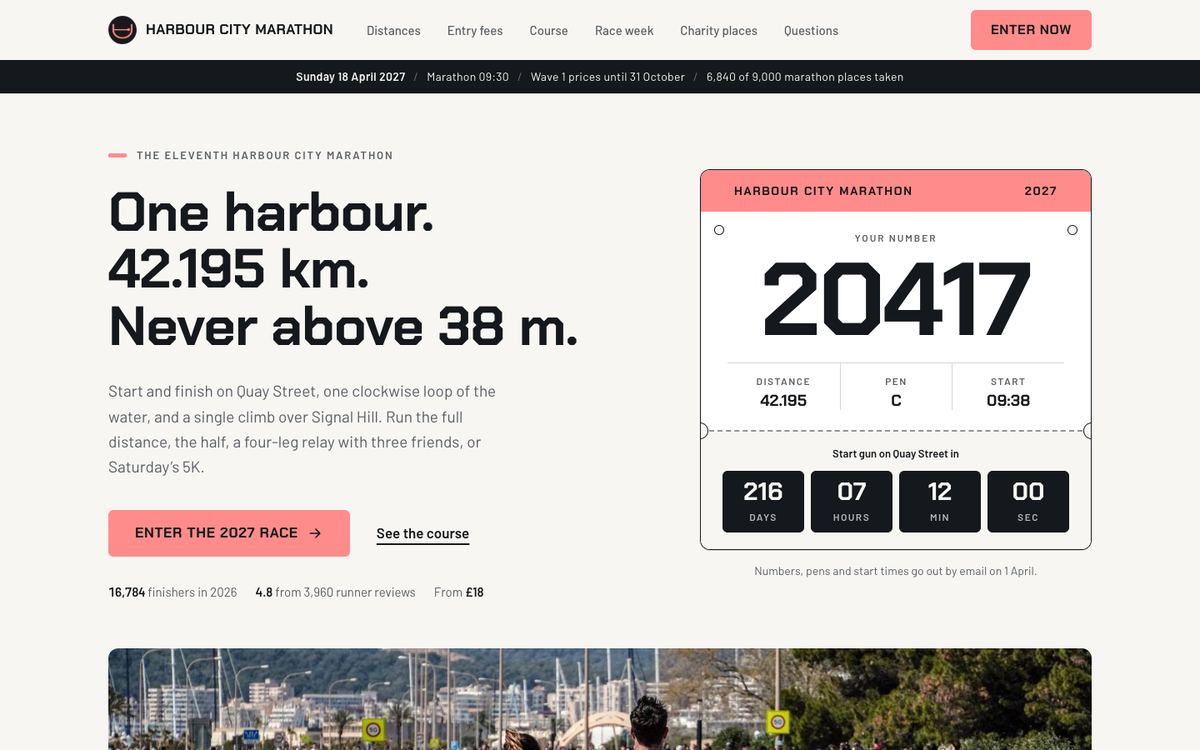
Runners choose a race on the course, the date and the price, and they enter earlier when there is a reason. City Marathon Race Day looks like a race bib with a start clock, draws the course and its elevation, and sets out entry fees by wave in high-vis coral.
It suits city marathons and halves, road race weekends, triathlons, sportives and gran fondos, open-water swims, obstacle races and charity runs.
How the page fills the start pens
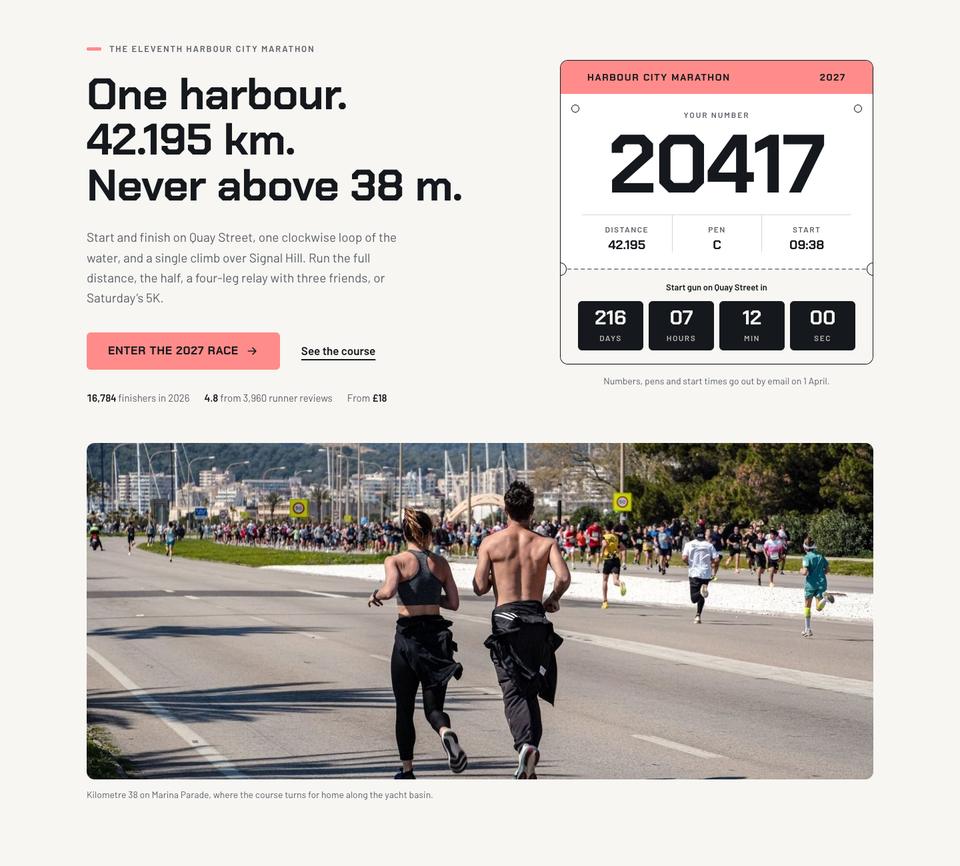
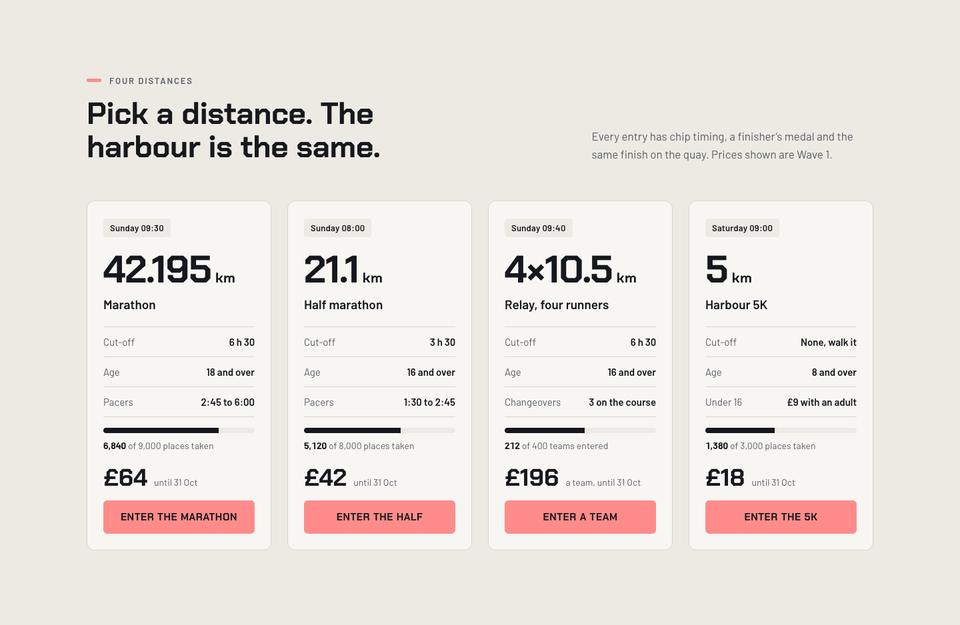
The hero sums up the course in three facts, “One harbour. 42.195 km. Never above 38 m.”, with the edition and start location. Distances shows the options and what every entry includes.
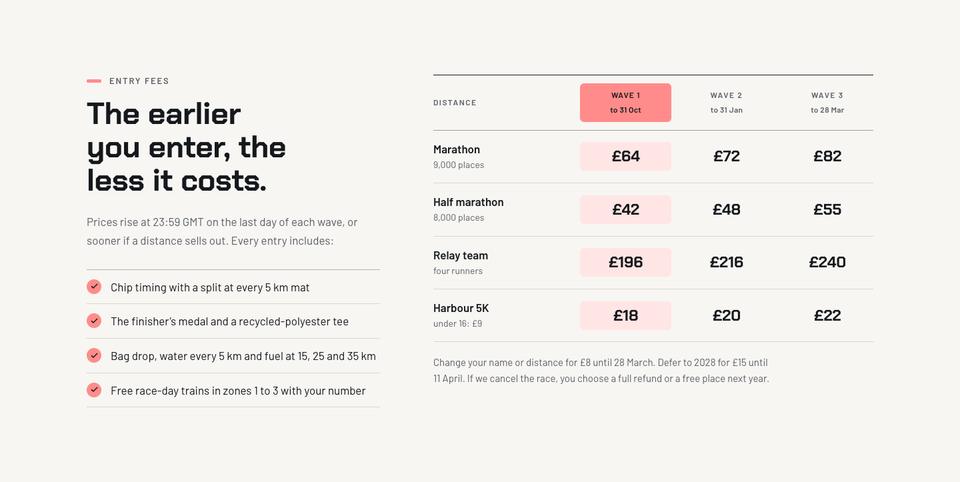
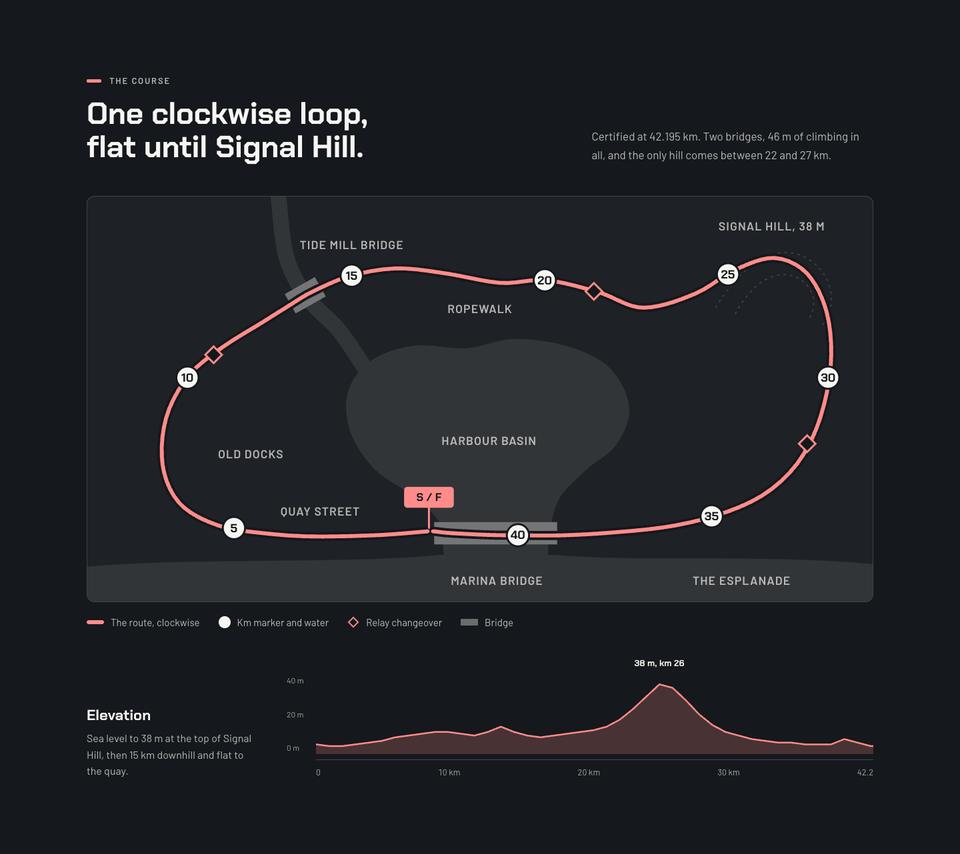
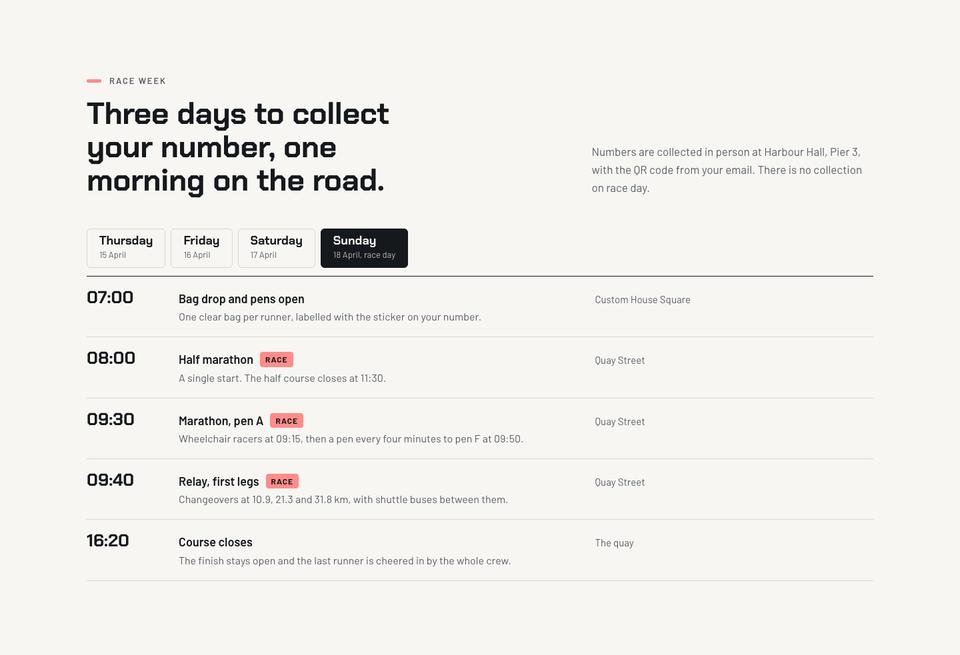
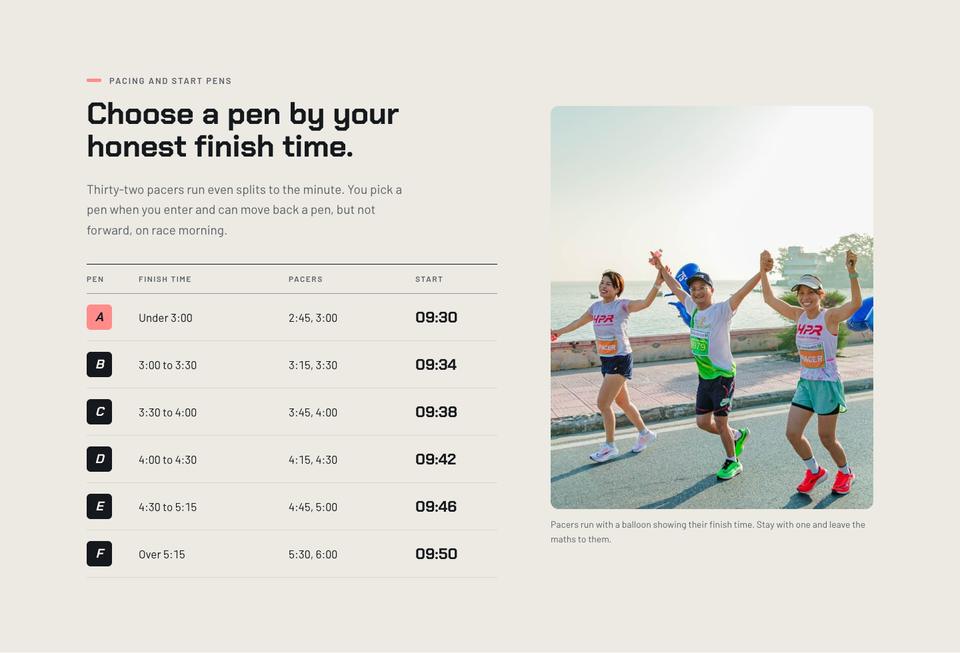
Entry fees explains waves and when prices rise. The course draws the route with bridges, climbs and certification. Race week covers number collection and the race morning. Pacing and start pens helps runners choose a pen honestly.
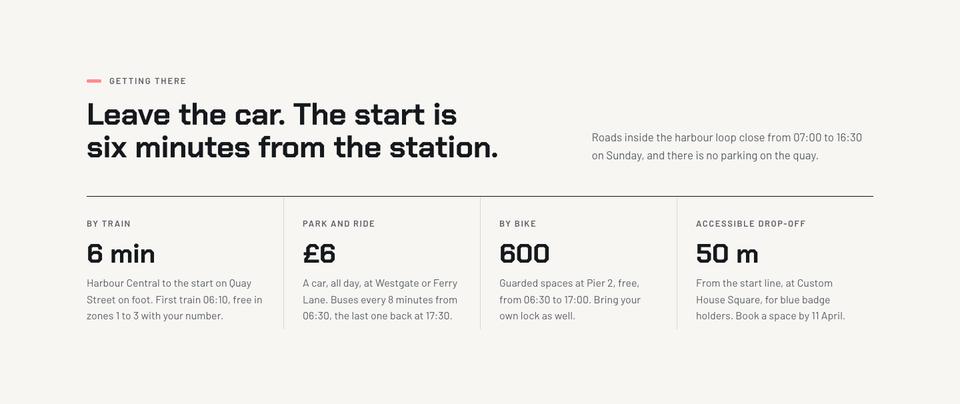
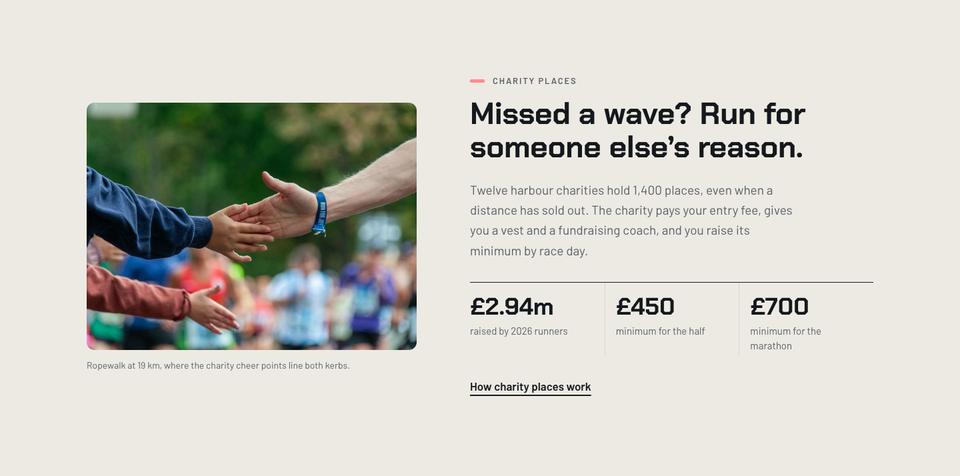
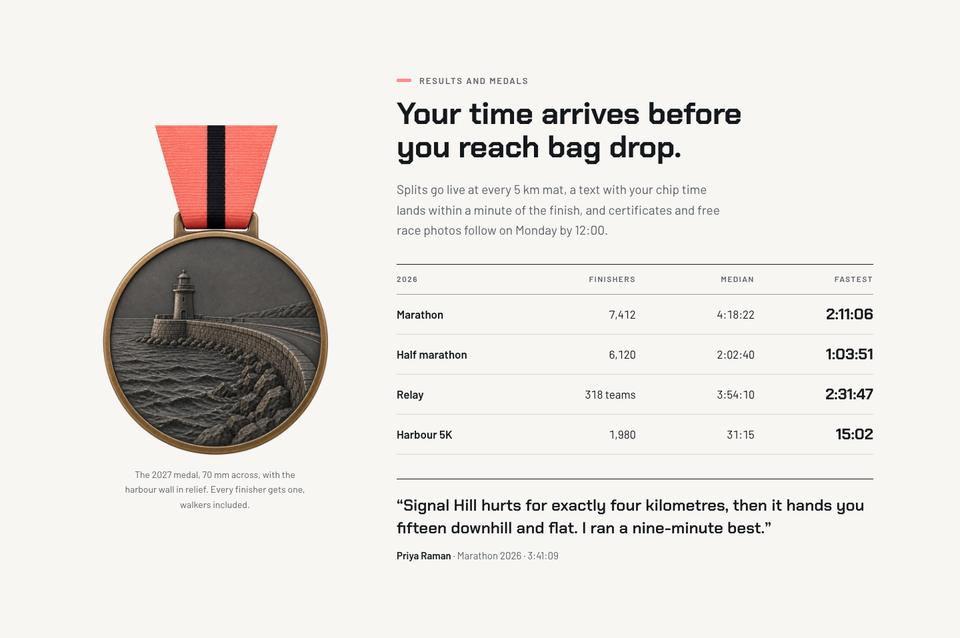
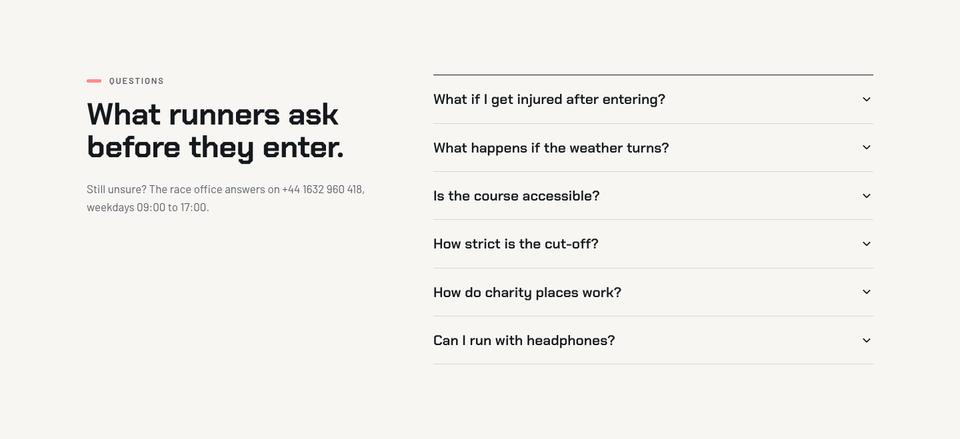
Getting there covers road closures and public transport. Charity places offers another way in when waves sell out. Results and medal shows the medal and how fast times arrive, enter counts down to the end of the current wave, and questions covers deferrals, age limits and walking.
Flat-course facts in the hero are aimed squarely at runners chasing a personal best, who make up a large share of marathon entries and decide on elevation more than scenery.
Adjusting the look
Four schemes are included: High-vis coral, Volt, Lane blue and Asphalt. Headings can be Chakra Petch, Archivo or Oswald. Three photographs are used; race-day photos of runners on the course and the medal close-up are ideal.
Distances, waves and the course details are editable. Ask the AI to rewrite the page for a triathlon or sportive.
Writing it for your race
Starting from the template costs no credits. For about 20 credits, the AI writes your copy into the design. Include the race name and edition, date and start location, distances and inclusions, entry waves and prices, course details and elevation, race week logistics, pacing, travel, charity places, results and medal, and deferral rules.
Race details entrants check before paying
Runners pick a race on its course, its date, its price and whether they can finish within the cut-off, so gather those details first. Confirm the distances offered, start times for each wave, and cut-off times. The course section needs a certified distance where applicable, the route in order with landmarks, total elevation gain and where the climbs fall. A drawn course map and elevation profile help runners judge difficulty at a glance.
Entry fees should show each wave with its price and closing date and time, plus what every entry includes, such as chip timing, a medal, a shirt and photographs. State transfer and refund policies, deferral options and what happens if the event is cancelled. The race week section needs number collection times and places, required ID, and whether collection can be done by someone else.
The pacing section explains start pens by expected finish time, and should mention pacers and how to change a pen. Include water and fuel stations by kilometre, medical support, baggage drop and toilets. Accessibility for wheelchair entrants and guide runners should be stated if you offer it. Three photographs are used, so pick a start-line crowd, a scenic stretch of the course and a finish moment.
List the charity partners and fundraising places if you offer them, with the minimum pledge. Charity entries are an important route into popular races and deserve a clear line on the page.
Triathlons, sportives, swims and charity walks
A triathlon can split the course into swim, bike and run with transition details and wetsuit rules. Sportives and gran fondos usually offer several route lengths with feed stations and mechanical support. Open-water swims need water temperature, safety cover and cut-offs by distance. Charity walks can soften the timing language and focus on routes, fundraising targets and family entries.
When another template fits better
City Marathon Race Day is for participation events. A spectator music event fits Music Festival or Event. A charity appeal asking for donations belongs on Cause Appeal, and a gym or training club on Gym.
See every event layout on the event templates page.
Before you publish
- Use the certified course and correct elevation.
- Check wave prices, caps and closing times.
- Confirm charity partners and fundraising targets.
- Link entry to your registration system.