What a finance landing page has to do
Finance buyers read carefully. They look for who holds the money, what everything costs, how the product fits their accounting and whether the numbers reconcile. A finance landing page wins trust by being exact, and it loses it with a single vague or hidden fee.
The sections that earn applications
The positioning. What the product is and who it is for.
Protection. Where funds are held and how they are protected.
Fees. The full schedule, with no hidden tiers.
Setup. Time to open or go live and what is required.
Evidence. Customer results with dates and sample sizes.
Questions. Security, integrations and what happens if the company fails.
Choosing a template
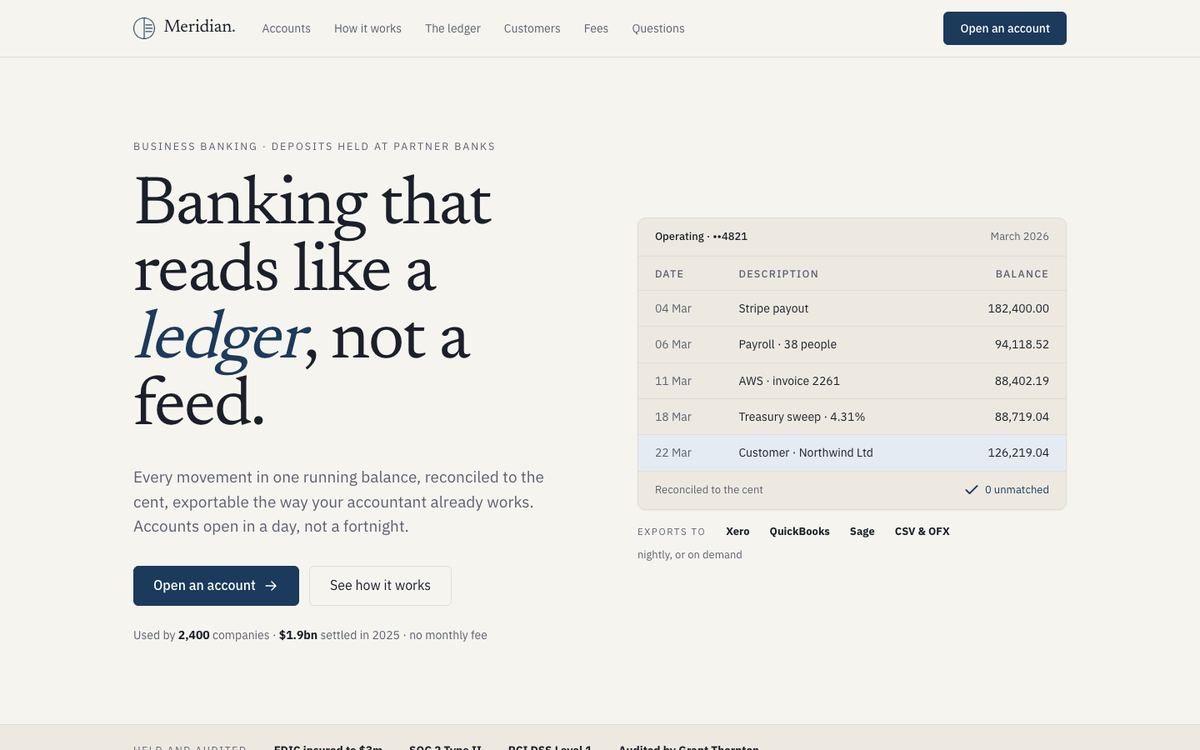
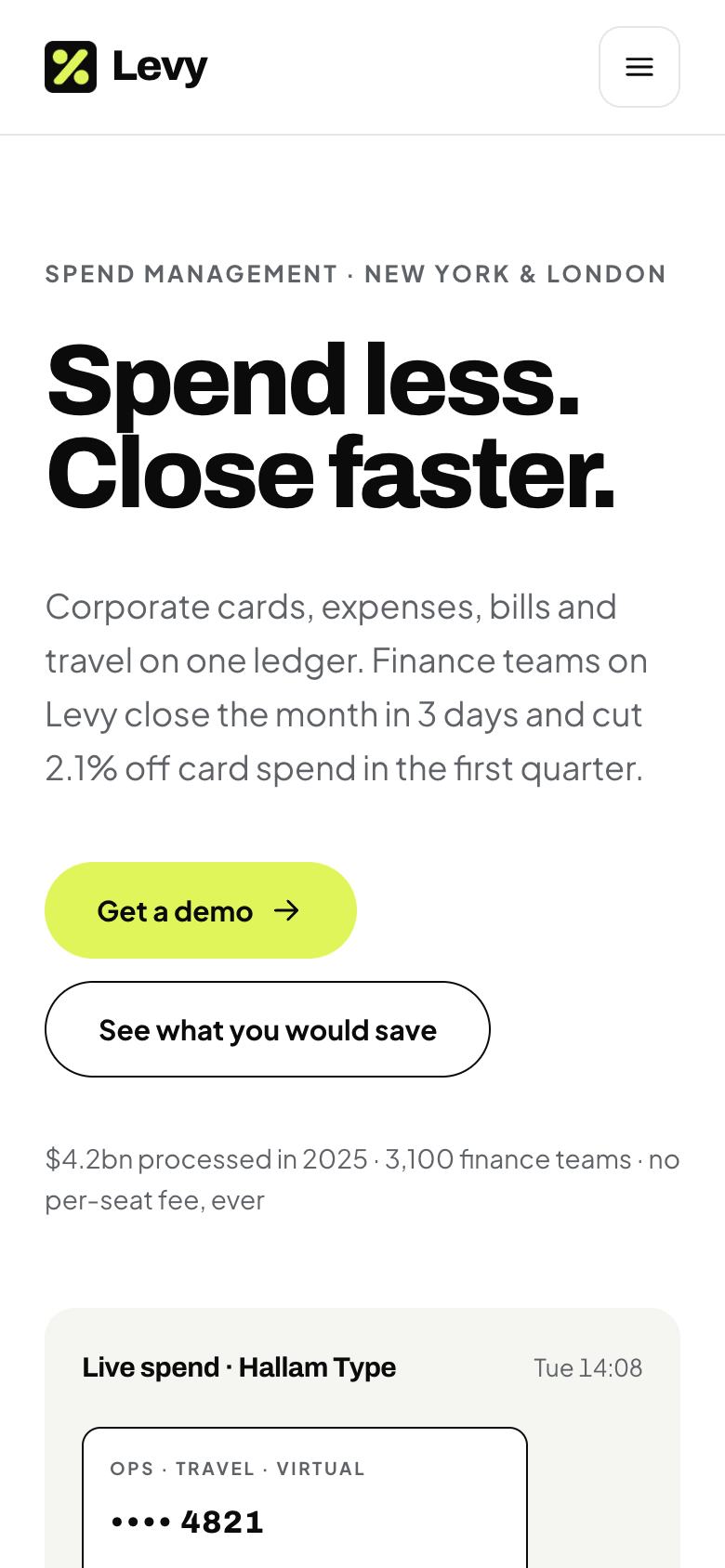
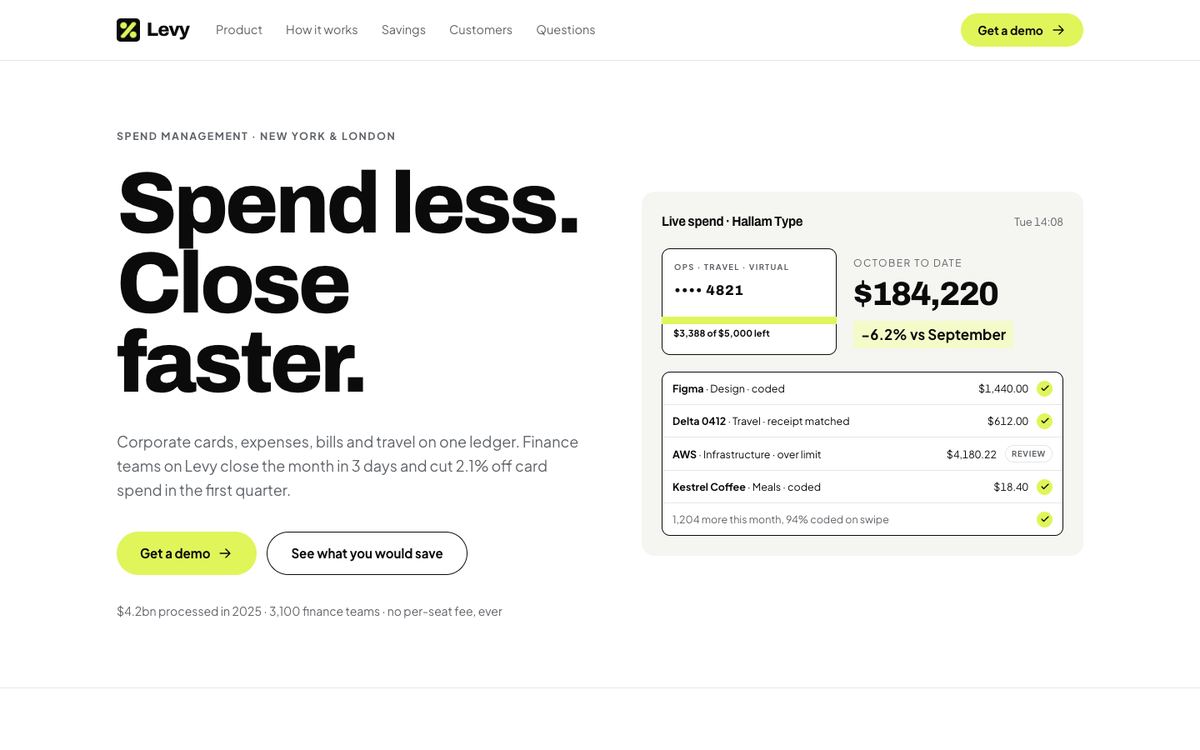
Quiet Ledger is warm bone paper and deep navy for banking, accounting, treasury and insurance. Lime Ledger is white with lime figures for cards, spend management, payables and payroll. Related layouts include Web3 for crypto, Project Finance Dashboard for finance software and Counsel Practice for advisory firms.
Common mistakes
Hidden fees. Finance buyers look for them and leave when they find one.
Undated metrics. Every figure needs a date and a base.
Unchecked regulatory claims. Get compliance sign-off before launch.
Quiet Ledger or Lime Ledger, side by side
The two finance templates share a respect for exact figures but speak to different buyers. Quiet Ledger is hushed and careful. It suits products where the buyer reads statements for a living and wants reassurance before speed: business banking and treasury, accounting and bookkeeping practices, wealth administration, insurance broking. The page draws a running balance as a ledger, publishes the complete fee schedule, states where money is held and how it is protected, and uses no photographs at all.
Lime Ledger is fast and quantified. It suits spend management, corporate cards, accounts payable, payroll, procurement and B2B payments, where the buyer is a finance lead looking for hours saved and money recovered. The page leads with a heavy two-line headline, product tiles drawn as flat interface, very large outcome numbers, a savings calculator and a quote from a finance director. If your product is a bank account with cards, choose by tone: Quiet Ledger if trust is the main hurdle, Lime Ledger if efficiency is.
Writing finance copy that passes review
Finance pages are read by buyers, competitors and regulators, so every sentence should survive all three. Avoid words that imply guarantees, such as “risk-free” or “always”, and describe protection precisely: which scheme covers deposits, up to what amount, and which institution holds the money. If you are not a bank, do not describe your product as a bank account without the qualifications your regulator requires.
Numbers are persuasive in finance only when they are defined. A figure like “close the month in three days” needs the group it describes, the period and how it was measured. Fees should be listed in full, including those that apply only in some cases, such as international payments, card replacement or currency conversion. A fee that appears only in the terms and conditions will be found, and it will cost more trust than it earns.
Proof that finance buyers accept
Finance leads trust peers more than logos. Collect quotes from finance directors, controllers or founders who can describe a measurable change, and ask whether they will take a reference call. Customer stories should include the company’s size, the systems they used before and the result over a defined period. Security and compliance proof, such as certifications, audit reports and data residency, should be linked or available on request, and the page should say how to obtain them.
What the application or demo form should ask
For banking and financial products, keep the first form short, such as company name, work email and company registration number, and explain that identity checks happen later in a secure flow. Never collect sensitive financial data in a simple web form. For software sold on a demo, ask for company size, the accounting system in use and the main problem to solve, which lets a sales team prepare a relevant demonstration. State the time to reply and what happens next.
Getting finance buyers to the page
Finance buyers often arrive from search terms that describe a specific problem, like month-end close or expense policy, from comparison sites and from accountants who recommend tools to clients. Partnerships with accounting firms can be tracked by giving each partner its own link. Because every application or demo request arrives with its source and campaign, you can compare the cost of a qualified lead across channels. Keep a record of every published figure and fee with the date it was last checked, which also helps when compliance reviews the page.
Related collections are worth a look for finance businesses with a different angle: Web3 for crypto products, SaaS Annual Deal for a discounted subscription, and Counsel Practice for advisory firms that sell expertise rather than software.
Keeping figures and fees up to date
Finance pages carry numbers that change: fees, interest rates, protection limits, customer counts and outcome figures. Keep a simple register of every figure on the page with its source and the date it was last checked, and review it on a schedule, such as monthly, and whenever pricing or terms change. When a fee changes, update the page before the change takes effect for customers, and keep the previous version on record.
Regulated firms often need compliance approval for each change to marketing material. Build that step into your publishing routine rather than treating the page as something that can be edited freely, and store approvals alongside the dated versions.
One page per product or audience
Finance companies often sell several products to different buyers, such as a business account for founders and a treasury service for finance teams, or bookkeeping for sole traders and payroll for growing companies. A page for each keeps the fee table, the proof and the form relevant to one reader. Each page can carry its own campaign links, so you can compare the cost of a qualified application by product rather than across the whole business.
From template to live page
Pick a template and it opens in the editor with its layout and sample copy. Update fees, products and figures in place, or tick “Write the text for my business” for about 20 credits and the AI rewrites the copy while keeping the design. Applications arrive in your inbox with their source.