For finance software that sells on numbers
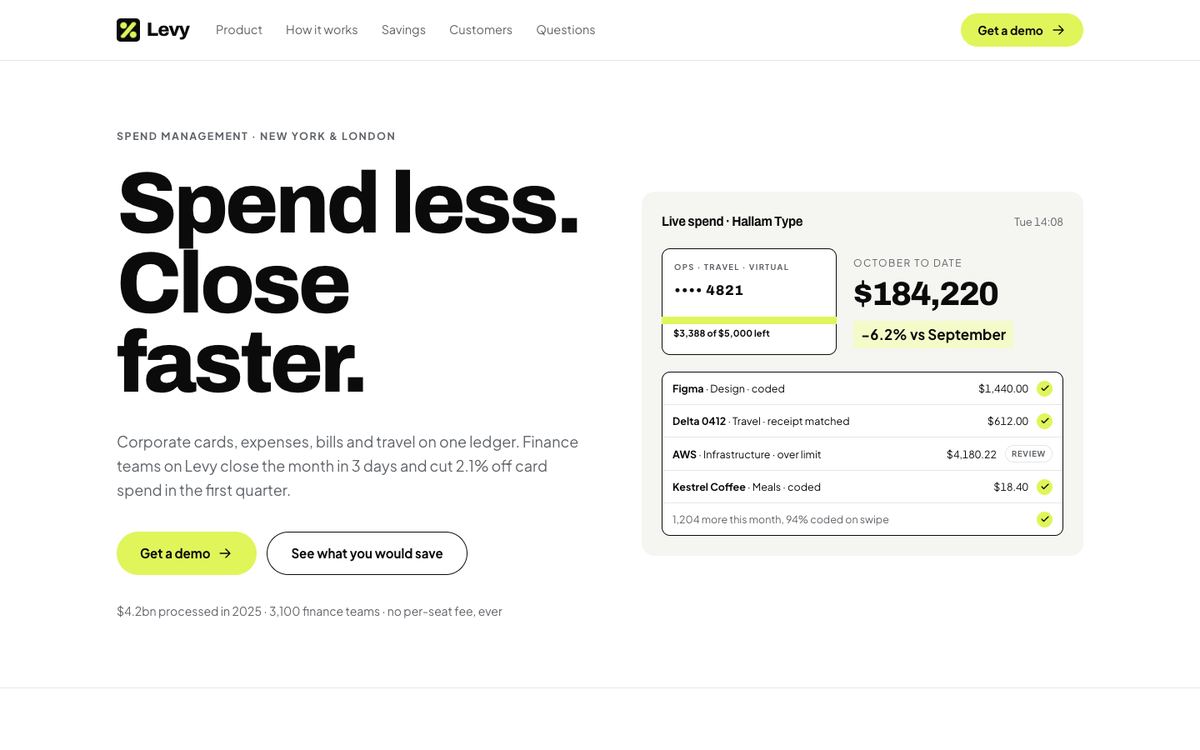
Where Quiet Ledger is hushed, Lime Ledger is fast. It is written for modern finance software bought by a controller or CFO who wants to see hours and percentages, not reassurance. The page is white with a heavy grotesque, and lime appears only as a fill behind the figures that matter.
It suits corporate cards, expense and spend management, accounts payable and invoicing, payroll, procurement, billing and B2B payment platforms. Choose it when the brief is quantified and energetic rather than traditional.
How the page gets a demo booked
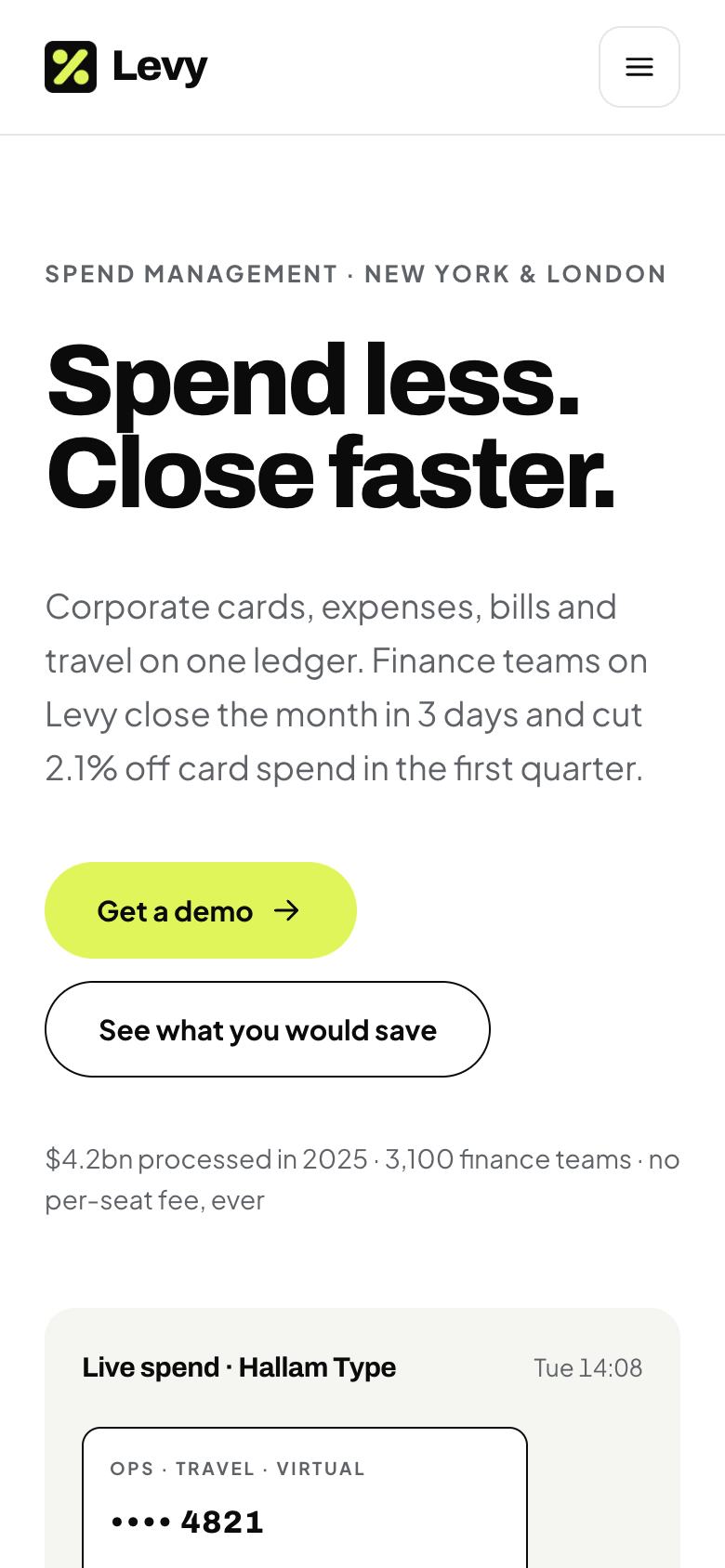
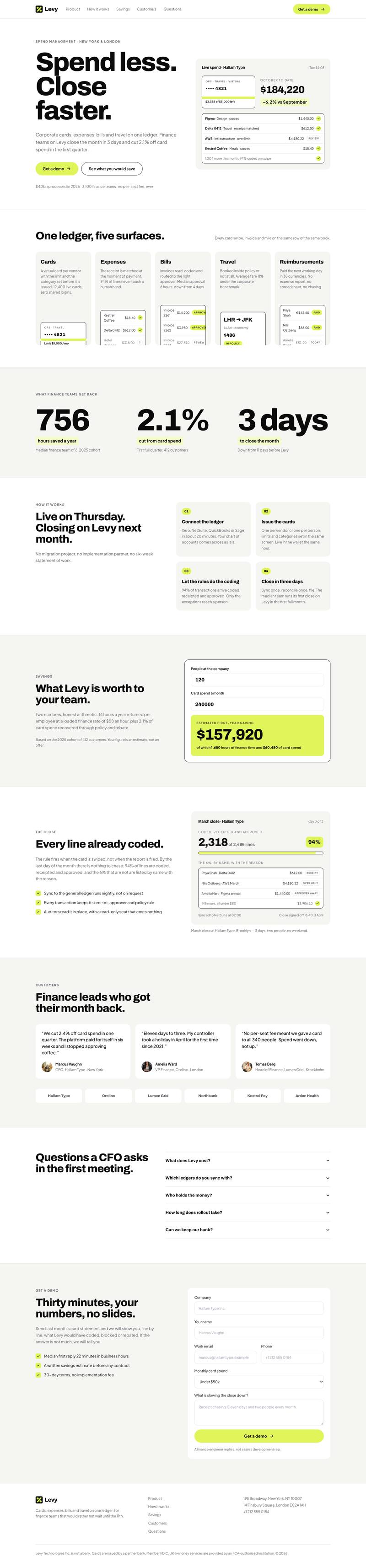
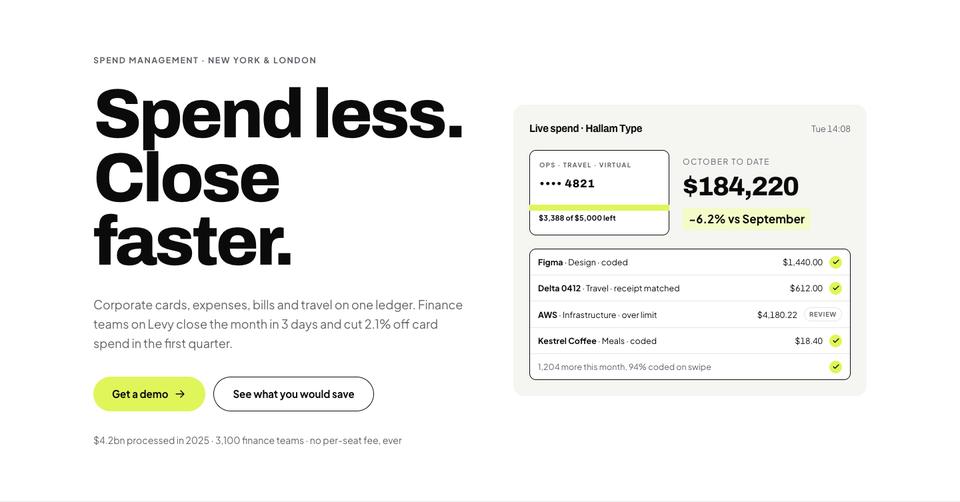
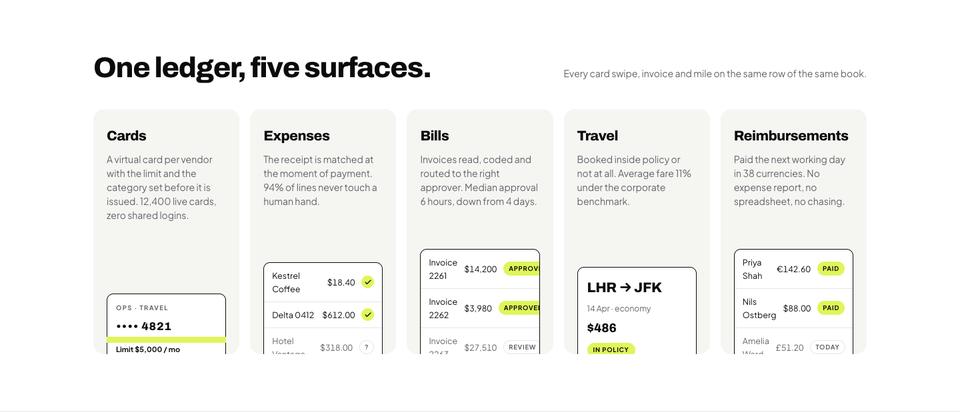
The hero is four words, “Spend less. Close faster.”, with the product scope and one customer metric: days to close the month. The product shows five surfaces, cards, expenses, bills, travel and reimbursements, on one ledger in a bento grid.
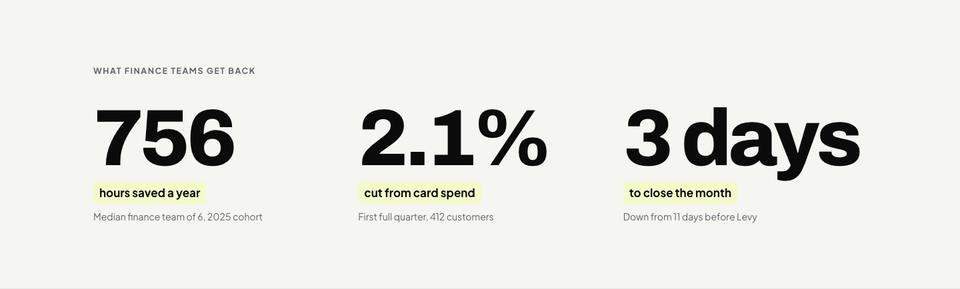
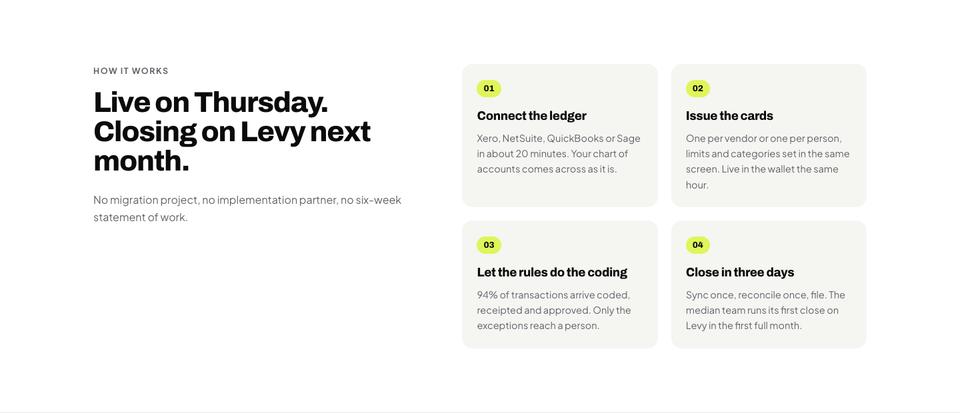
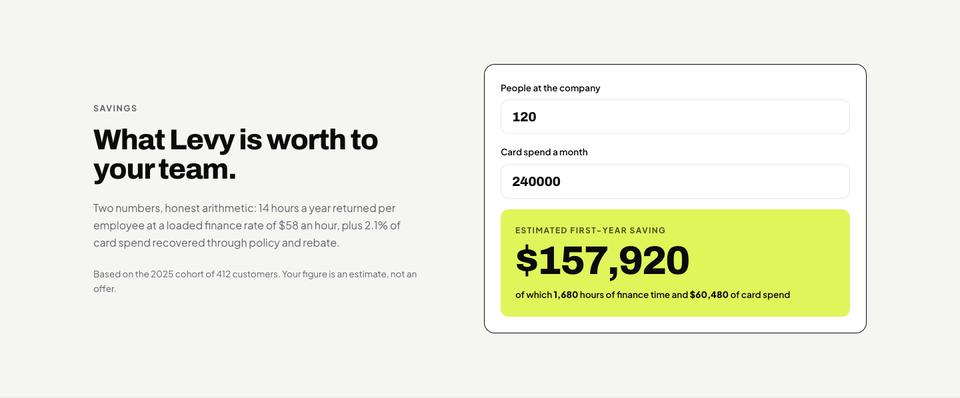
What finance teams get back is a band of three figures highlighted in lime: hours saved, card spend cut and days to close. How it works promises going live within days and closing on the product the next month. Savings turns the figures into an estimate for the visitor’s own team with the arithmetic shown.
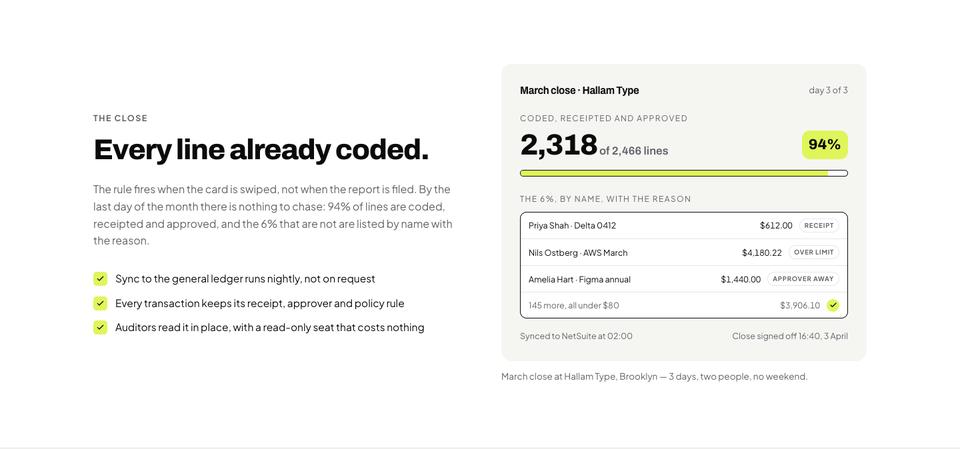
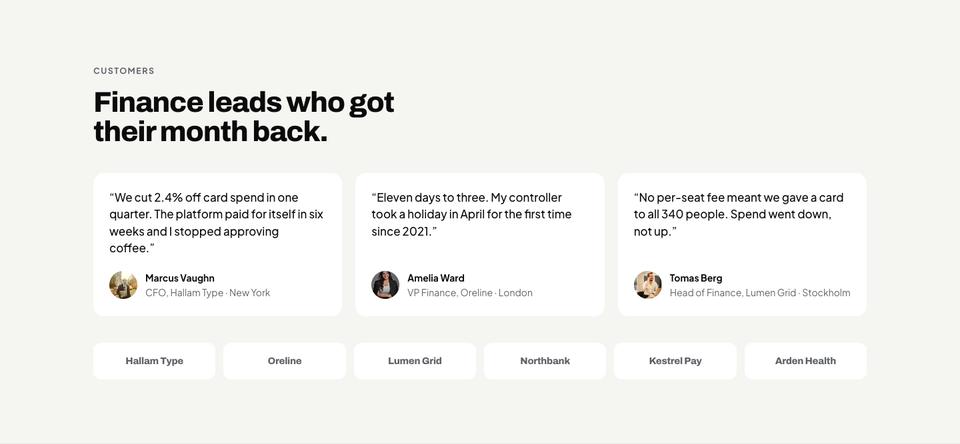
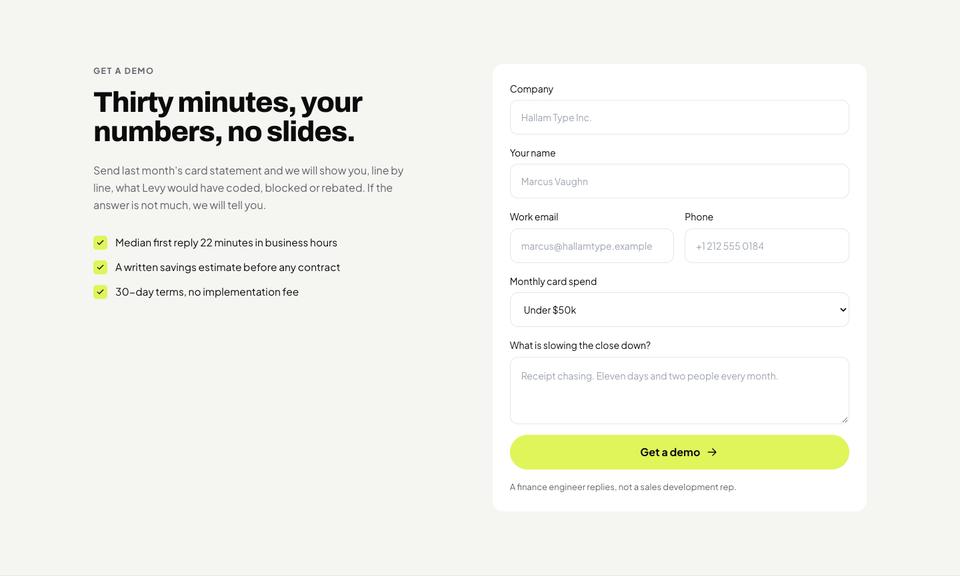
The close explains coding rules that apply at the moment of payment, so nothing is left to chase at month end. Customers quote finance leads with results, questions handles cost, card issuing and integrations, and the page ends with a demo built around the visitor’s last card statement.
Adjusting the look
Four schemes are included: Lime, Ink, Tangerine and Sky. Headings are Archivo or Familjen Grotesk over Plus Jakarta Sans, or Epilogue over Mulish. Three photographs are used; product panels and figures do the work.
Figures, product cards and the savings assumptions are editable in place. Select the savings section and ask the AI to rewrite its explanation to match your own data.
Writing it for your product
You can start from the template free of credits, or tick “Write the text for my business” so the AI writes the copy for about 20 credits without changing the design. Give it what the product covers, the metrics your customers achieve and how you measured them, setup time, how coding or approvals work, pricing model, integrations and what the demo shows.
Making the numbers hold up
Lime Ledger puts outcome figures at a very large size, so each one will be read closely by a finance buyer. For every number, define the measure, the group it covers and the period, such as median hours saved a year for finance teams of a given size in a named cohort. If a figure comes from a customer survey, give the sample size. Finance leads distrust round numbers without a source.
The savings calculator needs arithmetic you are comfortable publishing: the inputs, the hourly rate assumed and the percentage saved on spend, with a note on where those assumptions come from. The product tiles should each show one real surface, such as a card with limits, an invoice being approved or a reimbursement, drawn flat. The how-it-works section should list the accounting systems you connect to and the actual time to go live. Three photographs are used, so the lime fill and heavy type carry the page. Check any statement about card issuing, licences or partner banks with your compliance team.
Accounts payable, payroll and B2B payments
An accounts payable or invoicing tool can turn the tiles into capture, approval, payment and reconciliation, with figures for invoices processed and days to pay. Payroll software usually shows a pay run, the countries supported and the pricing per employee. Procurement platforms can lead with purchase requests and approval times. B2B payments and billing products can use the calculator for fees saved or days sales outstanding reduced, and keep the demo form for a finance lead.
When another template fits better
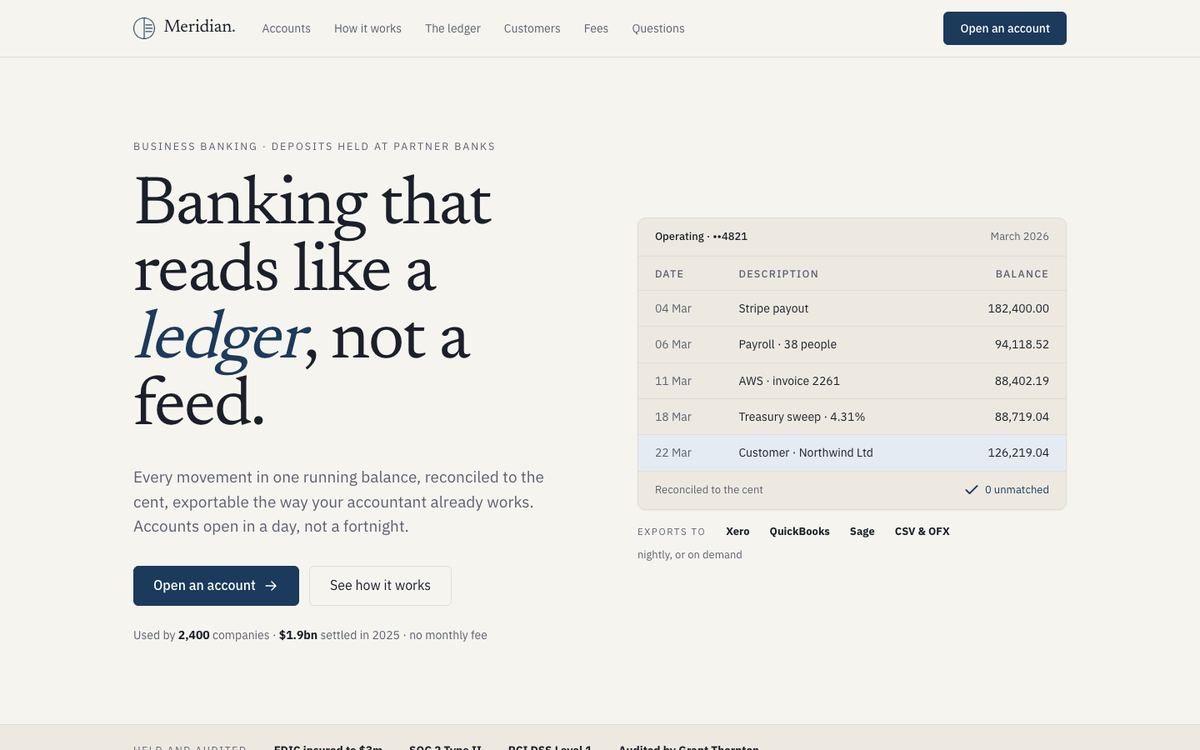
Lime Ledger is loud about numbers. A bank, accountancy or insurer wanting calm and tradition should use Quiet Ledger. A dashboard for project finance fits Project Finance Dashboard, a consumer payments or transport app with an install goal suits Mobile App Install, and crypto products belong on Web3.
Both finance layouts are on the finance templates page.
Before you publish
- Check every customer metric and its cohort or date.
- Make sure the savings estimate states its assumptions clearly.
- Have card programme and regulatory wording reviewed.
- Ask for team size and monthly card spend in the demo form.