For finance products sold to people who read statements
Finance directors and bookkeepers are not moved by gradients. They want to know who holds the money, what everything costs and whether the numbers reconcile. Quiet Ledger is a calm template on warm bone paper with deep navy, a real ledger table and tabular figures, and no photography in the demo at all.
It suits business banking and treasury products, accounting and bookkeeping practices, wealth and fund administration, insurance broking, and payroll and payables tools. Choose it when the buyer reads a statement for a living and the page should feel exact and trustworthy.
How the page earns an application
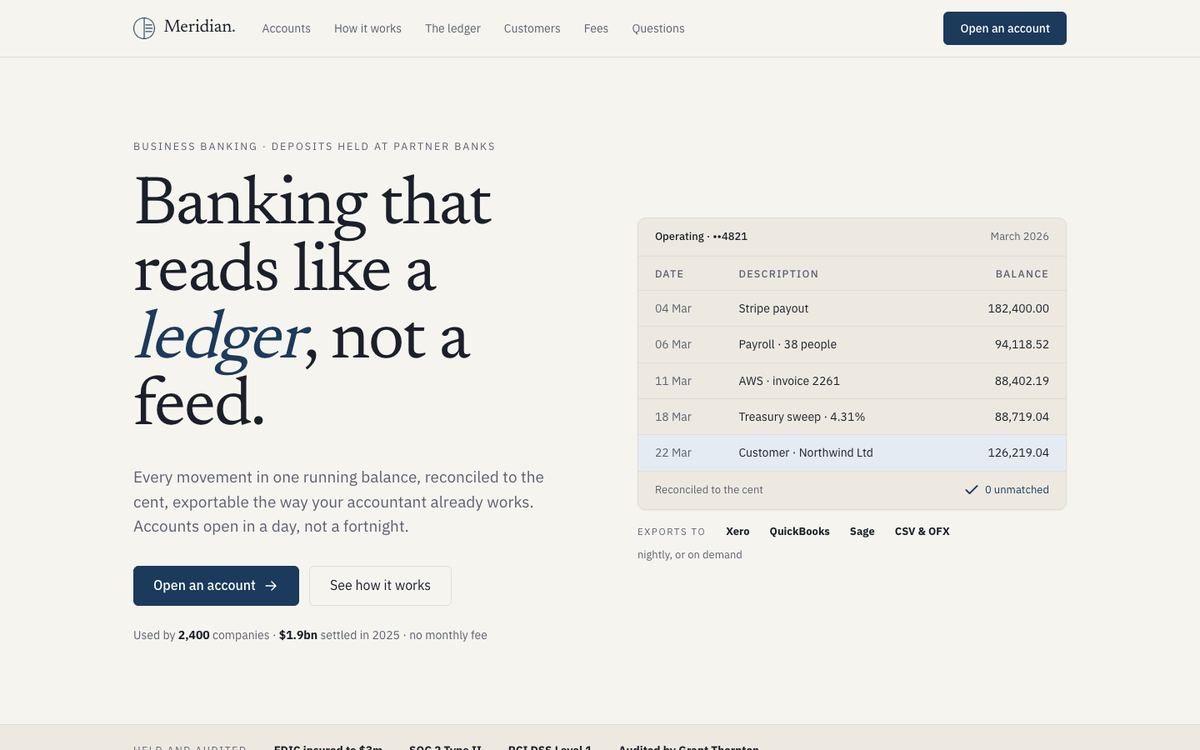
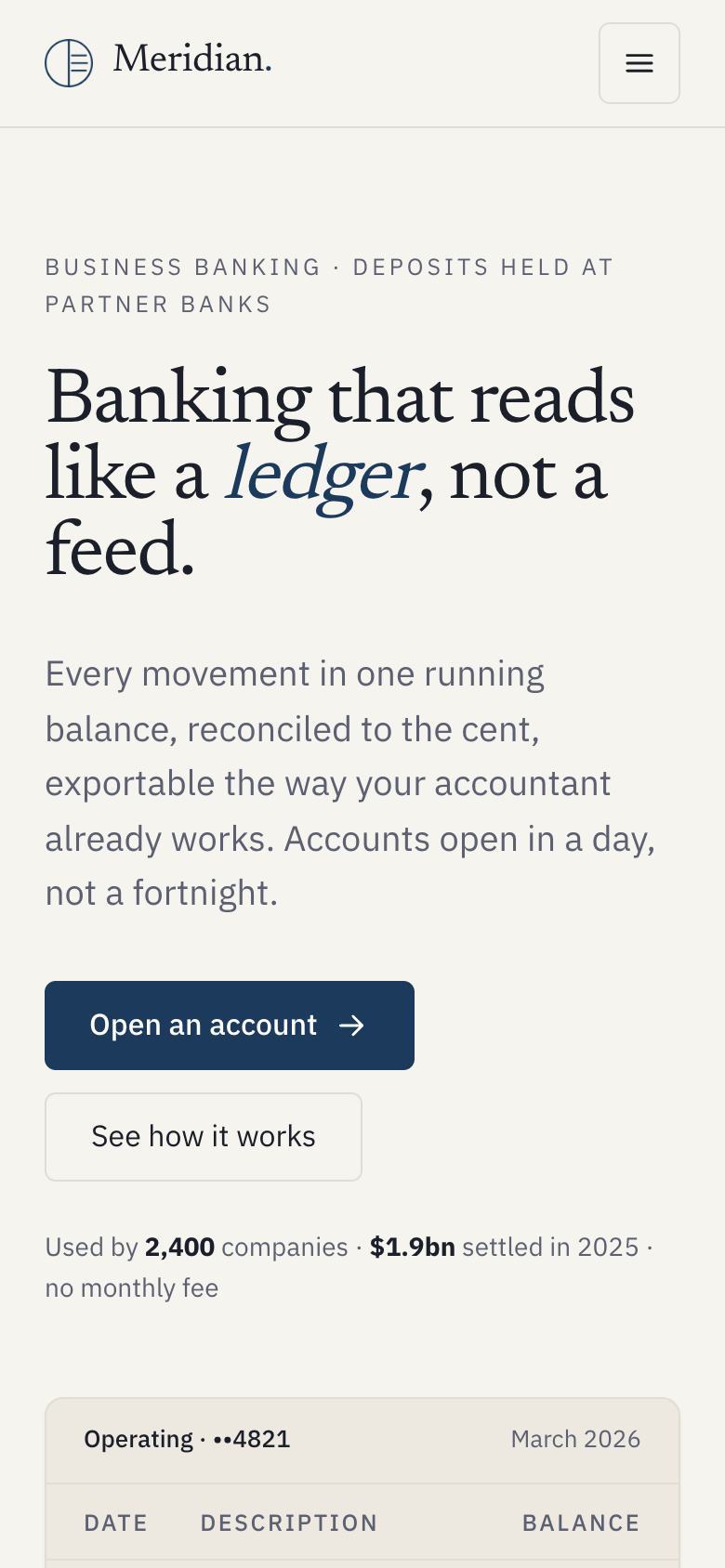
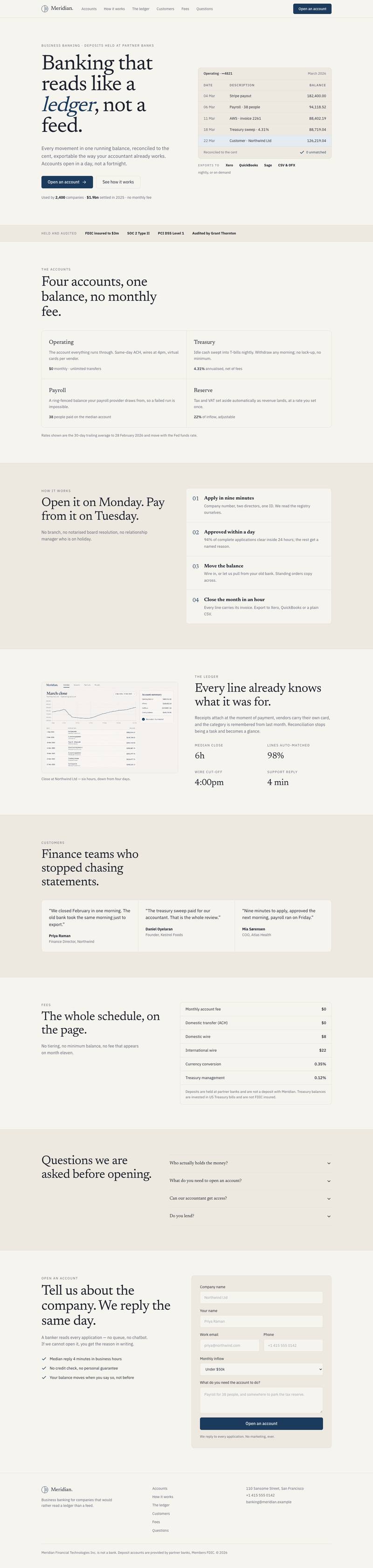
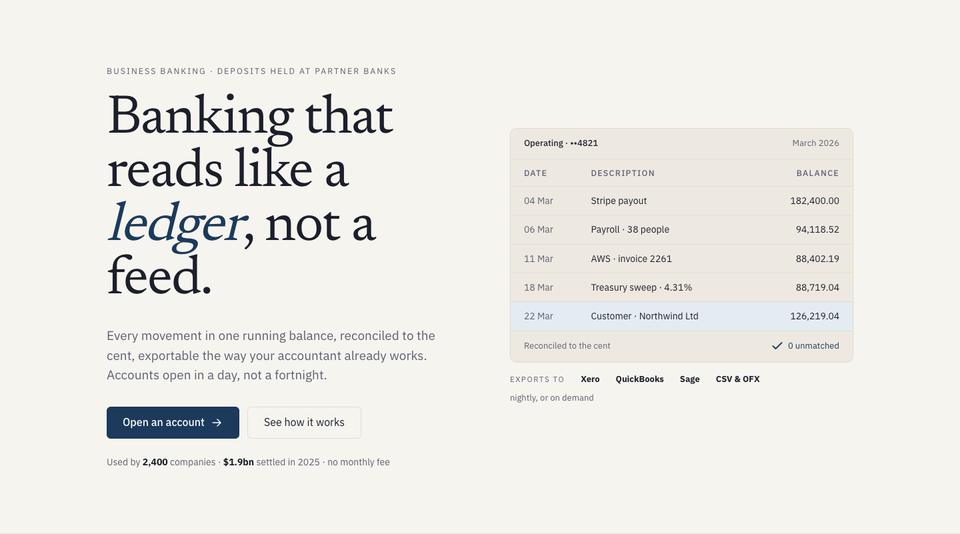
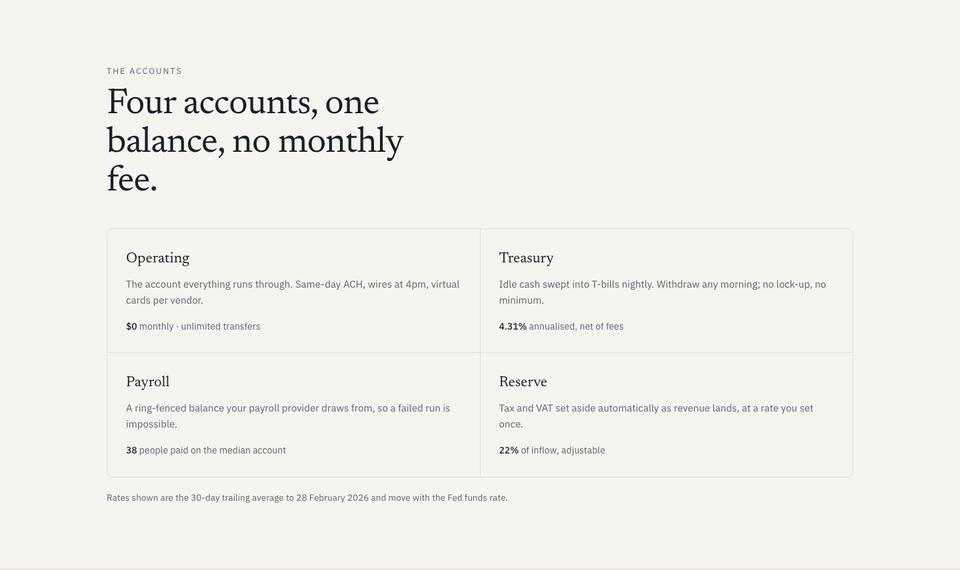
The hero contrasts the product with consumer finance apps, “Banking that reads like a ledger, not a feed”, and states where deposits are held. The accounts sets out four account types that share one balance, each with its purpose and fee.
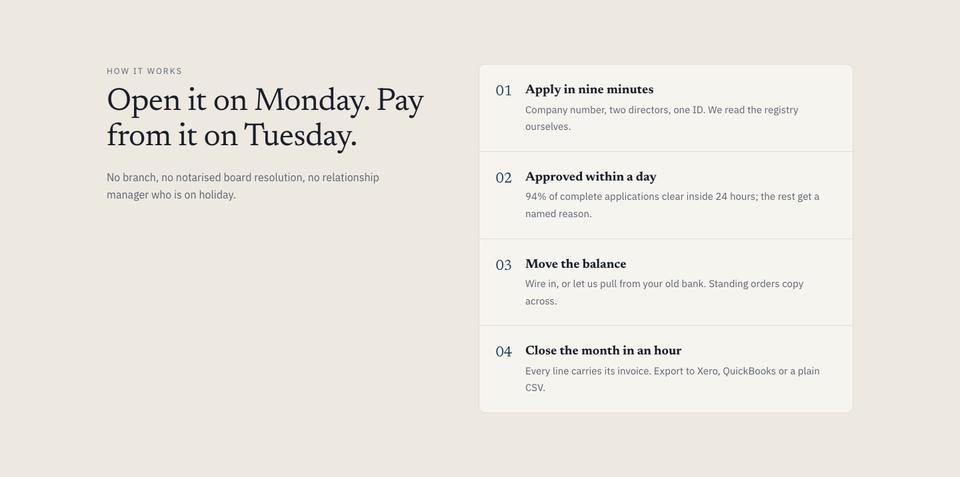
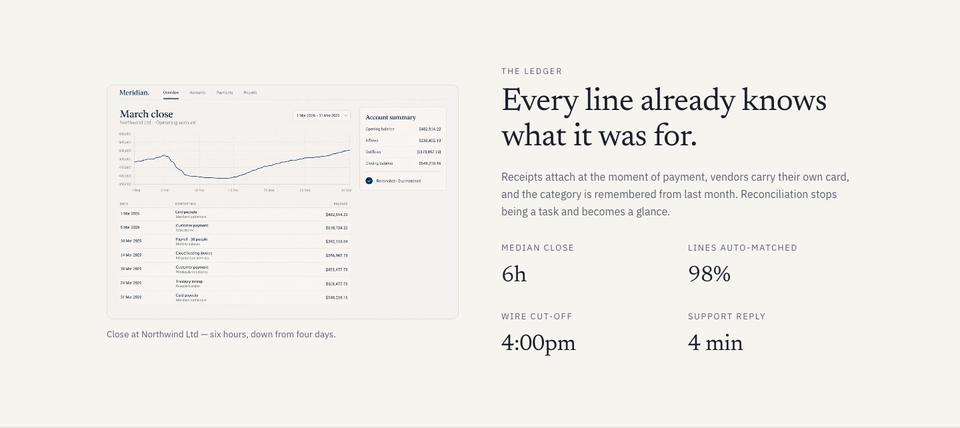
How it works times the opening process from application to first payment, and lists what is not required. The ledger shows a realistic transaction table where every line carries its category, receipt and vendor, alongside a customer’s shorter month-end close.
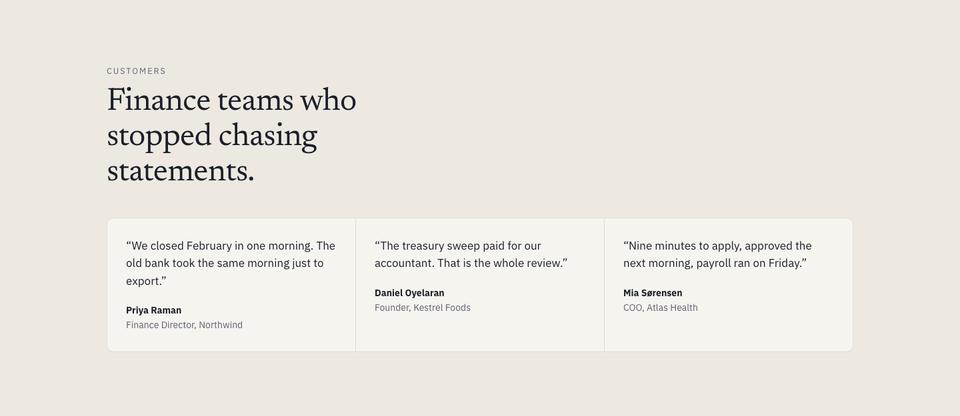
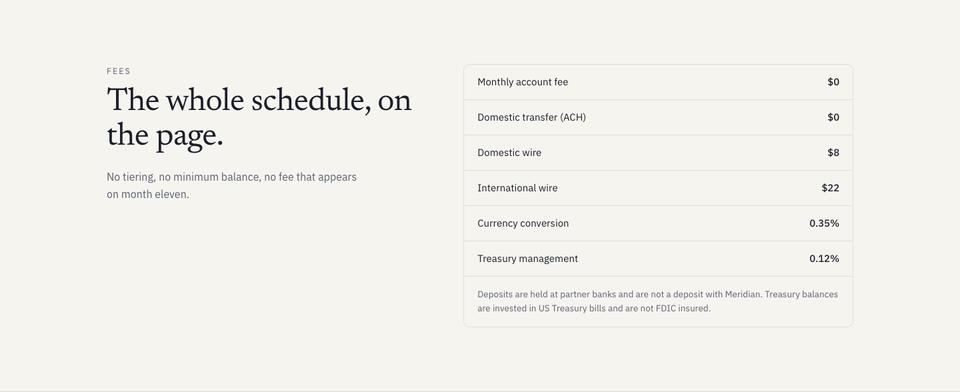
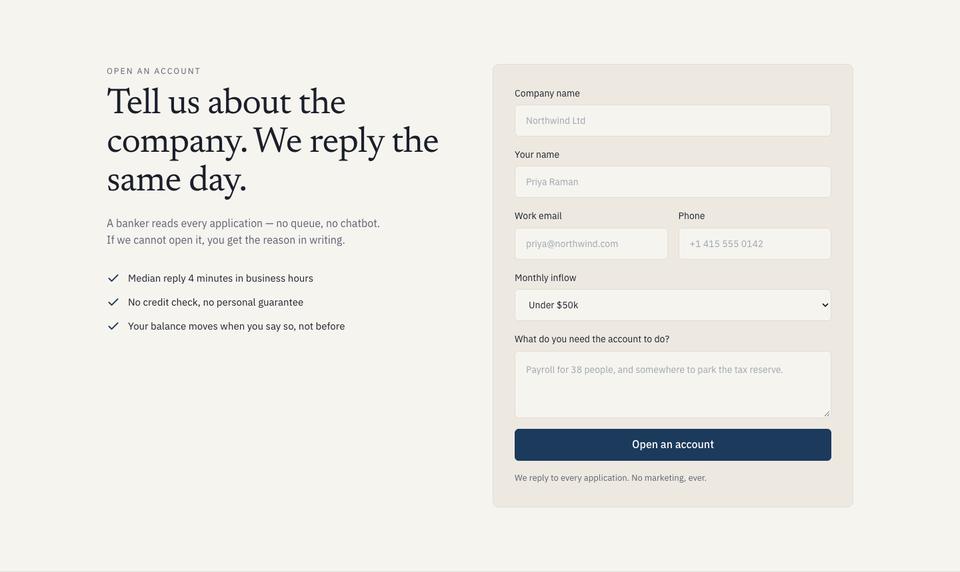
Customers quote finance teams with concrete time saved. Fees publishes the whole schedule, with no tiers or minimum balance. Questions answers the ones asked before opening, starting with who actually holds the money, and the page ends with open an account, reviewed by a person the same day.
Adjusting the look
Four schemes come with it: Deep navy, Ink, Moss and Bronze. Headings are Newsreader, Literata or Crimson Pro, all paired with sans-serif body faces that have clear tabular figures. The absence of photography is deliberate; it makes the page fast and keeps attention on the numbers.
The ledger and fee tables are editable in the page editor. Select one and ask the AI to rebuild it from your real schedule or a sample export.
Writing it for your firm or product
Starting from the template is free. If you tick “Write the text for my business”, the AI writes your copy into the design for about 20 credits. Include your product types, where funds are held and protections, the opening process, what makes reconciliation easier, a customer result, your full fee schedule and how applications are reviewed.
What compliance will want to see first
Finance pages are among the most regulated on the web, so gather the wording with your compliance team before editing. The hero and the questions section need an accurate statement of who holds client money, what protection applies and up to what amount, and the regulators or licences you operate under. Avoid describing a service as a bank unless it legally is one.
The fee schedule should be complete, with every charge a customer could see on a statement, including international transfers, card fees and anything that depends on volume. The drawn ledger in the hero works best with realistic but invented transactions that show your key features, such as receipts attached at payment or categories applied automatically. Customer quotes should come from finance roles and describe a measurable change, like days saved at month end. This template uses no photographs at all, which keeps the page fast and lets the tables and figures build trust.
Accounting firms, insurance brokers and payroll tools
An accounting or bookkeeping practice can replace the accounts with service packages by business size, publish monthly fees and turn the ledger into a sample month-end report. Insurance brokers usually list the covers they arrange, the insurers on their panel and how claims are handled. Payroll and accounts payable tools can keep the ledger and show a pay run or supplier payment batch, with pricing per employee or per transaction.
When another template fits better
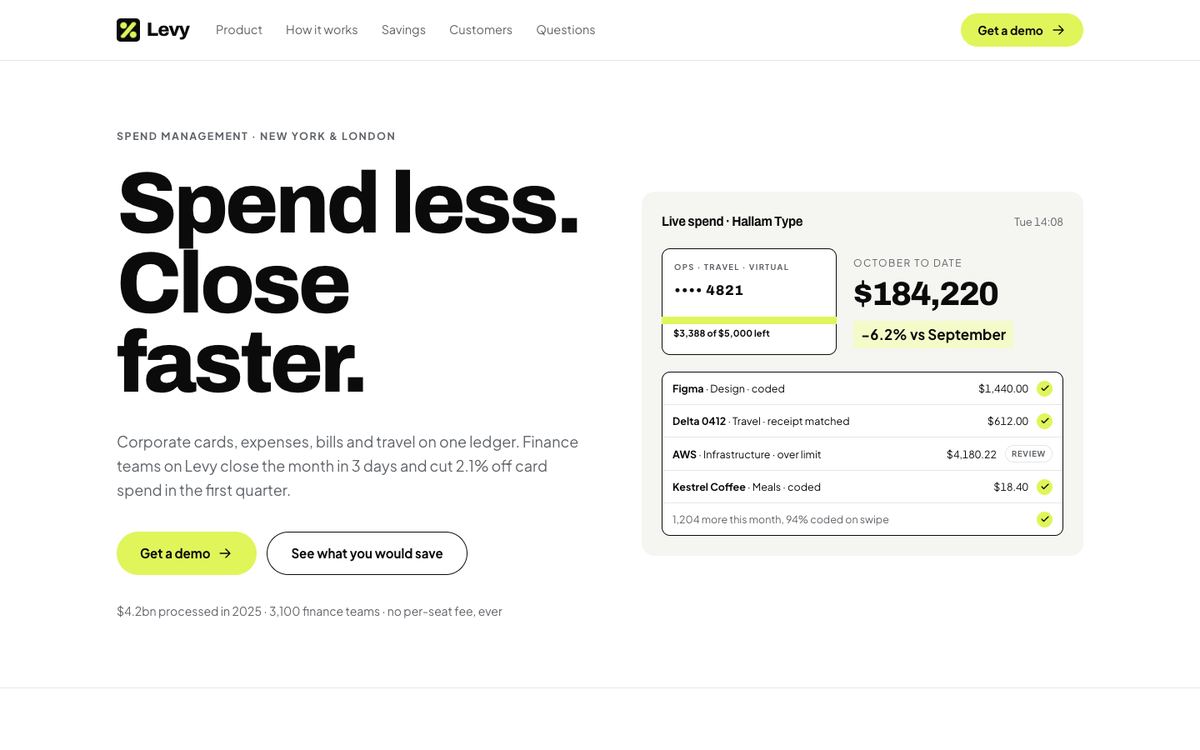
Quiet Ledger is traditional. A payments or spend-management product aimed at startups may prefer the brighter Lime Ledger, and a crypto wallet or exchange belongs on Web3. A law, accountancy or advisory firm selling expertise rather than an account should look at Counsel Practice, and a finance dashboard sold to operators fits Project Finance Dashboard.
Both finance layouts are on the finance templates page.
Before you publish
- Have compliance review deposit protection and regulatory wording.
- Check the fee schedule is complete and current.
- Use realistic but fictional data in the ledger example.
- Ask for company type and country in the application form.