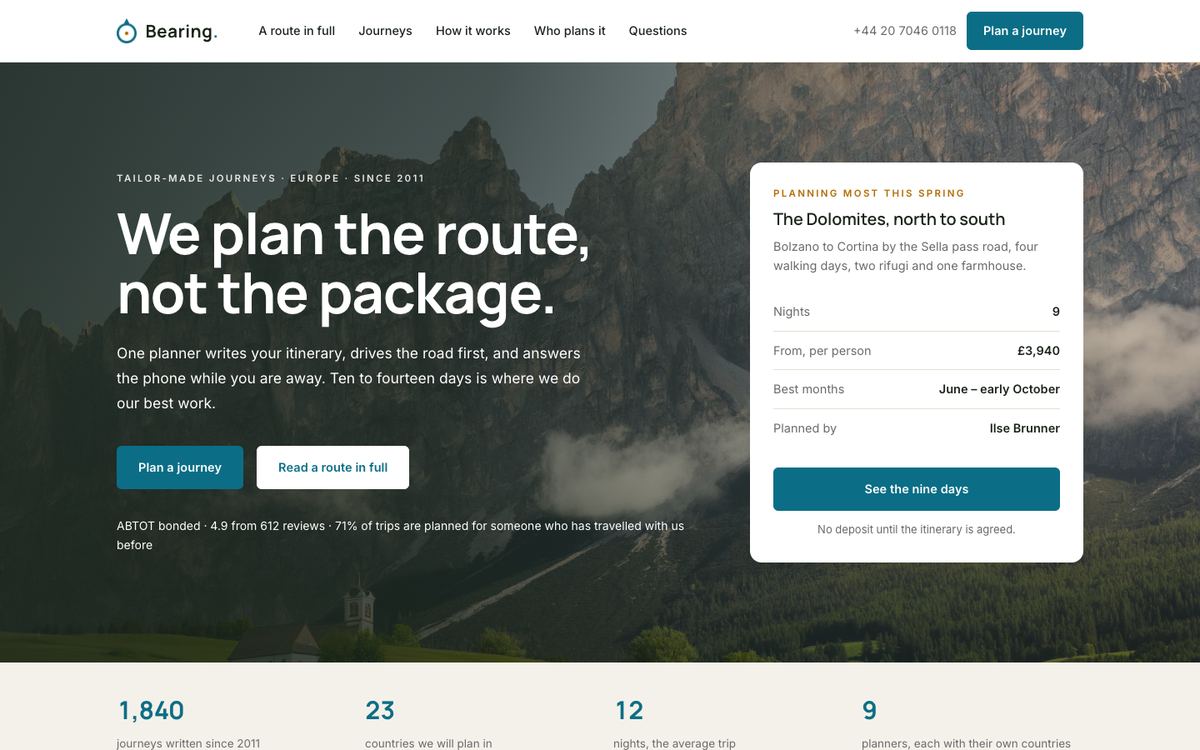
Real estate landing page templates
Two finished property landing pages: one for estate agents winning valuations, one for developers launching homes off plan. Each opens in the editor with its layout, photos and sample copy at no credit cost.
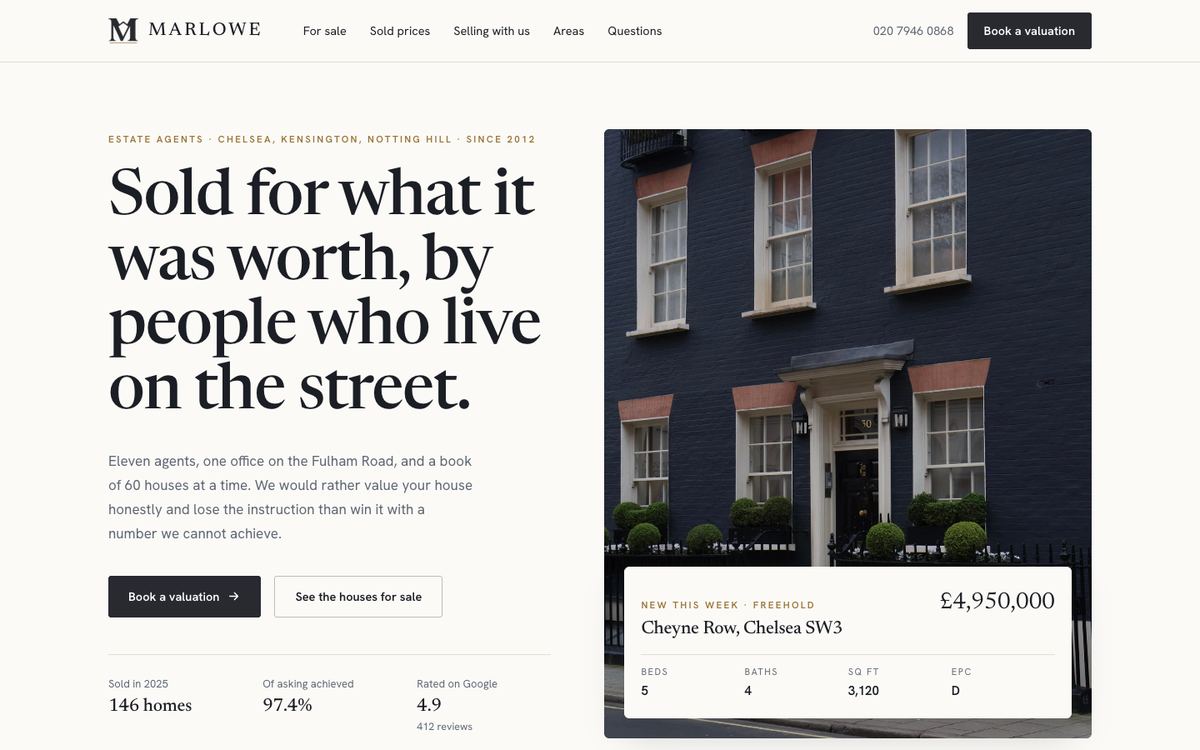
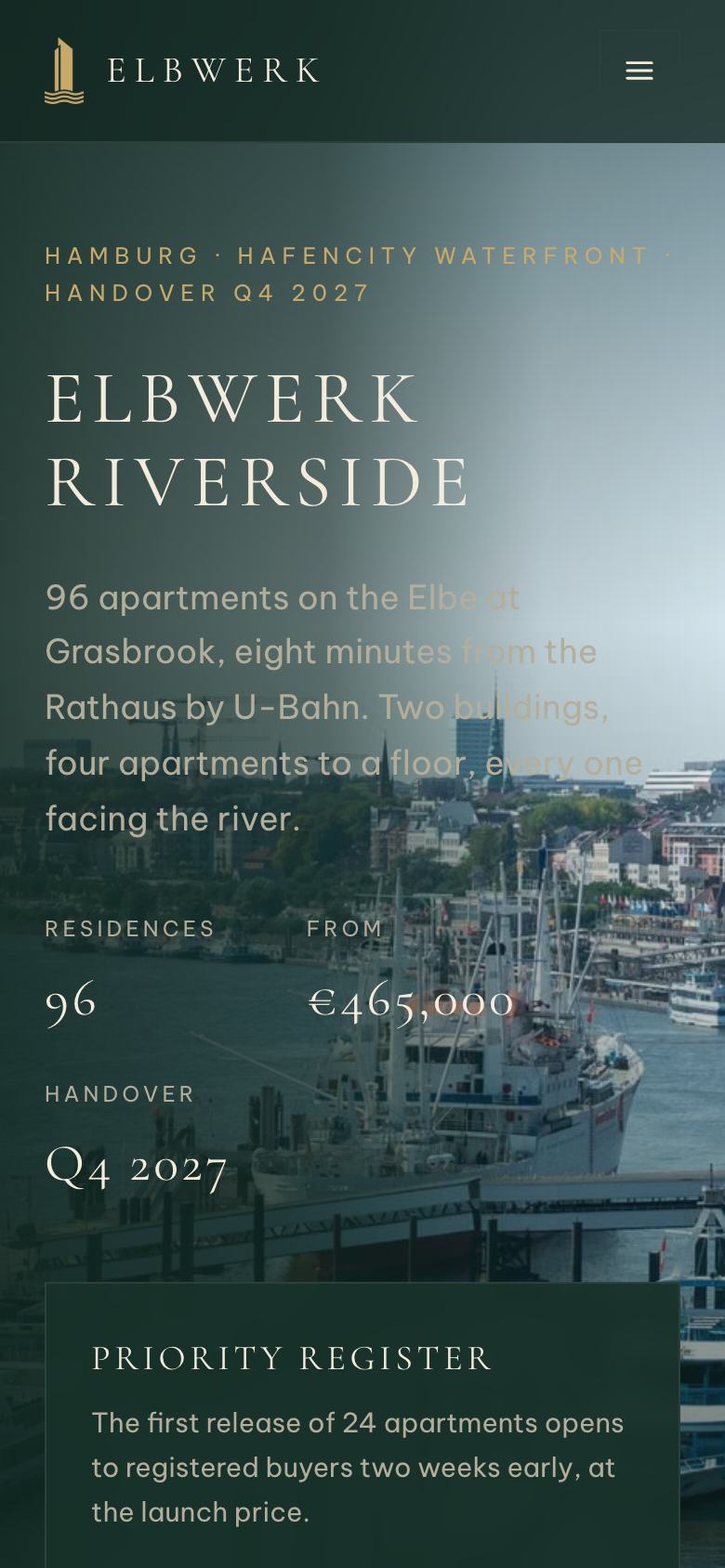
Two finished property landing pages: one for estate agents winning valuations, one for developers launching homes off plan. Each opens in the editor with its layout, photos and sample copy at no credit cost.
Property is expensive and slow to buy or sell, so trust is everything. Sellers choosing an agent want evidence of results and a clear fee. Buyers reserving off plan want plans, prices and protection for their deposit. A property landing page earns the first step, a valuation or a registration, by showing that evidence plainly.
Where. The areas covered or the scheme’s location and transport.
What. Listings or residences with prices, sizes and photographs or renders.
Evidence. Sold prices against asking, or construction progress and past schemes.
Money. Agency fees or the payment schedule with escrow.
Questions. Commitment, foreign buyers, timelines.
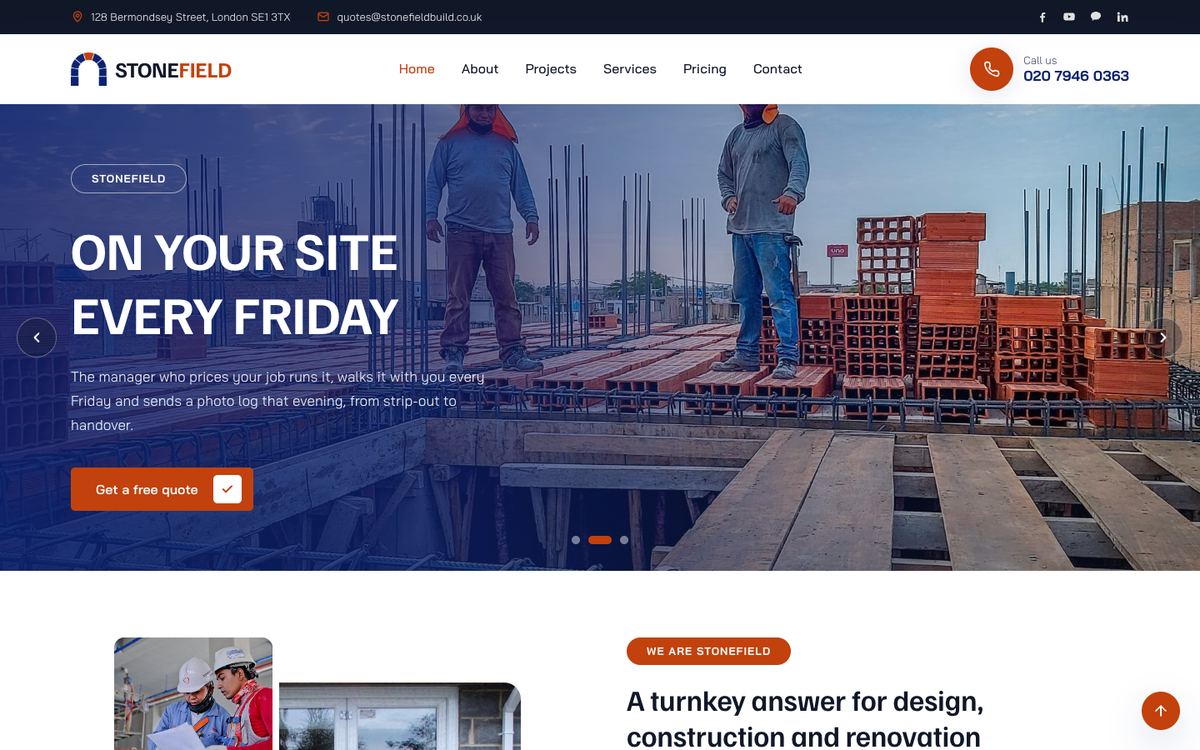
Estate Agency is editorial and understated for agents, buying agents and lettings. Residence Launch is dark and luxurious for developers launching a scheme. Related layouts include Construction for builders and Cabin Rentals Direct for holiday lets.
Claims without data. “We get the best price” needs a sold-prices table behind it.
Unlabelled renders. Mark CGIs as illustrative where required.
Unclear fees or payment terms. Put them on the page.
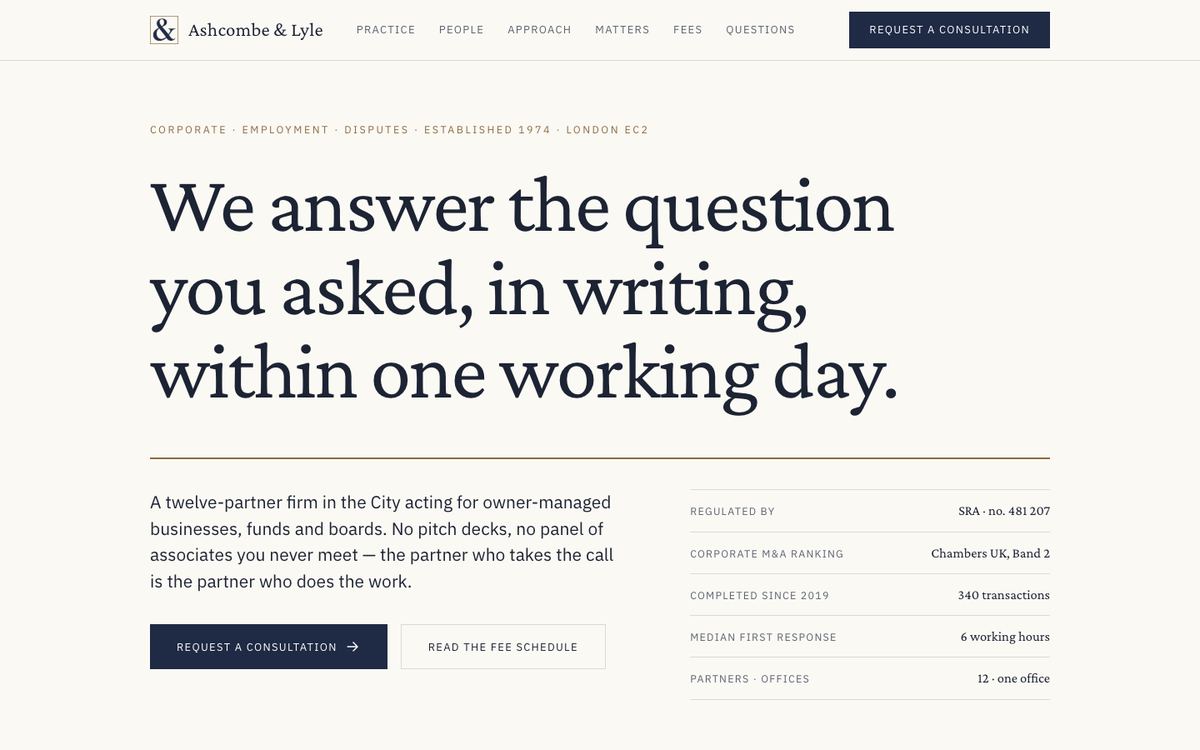
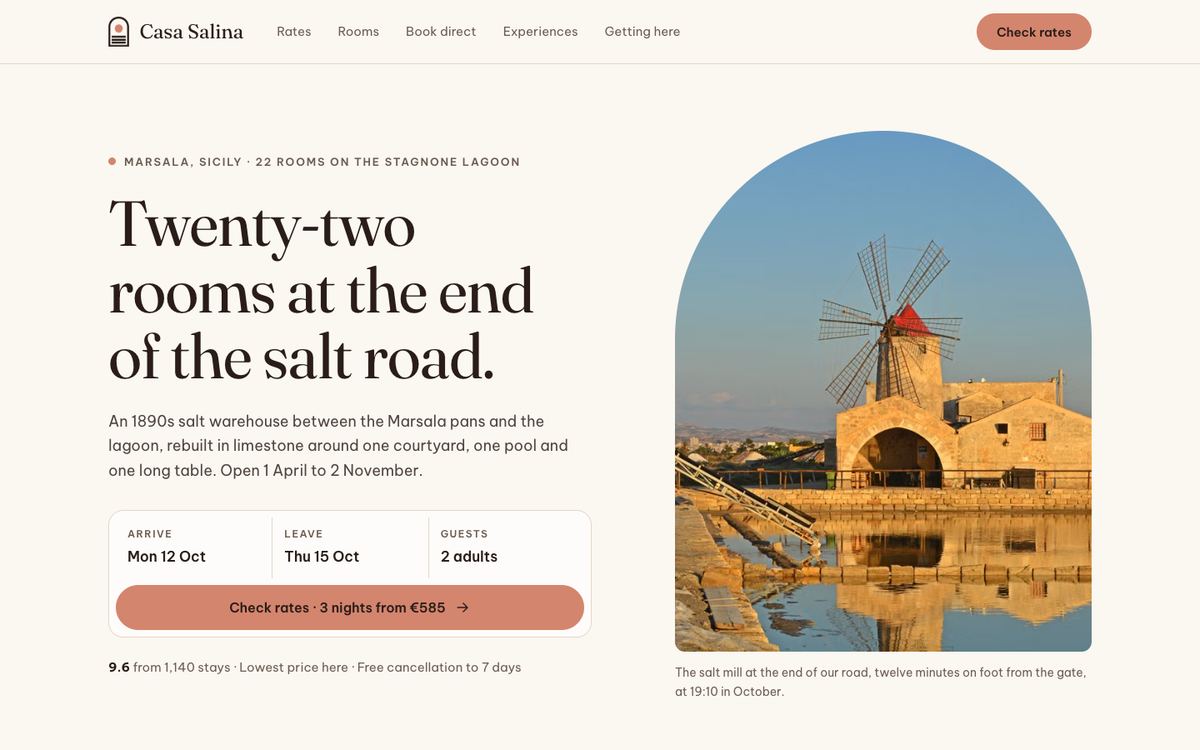
The two property templates serve opposite sides of the market. Estate Agency is for agents winning instructions from sellers and landlords. Its argument is evidence: a portfolio of current listings with guide prices, a table of sold prices against asking taken from public records, price per square foot by area, and a single fee stated on the page. The design is editorial and understated, on a warm off-white ground, and the conversion is a valuation request.
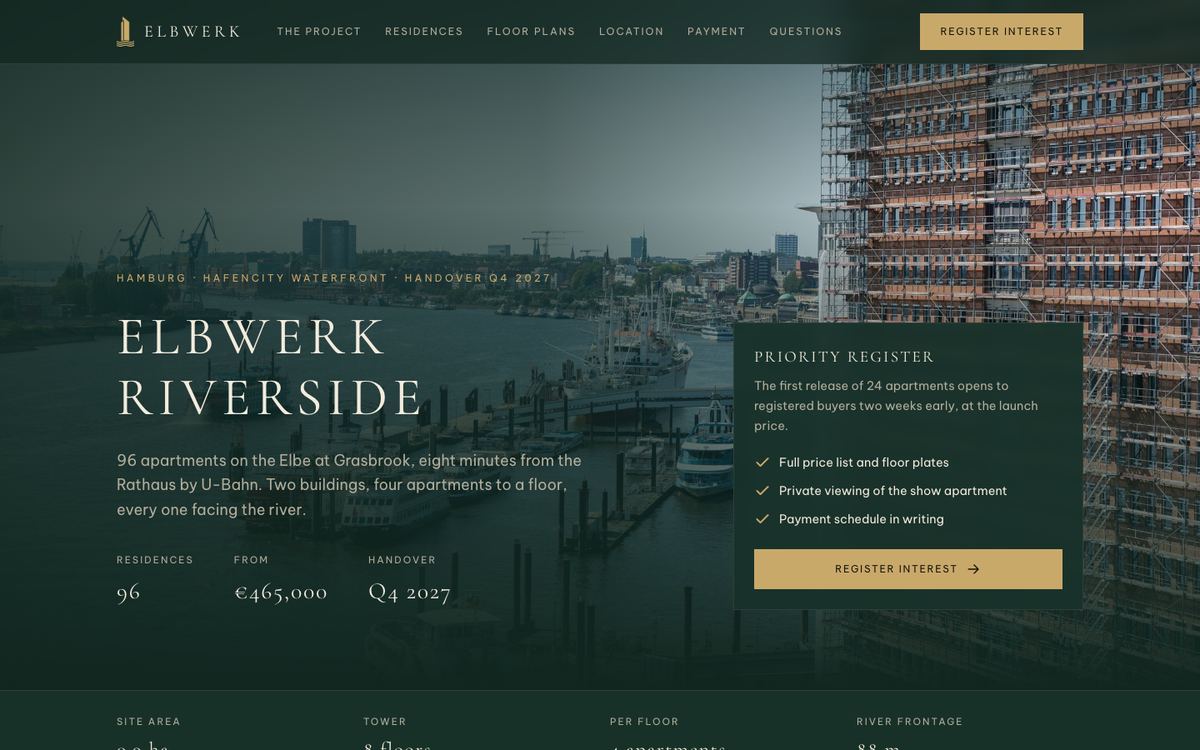
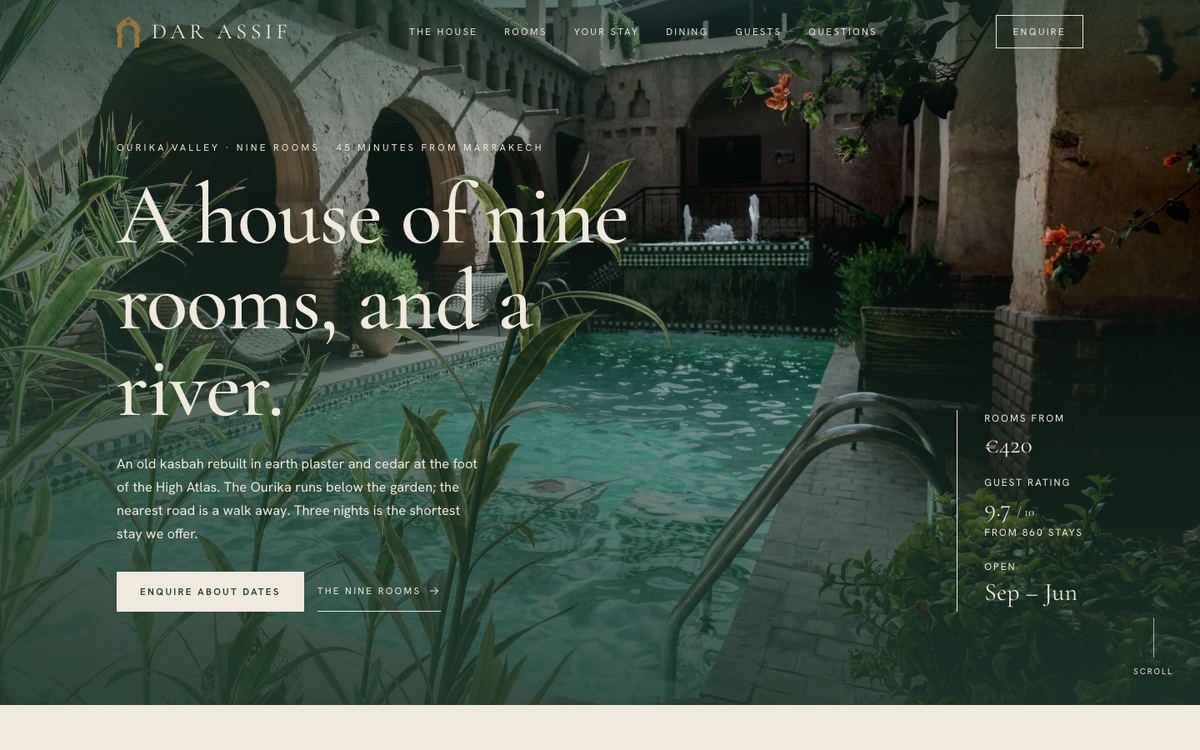
Residence Launch is for developers selling homes that are not built yet. Its argument is certainty: the number of homes, the handover date, floor plans with every dimension, a price list by layout, travel times from the site and a payment schedule tied to construction stages. The design is dark and luxurious, with a serif display, and the conversion is registration for the first release. A developer who also sells completed homes through agents might use Residence Launch for the scheme and give agents an Estate Agency page for the resale market around it.
Property descriptions are full of words that buyers have learned to ignore, such as “stunning”, “sought-after” and “deceptively spacious”. Replace them with facts: square footage, the aspect of the main rooms, ceiling heights, the distance to a station in minutes and the energy rating. For agents, the strongest line on the page is usually about pricing honesty, such as valuing conservatively so homes sell without reductions, backed by the sold-prices table.
Developers should write the scheme description around decisions a buyer can check, such as the number of homes per floor, dual-aspect layouts or daylight in stair cores. Every claim about completion dates, specifications and protection of deposits should be reviewed by your legal team, since in many countries these statements form part of what buyers rely on when reserving.
For agents, listing photographs should come from the same photographer you use for marketing, taken in daylight with straight verticals. Choose exteriors that show the street and interiors that show the best room of each home. For developers, renders are unavoidable before construction, so label them as illustrative, keep them realistic and pair them with photographs of the site, the neighbourhood and the view. Floor plans should be the drawings that will be built, at a size that can be read on a phone.
A valuation form needs the property address or postcode, the type of home, the timescale and contact details. Asking whether the owner is also buying helps an agent prioritise. A registration form for a new scheme needs the preferred layout, budget range, whether the buyer needs a mortgage and whether they live in the country, since rules for foreign buyers often differ. Say what happens after submitting: who calls, when the price list arrives and when viewings or the show apartment open.
Agents usually bring traffic from local search, leaflets with a short link, and the property portals where their listings appear. Developers rely on paid social, property search sites, and international agents who share the registration link. Because each lead arrives with its source, a developer can see which campaign produced registrations in each country, and an agent can tell whether valuation requests came from a leaflet drop or a search ad. Keep the listings or price list current, since outdated availability is the fastest way to lose a serious buyer.
Out-of-date property information causes real problems: buyers ask about homes already under offer, sellers compare your published figures with public records, and renders that no longer match the building create disputes. Set a routine. Agents should update listings as soon as a home goes under offer or is withdrawn, refresh the sold-prices table when new records are published, and date the area statistics. Developers should update availability after every release, mark sold units, and replace renders with construction photographs as the building rises.
Keep a dated record of every price list and payment schedule you publish. If terms change between releases, buyers who registered earlier will ask what applied to them, and a clear history protects both sides.
Property marketing often works better with focused pages. A developer can publish one page per scheme, each with its own registration form and campaign links. An agent covering several neighbourhoods can create a page per area with local sold prices and listings, which is also more useful to a seller in that area than a general company page.
Pick a template and it opens in the editor with its layout and sample copy. Update listings, prices and plans, or tick “Write the text for my business” for about 20 credits and the AI rewrites the copy while keeping the design. Valuation requests and registrations arrive in your inbox.
Starting from any template costs no credits. Or describe what you sell and the AI draws a page for your business, usually in about two minutes.