For an estate agency making the investment case
Someone searching for an Estate Agency page often needs more than a list of available homes. They may need to show why a property business is trusted with capital, how it chooses opportunities and what information a prospective investor can expect before a meeting. This template is built for that side of property work. It starts with a broad proposition, then moves through investment performance, an approach to value creation, properties, reporting and a request for access.
That makes it a close fit for an agency with an investment arm, a developer seeking backing, or a property adviser speaking to professional clients. A generic agency page can undersell this work by treating it as ordinary sales copy. Here, the page makes room for a track record, a considered portfolio and the process behind decisions. The dark, editorial direction supports a more formal conversation.
It is not a listing search page or a page designed around individual buyer viewings. If the immediate job is to launch homes for sale and gather enquiries on a specific development, Residence Launch or Off Plan Residences is the more direct starting point.
A page that moves from proposition to access
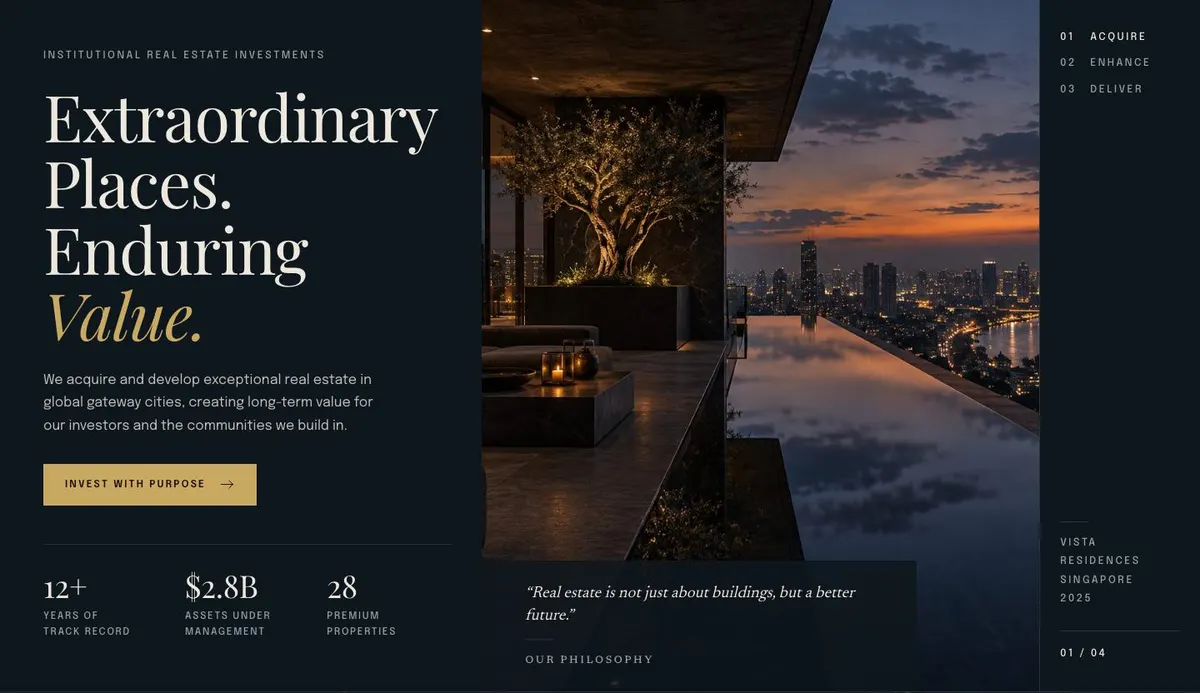
The Hero opens with a short statement of purpose, supporting copy and a photograph. Its button, “Invest with purpose”, establishes the action early. For an estate agency adapting the page, this is where the business should state the kind of property opportunity it represents: development capital, managed property investment, land, commercial assets or another clearly defined offer. The first claim needs to be specific enough to attract the right enquiry.
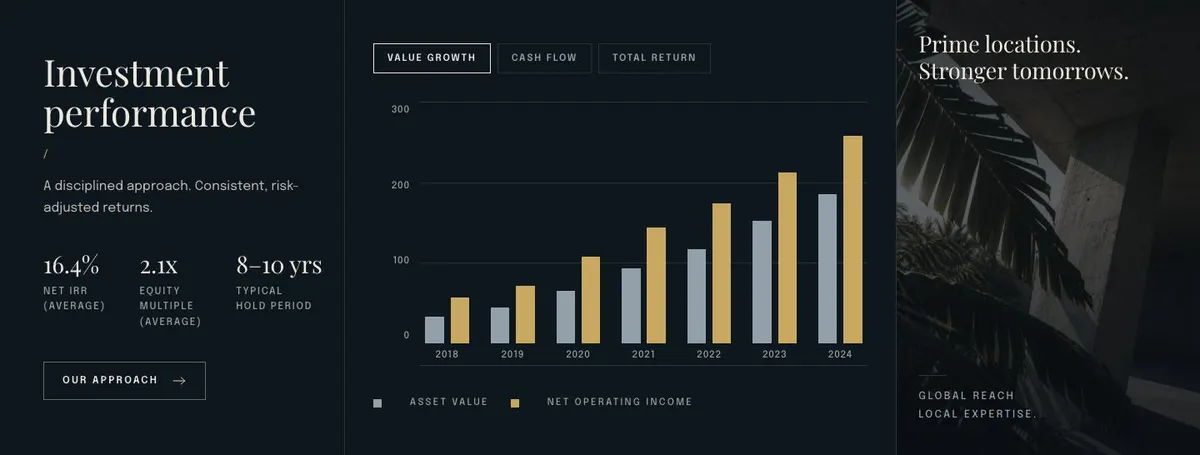
Performance follows. It combines a photograph with tabs or a slider, giving the page a place to explain results or a track record over time. The button, “Our approach”, takes the reader towards the reasoning behind those figures. This band should only contain measures the business can stand behind. If there is no established performance history, it is better to explain the investment method and the stage of the opportunity than to imply a record that does not exist.
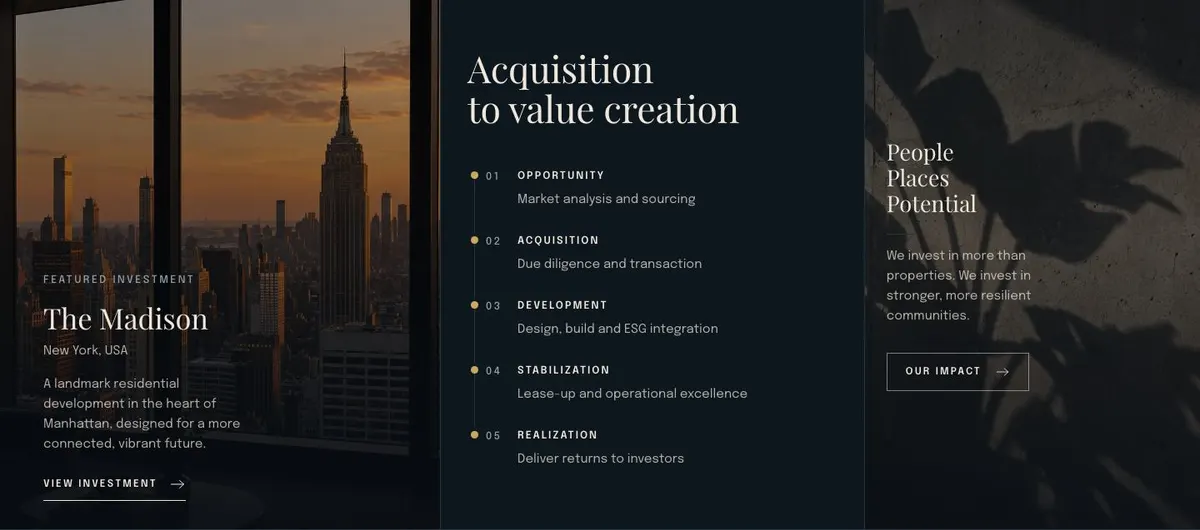
The Approach band is headed “Acquisition to value creation”. It uses photographs alongside a five-part progression, so it is suited to explaining how an opportunity moves from selection through to the work that creates value. An agency could frame this around sourcing, assessment, acquisition, improvement and disposal or long-term management, where those stages genuinely reflect its process. “Our impact” is the onward action, so the copy should explain what the business does, not merely make broad promises.
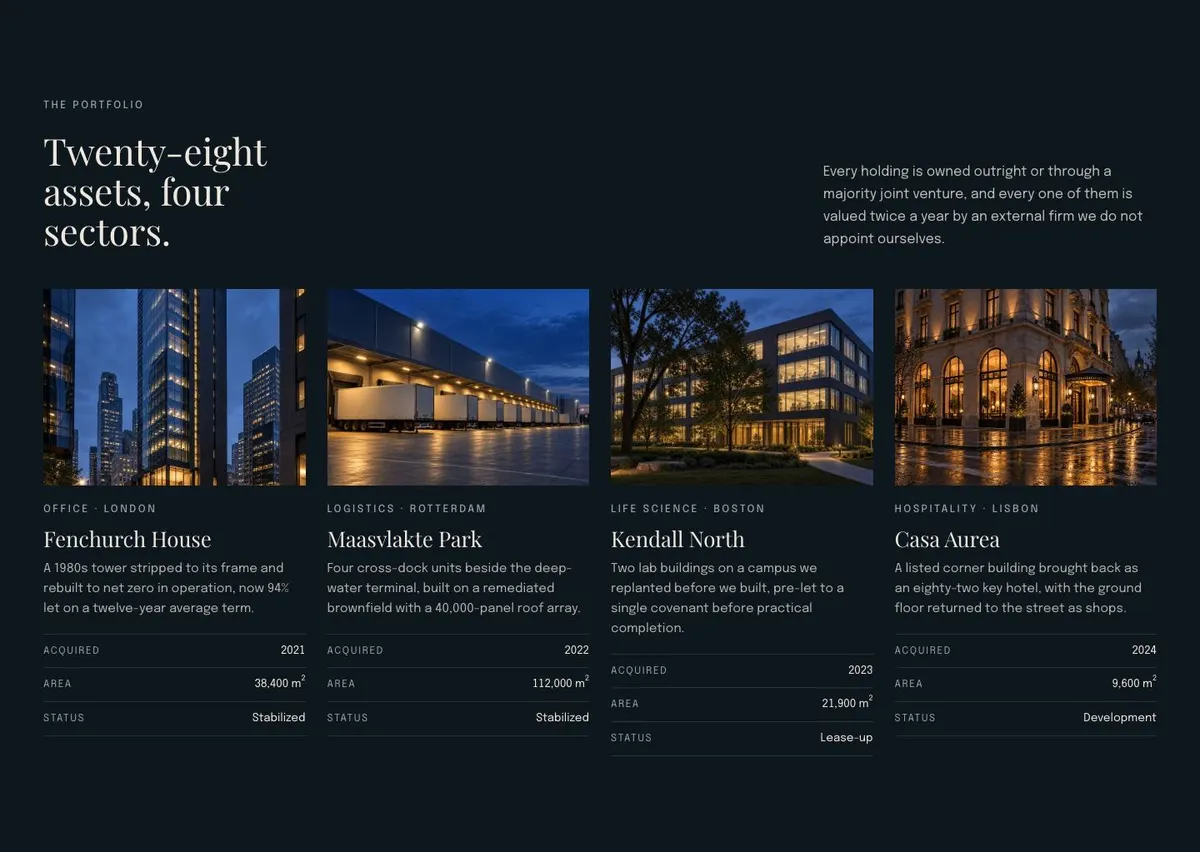
Properties is where the page gives substance to the portfolio. The existing structure brings together four property images and detail around holdings, with a heading that sets out the scale and sectors. An agency should replace this with its own portfolio position: the types of property it handles, the locations that matter and the way assets are held or managed. This is a useful place for selected examples, but every statement about ownership, valuation or partnership arrangements must match the business’s real position.
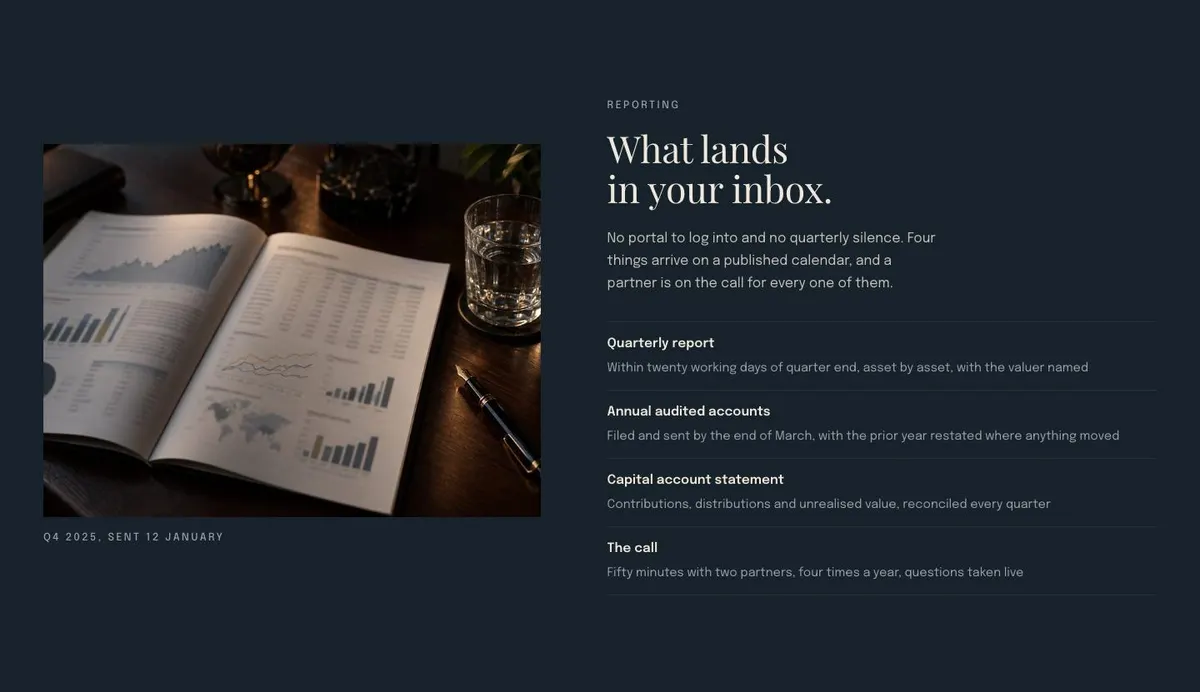
Reporting explains what a client or investor receives after the initial conversation. Its heading, “What lands in your inbox”, and supporting line make regular communication part of the offer. The band is suitable for setting out the updates the business sends and when they are sent. It should be written plainly, especially where reporting dates, calls or documents affect a decision to proceed.
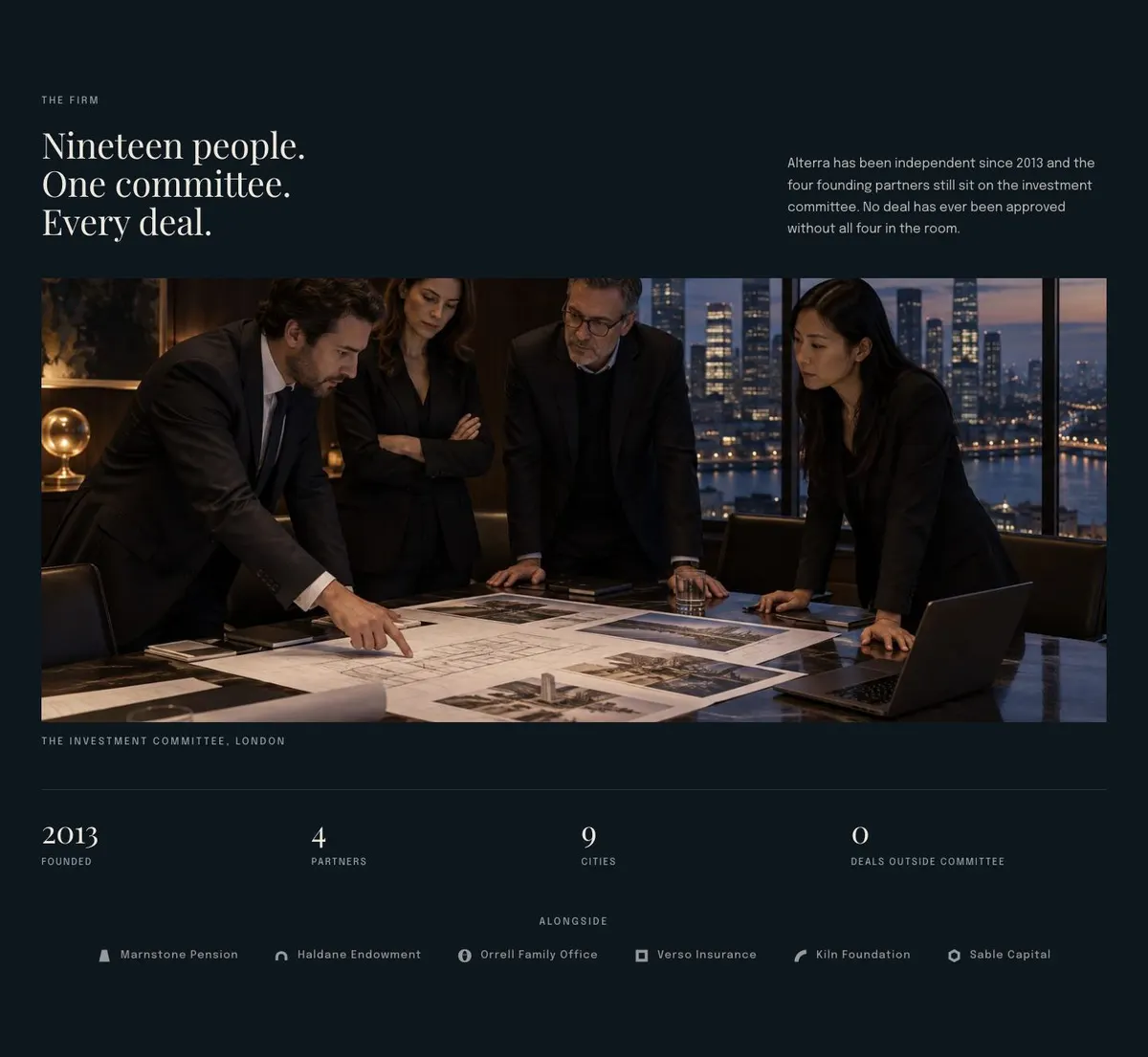
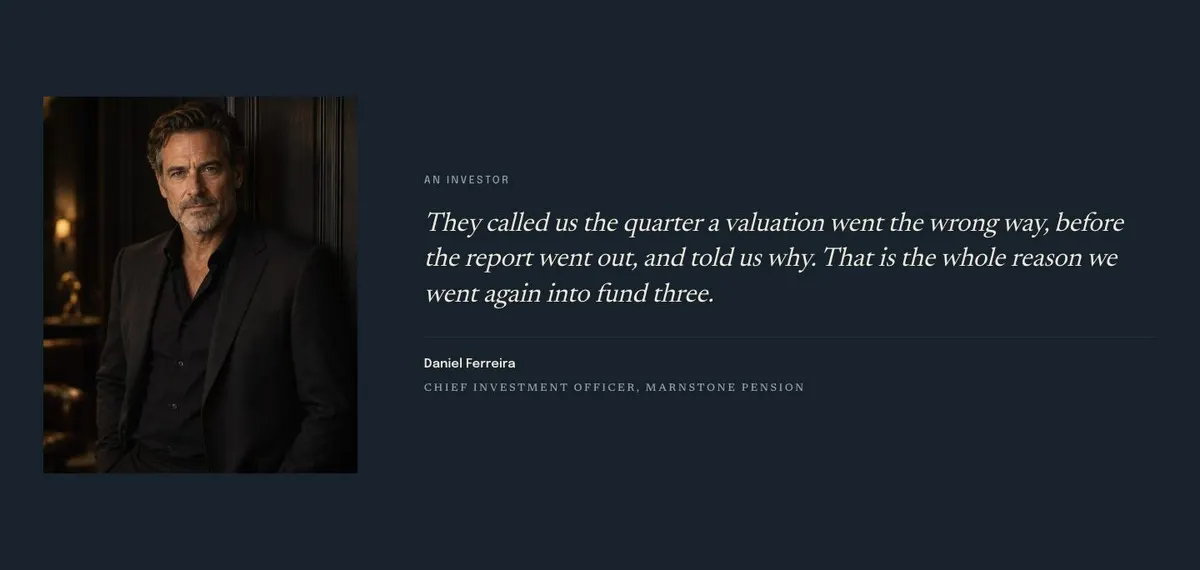
About introduces the people and the decision-making group through a set of team photographs. The existing emphasis is on accountability for every deal. For an estate agency, it can introduce the principals, investment committee or senior property team, provided those people genuinely have the role described. The Reviews band then gives space to a client quotation and photograph, offering one concise outside perspective before the practical questions begin.
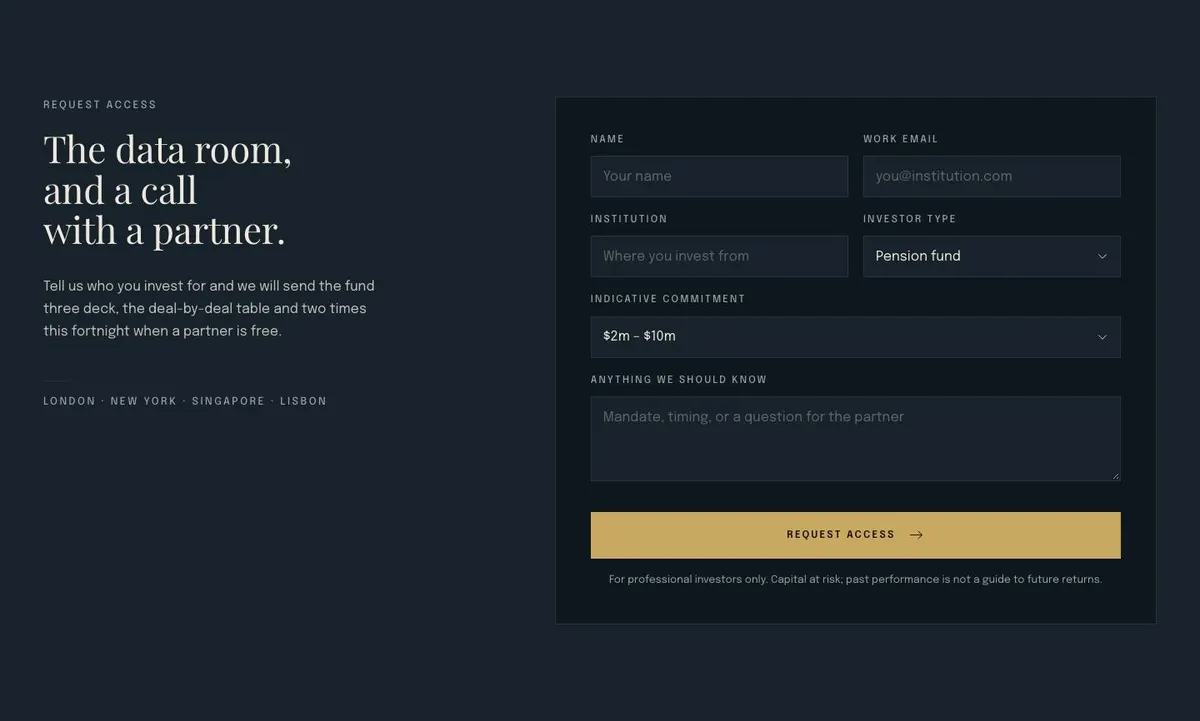
Questions is an accordion headed “Before you ask for access”. Use it for the questions that otherwise slow down an initial enquiry, such as the type of opportunity considered, the expected route into a conversation, fees where appropriate, or how information is shared. The answers need to be clear and checked. Access ends the main journey with an enquiry form and a promise of a follow-up conversation and materials. The Closing band repeats the “Request access” action beside two photographs, giving the reader one final route to make contact.
Adapting the design and imagery
The template has four colour schemes: Champagne, Copper, Sage and Ice blue. Its base direction remains dark, with light text and a restrained accent colour. Choose the scheme that works with existing property photography and the business’s established identity, rather than choosing one simply because it feels more expensive.
Playfair Display is the display face and Epilogue is the body face. The available font pairings also include Newsreader with Epilogue and Prata with Epilogue. The large display type is best reserved for the main statements, while the body copy should carry the factual explanation. This is an editorial page, so short claims need evidence nearby.
The template calls for 20 photographs across the page. They appear in the Hero, Performance, Approach, Properties, Reporting, About, Reviews and Closing band. Prepare images with a clear purpose: a place or asset for the opening, portfolio material for the property section, and credible team photographs for About. Do not use the team area to fill gaps with generic office imagery.
Writing it for the business
Starting from this template costs no credits. Rewriting its copy with AI costs about 20 credits. A good brief names the business, the audience and the exact outcome required from the page. It should also say what kind of property work is being presented, which claims are verified, what examples can be named, and what should happen after the form is submitted.
The brief should distinguish an agency’s sales work from its investor or development work. It should name the tone needed for the intended audience and identify any wording that must not be used. This gives the rewrite enough direction to turn a fund-style structure into an honest property business page.
What to prepare before publishing
Start with the core proposition for the Hero and the action behind “Invest with purpose”. Write a concise explanation of the business’s approach, with the real stages it follows. Gather the performance information that can be published, or decide how that section will explain the opportunity without unsupported results.
Then prepare the portfolio material: selected properties, sectors, locations and any ownership or partnership wording that has been approved. Write the reporting promise, the team descriptions and the questions that prospective clients ask before sharing details. Finally, decide what the enquiry form leads to. The template offers access and a call; the business needs to be ready to provide the information and follow-up it promises.
Useful variations for nearby property trades
A developer raising capital can use the structure to explain a pipeline, the route from acquisition to delivery and the assets behind the proposal. The performance section should reflect only the developer’s actual record, while the access form can invite a conversation about the current raise.
A property investment manager can retain the emphasis on reporting, portfolio detail and decision-making. Its page should make clear which strategy, geography or sector it covers, then use Questions to answer the points investors need before requesting materials.
A commercial estate agency working with landlords or corporate occupiers can shift the approach section towards advisory work and transactions. It should avoid presenting itself as a fund unless investment access is genuinely the service being offered.
When another template fits better
Residence Launch is better for a page centred on introducing homes or a single residential release. Garden Community Residences suits a residential development framed around its setting and community. Off Plan Residences is the clearer option where buyers need to enquire about homes before completion. Waterfront Development Enquiries is for a development enquiry journey with a waterfront focus. Browse the wider real estate template collection for other property starting points.
Before publishing
- Check every performance and portfolio claim.
- Make the first action match the real offer.
- Use photographs of actual properties and people.
- Test the enquiry follow-up before sharing the page.