What a service business landing page has to do
People hiring a service are buying a promise. They cannot inspect the work before it is done, so they look for signs: a clear scope, a price or range, proof from past jobs, the names of the people involved and what happens if things go wrong. A service landing page wins enquiries by making those signs easy to find.
The sections that bring in enquiries
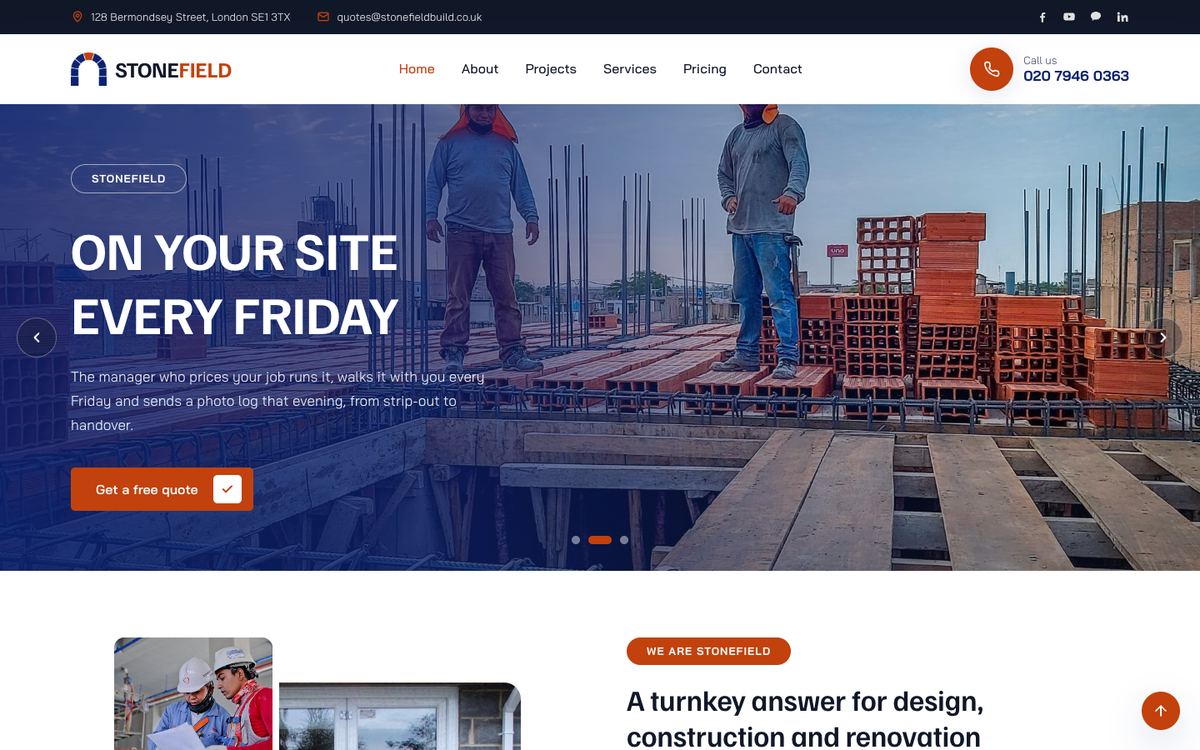
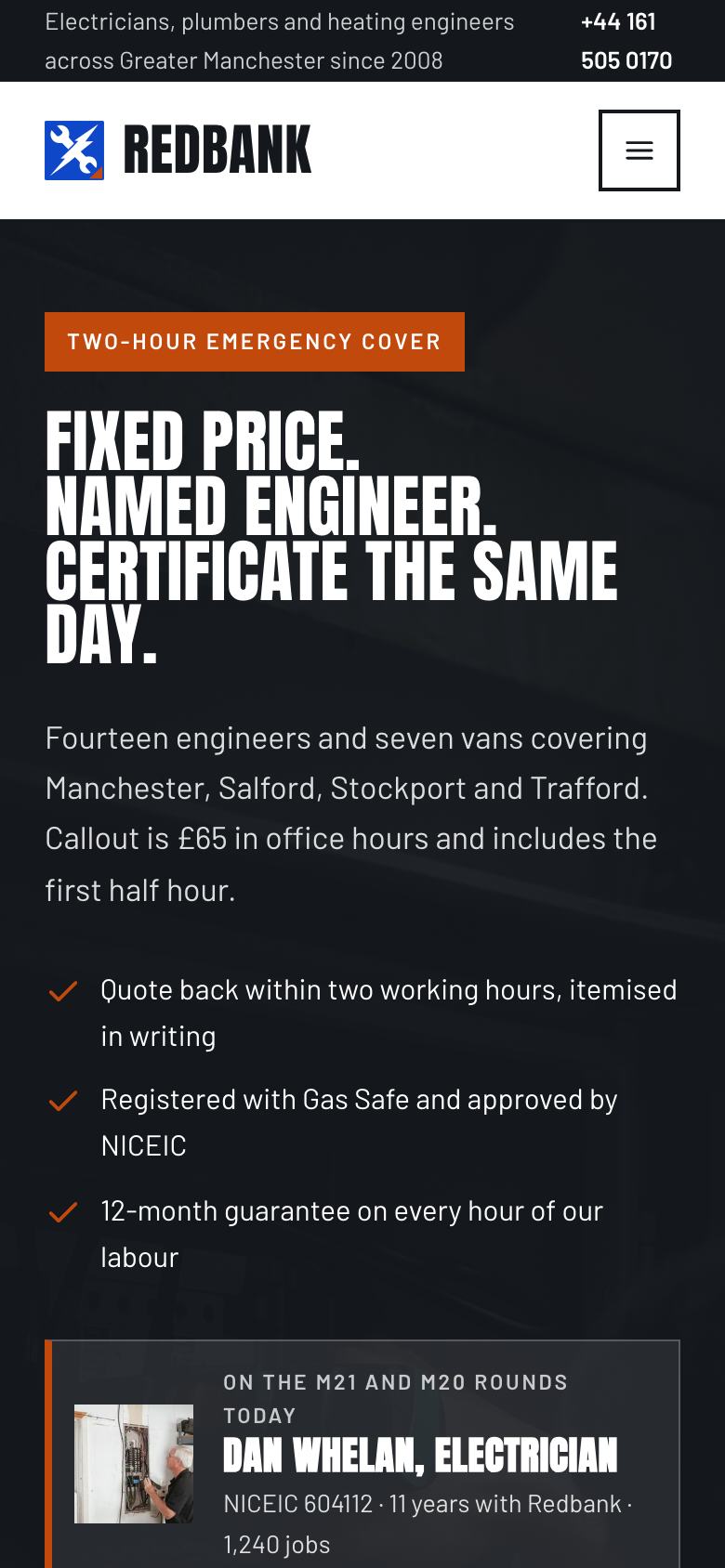
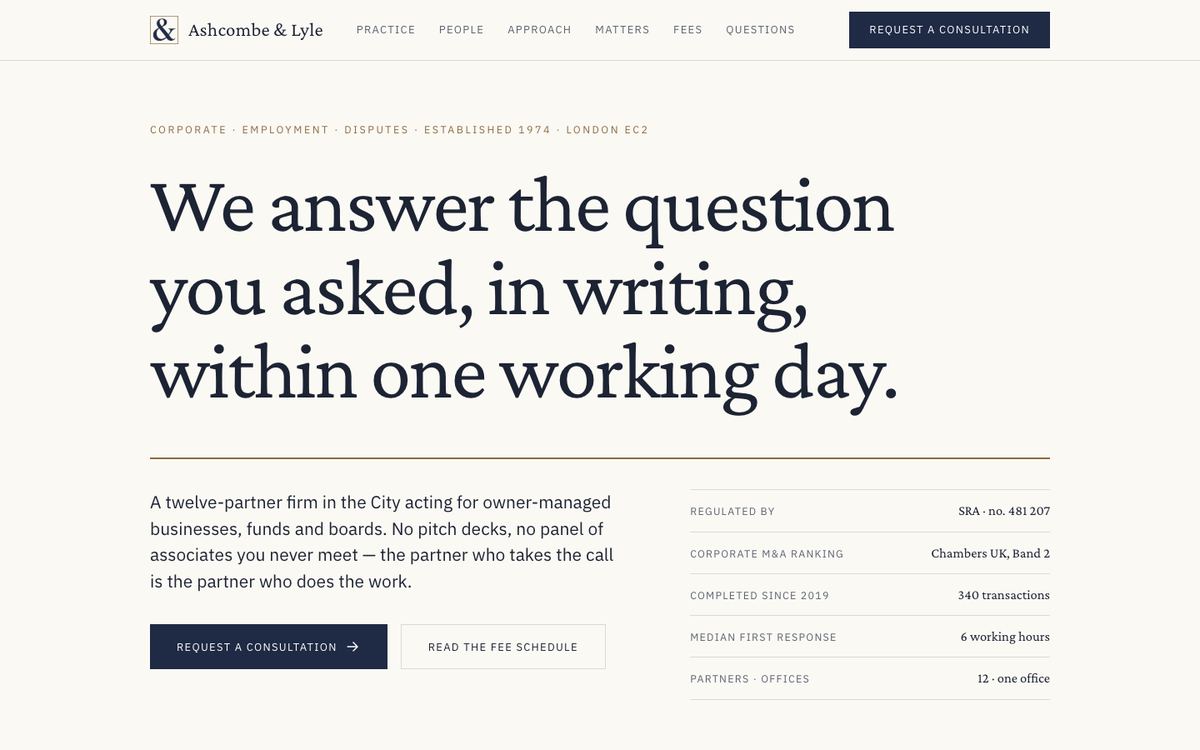
A promise in the hero. “Fixed price. One site manager.” or “We answer the question you asked, in writing, within one working day.” Both are specific commitments rather than slogans.
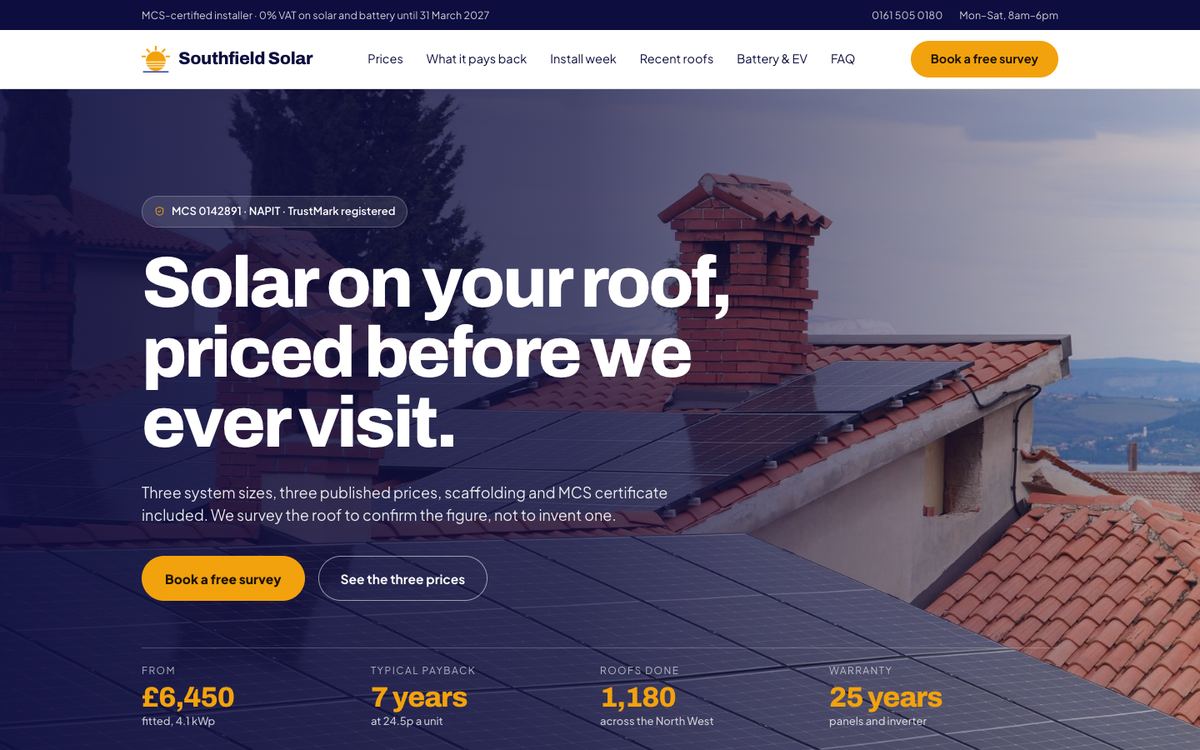
Prices or rates. Solar publishes system prices and Construction rates per square metre, because cost is the first question.
Proof from real work. Recent jobs with dates, figures and photographs, not generic testimonials.
The process. Steps from first contact to completion, with who does what and how long it takes.
Credentials. Registrations, insurance and accreditations, stated precisely.
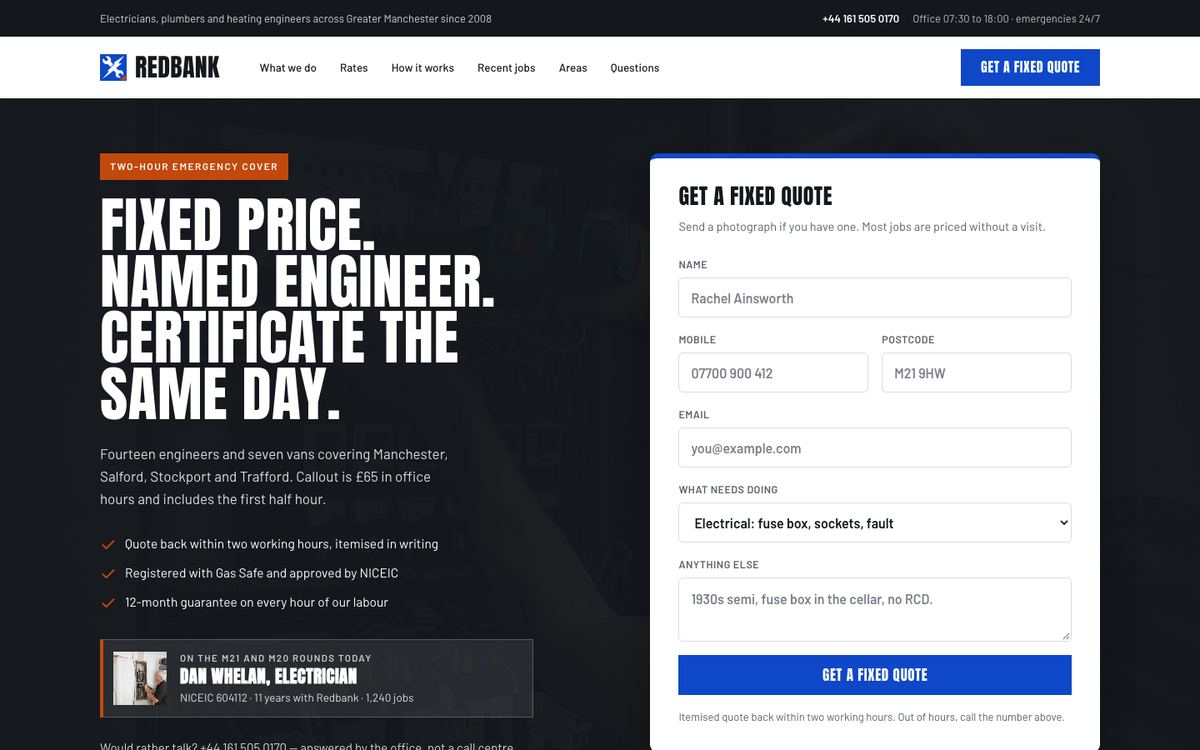
A focused form. Ask for what you need to quote: postcode, type of work, photos, deadline.
Choosing a template
Building and installation. Construction for extensions, refurbishments and design-build; Solar for solar, batteries and EV charging.
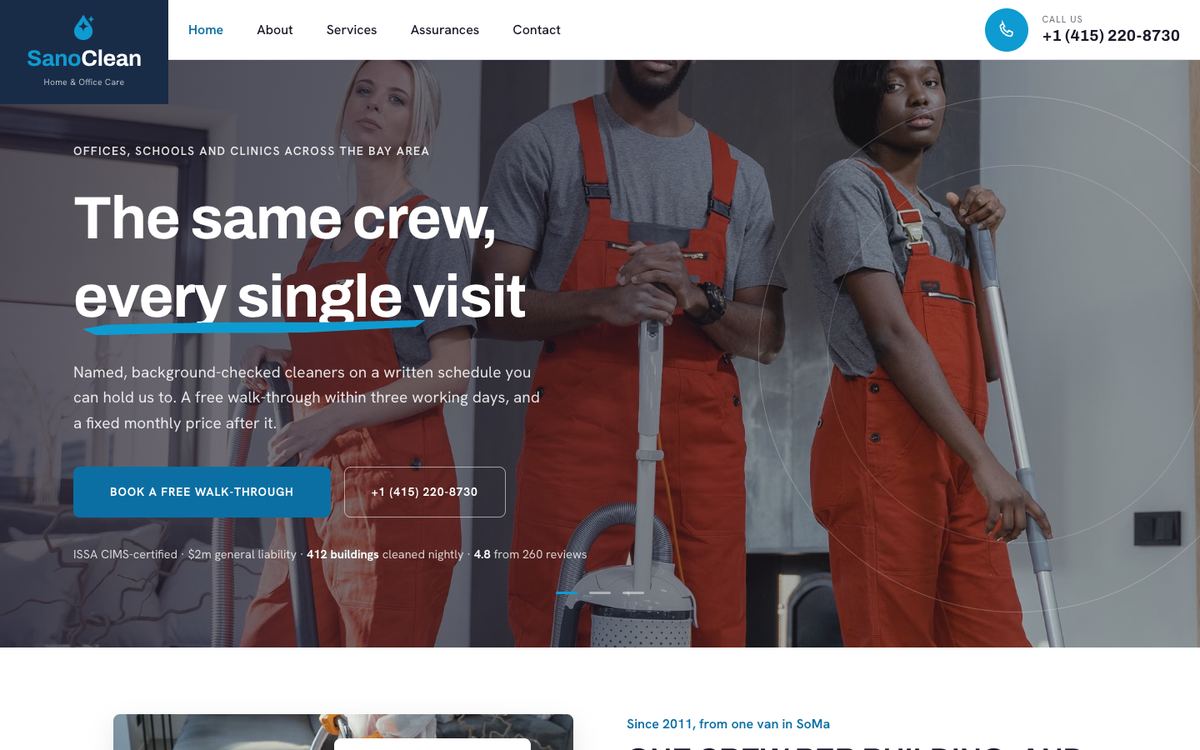
Trades and local services. Trade Shopfront for callouts with a fixed price; Cleaning Services for recurring cleaning contracts.
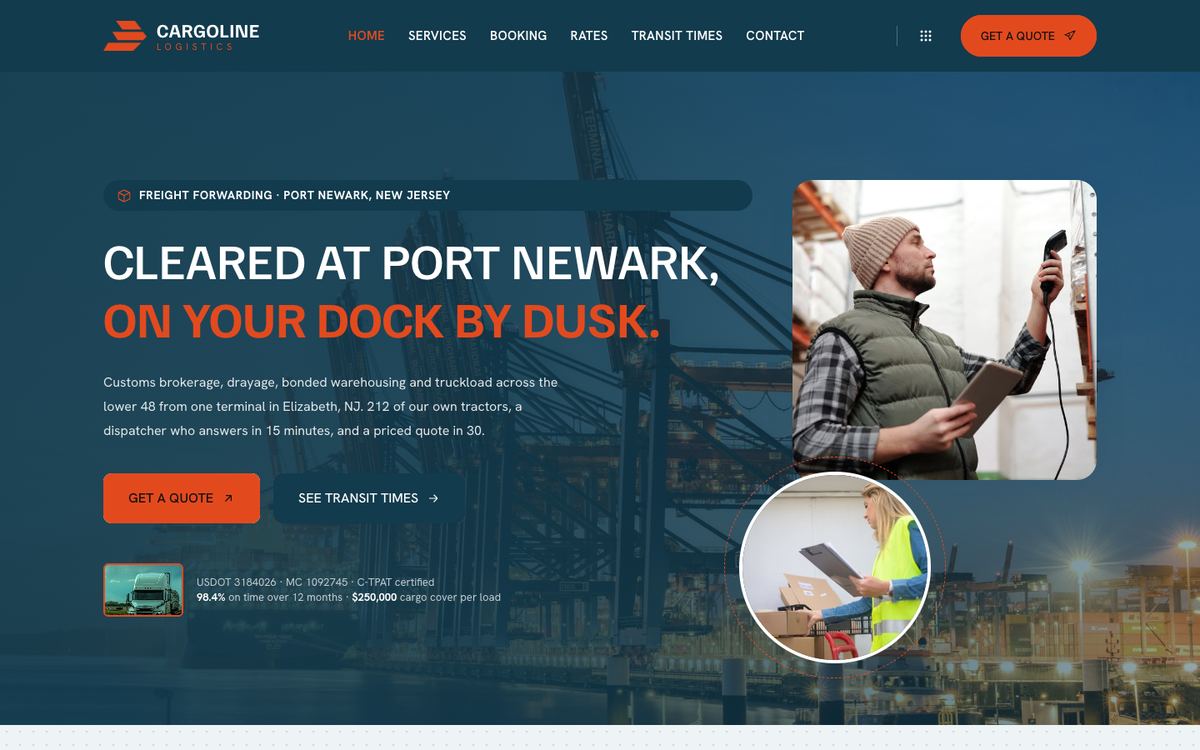
Freight and distribution. Logistics for forwarders, couriers and warehousing.
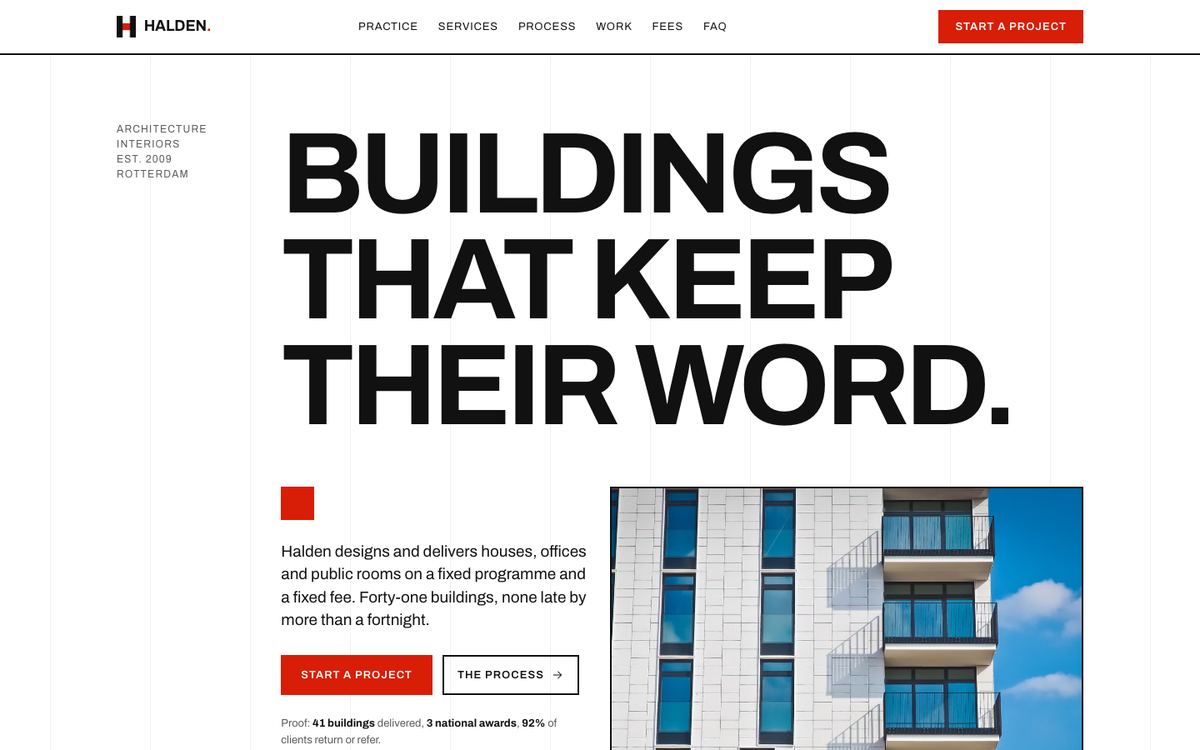
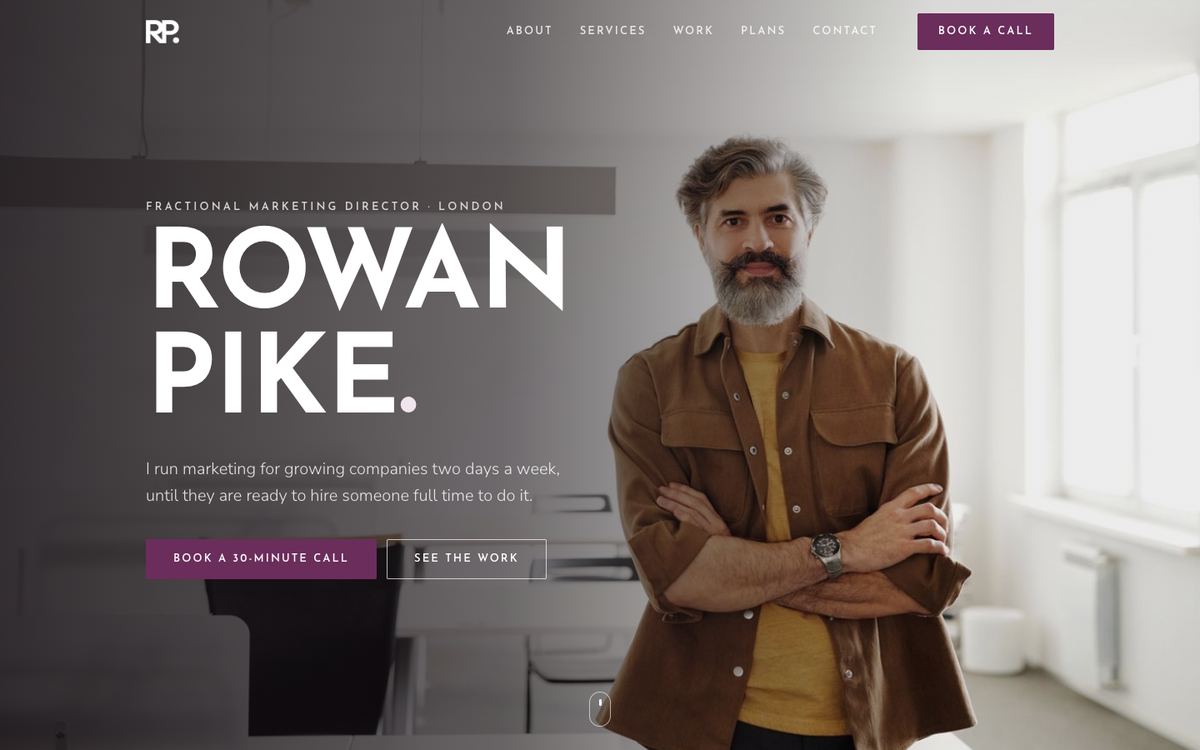
Advisory and professional firms. Counsel Practice for law, accountancy and advisory partnerships; Swiss Grid for consultancies and architects who sell rigour; Solo Consultant for one senior independent.
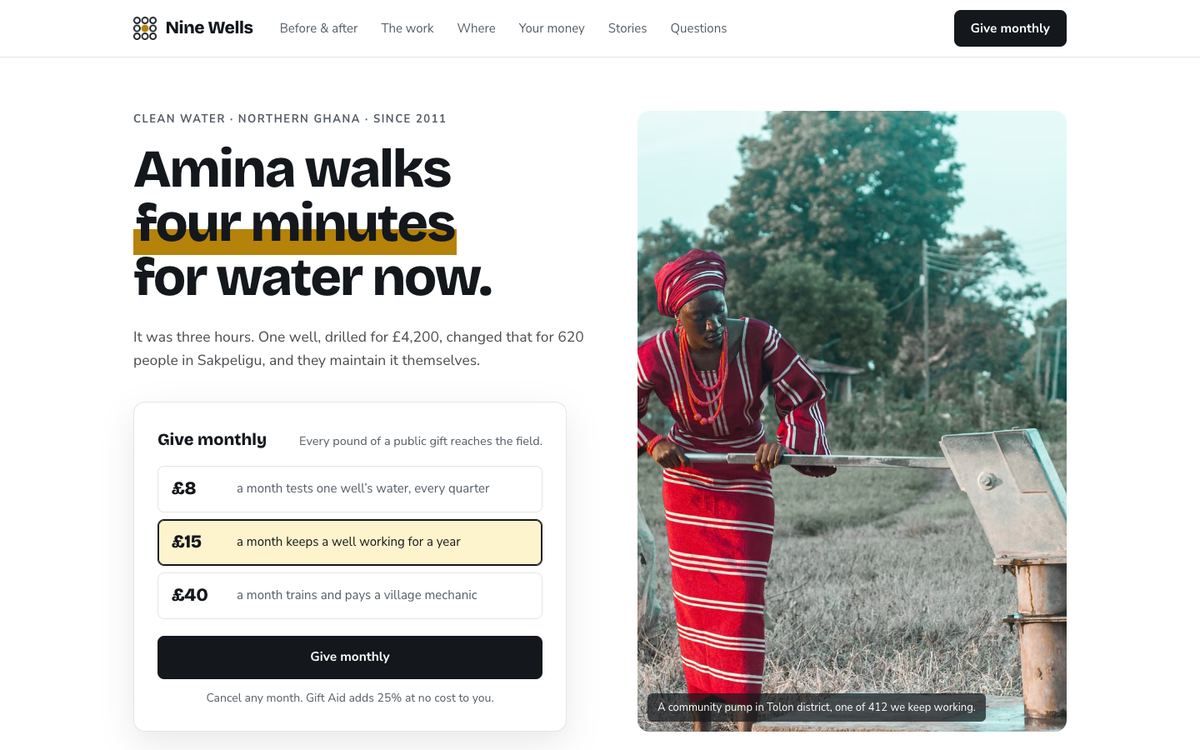
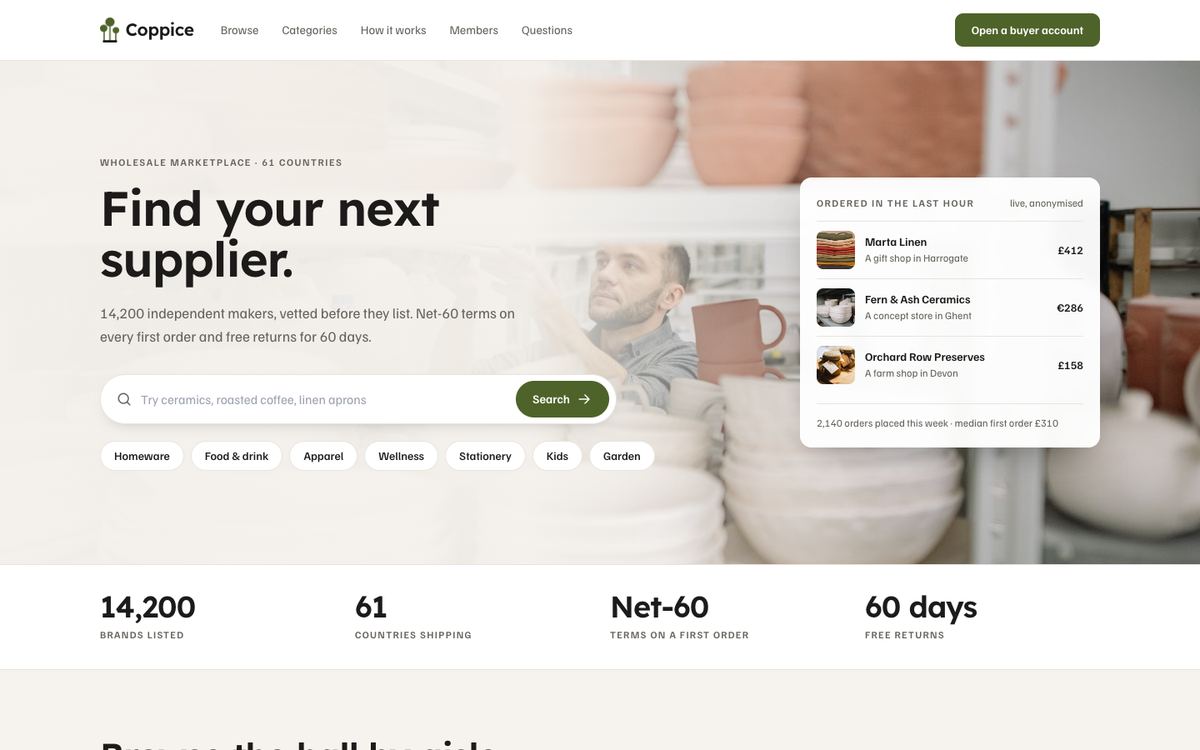
Charities and marketplaces. Cause Appeal for monthly donors; Wholesale Marketplace for two-sided B2B platforms.
Common mistakes
Vague promises. “Quality service” and “trusted experts” say nothing. Replace them with commitments you can measure.
No price anywhere. Visitors who cannot find any indication of cost often leave to find a competitor who shows one.
Stock photography of people who do not work there. For services, real team and job photos matter more than on almost any other page.
Long forms. Every extra field loses enquiries. Collect details on the first call.
Writing a service promise people can hold you to
The strongest service pages in this collection each lead with a commitment that can be tested: a fixed price with one site manager, a written answer within one working day, the same cleaning crew on every visit, a certificate issued the same day. Before editing a template, write down the promise your business actually keeps, and check it against the last few months of work. If you meet it nine times out of ten, say so honestly rather than claiming always.
Describe the work in the terms clients use when they call. A homeowner asks about a loft conversion or a consumer unit change, not “residential electrical solutions”. A finance director asks about audit fees and deadlines, not “bespoke advisory”. Use their words in headings and service lists, and keep industry language for places where precision matters, such as certifications or technical specifications.
Showing prices without losing flexibility
Many service businesses avoid publishing prices because every job is different. The templates in this collection show a middle path. Trade Shopfront publishes callout and hourly rates plus fixed prices for the most common jobs. Solar prices three standard system sizes and lists what changes the price. Counsel Practice publishes fixed fees for common instructions and hourly rates by seniority. Any of these approaches gives visitors a sense of scale while leaving room for a proper quote.
Proof that services are really delivered
Because clients cannot inspect a service before buying, proof carries more weight than on any other kind of page. Collect photographs of finished jobs with the location and date, figures from your own records such as jobs completed or on-time delivery, and testimonials that mention a specific result. Registration and insurance details should be current and precise. For advisory firms, describe recent matters in general terms where confidentiality allows.
Show the people who will do the work. A photograph of the site manager, the engineer or the partner who takes the first call reassures more than a logo wall. Where teams change, show the leads and explain how continuity is kept.
What the enquiry form should ask
Service forms should collect what you need to give a useful reply: the type of work, the location or postcode, a timescale and contact details. Photographs are valuable for trades and building work, since many jobs can be priced from a picture. For advisory firms, a short description of the matter and any deadline helps route the enquiry to the right person. Tell the visitor when you will reply and in what form.
Where service enquiries come from
Local services depend on map listings, review platforms and search for the service plus a town; B2B services depend on referrals, industry directories and search for specific expertise. Use the landing page as the destination for each listing and campaign. Because enquiries arrive with their source attached, you can see which directories and ads bring jobs you actually win, and stop paying for leads that never convert.
Keeping proof and credentials current
Service pages lose credibility when their proof is old. Replace job photographs and case studies with recent work every few months, keep registration and insurance details current and remove accreditations that have lapsed. If you publish rates or fixed prices, review them when costs change and update the page before new quotes go out.
A page per service or area often performs better than a single page for everything. An electrician offering both emergency callouts and full rewires, or a law firm with employment and property practices, can create focused pages with their own prices, proof and form, and see which service each campaign brings in.
From template to live page
Pick a template and it opens in the editor with its layout and sample copy. Replace the photographs with your own jobs and team, edit prices and process in place, or tick “Write the text for my business” so the AI rewrites the copy for about 20 credits while the design stays. Enquiries land in your inbox with where they came from.