For firms that sell order and proof
Some clients want warmth; others want to see that a firm keeps its promises. Swiss Grid is for the second group. It uses a strict 12-column grid, uppercase grotesque type, numbered sections and a single signal red, and it lets figures and completed work speak.
It suits consultancies, architecture and engineering practices, law and accounting firms, research groups, industrial and B2B manufacturers and design studios that sell rigour. Choose it when the brief is credential-led and wants proof rather than warmth.
How the page builds credibility
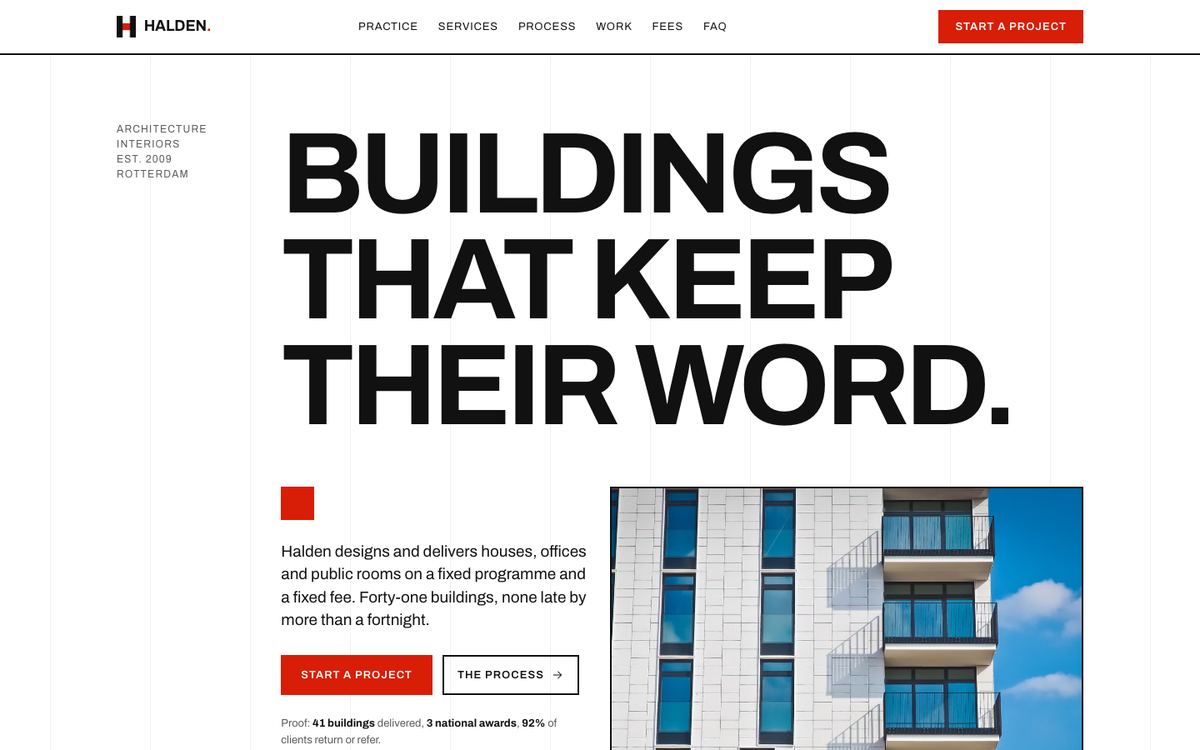
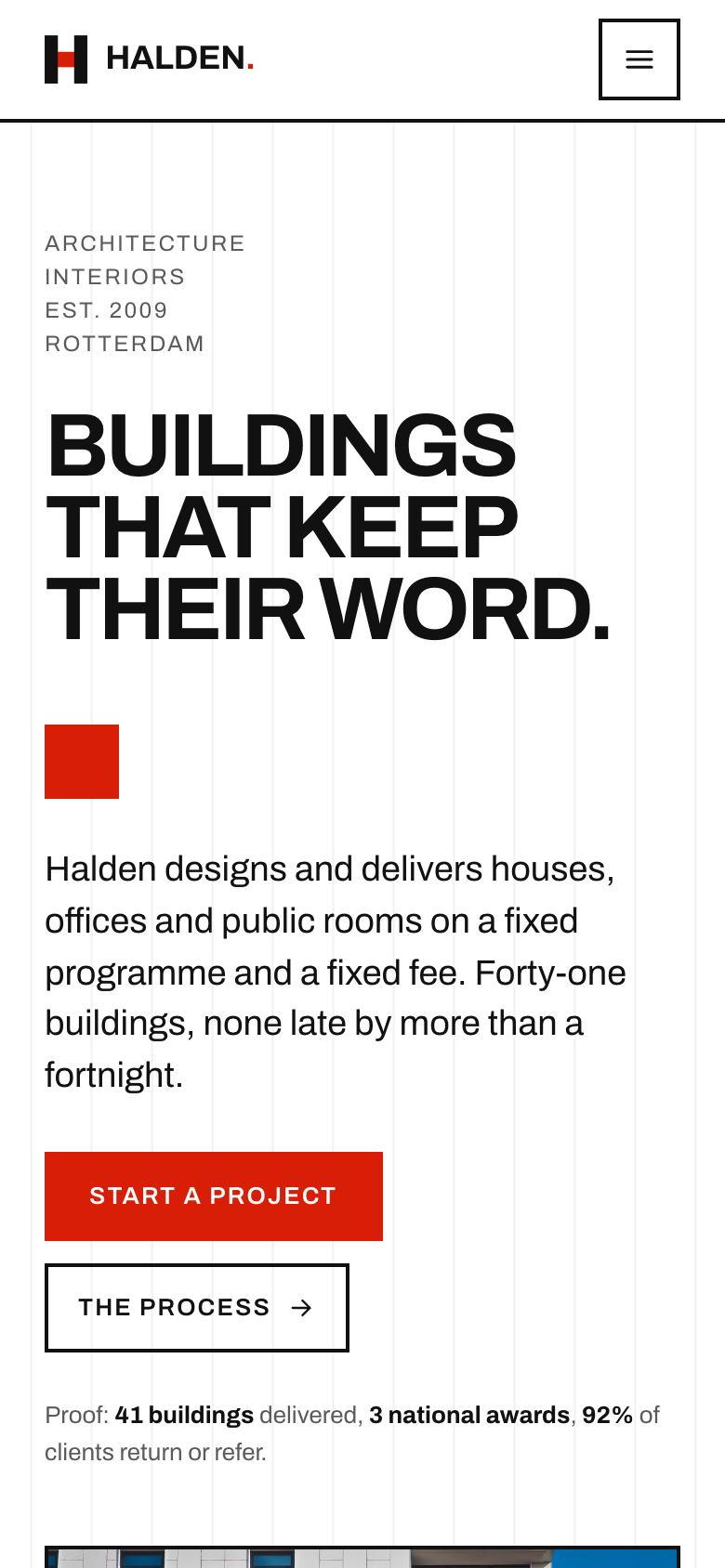
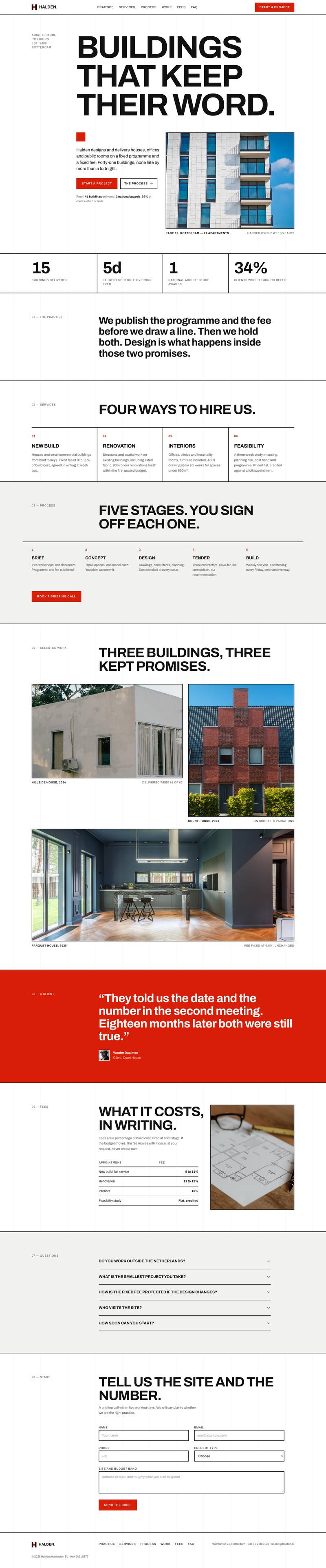
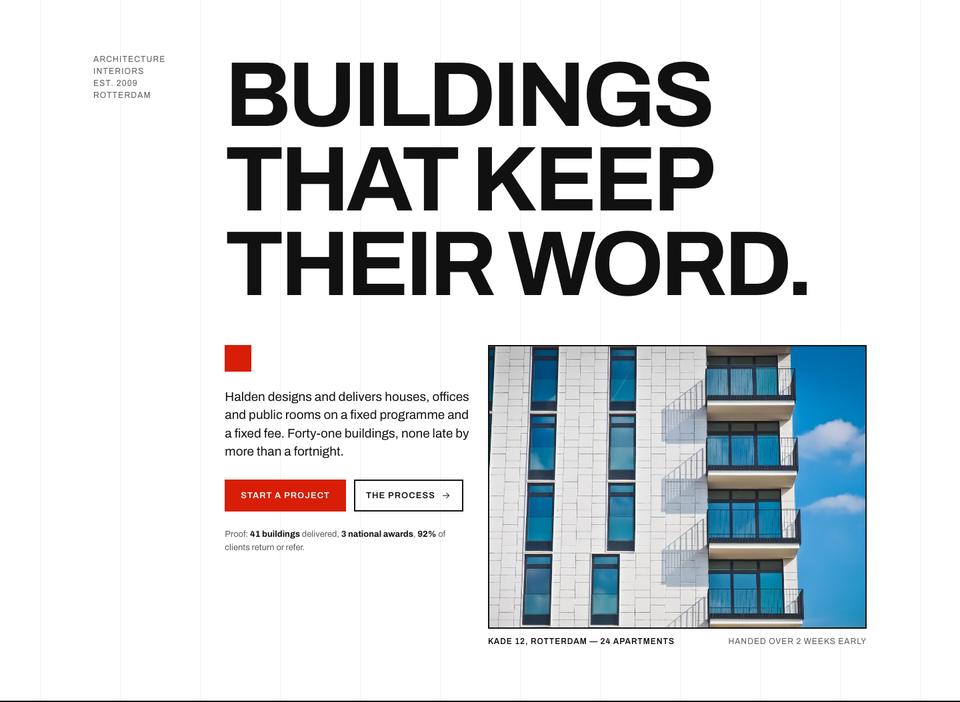
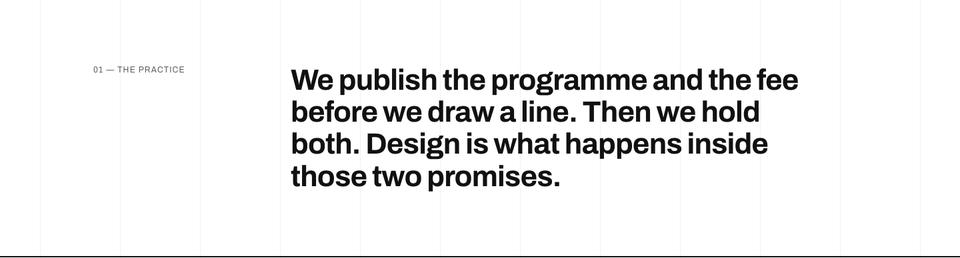
The hero sets a short statement, “Buildings that keep their word”, beside the practice’s disciplines, founding year and city. A numbers band follows with buildings delivered, largest ever overrun, awards and returning clients. The practice section states the firm’s principle in two sentences.
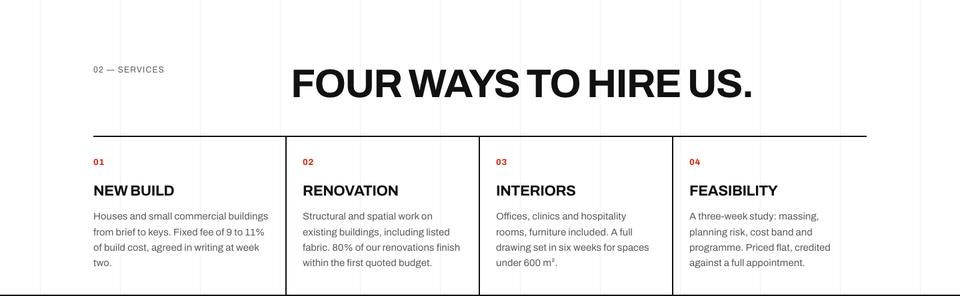
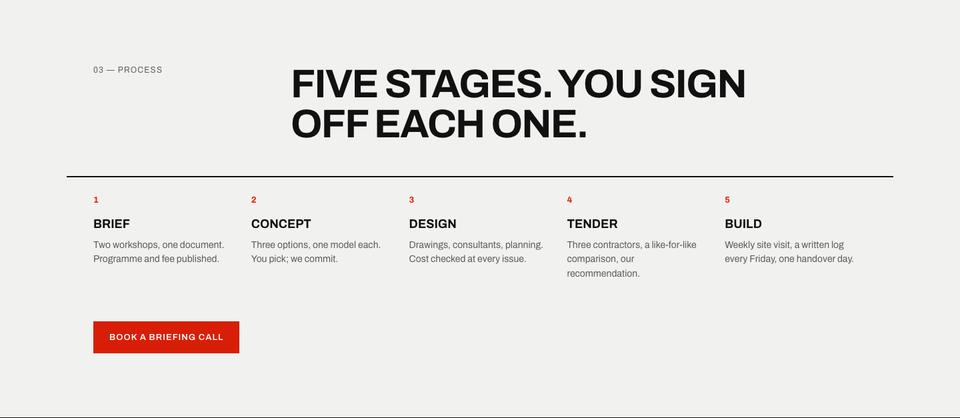
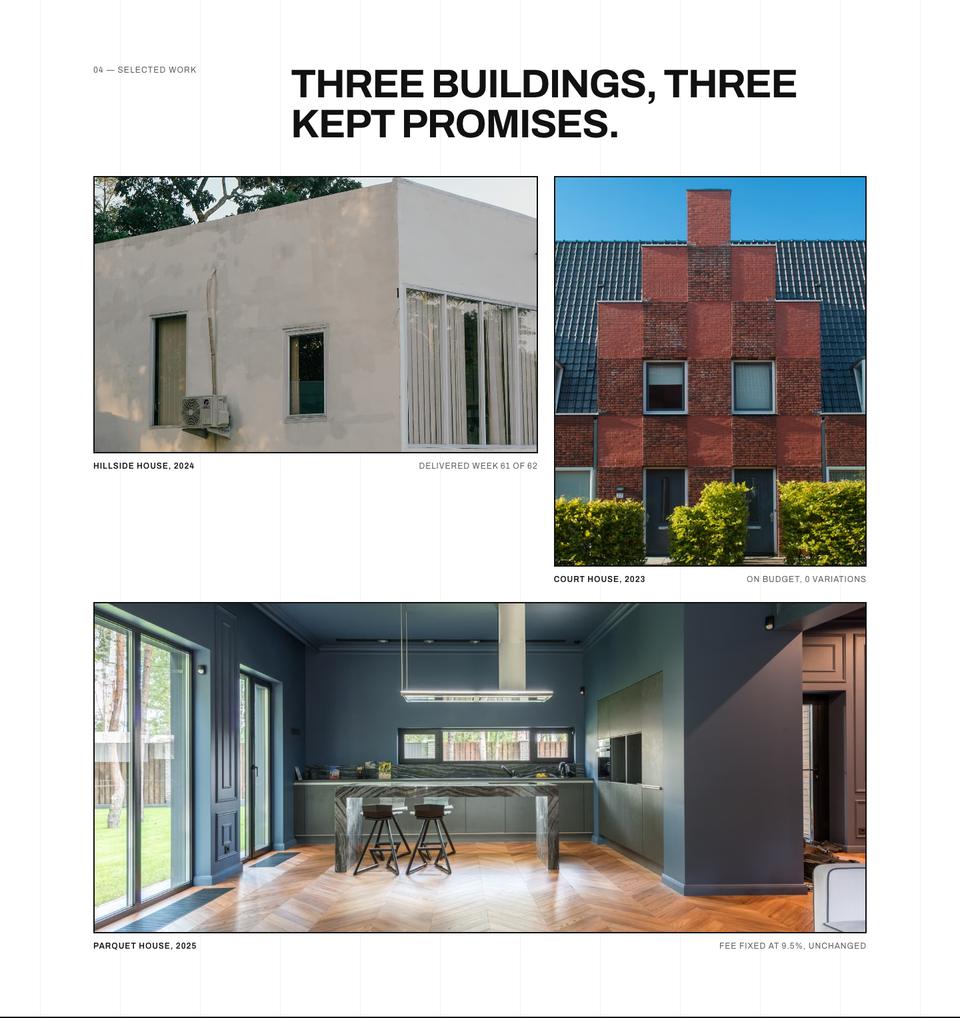
Services gives four ways to hire the firm, each with how the fee is set. Process lays out five stages the client signs off one by one, and selected work shows three projects, each labelled with the promise it kept, such as delivered a week early or with no variations.
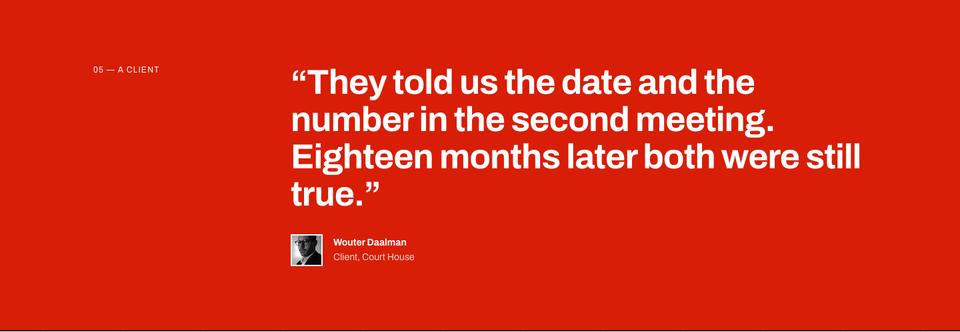
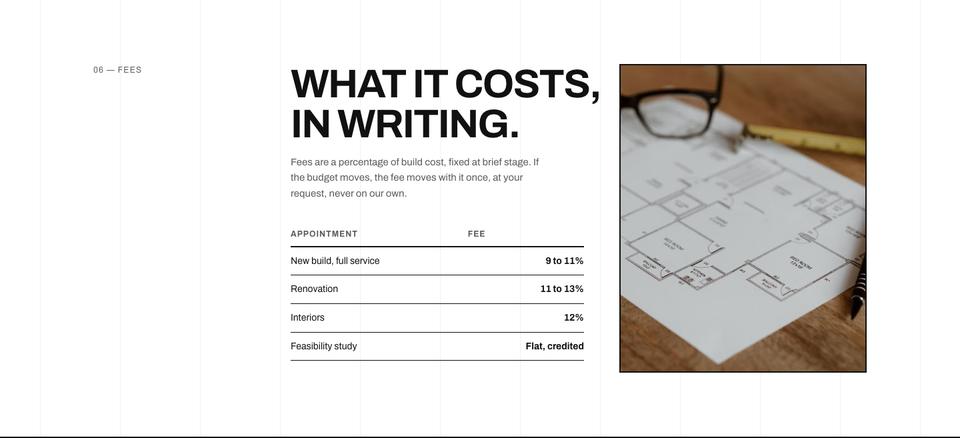
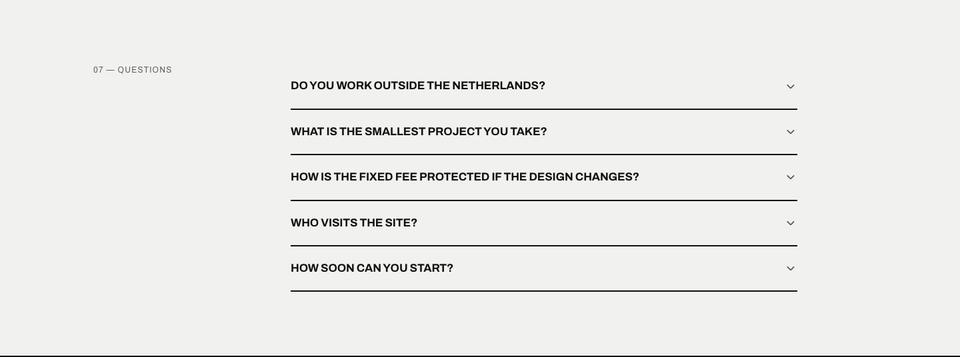
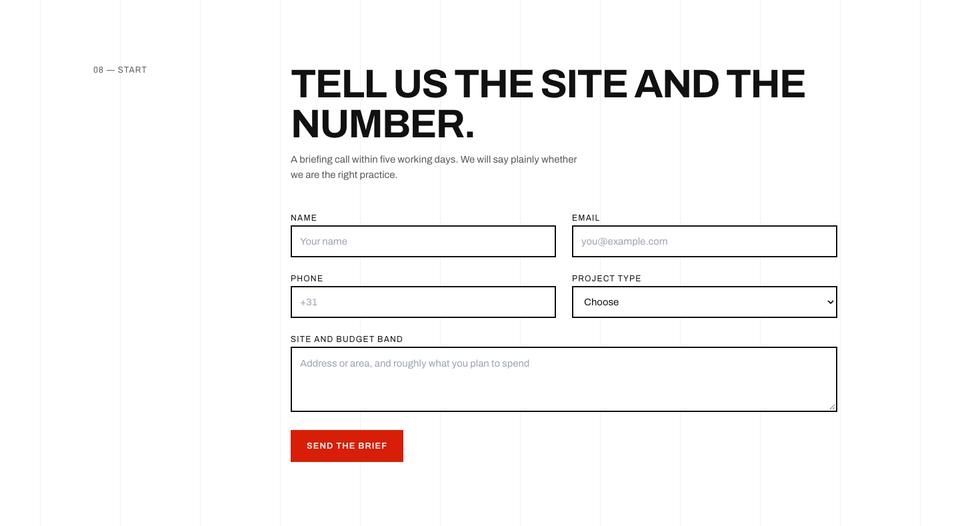
A single client quote confirms that the date and number held. Fees explains how fees are fixed and when they can change, questions covers geography and working with others, and the page ends with a briefing form that promises a plain answer on fit.
Adapting the design
Four accents are included: Signal red, Black, Cobalt and Orange. Type can be Archivo throughout, Familjen Grotesk headings over Archivo, or Space Grotesk over Barlow. The demo uses only six photographs, so a few strong images of your work are enough.
The grid holds when you edit. Change figures, service lines and project labels in place, or select a section and ask the AI to tighten it.
Writing it for your firm
Starting from the template costs no credits. For about 20 credits, the AI can write the copy for your practice into the same layout. Give it your disciplines and location, the figures that prove your reliability, how clients can hire you, your stages, three projects with a measurable promise each, how fees are set and where you work.
Evidence the grid needs
This template is built for firms that sell rigour, so the numbers carry more weight than adjectives. Gather the facts behind the stats band: projects delivered, schedule performance, awards and the share of clients who return or refer. If you publish a worst case, such as the largest overrun ever, make sure it is accurate, because that single honest number is what makes the others believable.
The services section should state how each engagement is priced, for example a percentage of build cost, a fixed fee or a day rate, and when the price is agreed. Write the process stages with what the client signs off at each one. For the selected work, choose three projects and one fact each that shows a kept promise, such as delivered in week 61 of 62 or zero variations. Six photographs carry the page, so choose clean architectural or product images that suit the strict grid.
Law, accounting, engineering and manufacturing
A law firm can turn the services into practice areas with fee arrangements and replace built projects with representative matters. Accounting practices usually list services by client type and publish fixed monthly fees. Engineering consultancies can keep the stages and show project data such as capacity or tonnage. B2B manufacturers can use the numbered sections for capabilities, tolerances and certifications, with the enquiry form asking for drawings or quantities.
When another template fits better
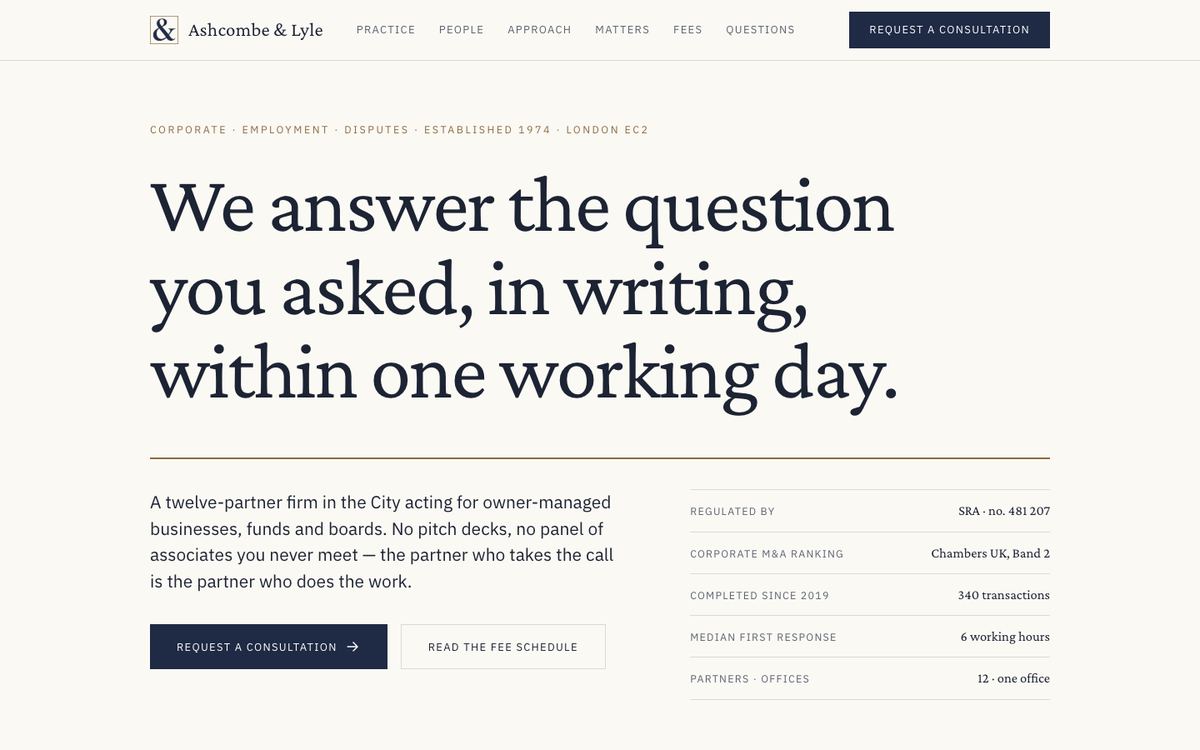
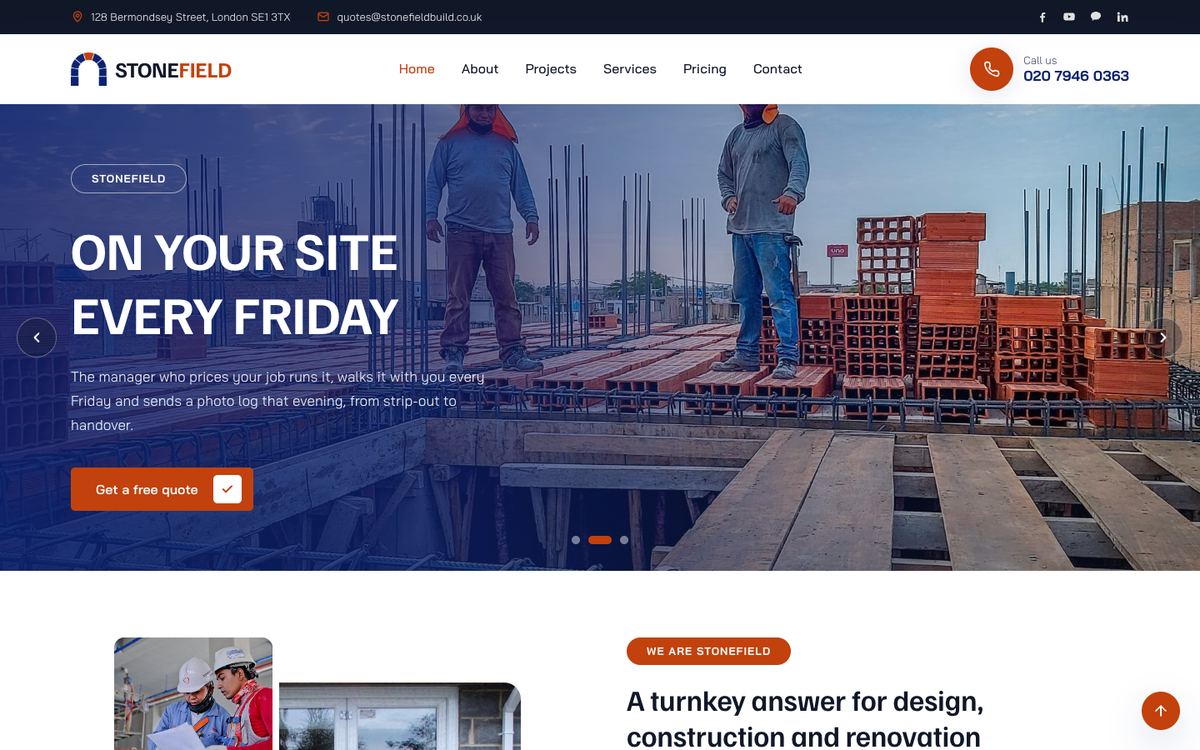
Swiss Grid is austere on purpose. A law, accountancy or advisory firm that wants a traditional serif feel should look at Counsel Practice. Builders selling construction rather than design are better served by Construction, and a design studio presenting a body of work as an index fits Studio Index. Solo consultants have Solo Consultant, and IT or engineering services with SLAs belong on IT Solutions.
More are listed on the professional services templates page.
Before you publish
- Check every figure in the numbers band against your records.
- Get client permission for named projects and the quote.
- Make sure fee wording matches your terms of appointment.
- Ask for site, project type and budget in the briefing form.