A cause appeal that gives the argument room
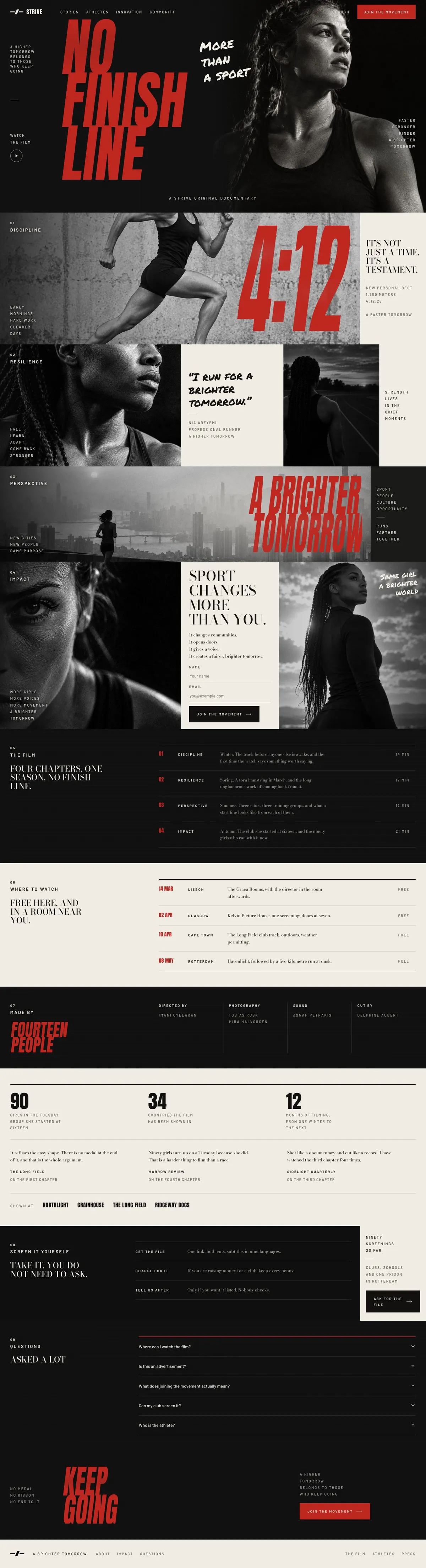
Someone searching for a Cause Appeal needs more than a short statement and a contact button. They need a page that explains what matters, makes the case with conviction, and gives people a clear next step. This design does that through a succession of editorial chapters, photographs, film material and an enquiry route.
It is made for a brand arguing for something rather than simply selling something. That could be a documentary campaign, a sportswear or outdoor label with a public point of view, a club, a federation, a charity, an advocacy project, or a studio introducing a series. A generic service page can make such work feel like an announcement without a reason to care. This template gives the position, the people behind it and the intended impact separate places.
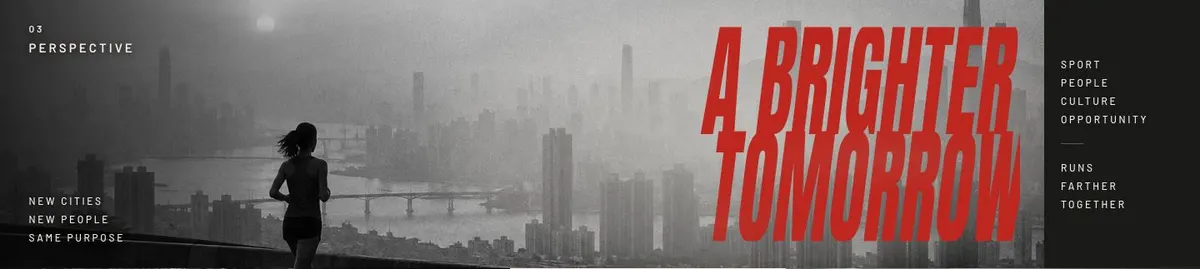
The visual structure is deliberately spare. The page is organised as four full-bleed chapters, with large display copy and photography carrying much of the message. That makes it a good fit when the campaign has a defined idea and original images to support it. It does not include a product catalogue or a payment route. If the job is to launch a performance product rather than lead with a cause, Performance Running Launch is the closer starting point.
Adapting the design
The template offers Signal Red, Cobalt, Flare and Bone colour schemes. Choose one that supports the tone of the cause and remains appropriate for the photographs. The page uses Anton for display text and Barlow for body copy. Alternatives include Anton with Barlow, Bodoni Moda with Barlow, and Permanent Marker with Barlow. The display face should be reserved for short statements, chapter titles and campaign language; longer explanation belongs in the body face.
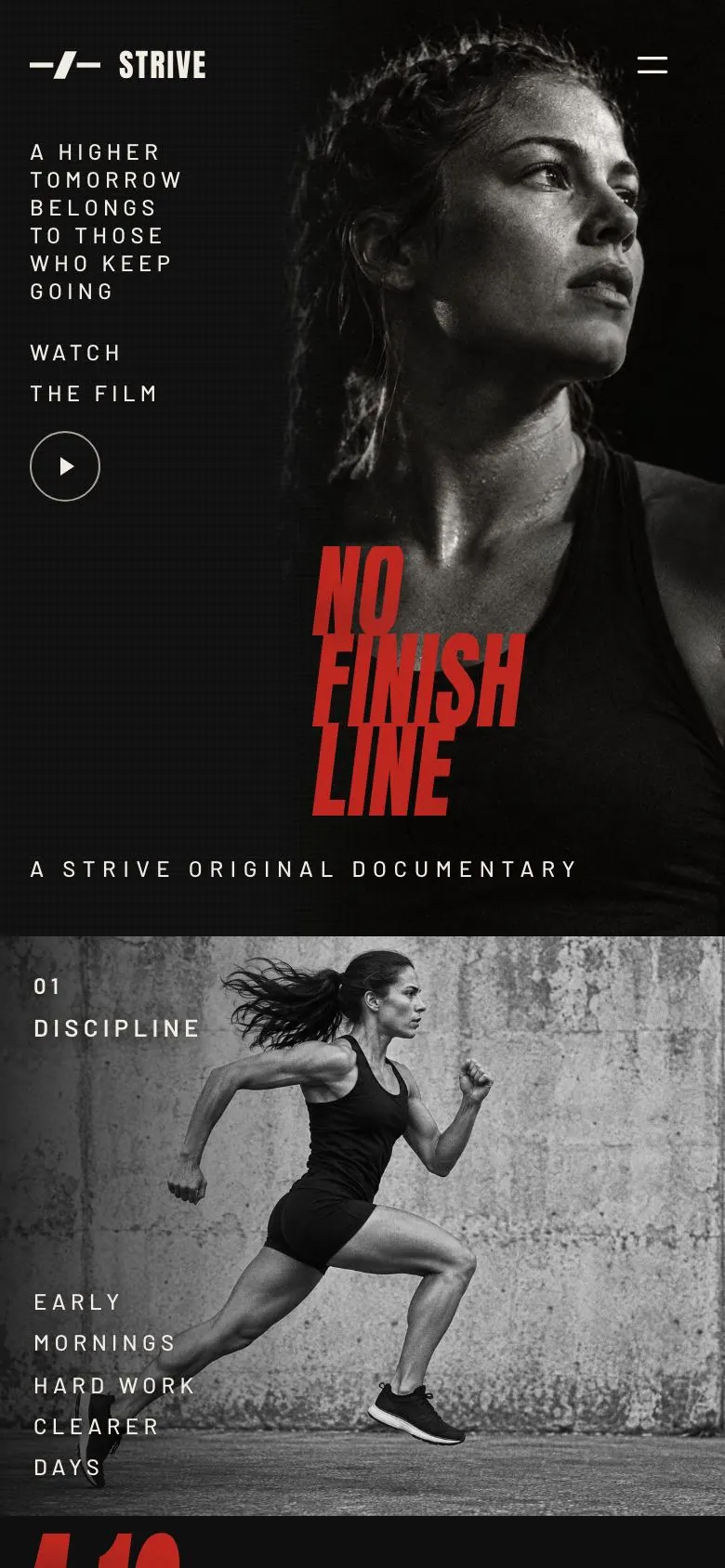
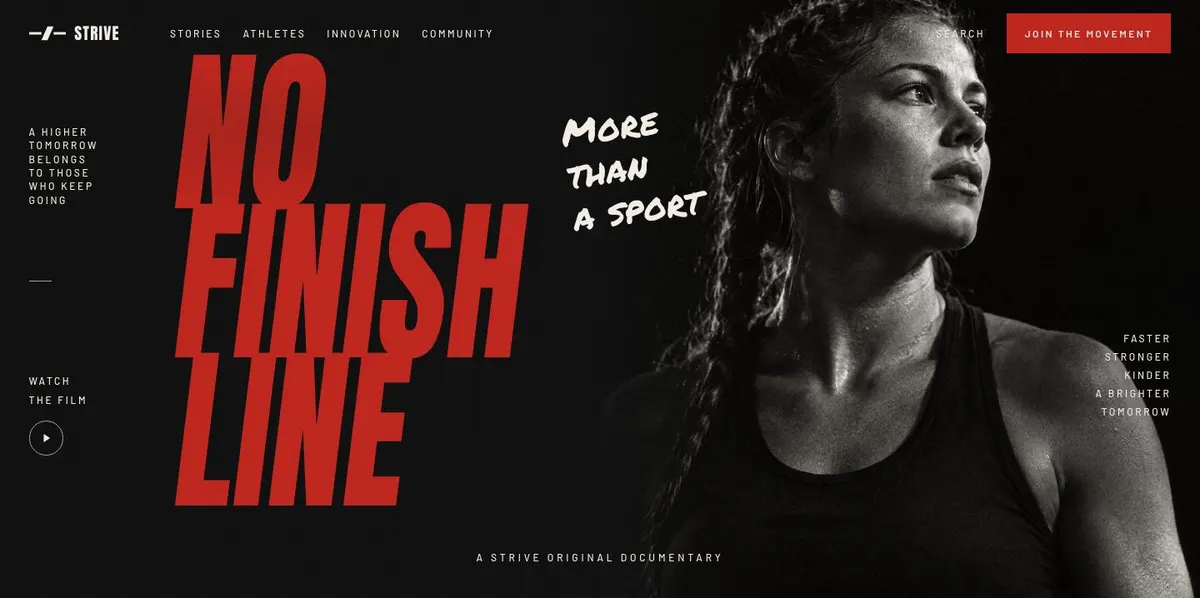
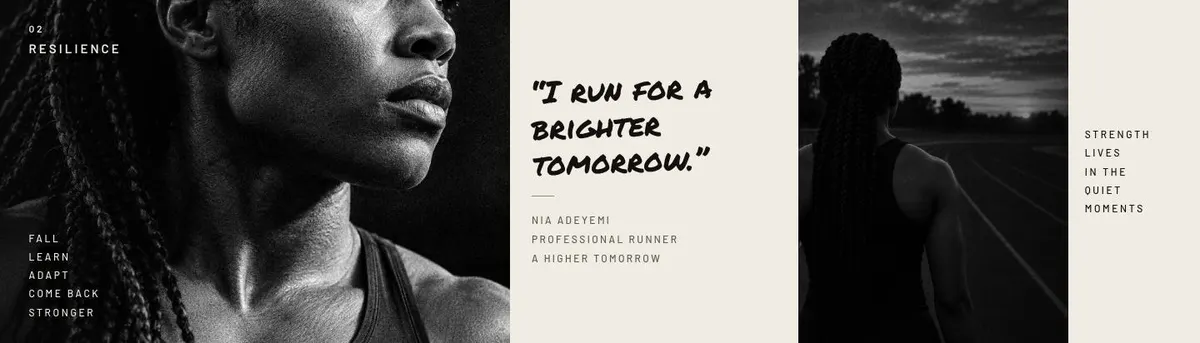
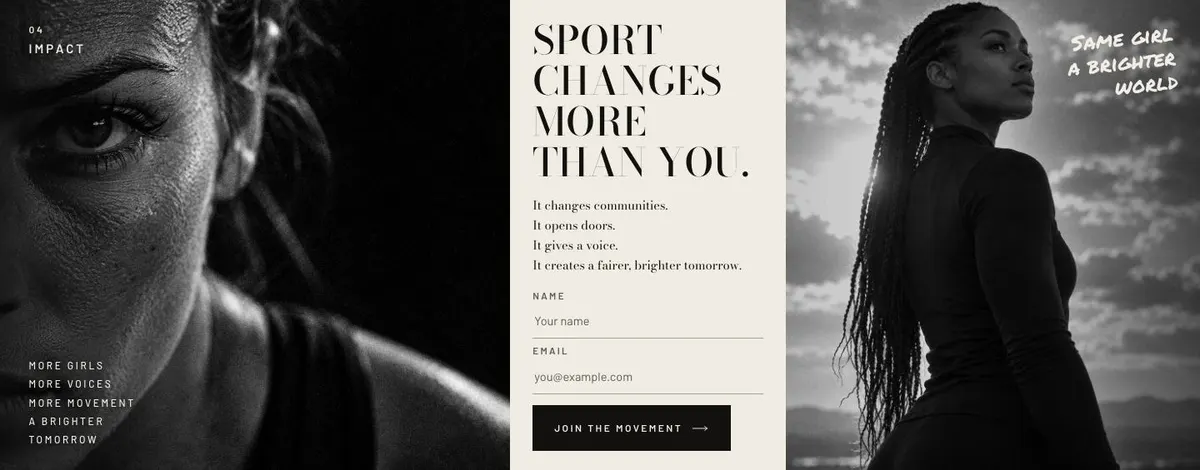
Nine photographs are needed across the page. They appear in the Hero, Discipline, Resilience, Perspective, Impact and the final closing band. Plan them as a connected sequence rather than nine unrelated assets. The first images should establish the subject, the middle photographs should show people or places that make the argument real, and the final image should leave the campaign with a clear emotional direction.
Writing it for your business
Starting from this template costs no credits. Rewriting the copy with AI costs about 20 credits. A useful brief names the organisation, the campaign subject, the people involved, the intended audience and the enquiry goal. It should also explain the four chapters, what visitors can watch or request, and what questions need answering.
Give the AI facts rather than broad ambitions. Name the film, series or campaign where one exists. State the locations, dates, partners and claims that have been checked. Include the desired tone, but also give the practical action required at the end. That makes the revised copy more likely to fit the page’s progression from proposition to enquiry.
What to prepare first
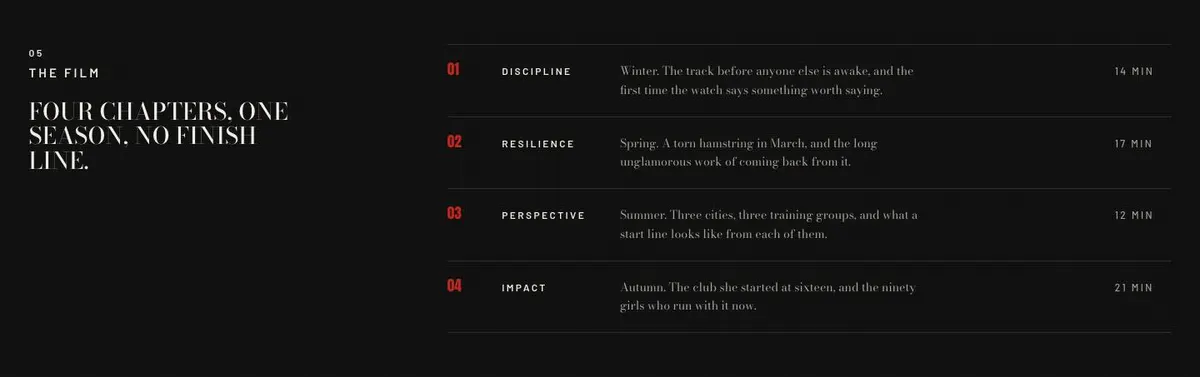
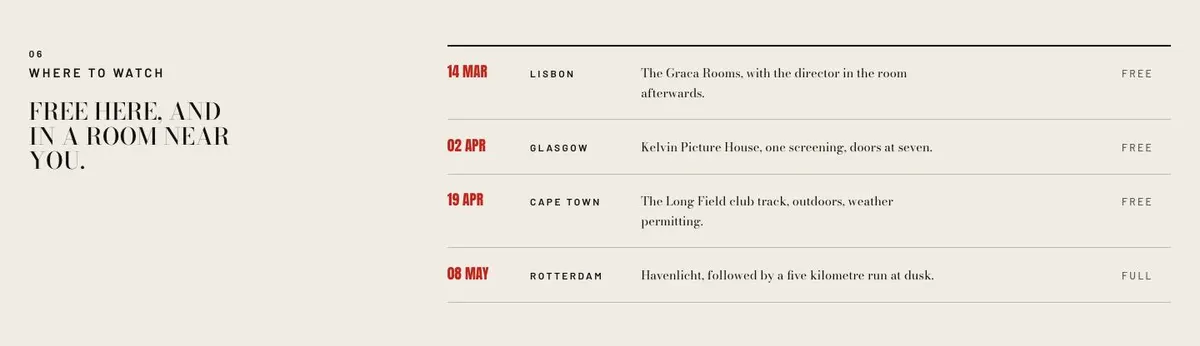
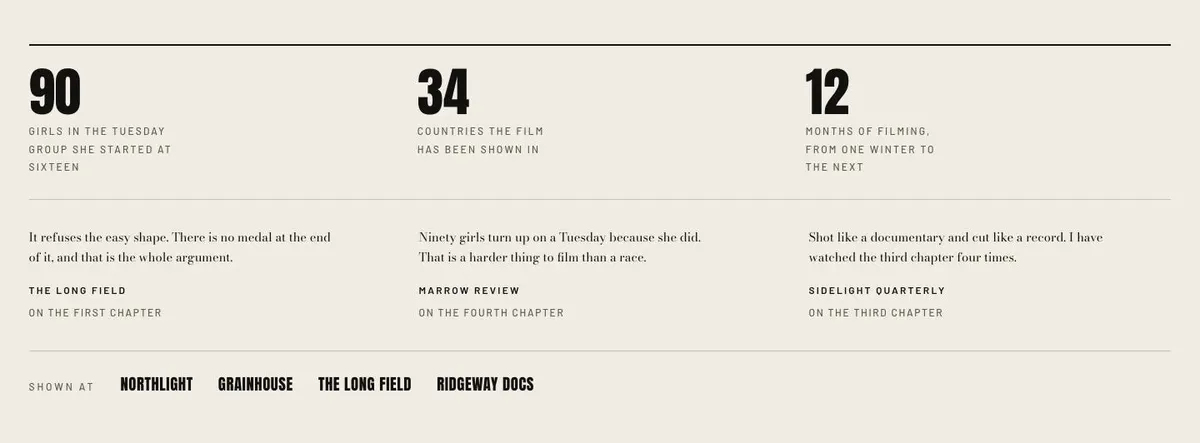
Before publishing, write the core campaign statement and the short line that explains it. Prepare the chapter descriptions for Film, the watching information for Watch, the contributor list for Credits, and at least two approved quotes for Resilience and Says. Decide what an enquiry through Impact is for, and what someone asking for a file through Screen should be told.
Gather the nine photographs before changing the layout. Choose images with enough relevance to carry individual chapters. Finally, draft the Questions answers from real conversations with organisers, partners, viewers or supporters. The useful questions are usually about access, use, participation and next steps.
Variations for neighbouring work
A sportswear campaign can use Discipline and Resilience to show the people and principles behind a launch, while Film documents the story in chapters. Keep the enquiry focused on partnerships, screenings or campaign contact rather than product orders.
A charity or advocacy project can use Perspective and Impact to explain the wider issue and the change it seeks. The quotes should come from people with direct experience or relevant responsibility, and the questions should address practical involvement.
A film studio or cultural label can make Film and Watch the centre of the page. Credits should name the creative team, while Screen can explain the route for programming, press or other legitimate file requests.
When another template fits better
For a launch centred on running and performance, start with Performance Running Launch. For a design-led portfolio with a house or studio focus, consider Artisan House Showcase.
If the main requirement is a trade catalogue, Wholesale Marketplace is more appropriate. For a collection-led fashion event, use Fashion Week Registration. Browse the professional services template hub for further starting points.
Before you publish
- Check that the central claim is specific and supportable.
- Confirm that all nine photographs are approved for use.
- Make the enquiry purpose clear in Impact and Screen.
- Answer the practical questions visitors are most likely to ask.