For forwarders who are measured on every load
Shippers do not buy logistics on brand. They buy on lanes, transit times, cost and what happens when something goes wrong. Logistics is a bold, photo-led template that lists those things plainly, with service lines, a rate card, a year of performance data and contract commitments, and ends in a quote request answered in 30 minutes.
It suits freight forwarders, courier and express companies, warehousing and fulfilment, customs brokers, trucking fleets and import-export traders. Choose it when the page must list service lines, a booking process and coverage numbers.
How the page wins the quote
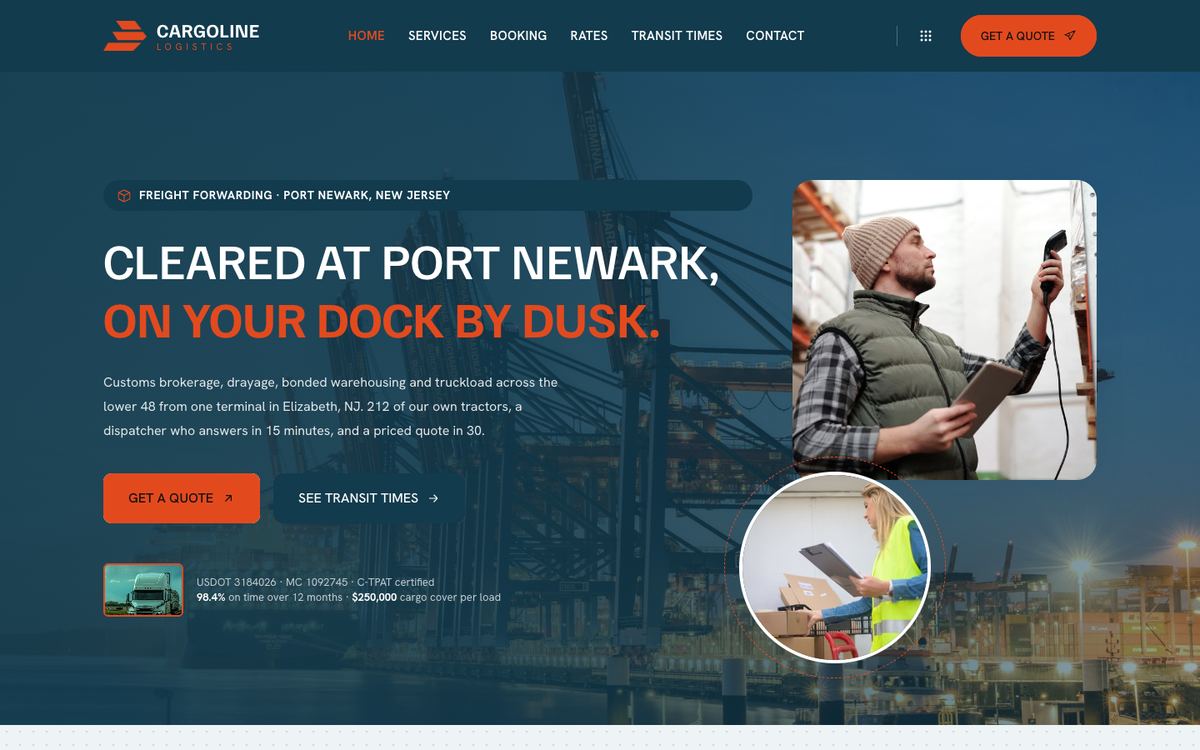
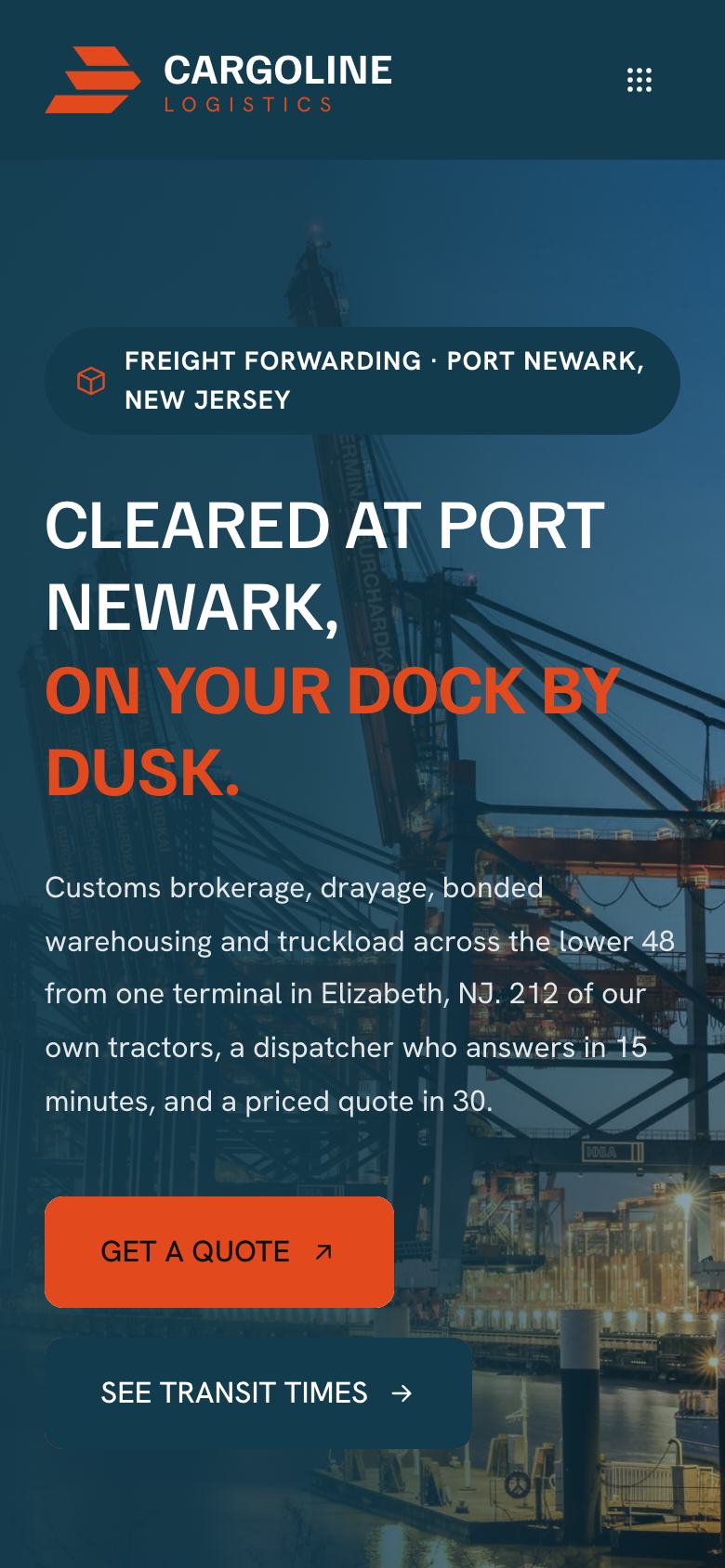
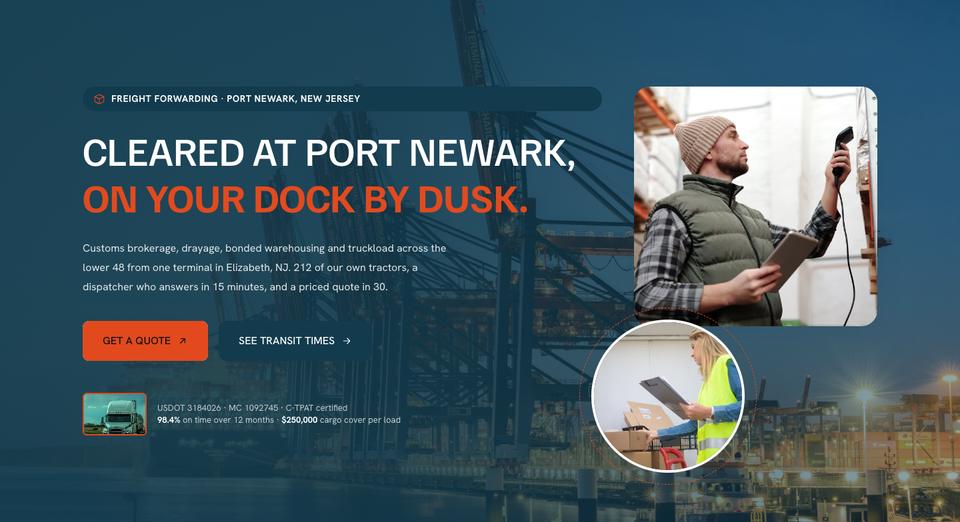
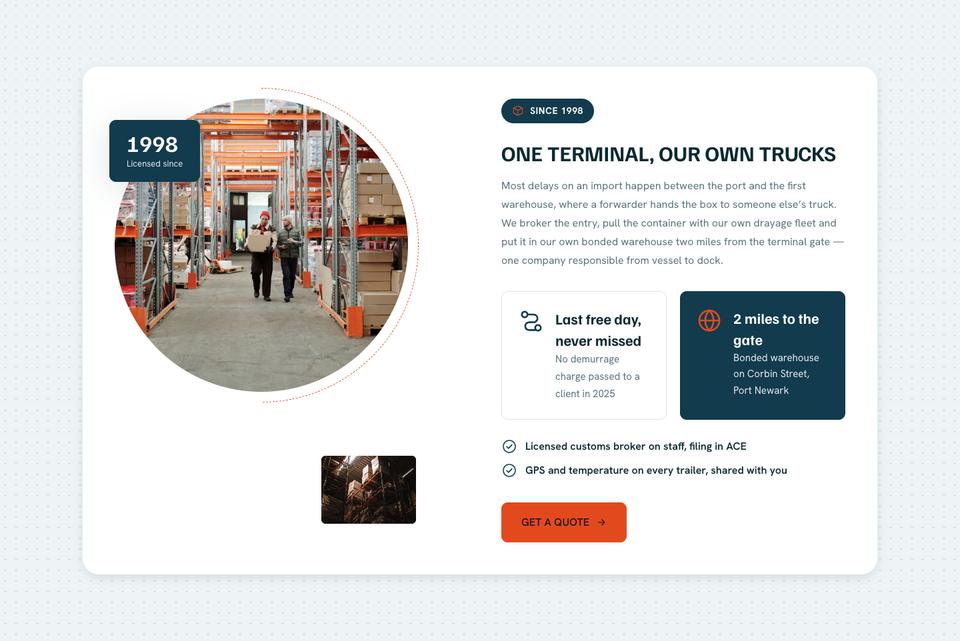
The hero promises a concrete outcome, “Cleared at Port Newark, on your dock by dusk”, and lists the services covered. About explains why owning the terminal and trucks prevents the delays that happen at hand-offs.
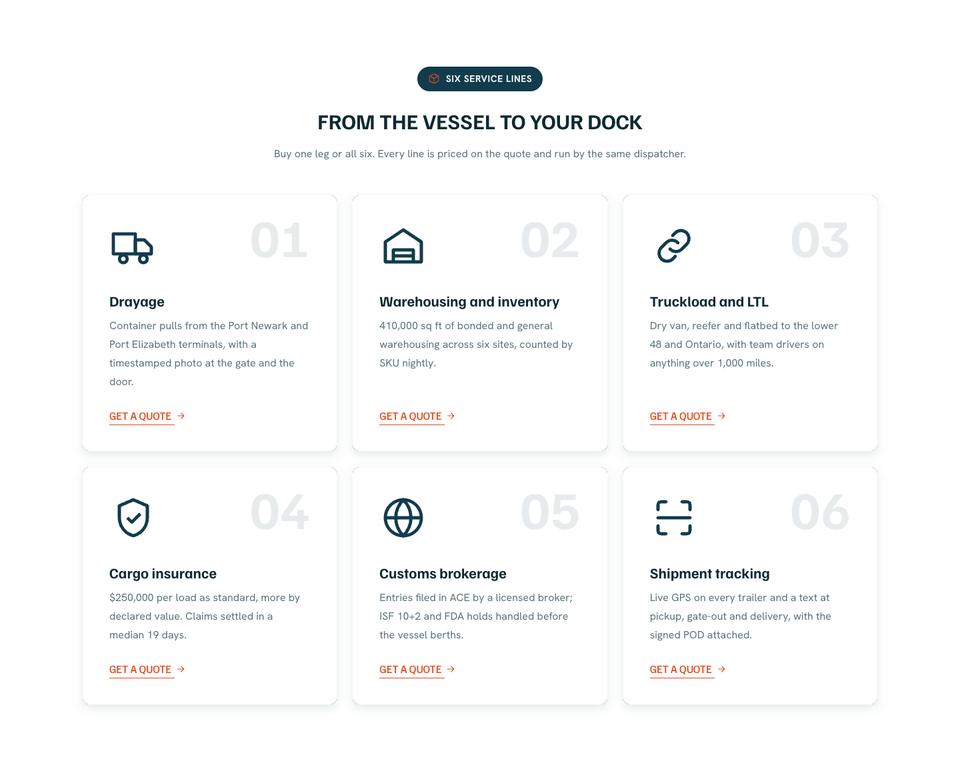
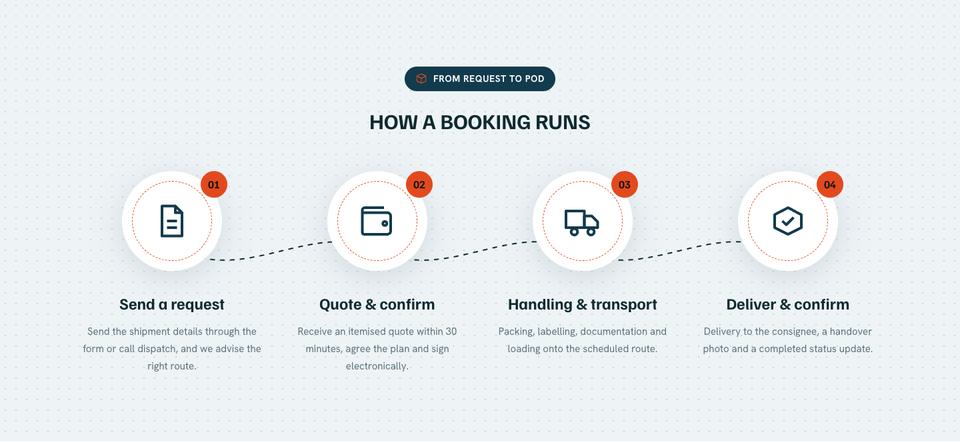
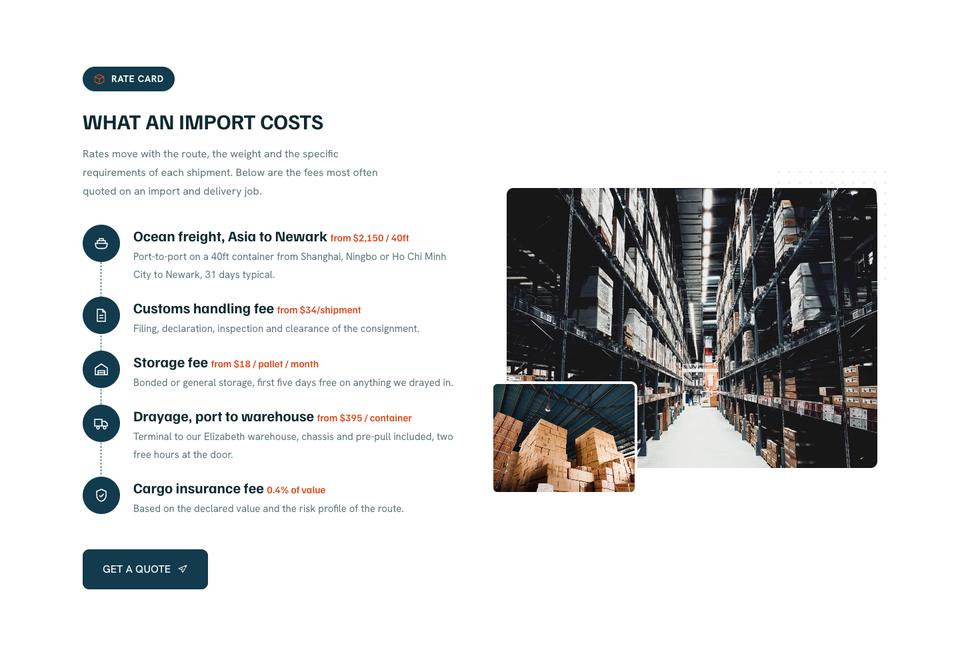
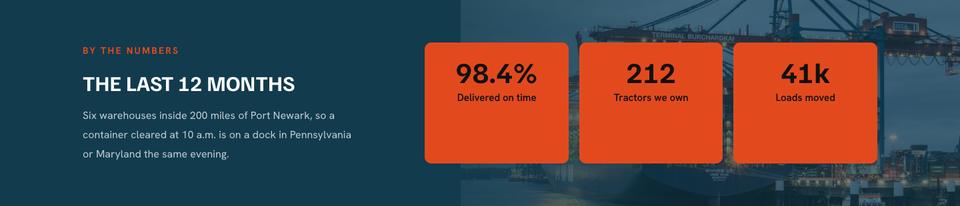
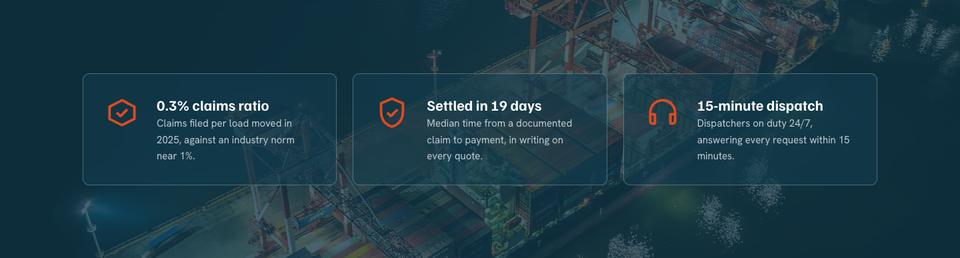
Services sets out six service lines that can be bought separately. How a booking runs goes from request to proof of delivery, and the rate card shows the fees most often quoted on an import. The last 12 months and a claims band give warehouse coverage, on-time delivery, claims ratio and settlement time.
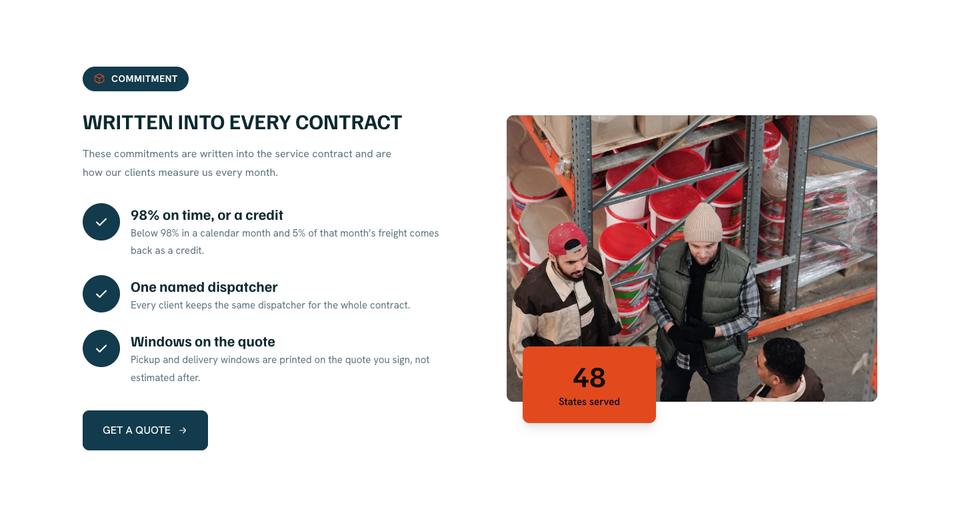
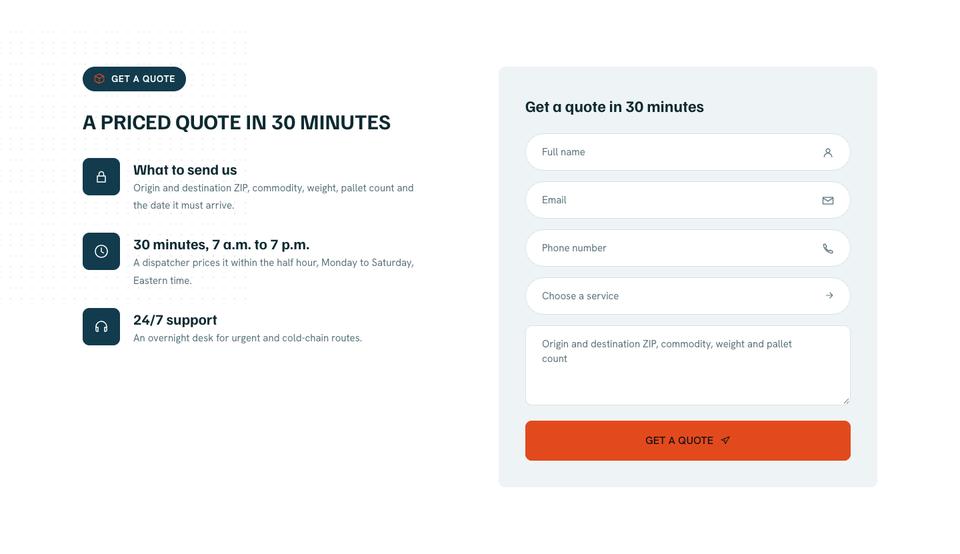
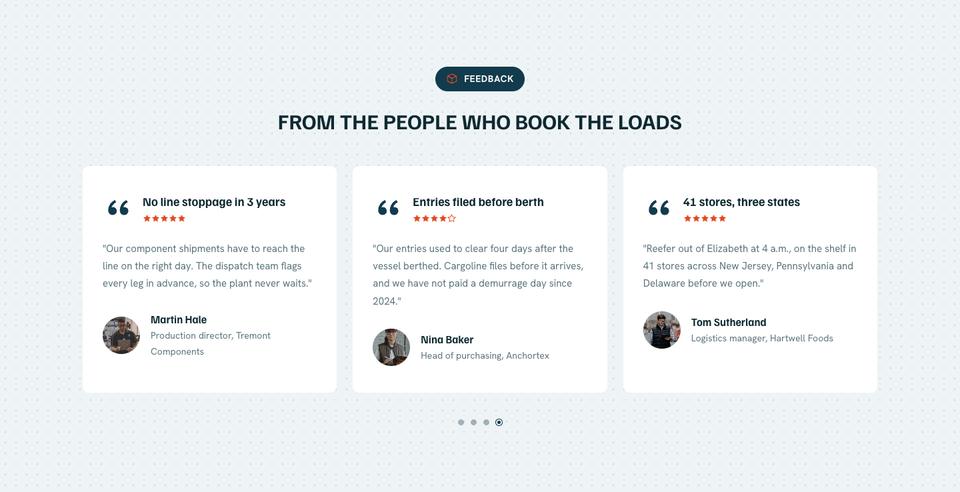
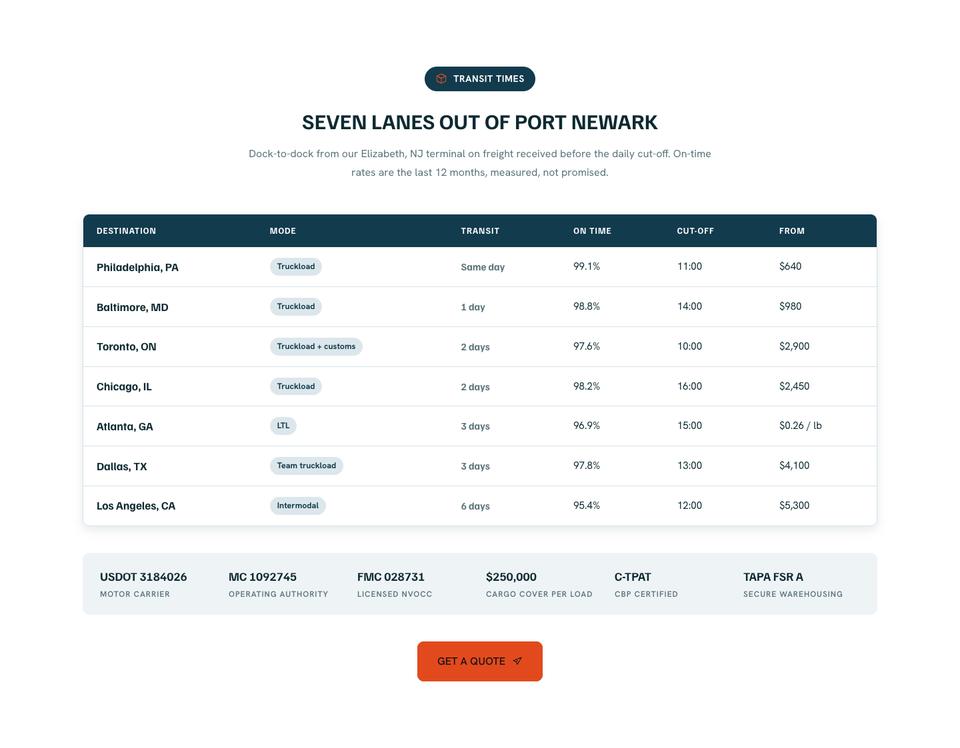
Commitment lists what is written into every contract, such as credits for late loads. A logo strip names clients, the quote form says what to send and promises a priced reply in 30 minutes, feedback comes from the people who book loads, transit times lists the main lanes with on-time rates, and contact details give the dispatch and quote lines.
Adjusting the look
Choose between Signal red, Port blue, Fleet green and Cargo orange. Fonts are Familjen Grotesk with Hanken Grotesk, Archivo with Barlow, or Epilogue with IBM Plex Sans. The demo uses 14 photographs of terminals, trucks and warehouses; replace them with your own fleet and facilities.
The rate card, lanes table and numbers are all editable. Select a table in the editor and ask the AI to fill it from your current rates or transit data.
Writing it for your company
You can start from the template for free, or let the AI write your copy into it for about 20 credits. For this page it needs your location and licences, service lines, the booking process, typical fees, performance figures such as on-time rate and claims ratio, contract commitments, main lanes and transit times, and what a quote request should include.
Operational facts to confirm first
Freight buyers compare forwarders on facts they can check, so collect them before editing. List every service line you actually run, such as drayage, customs brokerage, bonded storage, transloading, truckload and last mile, and for each one note the areas covered and whether you use your own equipment or partners. The booking process should mirror your dispatch workflow from request to proof of delivery, with the time each step normally takes.
The rate card works best with the fees most often quoted on a standard import, with a clear note that final rates depend on route, weight and requirements. Pull twelve months of operating numbers: loads moved, on-time percentage, claims ratio and time to settle a claim. Check licences, bonds and insurance values with your compliance lead before publishing them. The template uses fourteen photographs, so shoot your own trucks, the warehouse floor and the dispatch team rather than generic container ships.
Couriers, warehousing and customs brokers
A courier or express company can replace port clearance with collection cut-offs and delivery windows, and turn the rate card into zones. Warehousing and fulfilment providers usually lead with storage capacity, pick-and-pack accuracy and integrations with online shops. A customs broker can narrow the service lines to entries, classification and duty planning, and use the quote form to ask for commodity codes and shipment frequency.
When another template fits better
Logistics is built for B2B freight. A wholesale marketplace connecting buyers and suppliers fits Wholesale Marketplace, and a brand selling trade stock with a price sheet should look at Wholesale Trade. Construction and field-service firms have Construction and Trade Shopfront, and software for dispatch and scheduling belongs on Trade Operations Suite.
More are listed on the professional services templates page.
Before you publish
- Check every rate, transit time and on-time figure is current.
- Confirm contract commitments with your legal terms.
- Use client names only with permission.
- Make the quote form required fields match what dispatch needs to price.