For products that exist on paper first
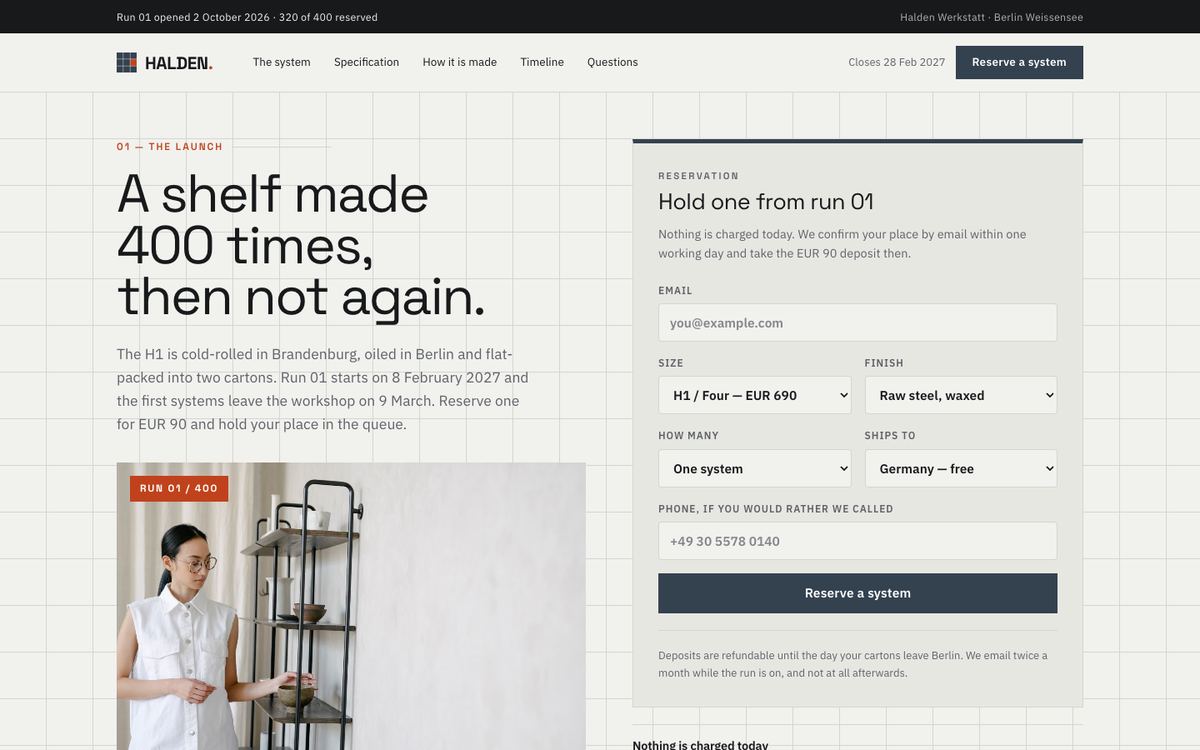
Pre-orders ask people to pay for something they cannot hold yet, from a company that may be small. That only works with openness: how many will be made, what it will measure, who makes it, when each step happens and what happens to the money. Pre-order Launch has a limestone-paper ground, a faint drawing grid, cold steel colours and an engineering typeface, and it puts all of that on the page.
It suits furniture and hardware runs, machined objects, first production batches, crowdfunded tools, instruments and bicycles. Choose it when the brief has a launch date, a deposit and a unit count.
How the page earns a reservation
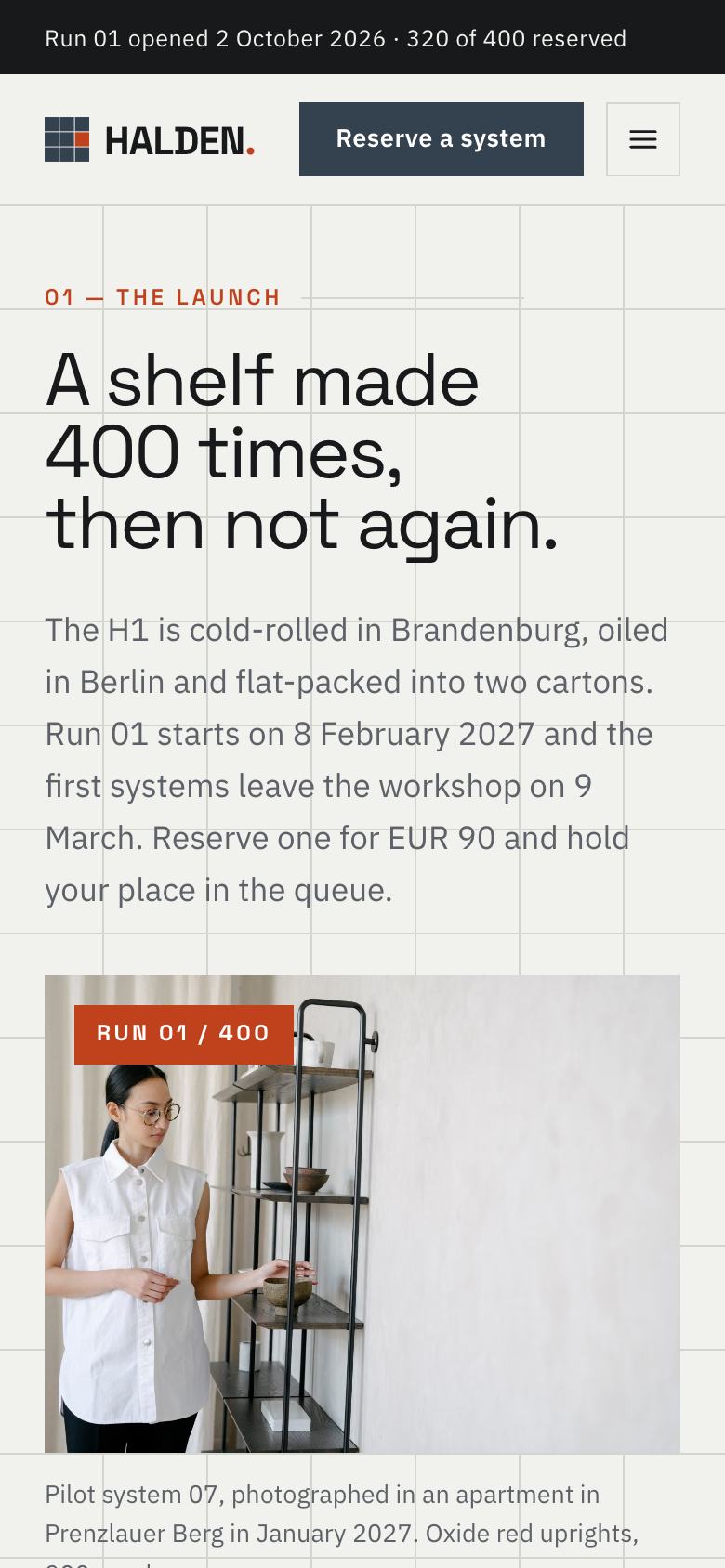
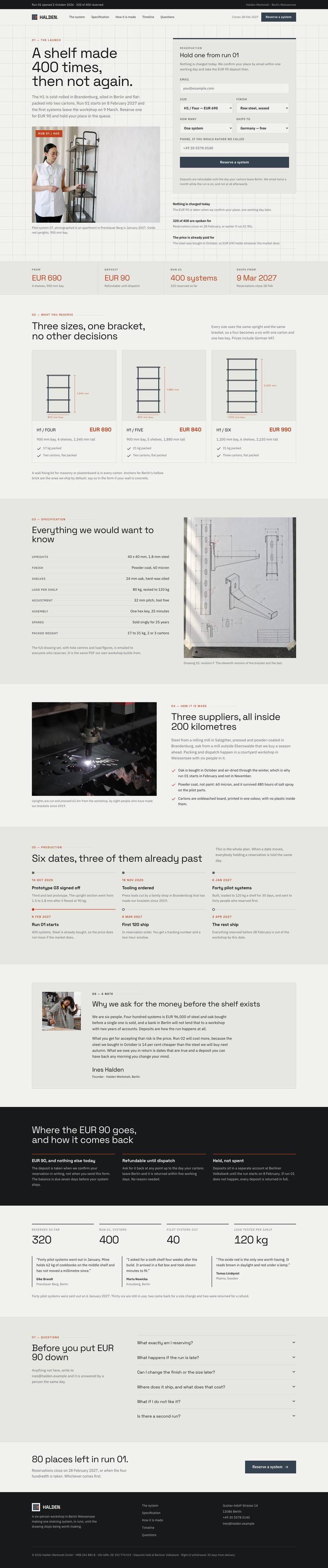
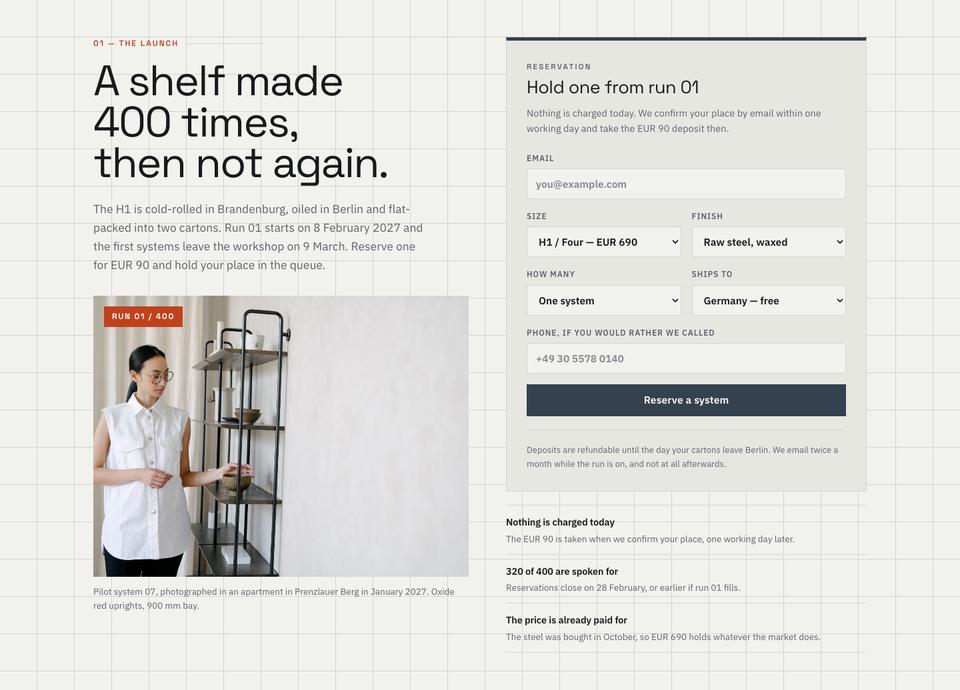
The hero states the run, “A shelf made 400 times, then not again”, with materials and where it is made. Launch numbers sets out starting price, deposit and refund terms, run size, reservations so far, ship date and closing date.
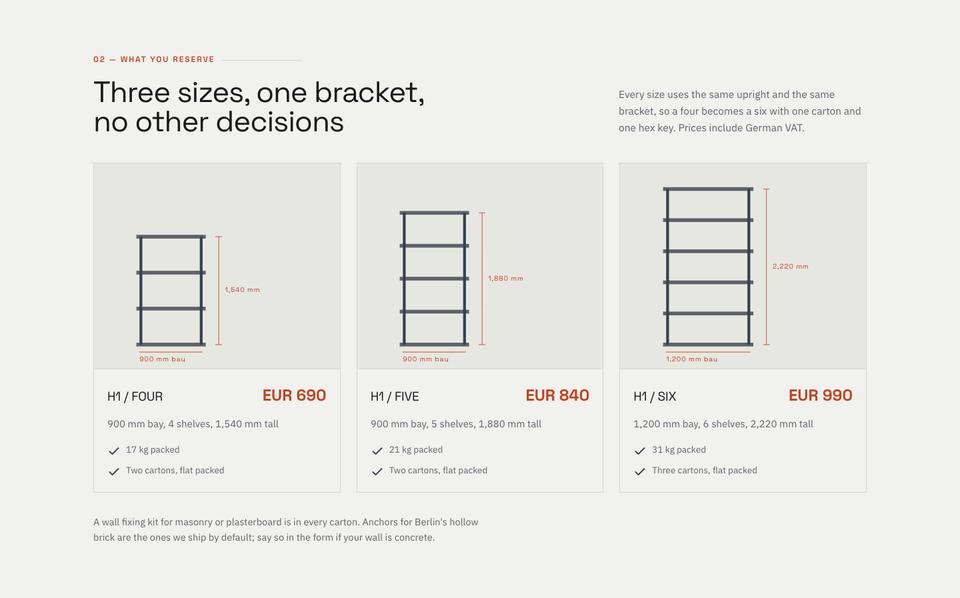
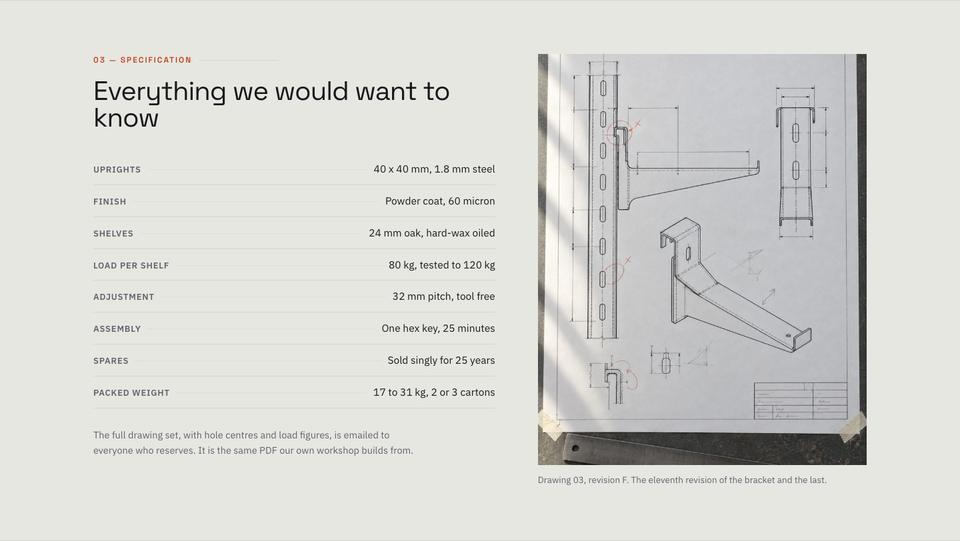
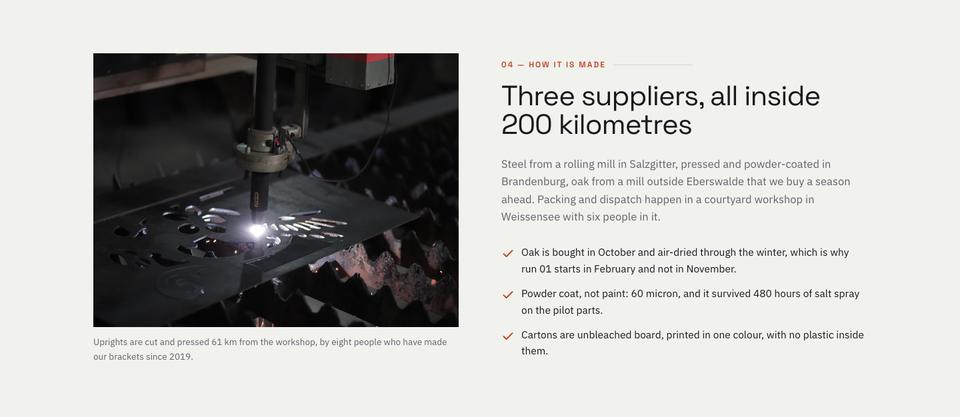
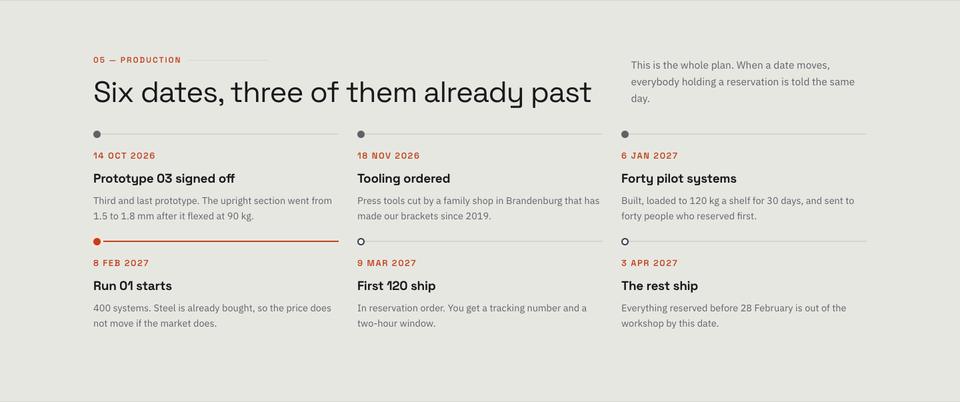
What you reserve explains the configurations with no unnecessary choices. Specification lists dimensions, materials, finishes and load ratings. How it is made names the suppliers and distances, and production is a timeline of six dates with those already met marked.
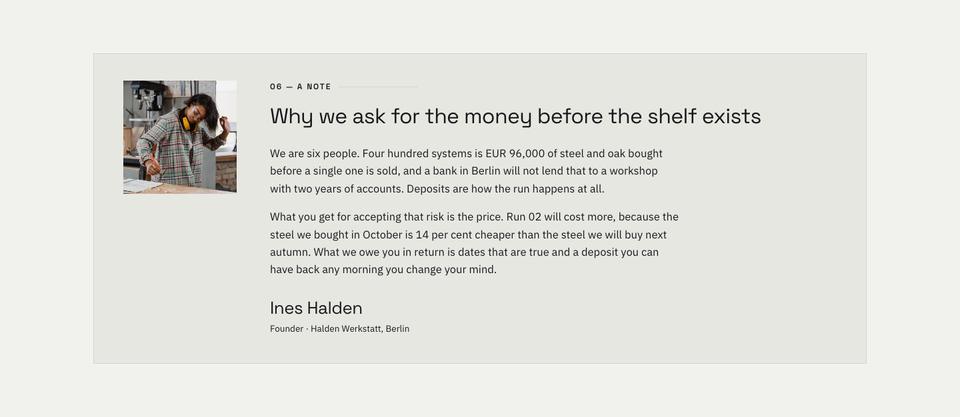
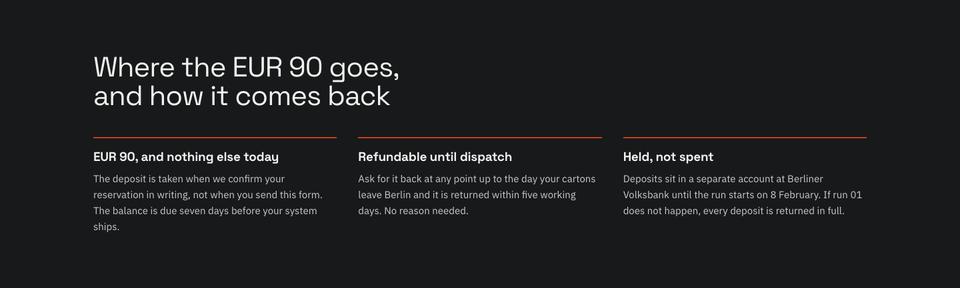
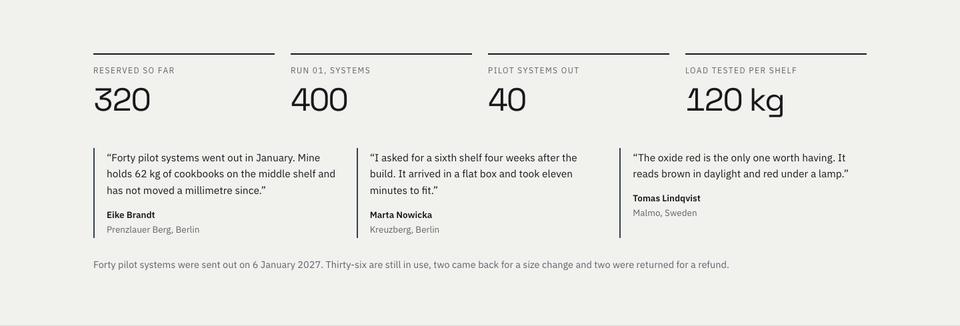
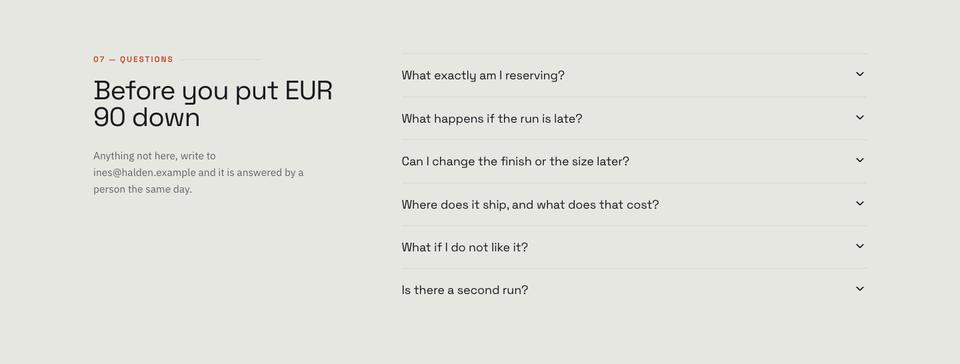
A note explains honestly why money is needed before the product exists. The deposit spells out where it goes and how to get it back. Pilot numbers show units already in homes and load tests, questions answers the doubts, and the page ends with places left and the reserve button.
Adjusting the look
Four schemes are included: Steel, Graphite, Pine and Oxide. Headings can be Space Grotesk, Archivo or JetBrains Mono. Three photographs are used; technical drawings and a few workshop shots suit the style.
The timeline, specs and counters are editable in place. When production dates move, update the timeline and ask the AI to draft the note to reservation holders.
Writing it for your launch
Starting from the template costs nothing. For about 20 credits, the AI replaces the sample copy with text for your product, keeping the design. Include run size and prices, deposit and refund rules, configurations, full specifications, suppliers, the production timeline, why you take pre-orders, pilot results and the reservation deadline.
Publishing a production plan you can keep
A pre-order asks people to pay before the product exists, so the page must show that the plan is real. List the production timeline with dates for prototype approval, tooling, first samples, the production run and dispatch, and mark which dates have already passed. Decide how you will tell reservation holders when a date moves, and commit to it on the page.
The reservation numbers need to be accurate: run size, units reserved so far, the deposit amount, when the balance is taken and until when the deposit is refundable. The specification table should come from the production drawings, including materials, dimensions, finishes, load ratings and tolerances. The suppliers section is persuasive when it names where each part is made and how far away. Consumer rules on pre-orders, refunds and delivery estimates vary by country, so check them. Three photographs are used, which for an unreleased product usually means a prototype, a detail and the workshop. Label prototype images as such, so buyers know what may still change before production.
Bicycles, instruments and crowdfunded tools
A bicycle maker can replace sizes with frame geometry and component options, with fitting guidance. Instrument makers usually add a sound sample link and the build time per instrument. A crowdfunded tool can turn the reservation into backer tiers and use the timeline for campaign milestones. Furniture and hardware runs can keep the page as it is and add assembly details and delivery options by country.
When another template fits better
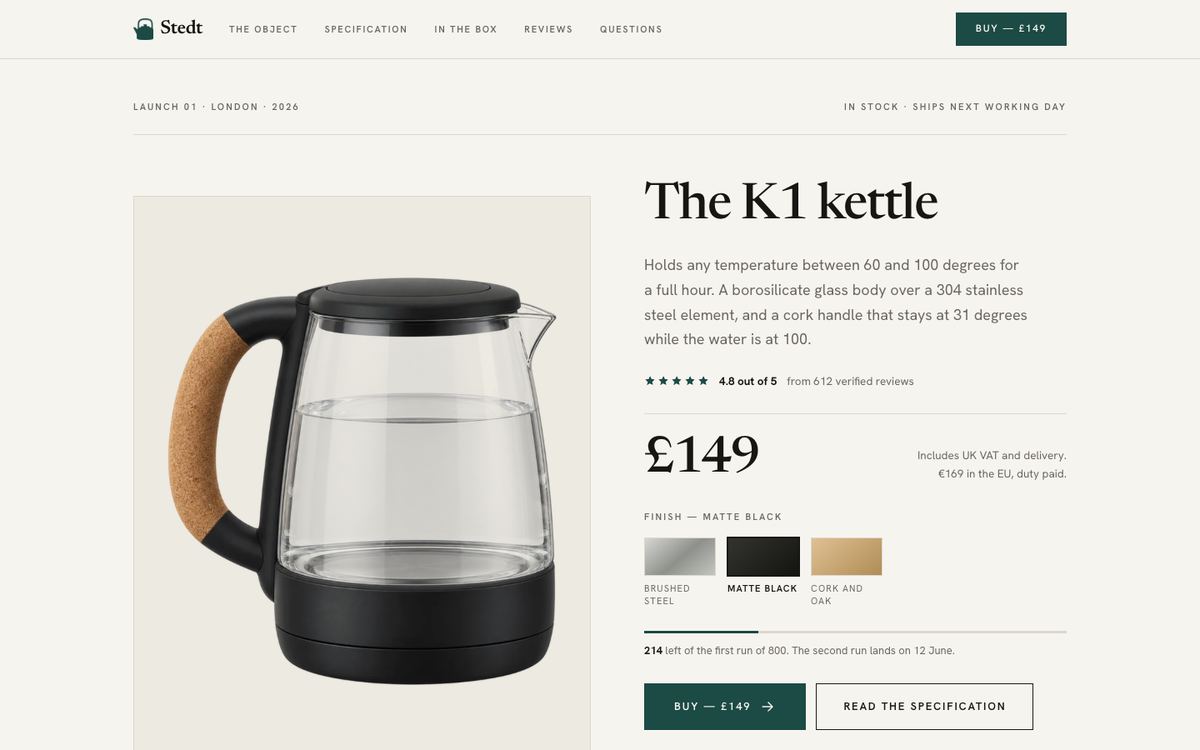
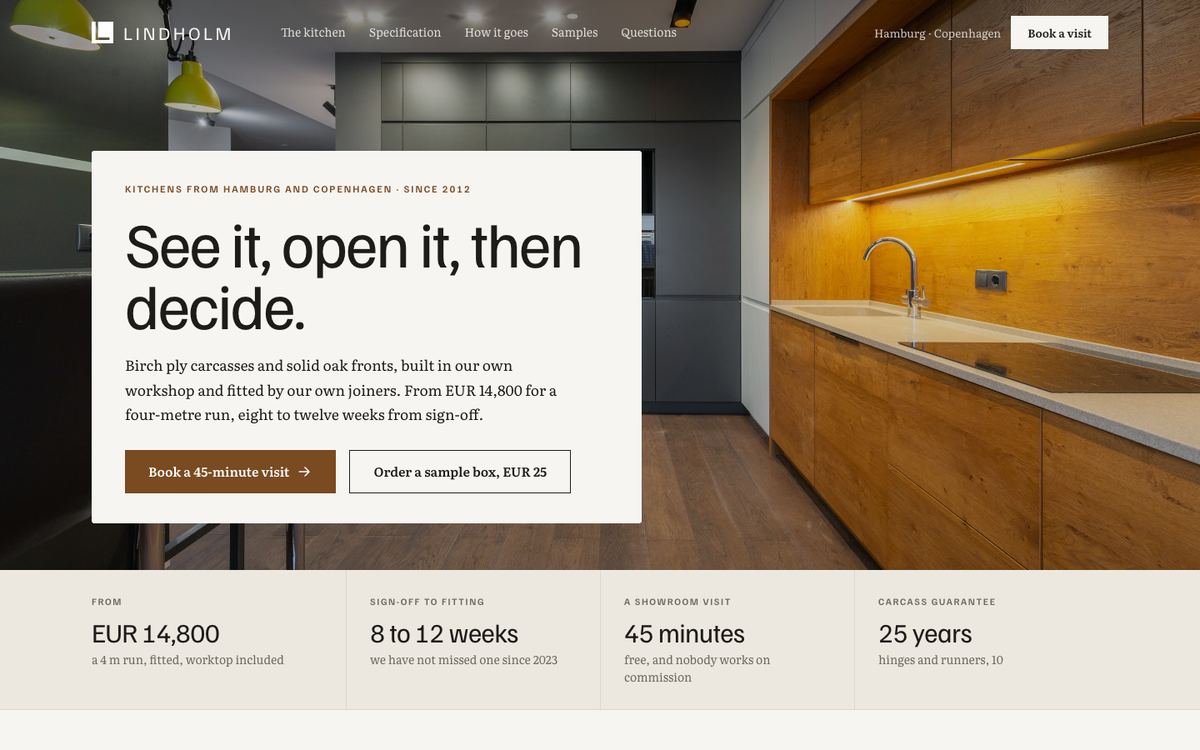
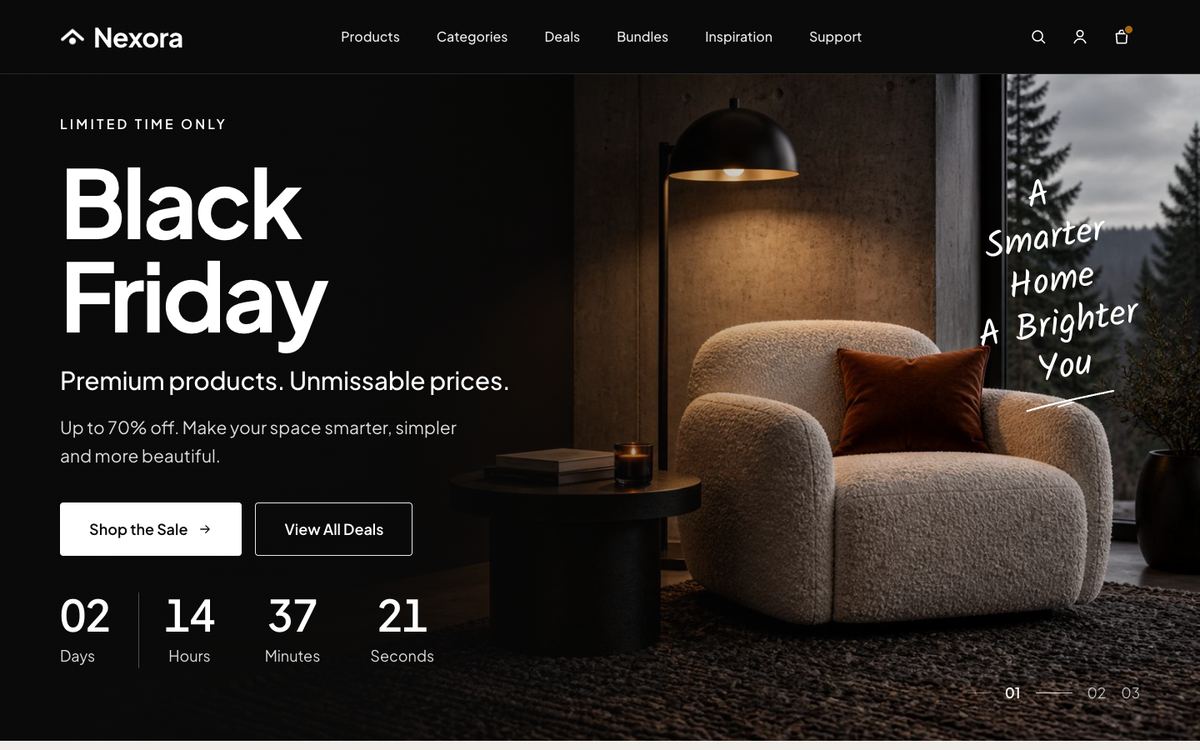
Pre-order Launch sells future stock. A product already in stock fits Single Product Launch, and large items best sold after a showroom demo belong on Booked Demo. Limited editions with a waitlist and release date suit Waitlist Drop, and consumer electronics with more visual energy Gadget Launch.
See the full list on the ecommerce templates page.
Before you publish
- Check deposit terms against consumer law for your markets.
- Keep the reserved count and places left accurate.
- Update the production timeline whenever a date moves.
- Test the reservation and deposit flow end to end.