For one well-made object
When you launch a single product, the page should behave like the product: considered and without clutter. Single Product Launch is centred and minimal, with a large product photograph, a hairline specification table and a single price. It is written for buyers who compare specifications before they spend.
The layout deliberately gives the specification table as much space as the photograph. A buyer spending real money on one object reads the measurements, the materials and the warranty, and a page that hides them reads as a page with something to hide.
It suits kitchen and desk hardware, lamps and speakers, bags and luggage, tools and instruments, a single appliance or a single edition. Choose it when the brief sells one object rather than a range.
How the page sells one thing
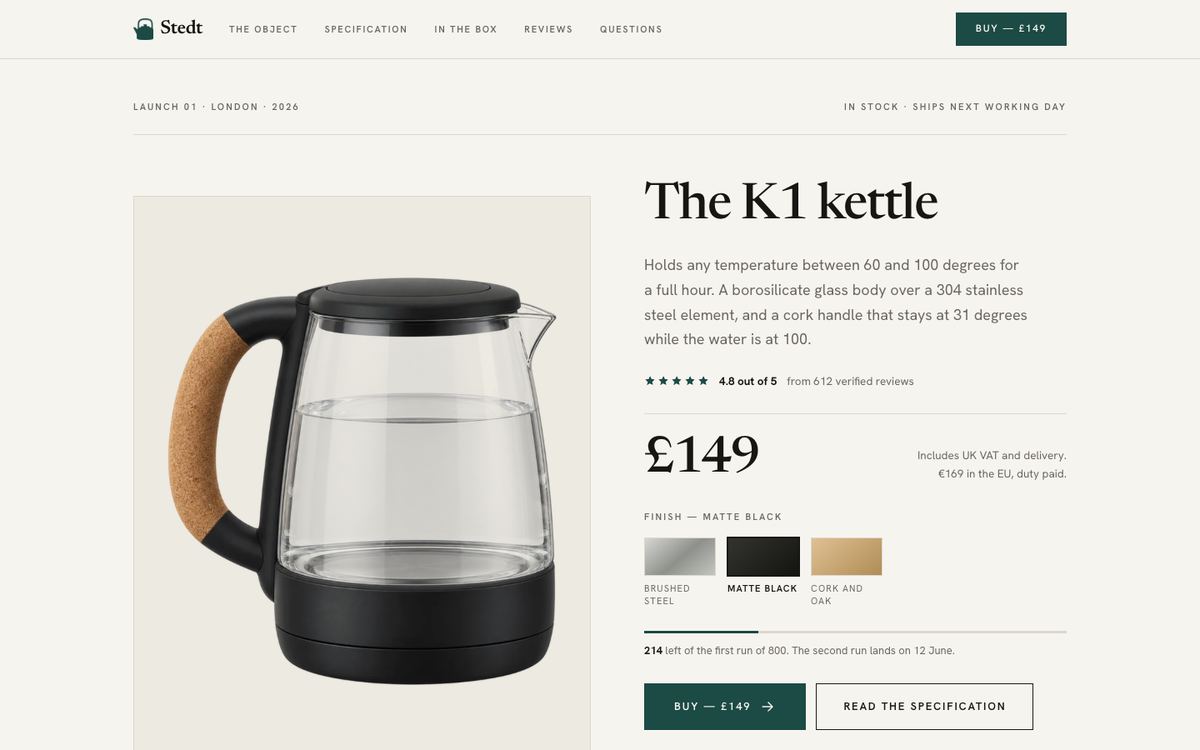
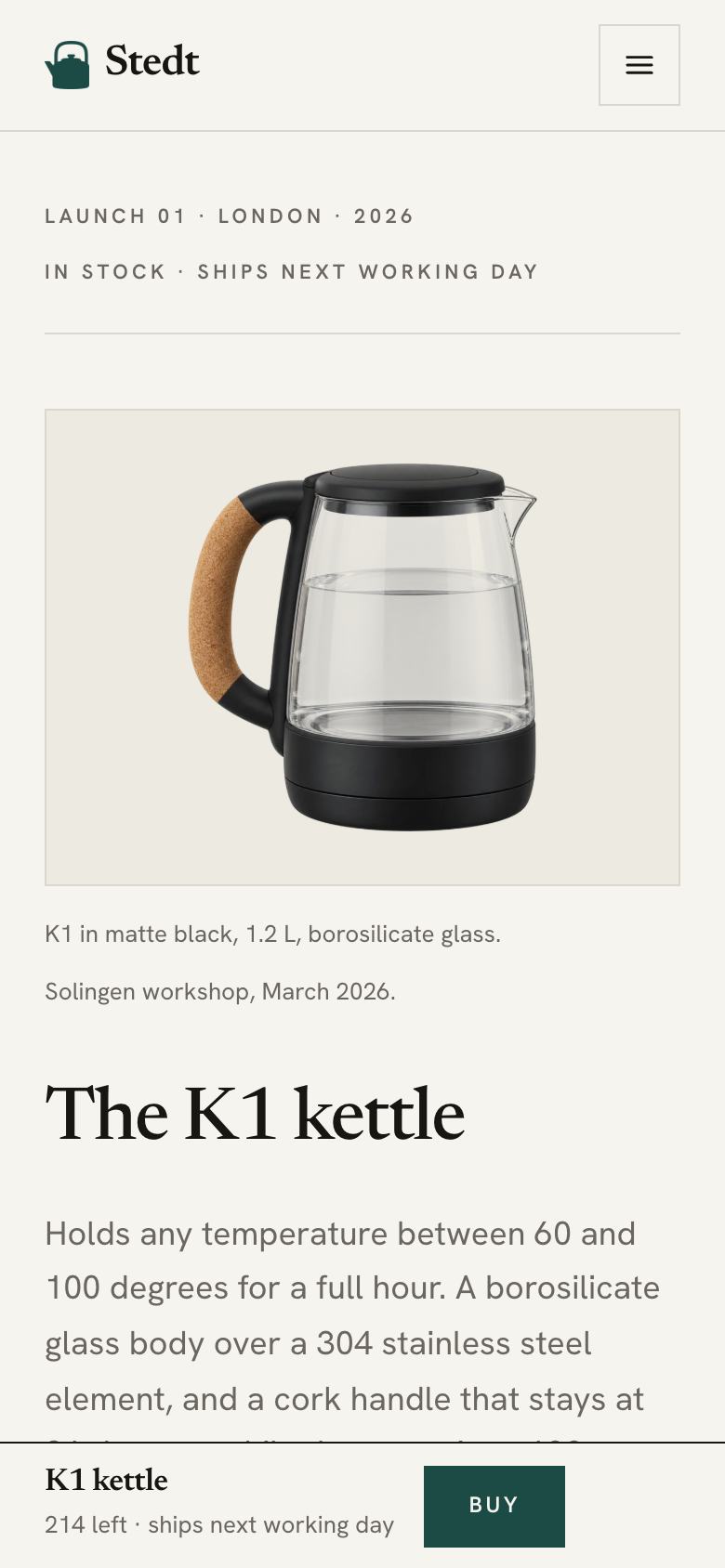
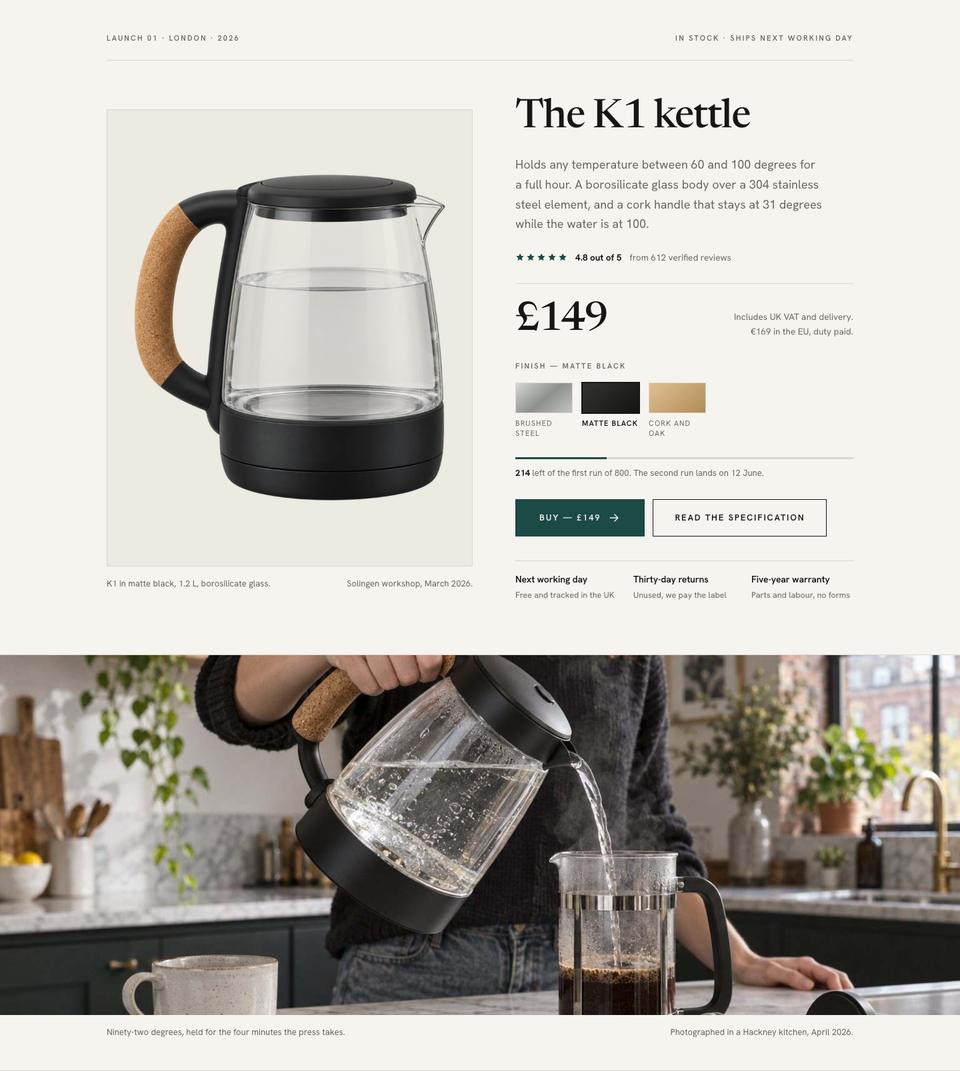
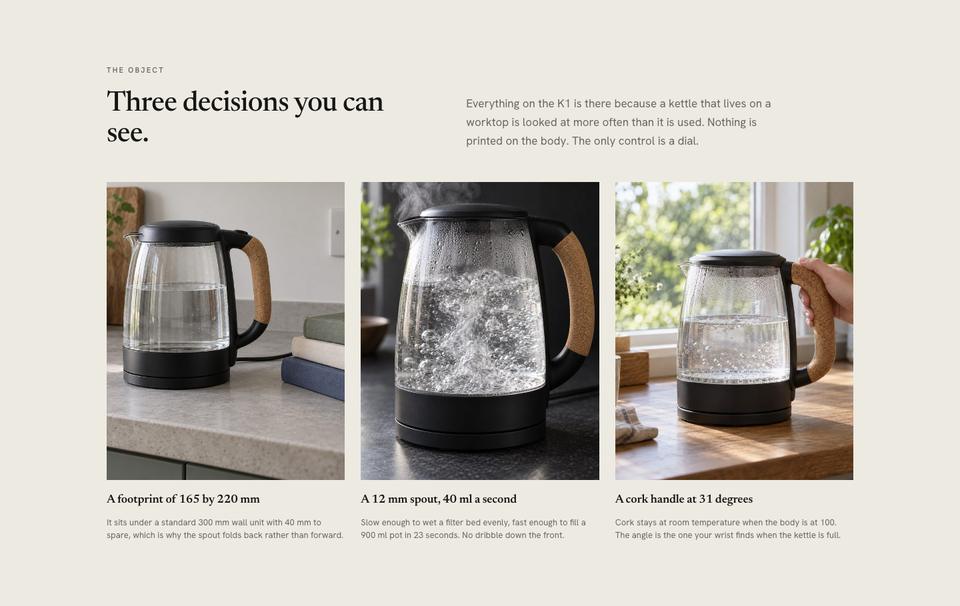
The hero names the product plainly, “The K1 kettle”, with a large photograph, what it does in one sentence, where it is made and stock status. The object explains three design decisions the buyer can see, each justified by how the product is used.
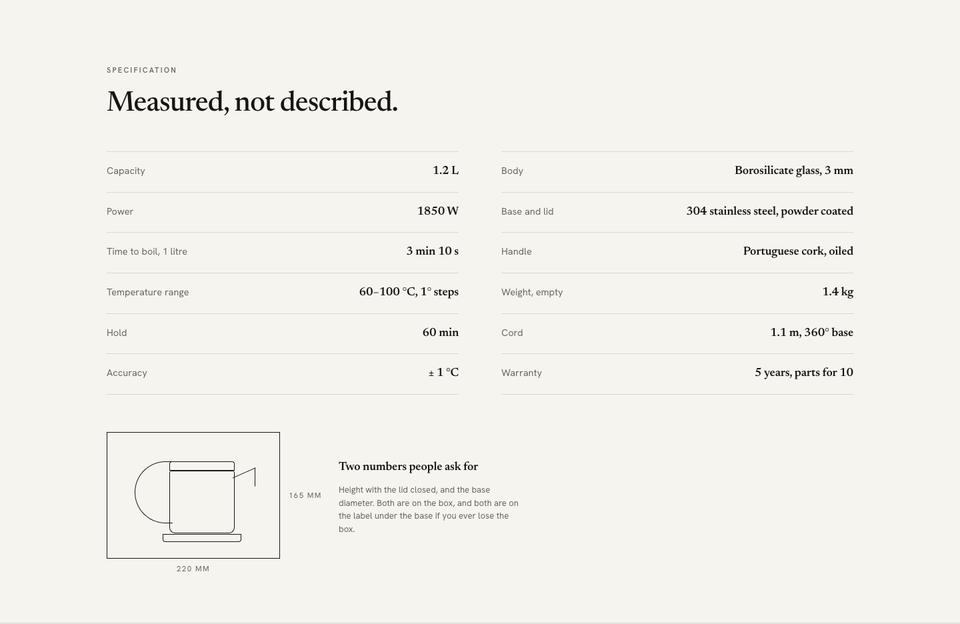
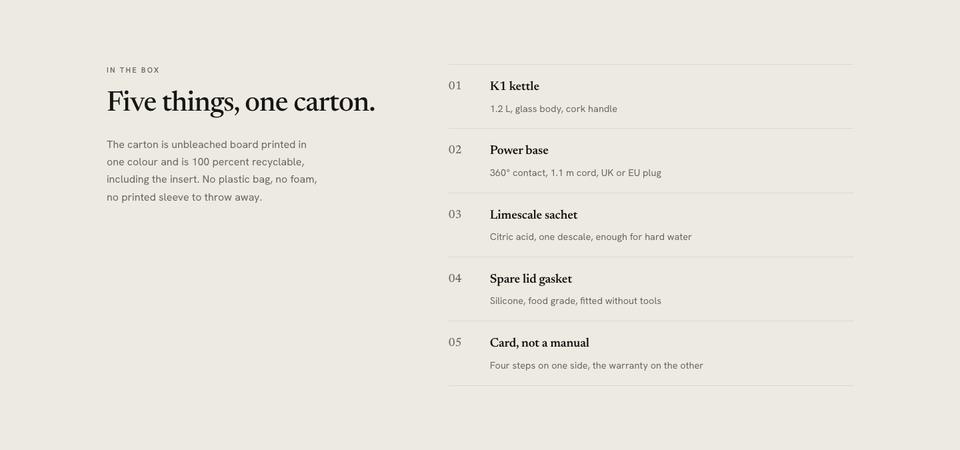
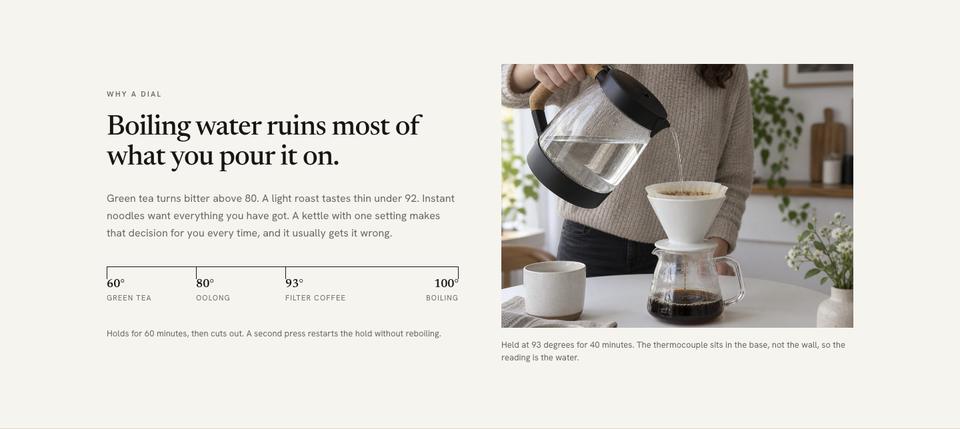
Specification is a hairline table of measured facts, capacity, power, times, tolerances and materials, under the heading “Measured, not described”. In the box lists contents and packaging. Why it matters makes the argument for the product’s main feature through everyday examples.
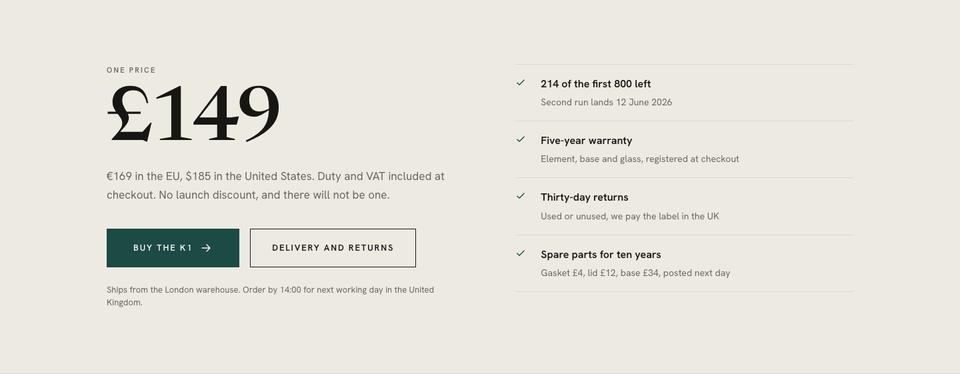
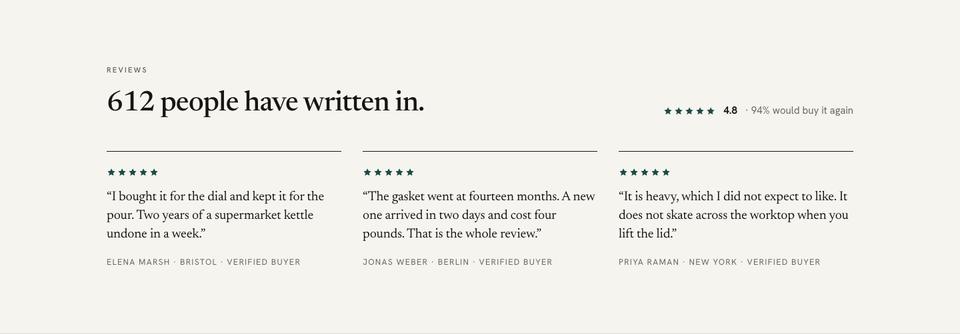
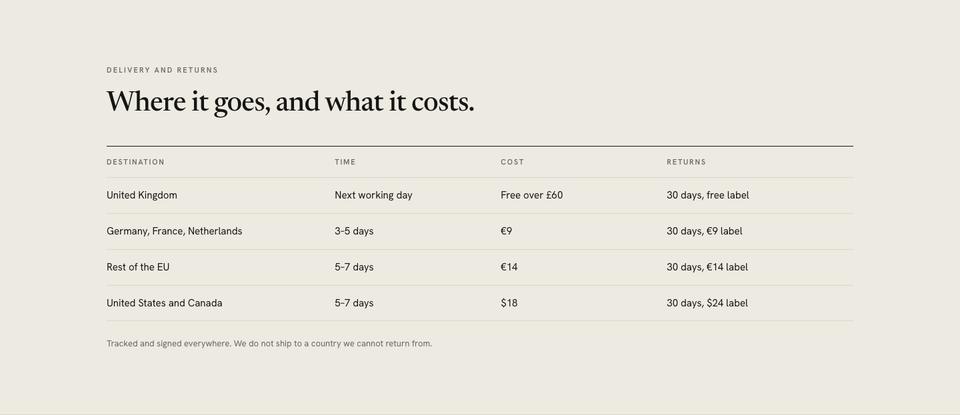
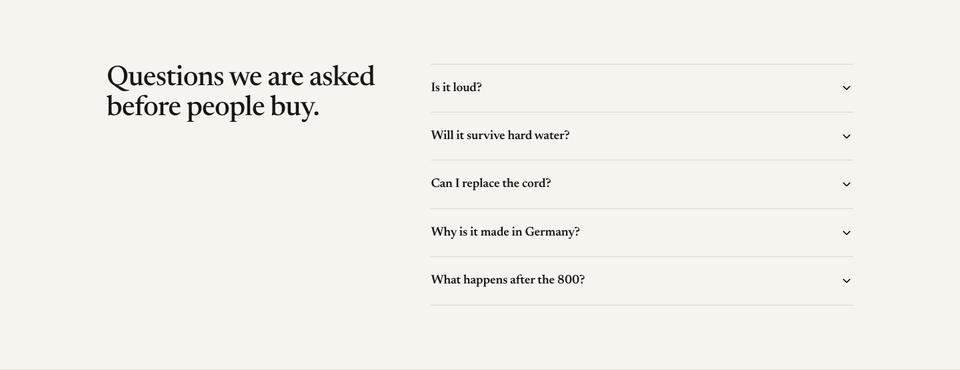
One price states the price in each currency with duties included and says there will be no launch discount. Reviews give the number of reviews, rating and repurchase intention, delivery and returns is a table by destination, and questions handles noise, cleaning and warranty.
Making it yours
Four schemes are included: Petrol, Ink, Clay and Ocean. Headings can be Newsreader, Spectral or Literata. Five photographs carry the page; one excellent hero shot and a few details are enough.
The specification table and delivery table are editable. Select them and ask the AI to rebuild them from your product sheet.
Writing it for your product
You can start from the template at no credit cost, or tick “Write the text for my business” and the AI writes your copy for about 20 credits, keeping the design. Include the product name, what it does and where it is made, design decisions, full specifications, box contents, prices by market, delivery and returns terms, reviews and common questions.
Testing the specification before you publish
A single-product page is read by buyers who check every number, so measure everything in the specification table yourself rather than copying the factory sheet. Capacity, power, dimensions, weight, materials, time to complete a task and accuracy should each be tested on production units, with the conditions noted where they matter, such as time to boil one litre from cold. If a figure differs between batches, give the range.
The in-the-box section should list every item in the carton and describe the packaging honestly. Decide the price for each market with taxes and duties included, the warranty length and what it covers, the returns window and who pays postage. The object section explains three design decisions that a buyer can see, so write down the reason behind each one. Reviews should be collected from verified buyers with the share who would buy again. Five photographs are used, and they need to be excellent: the object on a plain ground, in use, a detail of the material and one scale reference.
Lamps, bags, tools and instruments
A lamp or speaker can replace the dial story with light output or sound measurements and add a section on what it looks like in a room. Bags and luggage usually list volume, weight, material and the airline sizes they fit. Tools can show the jobs they are rated for with test results. Instruments and single editions can add a maker’s note and serial numbering, while keeping one price and one buy button.
When another template fits better
Single Product Launch sells one item now. A product taking pre-orders before it ships fits Pre-order Launch, and a consumer electronics launch with more visual energy suits Gadget Launch. Sets and multi-packs belong on Bundle And Save, and a product that needs an in-person demo, such as a kitchen or machine, on Booked Demo.
See every selling layout on the ecommerce templates page.
Before you publish
- Check every specification against the final production unit.
- Confirm prices, duties and delivery terms for each market.
- Point the buy button at a working checkout.
- Use your own product photography.