SolarLanding page template
An installer page with published prices, converting on a free survey
A photo-led page for solar and energy installers that publishes fitted prices, shows metered payback from real homes and converts on a free home survey.
An installer page with published prices, converting on a free survey
A photo-led page for solar and energy installers that publishes fitted prices, shows metered payback from real homes and converts on a free home survey.
Switch devices, scroll the full page, or open the live demo. This is the exact layout, photos and sample text a new page starts with.
The headings are the demo's own sample text. Your brief, or the AI copy pass, replaces them; the structure stays.
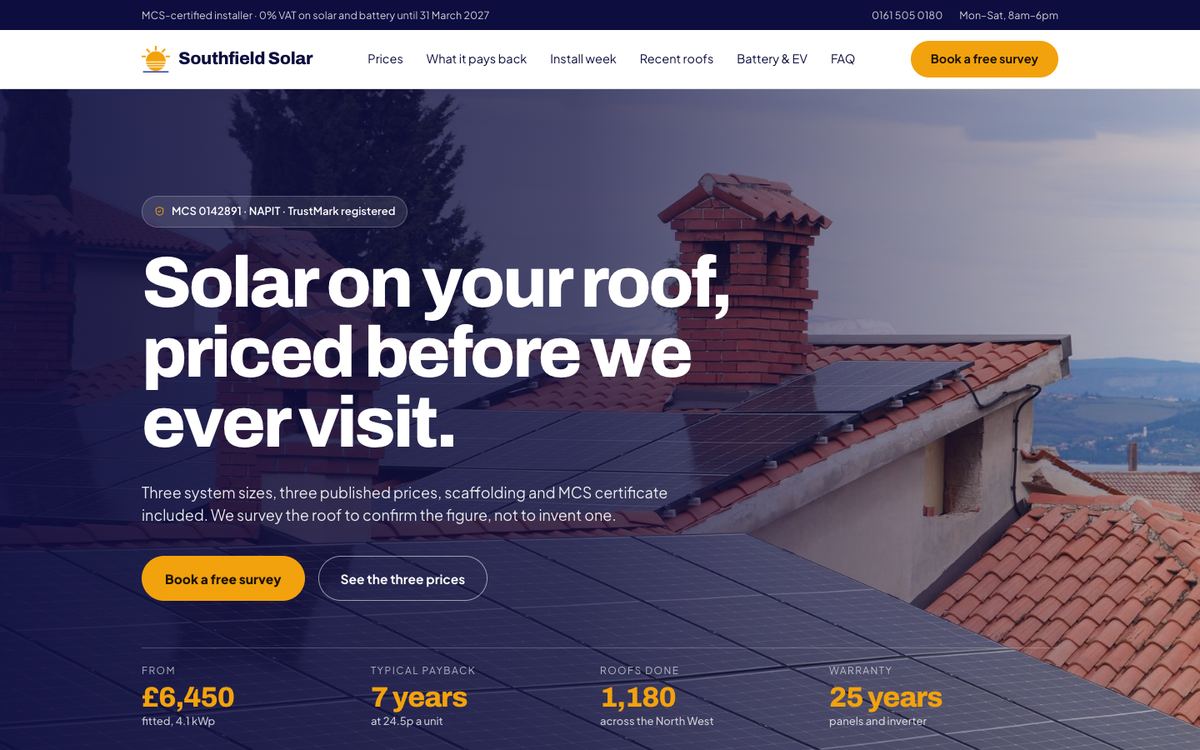
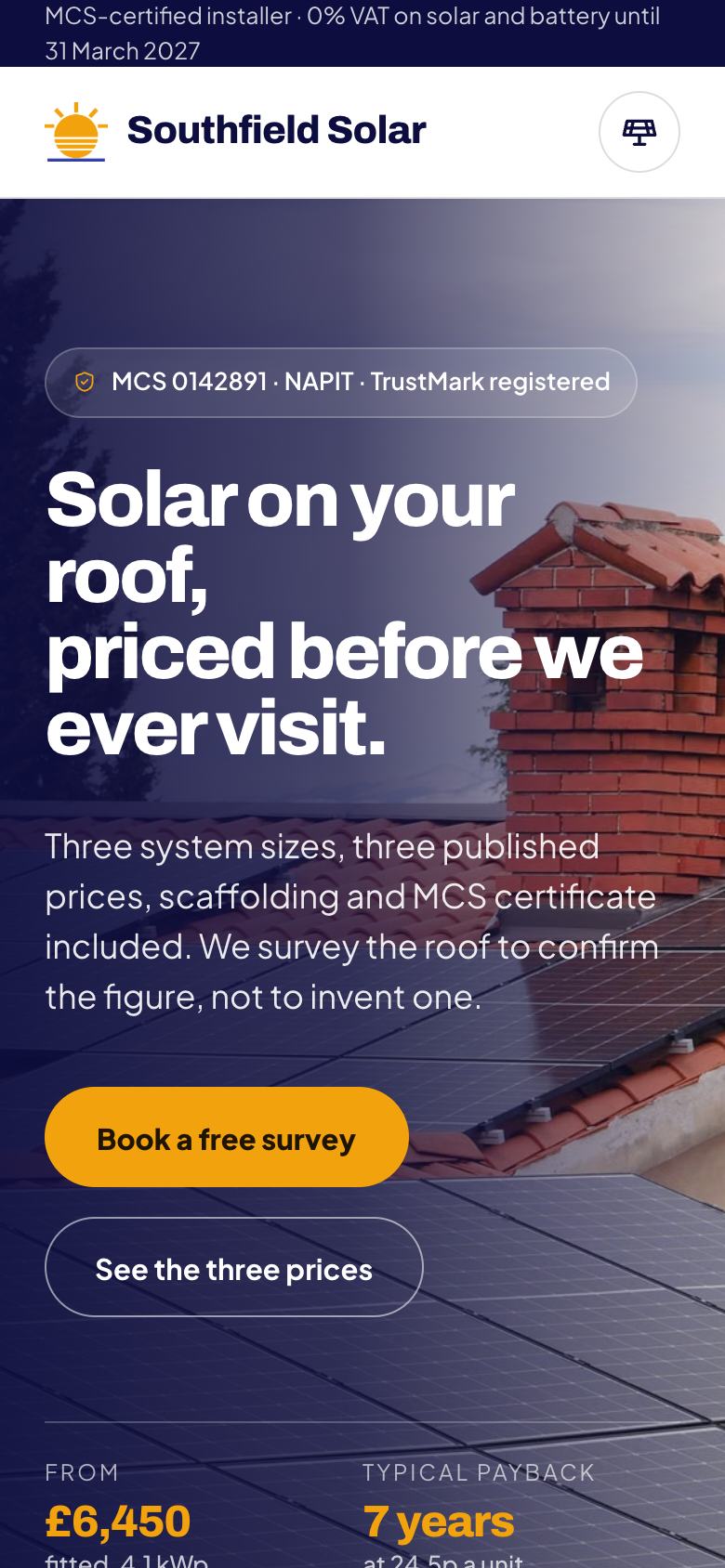
Solar on your roof, priced before we ever visit.
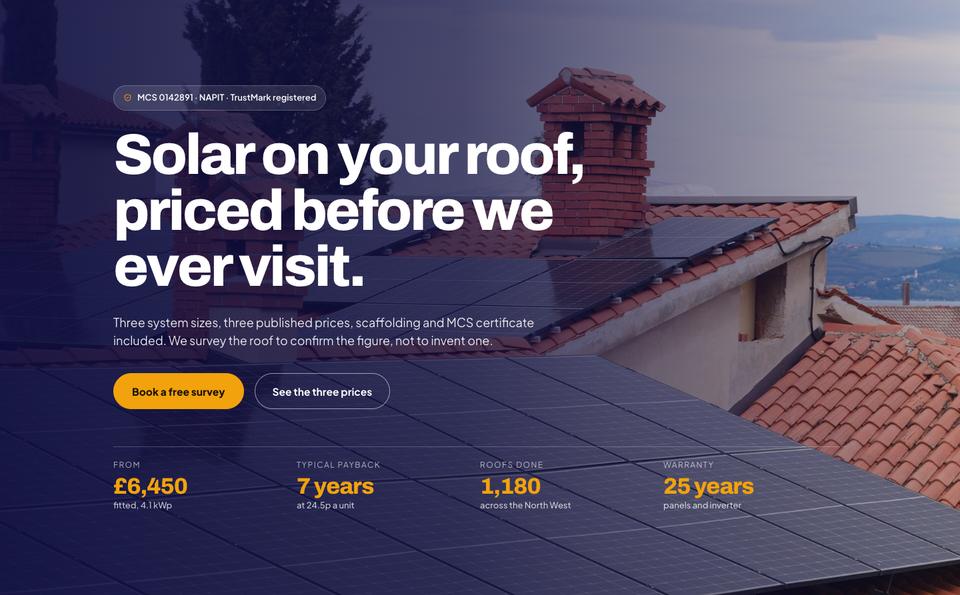
Three roofs, three prices, no “from” games.
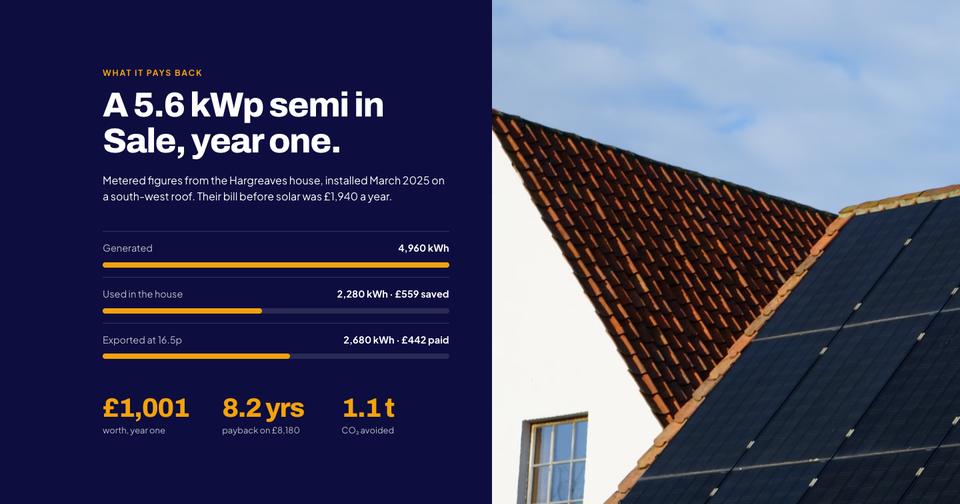
A 5.6 kWp semi in Sale, year one.
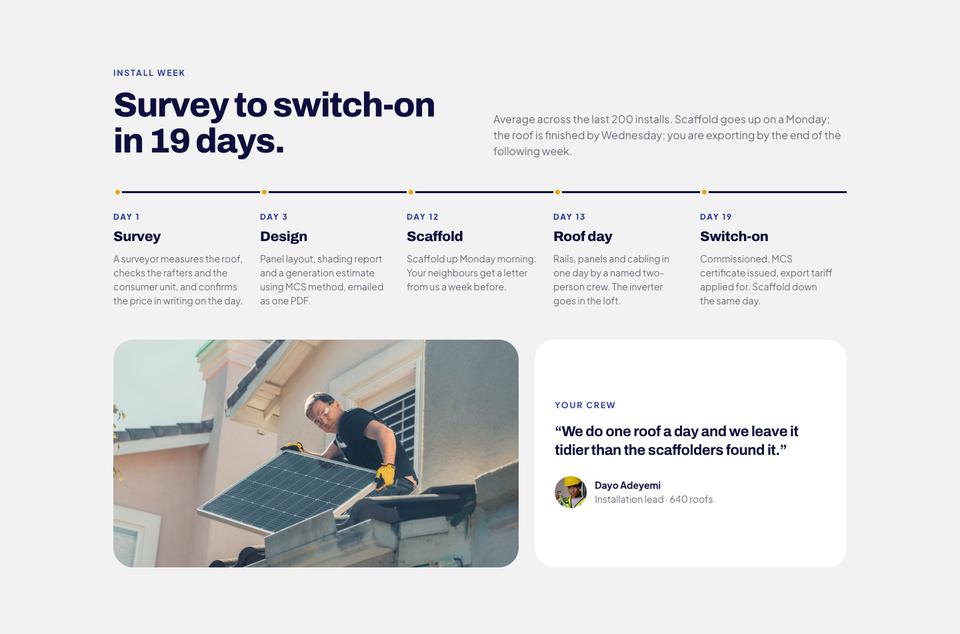
Survey to switch-on in 19 days.
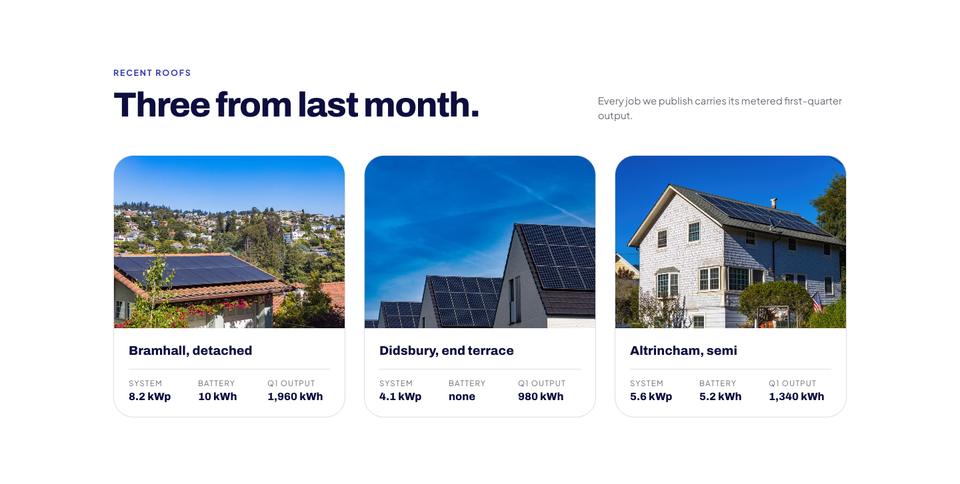
Three from last month.
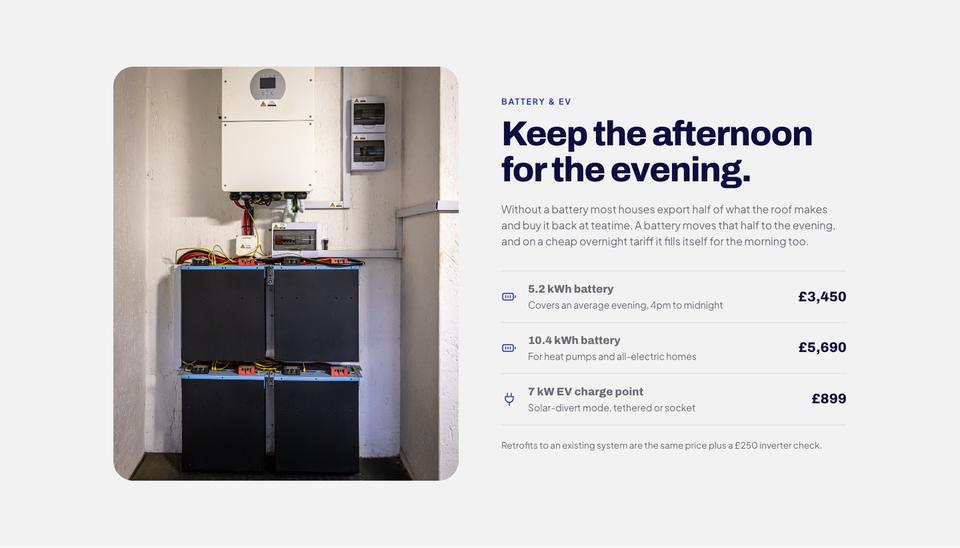
Keep the afternoon for the evening.
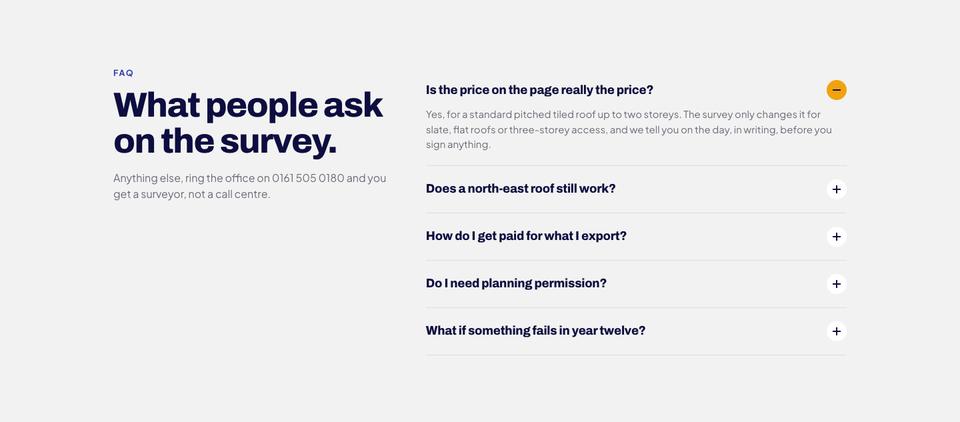
What people ask on the survey.
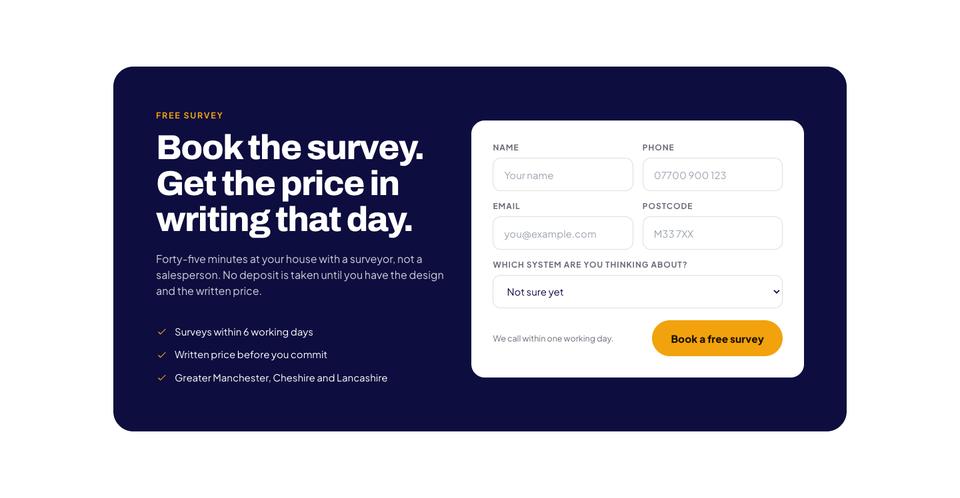
Book the survey. Get the price in writing that day.
Homeowners researching solar expect to be chased by salespeople and quoted “from” prices that grow on the doorstep. Solar is a photo-led template that turns that expectation around. It publishes three fitted prices, shows metered figures from a real house and converts on a free survey with a written price the same day.
It is written for a residential installer and suits rooftop and commercial solar, battery storage and EV charging, electrical contractors and green-building suppliers. Choose it when the offer is a survey or quote and your proof is installed systems and kWp figures.
The hero puts certifications in the first line and makes a direct promise: solar priced before anyone visits. Full-bleed photography of an installed roof does the rest.
Prices shows three system sizes for a standard roof with what is included, such as scaffolding and certification. Payback follows one real house through its first year with bills before and after. Install week explains the 19 days from survey to switch-on, day by day, which answers the disruption question. Scaffold on Monday, roof finished by Wednesday, exporting by the end of the week is the kind of detail that makes a homeowner book.
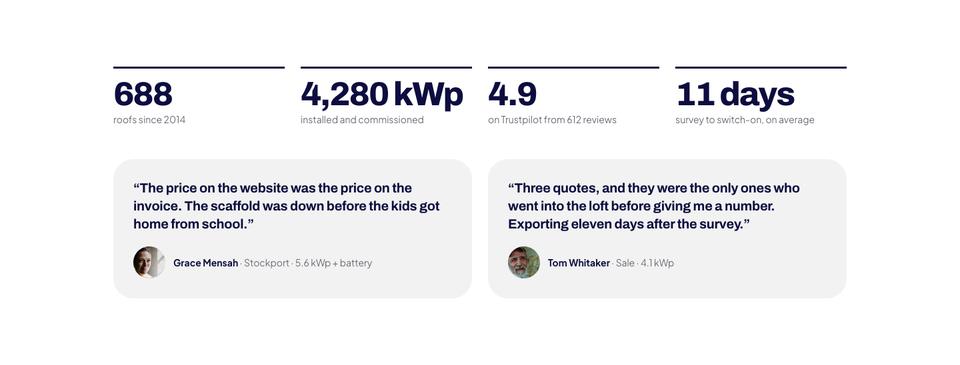
Recent roofs shows three installs from last month with their size and measured output, and battery and EV explains why storage matters in plain terms. A band of numbers and reviews (roofs installed, capacity, rating) adds scale. Questions answers what people ask on the survey, and the page ends with the free survey form, stating that no deposit is taken until the customer has the price in writing.
Four schemes are included: Sunlight amber, Deep ocean, Forest green and Mint teal. Headings use Archivo, Familjen Grotesk or Lexend over Plus Jakarta Sans or Hanken Grotesk. The layout is full-bleed and photo-led, so real images of your own installations matter more here than in most templates.
Price cards, payback figures and install cards are all editable in place. Select the prices and ask the AI to rewrite them from your price list if you prefer.
Start from the template with no credits spent, or have the AI replace the sample copy with text for your company for about 20 credits while keeping the design. Give it your area and certifications, your packages and prices, one customer’s real payback figures, your average install time, battery and charger options and your review score.
Published prices build trust only if they hold on the survey, so define the standard job each price covers: roof type, storeys, orientation, panel count and what is included, such as scaffolding, the grid application and the certificate. State what changes the price, for example a flat roof, a long cable run or a consumer unit upgrade, so a higher quote on the day does not feel like a trick.
The payback section needs one metered household, with the bill before, the system size and the savings over a named period. Avoid projected lifetime savings that depend on energy prices you cannot predict. For the recent roofs, record kWp, battery size and first-quarter output for each job, and get the owner’s permission to name the area. The page uses ten photographs, so make sure your installers take clean shots of finished arrays from the street and the roofline.
A battery or EV-charging installer can move the battery section to the top and publish prices by capacity or charger type. Commercial and industrial electrical contractors usually replace household payback with a site case study showing demand charges saved, and swap the free survey for a site assessment booked by a facilities manager. Green-building suppliers can keep the structure and show installed projects by building type.
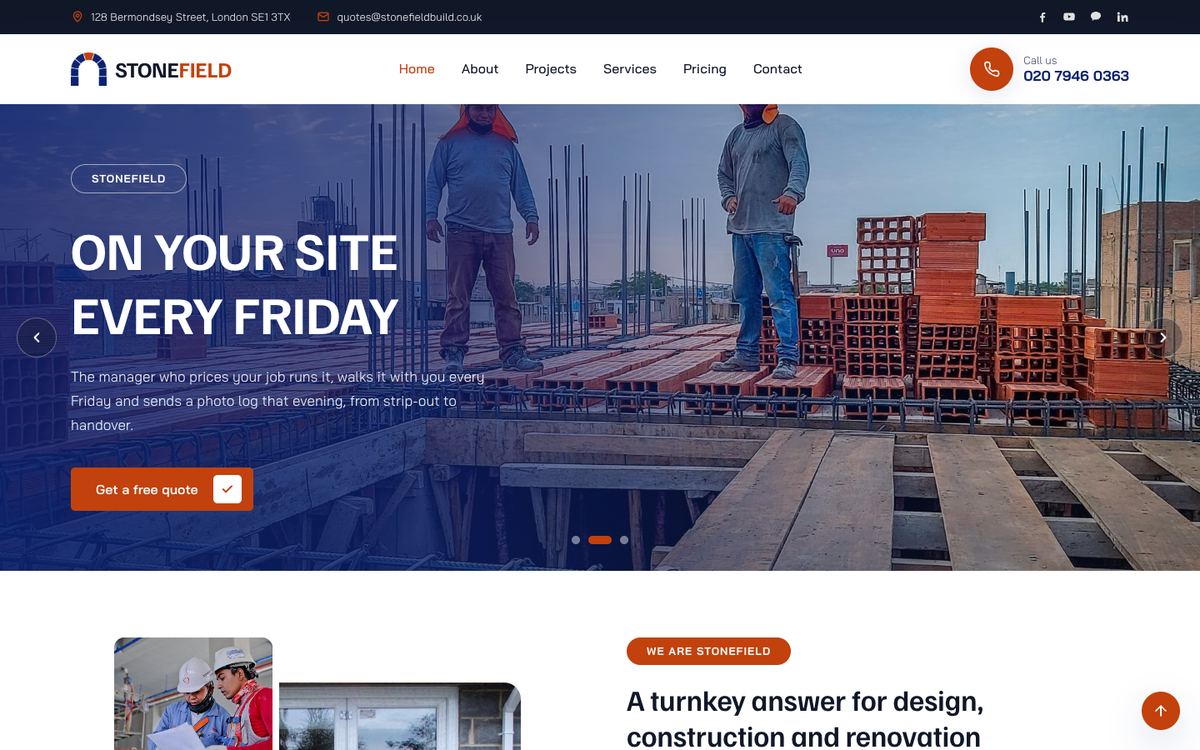
If your business is building work rather than energy, Construction shows projects and a turnkey process. Tradespeople such as electricians and plumbers who want a simpler call-out page will find Trade Shopfront closer, and commercial or domestic cleaning companies have Cleaning Services. For freight and delivery firms, Logistics keeps the same practical tone.
There are more on the professional services templates page.
 ConstructionProfessional services · Familjen Grotesk
 Cleaning ServicesProfessional services · Archivo
 Solo ConsultantProfessional services · Josefin Sans
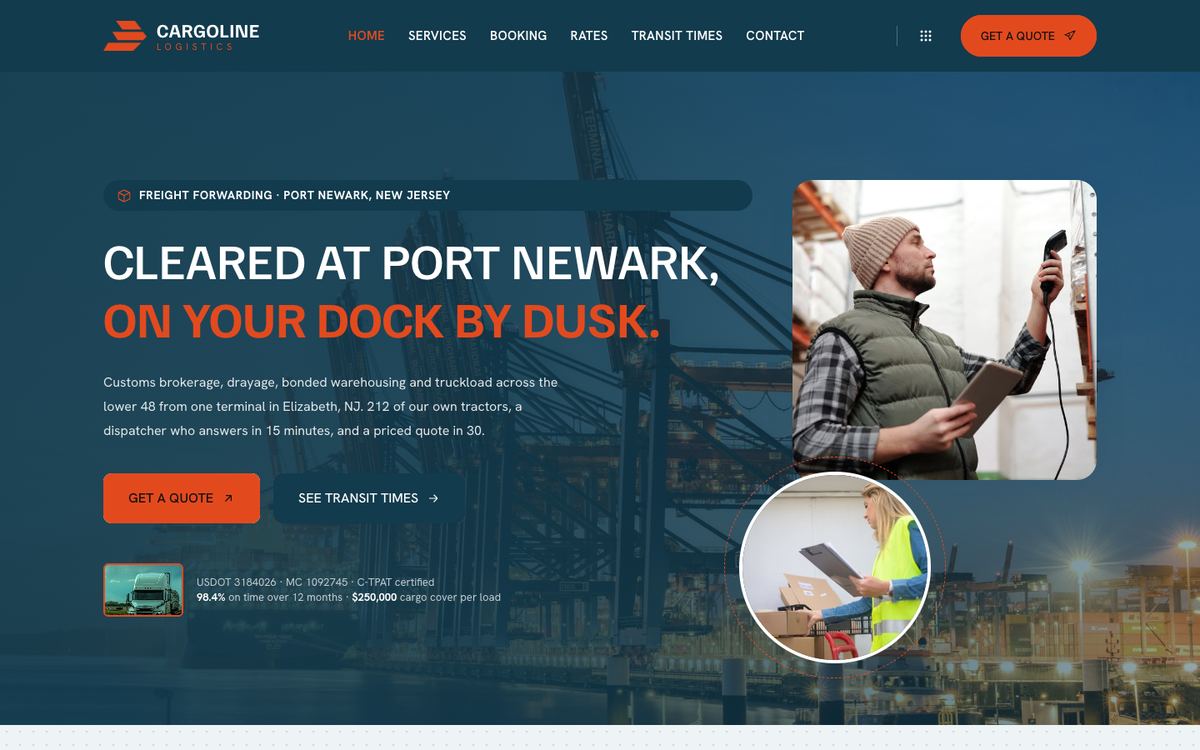 LogisticsProfessional services · Familjen Grotesk
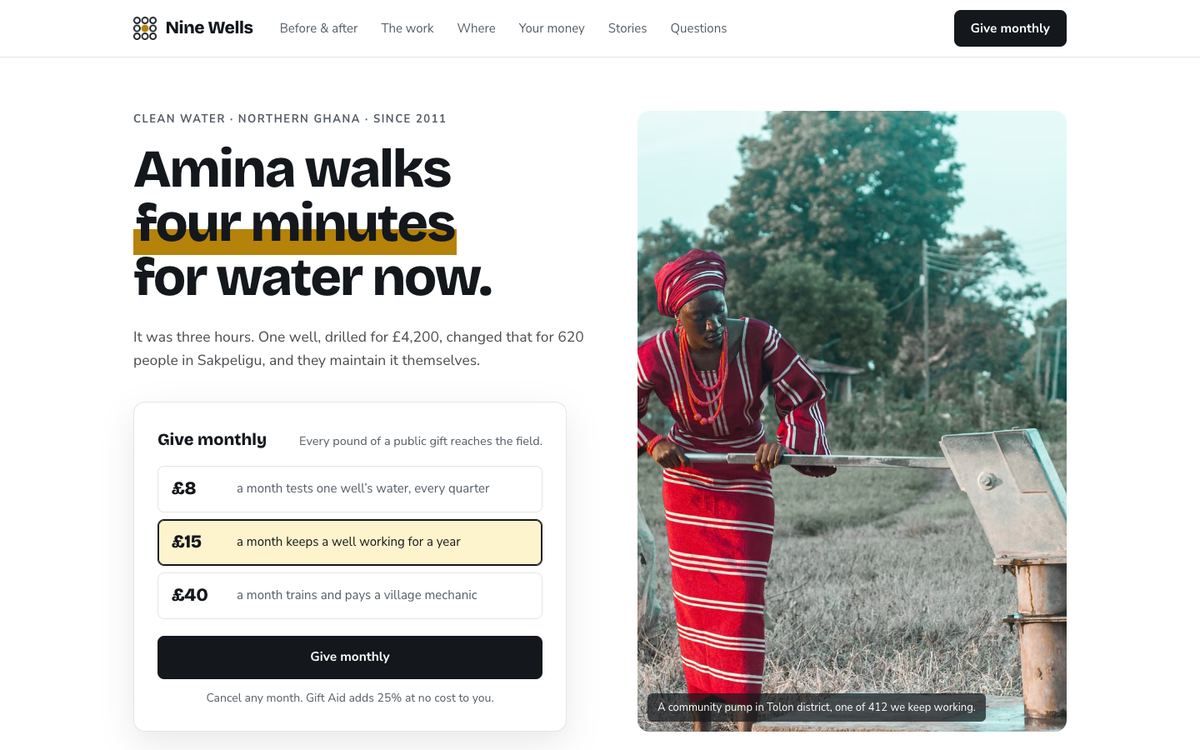 Cause AppealProfessional services · Bricolage Grotesque
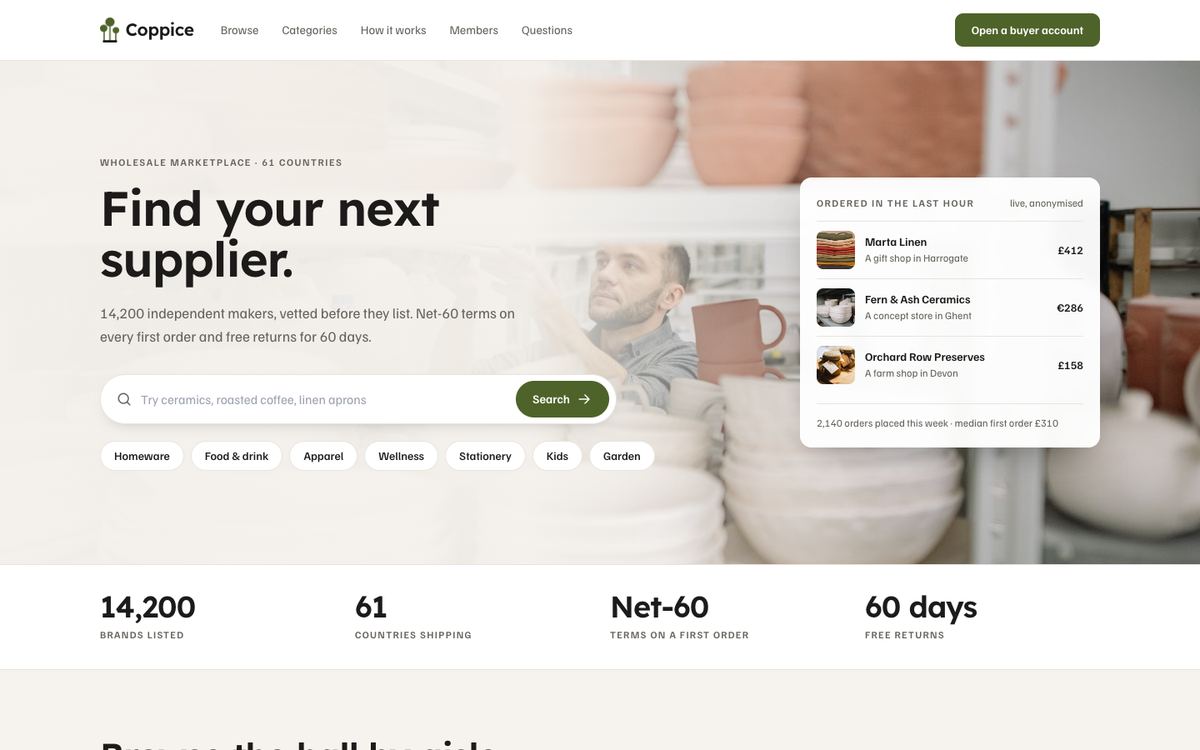 Wholesale MarketplaceProfessional services · Lexend
Starting from the theme costs no credits. Or describe the offer and the AI draws a new page in this style, usually in about two minutes.
