For marketplaces with two doors
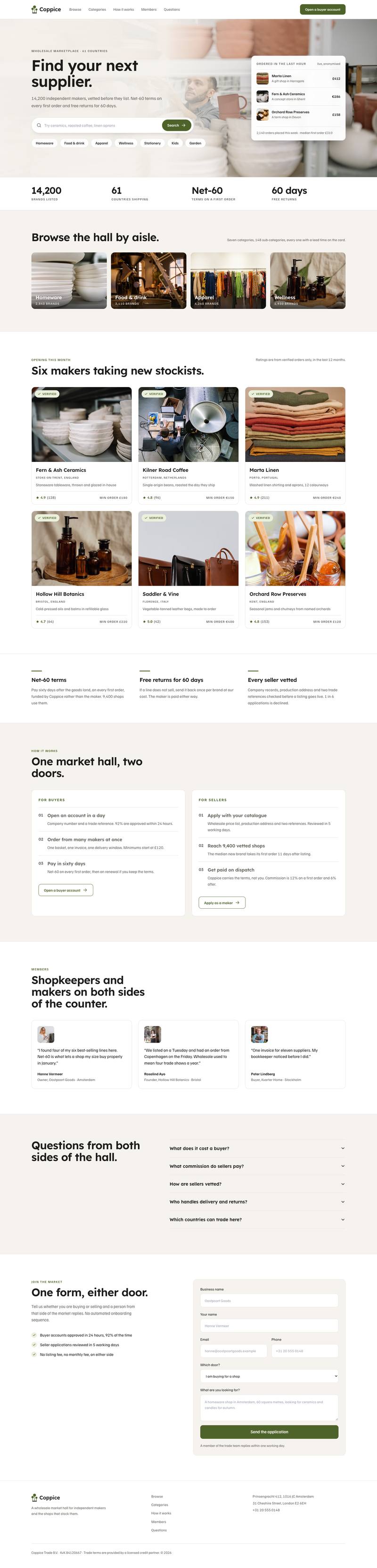
A marketplace page has to persuade two audiences at once without confusing either. Wholesale Marketplace does it like a market hall: a search plate and category aisles for buyers, featured seller cards for makers, terms that make a first order easy, and one join form with a door for each side.
It suits two-sided marketplaces and trade directories, supplier networks and B2B catalogues. Choose it when listings, categories, minimum orders and terms carry the page and both sides join through the same form.
How the page serves both sides
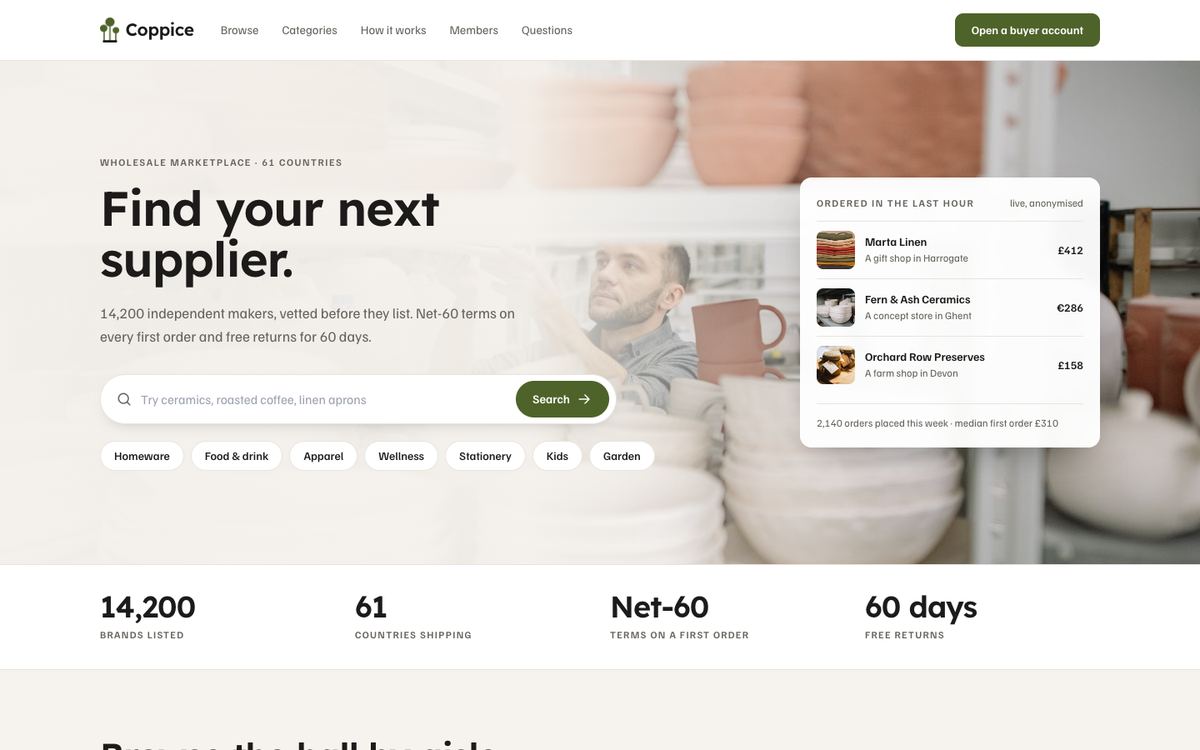
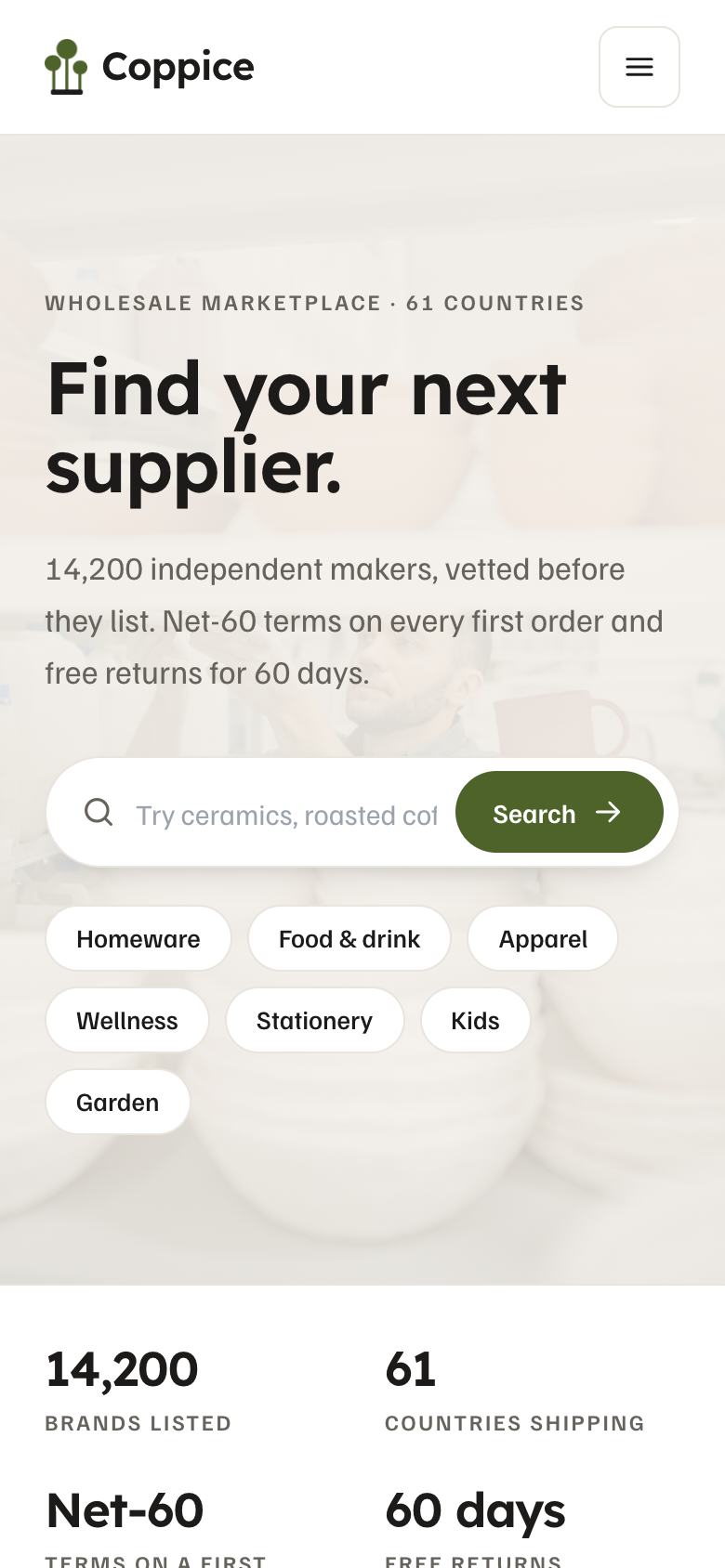
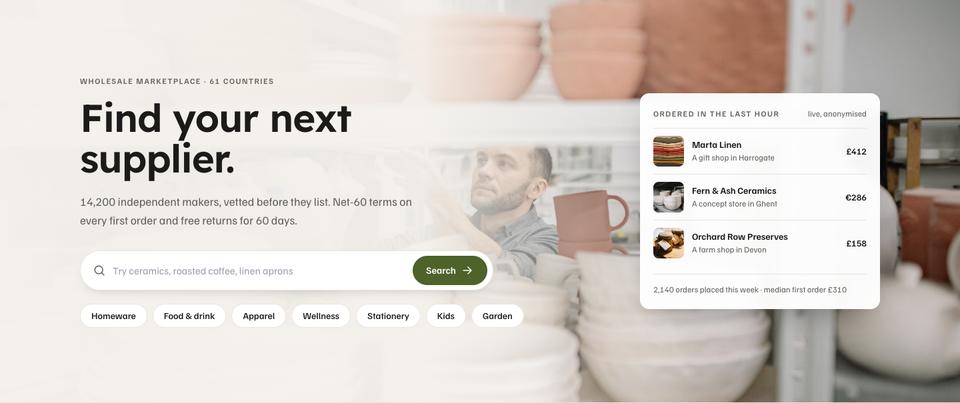
The hero addresses buyers first, “Find your next supplier”, with a search plate and the three terms that matter: vetted makers, payment terms and free returns. A numbers band gives brands listed, countries, terms and returns.
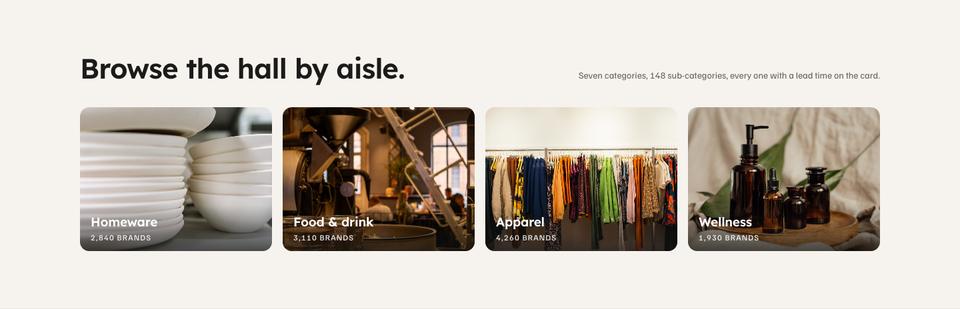
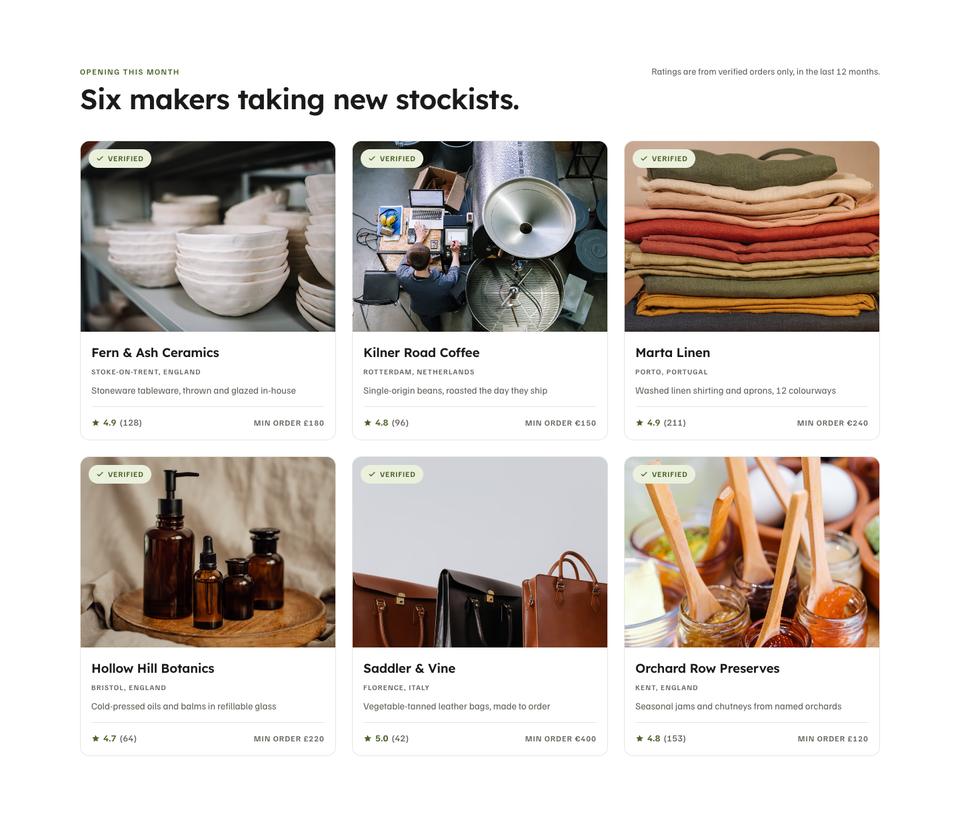
Categories presents the aisles with brand counts, and opening this month features six makers taking new stockists, with location, minimum order and ratings from verified orders. Terms explains who funds the payment terms and how returns work, removing risk for a shop trying a new brand. For most marketplaces this is the real reason a buyer signs up, so it earns its own section rather than a line in the small print.
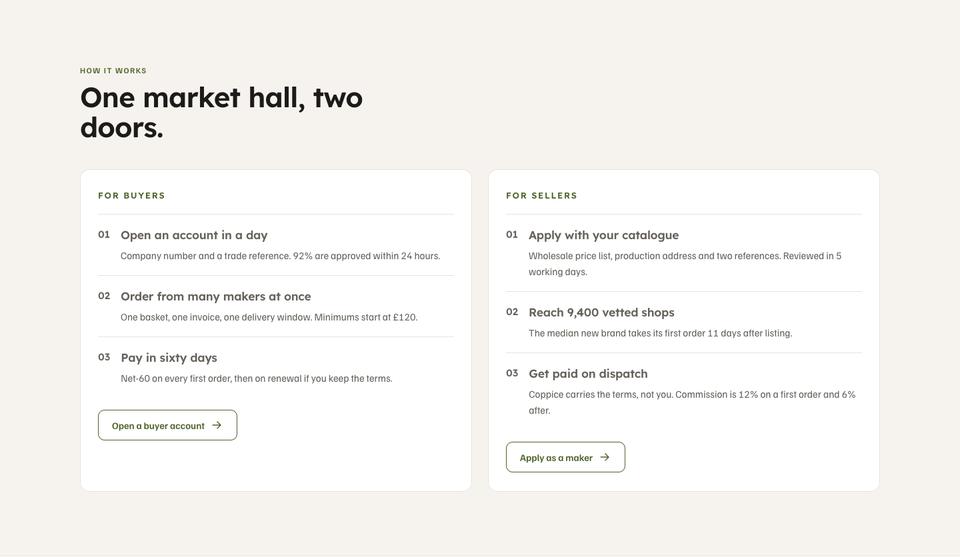
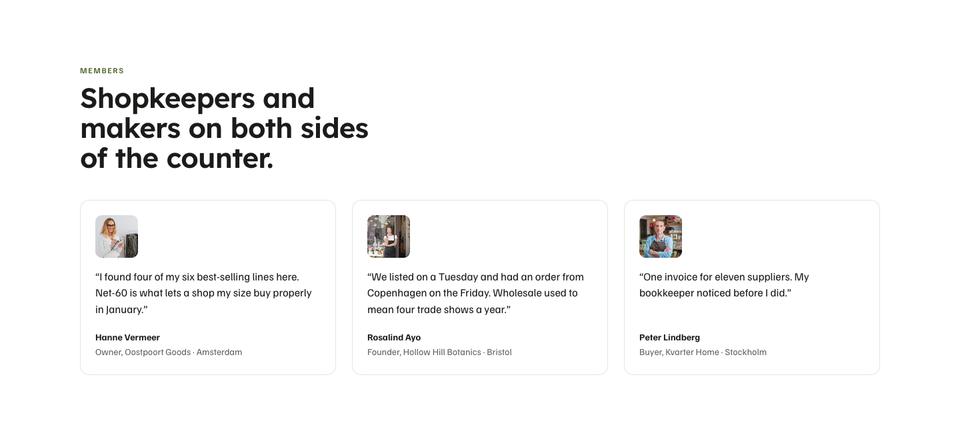
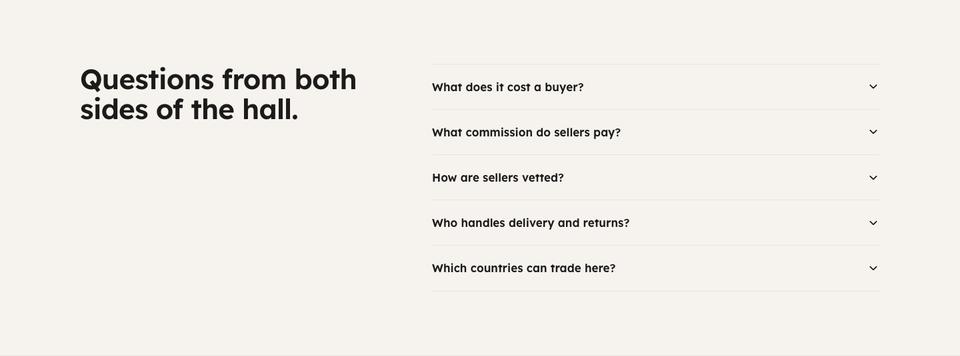
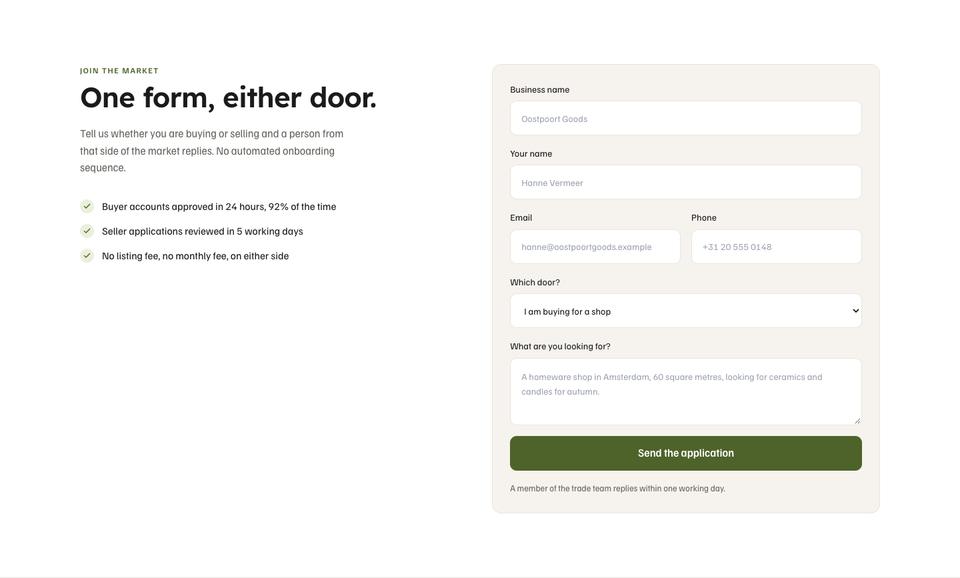
How it works splits into two columns, one for buyers and one for makers, each with its own steps. Members quotes a shopkeeper and a maker, questions answers what each side pays, and the page ends with join the market, one form that routes to the right team.
Adapting the design
Four schemes come with it: Olive, Clay, Teal and Plum. Headings can be Lexend or Plus Jakarta Sans over Familjen Grotesk, or Epilogue over Mulish. The demo uses 17 photographs, largely product and maker images on the seller cards; real listings from your marketplace are best.
Categories, seller cards and terms are editable. Update featured makers each month, or ask the AI to rewrite the section from a list of new sellers.
Writing it for your marketplace
Starting from the template is free. For about 20 credits, the AI replaces the sample text with copy for your marketplace, keeping the layout. Give it your size and reach, categories, how sellers are vetted, terms for buyers, fees for each side, the joining steps and example sellers.
What each side of the market needs to read
A two-sided page has two audiences with different questions, and this template answers both on one page. For buyers, gather the facts that decide whether it is worth opening an account: how many sellers are listed, which categories and countries are covered, minimum orders, payment terms, returns and how quickly accounts are approved. For sellers, prepare what it costs to list, commission rates, how they get paid and how they are vetted.
The category section needs real counts for each aisle, with lead times if they are shown on cards. The featured sellers should be makers who agree to be highlighted, with location, product type, minimum order and a verified rating from actual orders. Check the numbers band against your own data, and if you offer terms funded by a partner, describe that accurately. Seventeen photographs are used, mostly for seller cards and categories, so ask sellers for consistent product photography on a plain background to keep the grid tidy.
Trade directories and supplier networks
A trade directory without transactions can replace terms and returns with verification and contact details, and change the form into a listing request. Supplier networks for a single industry, such as construction materials or restaurant supplies, usually add certifications and delivery regions to each card. Service marketplaces can swap products for providers with day rates and availability. In each version, keep the single form with a clear choice of which side of the market the visitor is on.
When another template fits better
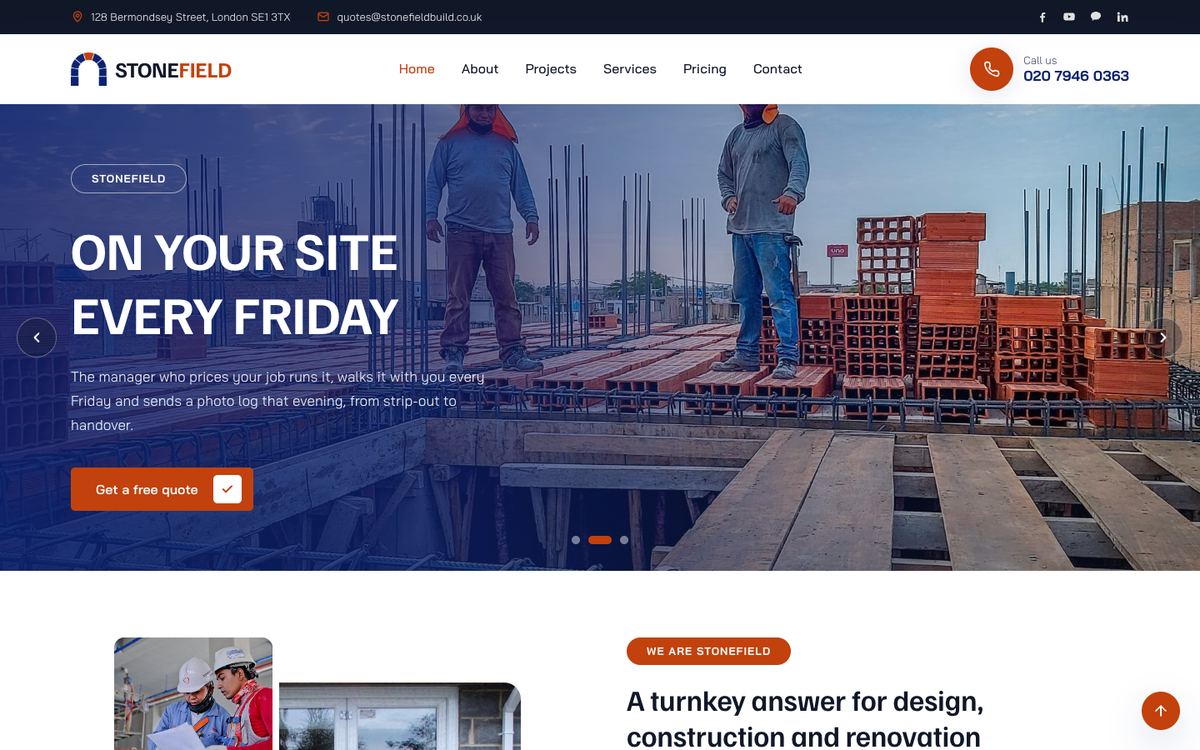
Wholesale Marketplace connects many sellers. A single brand selling to shops should use Wholesale Trade, and a trade shopfront for one tradesperson or firm fits Trade Shopfront. A course marketplace with many instructors belongs on Learning Platform, and a hotel booking platform on Hotel Booking Platform.
More are on the professional services templates page.
Before you publish
- Use real, approved seller listings for the featured cards.
- Check terms and returns wording with your finance team.
- Make the search plate link to a working catalogue.
- Test both paths of the join form.