Sell the night, not a generic event listing
Halloween Manor Party is built for a ticketed event where the reason to attend is the whole evening: the setting, the music, the rooms, the schedule and the people expected to arrive. It fits a Halloween party, masquerade ball, haunted house night, themed gala or late-night immersive event.
A generic event page can make a night feel like a date, a location and a button. That undersells an event with a programme and an atmosphere of its own. This template gives the organiser room to explain what guests will encounter, when parts of the night happen and what each ticket means.
The page is most useful when there is a clear occasion and a clear choice to make. The organiser needs a date, location, ticket offer and booking process ready before publishing. The event also needs enough visual material to show the performers, venue, rooms, contest and crowd without relying on vague promises.
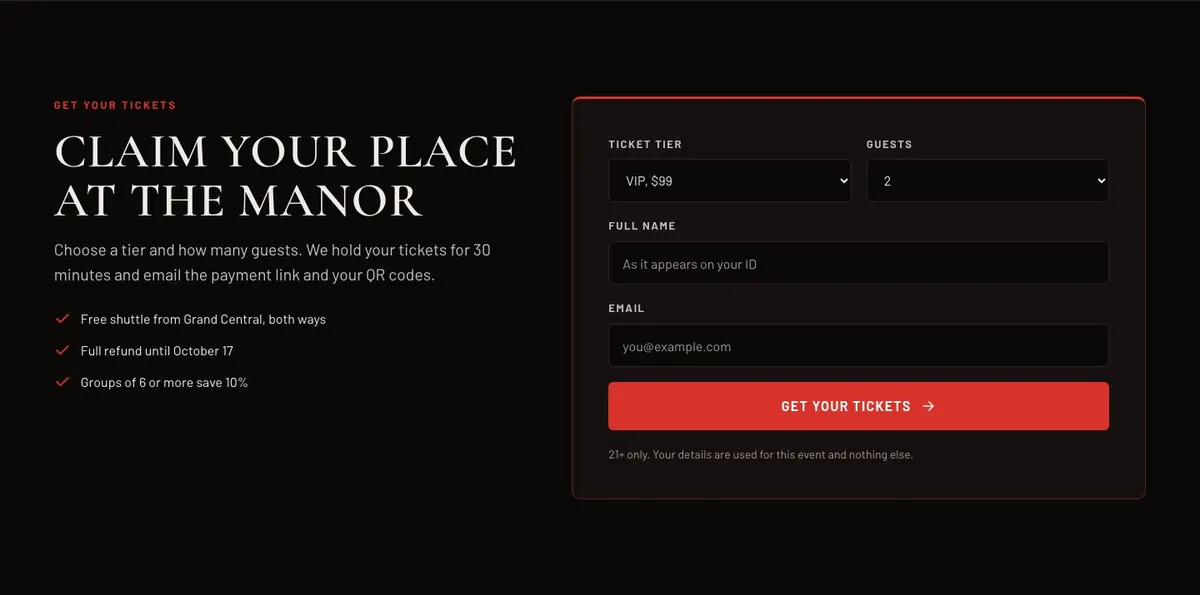
The goal is a purchase. The page leads towards ticket selection, then asks guests to choose a tier and number of guests. It is therefore a better fit for a planned paid night than for a loose announcement or a simple invitation.
Adapting the design to the event
The template has Blood red, Pumpkin, Witch violet and Potion green colour schemes. Choose one that supports the event’s own theme rather than trying to make every possible mood fit at once. A masquerade may suit a different scheme from a pumpkin-led Halloween party, while a haunted historic-venue event may need a quieter visual direction.
Cormorant Garamond is the display face and Barlow is the body face. The available font pairings are Cormorant Garamond with Barlow, Playfair Display with Barlow, and Mulish with Barlow. The headings are uppercase, so short event names and concise section labels will read more clearly than long phrases.
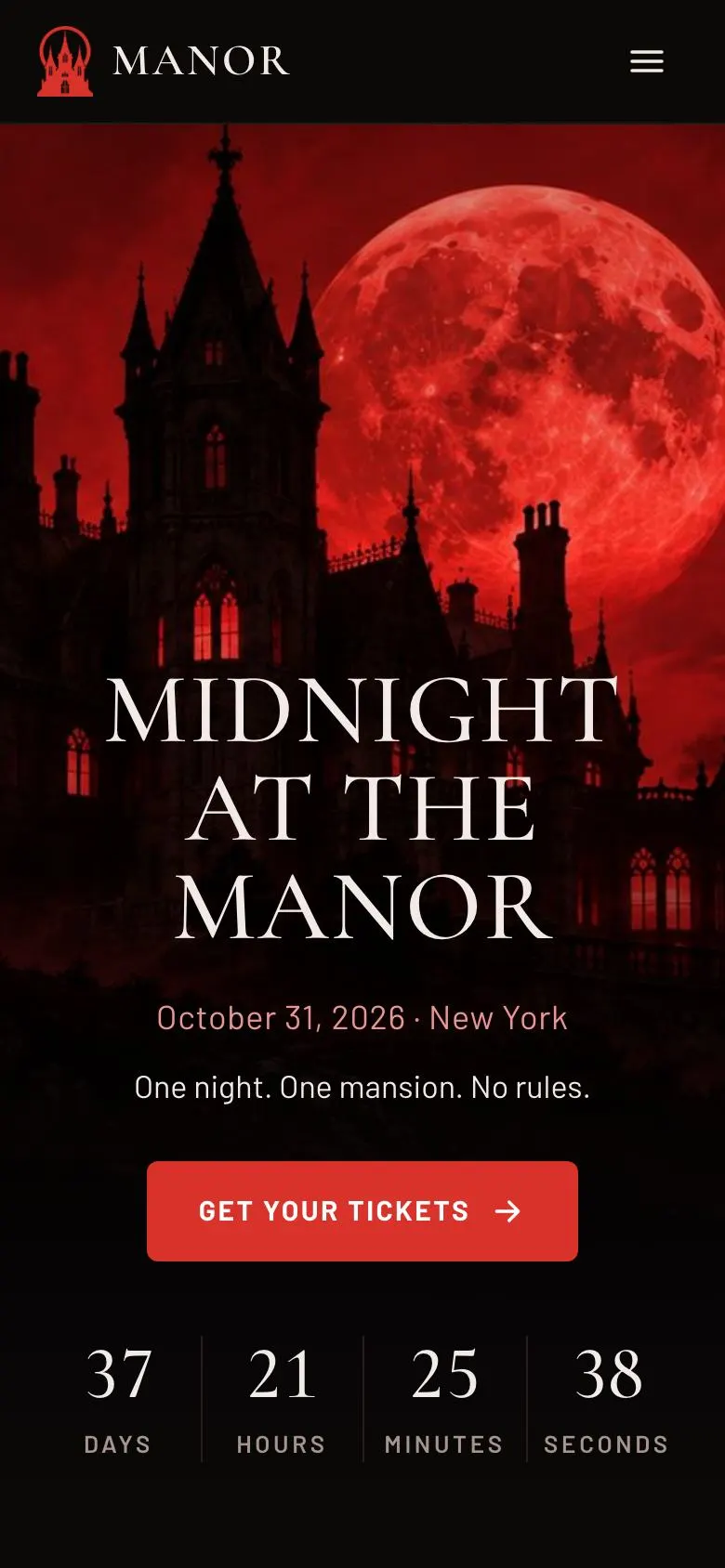
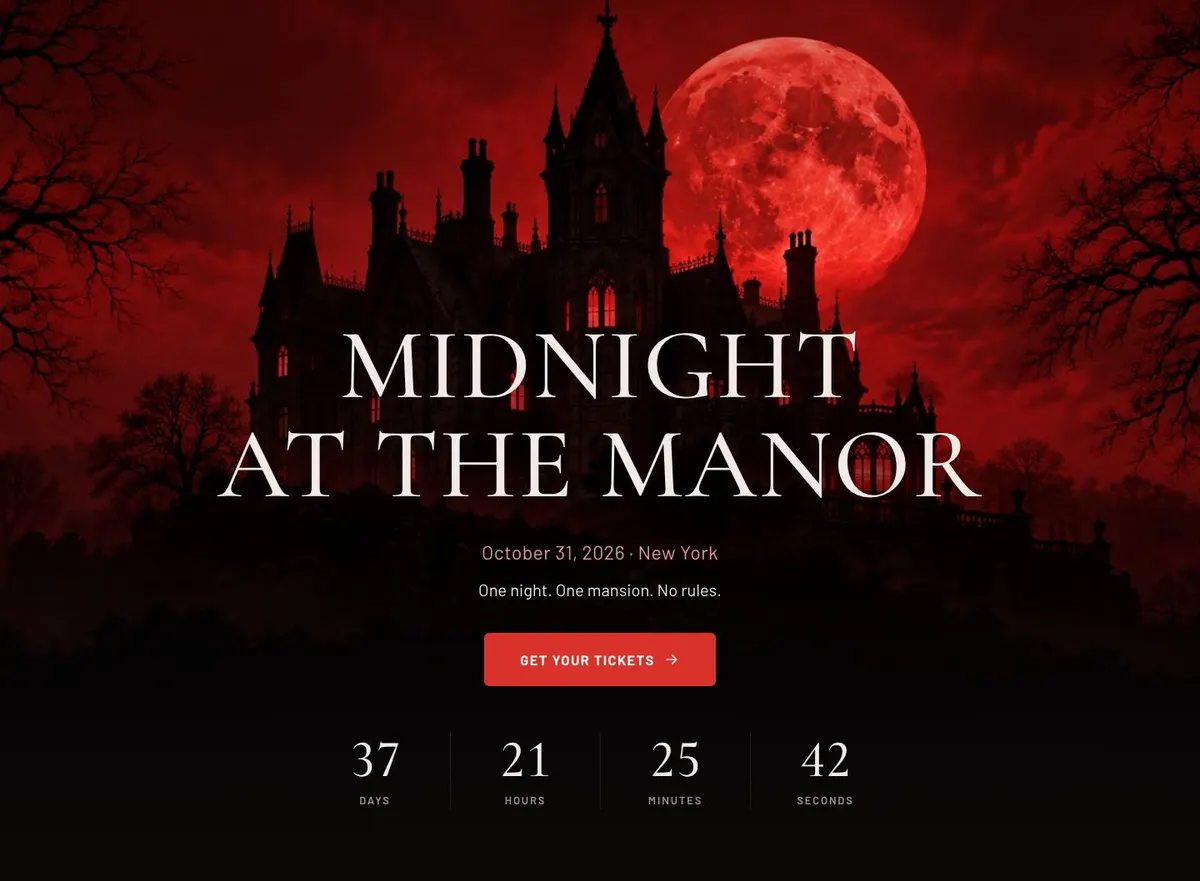
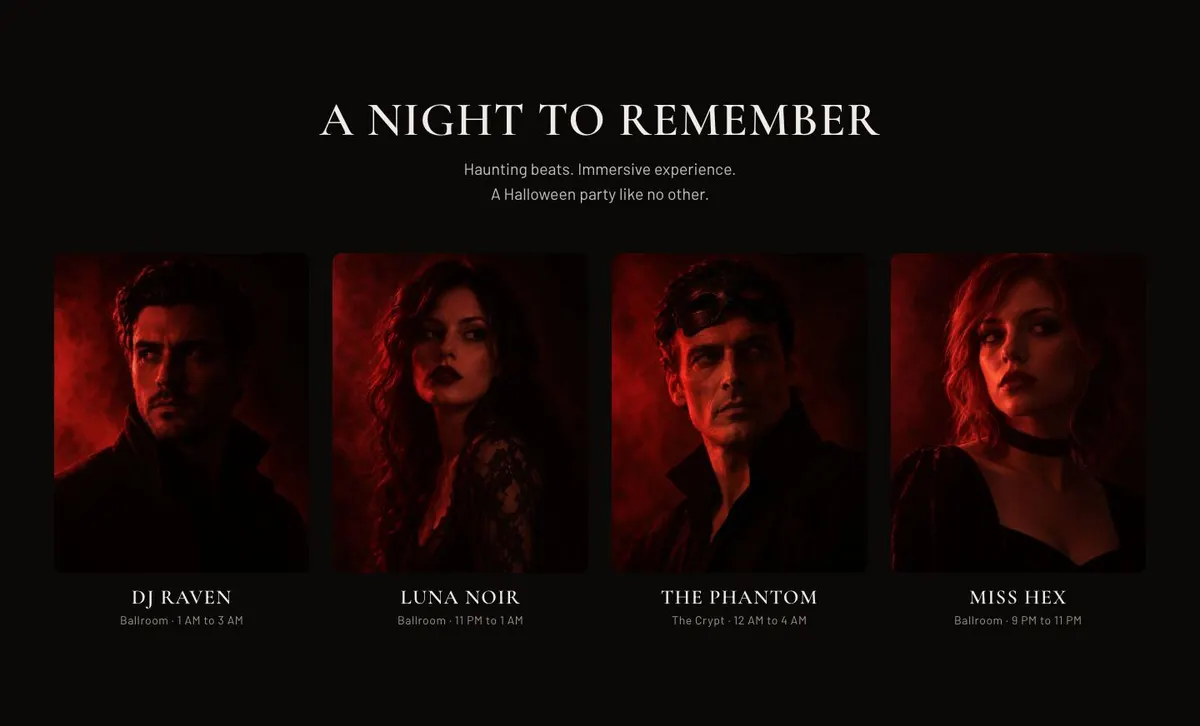
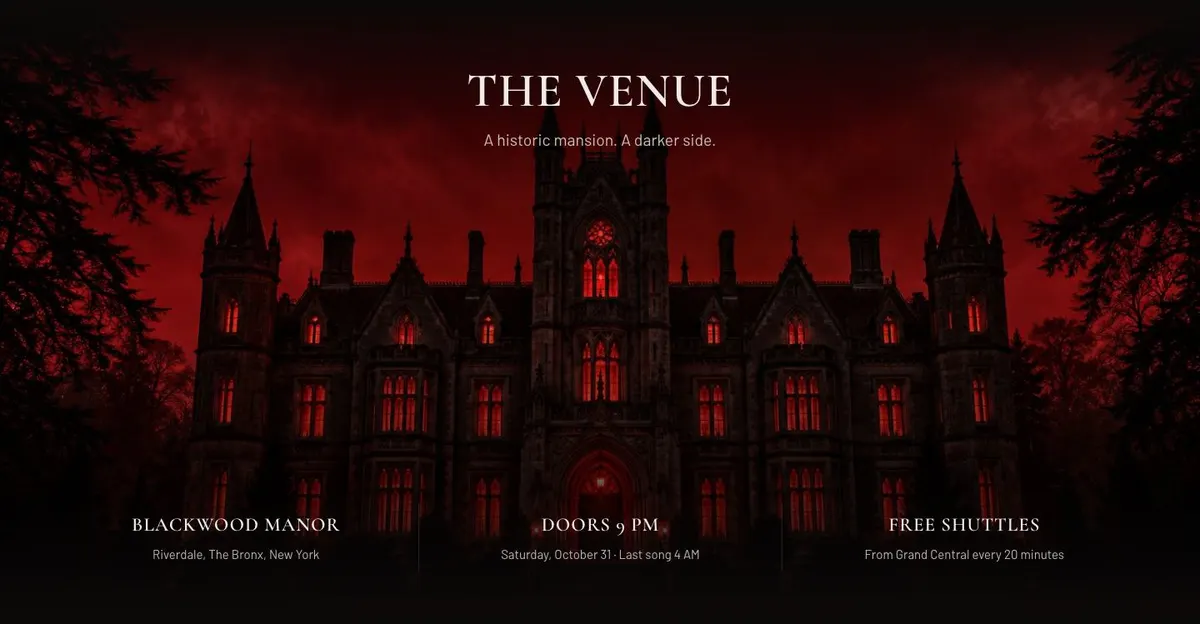
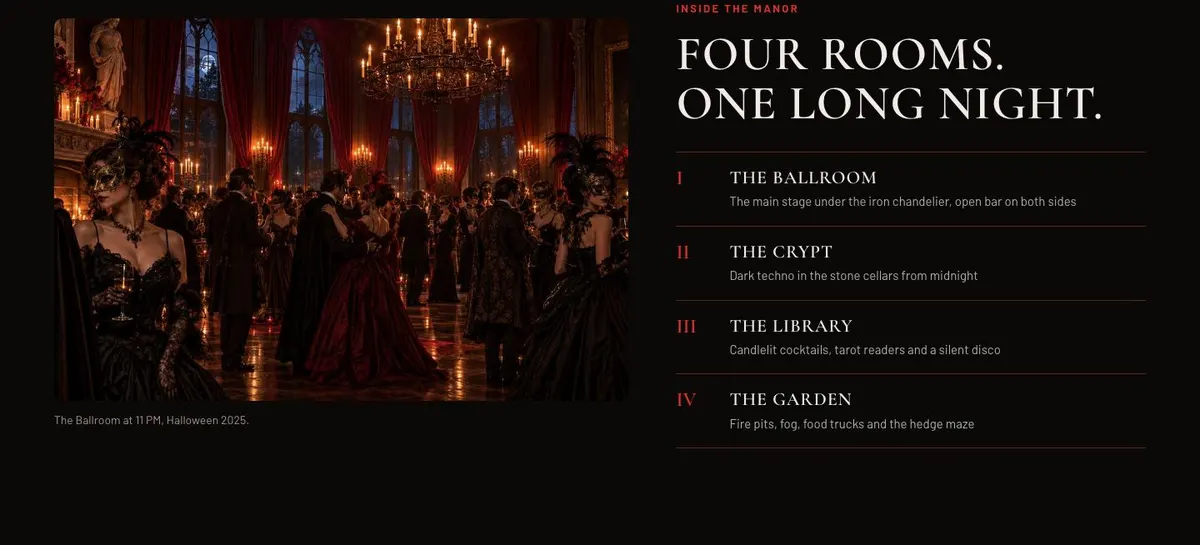
The page needs 11 photographs in total. Prepare an opening image, four lineup images, a venue image, a rooms image, a costume-contest image and two closing crowd images. These pictures should show the real event, people or place being sold. Do not treat the photographs as decoration added after the copy; several bands rely on them to establish what the guest is booking.
Writing it for your business
Starting from this template costs no credits. Rewriting the copy with AI costs about 20 credits. A useful brief names the event, date, location, ticket tiers, what each tier includes, the booking process and the tone to retain.
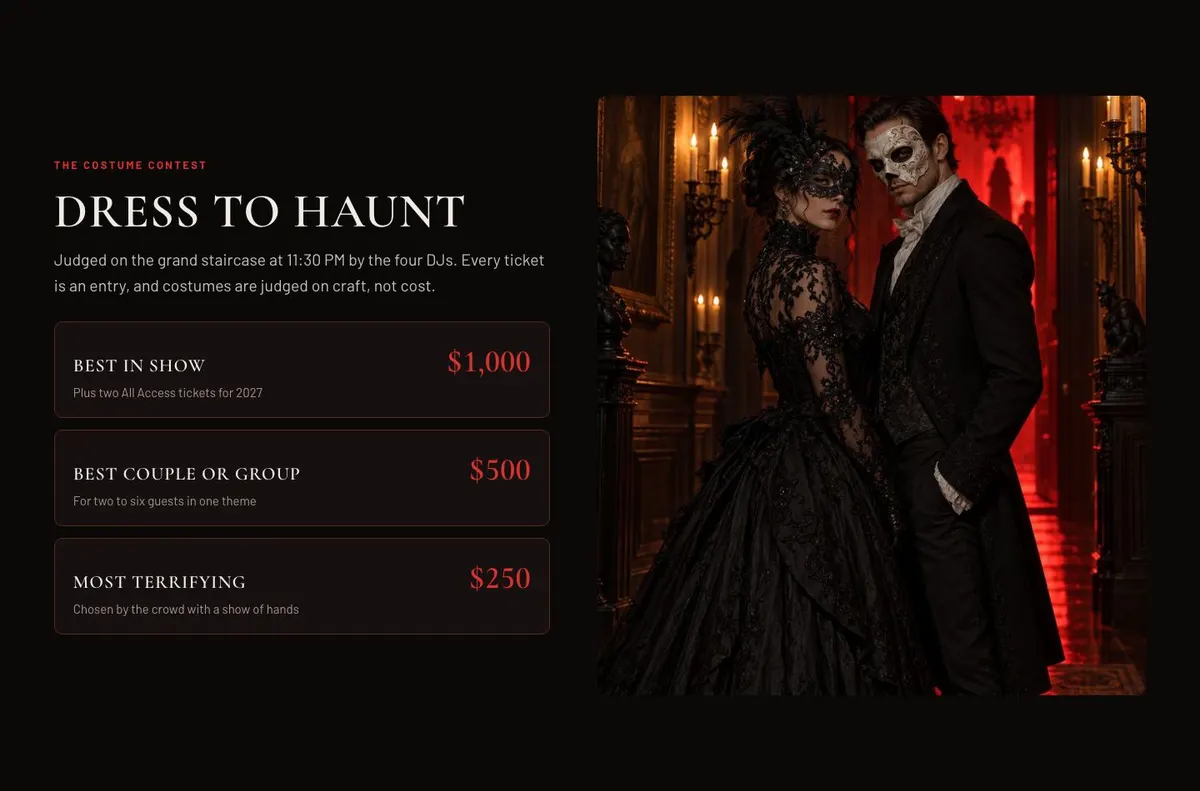
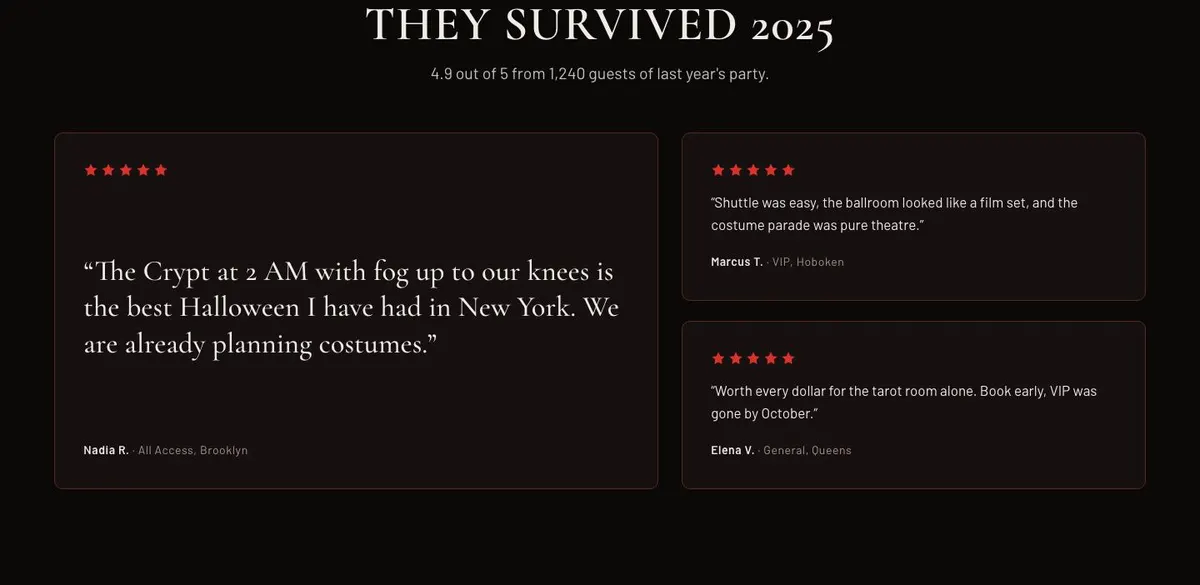
It should also name the lineup, the venue, the programme, the rooms and any rules that guests need to know. If there is a costume contest, give the judging time, location, judges and entry conditions. If there are reviews from a previous event, provide the approved wording and figures rather than asking the AI to create social proof.
Be specific about what must not change. For example, say whether fees are included, whether a shuttle or coat check is offered, how long tickets are held and what guests receive after booking. The AI can reshape supplied information for the bands; it should not be asked to fill operational gaps with assumptions.
What to prepare first
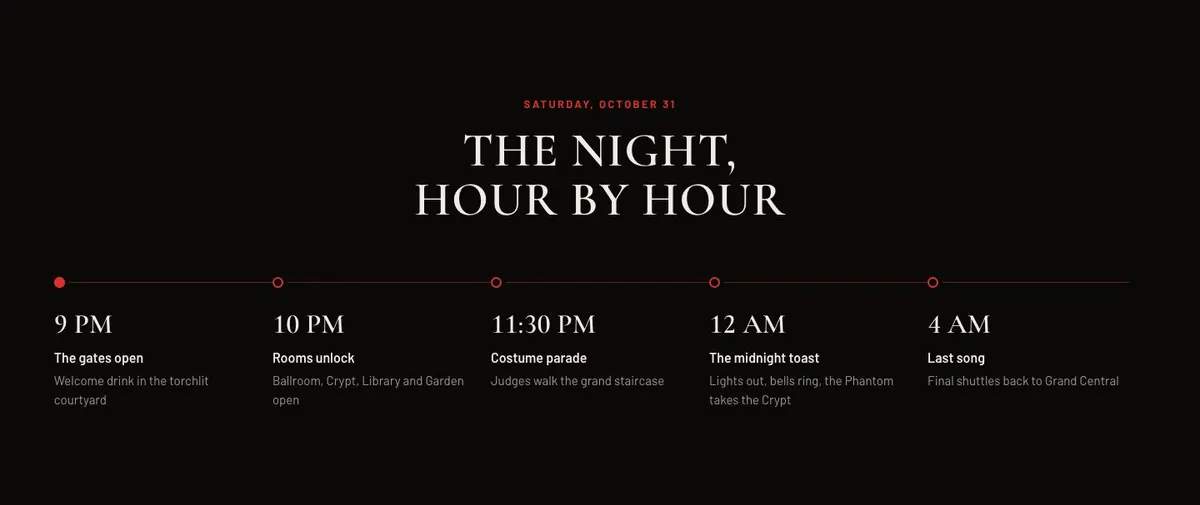
Write the event title, date and location first. Then prepare the ticket names, prices and inclusions, together with the actual steps guests take after they submit the booking form. Confirm the schedule before writing the hour-by-hour band.
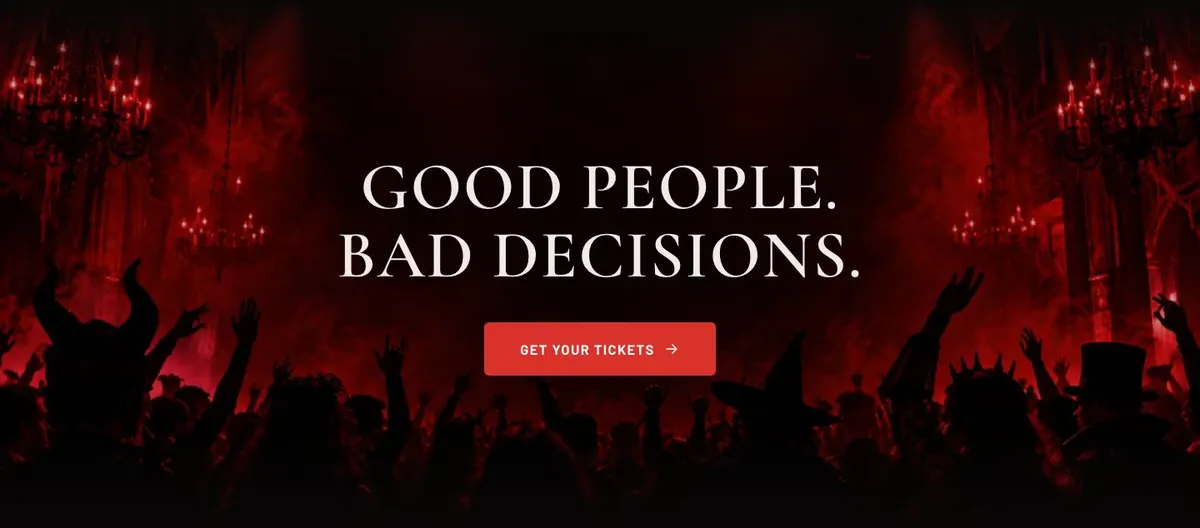
Gather performer names and four suitable images for the lineup. Photograph the venue and the rooms in a way that helps guests understand the setting. Choose a contest photograph only if a costume contest is part of the night, and keep two crowd images for the closing band.
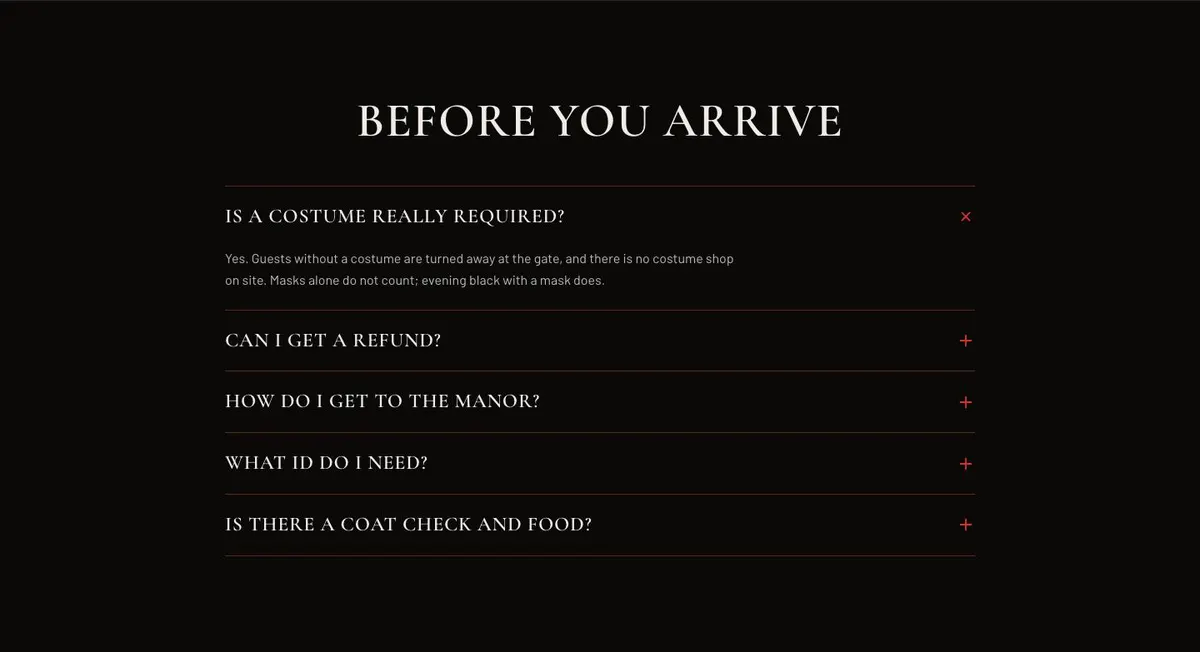
Finally, write concise rules and the questions guests are most likely to ask before arriving. Prepare real review material if the event has run before. The page is easier to trust when the event details, ticket terms and practical answers agree with one another.
Variations for neighbouring event types
For a masquerade ball, make the dress code and the rooms central to the copy. The lineup can introduce musicians, hosts or performers, while the contest band should only remain if there is a genuine judged element.
For a haunted house night, use the hour-by-hour section to explain the progression through the evening and use the venue material to establish the location. Ticket tiers need to say what access each option provides.
For a club night in a historic venue, let the lineup carry the DJs and let the venue explain the setting. The rooms section can distinguish music areas or experiences, provided those are real parts of the event.
When another template fits better
For a year-end party rather than a Halloween-led night, see New Year Party. For an event led by a haunted narrative, see Haunted House Story.
If the countdown is the central feature of a New Year event, see New Year Countdown. For a programme built around speakers and creators rather than a night out, see Creator Conference. Browse the wider events collection for other event formats.
Before you publish
- Check that the date, location and countdown match the event.
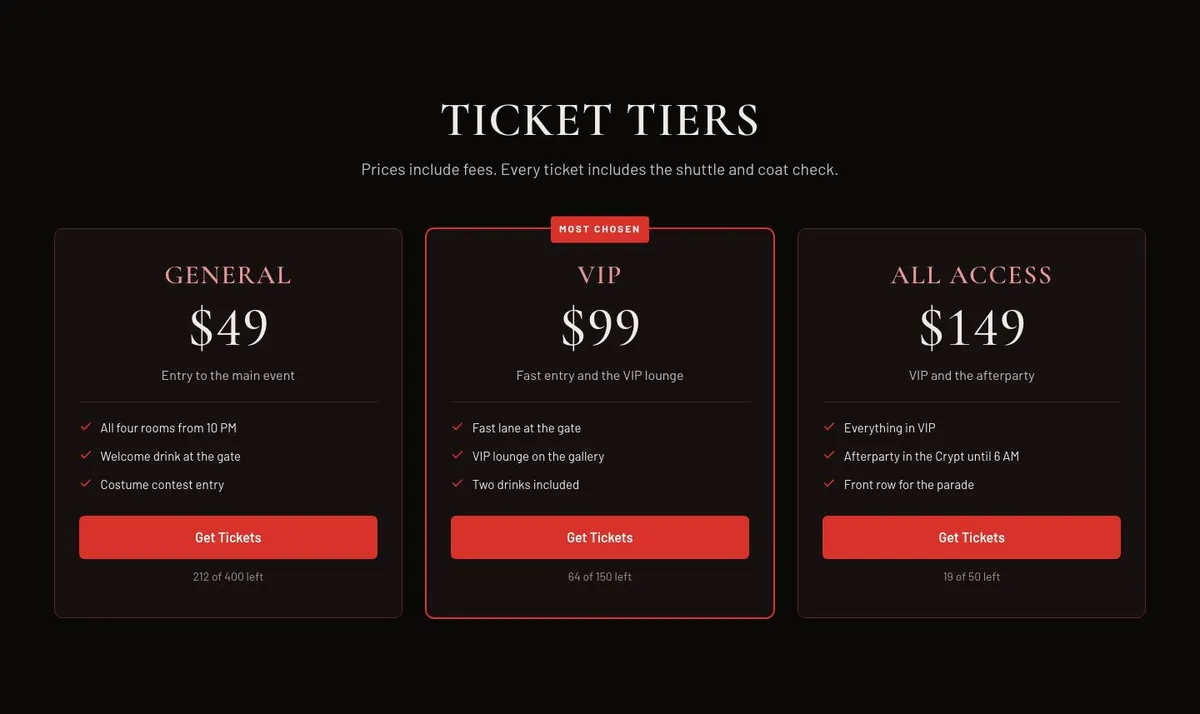
- Check every ticket tier against the actual offer.
- Check that the booking instructions match what happens next.
- Check that reviews, rules and contest details are real and current.