For attractions where the story is the product
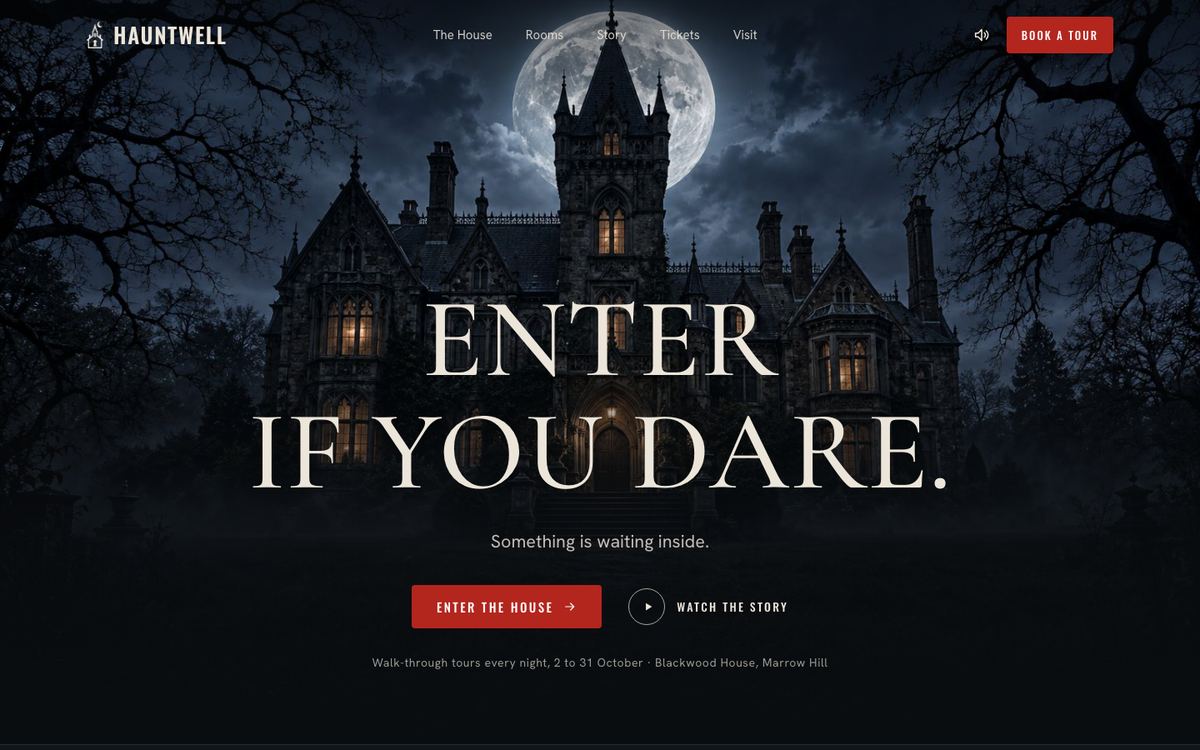
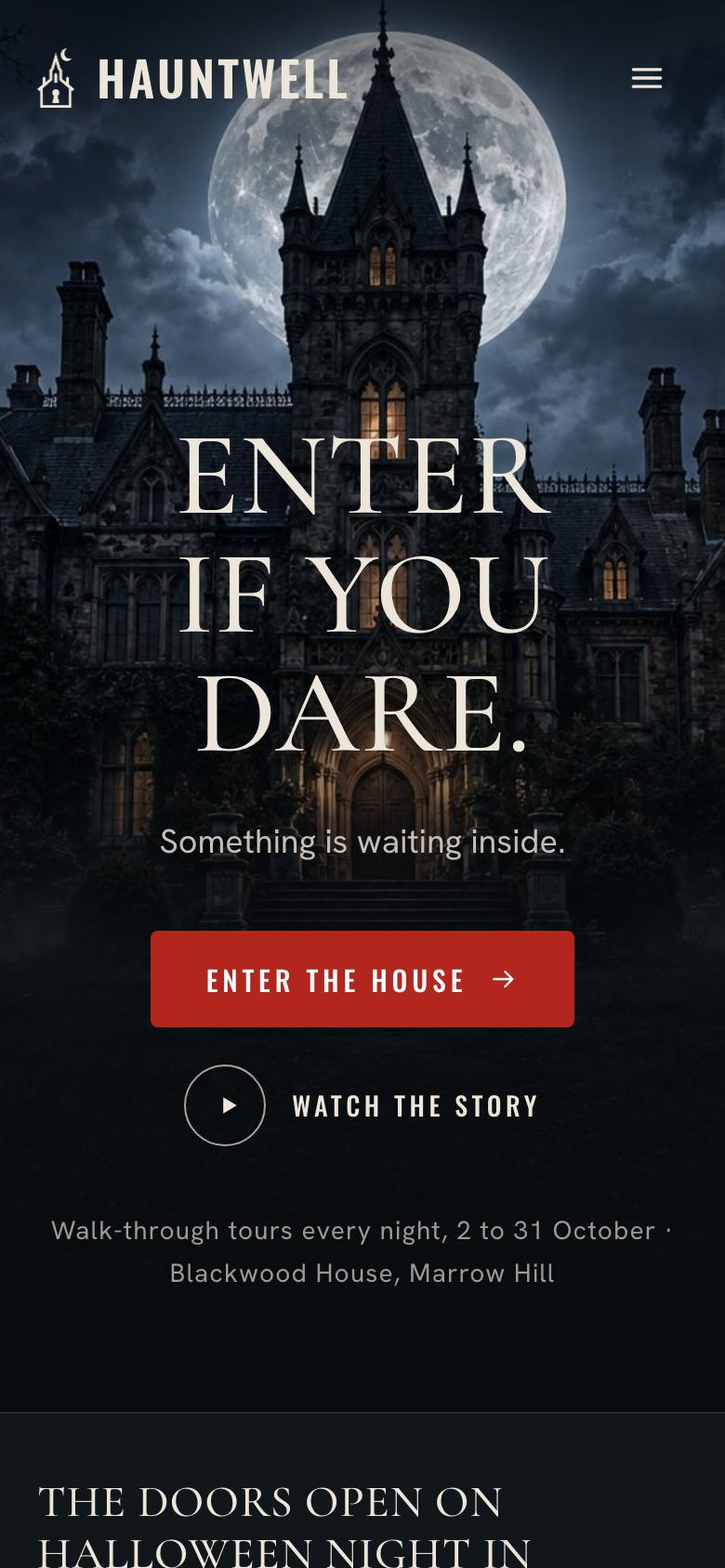
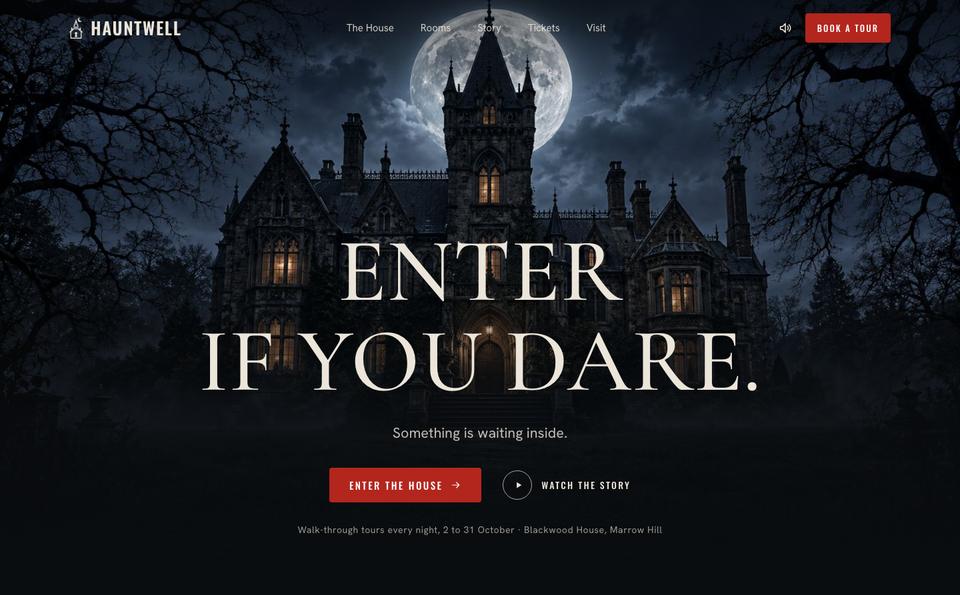
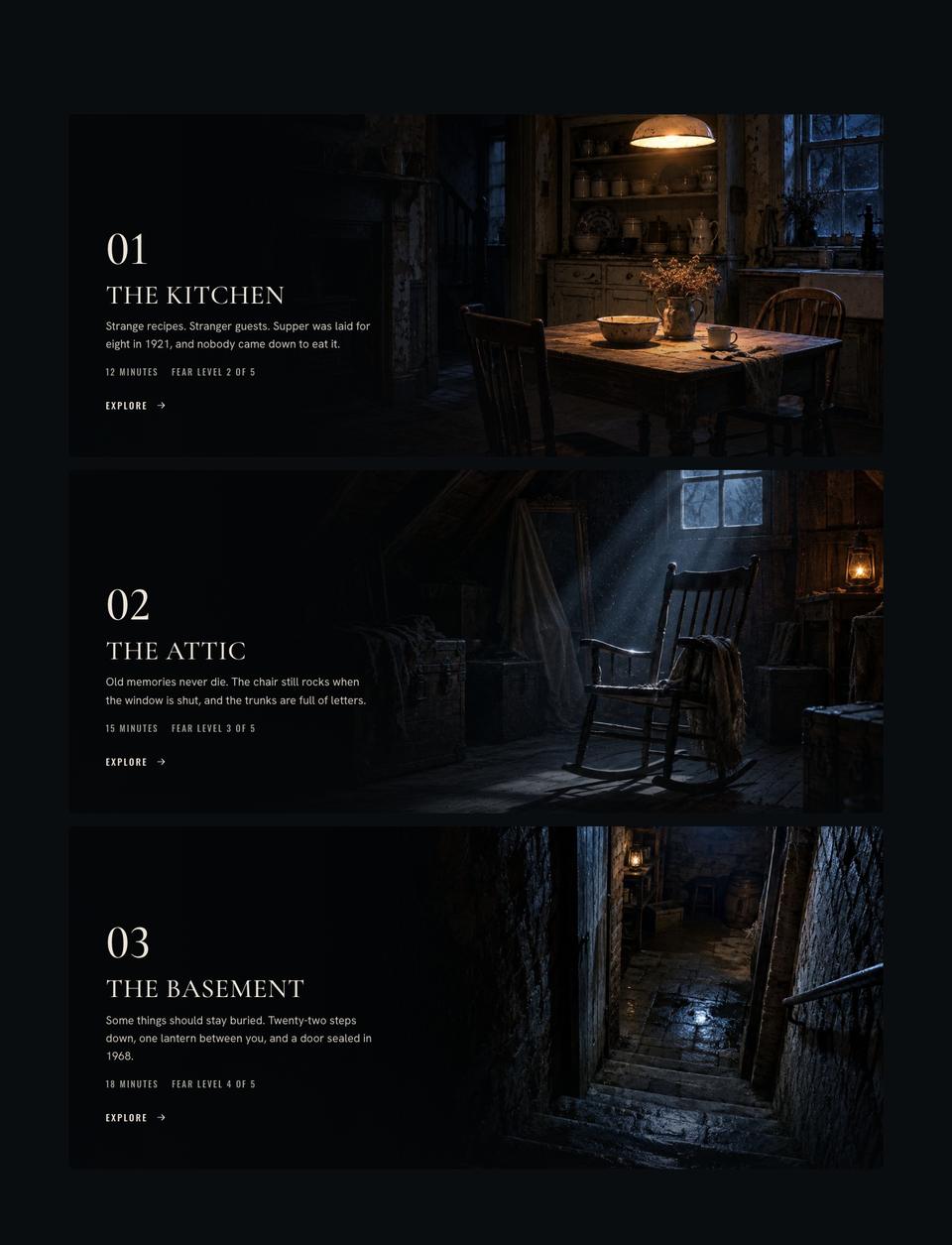
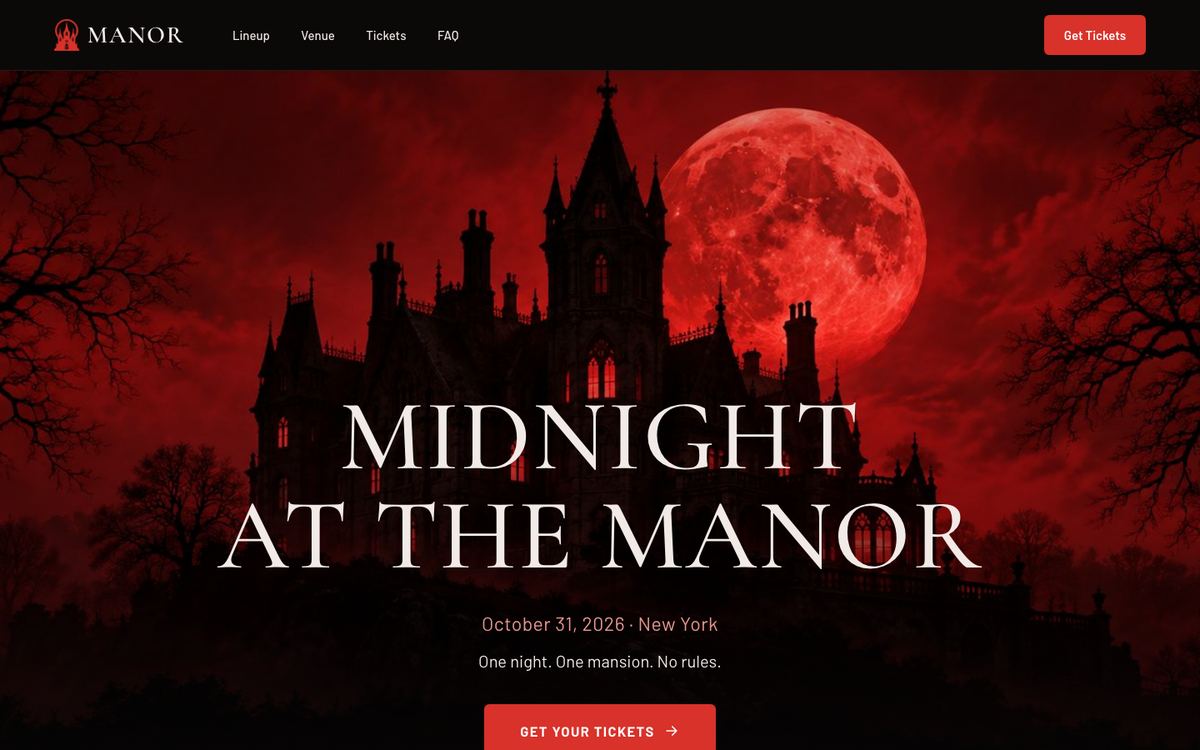
People book a haunted house for a feeling, and they cancel because of practical doubts: how scary is it really, will anyone touch me, can I leave, is it suitable for a teenager. Haunted House Story handles both. A moonlit mansion sits under a tall serif line, the rooms are told as numbered chapters on full-bleed night photographs, and the rules are stated plainly further down.
It suits seasonal walk-through attractions, ghost walks, escape rooms, candlelit museum nights and immersive theatre. Pick it when the tour is a story told in rooms and tickets are sold by the time slot.
How the page sells, section by section
The hero gives the invitation, the dates and the venue. A countdown runs to opening night. The house sets the length and the number of rooms, and room chapters give each room its own card with duration and a fear level.
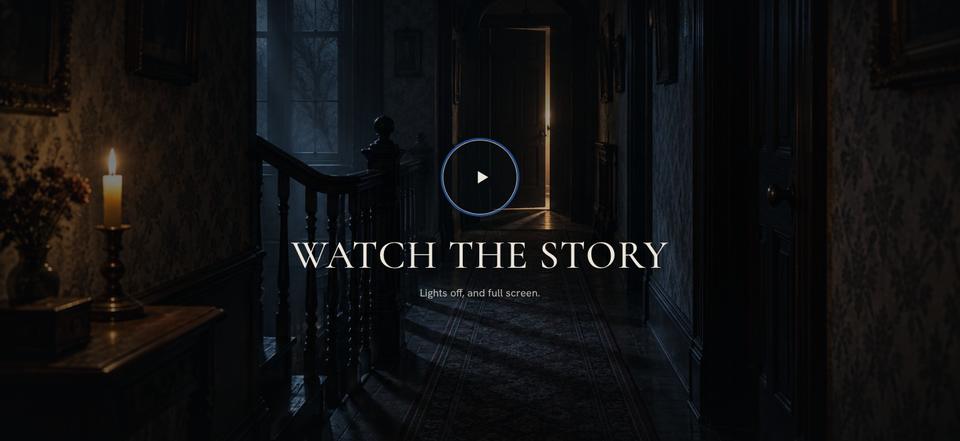
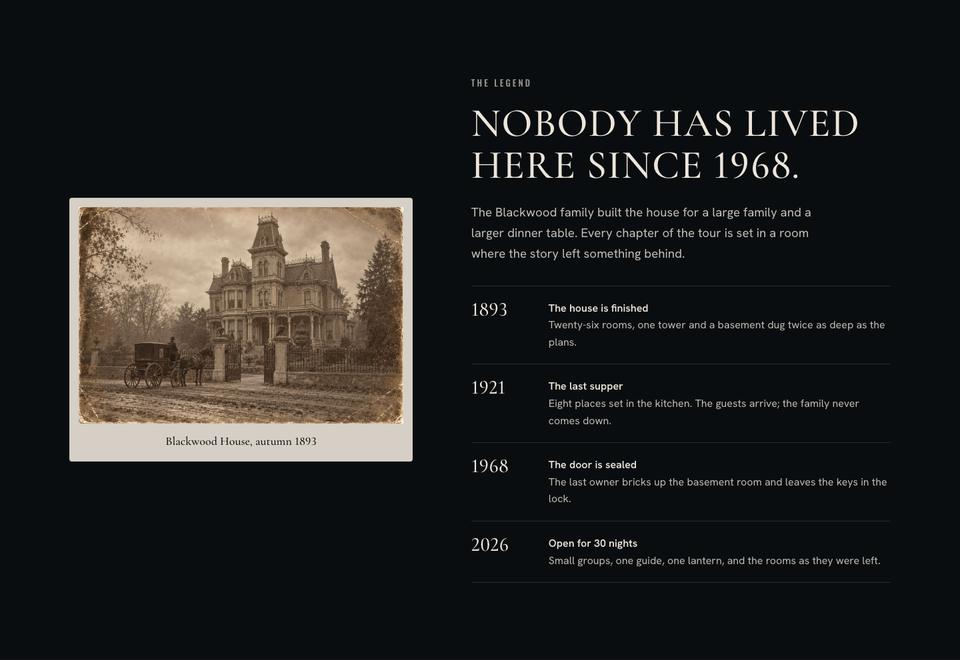
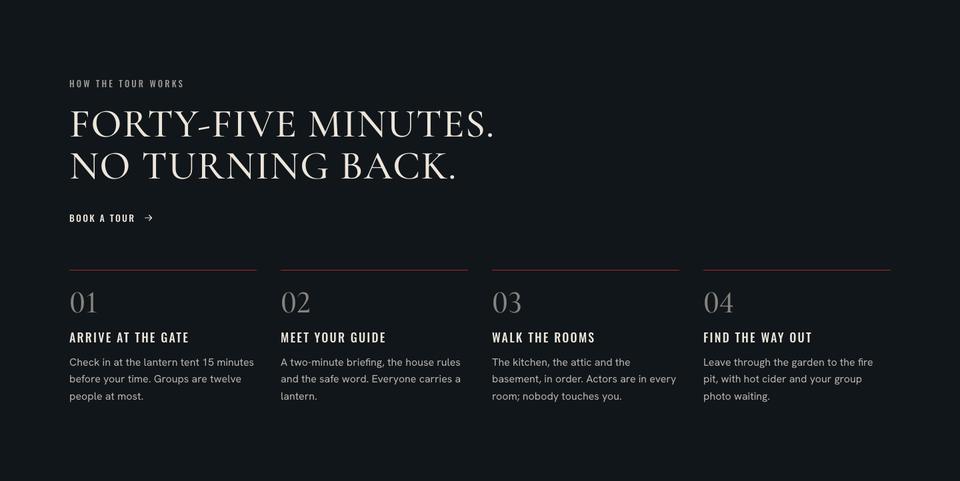
Watch the story is a trailer still, and the legend tells the history as a timeline, which is what turns a maze into an experience. How the tour works walks through arrival, the briefing, group size and the safe word.
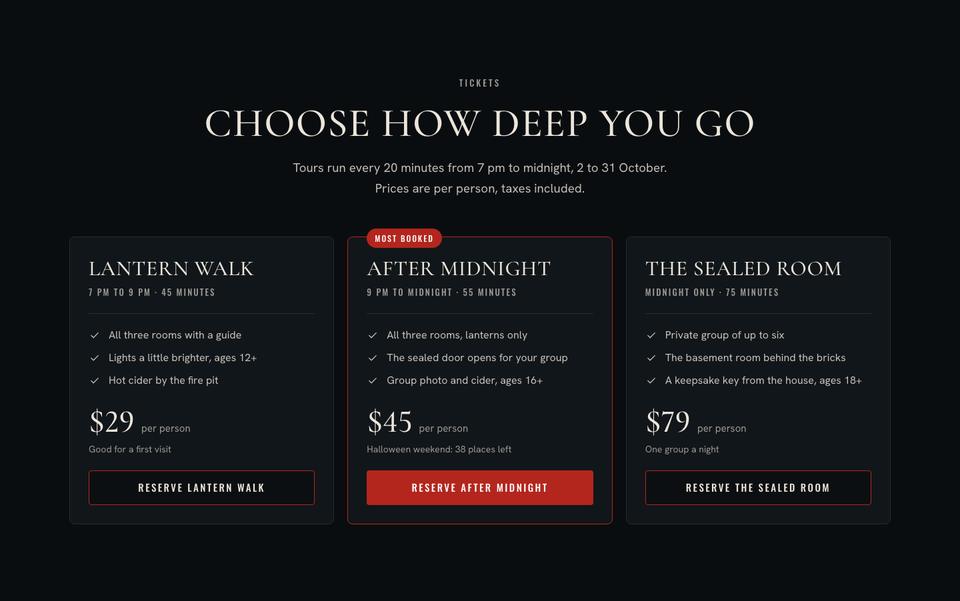
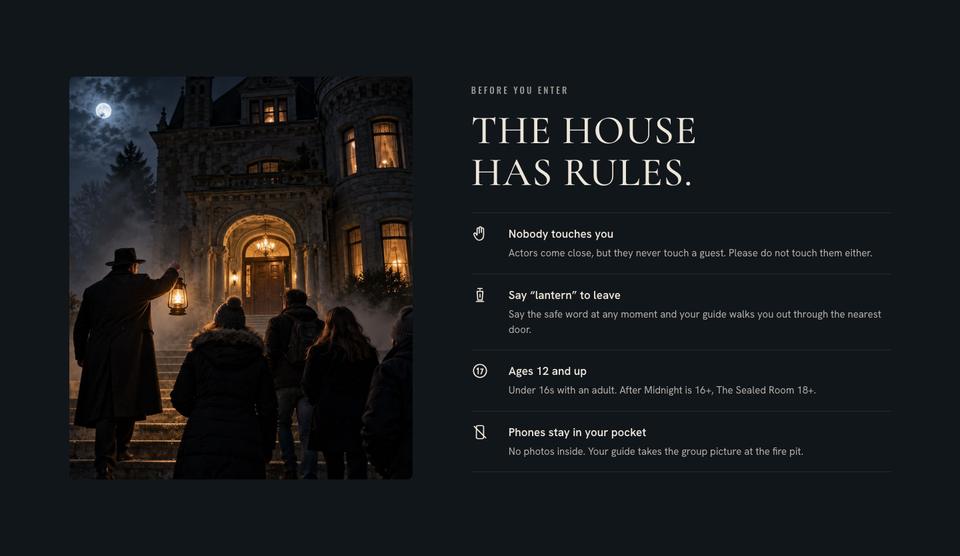
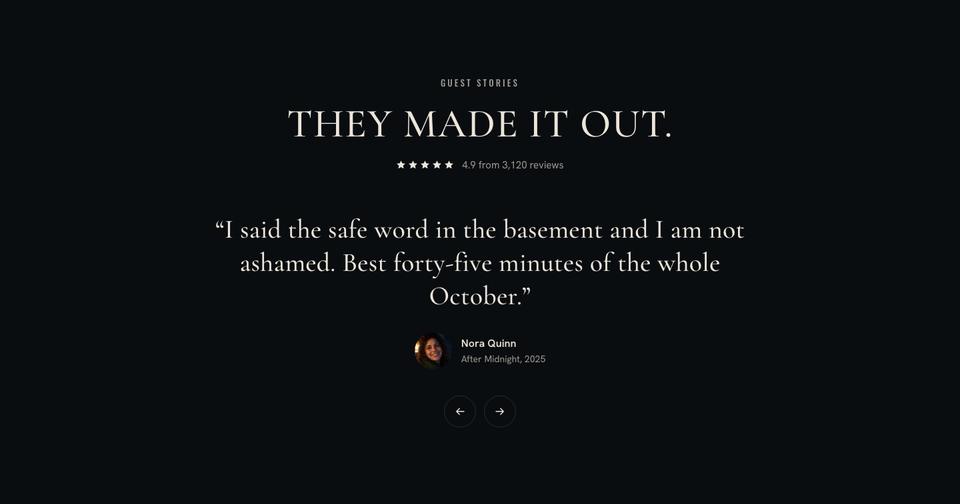
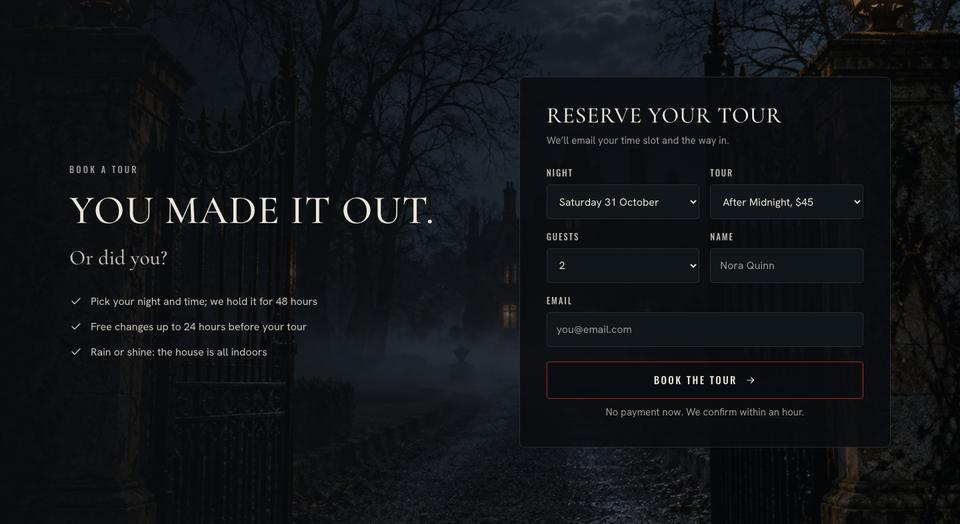
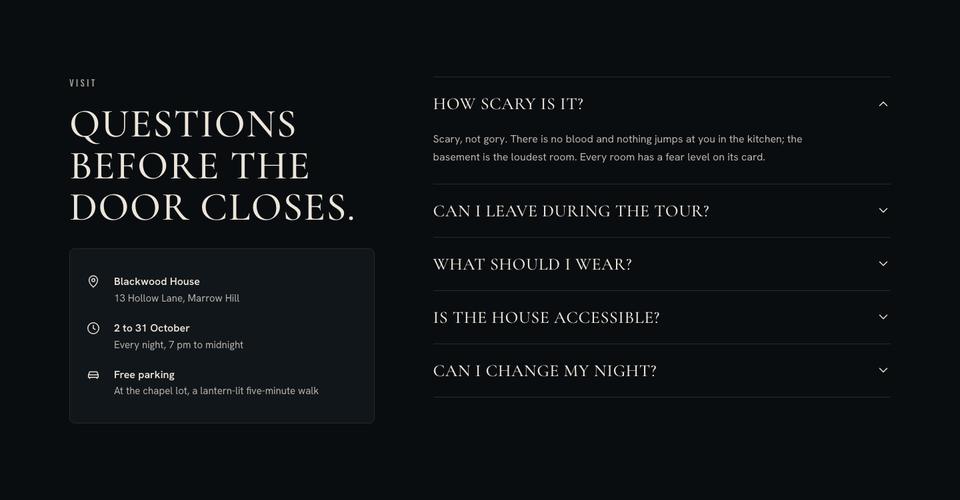
Tickets price the tiers by time of night and intensity. House rules answer touching, leaving, ages and access. Guest stories quote previous visitors, and the page closes with a booking form and the visit details: address, dates, opening hours and parking.
Making it yours
Blood, Pumpkin, Wraith and Bone schemes are included, with Cormorant Garamond, Playfair Display or Prata. Eleven photographs are used, and this page lives or dies on them: shoot at night with the set lighting, keep faces half-lit, and photograph each room you describe.
What to settle with your team
Write the tour as it actually runs: how long each room takes, the total duration, the group size and how often groups enter. Agree the fear levels between rooms and describe them in words, not just numbers, so a nervous guest can judge.
The rules section protects everyone, so be exact: whether actors touch guests, the safe word and what happens when it is used, the minimum age and the rules for under-16s, and any health warnings such as strobe lighting, fog, confined spaces or uneven floors. Check accessibility and say what is possible. State the refund and change policy, and what happens in bad weather if any part is outdoors.
Writing it with the AI
Edit the sample for free, or tick “Write the text for my business” for about 20 credits. A good brief names the attraction and venue, the dates and opening hours, the rooms with durations and fear levels, the ticket tiers, the rules and the booking terms.
Adapting it for other experiences
A ghost walk can replace rooms with stops on the route and add walking distance and terrain. An escape room turns chapters into rooms with difficulty and success rates, and adds team sizes. A candlelit museum night can keep the legend section for the building's history. A dark theatre production can swap fear levels for content notes and add the cast.
Filling the nights
Attractions sell out unevenly: weekends go first, weekdays need help. Use the page to sell the quieter nights by showing availability, and point local ads, listings and press at the same address so bookings arrive tagged. Guest photos and reviews from the current season are the strongest advertising you have, so ask for them in the confirmation email. Keep the page live after the season with next year's dates and a waiting list; it will rank all year for the venue and the town. Local press and listings also link to a page that stays at one address, and those links are worth more each season than the ads you buy in October.
When another template fits better
For a costume party in a venue rather than a tour, Halloween Manor Party sells the night itself. A theatre run with dates and seats fits Theatre Show, and a one-night event with free registration fits Event. All event layouts are on the event templates page.
Before you publish
- Check tour times, group size and slot spacing with the box office.
- State touching, the safe word and the minimum age.
- List health and accessibility warnings.
- Photograph every room you describe.
- Test the booking form and the confirmation email.