For shops that sell a character
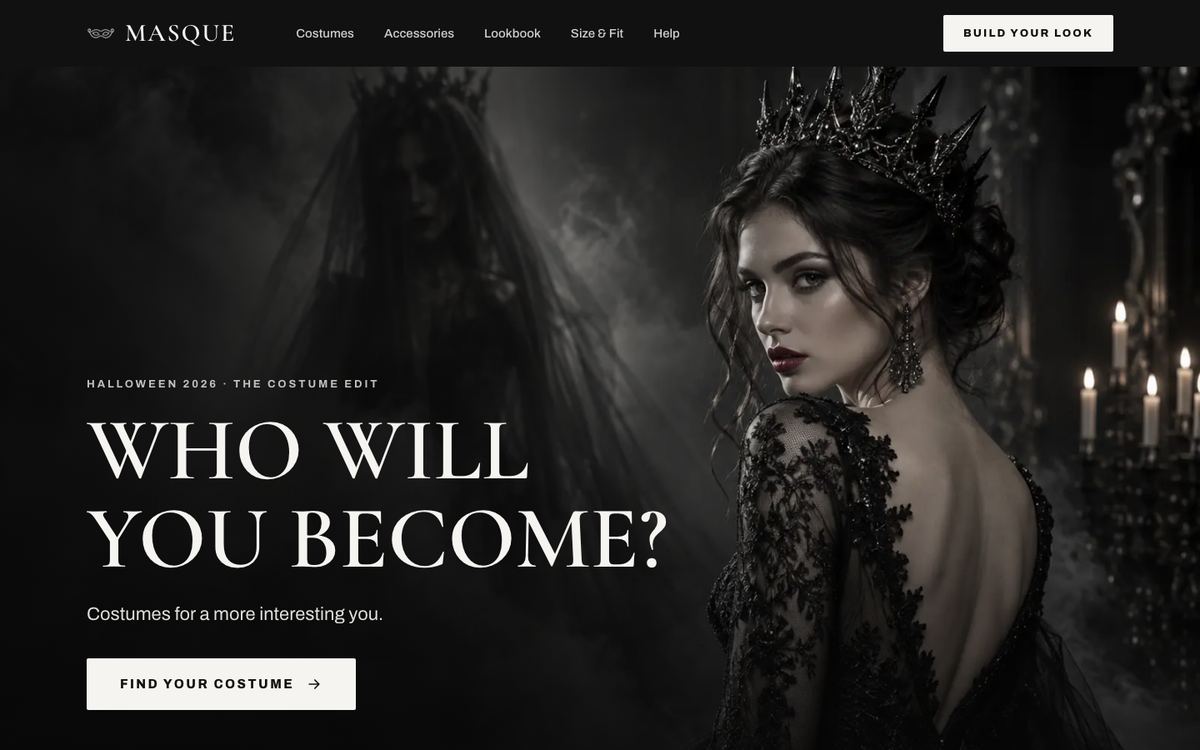
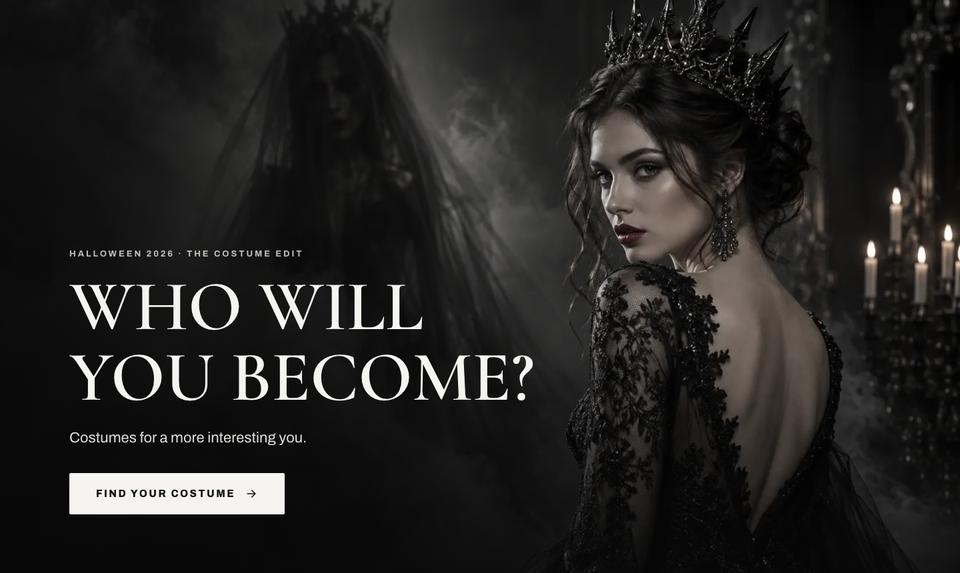
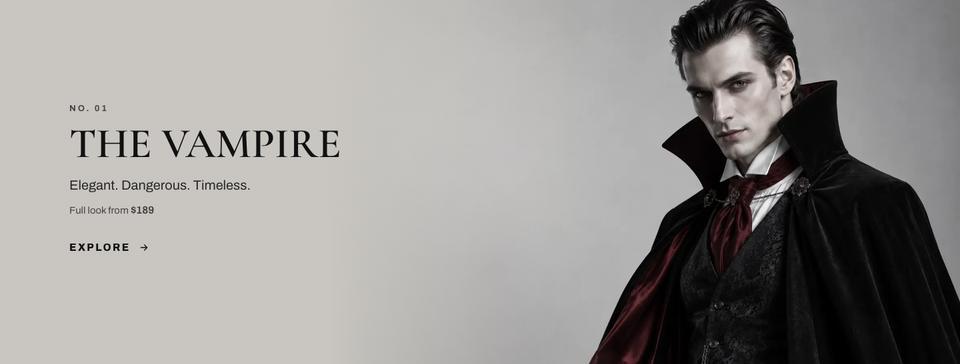
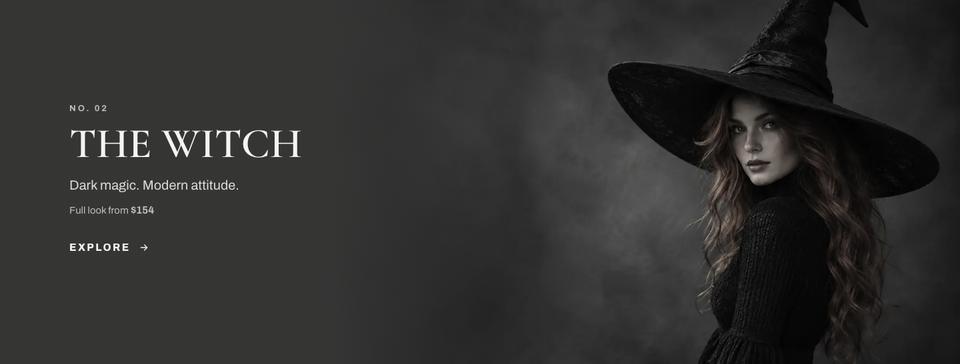
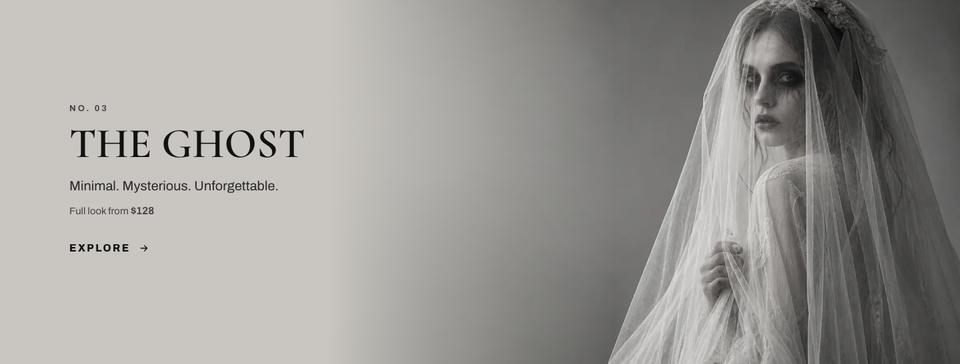
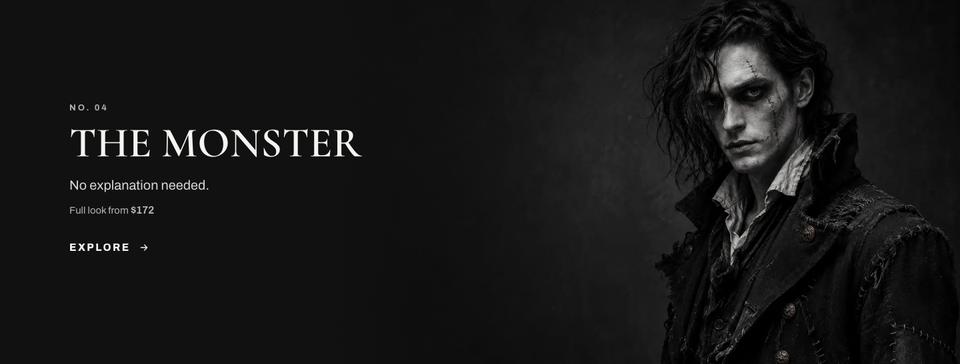
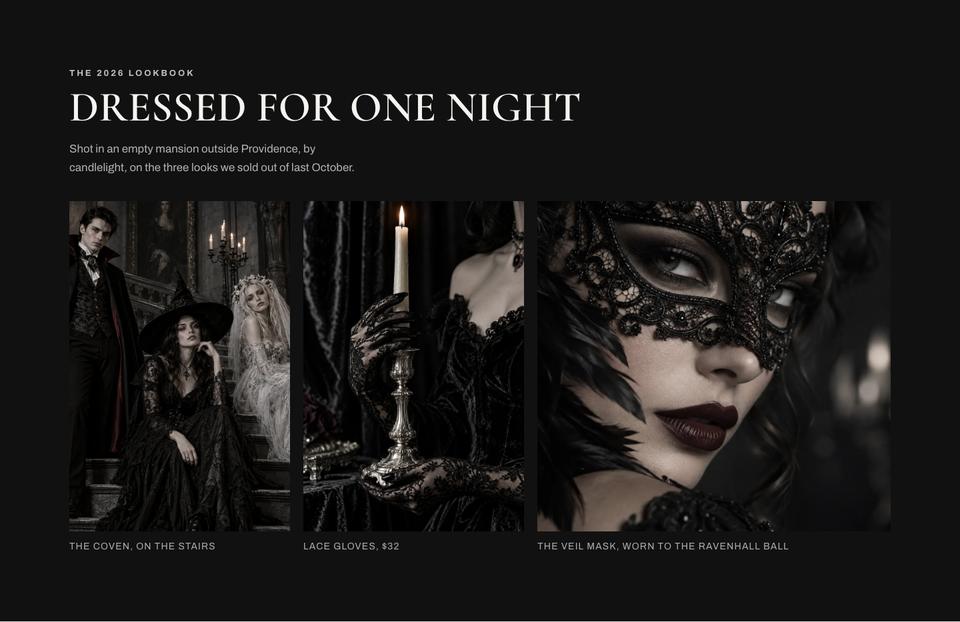
Nobody buys a cape; they buy being the vampire at the party. Costume Shop Editorial takes that seriously. It is monochrome and quiet, with a crowned portrait in the hero, full-width character bands each carrying a number, a name and a price for the whole look, and a candlelit lookbook shot in one location.
It suits Halloween and masquerade shops, party wear, cosplay makers and theatrical outfitters. Pick it when the photography can carry a mood and the shop wants to look like a fashion label rather than a joke shop.
How the page sells, section by section
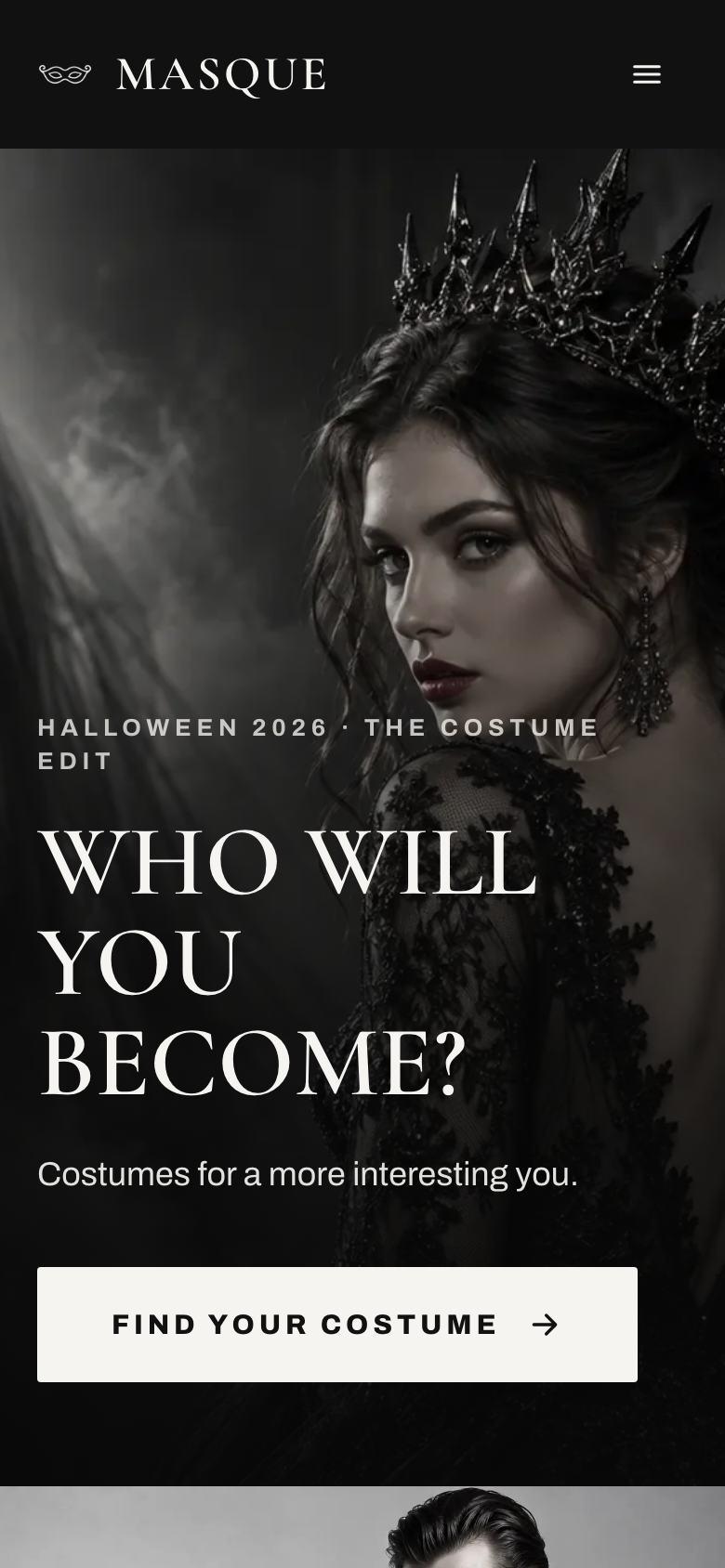
The hero asks who the visitor will become. Character bands give each look a number, three words and a starting price, on a full-bleed portrait.
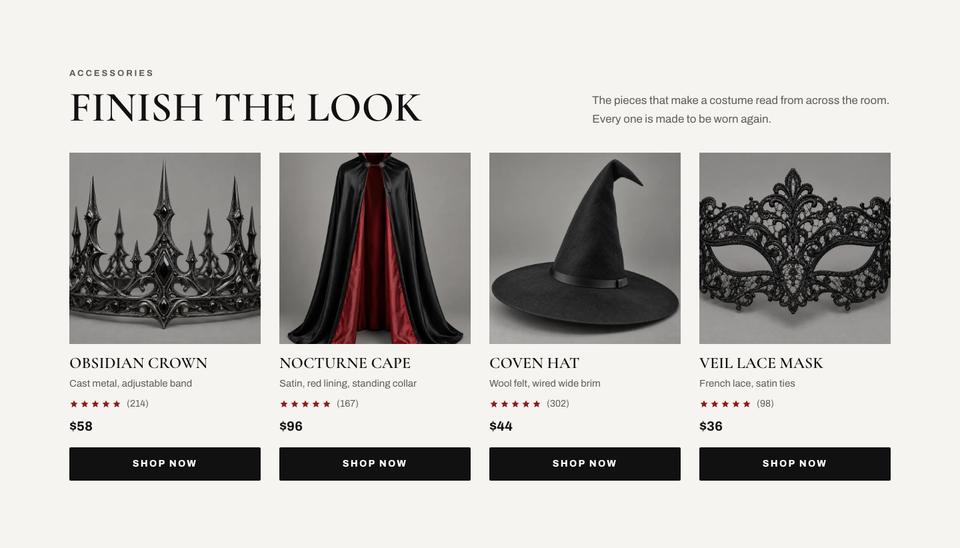
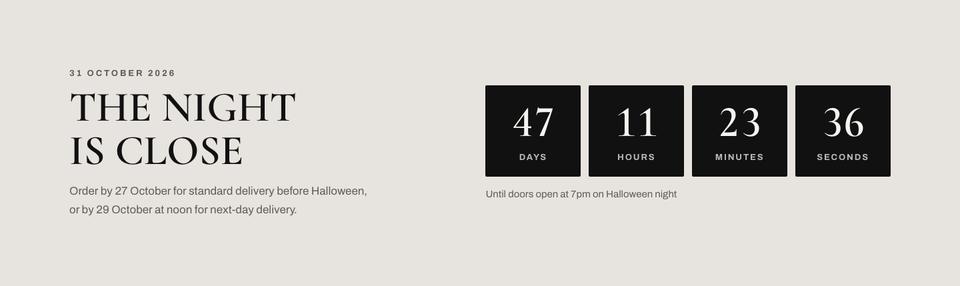
Accessories sell the pieces that make a costume read across a room, with ratings and prices. The lookbook shows the season's looks in one shoot, with items credited and priced. The countdown carries the order-by dates for each delivery speed.
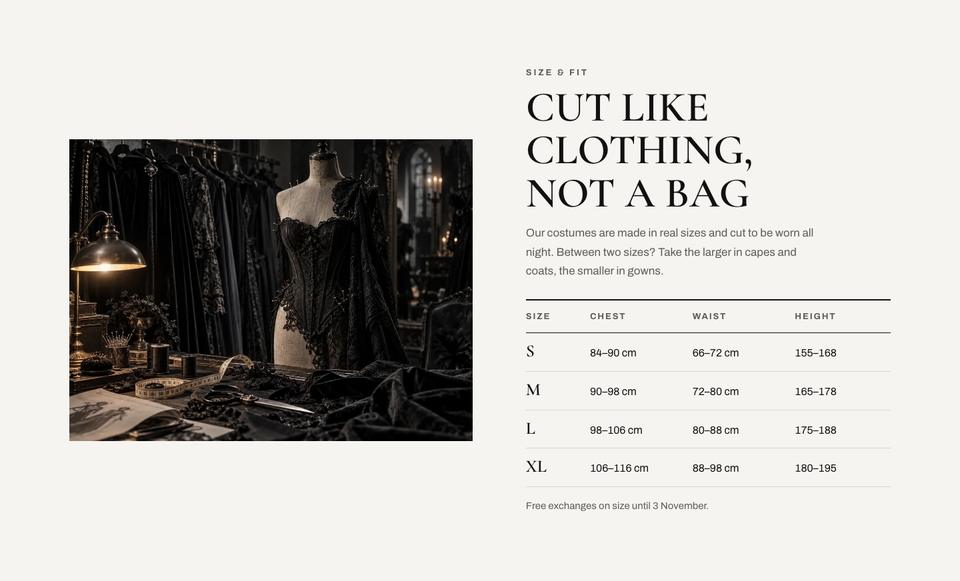
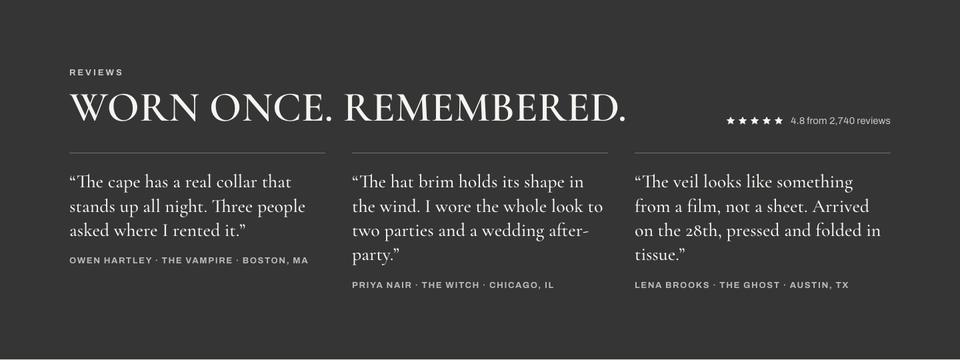
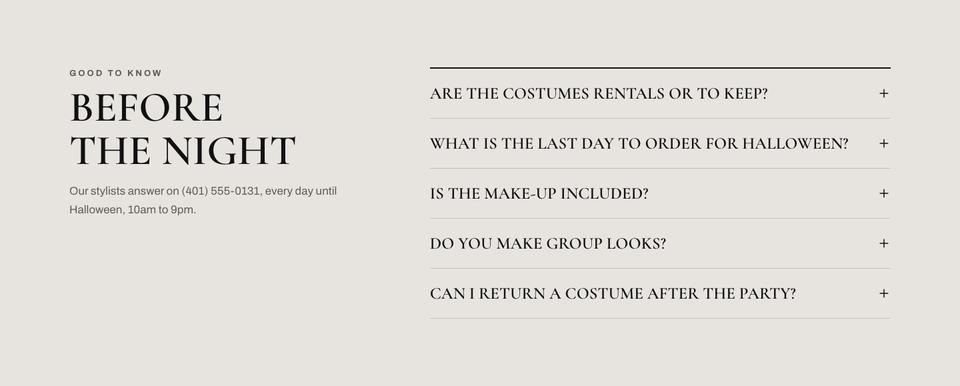
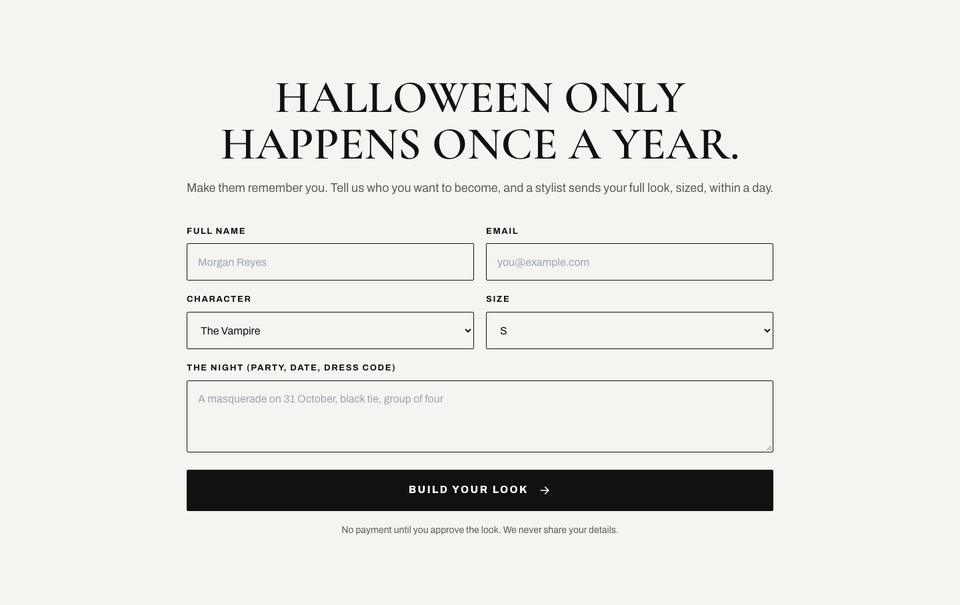
Size and fit is what separates a costume shop from a fancy-dress bin: real measurements in a table with advice for between sizes. Reviews quote wearers with the character they chose. The page closes with questions and a build-your-look form that sends a sized look from a stylist.
Making it yours
Ink, Oxblood, Midnight and Bone schemes are included, with Cormorant Garamond, Playfair Display or Prata. Thirteen photographs are used, and the look depends on them: one location, one light, full-length portraits and a few close details. Studio cut-outs will fight the design.
What to prepare before the season
Decide what a full look includes for each character and price it, then list the individual pieces so people can buy part of it. Publish a real size table with chest, waist and height, and say how each garment runs, because sizing causes most returns in costume.
Confirm the order-by dates with your carrier and state the cut-off for next-day delivery precisely. Say whether costumes are to keep or to hire, and give washing or steaming instructions. If pieces contain masks or flame-retardant treatments, note any safety information required where you sell. For the stylist form, agree who answers, how fast and what they send.
Writing it with the AI
Start from the template for free, or tick “Write the text for my business” for about 20 credits. A good brief names the shop, four characters with what each look includes and its price, the accessories, the size range, the order-by dates and how the stylist service works.
Adapting it for other seasons and shops
A masquerade or ball shop can replace characters with dress codes. A cosplay maker can turn bands into builds with lead times, since made-to-order takes weeks. A theatrical outfitter can price by hire period and deposit. A New Year party shop can keep the structure with metallic photography and a different date.
After Halloween
Costume pages have a short season but a long tail in search. Keep the page live with the dates removed, leave the size table and the care advice, and add a line about the next season. The lookbook images stay useful for social posts and for next year's campaign.
Where costume buyers look
Costume shopping runs on search for a character, on lookbook images shared in October, and on last-minute panic in the final week. Point each at the right band, keep the lookbook images sized for social, and put the order-by dates in every post from the middle of the month. Because stylist requests arrive with their source, you can see which character earns its shoot. Keep the page live after the season with the size guide and care advice; it ranks through the year for the looks you make.
When another template fits better
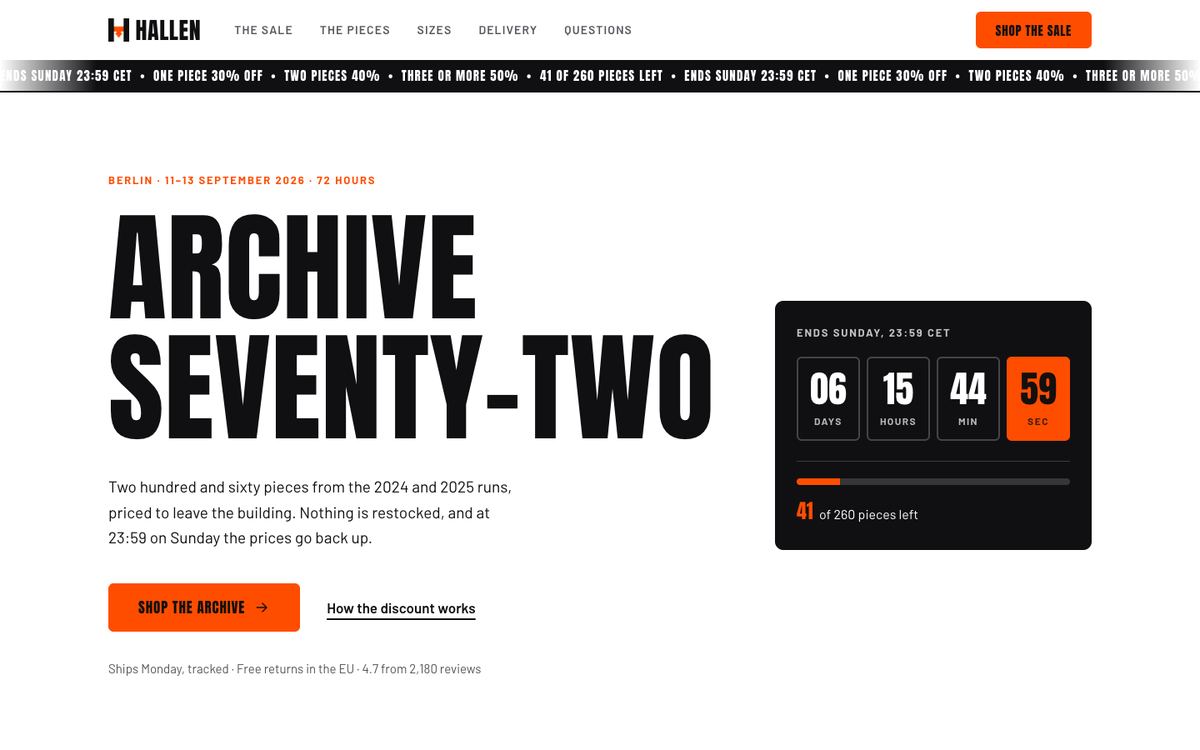
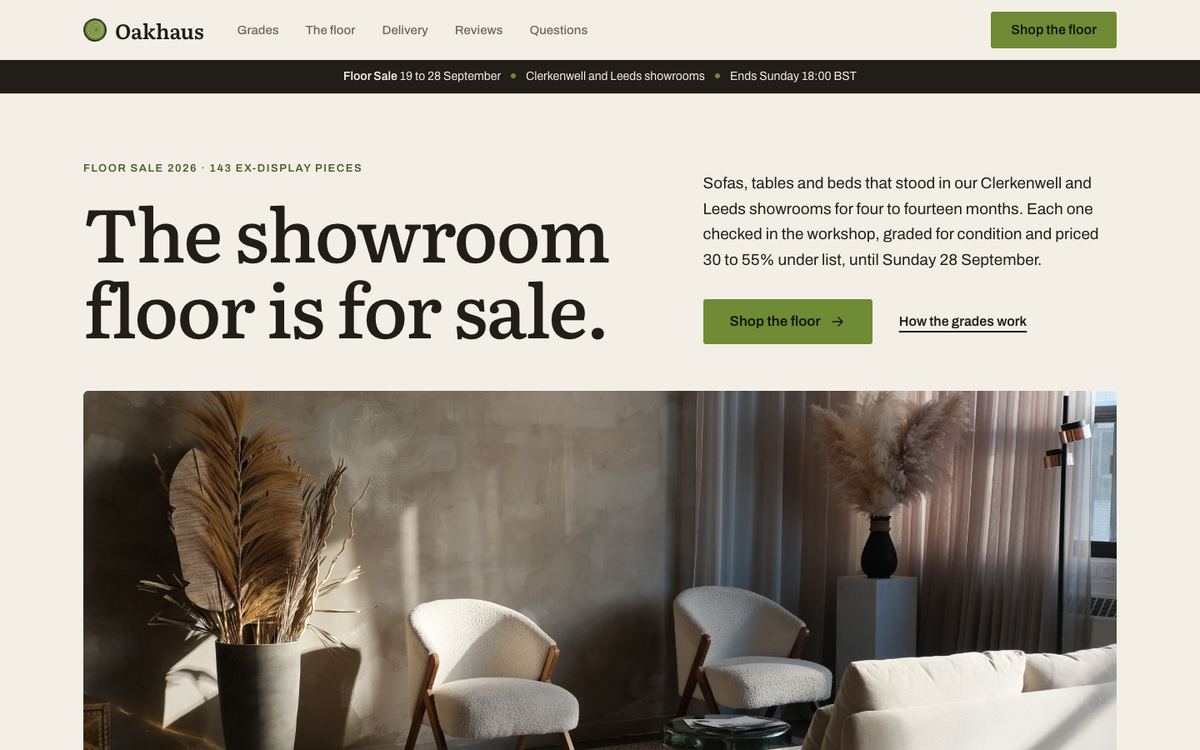
For a sale across decor, treats and party supplies, Halloween Night Sale leads with the deadline. A ticketed party fits Halloween Manor Party, and a fashion label's drop fits Drop Launch. More selling layouts are on the ecommerce templates page.
Before you publish
- Price each full look and list the pieces in it.
- Publish a real size table with measurements.
- Confirm order-by dates and the next-day cut-off.
- Say whether costumes are to keep or to hire.
- Shoot the lookbook in one location and light.