For roasters who sell a farm, not a flavour
Speciality coffee buyers want to know who grew it, when it was roasted and whether the price was fair. Coffee Roastery is an editorial template with a serif display face and producer-first lot cards that make those facts the product. It sells bags and subscriptions, and gives cafés and offices a separate wholesale route.
It is designed for speciality coffee roasters, tea and infusion merchants and small-batch producers who sell by the lot. Choose it when provenance data such as producer, altitude, process and roast date is your main argument.
How the page sells a subscription
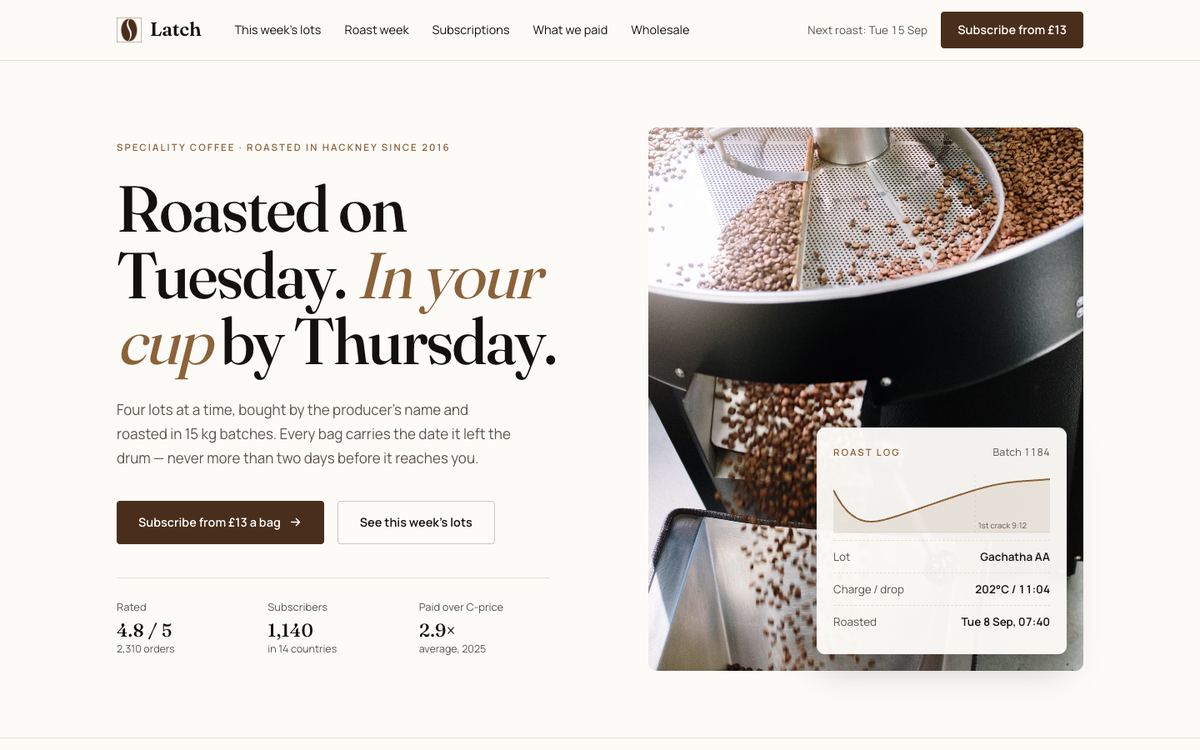
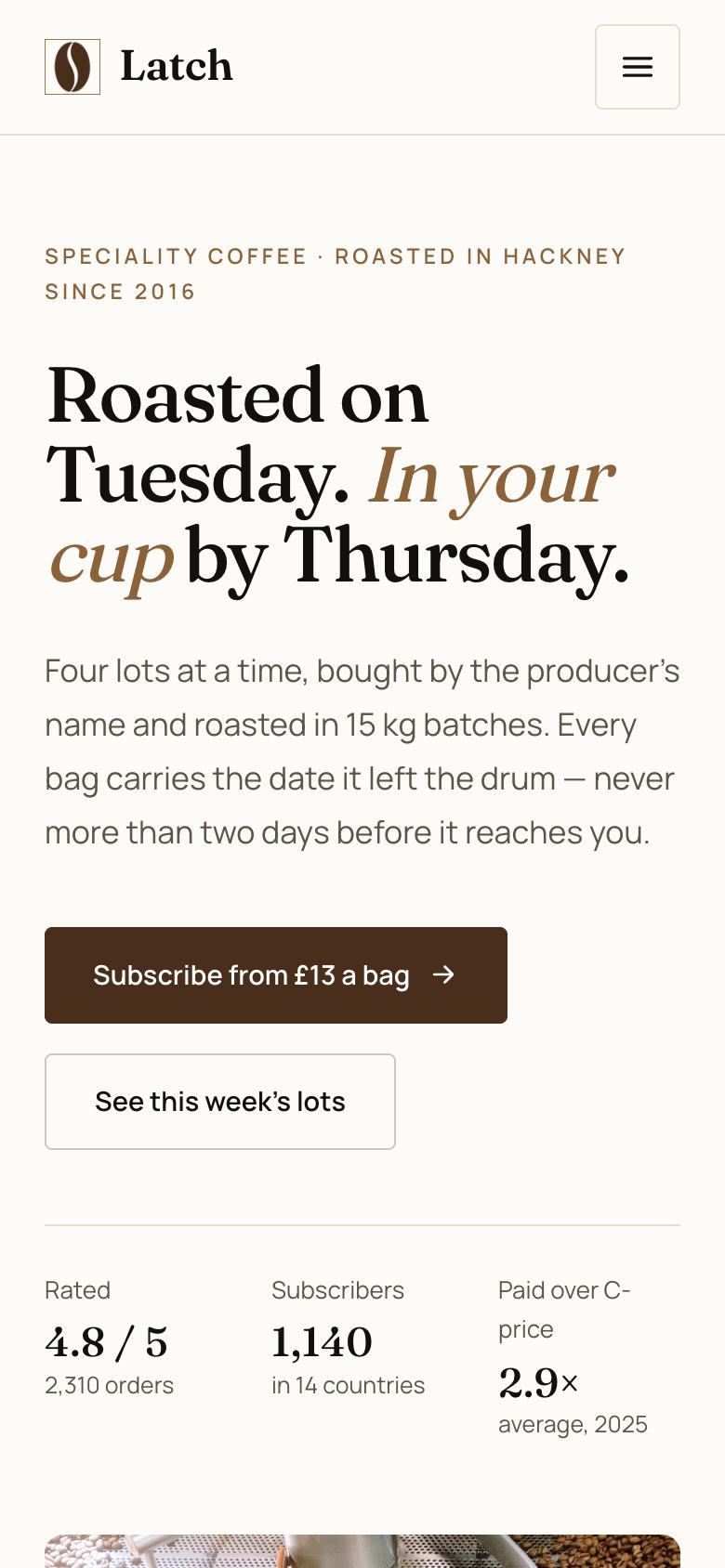
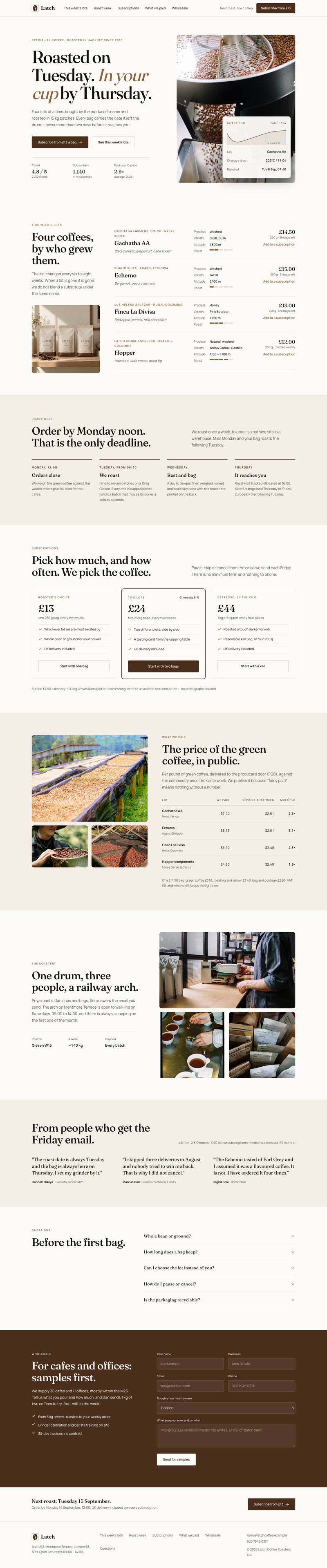
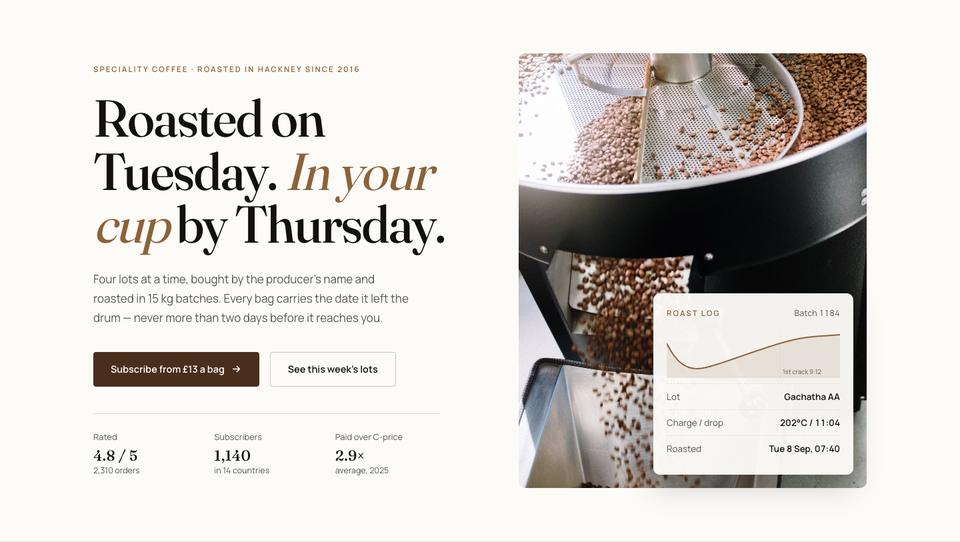
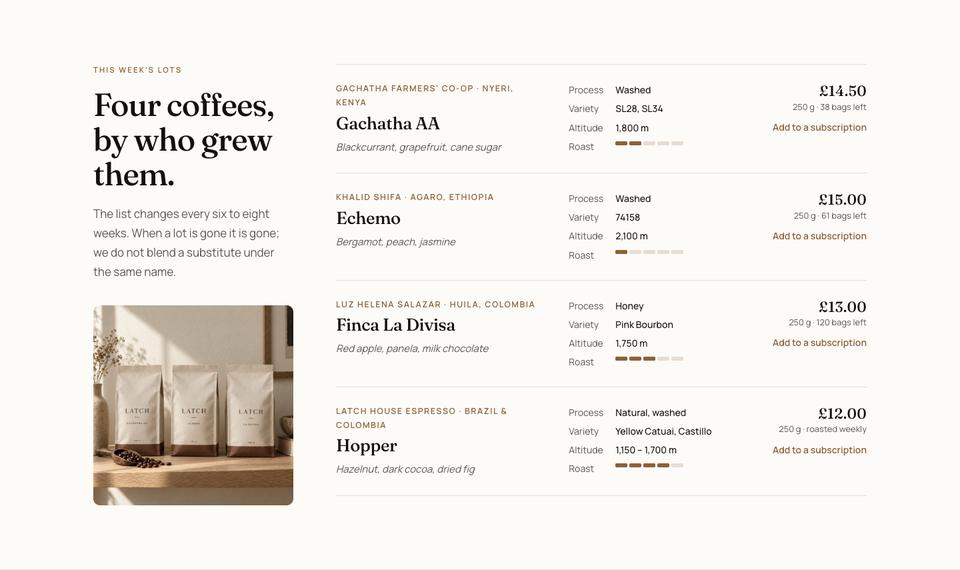
The hero makes freshness concrete, “Roasted on Tuesday. In your cup by Thursday”, with how long the roastery has run and a photograph of beans or bags. This week’s lots presents four coffees as cards named after the producer, with origin details, tasting notes and price.
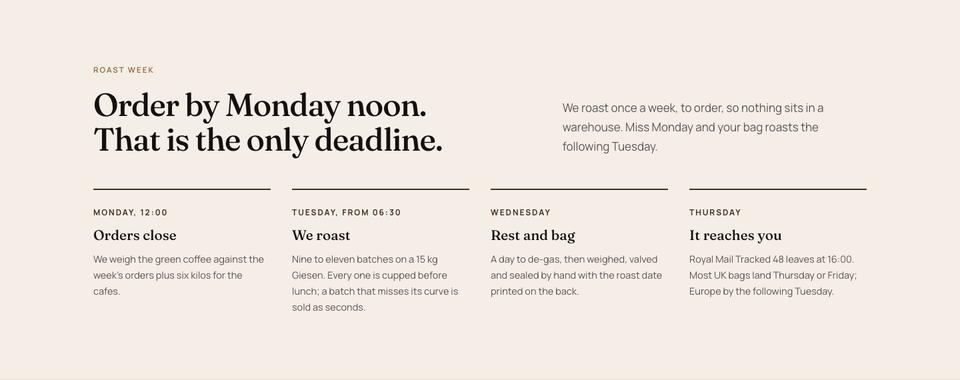
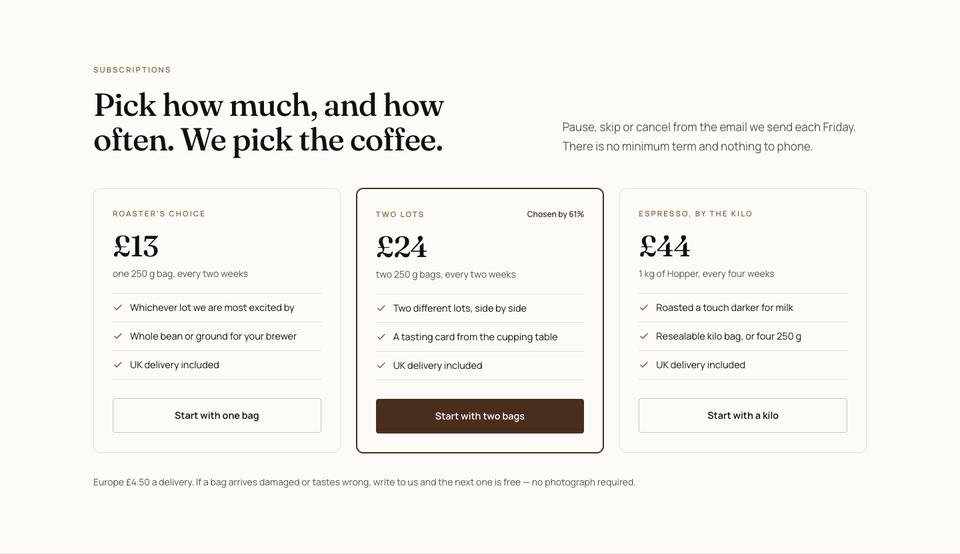
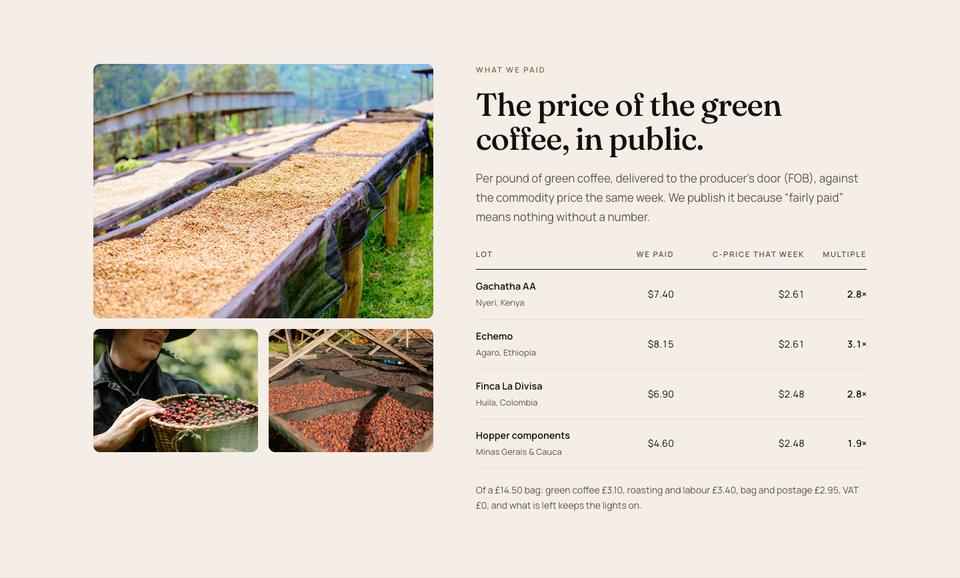
Roast week explains the single ordering deadline and why nothing sits in a warehouse. Subscriptions lets the visitor choose quantity and frequency while the roaster picks the coffee, with pause and cancel in a weekly email. What we paid publishes the green coffee price against the commodity price, an unusual level of openness that builds trust.
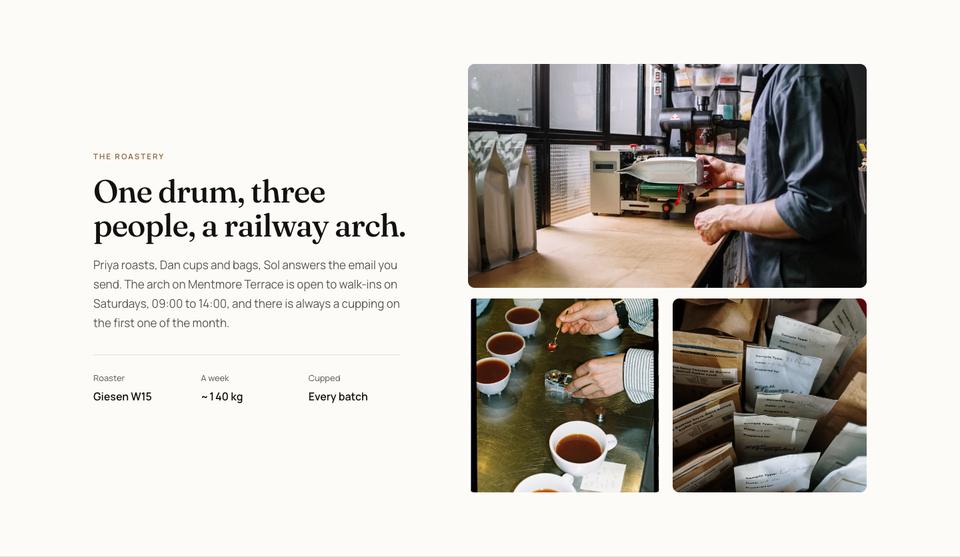
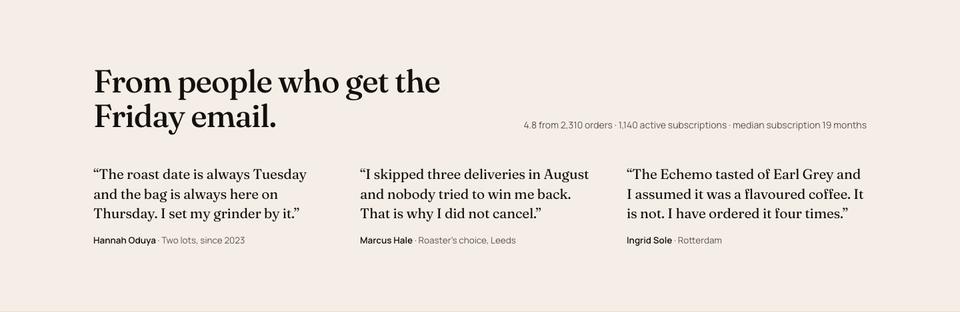
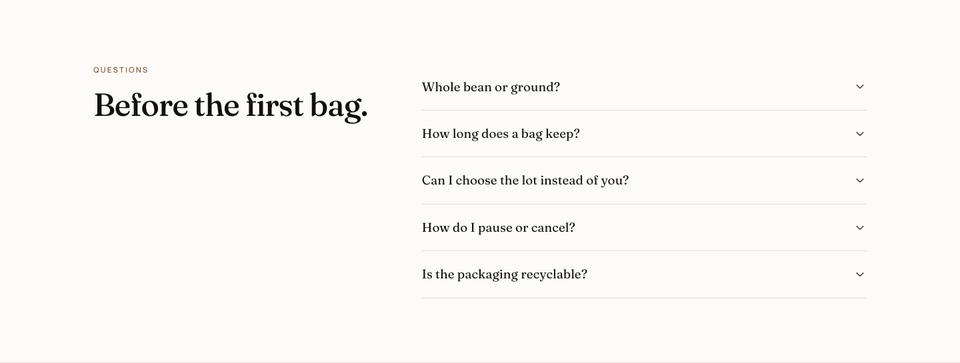
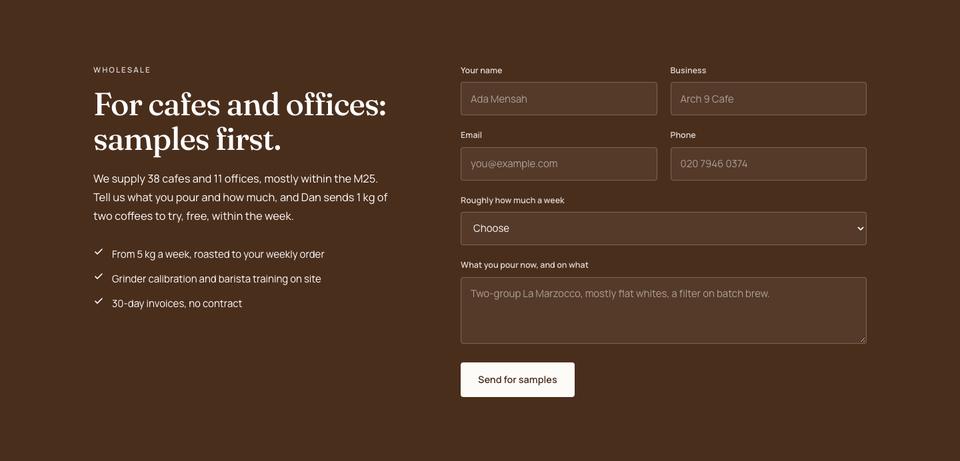
The roastery introduces the three people and the arch, reviews give order and subscription numbers, questions covers grinding and brewers, wholesale offers cafés and offices samples, and a final next roast strip repeats the deadline and the subscription price.
Making it look like your roastery
Four schemes are included: Dark roast, Terracotta, Plantation and Espresso. Headings can be Fraunces for a warm editorial feel, Manrope throughout for something cleaner, or Epilogue with Hanken Grotesk. Seven photographs carry the demo; bags, beans and the roasting space are the most useful to replace.
Lot cards are editable one by one. When lots change every few weeks, select the section and ask the AI to rewrite it from your new green coffee list.
Adding your own coffee
Start from the template free of credits, or tick “Write the text for my business” and the AI writes your copy into the same design for about 20 credits. Useful details: where and when you roast, your current lots with producer and process, subscription options and prices, delivery terms, what you pay for green coffee if you share it, and your wholesale offer.
Lot data to collect from your importer
The lot cards are the heart of this page, and they depend on information many roasters only keep in a spreadsheet. For each coffee on the list, gather the producer or cooperative name, the region, altitude, variety, process, harvest month and the roast date. Tasting notes should be short and specific, three words at most, so the provenance stays the main argument.
The sourcing section publishes what you paid for green coffee against the market price. If you buy through an importer, ask for the price paid to the producer as well as your landed cost, and say which figure you are showing. Decide how the subscription works before you describe it: bag sizes, frequencies, roast day, the order cut-off and how pausing or cancelling happens. The page uses seven photographs, which should include the roaster itself, bags on the bench and a producer or farm if you have permission.
Tea merchants and wholesale roasters
A tea merchant can keep the same structure with estate, elevation, flush or harvest season and processing on each card, and change the subscription to a monthly selection. Roasters who sell mainly to cafes should move the wholesale enquiry up the page, replace consumer subscriptions with delivery schedules and minimum orders, and add a line on training and equipment support. Small-batch producers of chocolate or honey can use the lot cards in the same way, with origin data doing the selling.
When another template fits better
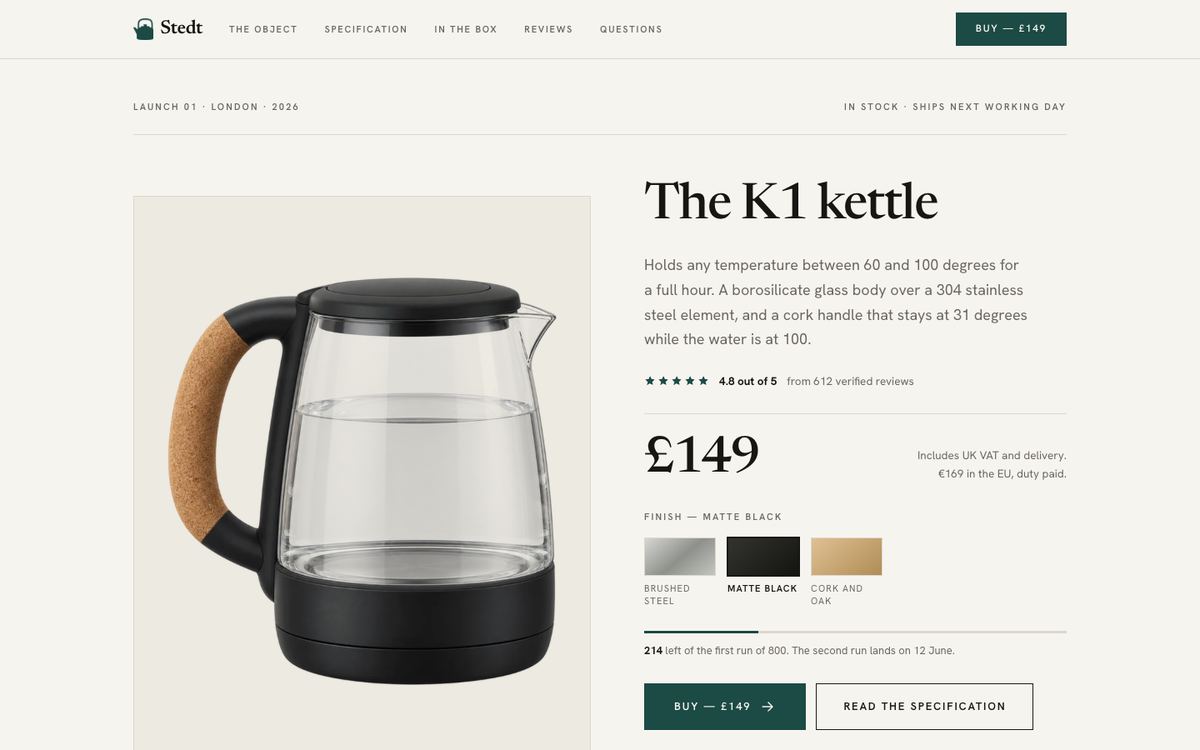
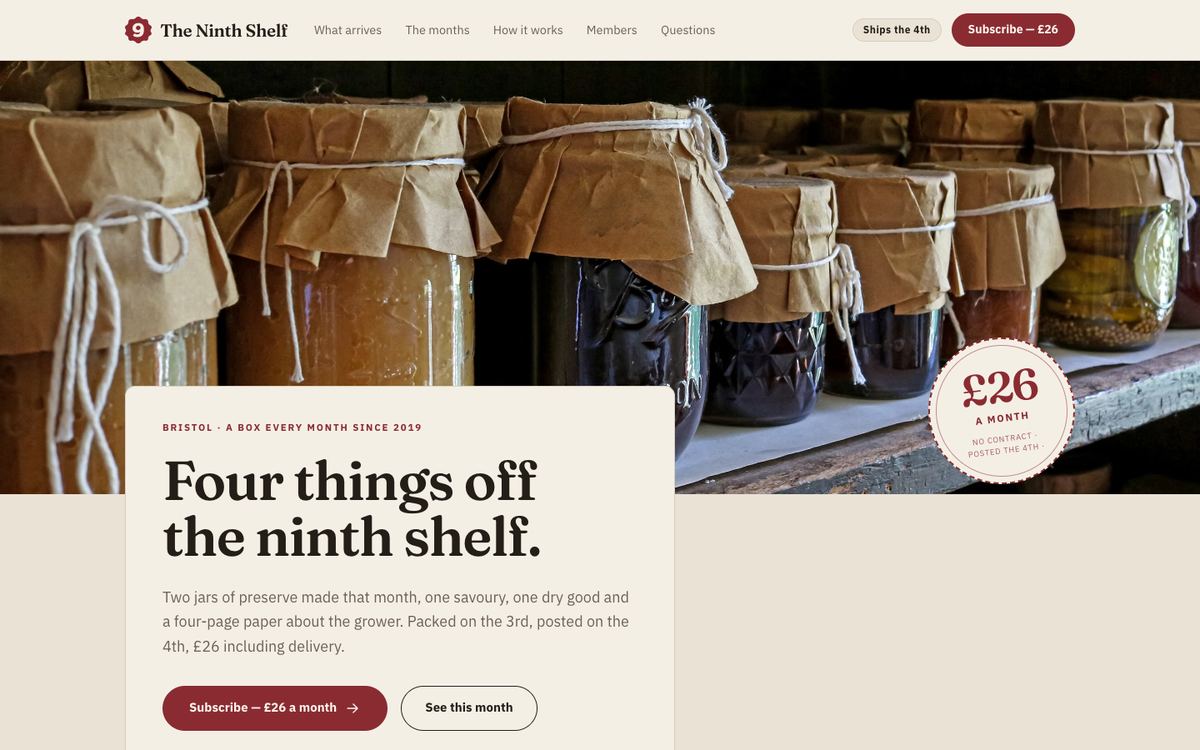
Coffee Roastery centres on provenance and recurring orders. A single product with a launch date fits Single Product Launch, and a mixed box of goods on a subscription suits Recurring Box Subscription. Food and drink brands with a handmade story but a wider range may prefer Small-Batch Craft, and a café that mostly wants table bookings belongs on Seasonal Kitchen.
The full ecommerce templates page lists every selling layout.
Before you publish
- Replace the sample lots with your current coffees and prices.
- Make sure the roast and ordering deadlines match your real schedule.
- Only publish green coffee prices you are happy to have compared.
- Set up the order flow so subscriptions and wholesale requests reach the right person.