A direct page for a place people want to enter
Someone searching for Boutique Resort Direct needs a page that makes a destination, a collection or a way of spending time feel coherent before asking for an order. A generic shop page can list products, but it often loses the setting that gives resort wear, a beach club or a small hotel its meaning. This design opens with a statement over photography, then moves between collections, products, stories and the list.
The template is for a label or place that sells a climate rather than a specification. It can suit resort wear, eyewear, a hotel, a beach club or a travel brand. It can also work for a film or music label built around a strong location. The page has an editorial rhythm: warm light ground, full photographic moments and short copy that leaves room for the images.
Its stated goal is a purchase. The product area and order route therefore need a real offer behind them, with product names, prices, options and fulfilment information prepared before launch. A hotel that needs visitors to compare dates or secure rooms should consider Hotel Flash Deals instead, because this page does not show a stay-search or availability band.
From first impression to the order route
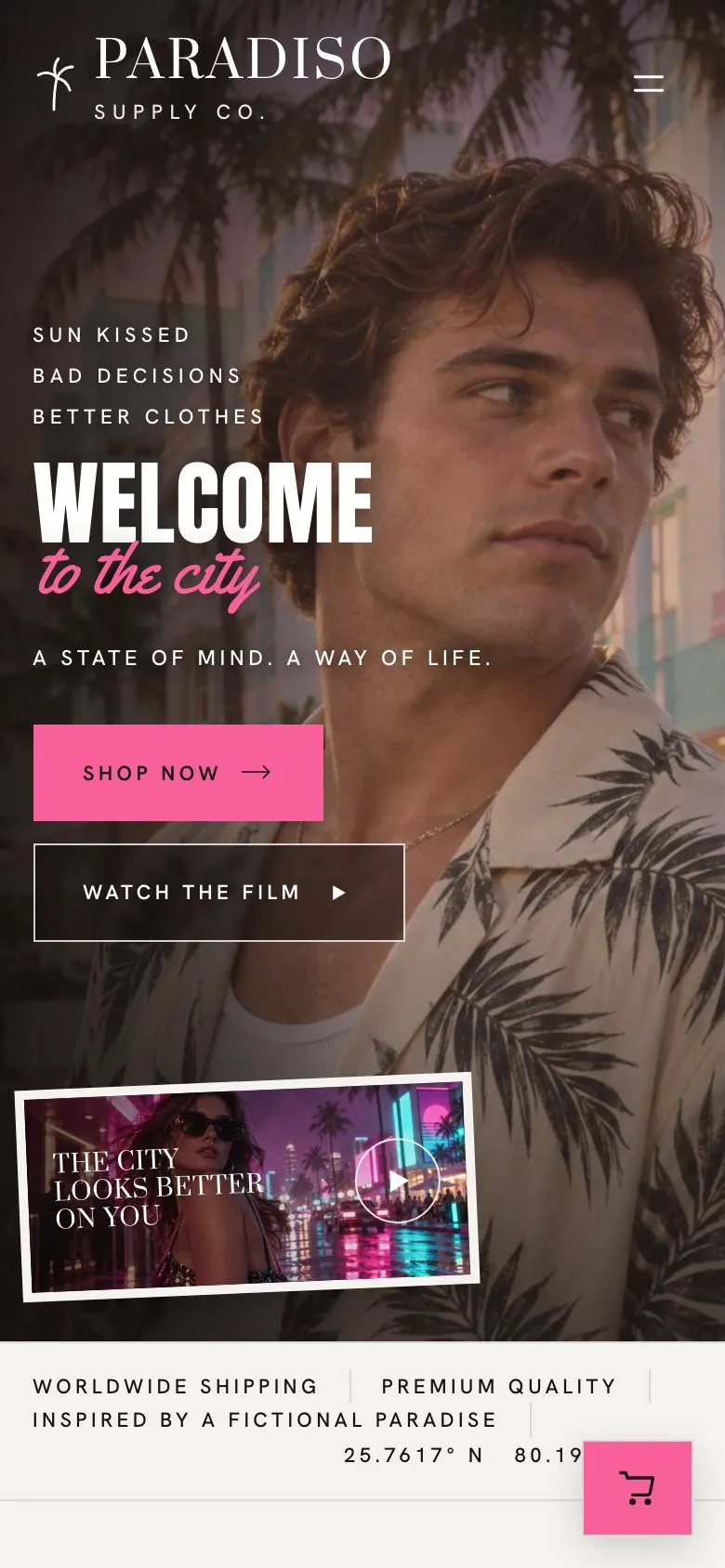
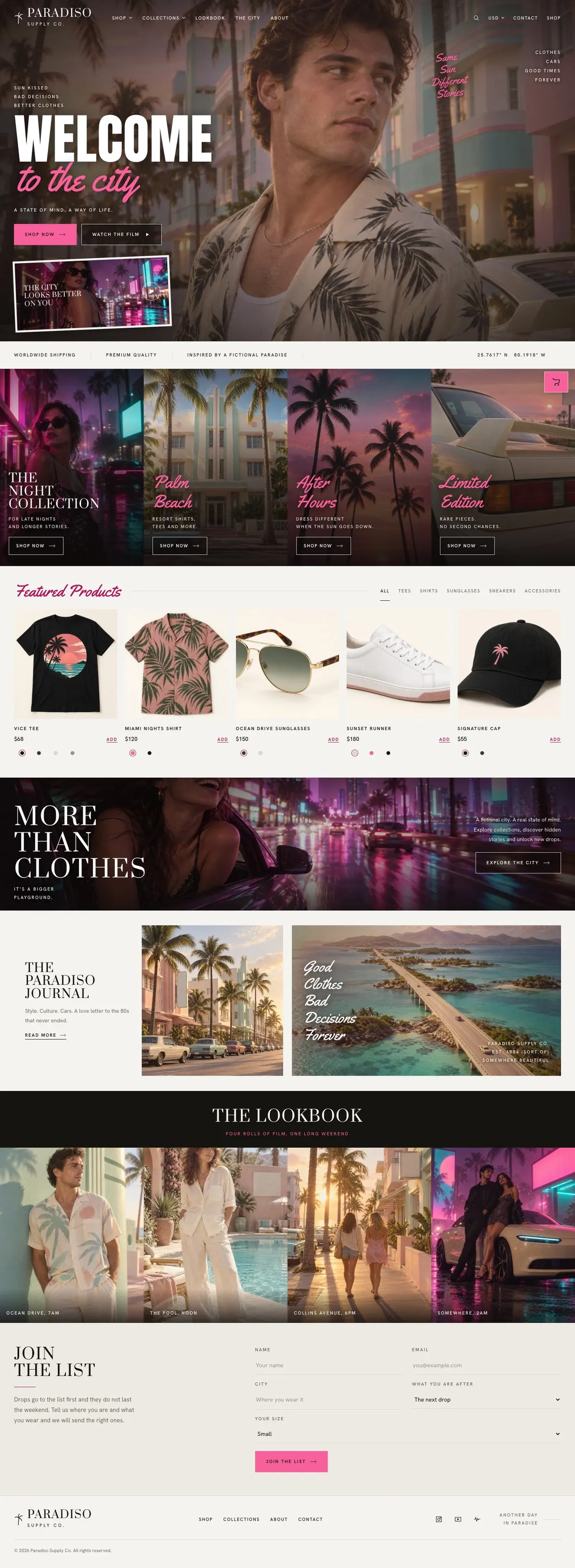
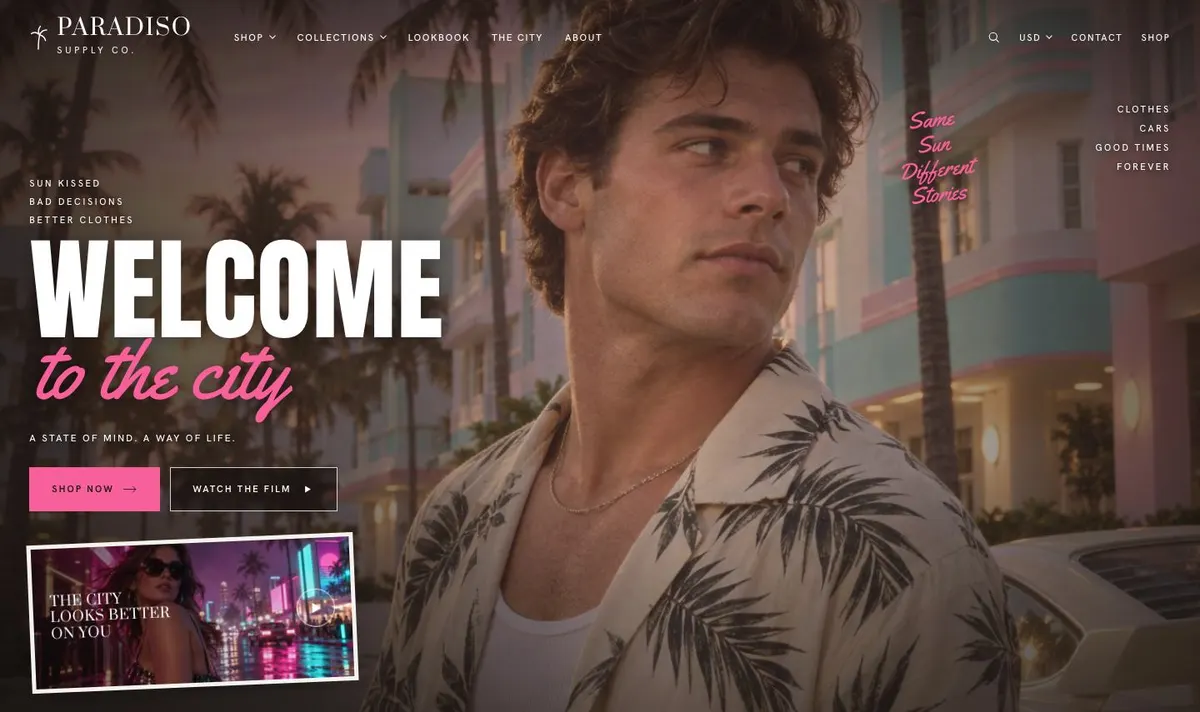
The page begins with Hero, headed “Welcome to the city”. It pairs a short line, “A state of mind. A way of life.”, with photography and the actions “Shop now” and “Watch the film”. For a business adapting it, this is the place to state the world being offered, not to explain every product. The first action should lead to the current collection or order route. The film action needs a real film or equivalent destination if it remains.
What Paradiso promises follows with the supporting line “Worldwide shipping”. This is where a clear operational promise belongs. A product business can use it for the delivery fact it can stand behind. A hotel, beach club or travel brand should replace it with one concise promise that is true of its own offer. The point is reassurance after the opening mood, not a long list of policies.
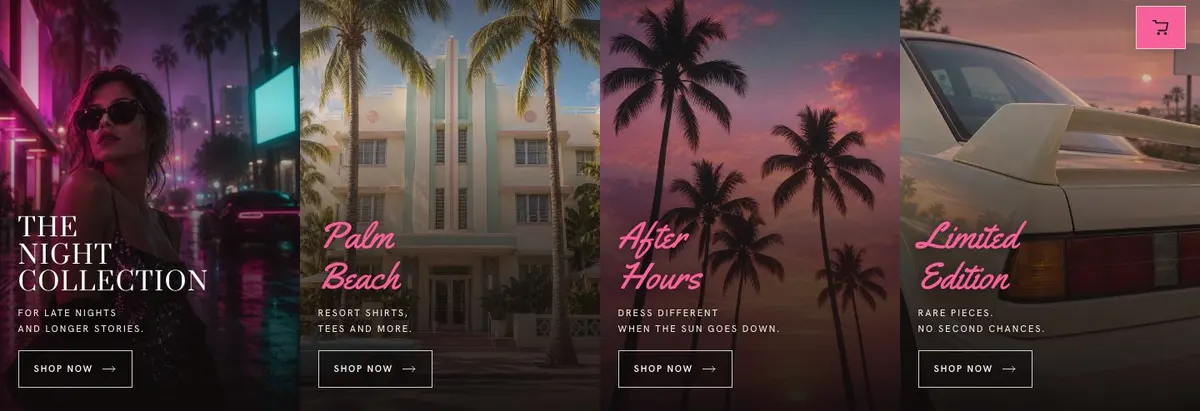
Collections introduces “The Night Collection” and gives it the line “For late nights and longer stories.” Its photographs make room for a named range, season, destination or service strand. The copy should name what the visitor is looking at and make the distinction useful. A resort-wear label might lead with a new drop. A beach club might use it for a daytime or evening identity. A travel brand might make it a route or escape.
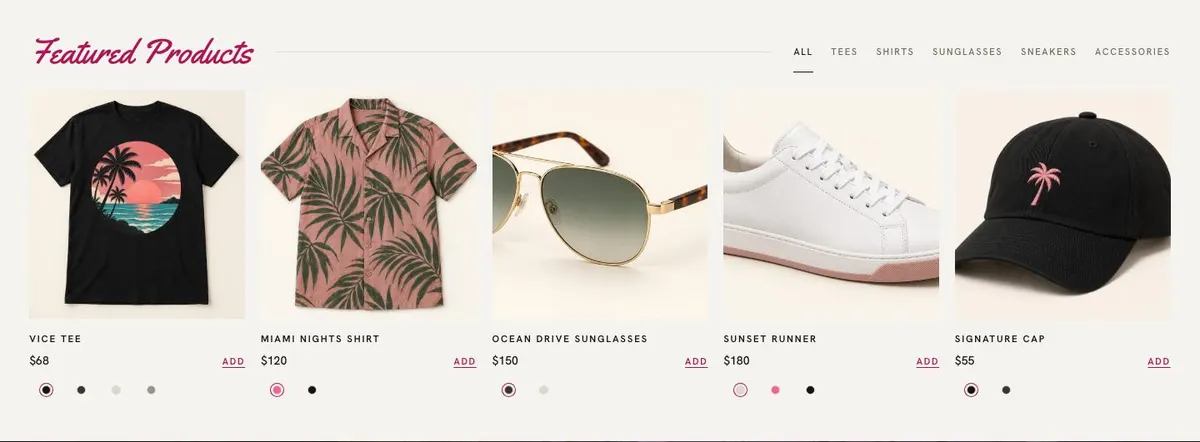
Shop is headed “Featured Products”. It includes a slider or tabs and a buy action, so it is the practical centre of the page. Products placed here need to be ready to order. Choose the items that best explain the collection rather than trying to represent everything at once. Each image must show a product or option clearly enough for the visitor to decide whether to continue.
City, headed “More than clothes”, broadens the story after the shop. Its existing copy describes a fictional city, collections, hidden stories and new drops, then sends people to “Explore the city”. This band is useful when the business has an editorial destination worth visiting: a guide, a location story, a journal area or a collection of related material. If there is no such destination, the wording and action should be changed to something the business genuinely provides.
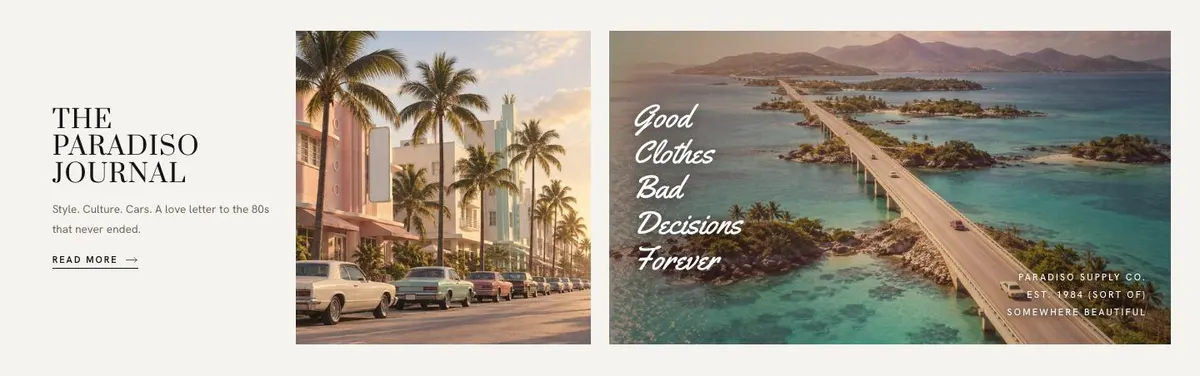
About presents “The Paradiso Journal” with a culture-led line. It gives the page a place for the references behind the offer. The content can be a journal, a set of local notes, a record of events or a short account of the brand’s point of view. It should not become an invented story. Write only what the business can keep current.
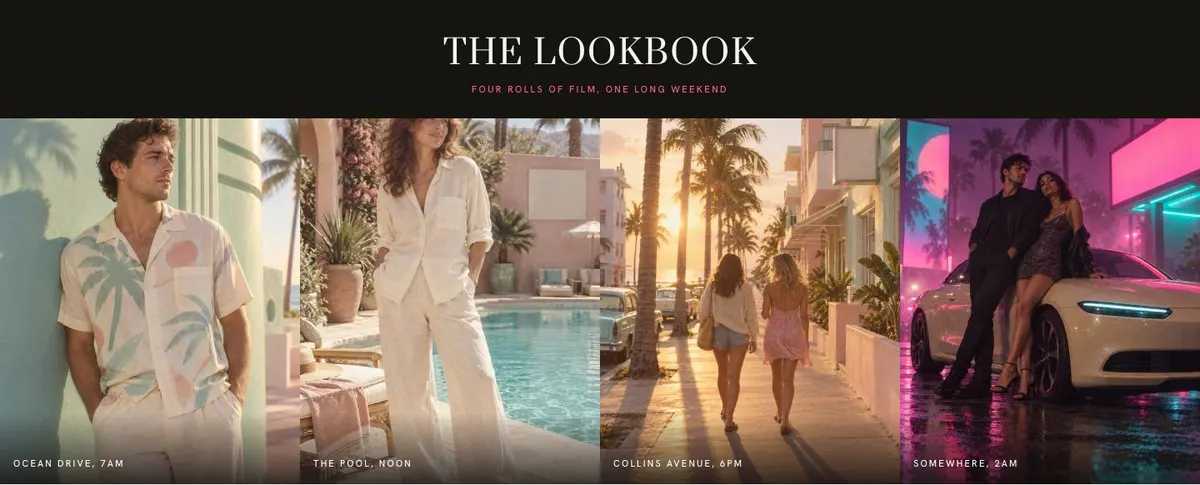
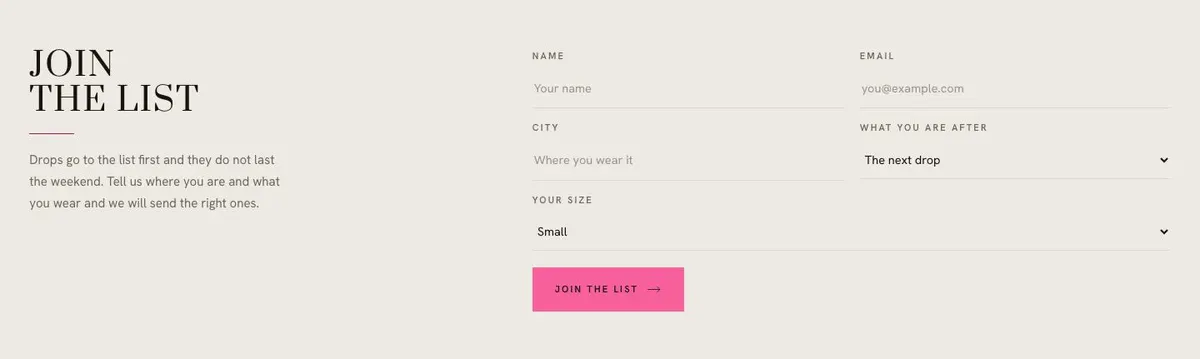
Lookbook follows with “The Lookbook” and “Four rolls of film, one long weekend”. This is the most direct space for a visual sequence that shows the collection, place or mood in use. It needs photography with continuity. Finally, Join asks visitors to “Join the list” and contains the form and a buy action. Its copy says drops reach the list first. Keep that promise only if it is how the business will operate. The form needs a clear reason to join and a considered follow-up plan.
Adapting the design without losing its rhythm
The available colour schemes are Flamingo, Lagoon, Sunset and Orchid. Select one that supports the existing product photography rather than asking the scheme to rescue images that do not belong together. The accent colour is used sparingly in the original direction, so the main work should remain with the photographs and the words placed over them.
The default typography combines Prata for display text with Hanken Grotesk for body copy. Alternatives are Prata with Hanken Grotesk, Anton with Hanken Grotesk, and Yellowtail with Hanken Grotesk. Prata is the closest fit when the business needs the editorial, serif-led approach shown by this template. Anton changes the tone towards direct display type. Yellowtail should be chosen only when its character belongs to the actual brand.
The page needs 23 photographs. They appear in the opening Hero, Collections, Shop, City, About and Lookbook bands. Prepare them as one set, not as separate batches: the shop images must feel related to the wider location and the lookbook must extend that same world. The design is photo-led, so weak or mismatched photography will be more noticeable than on a text-heavy page.
Writing it for the business
Starting from this template costs no credits. Rewriting the copy with AI costs about 20 credits. A useful brief names the business, what it sells, the location or atmosphere it is grounded in, the current collection or offer, the main purchase goal and the promise used in the reassurance band.
It should also state what “Shop now”, “Watch the film” and “Explore the city” should mean for this business. Name the journal subject and the reason for joining the list. The AI can then replace the placeholder direction with copy that has a job at every stage, rather than producing broad lifestyle language.
What to prepare first
Write the opening statement and the line beneath it first. Then prepare the named collection, featured products and the delivery or operational promise. These are the parts that connect the page’s atmosphere to a real order.
Gather the 23 photographs before publishing, including the product imagery for Shop and the sequence for Lookbook. Write the destination behind “Watch the film” and “Explore the city”, or change those actions if those destinations do not exist. Prepare the list message and the information the form needs to collect, then decide what subscribers will receive first.
Variations for nearby trades
For a boutique hotel, make the Hero about the property and location, use Collections for distinct parts of the stay, and turn City into local material worth exploring. Keep the product-led shop only if the hotel has a genuine orderable offer; otherwise Hotel Flash Deals is the closer fit for an offer-led hotel page.
For an eyewear label, use Collections for frames grouped by season or mood and use the lookbook to show frames in context. The journal can cover the visual references and locations behind the collection. The list should have a specific purpose, such as receiving future drops.
For a beach club, use the opening and City bands to establish the setting, then feature the items or offers that can genuinely be ordered. If access is the primary offer rather than products, Private Members Access may be more appropriate.
When another template fits better
Summer Fashion Sale fits a seasonal apparel promotion where the sale itself needs to lead the message. Nightlife Apparel Shop is worth considering when the label’s identity is rooted in nightlife rather than a destination escape.
Tour Departures is the better choice when travel dates and departures are the central decision. Small-Batch Craft fits an offer defined by making and limited production rather than resort atmosphere. Browse the hotels and travel hub for related starting points.
Before you publish
- Check that every purchase action leads to a real order route.
- Check that the shipping or operational promise is accurate.
- Check that the film, city and journal destinations exist.
- Check that the list message matches the follow-up visitors will receive.