For trips people train for
An adventure trip buyer is weighing effort, safety, dates and price, and needs to trust the guides. Adventure Trip reads like an expedition dossier: a drawn route with numbered huts, an elevation profile for each day, a departures table with places left, and plain answers about grade and weather.
It suits multi-day treks, hut-to-hut traverses, summit or glacier trips, sea-kayak or cycling expeditions and safari circuits sold as one guided small-group trip.
How the page gets a place booked
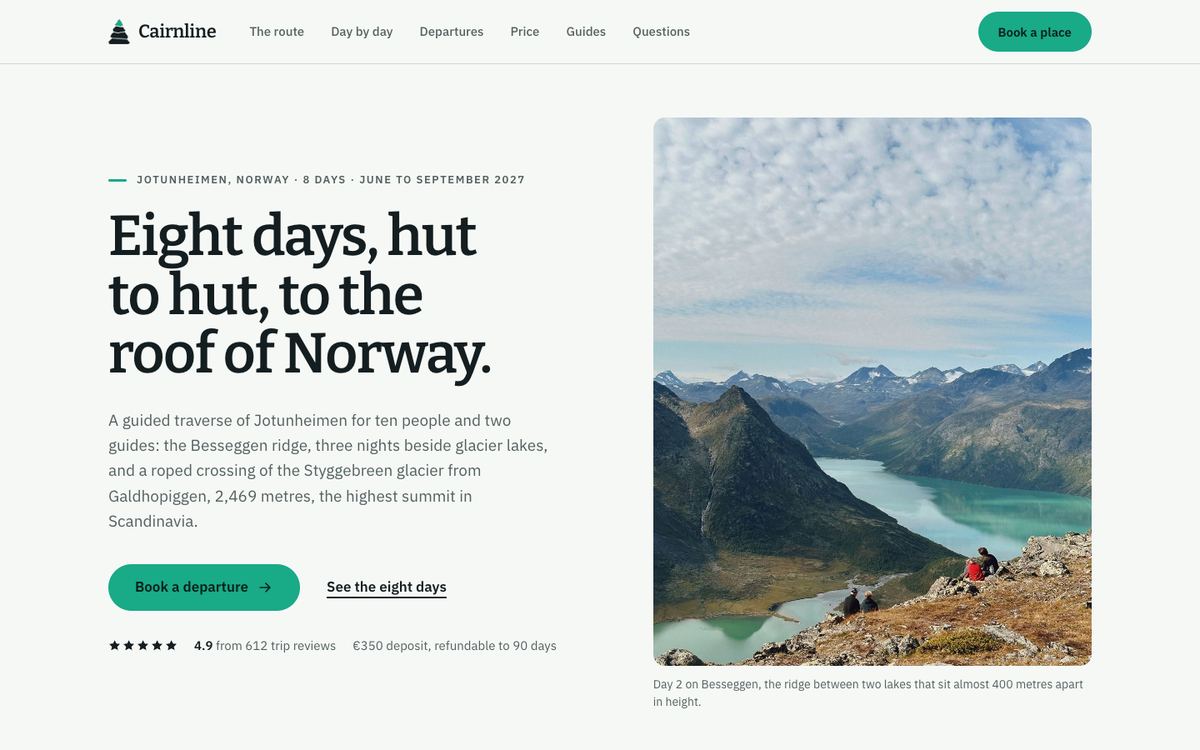
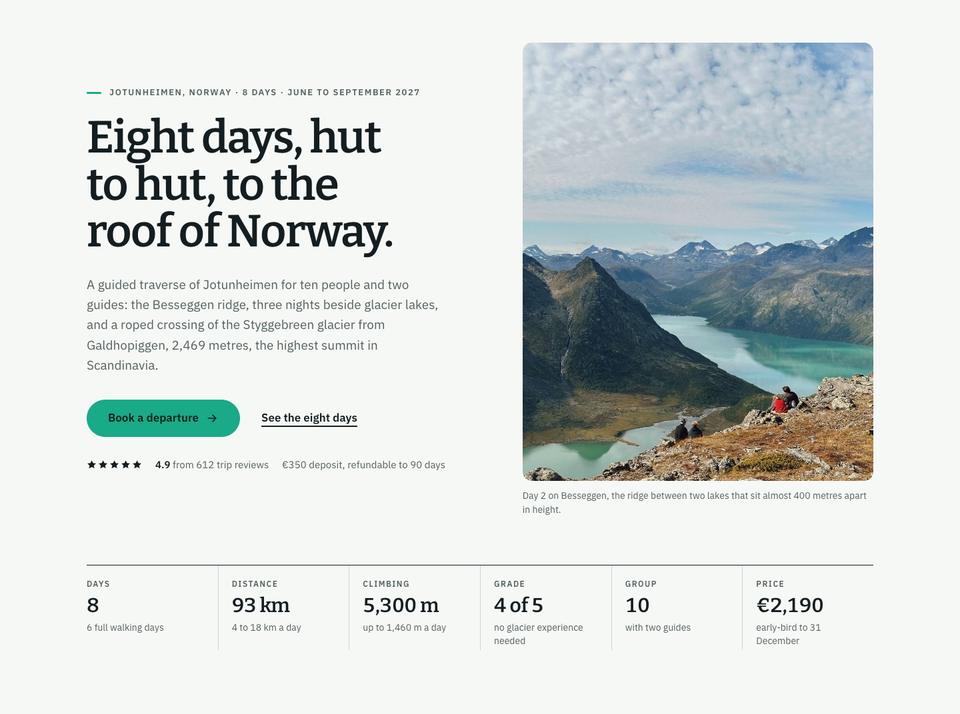
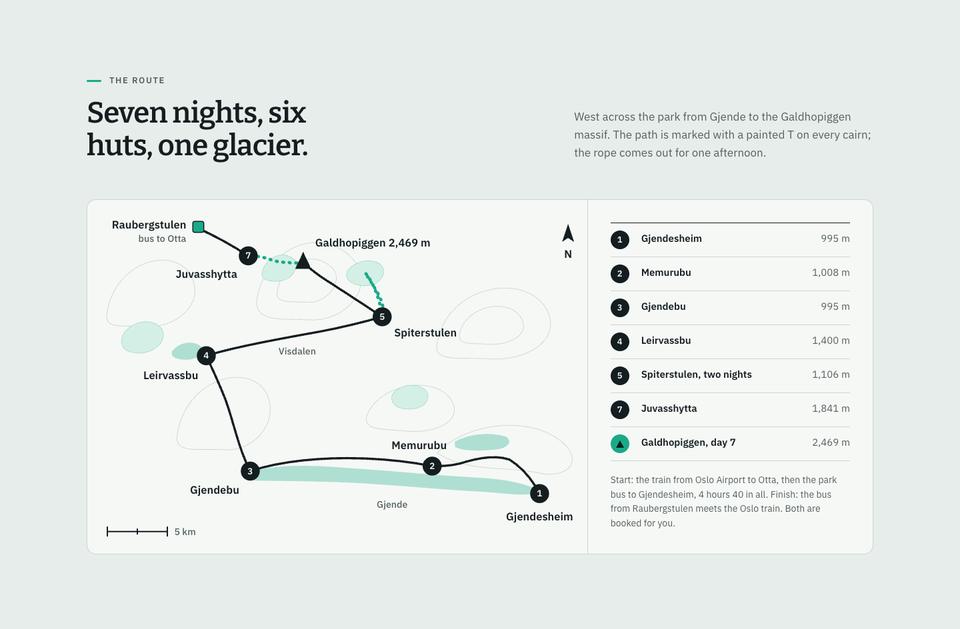
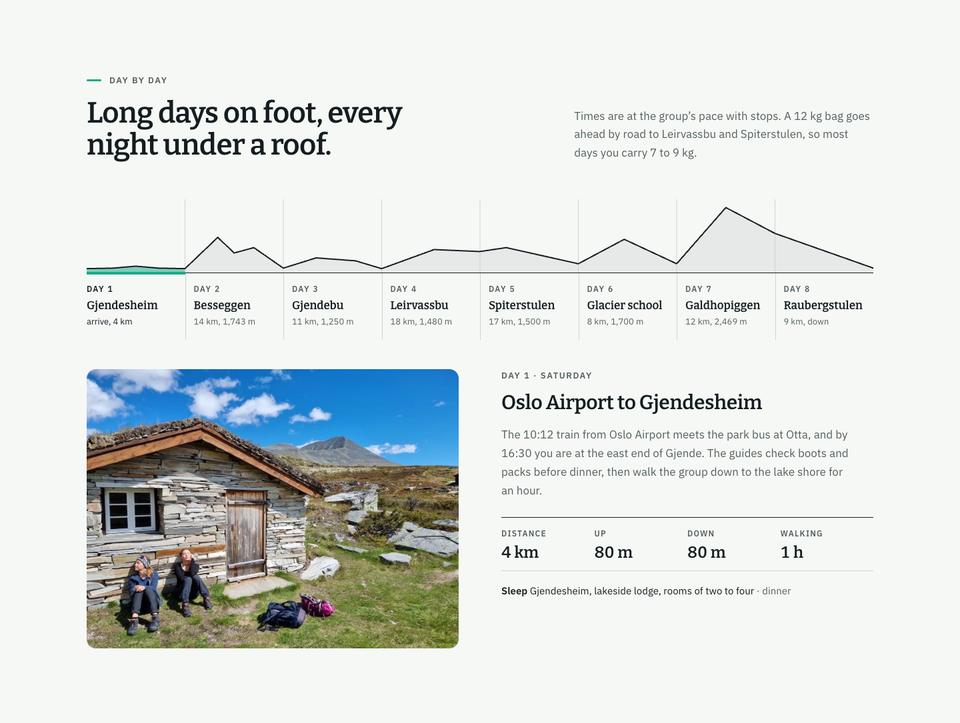
The hero sums up the trip, “Eight days, hut to hut, to the roof of Norway”, with region, length and season. The route draws the path with huts and the glacier. Day by day gives distances, climbs and times with luggage transfers.
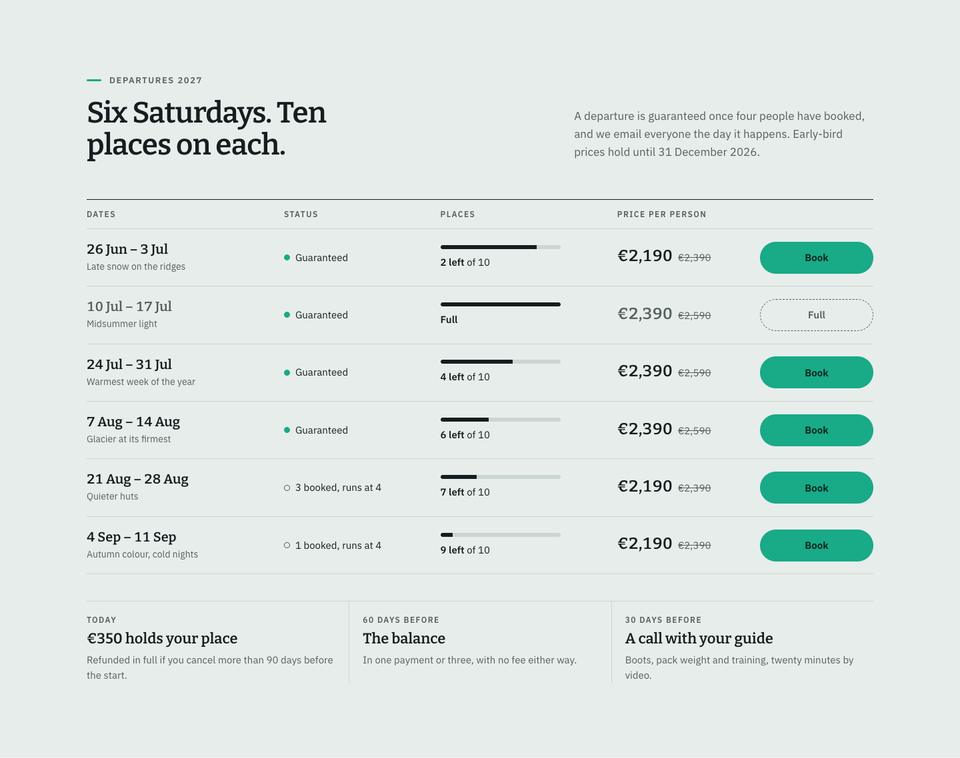
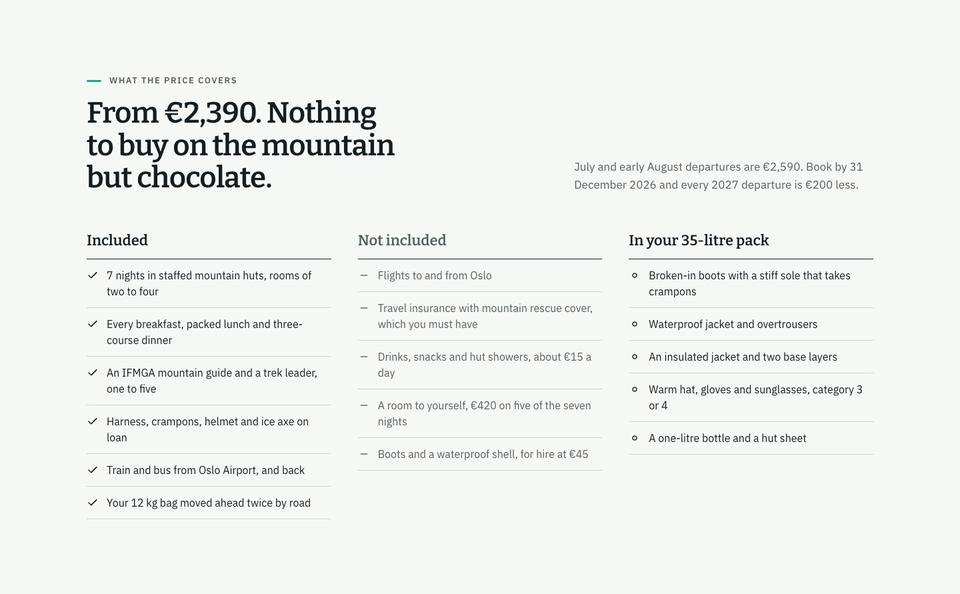
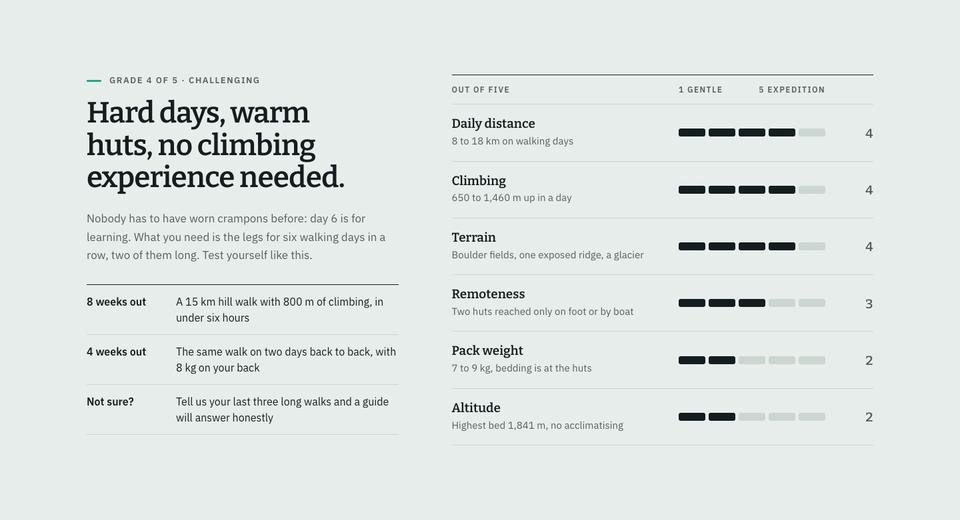
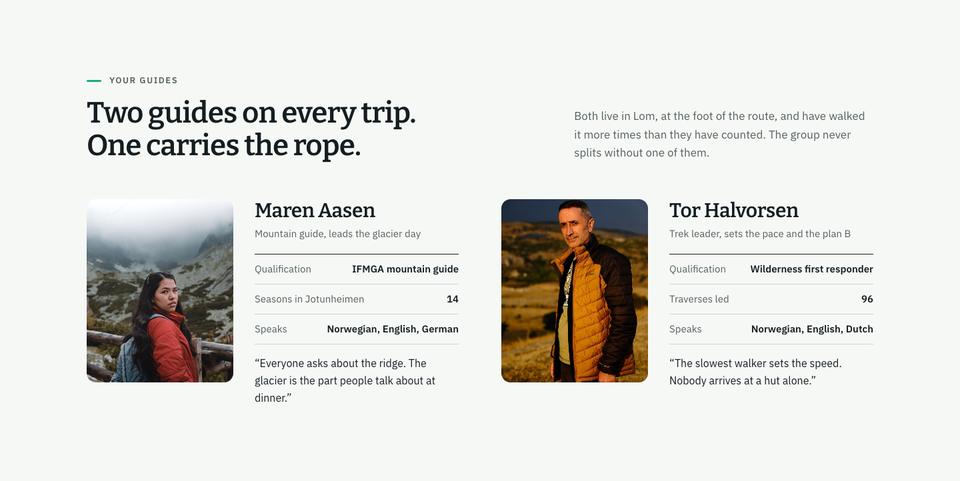
Departures lists dates with places left and the guarantee rule. What the price covers itemises inclusions. Grade explains the difficulty and what experience is needed. Your guides introduces two local guides and their qualifications.
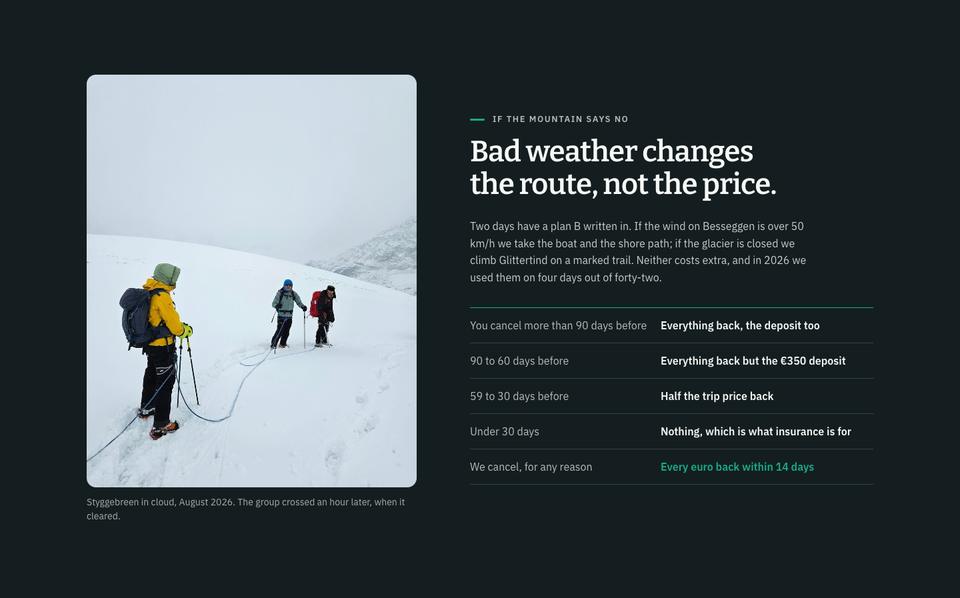
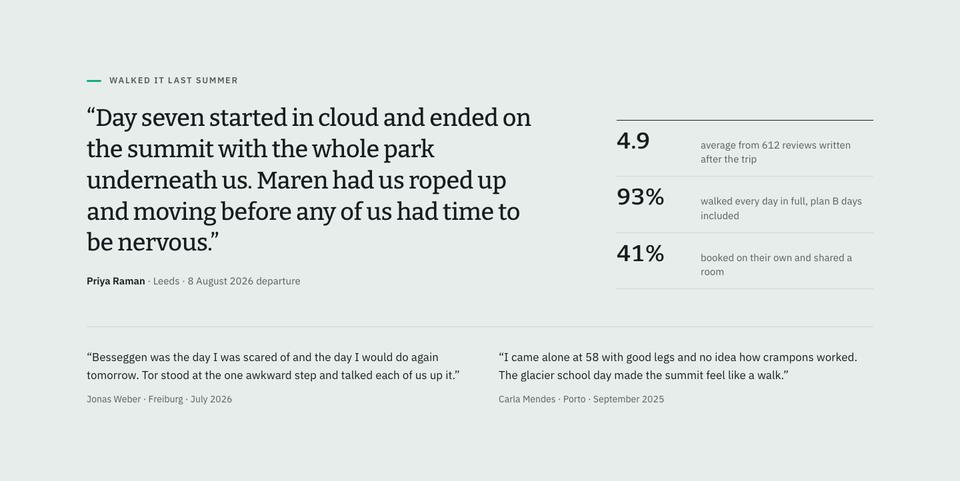
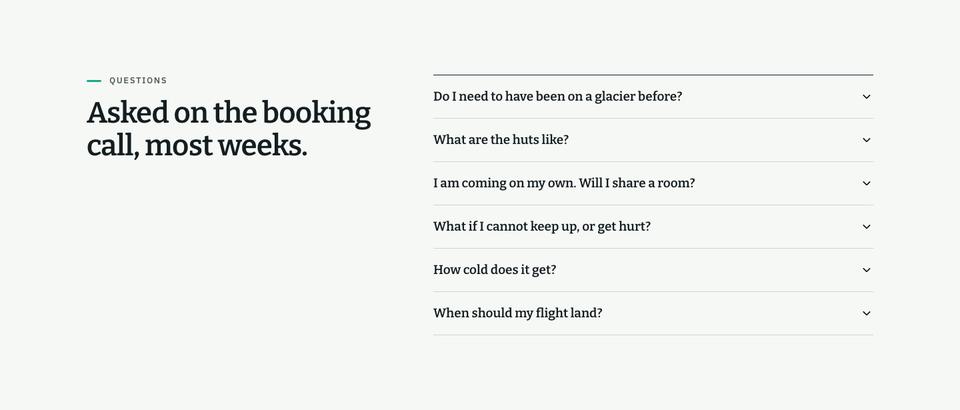
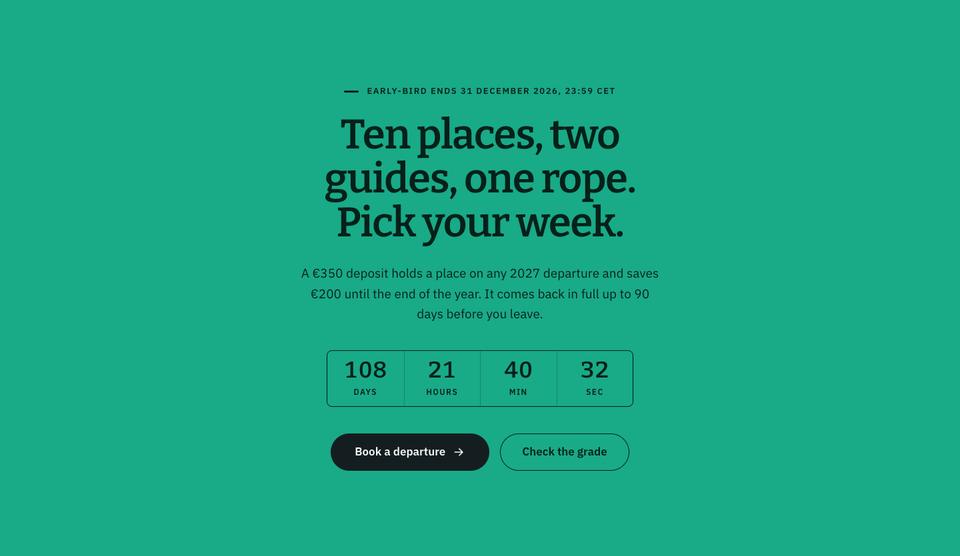
If the mountain says no explains how weather changes the route but not the price. Walked it last summer quotes past participants, questions covers glacier experience and fitness, and book gives the deposit and early-bird deadline with a countdown.
The weather section is the one experienced trekkers look for. A clear policy on changed routes shows the operator has done this many times and puts safety first.
Adjusting the look
Four schemes are included: Meltwater, Summit orange, Ice and Granite. Headings can be Bitter, Familjen Grotesk or Archivo. Twelve photographs are used; images from your own groups on the route are essential.
The route, days and departures are editable. Ask the AI to rewrite the day-by-day section for a different itinerary.
Writing it for your trip
You can start from the template for free, or have the AI write your copy for about 20 credits while keeping the layout. Include the region, length and season, route and daily stages, departures and group size, price and inclusions, grade and requirements, guides, weather policy, reviews, deposit and booking terms.
Route, effort and safety to set out
People booking a guided trek decide on the route, how hard it is and the date, and they want to trust the operator with their safety. Start with the route: each night’s stop with its altitude, the distance and ascent for each day, and the typical walking time at group pace. The elevation profile should use real figures, and the day-by-day tabs should mention terrain, such as marked paths, scree or a roped glacier crossing.
The grade section needs honest guidance on fitness and experience required, with examples of what someone should be able to do before booking. Say how you handle a guest who cannot keep up. For safety, list guide qualifications, group size and guide ratio, first aid, communication in areas without signal, and the conditions under which a day is changed or cancelled.
The departures table needs dates, price for each departure, places left, and the minimum number that guarantees a departure. The price section should list what is included, such as huts, meals, guides, luggage transfers and transport, and what is not, like flights, insurance and personal equipment. Provide a kit list and state whether rental gear is available. Twelve photographs are used, so show the huts, the terrain on hard days and the group at rest.
Explain the booking terms: deposit, balance date, cancellation charges and the travel insurance you require. Trips like this are booked many months ahead, so buyers read the fine print carefully.
Include how to reach the start point and where the trip ends, with train or bus connections and the time you finish on the last day. Guests book flights around those times, and a precise answer saves many emails.
Summits, sea kayaking, cycling and safaris
A summit or glacier trip can add acclimatisation days and technical skills taught on the way. Sea-kayak expeditions usually replace huts with campsites and add paddling distance and sea conditions. Cycling trips can show daily kilometres, elevation and bike hire options with support vehicles. Safari circuits can replace ascent with game drives and camp standards, keeping the departures table and places left.
When another template fits better
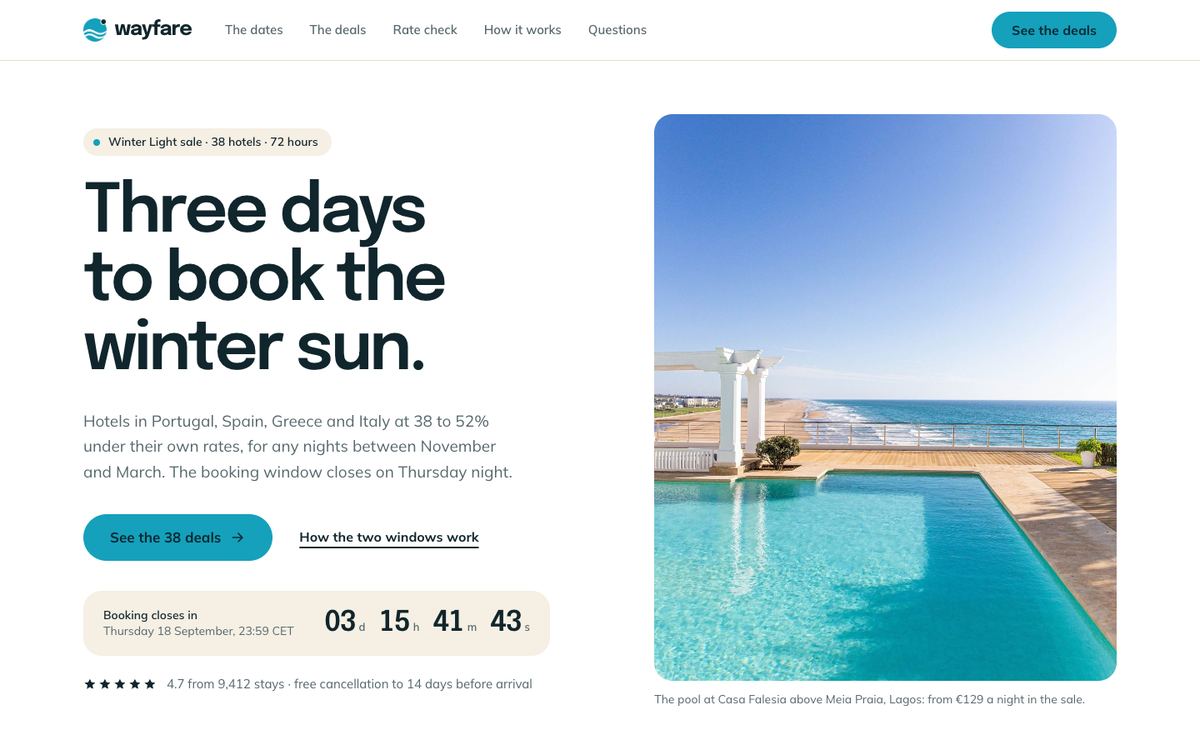
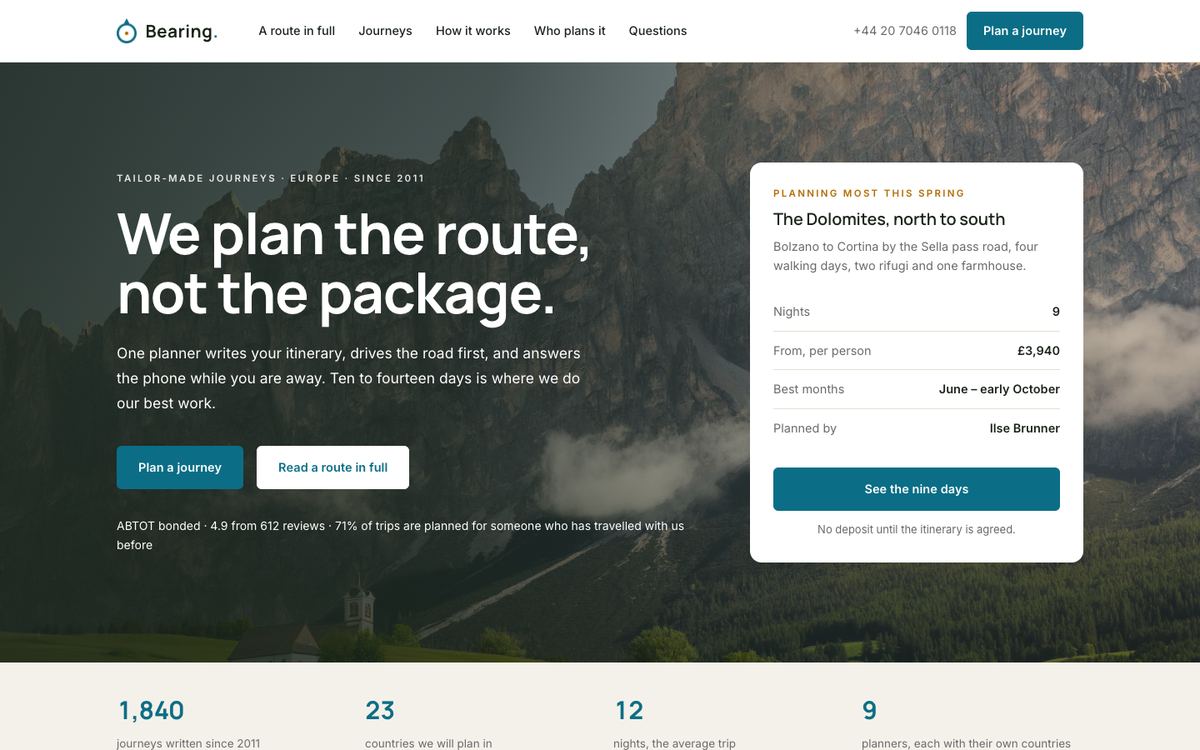
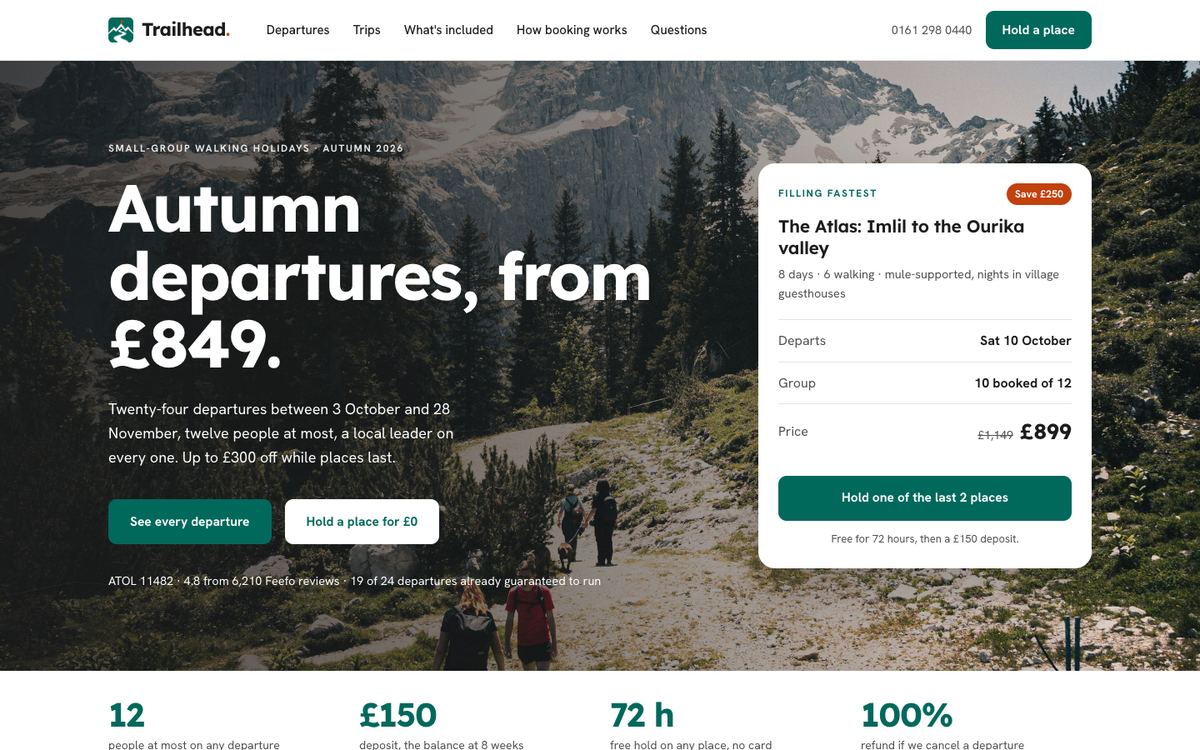
Adventure Trip sells one expedition. A company running many fixed departures fits Tour Departures, and bespoke itineraries Tailor-made Travel. A retreat with yoga and rest belongs on Wellness Retreat, and technical outdoor gear on sale on Outdoor Season End.
Compare them on the hotel and travel templates page.
Before you publish
- Check route data, grade and daily figures with your guides.
- Keep places left accurate for each departure.
- Confirm deposit, cancellation and insurance requirements.
- Set the early-bird countdown correctly.