For tour departures that need more than a list of dates
Someone searching for Tour Departures needs a page that makes each trip feel distinct, explains what sits behind it, and gives travellers a clear way to ask about joining. This design does that through a sequence of named destinations and the practical information that follows them. It is built for a travel business that sells places and its own judgement about how to experience them.
A generic travel page can flatten every offer into the same short description. That is not enough when an Italy journey, a Morocco route and a Patagonia departure call for different expectations. This template gives each destination its own place in the page, so the business can set out the character of a journey before asking for an enquiry.
The page does not have a stated band for a departure calendar or direct booking. If the business needs a different travel format alongside this enquiry-led approach, it is worth considering the Adventure Trip template.
A destination-led route to the enquiry
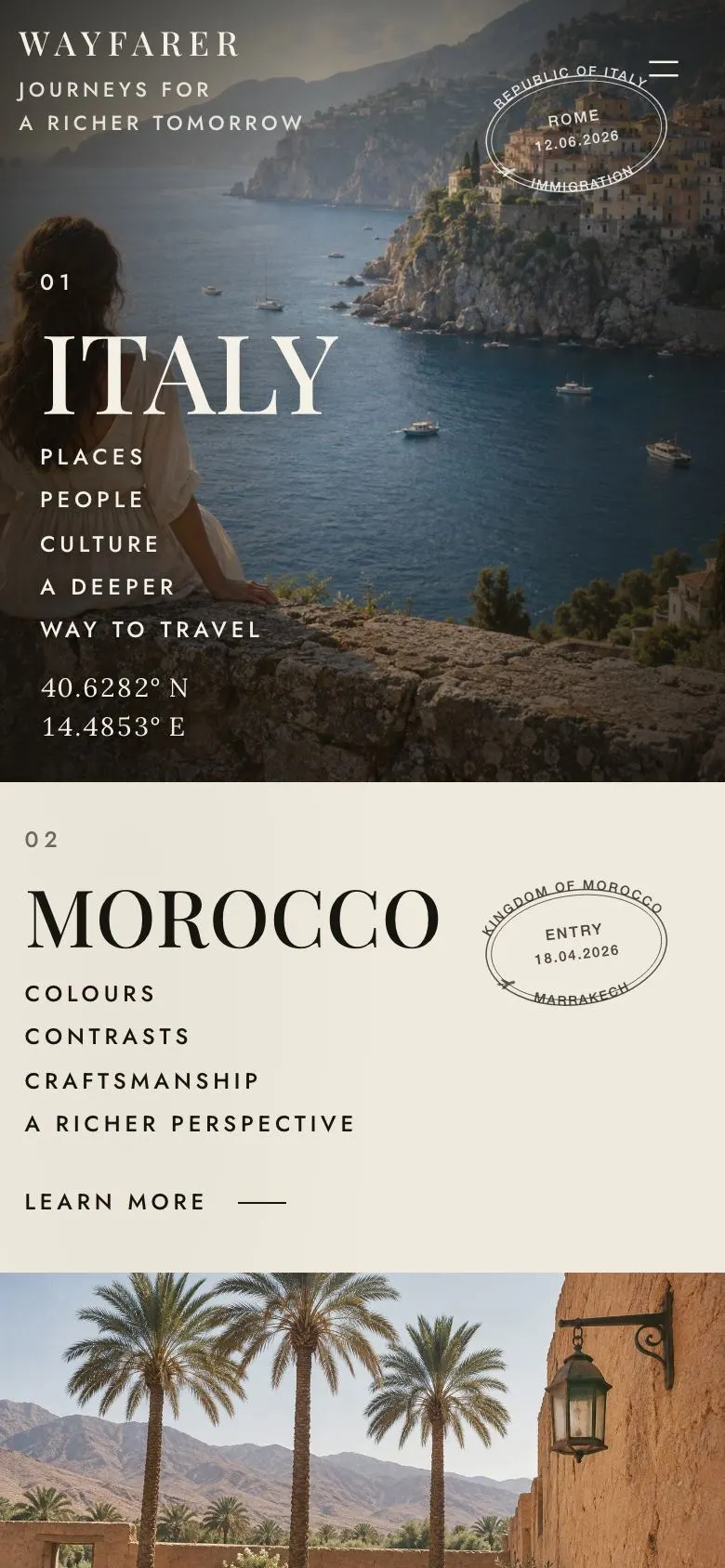
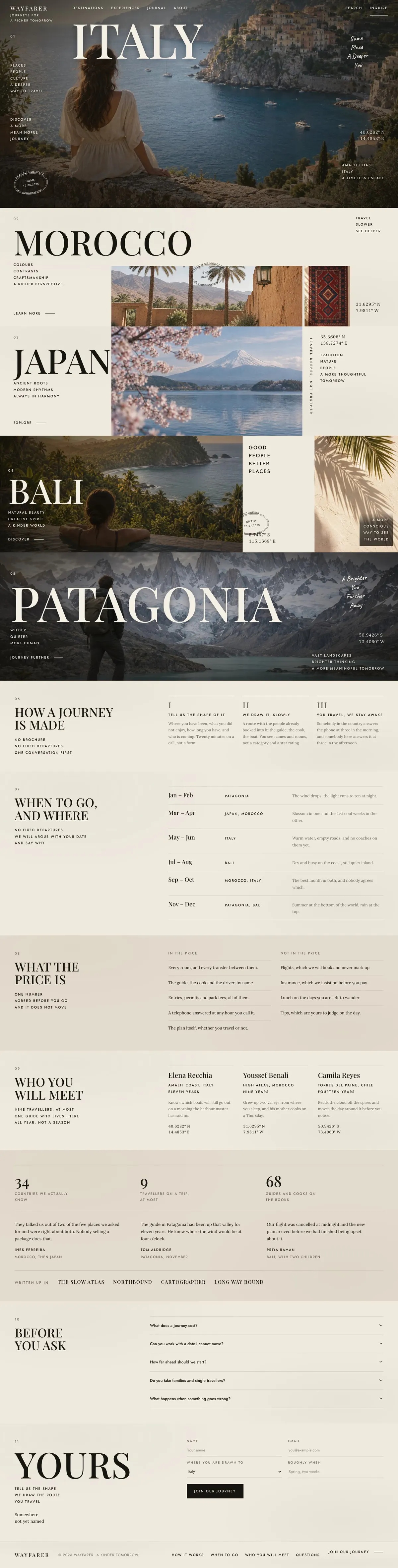
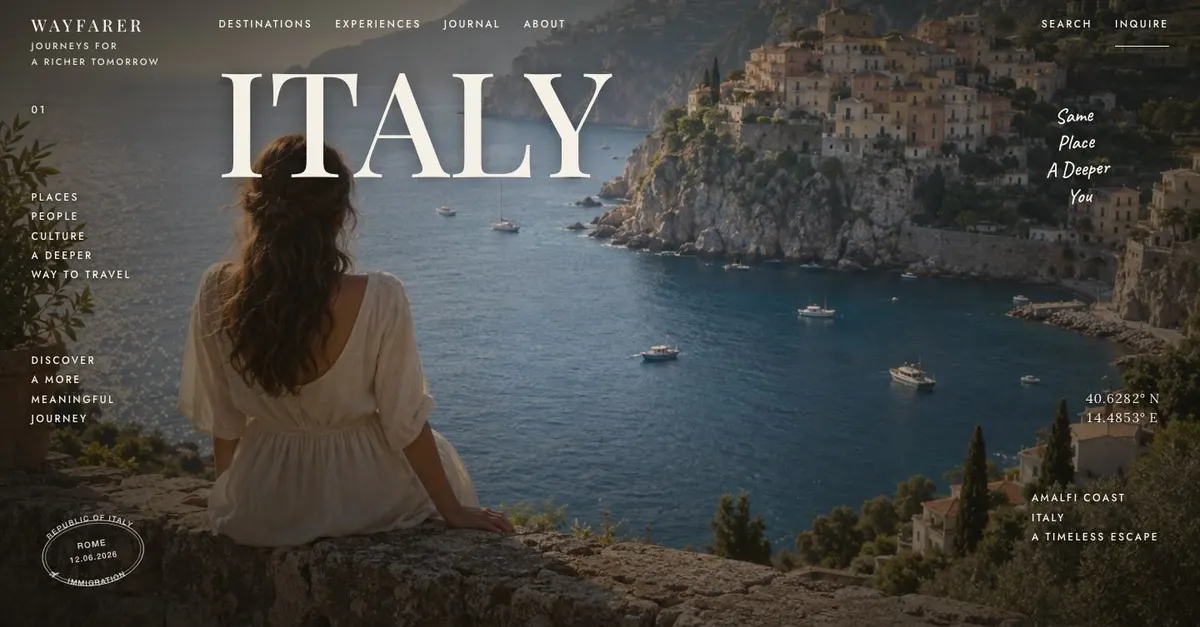
The page opens with the Hero, headed “Italy”. It combines two photographs with the “Start a journey” button. This is the first decision for the owner: choose the lead destination and write enough to establish why it represents the wider business. The button should lead travellers towards starting a conversation, so the wording around it should make that invitation credible.
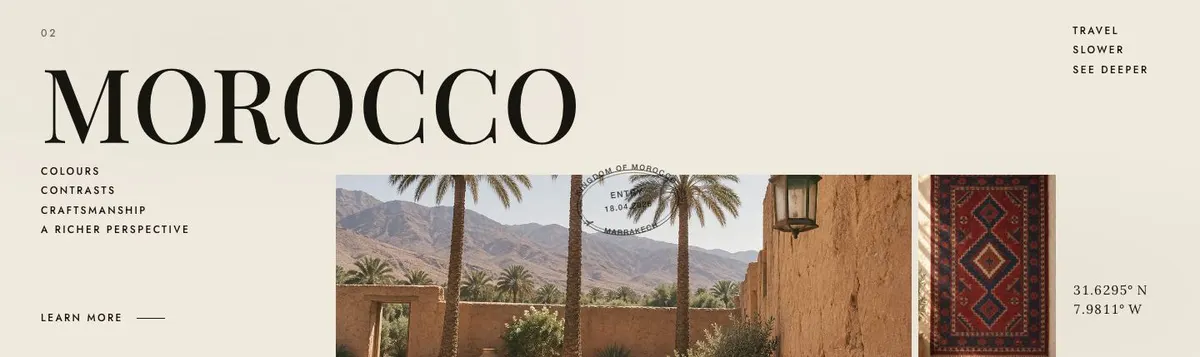
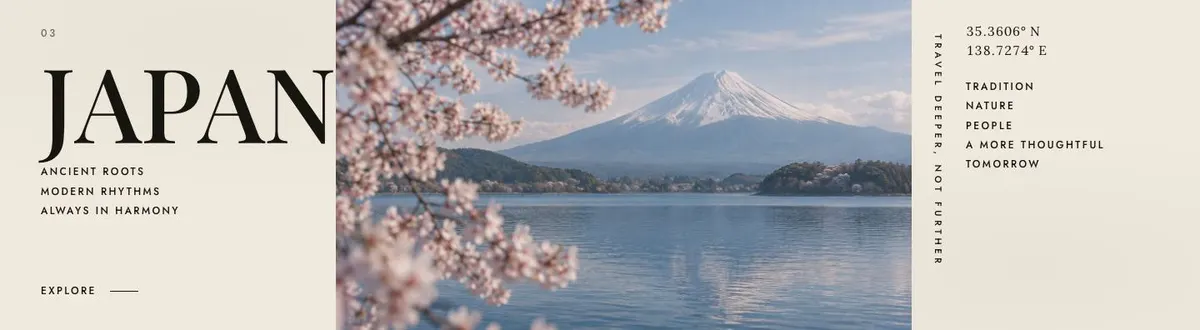
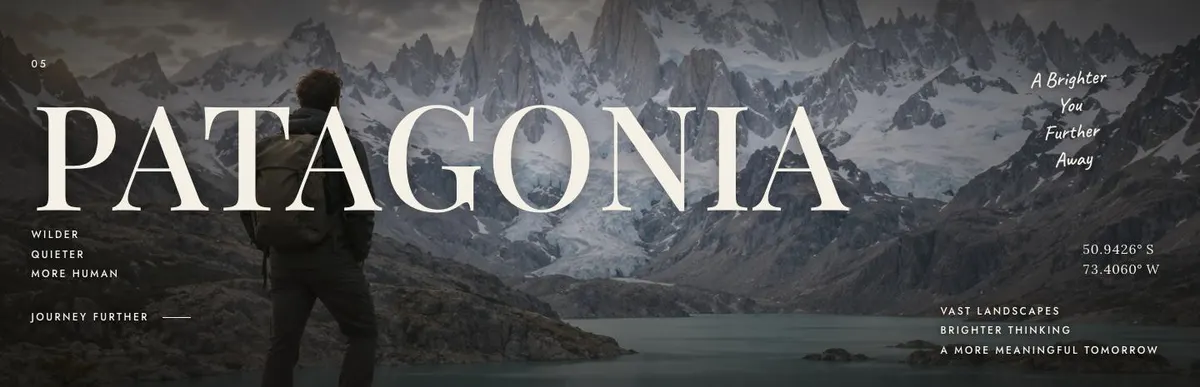
Four destination bands then carry the page forward. Morocco follows with three photographs, then Japan with one, Bali with three, and Patagonia with one. These are not interchangeable filler sections. They are the places where the owner should describe the sort of journey offered, the local focus, and the reasons a traveller might choose that route over another. A business with different destinations can replace the names and content while retaining the same sequence.
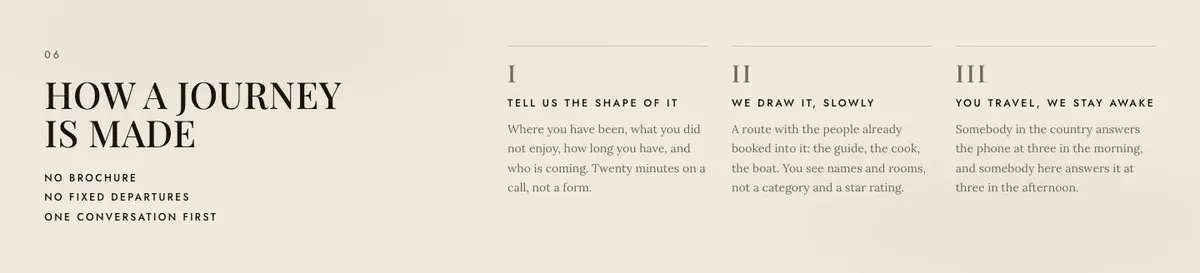
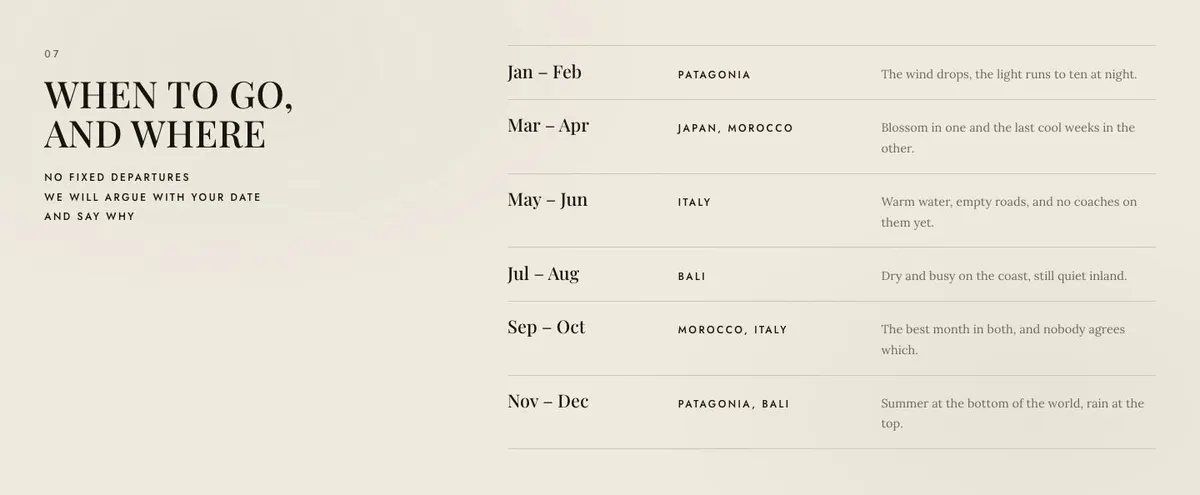
How a journey is made moves from inspiration to the working approach. Use it to explain how the business plans or runs a journey. When to go, and where gives a place for seasonal and location guidance. That matters when travellers are choosing between a route, a time of year, or both.
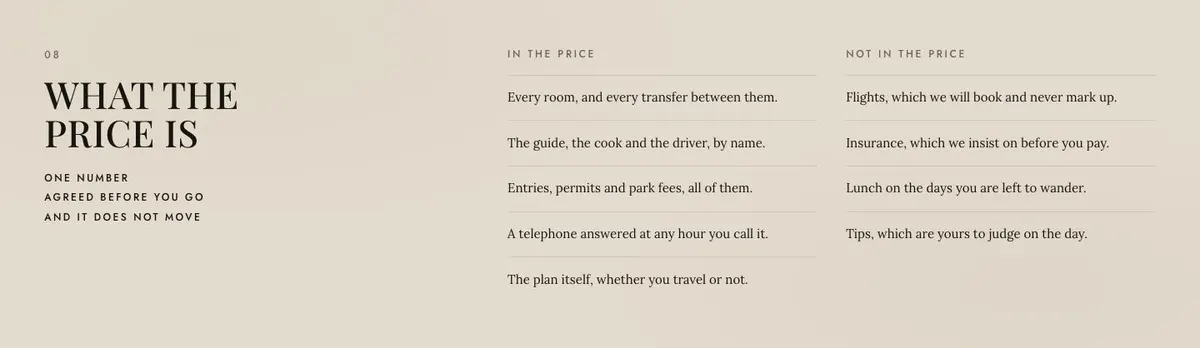
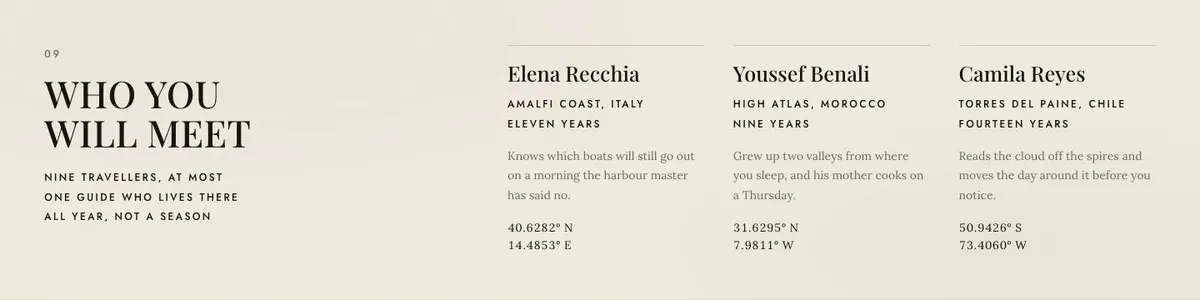
What the price is should set out the business’s own price explanation. It needs plain wording about what the traveller can expect from the cost, without implying services the business does not provide. Who you will meet then gives the owner room to introduce the people involved in the experience. It can cover the hosts, guides or other people the traveller is likely to encounter, where that is relevant.
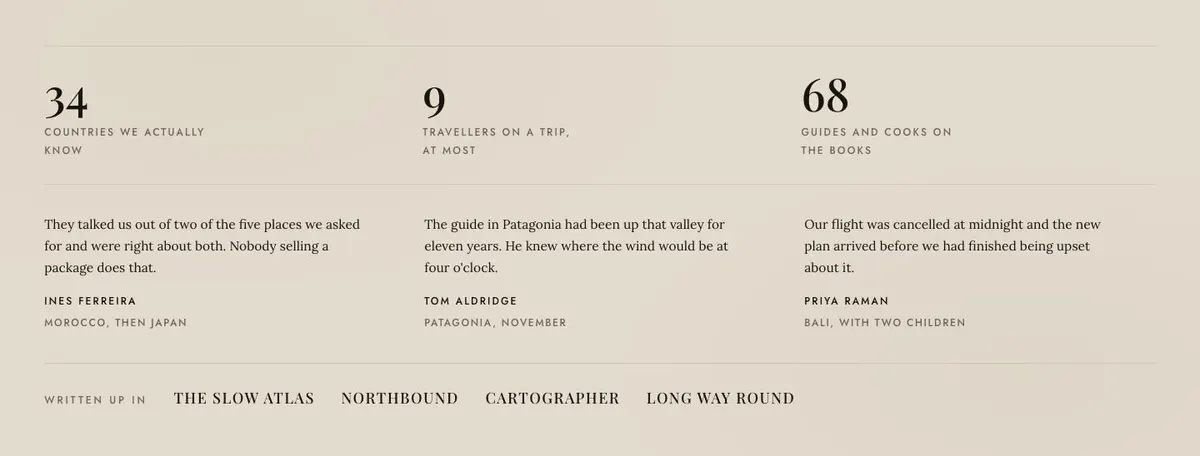
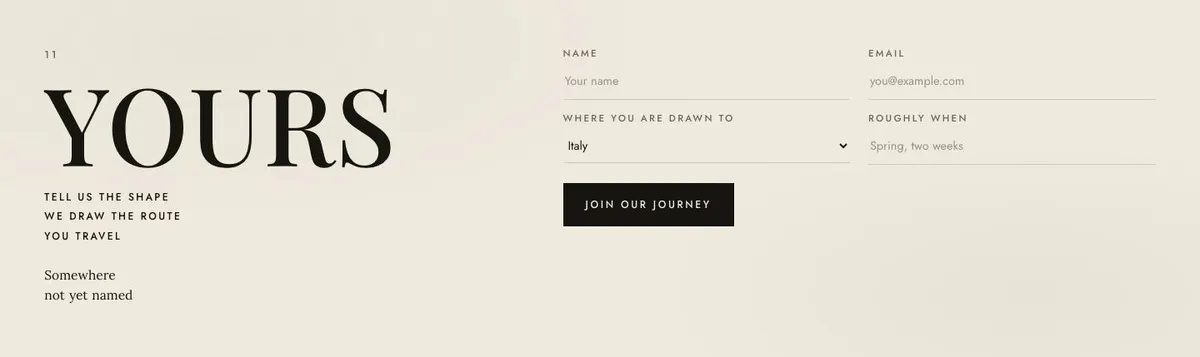
The Reviews band adds a traveller quote after the practical sections. Before you ask is an accordion for common questions, making it the right place for answers that would otherwise delay an enquiry. The final band is Yours, which contains the enquiry form. Everything above should prepare a traveller to complete that form with a useful request.
Adapting the design without losing its travel focus
The template offers Slate, Olive, Clay and Ink colour schemes. Select one that supports the business’s existing identity, then keep the destination writing and photography consistent with that choice. The page is light, serif-led, photo-led and editorial in direction, so it suits considered copy rather than a crowded sales message.
Playfair Display is the display face and Jost is the body face. The available font pairings are Playfair Display with Jost, Caveat with Jost, and Lora with Jost. A business should choose the pairing that keeps destination names, practical details and the enquiry invitation easy to distinguish from one another.
The page requires ten photographs in total. Two sit in the Hero, three appear in Morocco, one in Japan, three in Bali and one in Patagonia. Before changing the destination names, decide whether the business has enough strong images to support that distribution. A single image must still carry a destination band where only one photograph is used, while the larger sets can show several sides of a place or journey.
Writing it for the business
Starting from this template costs no credits. Rewriting the copy with AI costs about 20 credits. The result will be more useful when the brief names the business, the kinds of journeys it sells, the destinations to feature, the traveller it wants to attract, and the enquiry it wants people to make.
A good brief also states the facts that belong in “How a journey is made”, “When to go, and where”, “What the price is”, and “Who you will meet”. Include the questions prospective travellers ask most often, plus a genuine traveller quote if one is available. This gives the rewrite material to work from rather than asking it to guess the business’s approach.
What to prepare before publishing
Start with the lead destination for the Hero and the four destinations that follow. Write a short, specific account of each journey: what makes it worth taking, who it is for, and what the business wants a traveller to understand before getting in touch. Prepare the wording for the “Start a journey” button and the final enquiry invitation so both match the way the business handles enquiries.
Gather the ten photographs early. The owner should know which images belong to each destination band before the copy is finalised. Then prepare the travel-planning explanation, seasonal guidance, price explanation, people introductions, one review quote and the answers for “Before you ask”. The enquiry form comes last, but its purpose should shape the rest of the page.
Useful variations for neighbouring travel trades
A lodge group can use the destinations for different properties or regions, with “Who you will meet” introducing the people around each stay. A sailing outfit can make each destination a route and use “When to go, and where” for the conditions that affect its journeys. A photography workshop that travels can use the destination bands to explain each location’s focus, then introduce the people participants will meet through the Crew section.
A trekking operator can make the lead destination its principal route and use the later bands for alternative regions. In each case, the page remains strongest when the owner writes for an enquiry rather than trying to make every travel decision on the page itself.
When another template fits better
For a business centred on personalised planning across a wider range of travel choices, see Tailor-made Travel. For accommodation-led travel, see Boutique Resort Direct. For a travel business whose offer is closer to a defined outdoor trip, see Adventure Trip. For an event rather than a journey, see Music Festival. More relevant starting points are on the hotels and travel templates page.
Before publishing
- Check that every destination name matches its photographs.
- Check that the price explanation reflects the actual offer.
- Check that the questions answer real traveller concerns.
- Check that the enquiry invitation states the next step clearly.