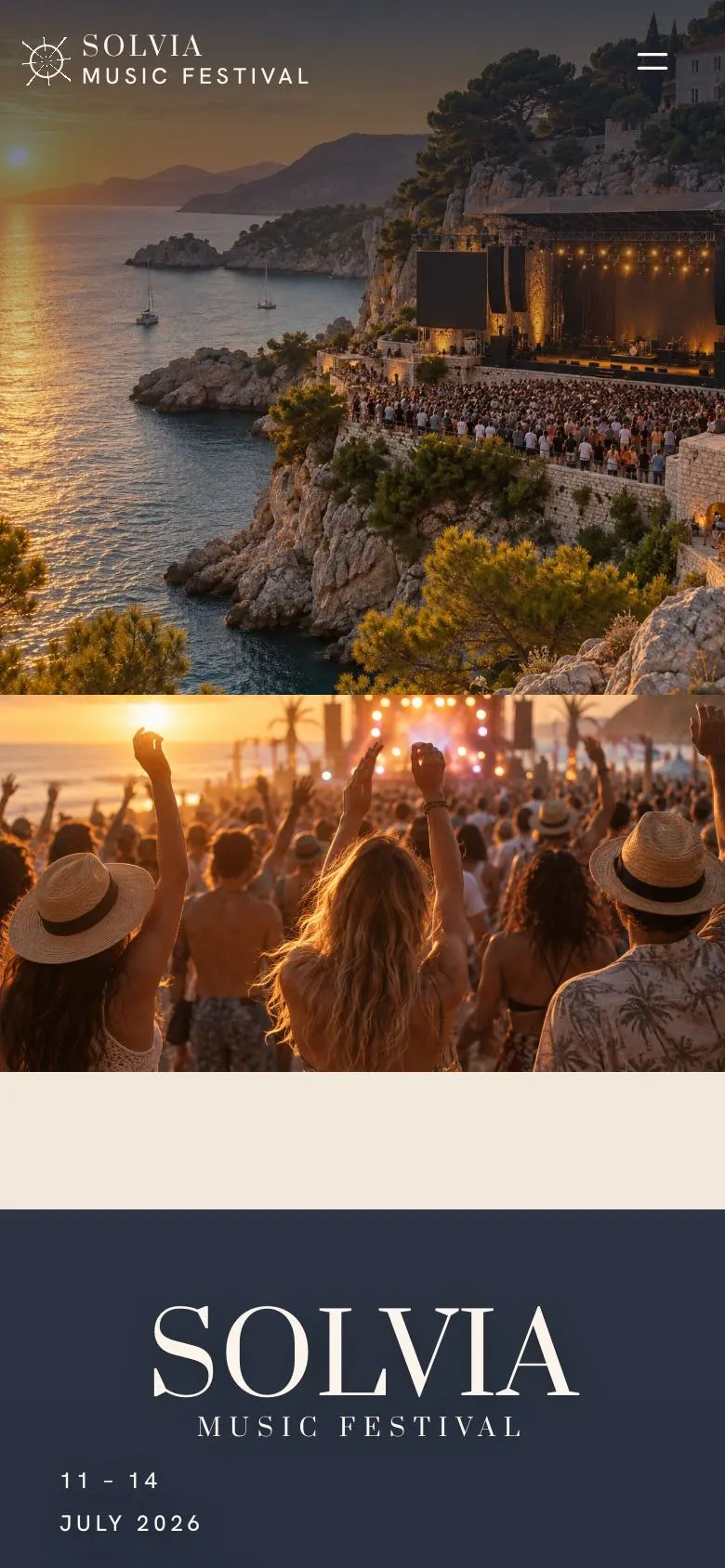
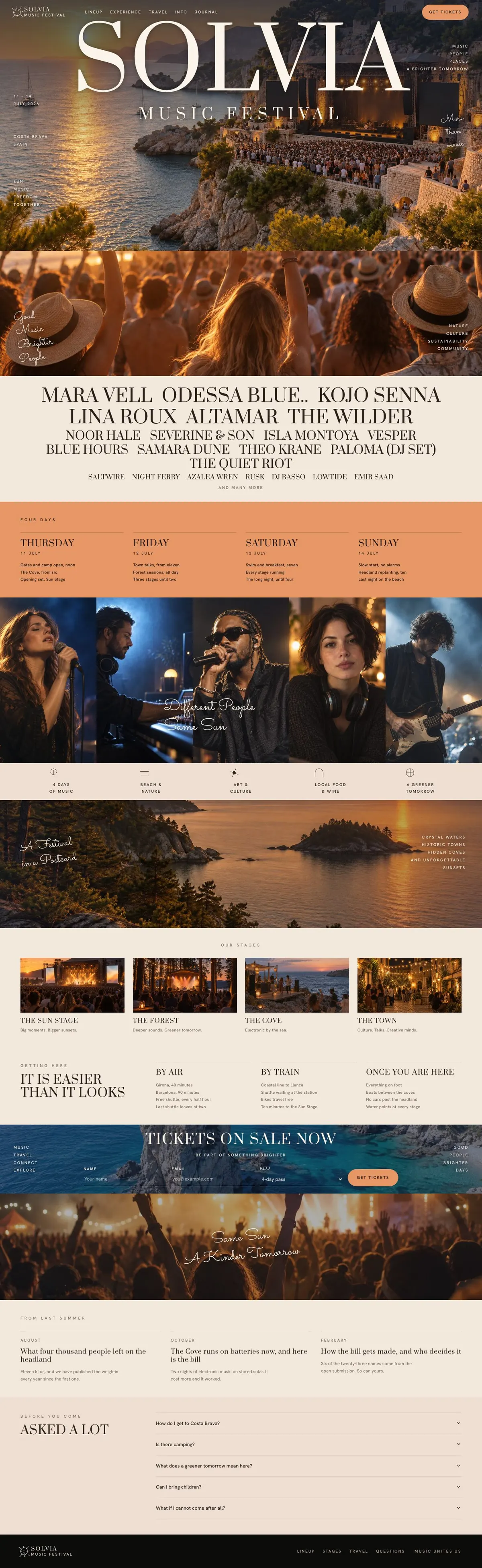
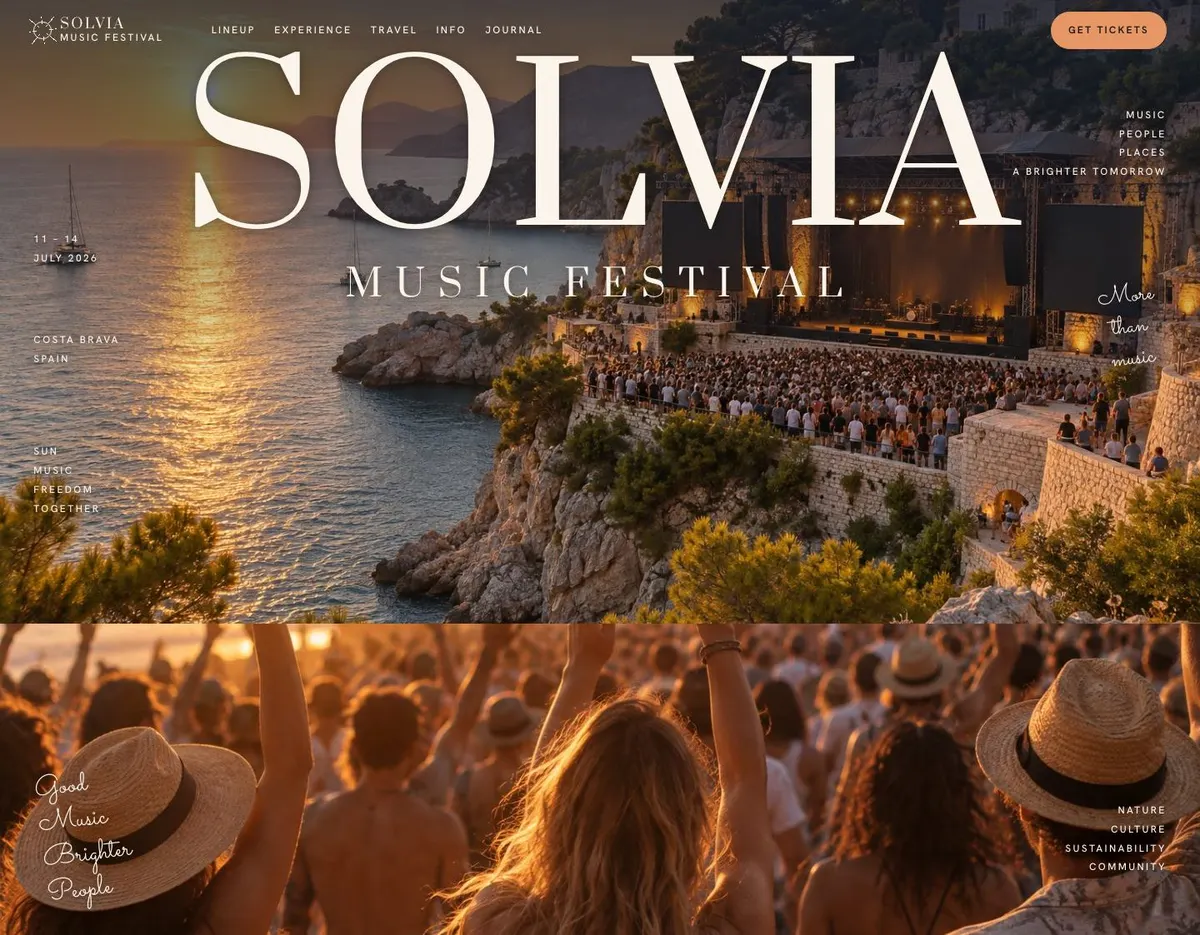
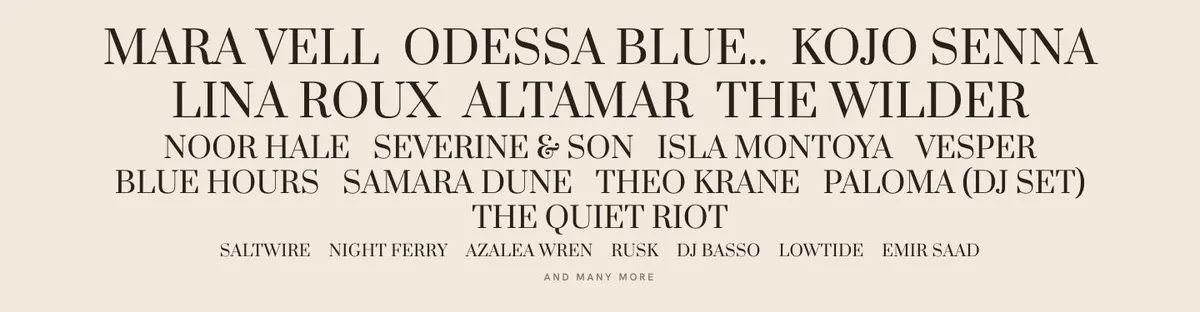
A place-led festival page, not a generic event listing
Someone searching for a Music Festival page needs more than a date and a name. They need to understand the programme, the setting and what makes the trip worth planning. This design does that through a photo-led sequence that moves from the festival identity into the lineup, days, experience, stages, travel and ticket interest.
A generic event page can make a destination festival feel like a diary entry. That undersells an event where the coast, island, resort or retreat is part of the decision. This template gives the place room to carry the offer alongside the music or programme. It is useful for a festival, a food and wine weekend, a wellness retreat, or a destination event with a seasonal programme.
The page is designed to lead to an enquiry. Its main call to action is “Get tickets”, and the Tickets band includes an enquiry form. Before publishing, the organiser should make sure the wording around tickets accurately reflects what happens after a visitor submits that form. The template does not show a payment mechanism, so it should not promise immediate ticket purchase unless the enquiry process supports that promise.
For an event centred on ticket dates rather than a destination setting, Live Tour Dates may be the closer starting point.
Adapting the design without losing its character
The template has four colour schemes: Sun, Coral, Olive and Sea. Choose one that works with the actual setting and the photographs available. The colour choice should support the event rather than replace clear words about where it is, what happens and how visitors can enquire.
Its type pairing is Prata for display text and Hanken Grotesk for body text. The available font combinations are Prata with Hanken Grotesk, Sacramento with Hanken Grotesk, and Playfair Display with Hanken Grotesk. Prata is the closest route to the page’s serif-led editorial direction. Sacramento changes the display voice, while Playfair Display offers another serif display option. Whichever pair is chosen, keep programme names, travel details and enquiry information easy to read.
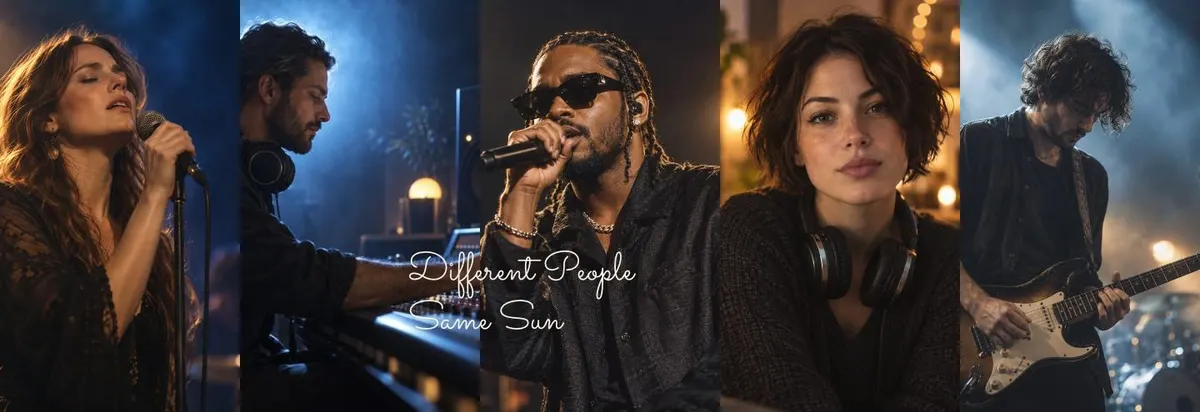
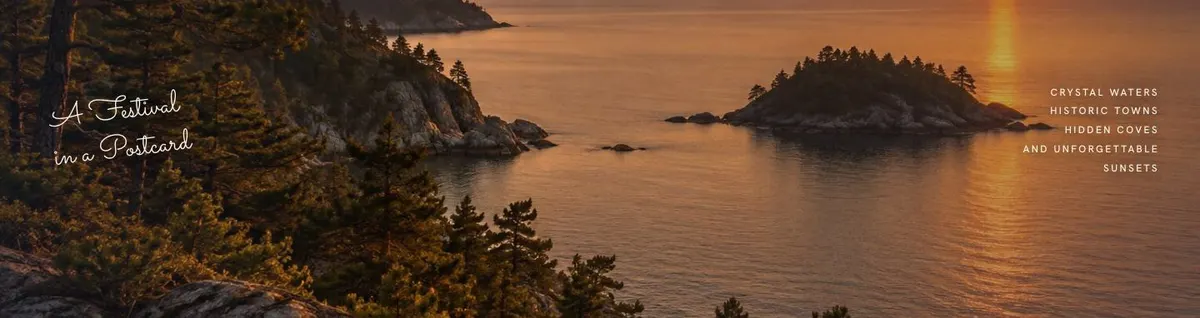
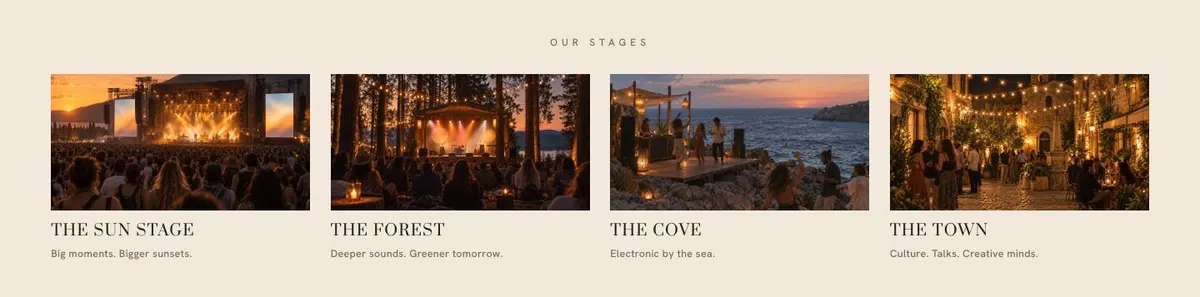
The page needs 14 photographs. Two appear in Hero, five in Experience, one in Postcard, four in Stages, one in Tickets and one in Same Sun A Kinder Tomorrow. Prepare these as a set rather than collecting them at the last moment. They need to tell a coherent story of the place, the people and the event across the page.
Writing it for your business
Starting from this template costs no credits. Rewriting the copy with AI costs about 20 credits. A useful brief should name the event, its location, the dates or season, the programme, the people involved, the travel facts visitors need and the desired enquiry outcome.
It should also say what the ticket enquiry means in practice. For example, the owner can ask for wording that invites visitors to enquire about availability, passes or attendance, but the brief should not ask the page to claim a purchase flow that is not present. Include the tone required for the event and any words that must be used exactly, such as venue names, stage names or programme titles.
What to prepare first
Start with the event’s core statement for Hero: the real name, what it is and why the setting matters. Then prepare the lineup and the day-by-day programme. These are the parts most likely to change, so they should be checked before the copy is finalised.
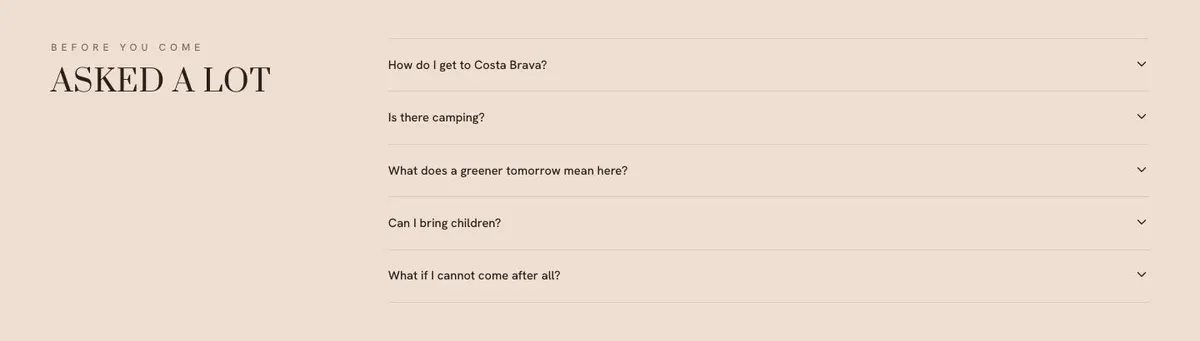
Next, write the travel information for the Travel band and decide the ticket enquiry wording for Tickets. Prepare the answers for Asked a lot at the same time. Questions should deal with the points that would otherwise stop someone enquiring, using the confirmed information the organiser is ready to publish.
Finally, gather the 14 photographs and decide what each group needs to show. Hero should introduce the event. Experience should show the wider feel of being there. Postcard, Stages, Tickets and Same Sun A Kinder Tomorrow each need an image that supports the words in their own band.
Variations for nearby trades
A food and wine weekend can use Lineup for chefs, producers or hosts, Days for tastings and meals, and Stages for a featured venue or programme area. The travel section remains important when the event is a destination break.
A wellness or yoga retreat can make Experience about the stay itself, use Days for the rhythm of the retreat, and use Stages for a named setting or central part of the programme. The Tickets enquiry should be rewritten to describe the real enquiry route for attendance.
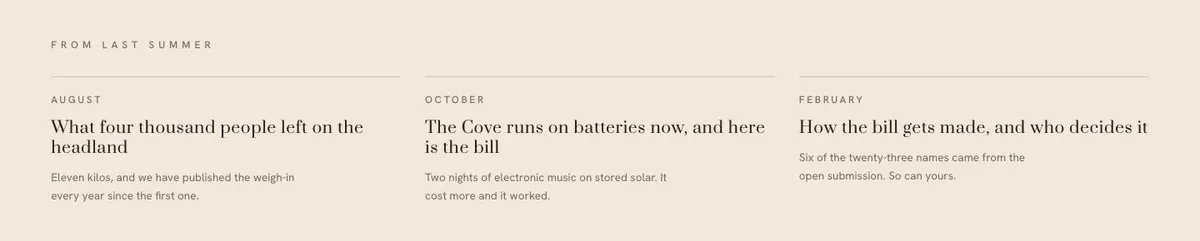
A small hotel group selling a season can retain the destination emphasis, use Journal for seasonal stories and adapt Lineup and Days to the programme it is actually offering. The page should still be clear about what visitors are enquiring about.
When another template fits better
Cultural Event Tickets is worth considering when the main job is presenting a cultural event and its ticket interest rather than a place-led festival experience.
Fashion Week Registration may fit an event whose next step is registration and whose programme is built around fashion.
Tour Departures is a better direction when departure information is the main decision visitors need to make.
Tailor-made Travel suits a travel offer built around a tailored trip rather than a fixed event programme. Browse the wider events template collection for related starting points.
Before you publish
- Check that the Hero name, event type and ticket wording match the real offer.
- Check that Lineup, Days and Stages use confirmed programme information.
- Check that Travel and Asked a lot answer the practical questions visitors will have.
- Check that all 14 photographs belong to the event and their assigned bands.