For travel planned by a person, not a booking engine
People who book a tailor-made trip are paying for judgement: the right road, the right pace, someone to call when something changes. A generic travel page with a search box undersells that. Tailor-made Travel is a light, editorial template led by route photography that shows the work itself, a real itinerary with its price, and ends on an enquiry with dates and a budget.
It suits tour operators and travel agencies selling planned journeys, including honeymoon and family travel and curated experiences. Pick it when the page has to show where the trip goes, what each day costs and who plans it.
How the page leads to an enquiry
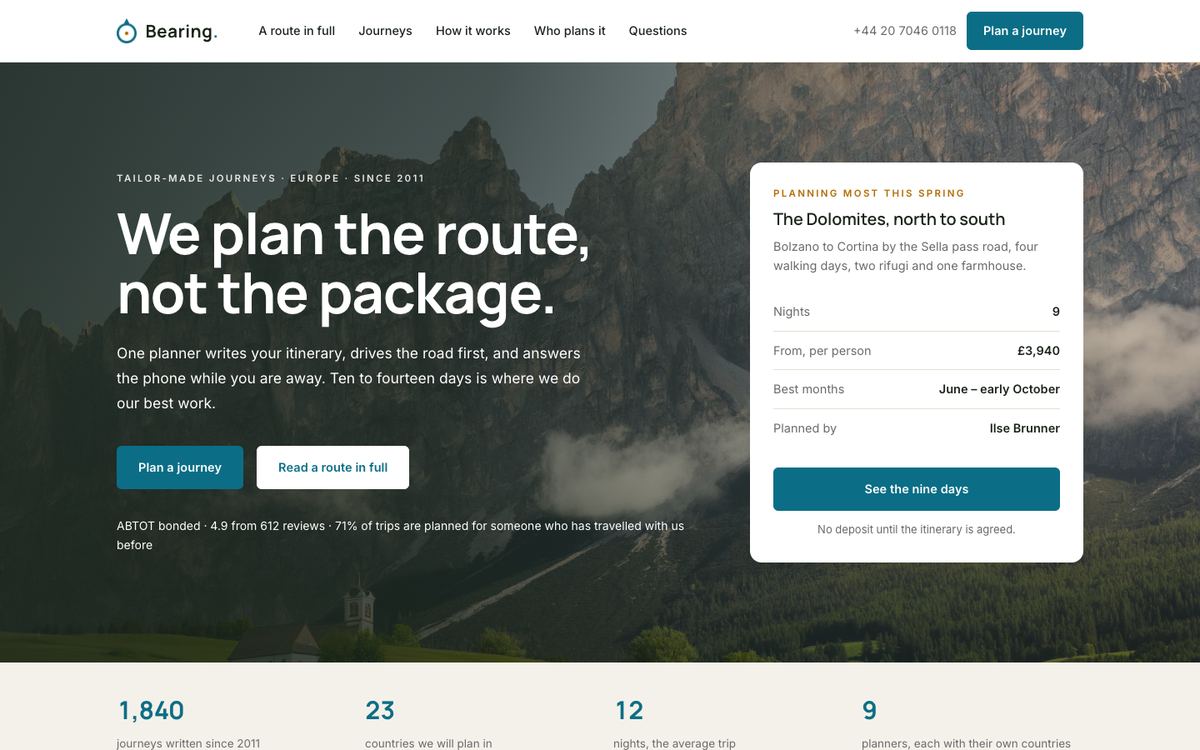
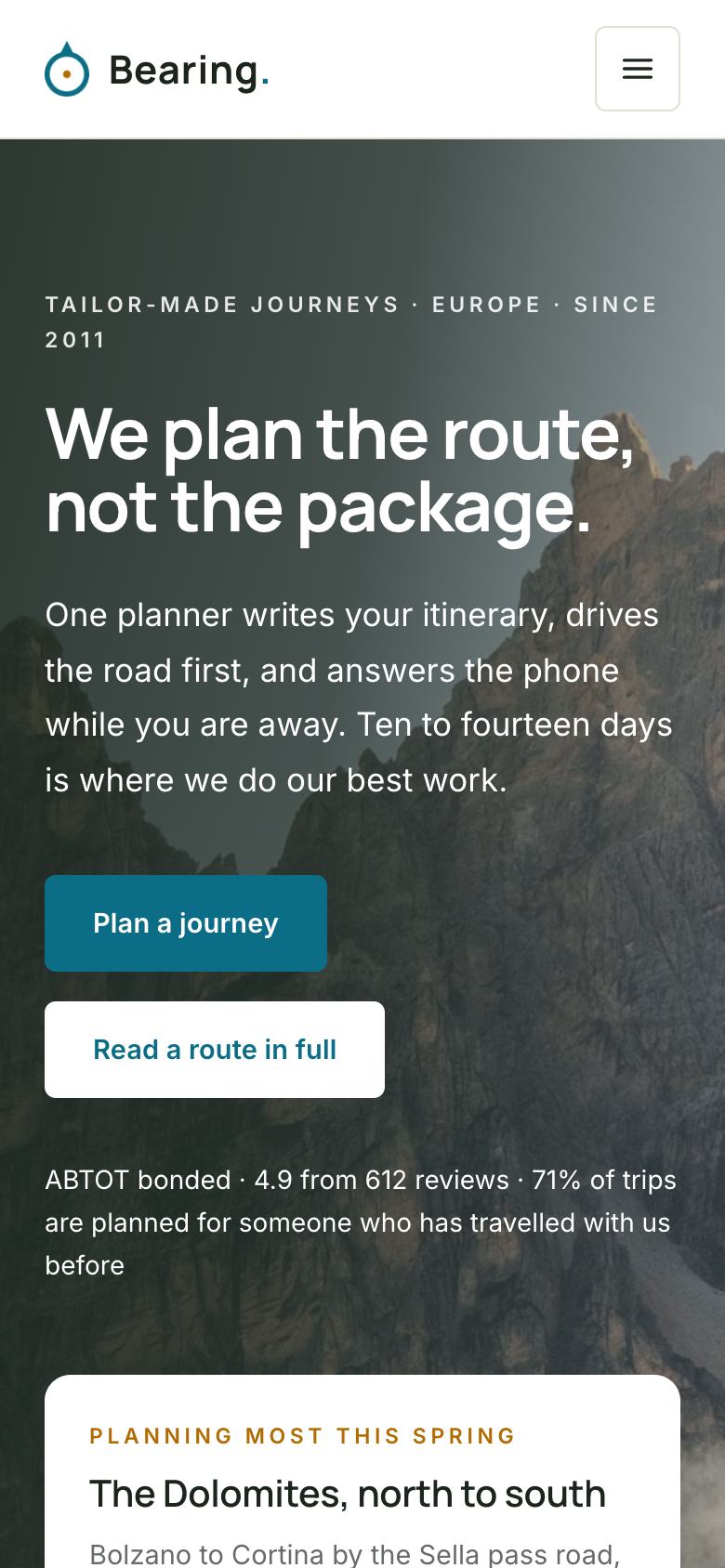
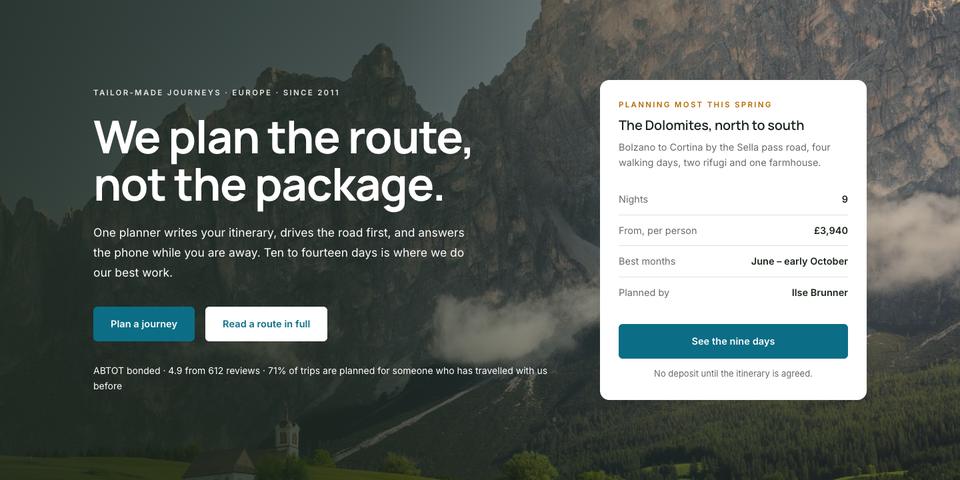
The hero separates the business from package sellers in one line, “We plan the route, not the package”, and says who writes the itinerary and who answers the phone. A numbers band gives journeys written, countries covered, average trip length and number of planners.
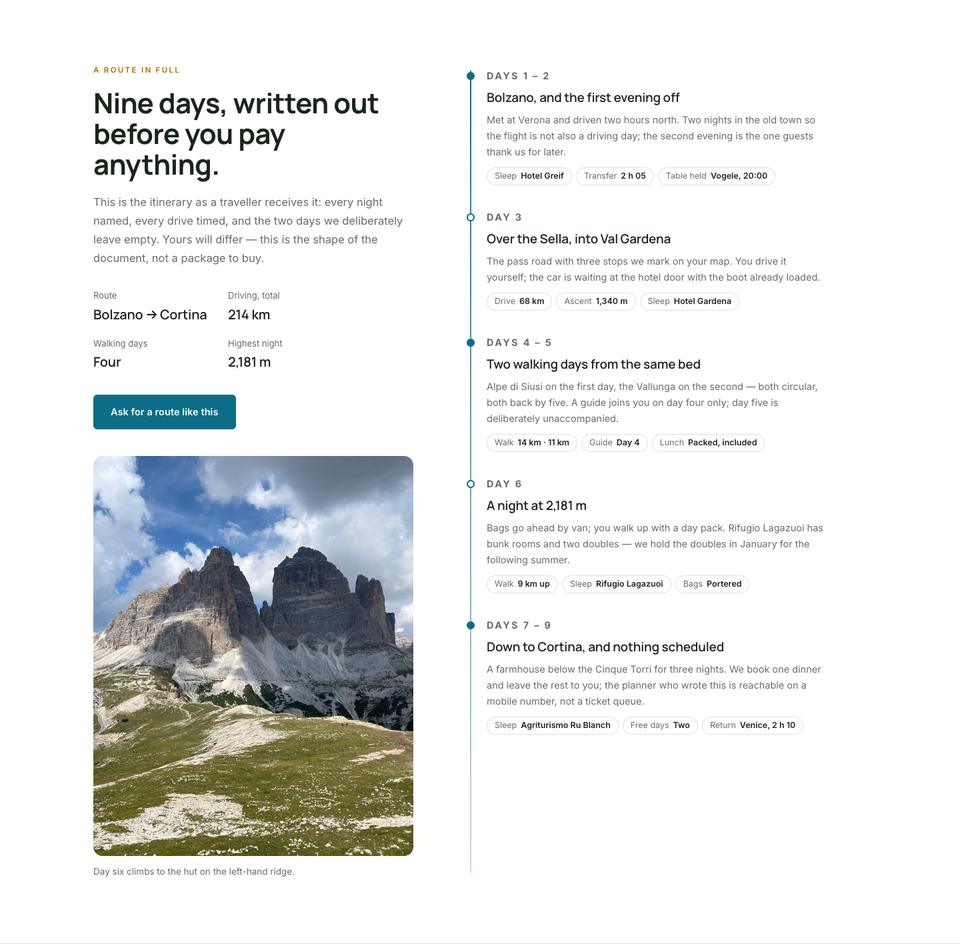
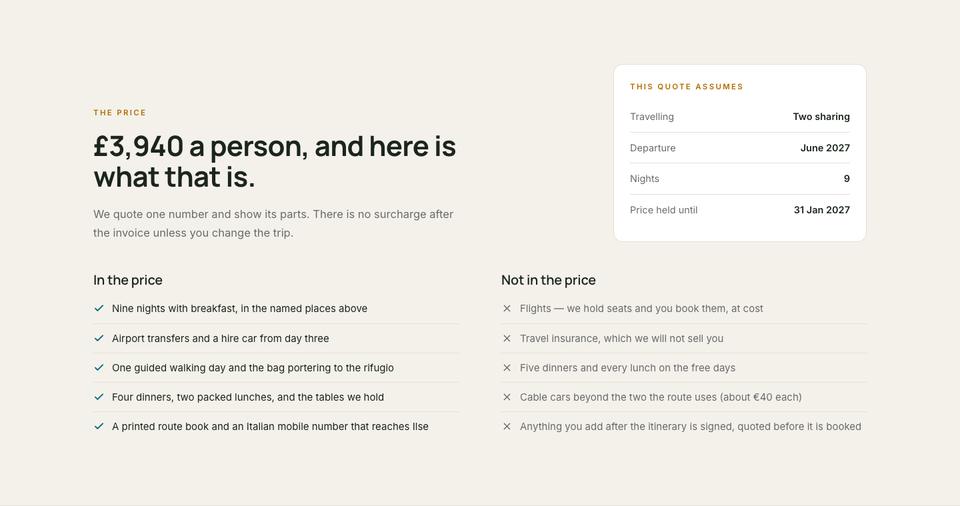
A route in full shows a nine-day itinerary exactly as a traveller receives it, with every night named and every drive timed. The price breaks that trip’s cost into its parts, with no surcharge after the invoice. These two sections carry most of the persuasion.
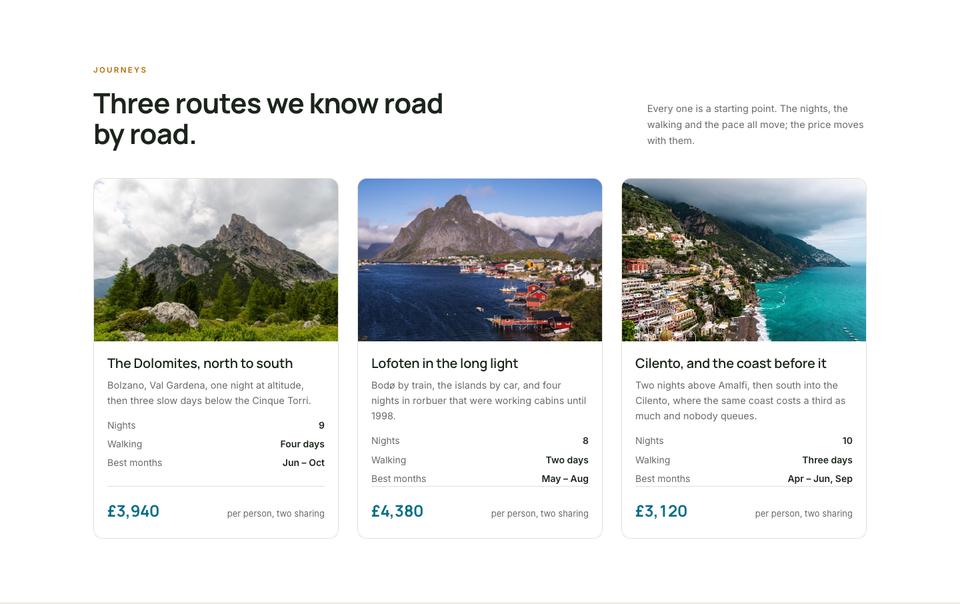
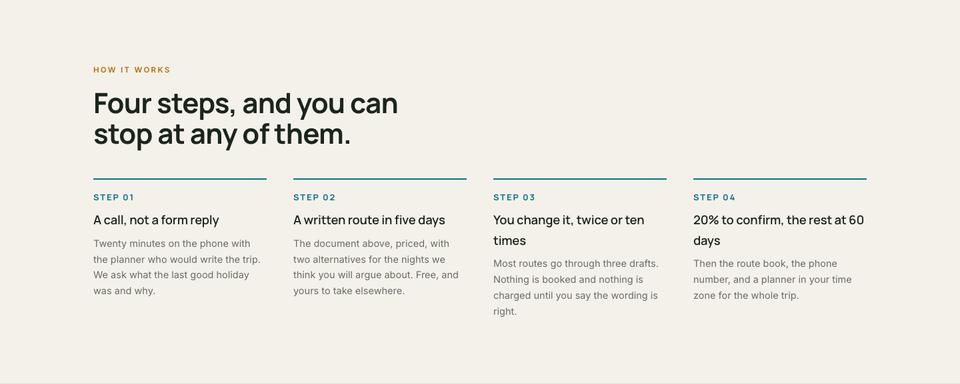
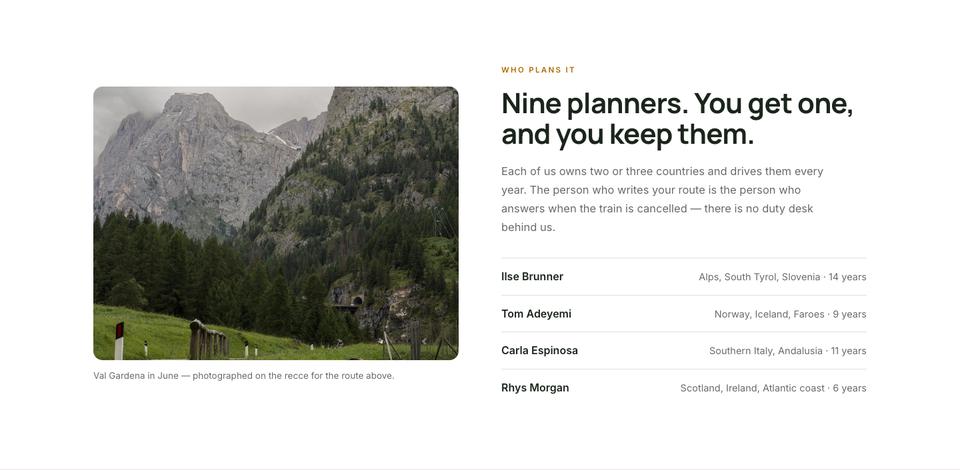
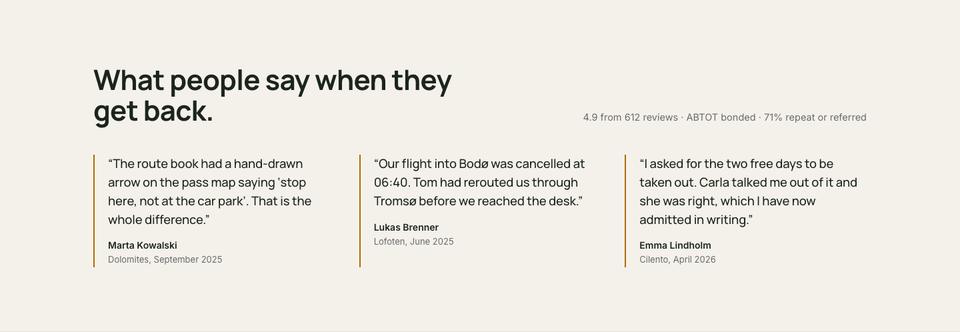
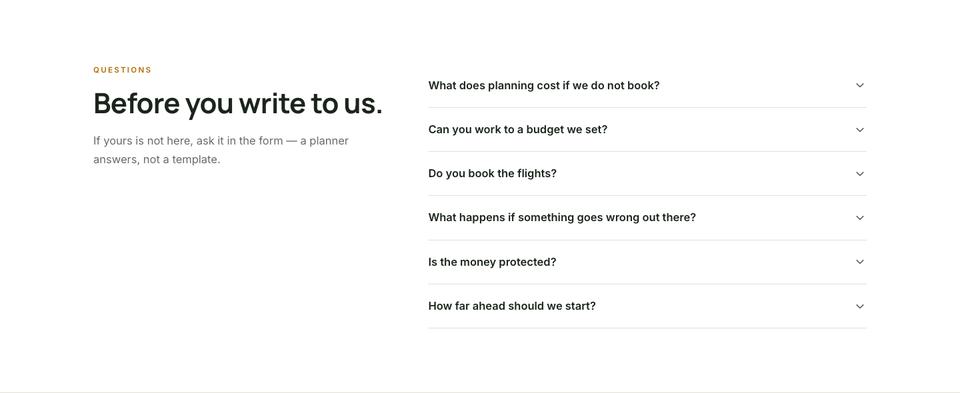
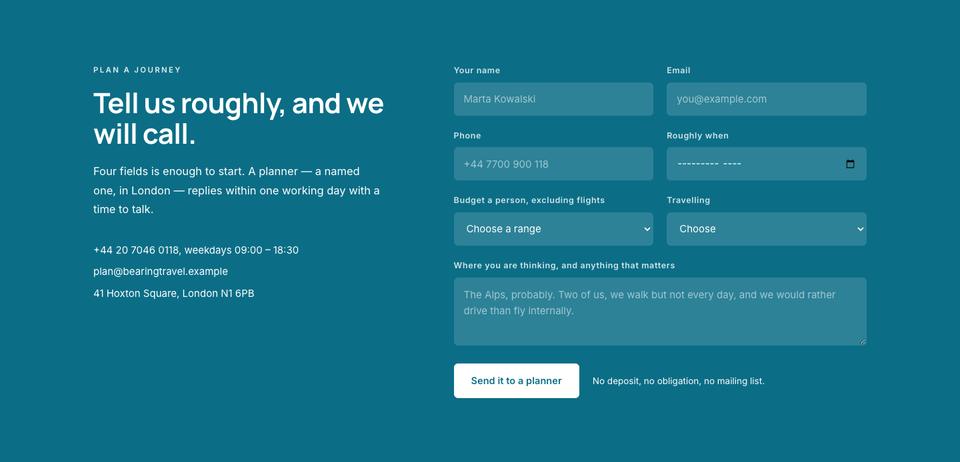
Journeys offers three routes the team knows road by road as starting points. How it works lays out four steps, each of which the client can stop at. Planners explains that one planner owns each trip, reviews adds a rating, bonding and the share of repeat clients, questions covers what planning costs if nobody books, and the page ends on a short enquiry form.
Adapting the design
Four schemes are included: Deep ocean, Sunset coral, Jade forest and Sea green. Headings use Manrope, Lexend or Epilogue with a neutral body face. The demo uses six large photographs, so choose images from your own recces; the hero and the planner section depend on them.
The itinerary and price breakdown are editable lists. Select one in the editor and ask the AI to reformat your own sample trip into it.
Writing it for your company
Starting from the template costs no credits. For about 20 credits the AI can replace the sample copy with text for your business while keeping the layout. A good brief names the regions you plan, one full sample itinerary with its price, how planners are assigned, your bonding or protection, your review score and what happens after an enquiry.
What the planners need to write first
This template asks you to publish a complete itinerary, which is unusual and very persuasive. Pick a trip you run often and write it the way a traveller receives it: each night with the hotel named or described, each drive with its time, and the free days marked. Then break down the price per person into accommodation, transport, guides and your planning fee, so the single figure can be checked.
The planner profiles need a photo, the countries each person covers and a line about the last time they travelled there. If planners do recce trips, use those photographs, since the layout has room for only six images and each one should show somewhere on a real route. Finally, time the four steps of the process honestly: how long the first call takes, when the draft arrives, how many revisions are included and when payment is due.
Honeymoons, family trips and experiences
A honeymoon specialist can keep the full itinerary but shift the tone towards pace and privacy, and ask for the wedding date in the form. Family travel companies should show where the long drives are broken up and what the children do each day. Agencies selling experiences or tickets rather than whole journeys can turn the route section into one day in detail, and the price breakdown into what the ticket includes.
When another template fits better
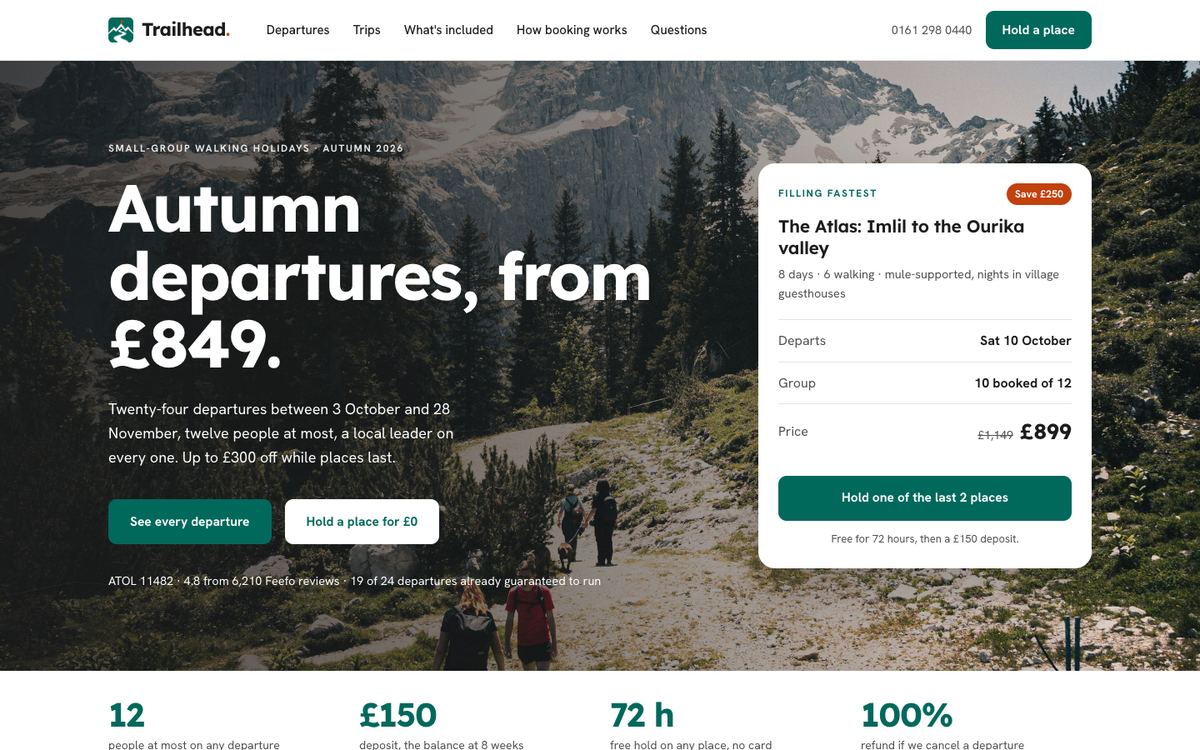
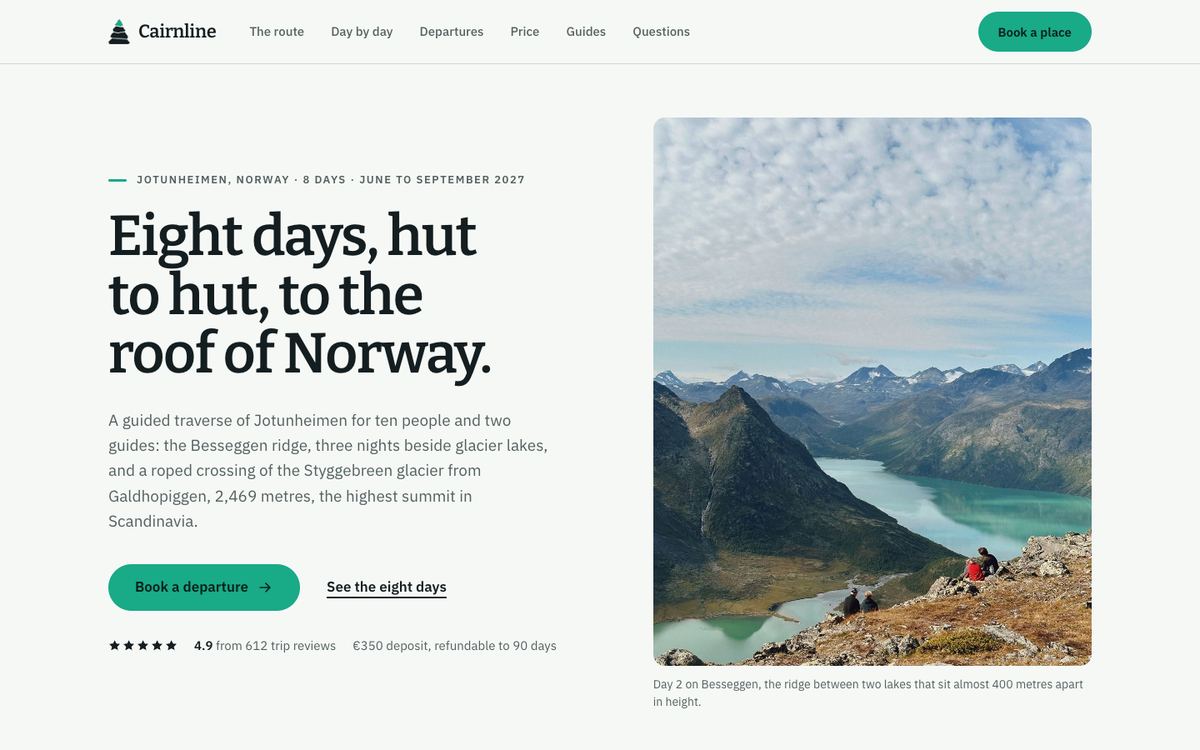
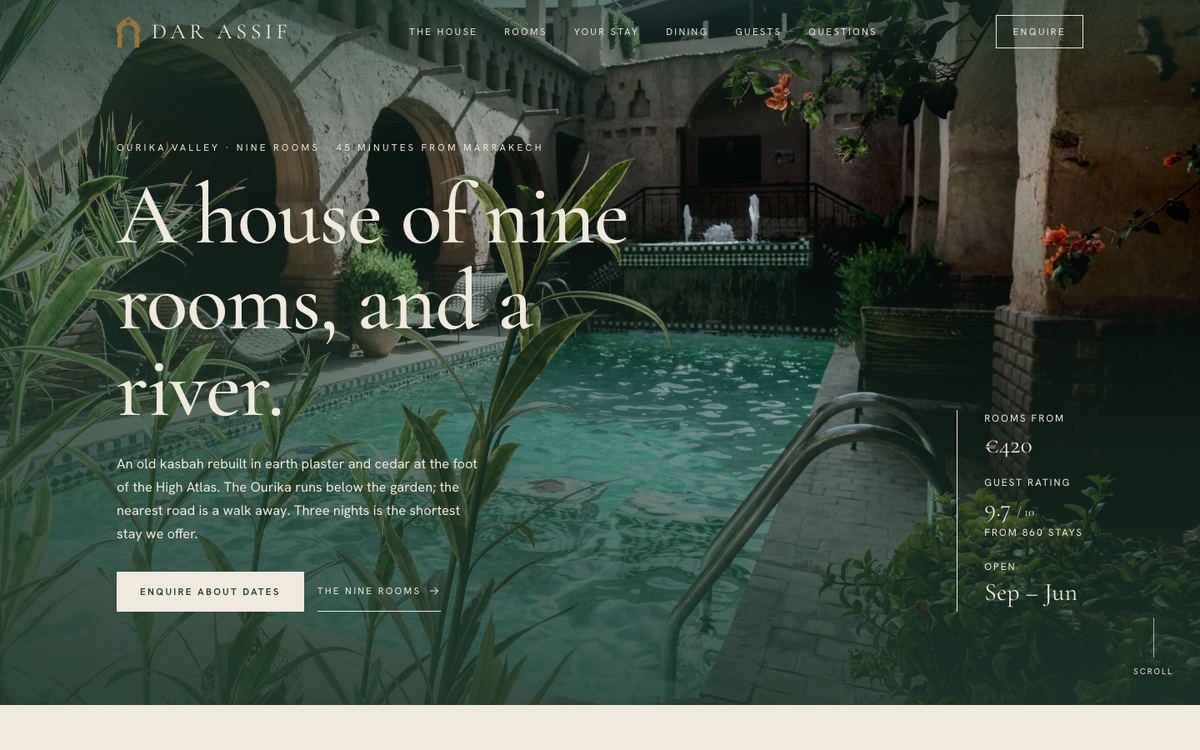
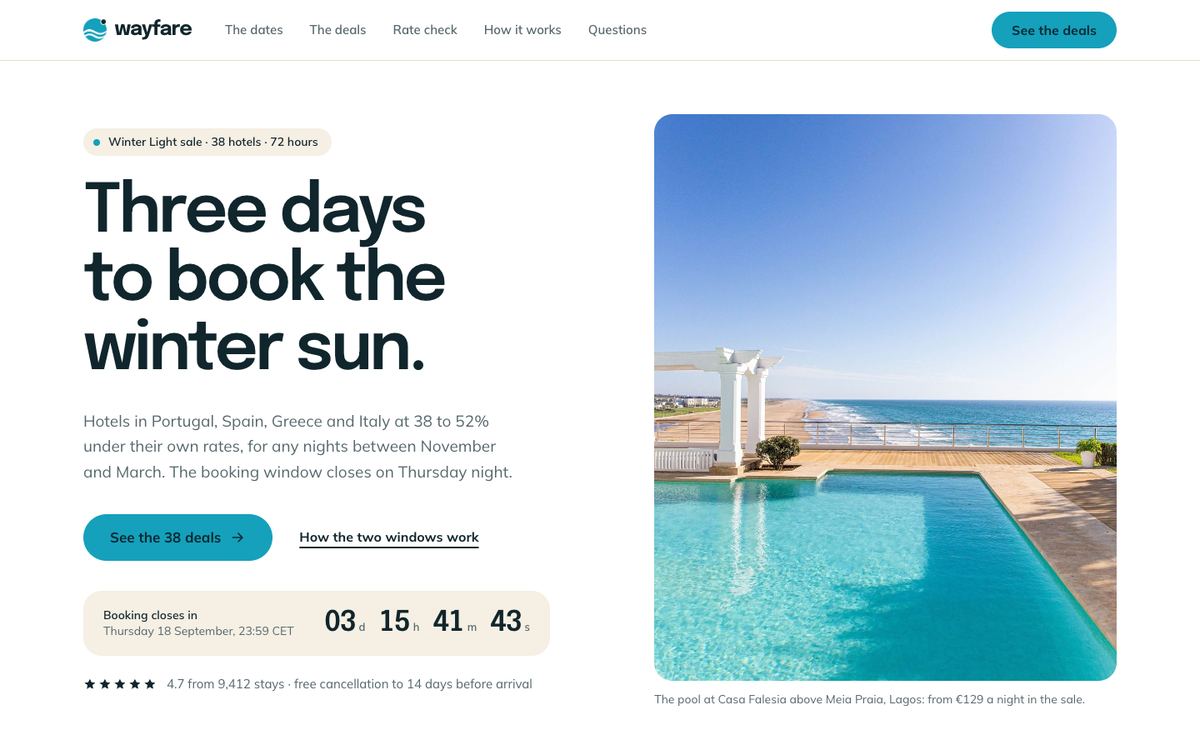
If you sell fixed departures with a price and places left, Tour Departures is built as a departure board. Adventure and trekking trips with dates and difficulty grades fit Adventure Trip. Hotels and resorts selling their own rooms should look at Quiet Luxury Stay or Boutique Resort Direct, and time-limited holiday offers suit Hotel Flash Deals.
Compare them on the hotel and travel templates page.
Before you publish
- Replace the sample itinerary with a real trip, priced as you would quote it today.
- Check your bonding or financial protection wording.
- Use photographs you have taken or licensed on your routes.
- Keep the enquiry form to the four facts a planner needs to call.