For marketplaces that sell stays by the million
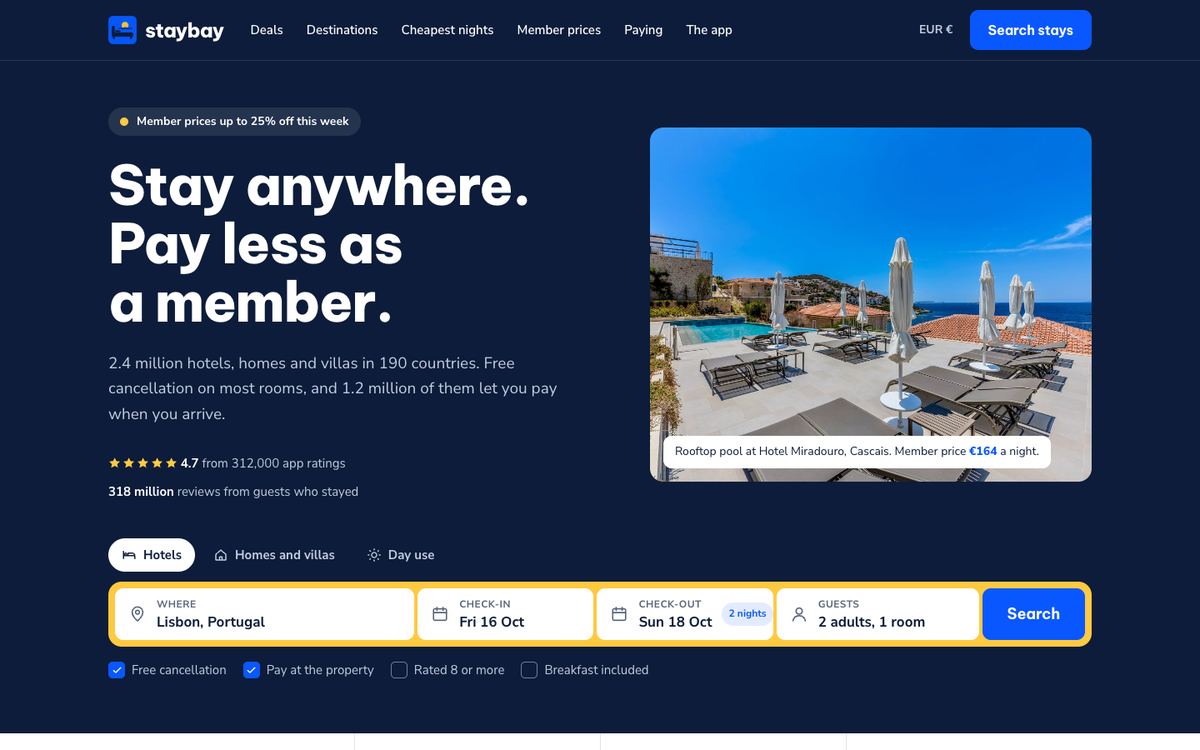
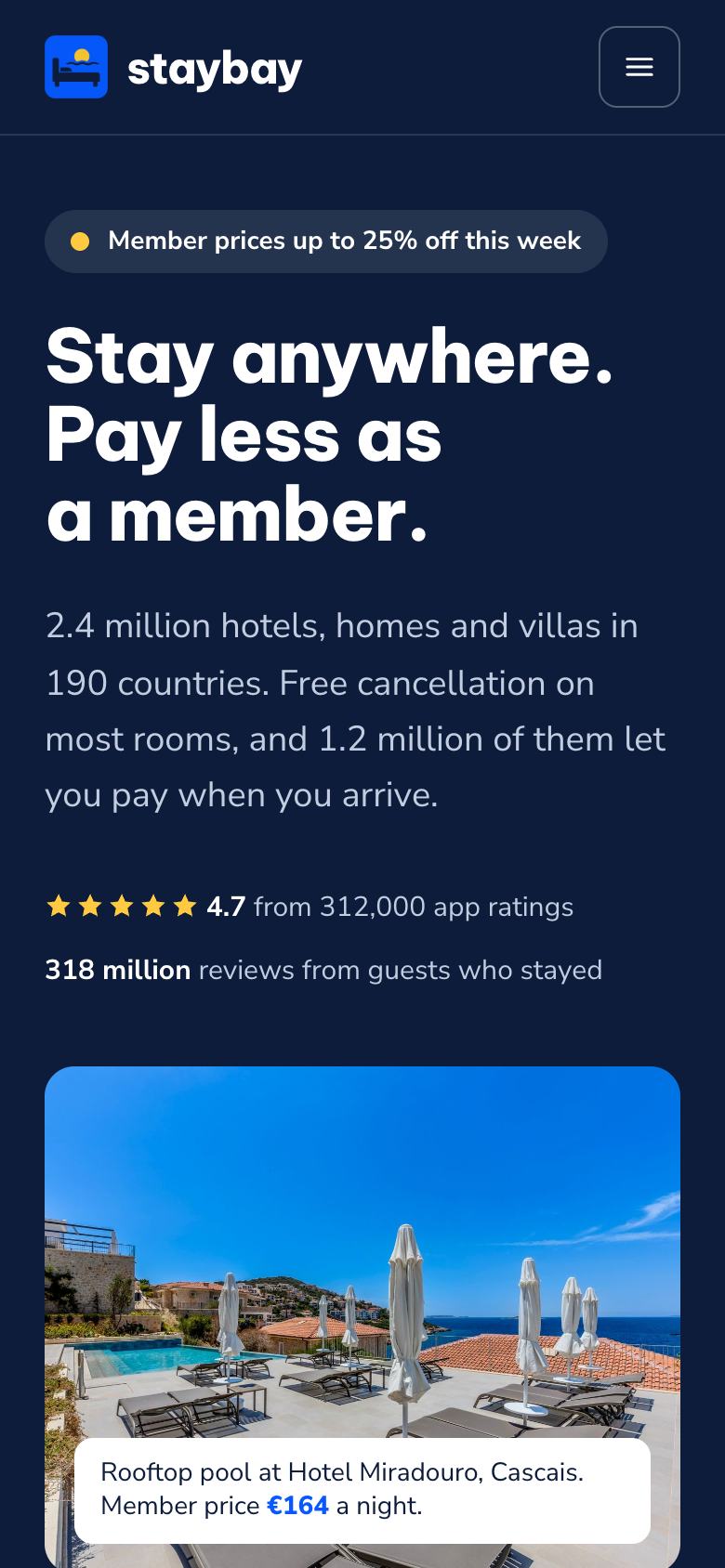
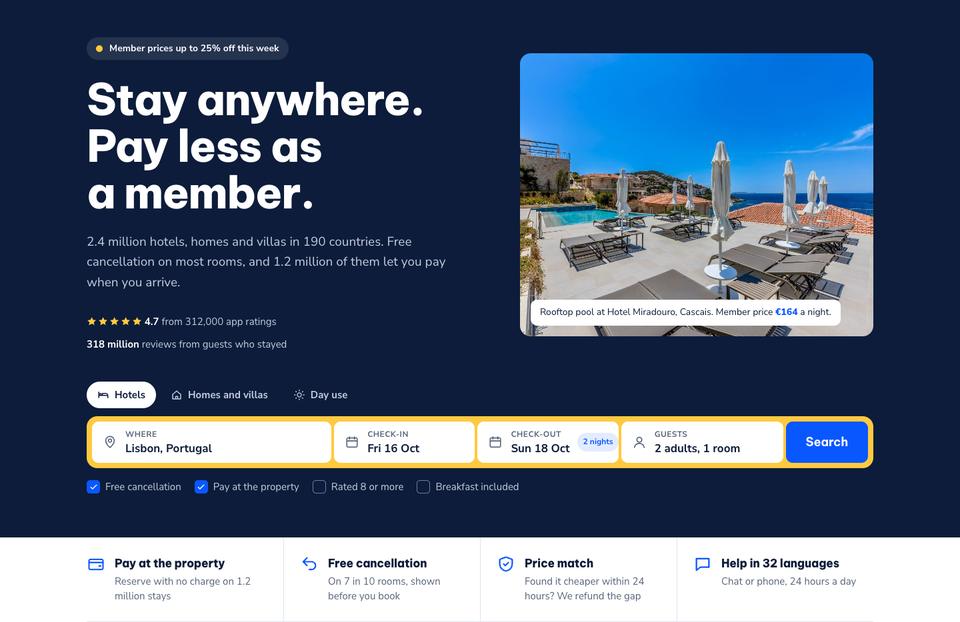
Visitors to a booking marketplace already know how these sites work. They expect a search box, deals, destinations, prices per night and clear cancellation terms. Hotel Booking Platform follows those conventions: a navy header and search ground, electric blue, sun-yellow member prices, dense property cards and a price-by-date strip.
It suits booking marketplaces and aggregators selling stays, rentals, tickets or rides from many suppliers.
How the page drives searches and sign-ups
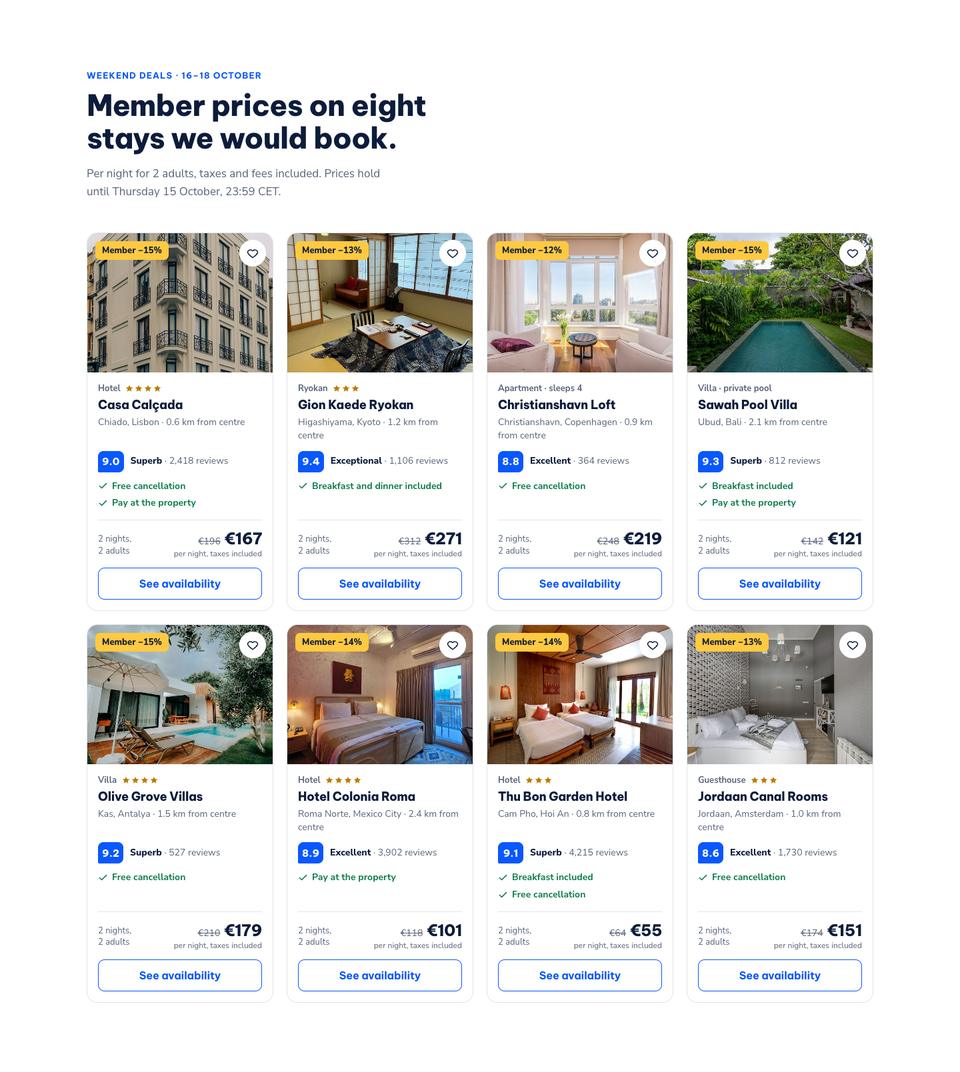
The hero combines the promise and the incentive, “Stay anywhere. Pay less as a member”, with the size of the inventory and a search bar. Weekend deals shows property cards with member prices, ratings and taxes included.
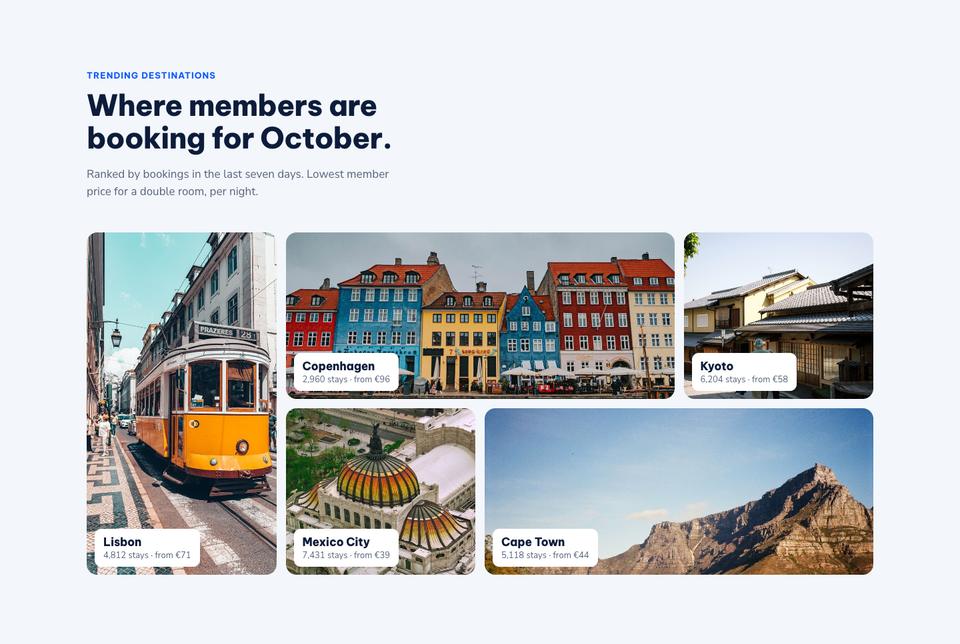
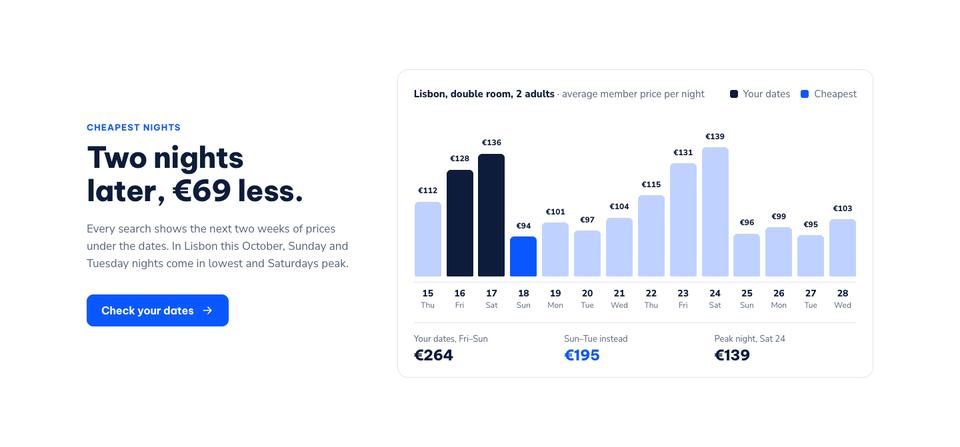
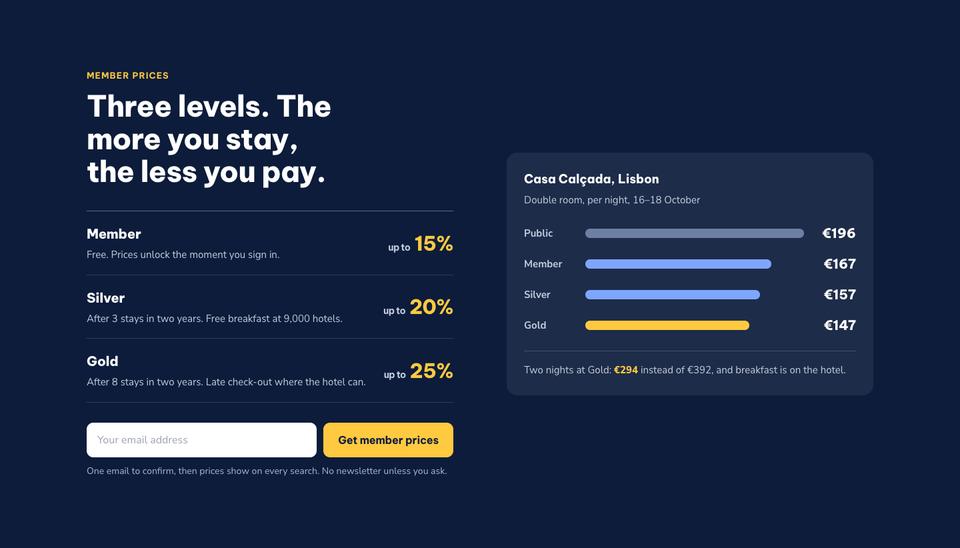
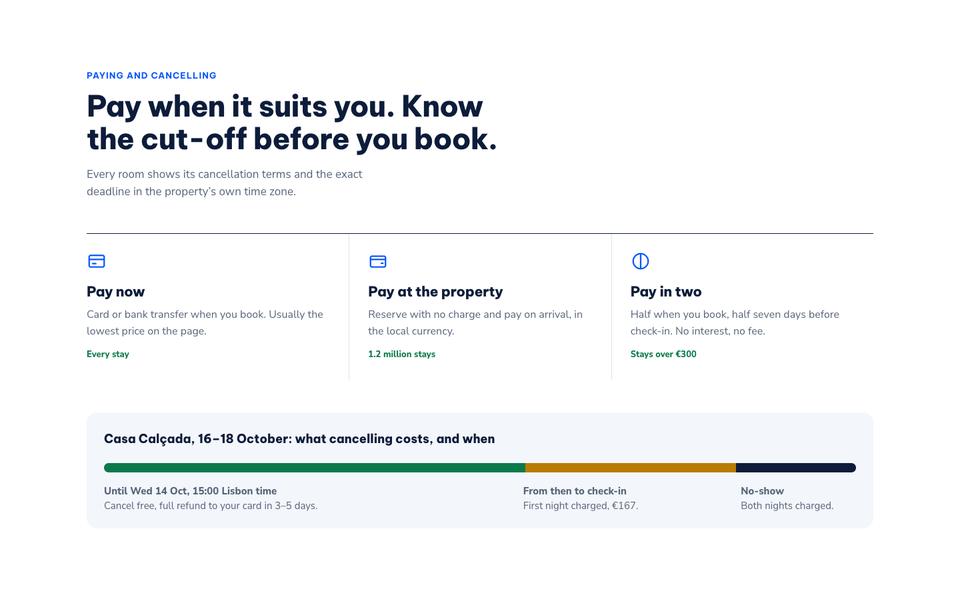
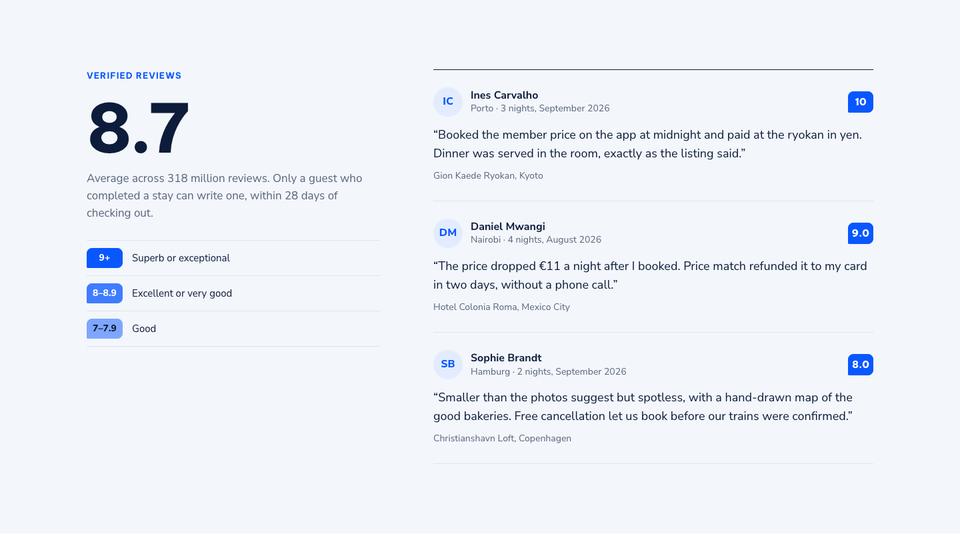
Trending destinations ranks where members are booking. Cheapest nights shows how shifting dates saves money. Member prices explains three levels, paying and cancelling shows cancellation cut-offs before booking, and verified reviews explains who can review.
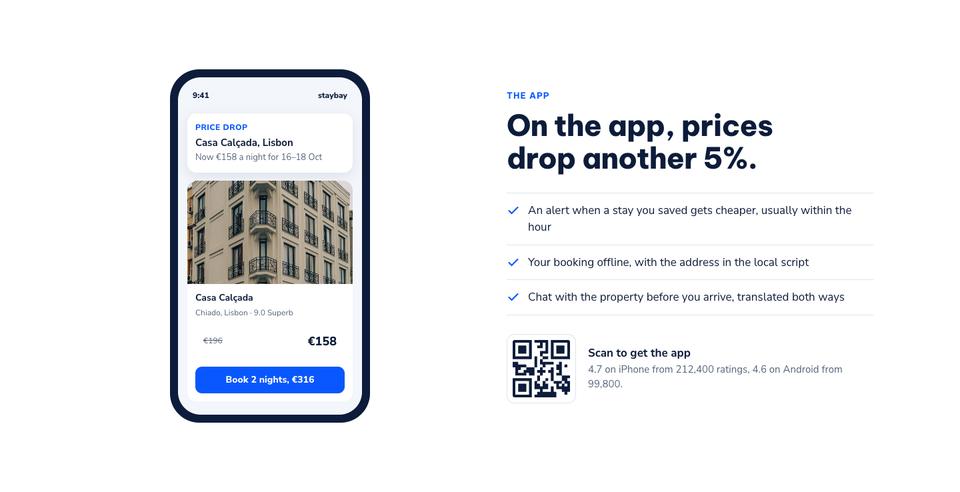
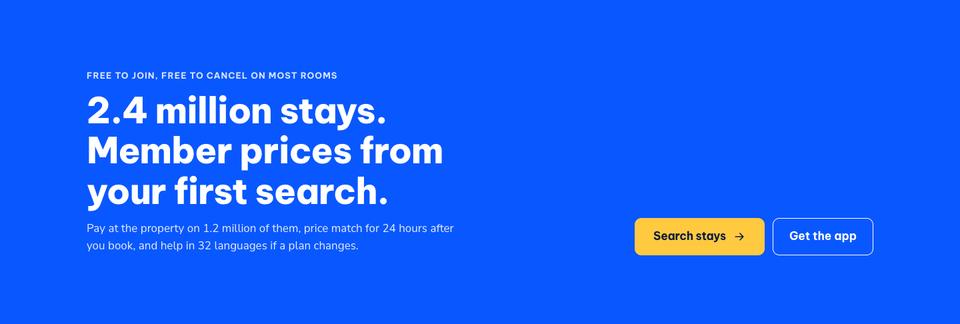
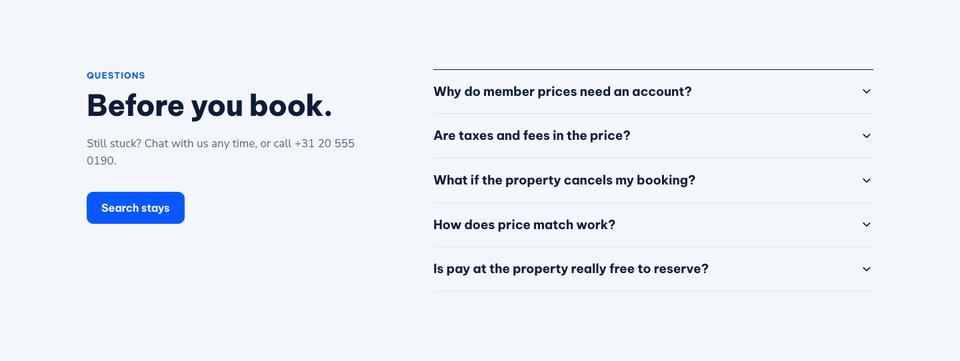
The app shows price-drop alerts and an extra discount. A join band repeats the membership offer, and questions explains why member prices need an account and how refunds work.
Familiar patterns are a strength here. Visitors should not have to learn a new layout to book a room, so the page puts its effort into clarity on price and cancellation.
Adjusting the look
Four schemes are included: Ocean blue, Coral, Lagoon and Navy. Headings can be Be Vietnam Pro, Manrope or Hanken Grotesk. Fourteen photographs are used for properties and destinations; use licensed images from your inventory.
Deal cards, destinations and member levels are editable. Ask the AI to rewrite deals for a different season or region.
Writing it for your platform
Starting from the template is free. For about 20 credits, the AI writes your copy into the design. Include inventory size and reach, member benefits and levels, featured deals, trending destinations, payment and cancellation options, review policy, app features and common questions.
Data a booking marketplace has to get right
A stays marketplace is judged on whether its prices and availability are real, so this template depends on live data more than words. The deal cards should pull from actual inventory, with the property name, location, review score and number of reviews, the nightly price for a stated number of guests, and whether taxes and fees are included. If you show a struck-through price, define what it is compared with, such as the non-member rate for the same room and dates.
The trending destinations section needs a clear ranking method, for example bookings in the last seven days, and the lowest member price for a defined room type. The cheapest-nights chart works best when it uses the prices a search would actually return for the following weeks. Member levels need thresholds for each level, the discount range and perks, and how status is kept or lost.
The paying and cancelling section is where trust is built: explain pay-now and pay-at-property options, how cancellation cut-offs are shown on each room, and how refunds are processed. Consumer rules on price display, drip pricing and cancellation vary by market, so check them with your legal team. Fourteen photographs are used, mainly on cards, so make sure supplier images meet a minimum quality and are cropped consistently.
The search bar is the main action, so test it on phones with real destinations and dates. Many visitors arrive from ads on mobile and leave the moment a date picker is awkward to use.
State how customer support works during a stay, including hours, languages and channels. When something goes wrong at a property far from home, a reachable support line is what separates a platform people trust from one they only use once.
Holiday rentals, campsites, car hire and tours
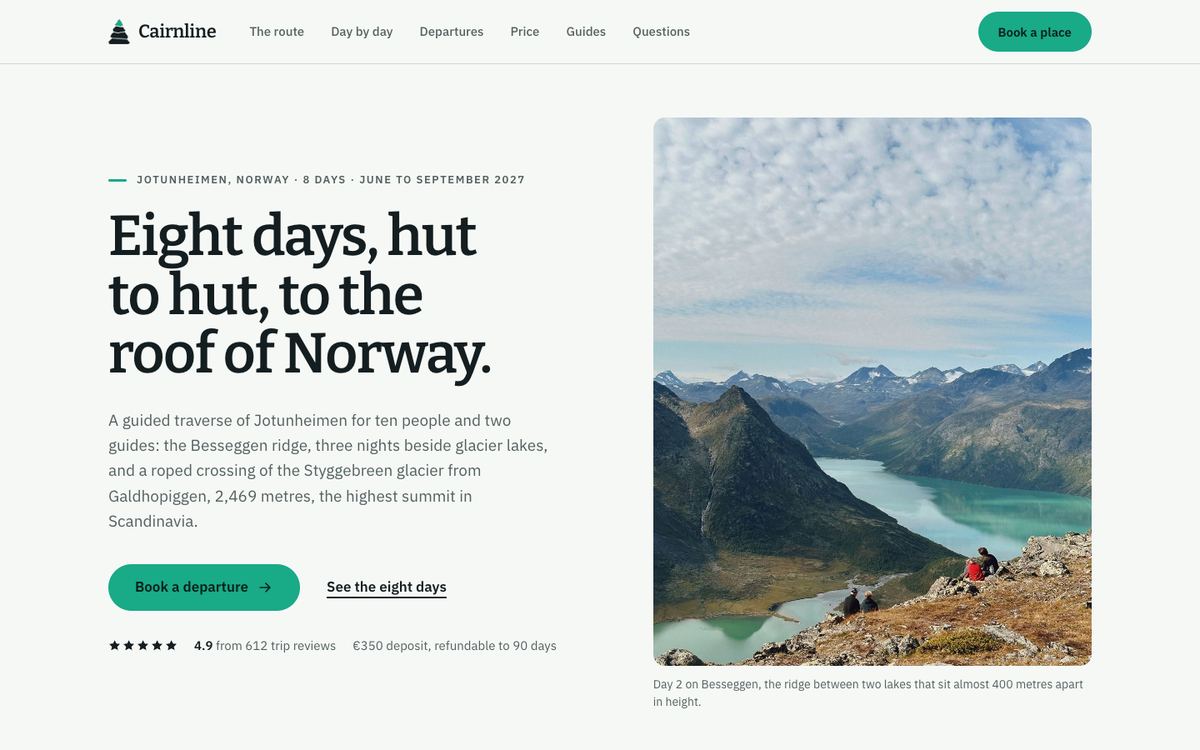
A holiday rental marketplace can replace hotels with homes, showing bedrooms, guest capacity and cleaning fees on each card. Campsite platforms usually add pitch types and facilities as filters. Car hire aggregators can turn property cards into vehicle classes with pick-up locations, fuel policy and deposit amounts. Tour marketplaces can show durations, group sizes and meeting points, with the same member pricing and cancellation clarity.
When another template fits better
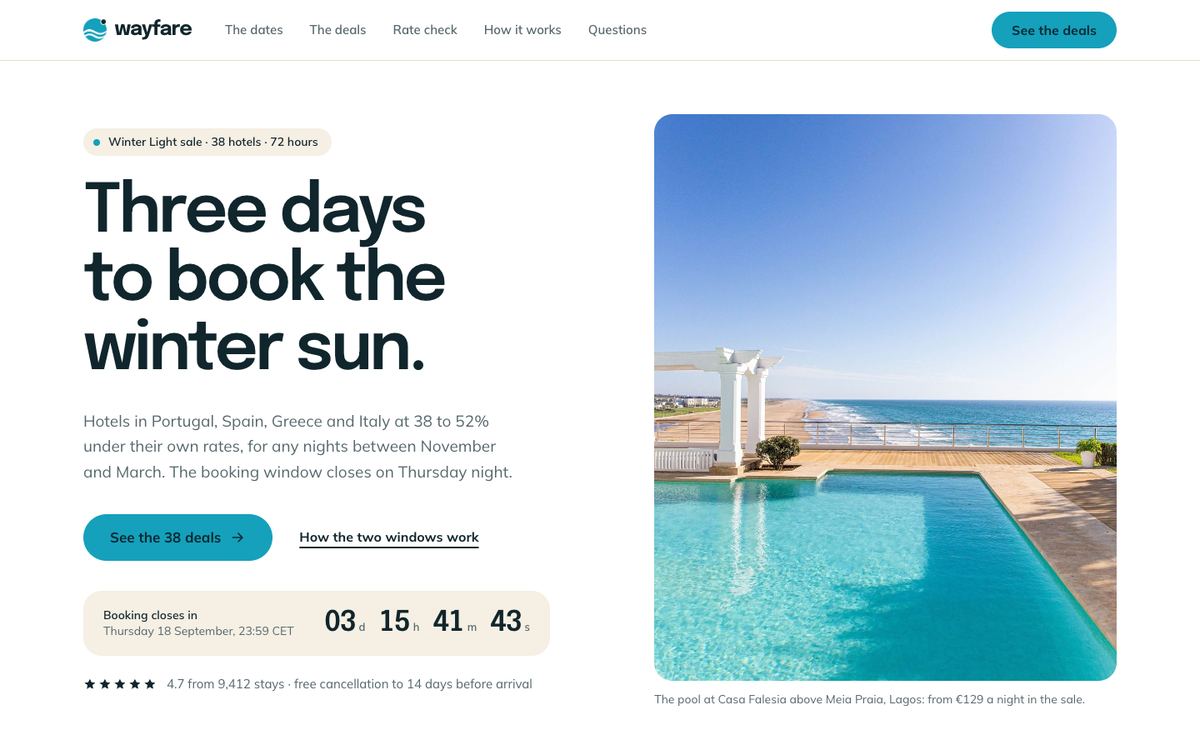
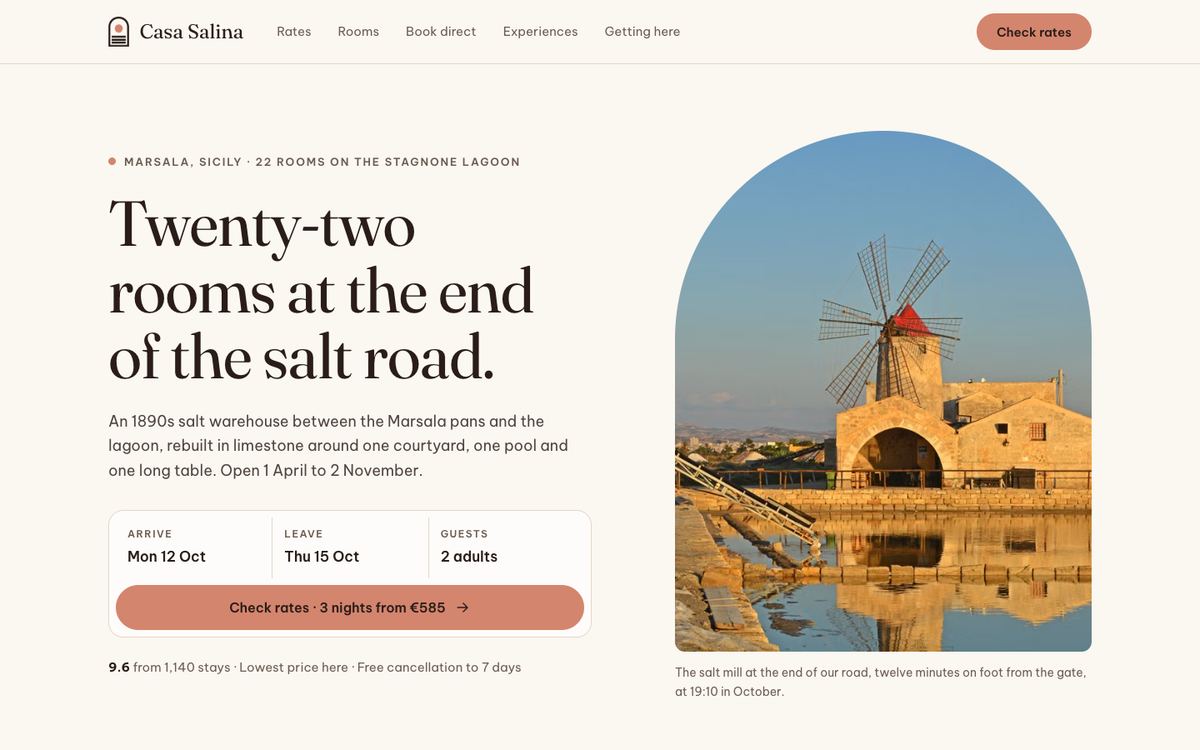
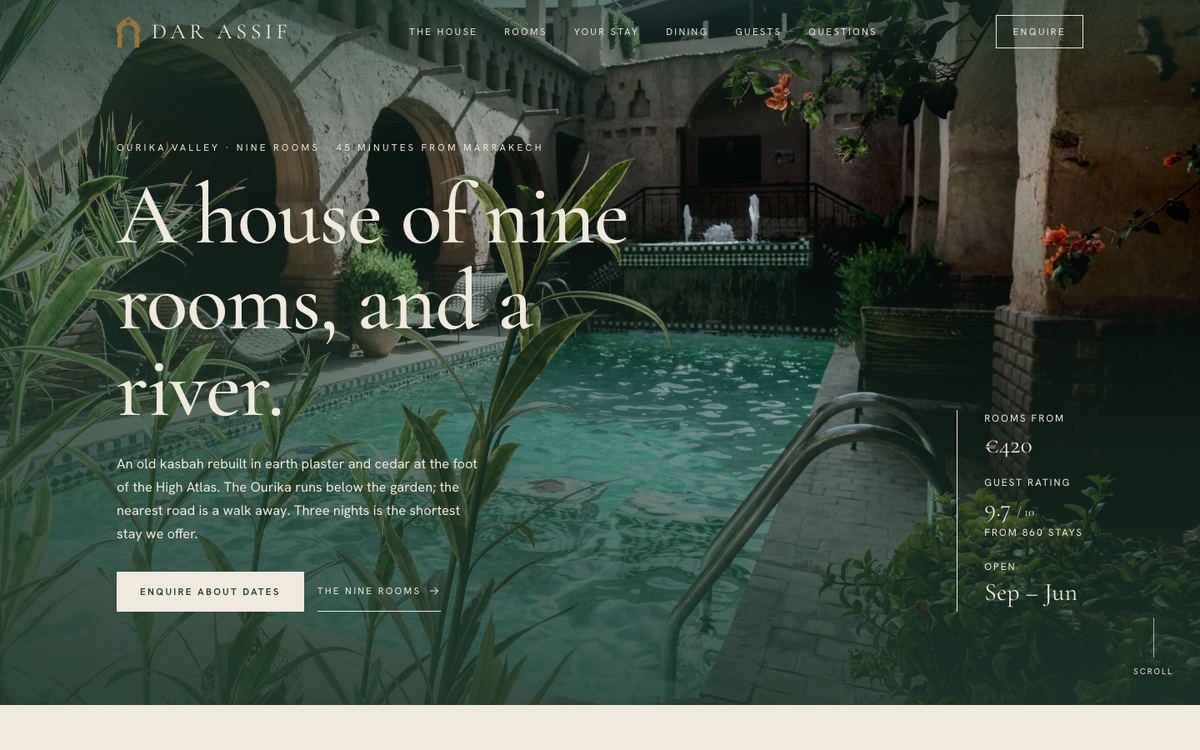
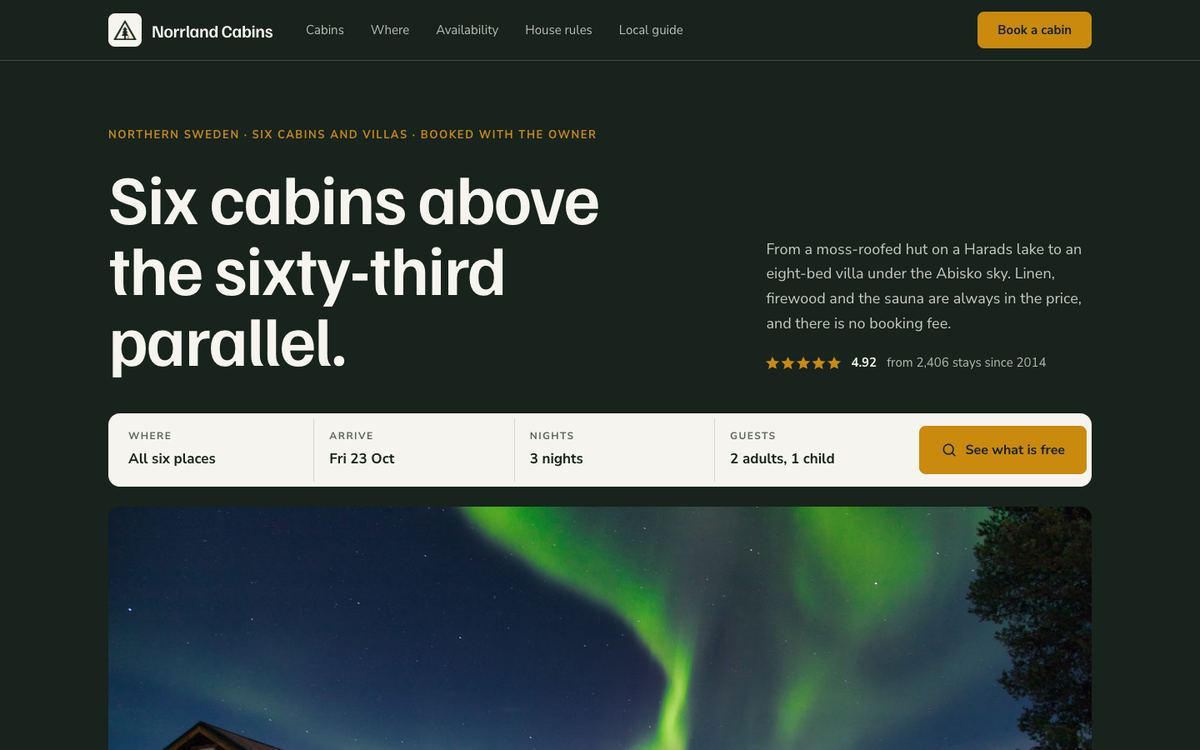
Hotel Booking Platform is for many suppliers. A single boutique hotel selling direct fits Boutique Resort Direct, and a small collection of cabins Cabin Rentals Direct. A time-limited multi-hotel sale belongs on Hotel Flash Deals, and a luxury property on Quiet Luxury Stay.
Compare them on the hotel and travel templates page.
Before you publish
- Check that displayed prices include taxes and fees as stated.
- Connect the search bar to your booking engine.
- Verify review statistics and policy.
- Use licensed property photos.