For makers who can only make so much
Small-batch brands have one advantage over big ones: the limits are real. Small-Batch Craft turns those limits into the pitch, with batch size, making schedule, ingredient list and how fast each run sells out. It is a warm template in linen, terracotta and olive with a slab serif and still-life photography, and the goal is reserving a place in the next batch.
It suits craft food and drink, roasteries and distilleries, skincare and candles, homeware and ceramics. Choose it when your brief names grams, days, batch sizes and sell-out times.
How the page sells the next batch
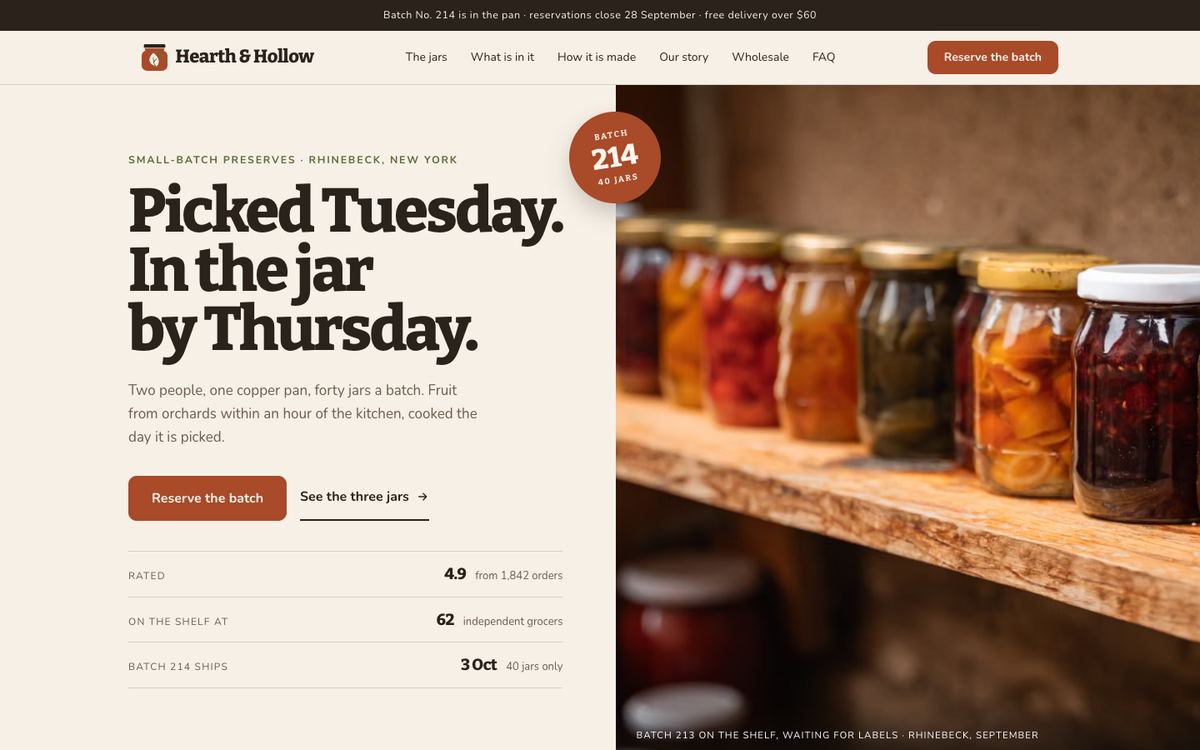
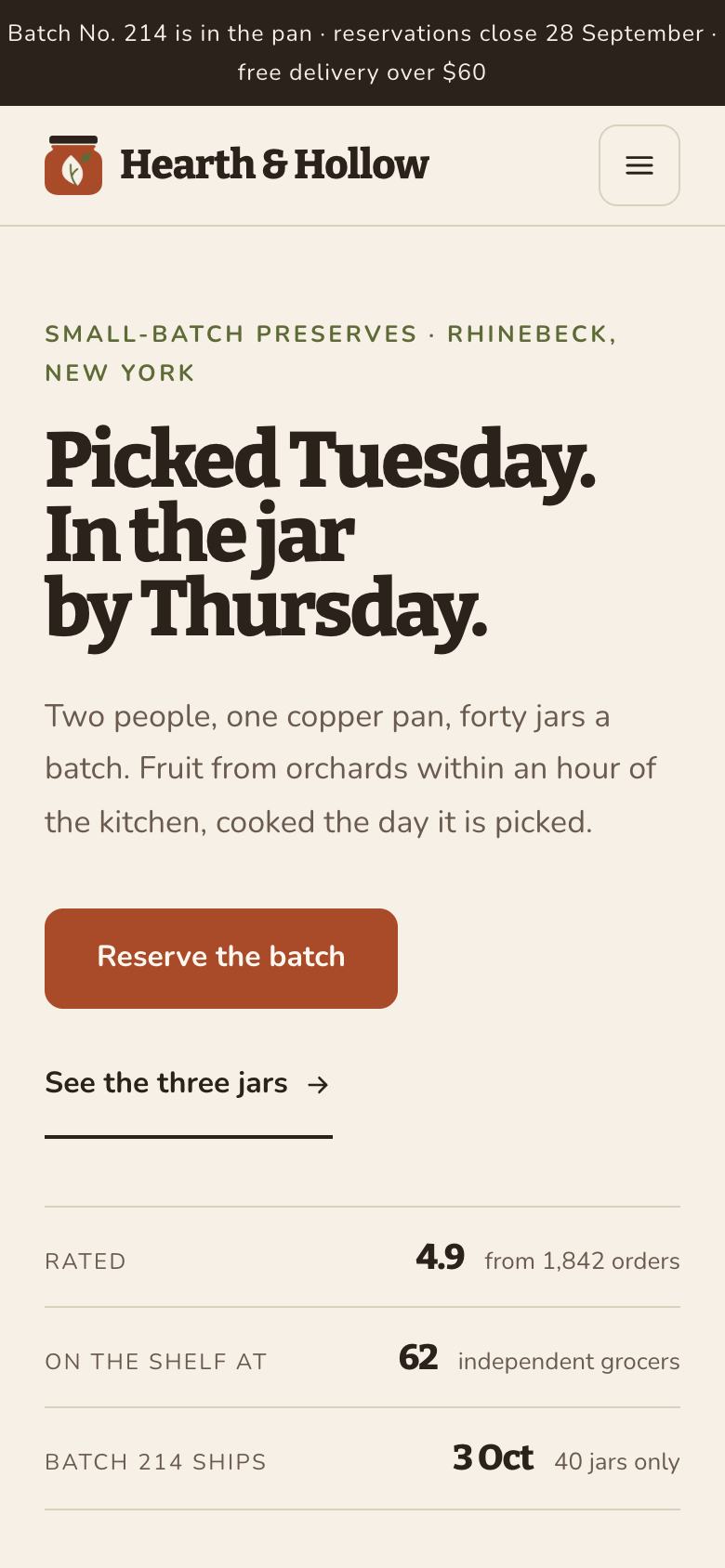
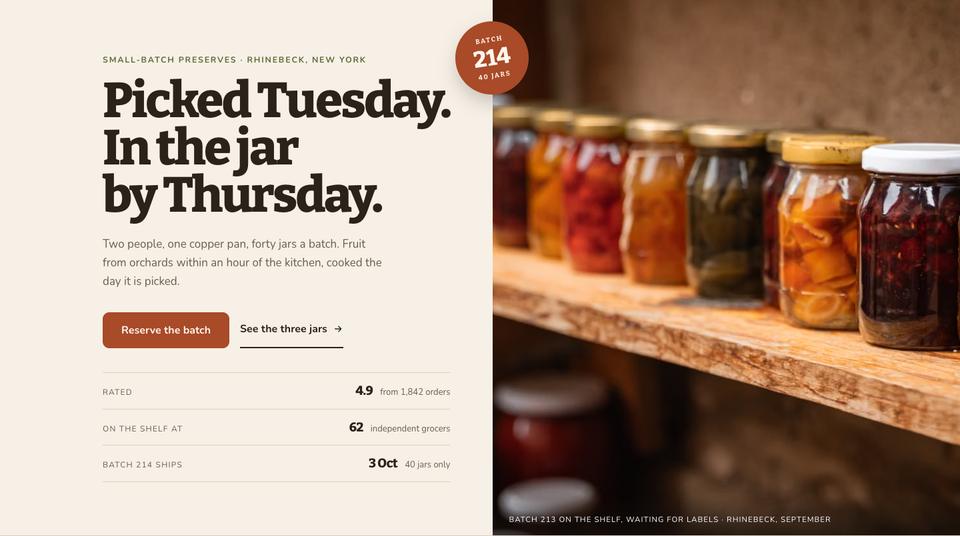
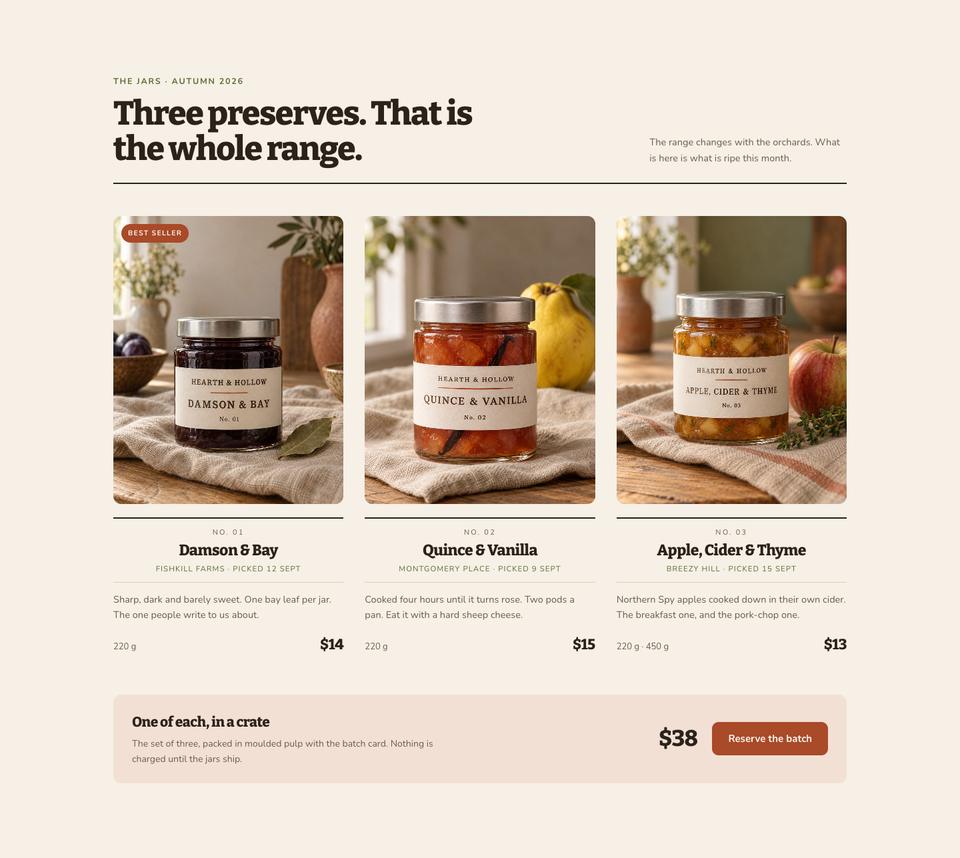
The hero puts the rhythm of making into one line, “Picked Tuesday. In the jar by Thursday”, with who makes it, where and how much each batch yields. The jars shows the whole range, labelled as what is ripe this month, with prices.
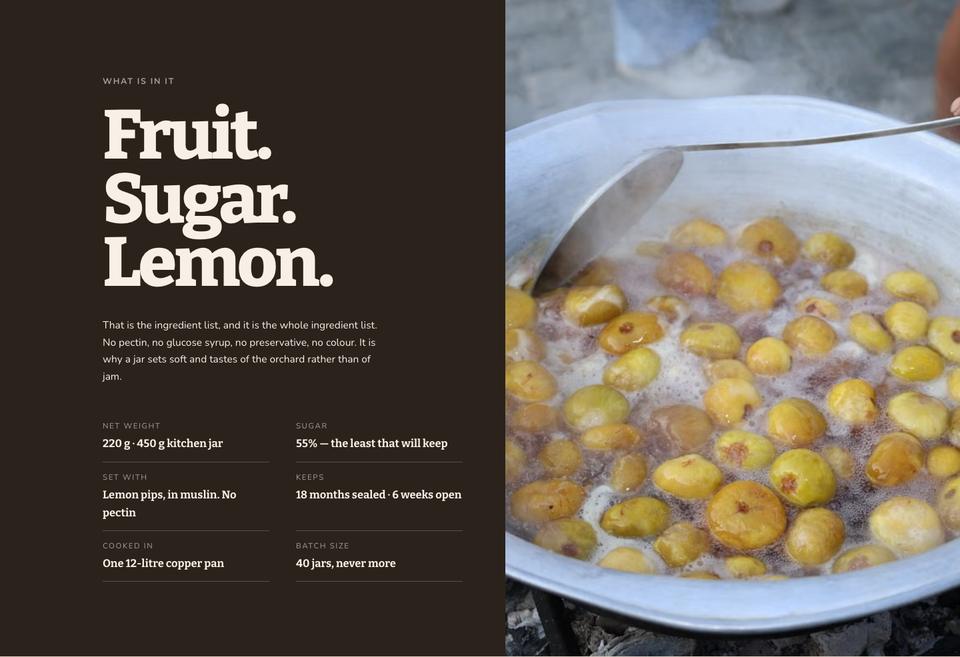
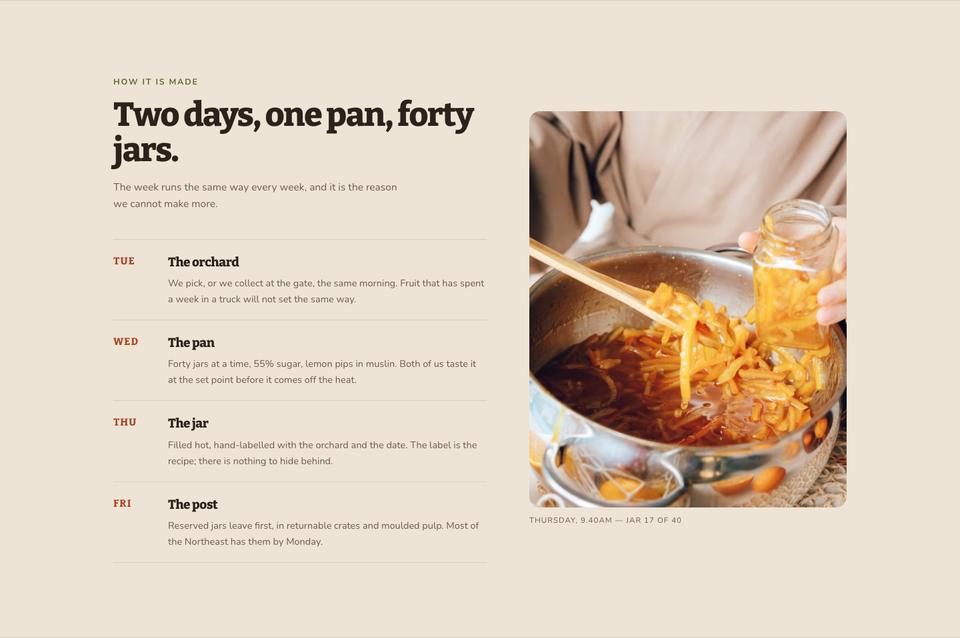
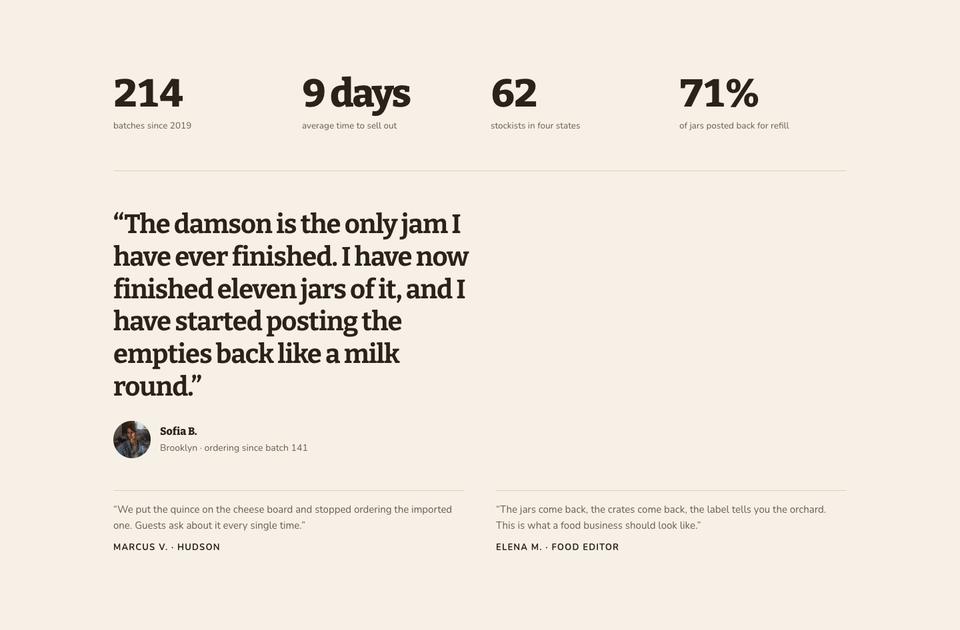
What is in it is the ingredient list set as a headline, a bold move that works when the list is short. How it is made walks through the making week day by day and explains why the maker cannot produce more. A numbers band gives batches made, days to sell out, stockists and refills, with a customer quote.
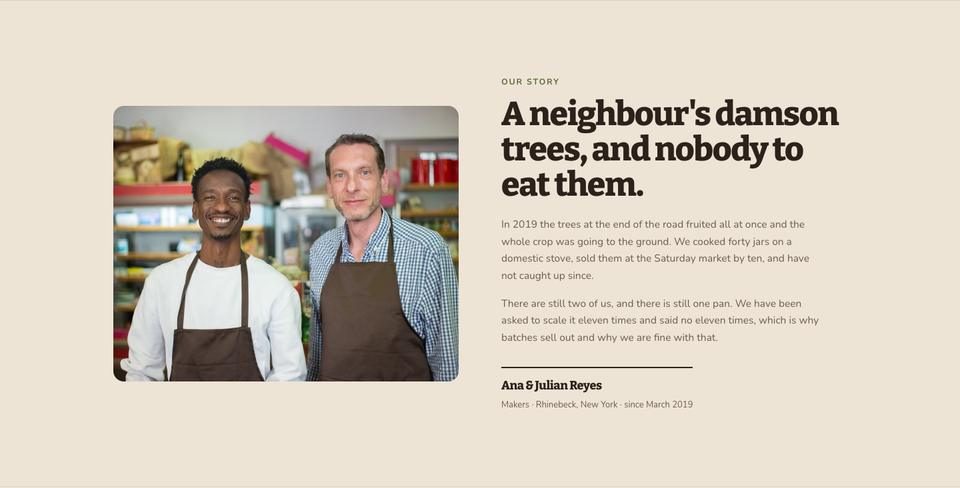
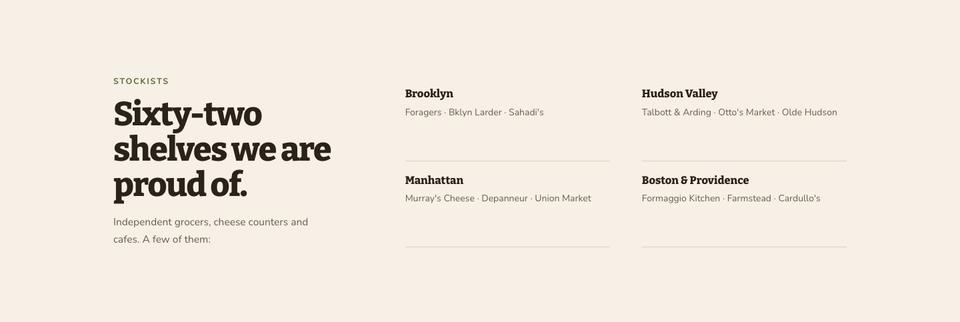
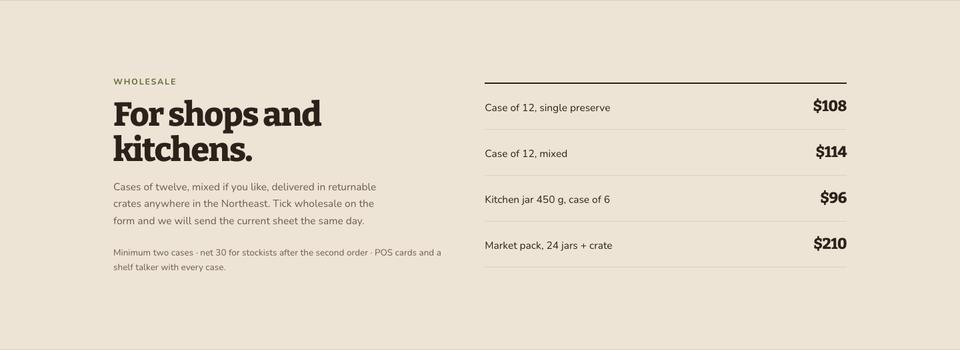
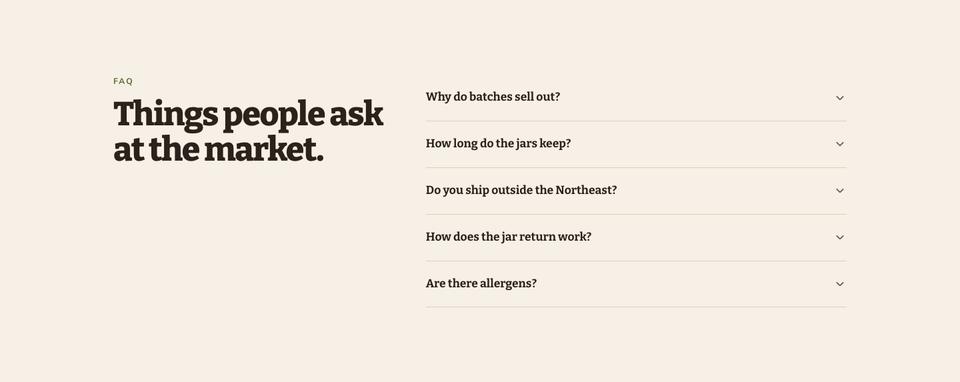
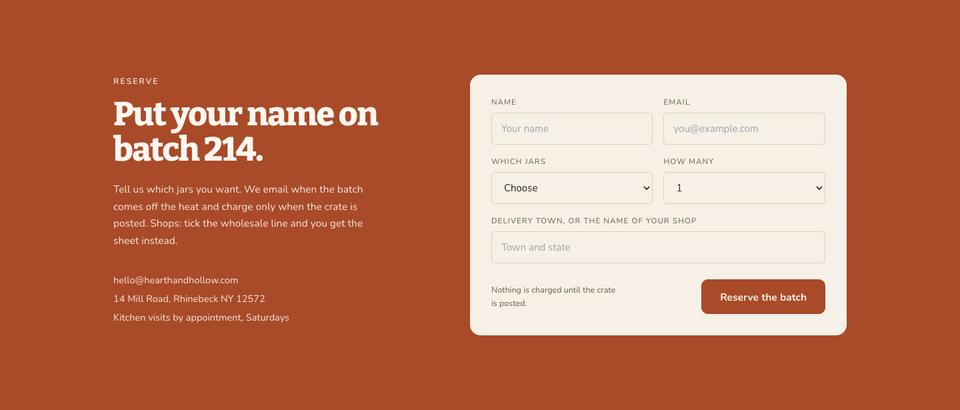
Our story tells how the business started, stockists lists shops by region, wholesale explains cases for shops and kitchens, questions uses the questions people ask at markets, and the page ends with reserve, a form to put your name on the next numbered batch.
Making it look like your brand
Four schemes come with it: Terracotta, Olive, Plum and Indigo. Headings are Bitter, a friendly slab serif, or Fraunces or Literata, with Nunito, Mulish or Hanken Grotesk for body text. The demo only uses five photographs, so a handful of good product and kitchen shots is enough.
The range, making week and stockist list are all editable in place. When your range changes with the season, select the section and ask the AI to rewrite it from your notes.
Putting in your own details
You can start from the template free of credits. For about 20 credits, the AI writes your copy into the same design. Give it your products and prices, ingredients, how and where each batch is made, batch size and typical sell-out time, stockists, wholesale terms and how reservations and payment work.
Numbers a small maker should write down
This layout turns the limits of a small operation into the reason to buy, so it needs the real figures. Work out how much one batch makes, how often you produce, how long a batch typically takes to sell and how many batches you have made in total. Those numbers fill the hero, the process section and the stats band, and they explain why the next batch has to be reserved.
List the full ingredients or materials for each product in the range, in the order they appear on the label, and note anything you deliberately leave out. The process section should follow your actual week, day by day, from sourcing to packing. If you sell through shops, collect the names of stockists who are happy to be listed, grouped by area. For wholesale, decide case sizes, minimum orders, delivery areas and lead times before you add the section. Five photographs are used, so still-life images in natural light, the product on a plain surface and the workspace, suit the slab serif and linen palette best.
Distilleries, skincare, candles and ceramics
A small distillery can turn the recipe section into the botanicals and still, with bottle numbers per batch, and check the rules on marketing alcohol in your region. Skincare makers should list full ingredients with their INCI names and any certification, keeping claims modest. Candle makers usually show wax, wick and burn time for each size. Ceramicists and homeware makers can replace the recipe with clay, glaze and firing, and turn batches into kiln loads, with a note that every piece varies slightly.
When another template fits better
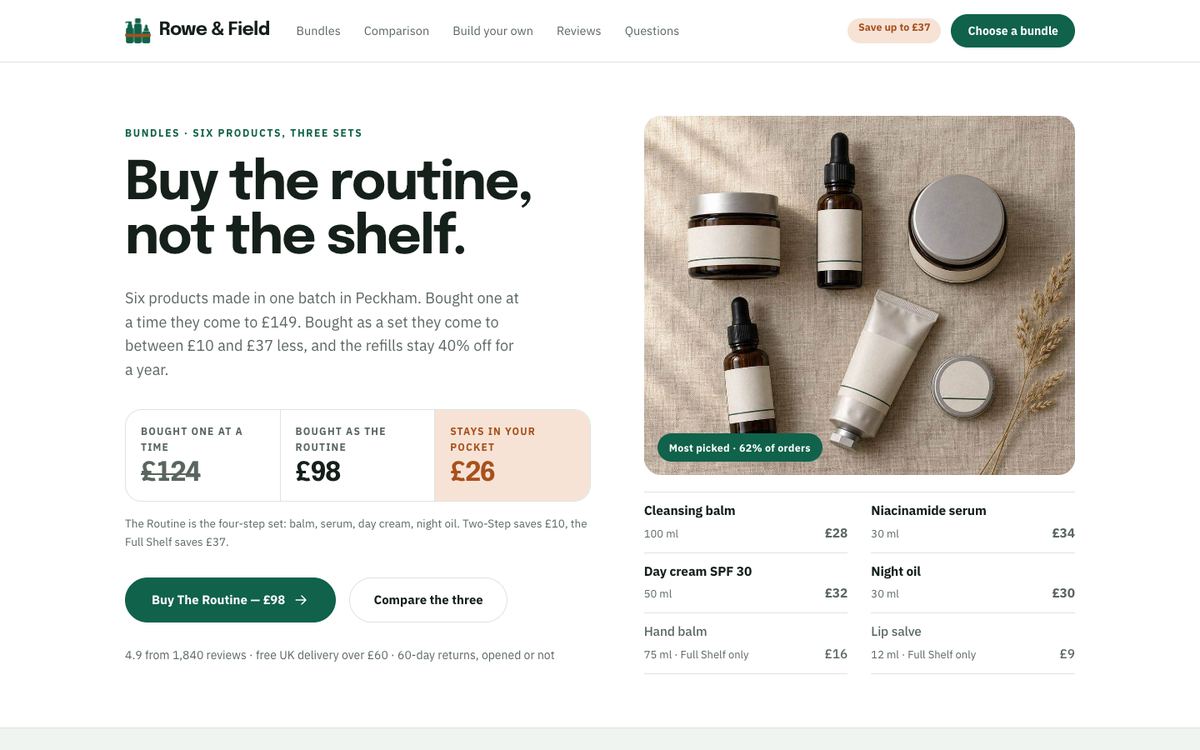
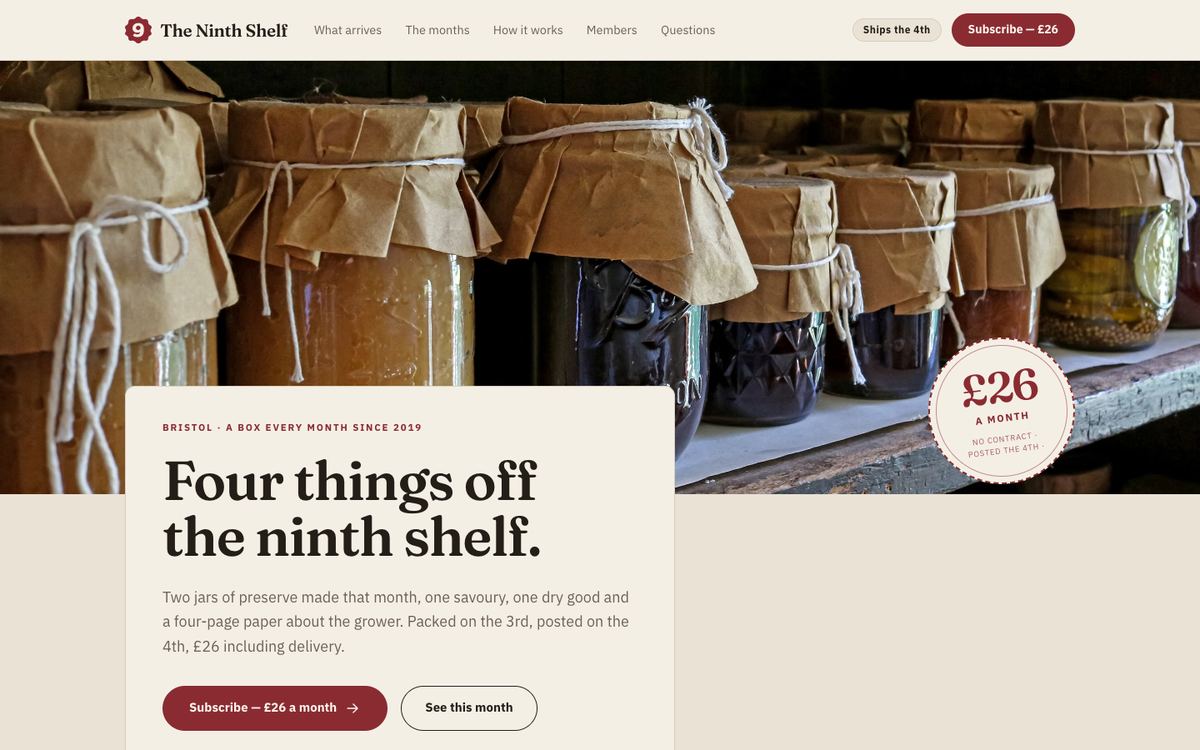
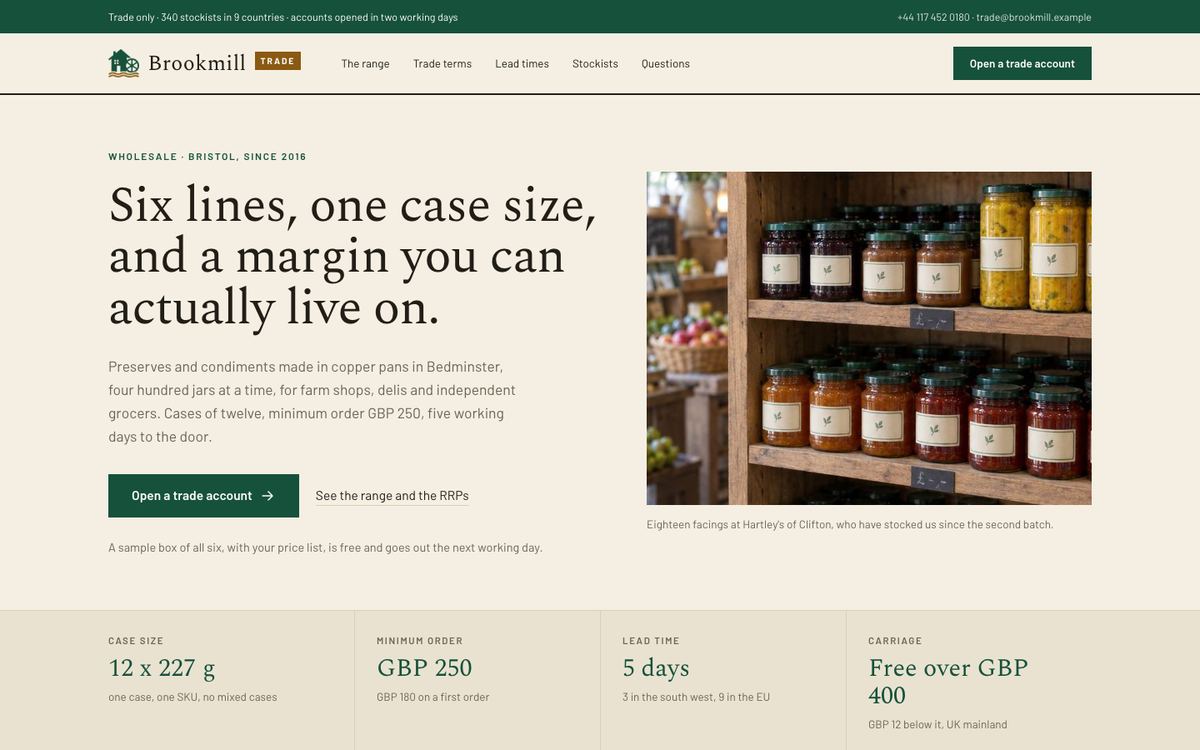
Small-Batch Craft reserves rather than sells. For direct online sales with discounts on multiples, Bundle And Save is closer, and recurring deliveries suit Recurring Box Subscription. A coffee roaster selling lots by producer should use Coffee Roastery, and a brand whose main customers are shops should look at Wholesale Trade.
See every selling layout on the ecommerce templates page.
Before you publish
- Check that batch sizes and sell-out times are current.
- Make sure the ingredient list matches your labels exactly.
- Get permission to name stockists.
- Explain in the form when customers are charged.