For brands whose customers are shops
A shop buyer reads a wholesale page like a spec sheet: case size, minimum order, margin, lead time, carriage and who else stocks it. Wholesale Trade is styled like manila card with a ruled price list, bottle green and a brown stamp, and it publishes those facts before asking a buyer to open an account.
It suits food and drink producers, homeware and skincare brands, and distributors or importers opening trade accounts. Choose it when the page must publish case sizes, minimum orders, margins and terms.
How the page opens accounts
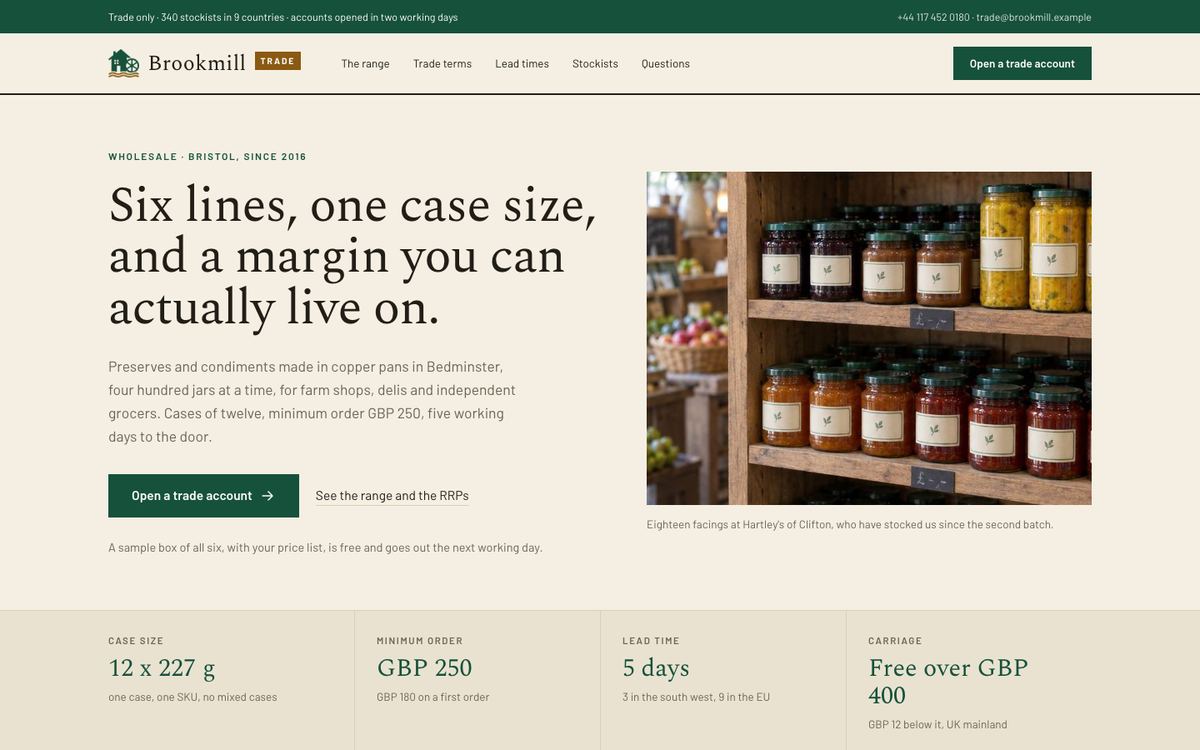
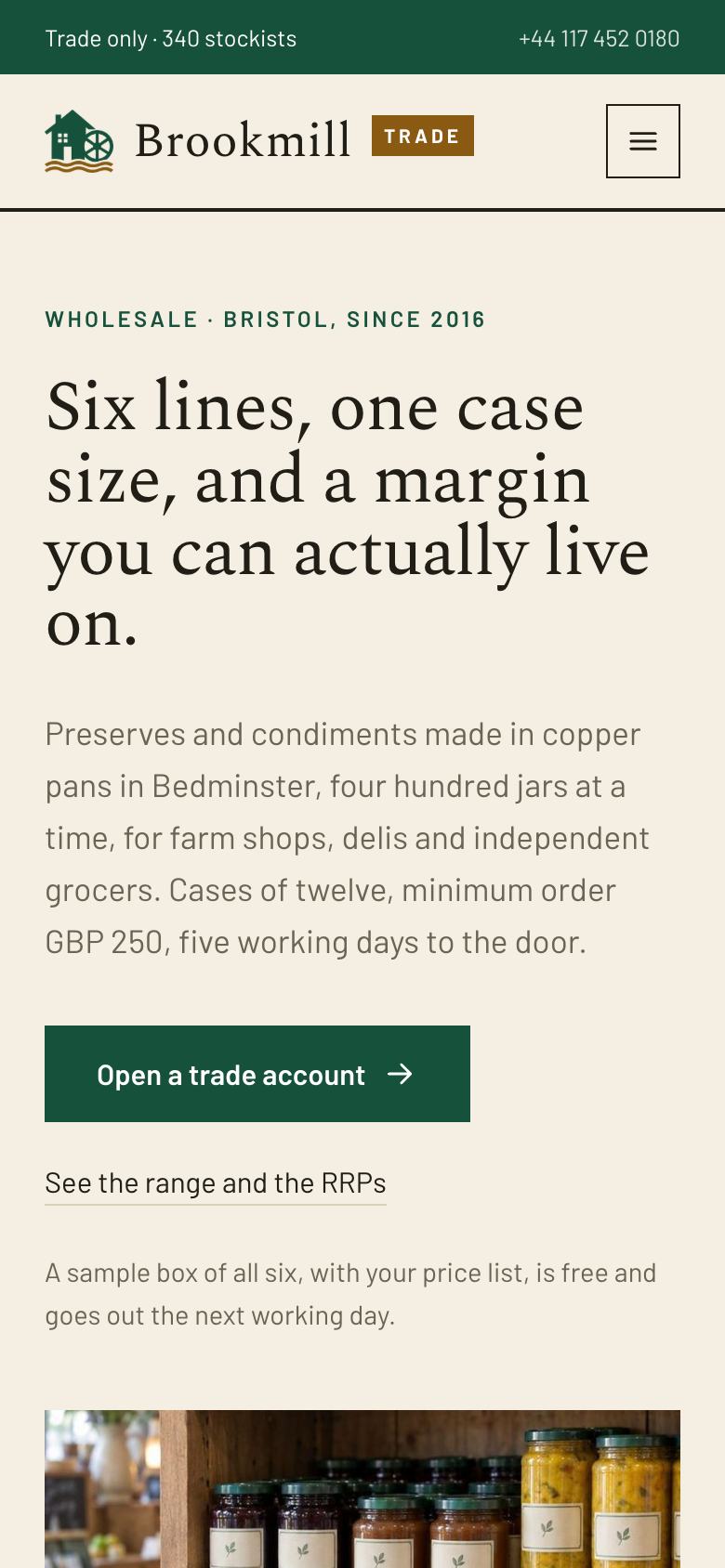
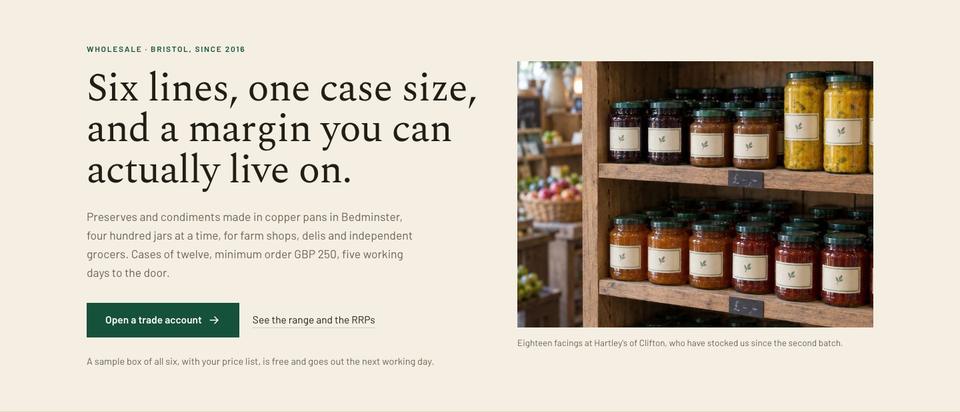
The hero speaks the buyer’s language, “Six lines, one case size, and a margin you can actually live on”, with where the brand is made and since when. A trade basics band lists case size, minimum order, lead time and carriage threshold.
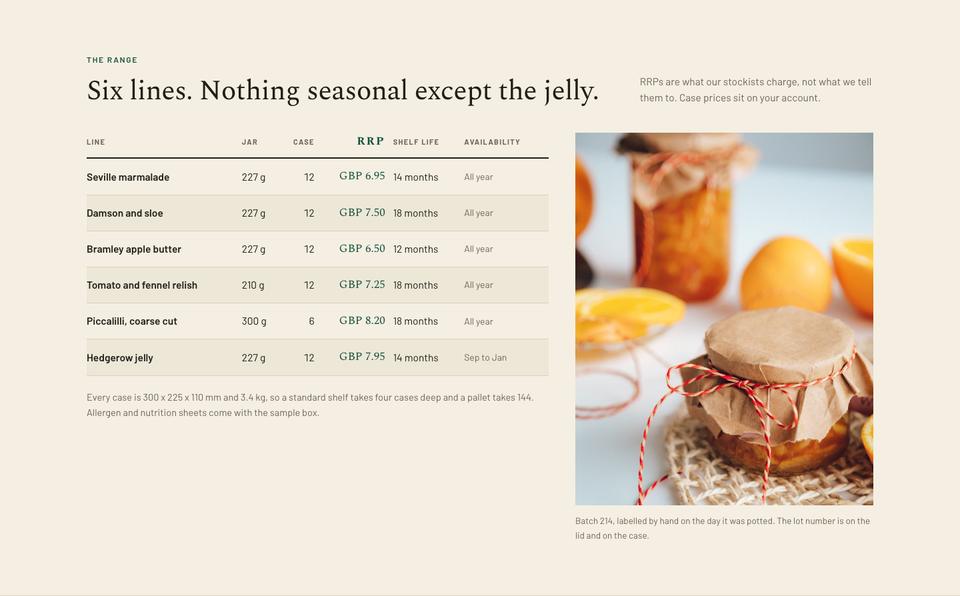
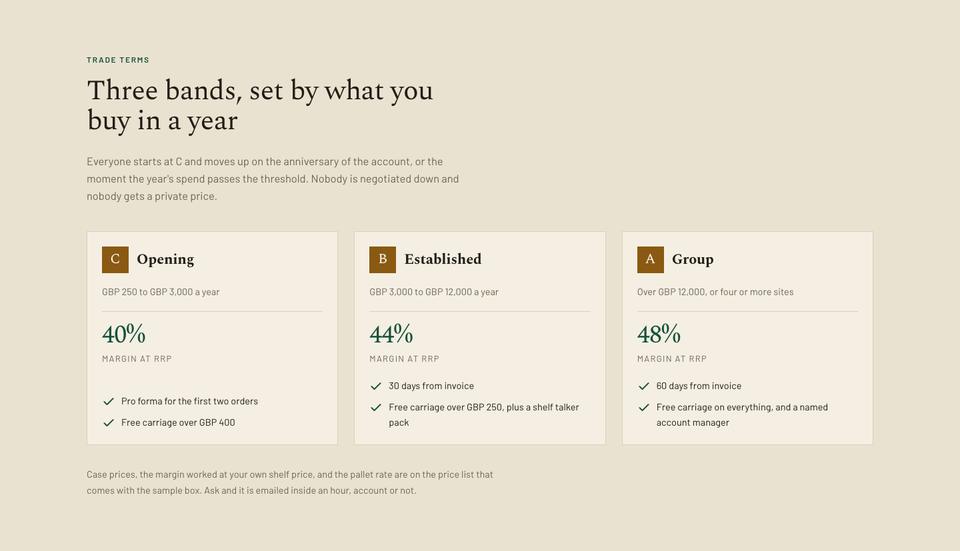
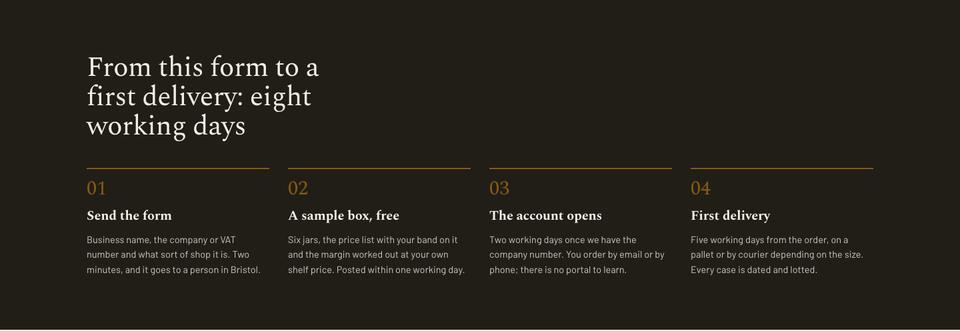
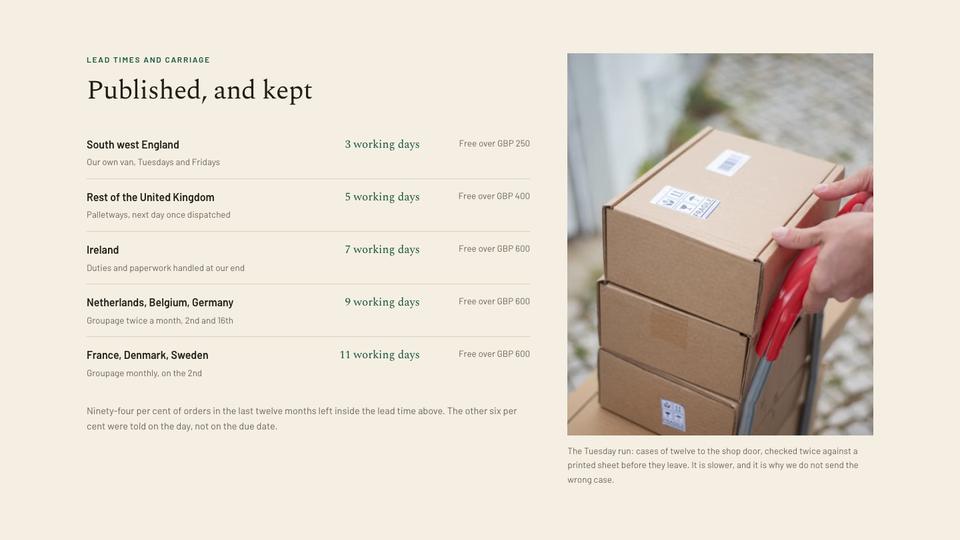
The range shows each product with the RRP stockists actually charge. Trade terms explains three bands by annual spend and how to move up. Opening an account times the path from form to first delivery, and lead times and carriage is a table by region.
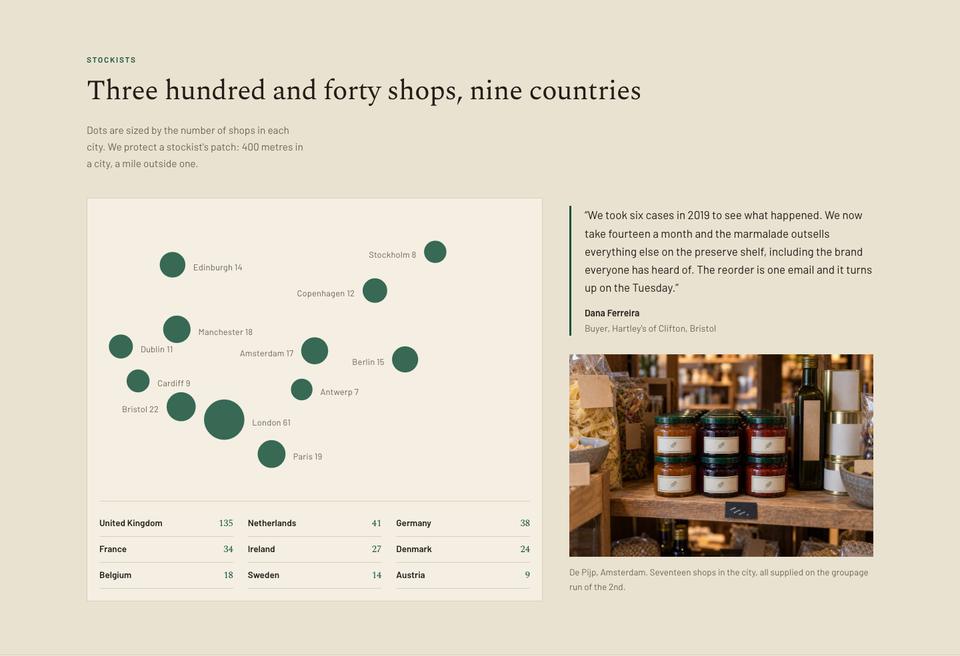
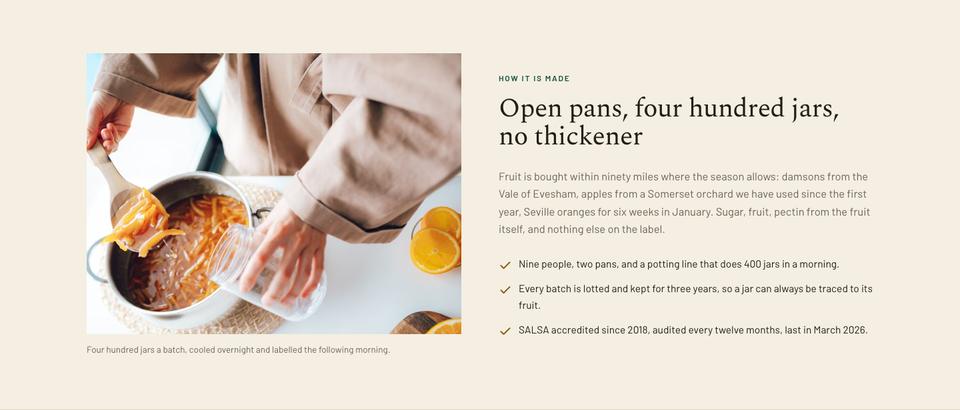
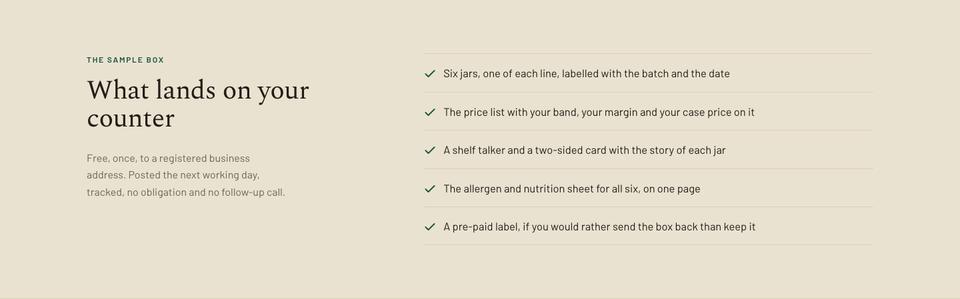
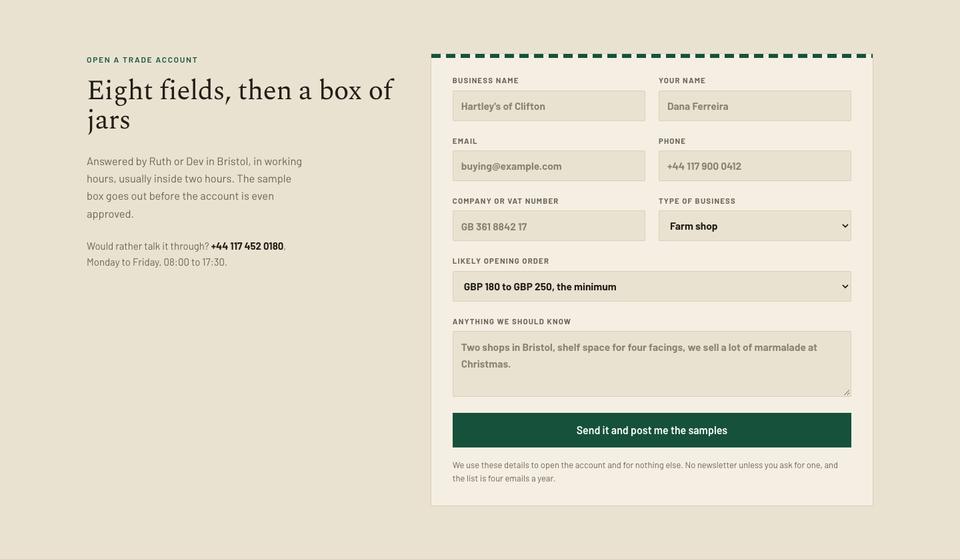
Stockists shows shops by city and explains how a stockist’s patch is protected. How it is made gives the production story, the sample box offers free samples to registered businesses, questions answers why trade prices are not public, the account form promises a fast reply, and a final strip gives the next batch date.
Adjusting the look
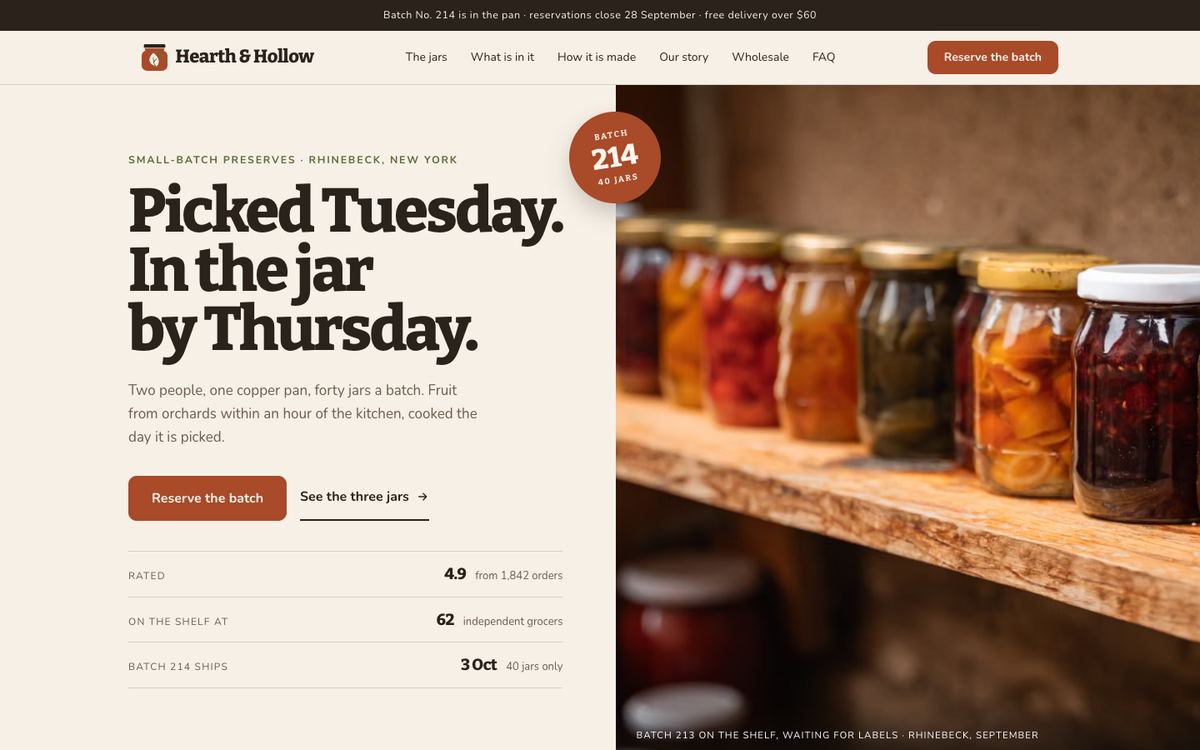
Four schemes are included: Bottle, Ink, Marine and Brick. Headings are Spectral, Bitter or Literata with Barlow, IBM Plex Sans or Hanken Grotesk. Three photographs are used, as the ruled lists carry most of the page.
Range, terms and lead-time tables are editable. Select one and ask the AI to rebuild it from your trade price sheet.
Writing it for your brand
You can start from the template for free, or tick the option for about 20 credits and the AI writes your copy while keeping the layout. Include your range with RRPs, case sizes, minimums, trade bands, lead times and carriage by region, stockist numbers and territory rules, samples, how accounts are approved and batch dates.
Trade terms to decide before publishing
Shop owners opening a new supplier want the commercial terms before they fill in a form, and this template publishes them. Decide the case size for each line, the minimum first order and repeat order, lead times by region, and the carriage threshold. If you offer price bands based on annual spend, set the thresholds and the discount at each band, and explain how an account moves between them.
The range table works best with the unit size, the case price hidden behind the account if you prefer, the recommended retail price and the shelf life. Shops care about margin, so check that the gap between case price and RRP leaves room for them. Write down how your account approval works, from the form to the first delivery, with the checks you run, such as a company or VAT number. If you protect stockists’ areas, state the distance. Stockist locations for the map need permission from the shops. Three photographs are used, so pick the production room, the range on a shelf and a packed case.
Include a short note on what happens when a line is out of stock or discontinued, and how much notice shops receive. Independent retailers plan shelves weeks ahead, and a clear answer here often decides whether they take on a new supplier at all.
Homeware, skincare and distributors
A homeware brand can replace shelf life with materials and care, and add display units or point-of-sale material. Skincare brands selling to salons and shops usually include ingredient compliance documents and training for staff. Distributors and importers can turn the range into brands carried, with minimums per brand, and use the terms section to explain credit accounts and payment days.
When another template fits better
Wholesale Trade is for one brand. A platform connecting many makers with shops fits Wholesale Marketplace, and a small-batch maker selling mainly to consumers belongs on Small-Batch Craft. A coffee roaster with café accounts can use Coffee Roastery, and a freight or distribution business Logistics.
See every selling layout on the ecommerce templates page.
Before you publish
- Check minimums, bands and carriage thresholds.
- Get permission before naming stockists.
- Confirm who qualifies for the sample box.
- Ask for company or VAT number in the account form.