For editions where scarcity is real
Most “limited” releases are marketing. Buyers of craft editions can tell. Waitlist Drop is written for makers whose numbers are genuinely limited by materials or hands, and it says so plainly: how many, why that number, what happened with past editions and how the queue works. It uses bone paper, a clean serif and full-bleed photographs.
It suits clothing and knitwear editions, ceramics and print runs, numbered objects and restocks with a queue. Choose it when scarcity is real and must be stated honestly.
How the page fills the list
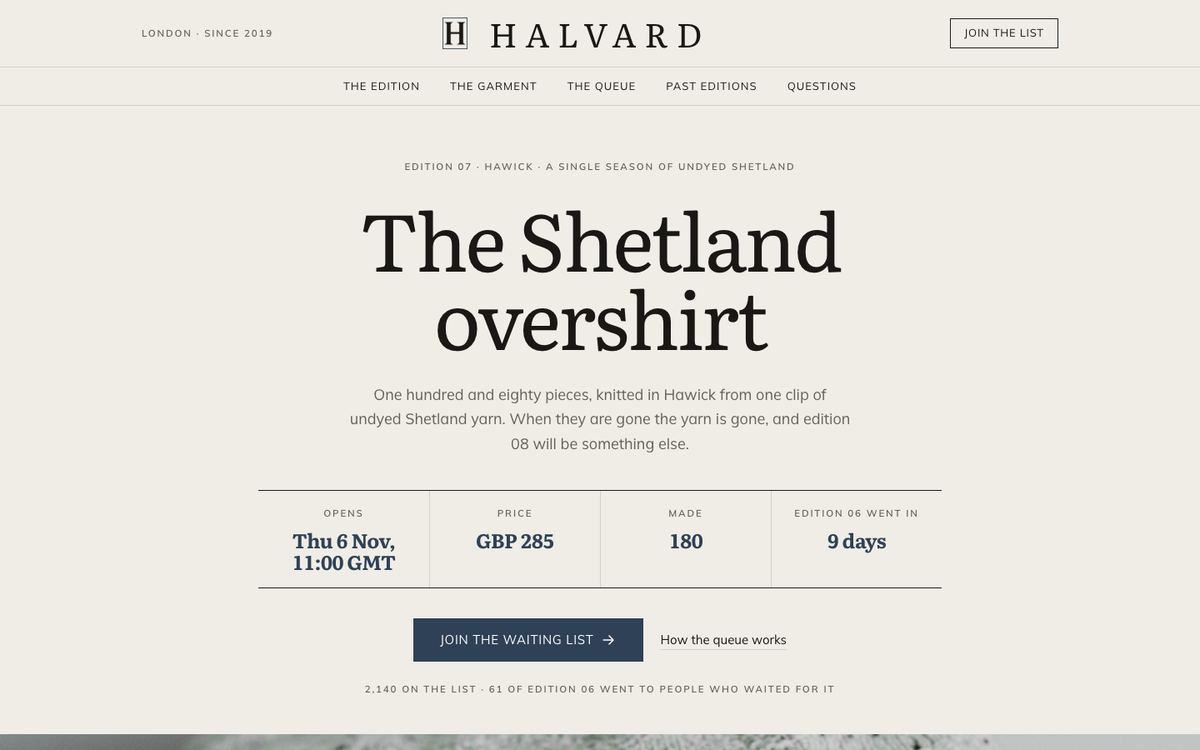
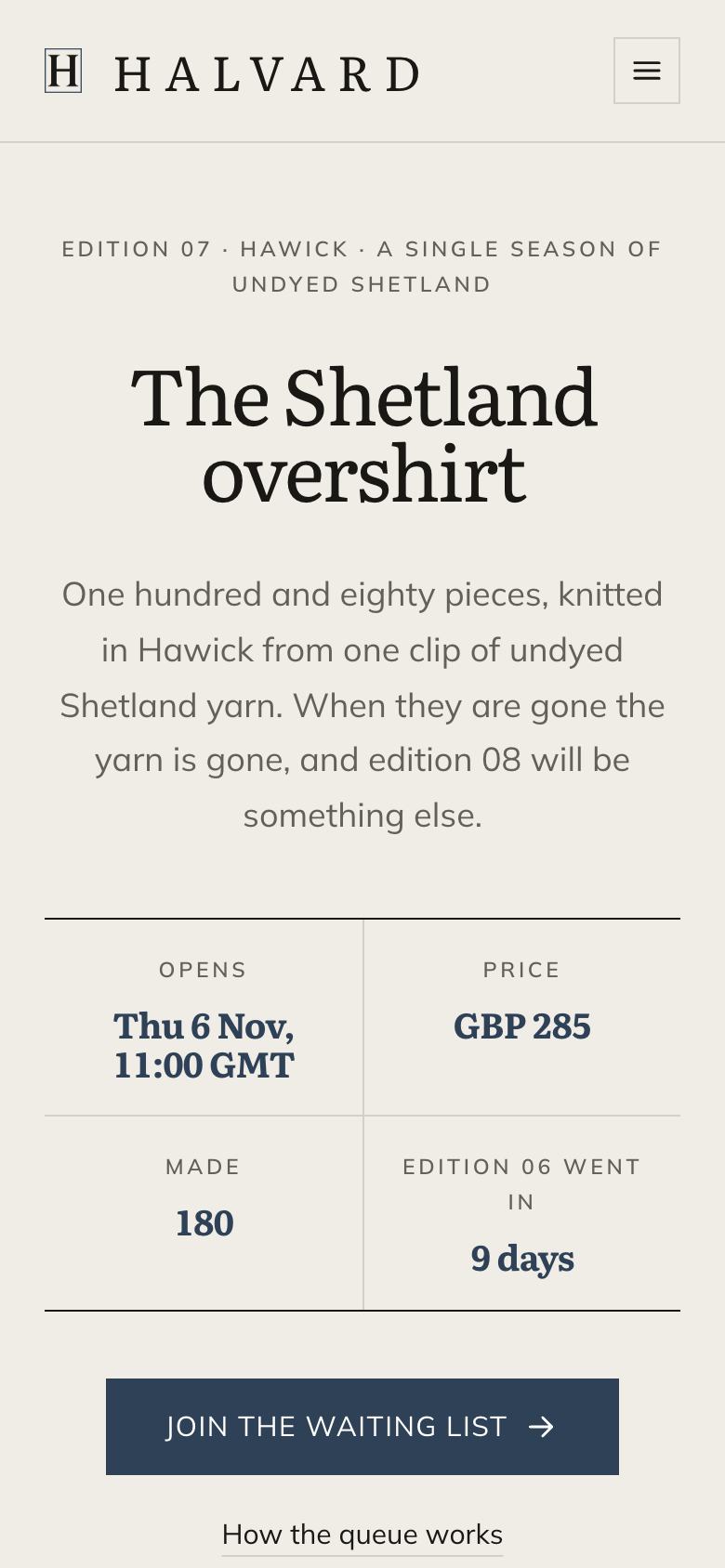
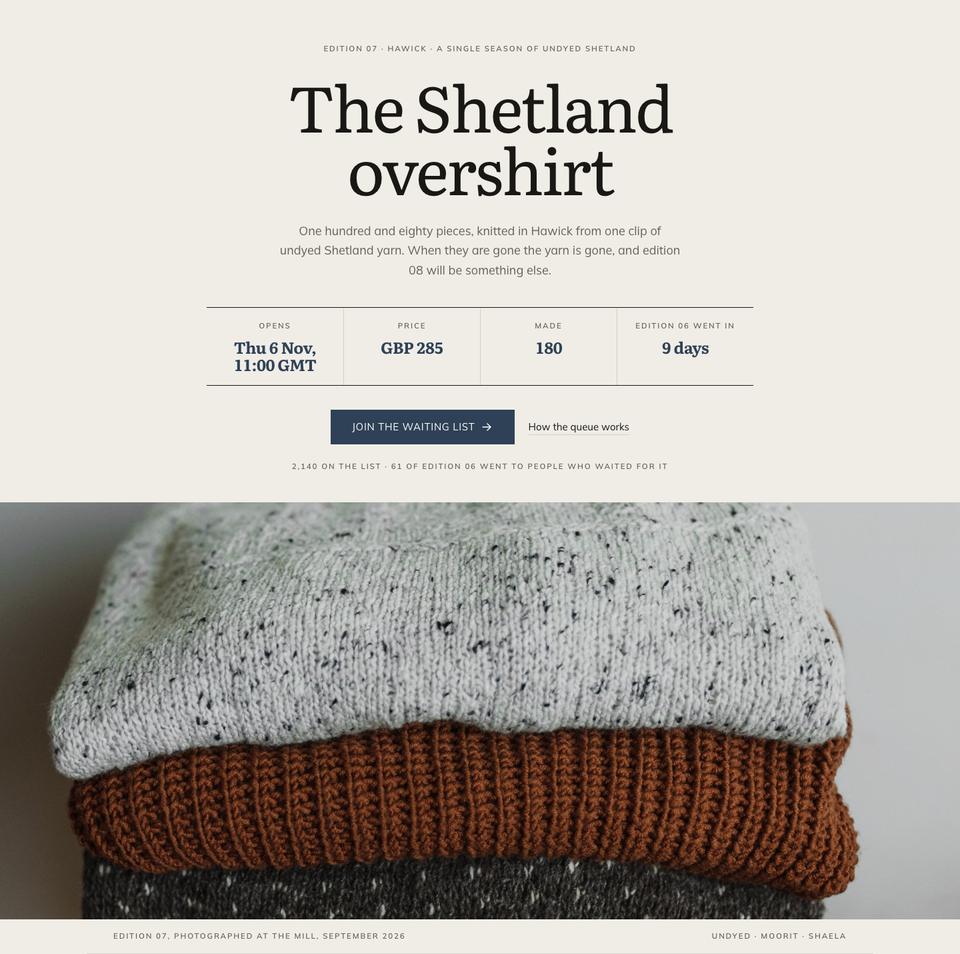
The hero names the edition and the object with a single strong photograph, and says how many are made, where and from what. An edition band gives yarn weight, sizes, making time and returns.
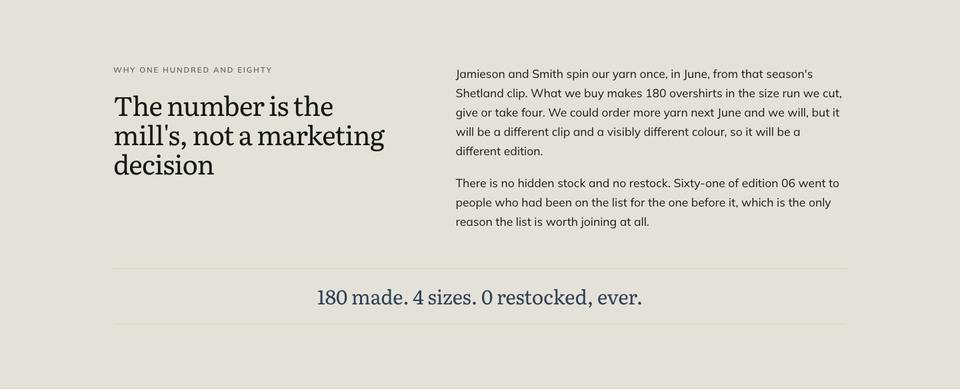
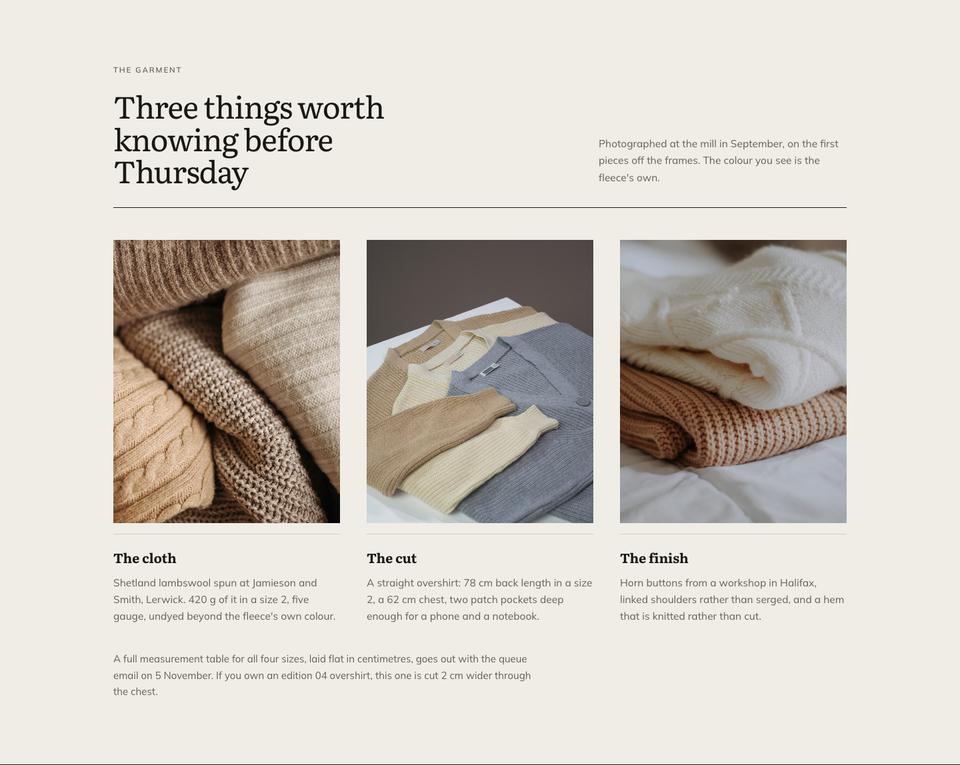
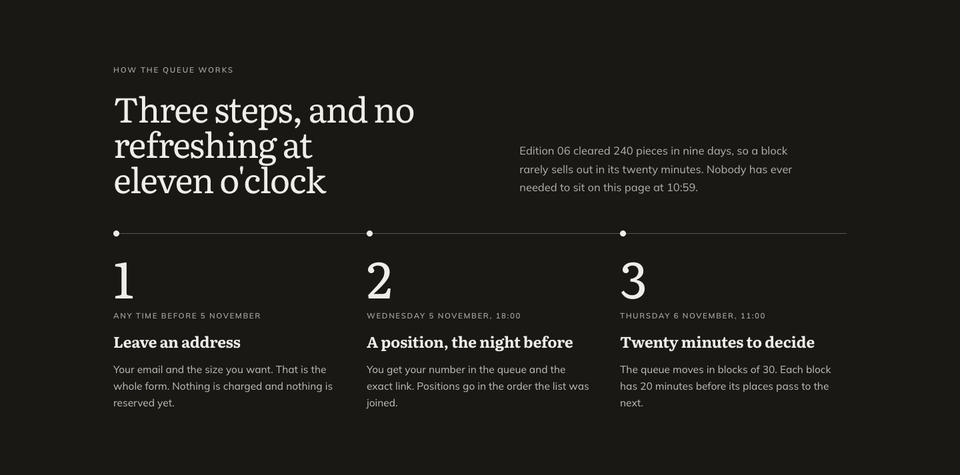
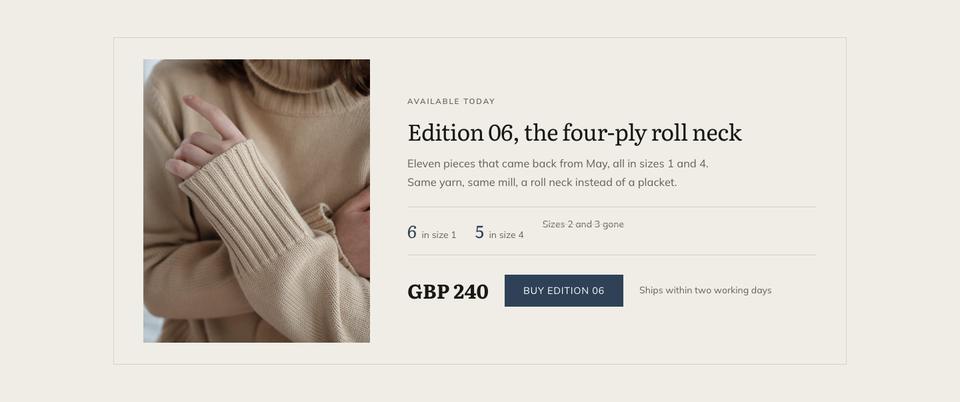
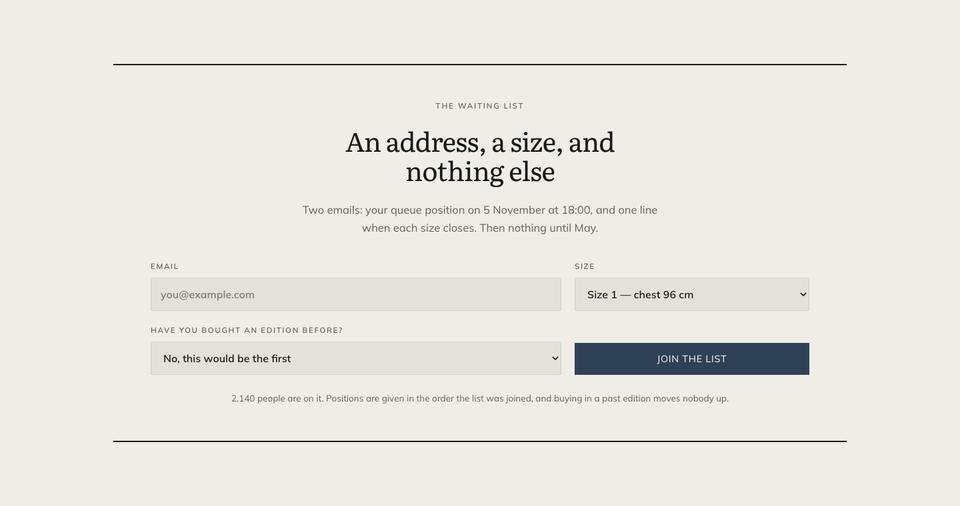
Why one hundred and eighty explains that the number comes from the material, not a marketing decision. The garment covers three things worth knowing, such as colour and fit. How the queue works replaces refreshing at release time with queue positions by email.
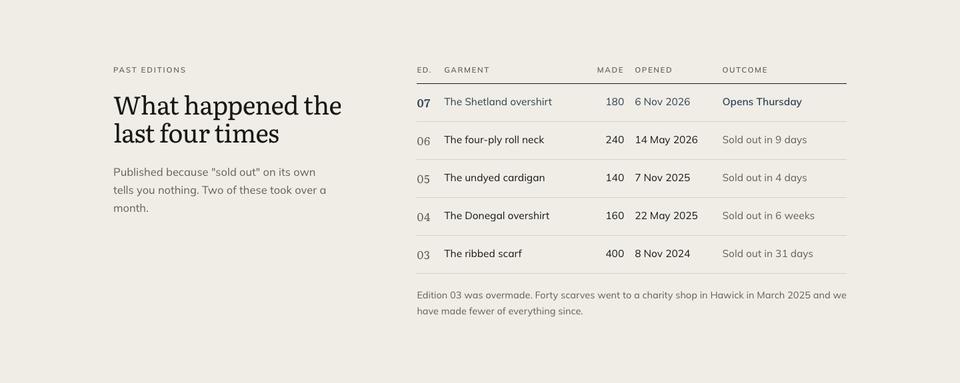
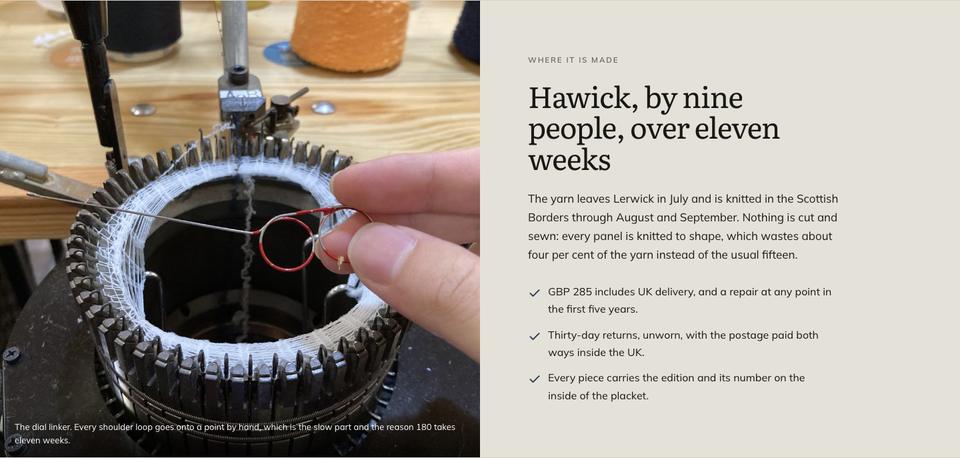
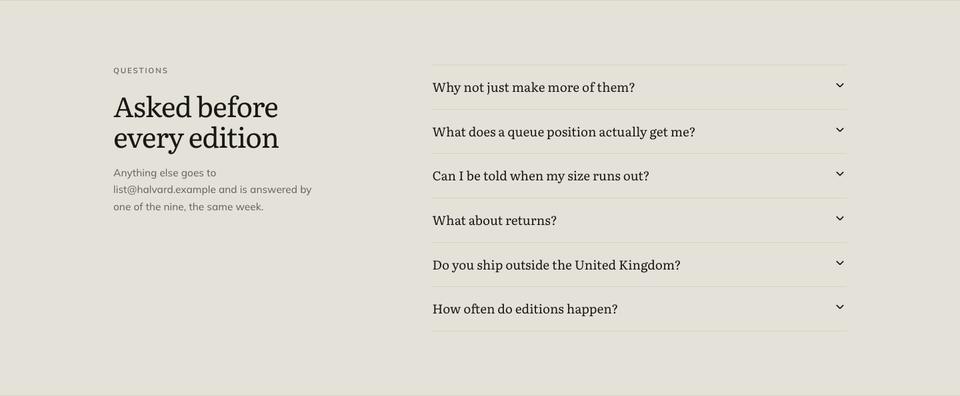
Past editions is a table of how many were made and how long each took to sell, including slow ones, which builds trust. Where it is made describes the workshop, available today offers a few leftover pieces from the last edition, questions answers why not make more, and the page ends with the waiting list and the release date.
Making it yours
Four schemes are included: Iron, Ink, Claret and Moss. Headings are Literata, Newsreader or Spectral. Six full-bleed photographs are used; the object and the making are what matters.
The past editions table and edition numbers are editable. For each new release, duplicate the page and ask the AI to update the edition details.
Writing it for your edition
Starting from the template costs no credits. For about 20 credits, the AI writes your copy into the same layout. Include the object, quantity and why, materials and sizes, release date and time, queue rules, past editions and sell-through times, where and by whom it is made, leftover stock and returns.
Stating scarcity honestly
This template is for limited editions where the number made is real, and it avoids countdown pressure. Start with the facts that set the limit, such as the amount of material bought, the mill’s capacity or the number of weeks the makers can give, and explain them in a sentence or two. Visitors respect a limit that has a reason.
The queue section must describe exactly how release works: when the list opens, how people are grouped, how long each group has to buy, and what happens to unclaimed pieces. The past editions table is the most unusual part of the page, listing previous releases with how many were made, when they opened and how long they took to sell. Include the slow ones. The garment or object section needs material, weight, sizes with measurements and care instructions. Returns should be stated plainly, including who pays postage. Six photographs are used, and the restrained look works best with images of the pieces at the place they were made, in natural colour. Say where the pieces are photographed and on whom, so buyers can judge fit and colour.
Ceramics, print runs and restock queues
A ceramicist can replace sizes with dimensions and glaze variations, and explain kiln capacity as the reason for the number. Print runs usually list paper, edition size, signing and numbering, with framing options. Numbered objects can show the numbering process. For a restock with a queue, the past editions table becomes previous restocks, and the queue section can explain how people on the list are notified when stock arrives.
When another template fits better
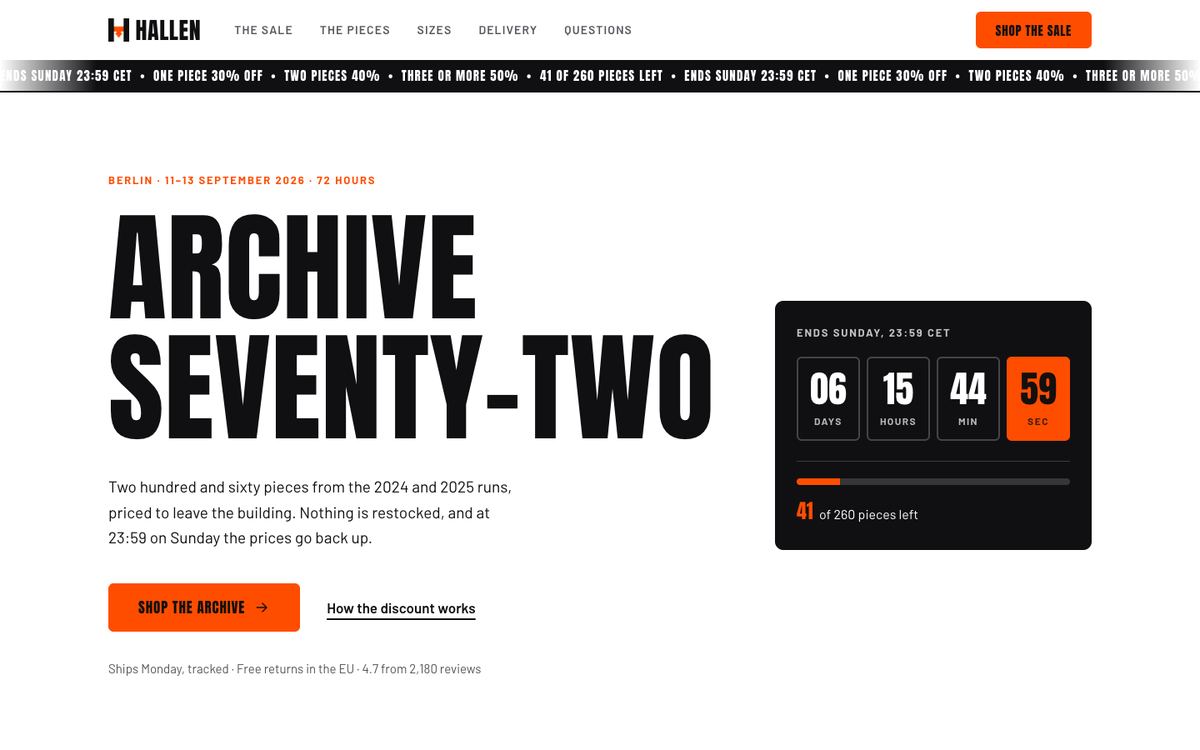
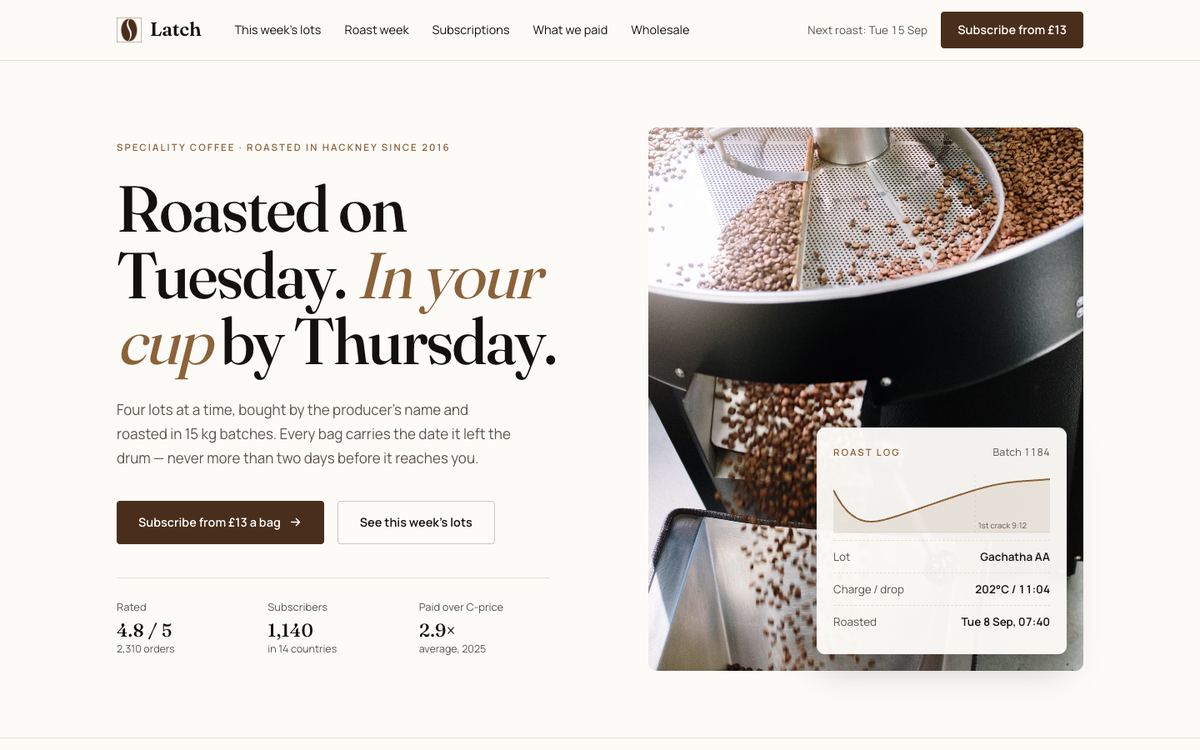
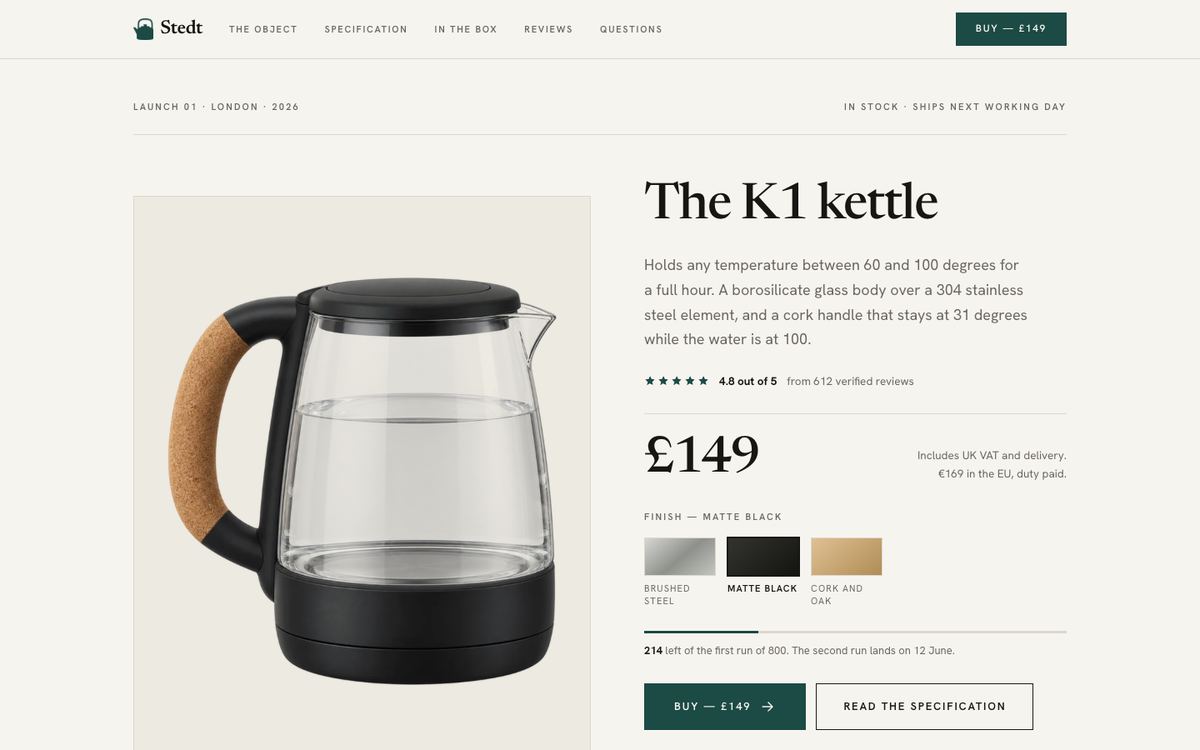
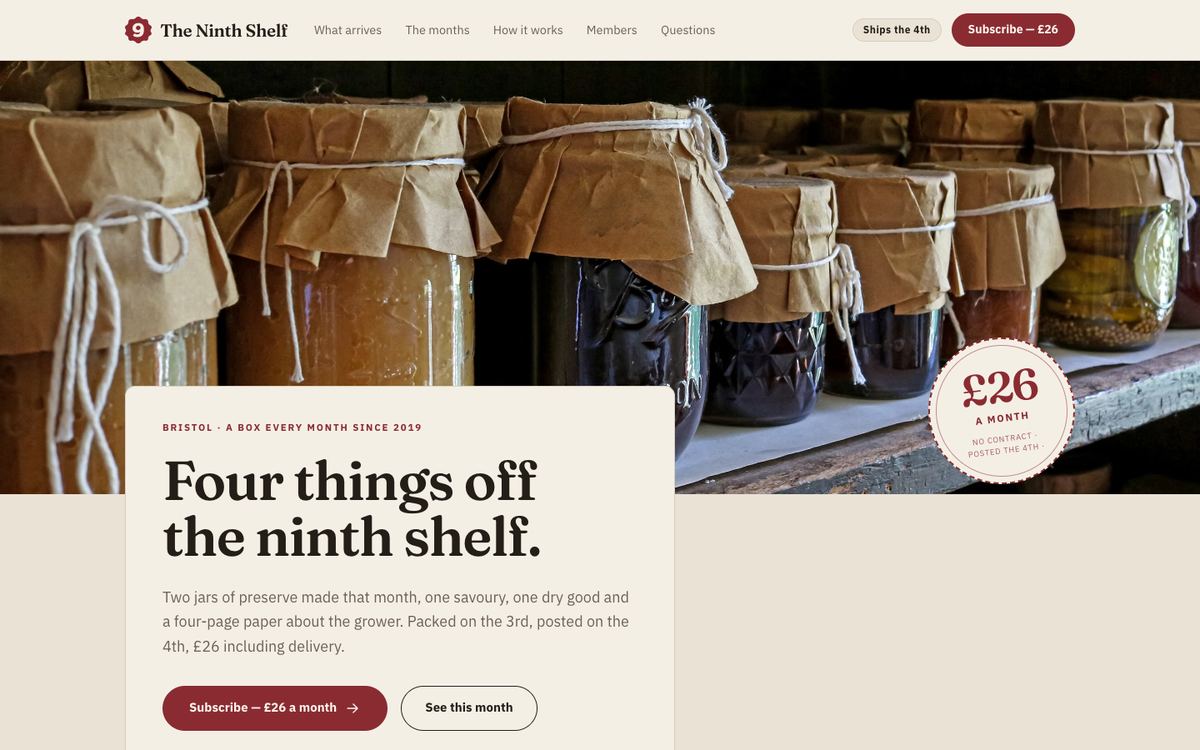
Waitlist Drop is quiet. A streetwear drop with more energy fits Drop Launch, and a product with a deposit and production timeline belongs on Pre-order Launch. A coffee or food maker with rotating lots suits Coffee Roastery, and a fashion house presenting a whole collection by appointment Maison Monochrome.
See every selling layout on the ecommerce templates page.
Before you publish
- State only quantities you will actually make.
- Check the release time and time zone.
- Make sure queue emails and checkout links are set up.
- Use your own photographs of the edition and workshop.