For kitchens where the menu is the argument
Nobody books a table because of an adjective. They book because of a dish, a price and an evening that works. Seasonal Kitchen is a warm template, terracotta on cream with a soft serif, that puts this week’s menu and the opening hours near the top and makes booking a two-minute job.
It is built for neighbourhood restaurants, cafés, bakeries and farm-to-table kitchens that change their menu with the season. Choose it when dishes, prices and hours carry the page and the goal is a table booking.
How the page fills tables
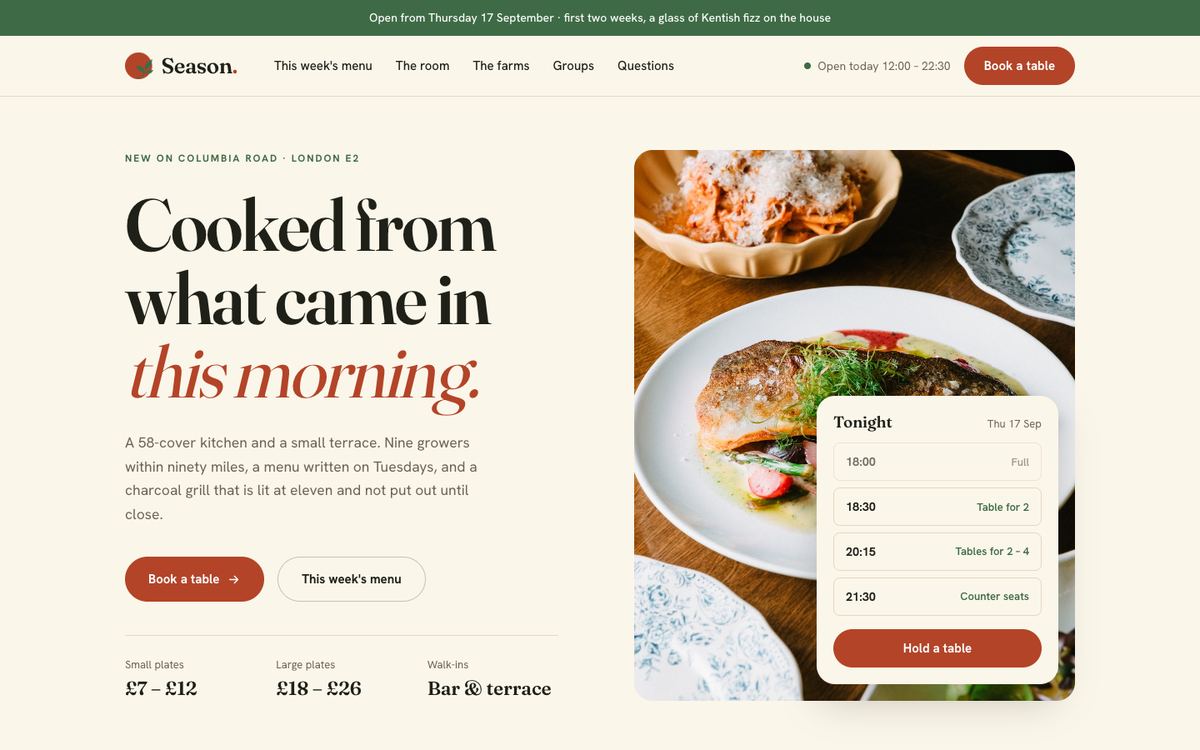
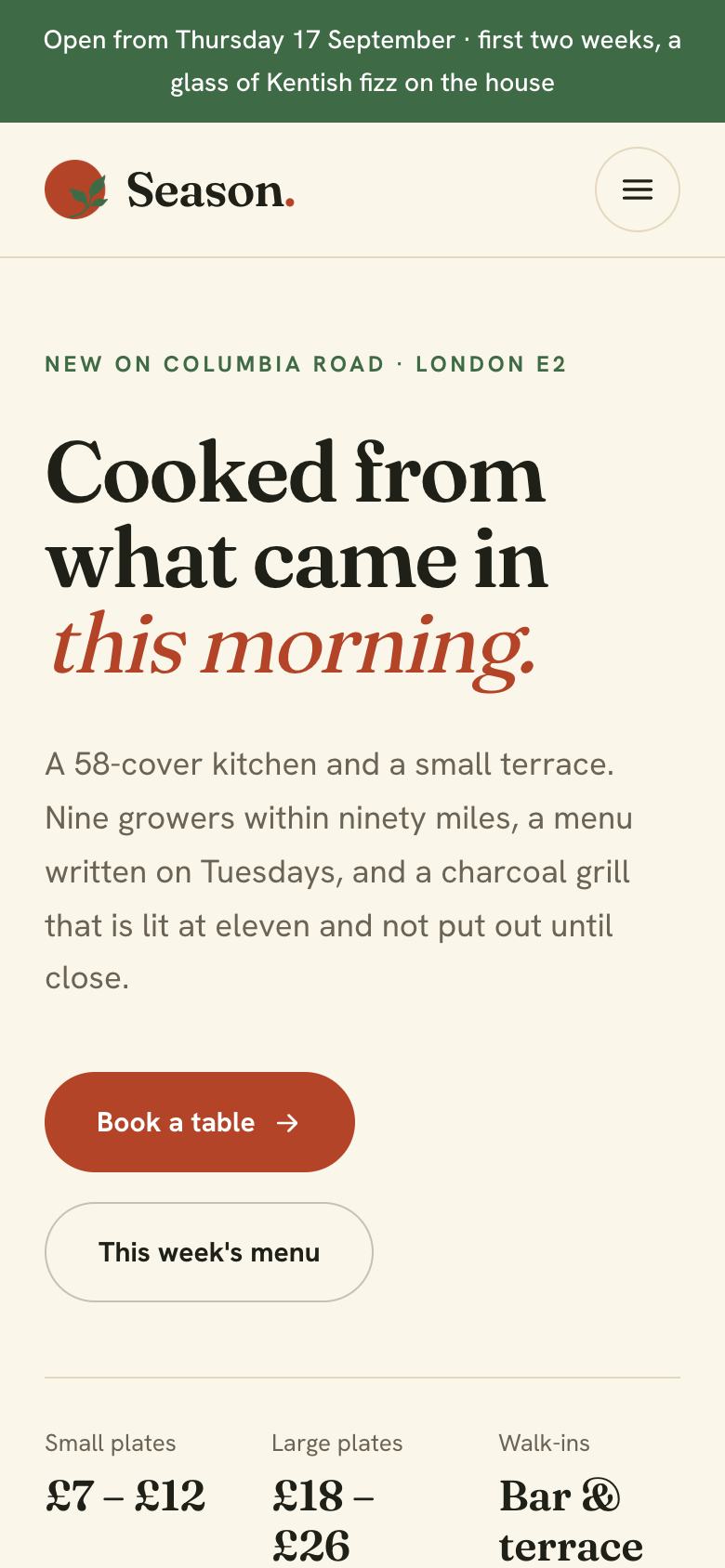
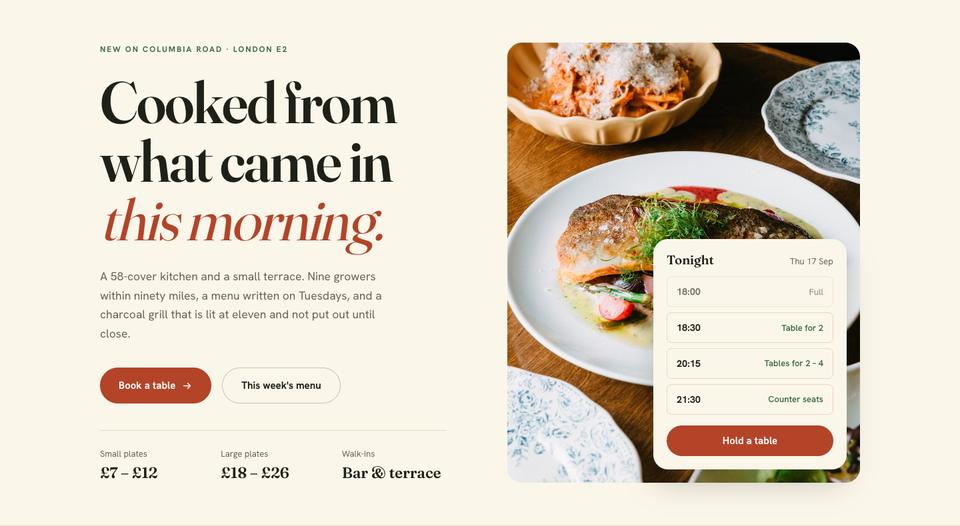
The hero says what makes the kitchen different, “Cooked from what came in this morning”, with the street, number of covers and a photograph of food. Opening hours sit immediately below, because it is the question most visitors arrive with.
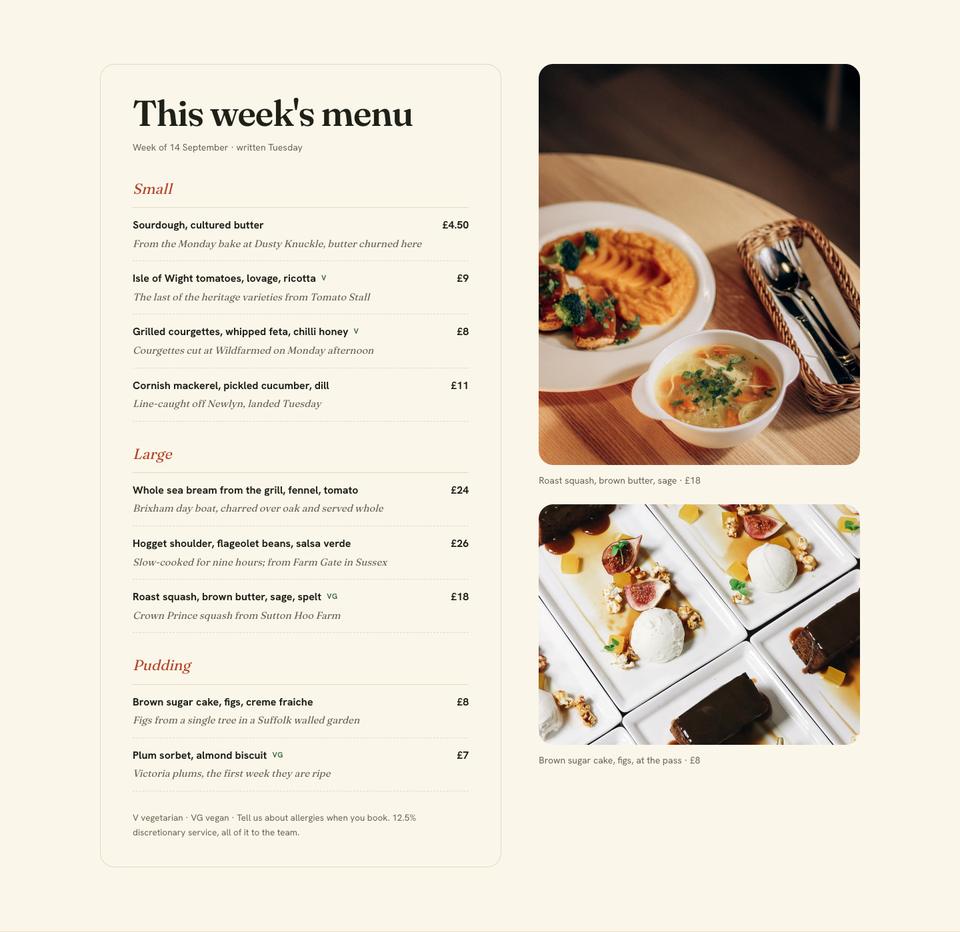
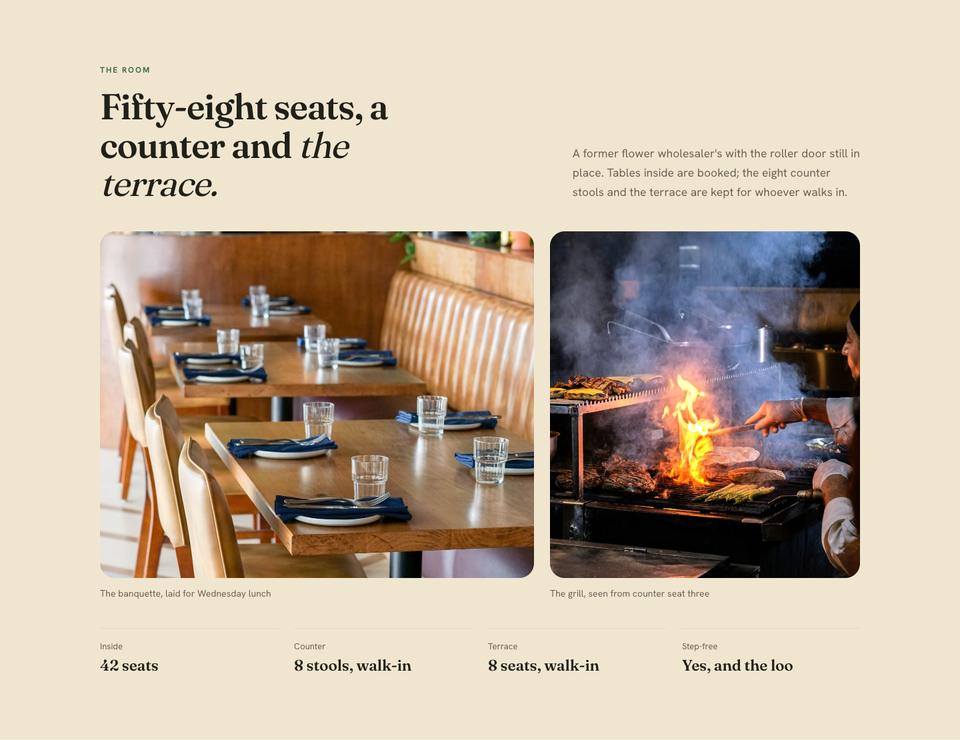
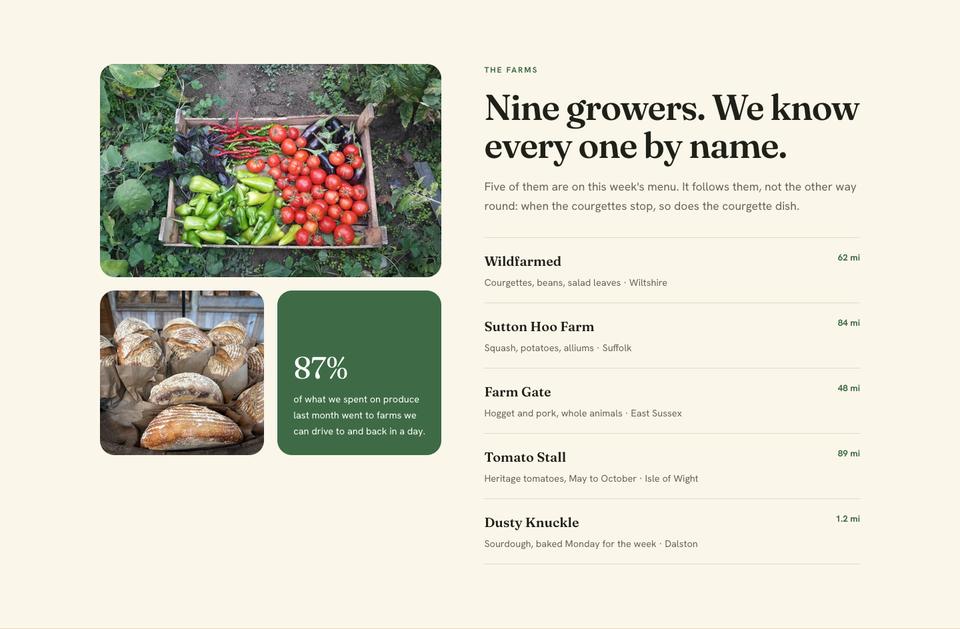
This week’s menu lists dishes with where each ingredient comes from and the price. The room describes the space and explains which seats are booked and which are walk-in. The farms names the growers and says how much of the produce budget goes to them, a specific version of “locally sourced”.
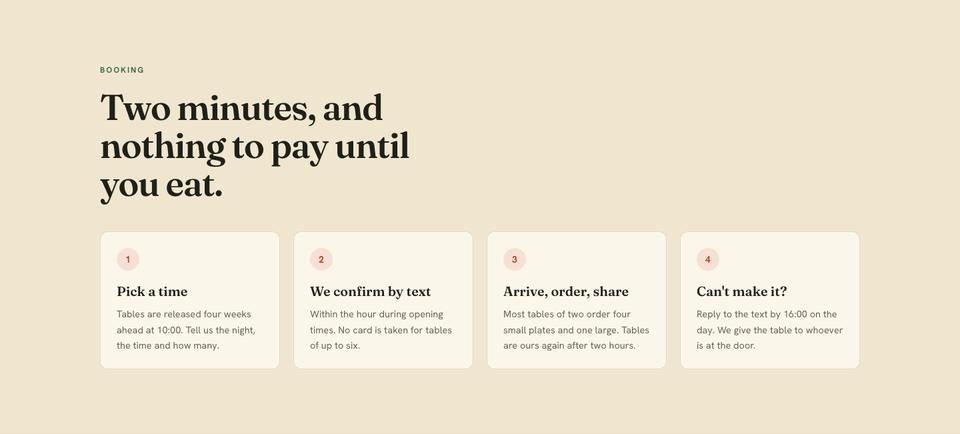
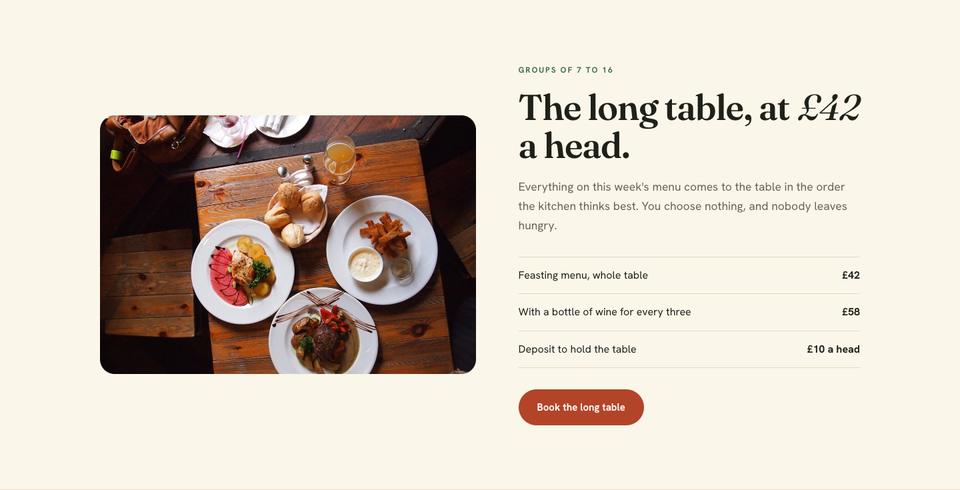
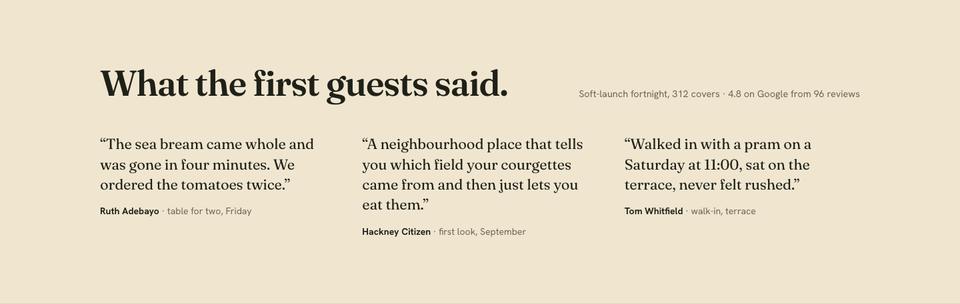
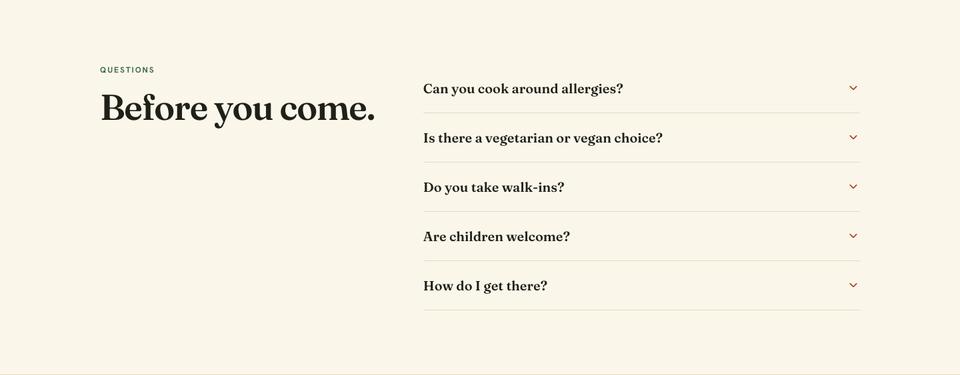
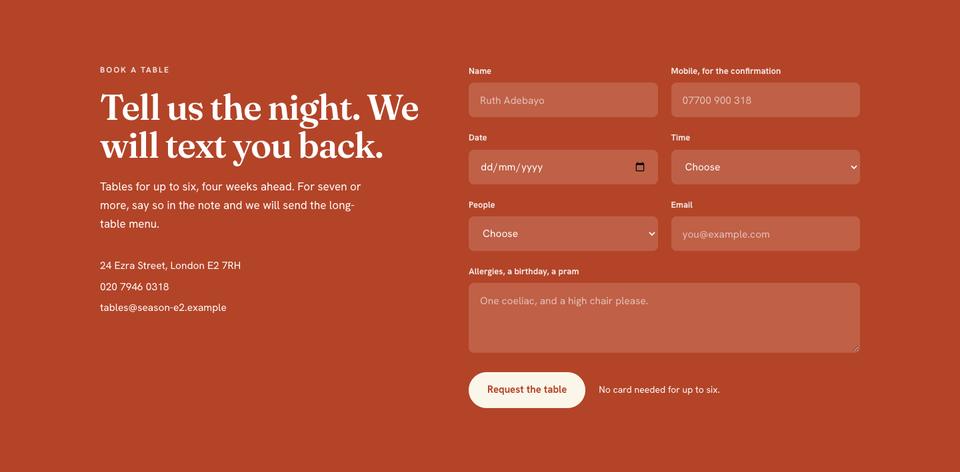
Booking explains the three steps and that nothing is paid until you eat. Groups offers a long-table set menu at a price per head. Reviews quote early guests with a rating, questions covers allergies, children and dogs, and the page ends on a booking form confirmed by text.
Styling it for your restaurant
Three schemes come with it: Tomato, Honey and Forest. Headings are Fraunces, a soft serif with character, or Newsreader for something more classic; body text is Hanken Grotesk or Plus Jakarta Sans. Eight photographs run through the demo, mostly food and the room, and your own will do more than any styling.
Update the menu and hours directly in the editor. If the menu changes weekly, select it and ask the AI to rewrite it from your notes; everything else on the page stays put.
Using your own menu and story
You can start from the template without spending credits. If you tick the copy option, the AI writes the text for your restaurant into the same layout for about 20 credits. Give it your address and covers, hours, a current menu with prices, where your produce comes from, group options, how booking is confirmed and any policies on allergies or deposits.
Keeping a seasonal menu current
The page is only as good as its menu, so decide who updates it and when. If the menu changes weekly, a single person should replace dishes and prices on the same day the kitchen writes them, and the “written on” date should change with it. Short dish descriptions work best: the main ingredient, where it came from, and one detail about how it is cooked.
The growers section needs names, locations and what each supplier sends, with permission to mention them. If you have a figure for how much of your produce spend goes to local farms, publish it for a named month. The opening hours block is read more than any other part of the page, so check it against your booking system and update it for holidays. Eight photographs carry the layout, which should include the room, the counter, a few dishes at natural light and the terrace.
Cafes, bakeries and farm-to-table kitchens
A cafe can replace the dinner menu with breakfast and lunch, and turn the group table into catering or a private hire option. Bakeries usually lead with the daily bake and collection times, and swap the table booking for pre-orders. Farm-to-table restaurants linked to a single farm can expand the growers section into the farm’s story, with photographs from the fields and the season the menu is following.
When another template fits better
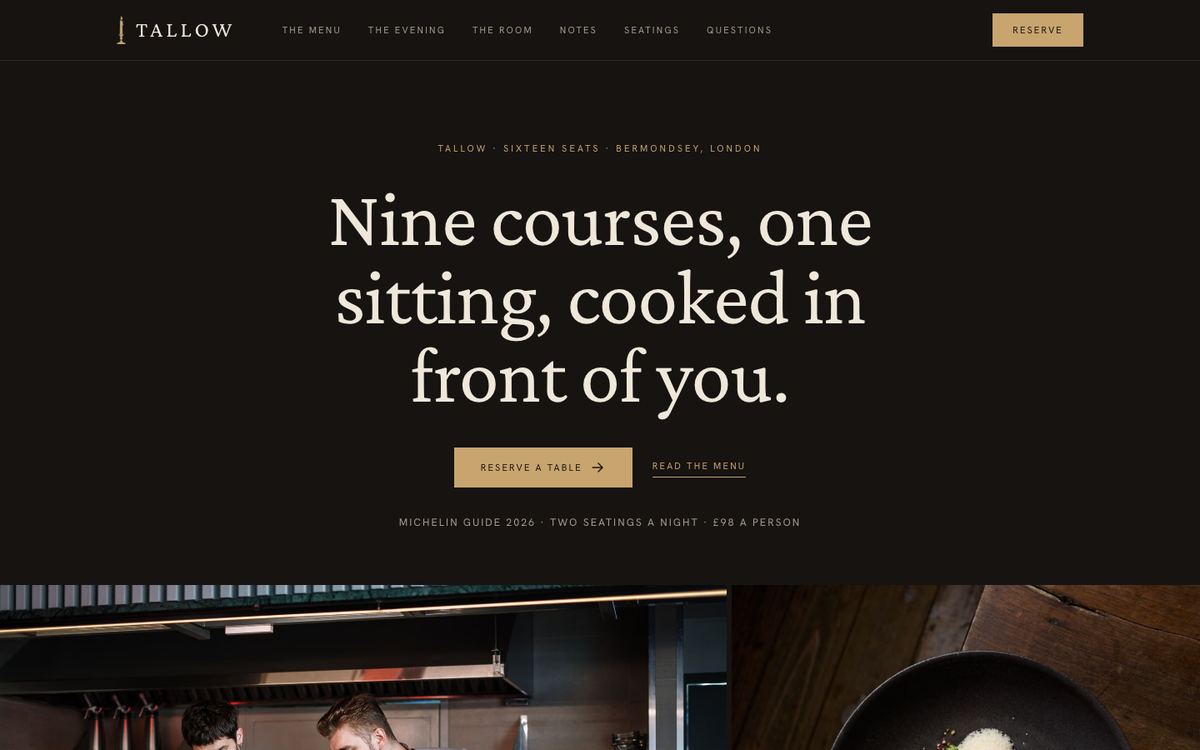
Seasonal Kitchen is relaxed and everyday. A tasting-menu restaurant or chef’s counter with fixed sittings and a darker, more formal mood belongs on Chef’s Table. If you roast coffee or sell produce online, Coffee Roastery and Grocer Weekend Offers handle ordering. For a hotel with a restaurant, Boutique Resort Direct leads with rooms and keeps dining as a section.
See both restaurant layouts on the restaurant templates page.
Before you publish
- Replace the sample menu and prices with this week’s real ones.
- Photograph your own dishes and room; stock food photos are easy to spot.
- Check opening hours, including bank holidays.
- Make the allergy answer match what the kitchen can actually promise.