For restaurants where the menu is the evening
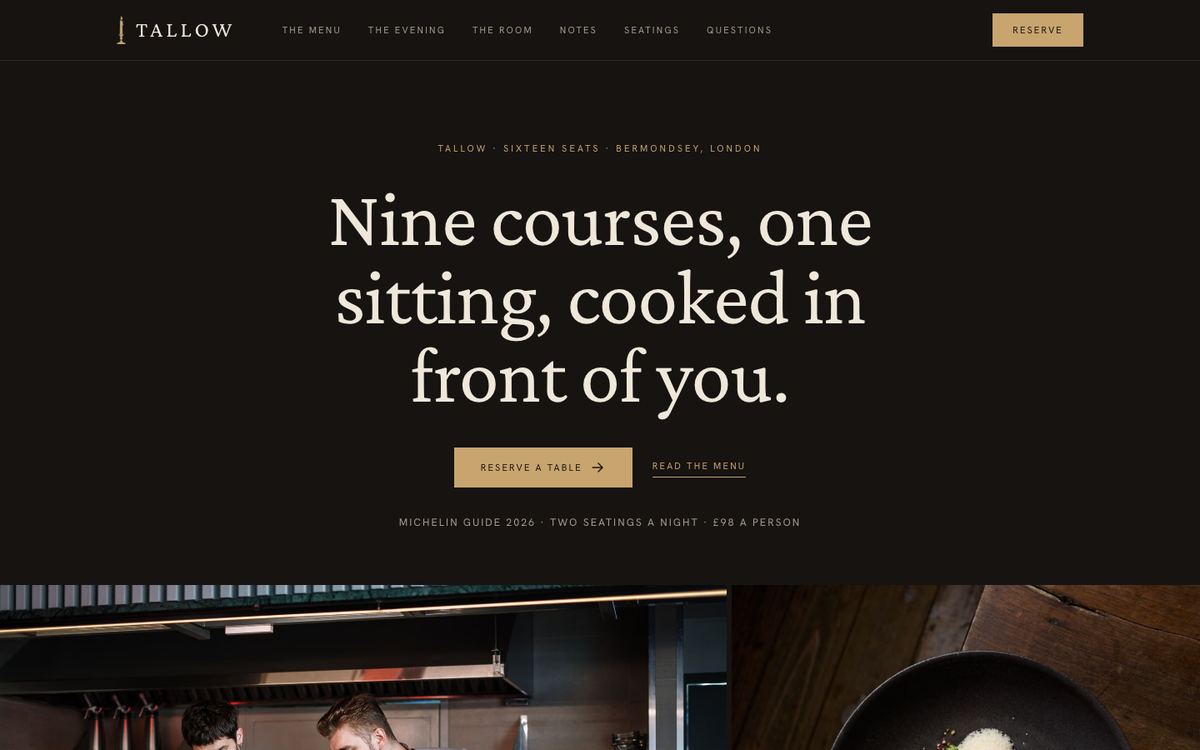
At a tasting-menu restaurant, guests are booking an evening rather than a table. Chef’s Table sets that mood before they arrive: a dark room, candlelight and the menu set as type in the middle of the page. It is centred, serif and quiet, and it converts on a table request with a date and a number of guests.
It suits tasting-menu restaurants, chef’s counters, wine bars and private dining rooms with one sitting and one price. Choose it when the menu itself is the page’s best content.
How the page makes someone book
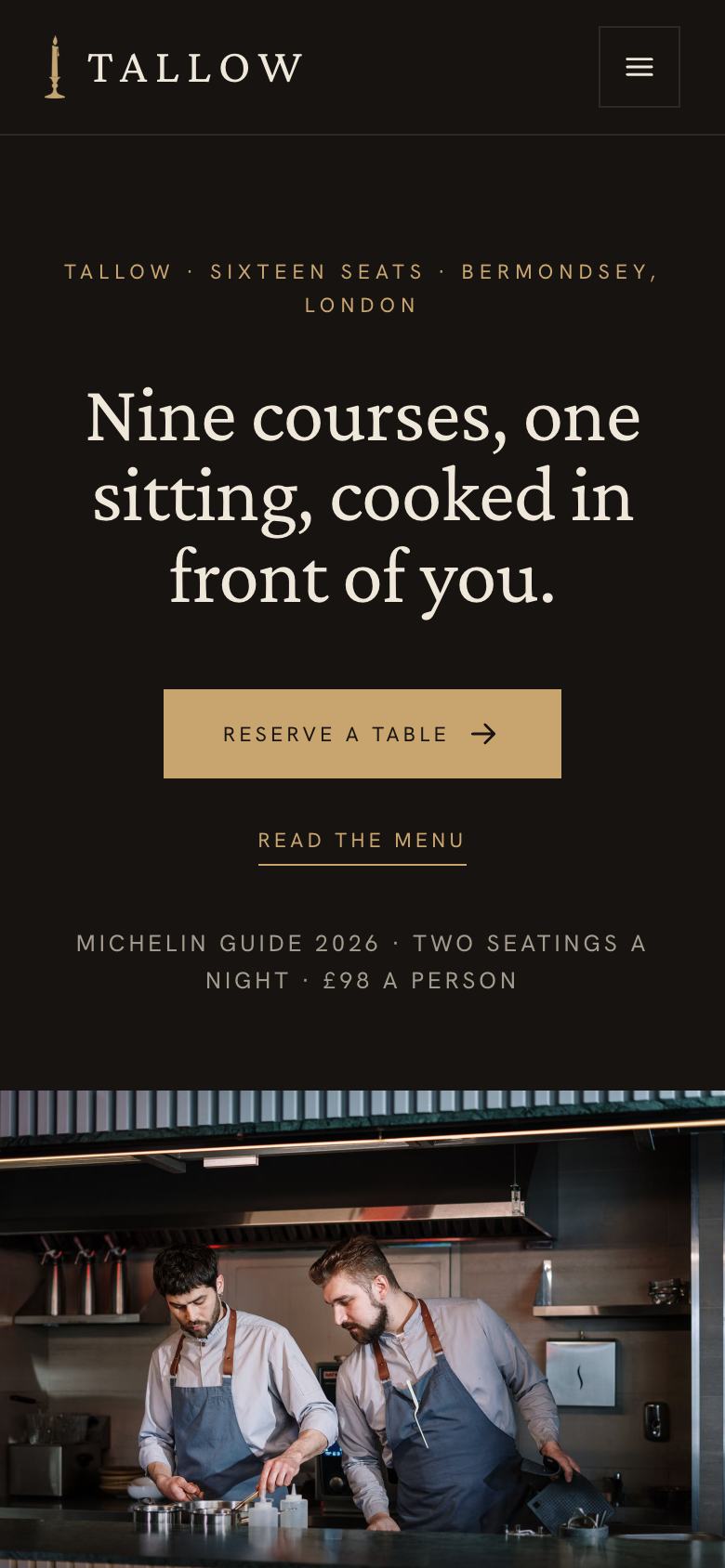
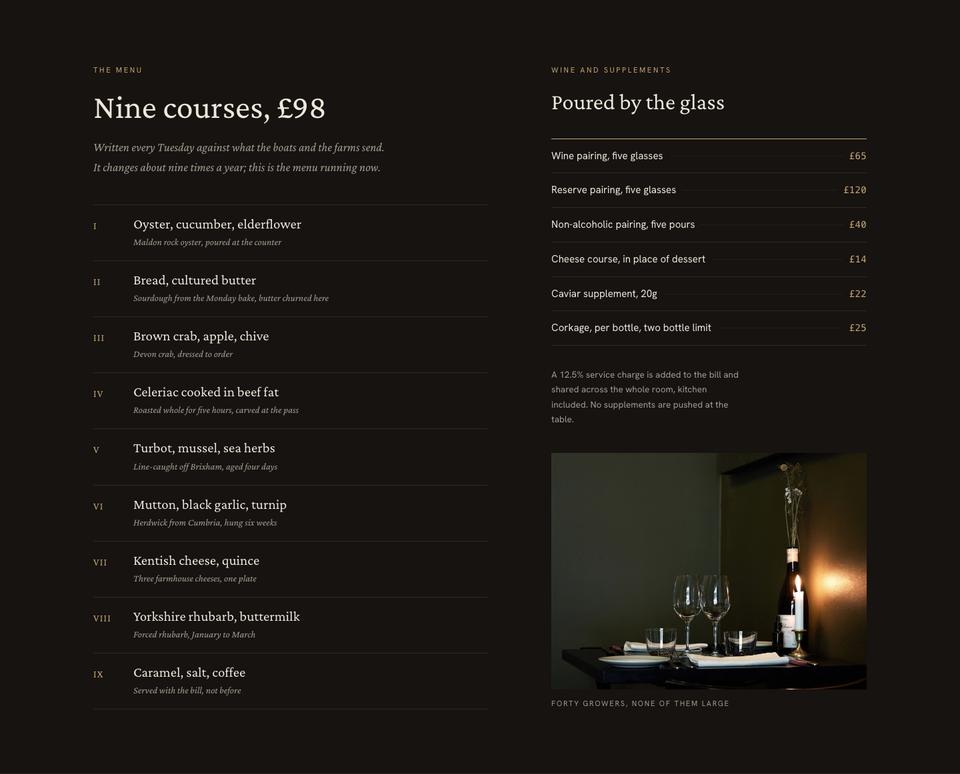
The hero describes the experience in one line, “Nine courses, one sitting, cooked in front of you”, with the name, number of seats, area and any guide recognition. The menu lists every course in roman numerals with its price at the top and a note on how often it changes.
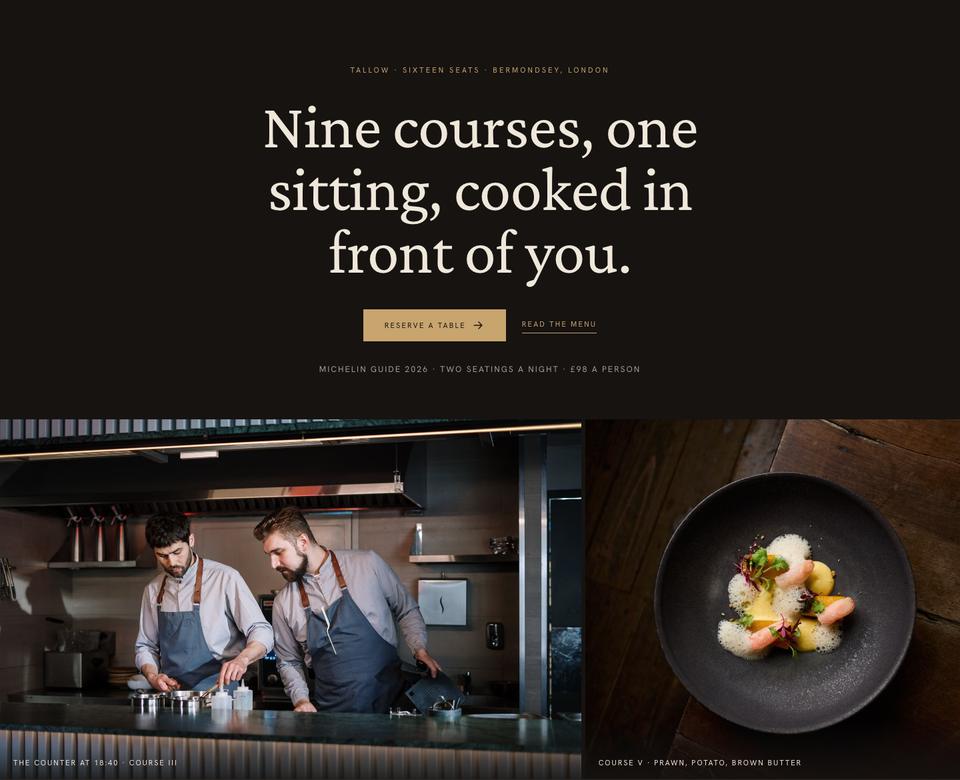
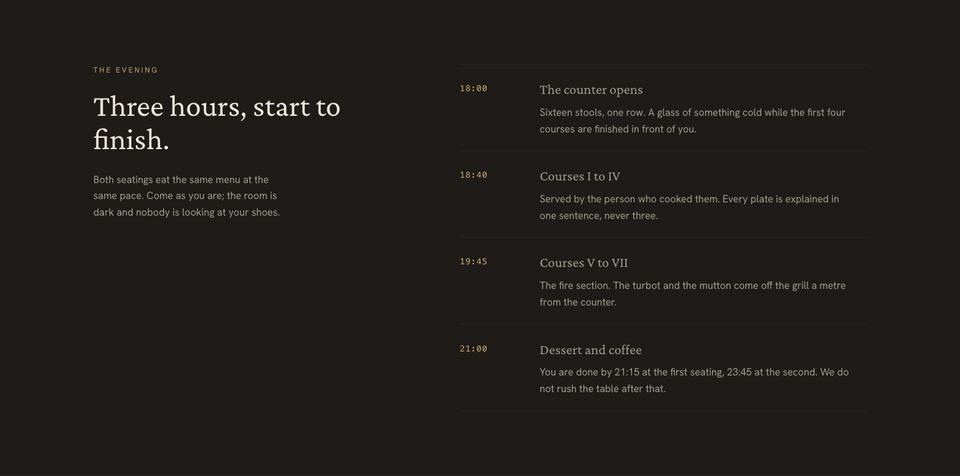
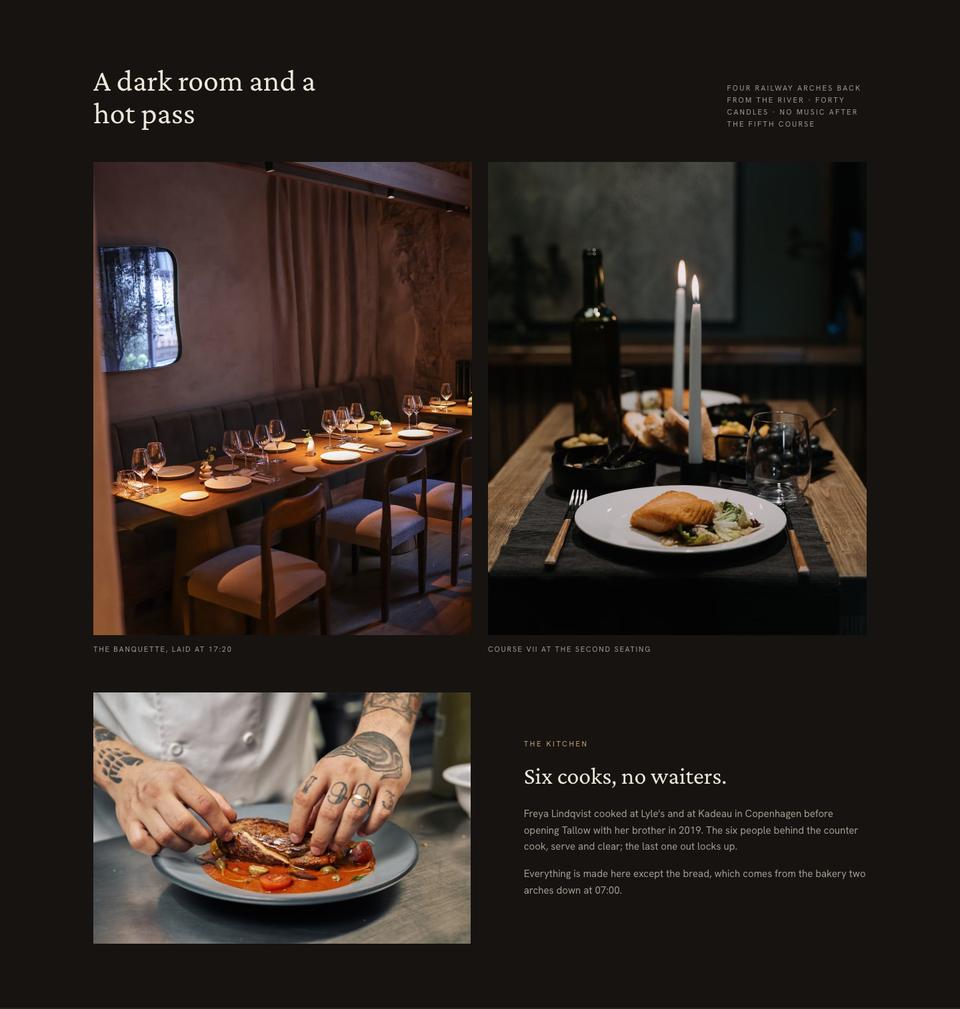
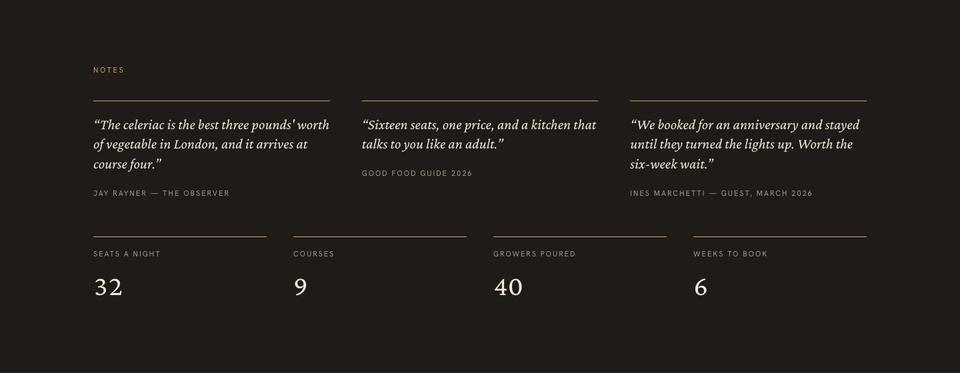
The evening sets out three hours from arrival to the last course, including what to wear. The room describes the space in a sentence of details, candles and arches and the pass, with photographs taken before service. Notes quotes critics and guests.
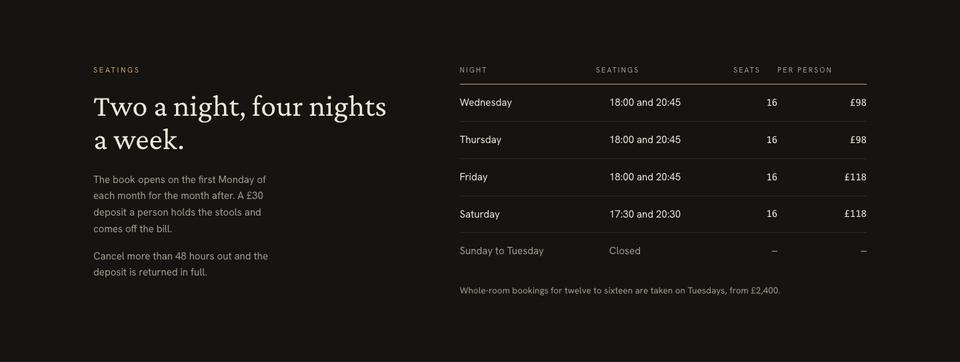
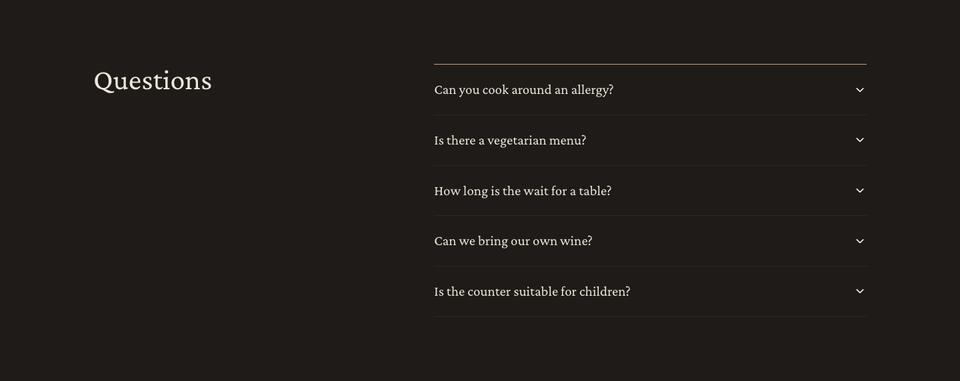
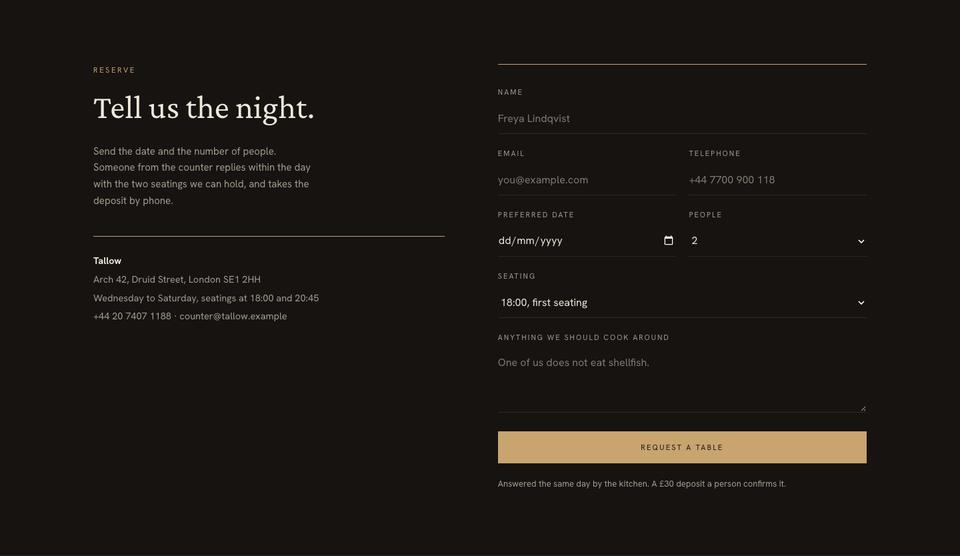
Seatings explains when the book opens, how many sittings run and the deposit. Questions answers allergies, drinks pairings and late arrivals, and the page closes with reserve, a request form answered within the day.
Styling it for your room
Four schemes sit on a dark ground: Brass, Copper, Bone and Absinthe. Headings can be Crimson Pro, Newsreader or Prata. Six photographs are used, low-light shots of plates and the room; your own photography is essential for this mood.
Menu courses, the evening timeline and seating details are editable in place. When the menu changes, select it and ask the AI to set your new courses in the same style.
Writing it for your restaurant
You can start from the template for free, or let the AI write your copy into it for about 20 credits. Include the number of seats and location, the current menu with price, how the evening runs, the room, press or guide mentions, seatings and booking rules, deposit policy and allergy approach.
What the kitchen needs to hand over
A tasting-menu page is built from details only the kitchen and front of house know, so collect them before editing. Get the current menu in the order it is served, each course named the way you describe it at the table, with the price of the menu, any supplements and the drinks pairing. Note how often the menu changes and on which day, so the page can say so honestly.
The evening section needs a real timeline: when guests arrive, when service starts, how long the courses take, when the last course lands and when the room closes. The seatings section must match your booking rules, including when the book opens, deposit amounts, cancellation terms and group sizes. For the notes section, collect short quotes from critics or guides you are allowed to use, with the publication named. Six photographs carry the page, and low light is hard to shoot well, so it is worth hiring a photographer for one service to capture the room, the pass and a few courses as guests see them.
Wine bars, chef’s counters and private dining
A wine bar can replace courses with the current list by the glass and small plates, and change the booking request into a walk-in note with limited reservations. A chef’s counter inside a larger restaurant can keep the whole page but explain how to find the counter and how it differs from the main room. Private dining rooms usually replace seatings with minimum spends by day and a form asking for the date, guest count and occasion.
When another template fits better
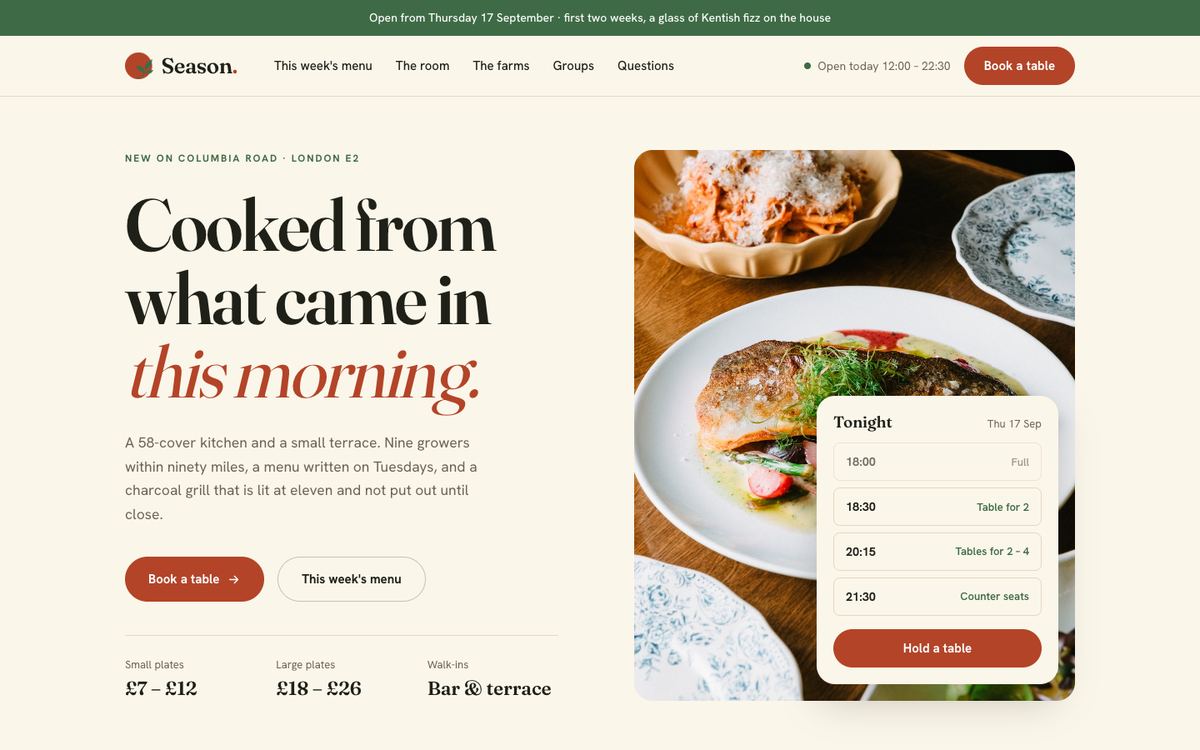
Chef’s Table is formal and dark. A neighbourhood restaurant, café or bakery with an à la carte menu will feel more at home on Seasonal Kitchen. A hotel with a restaurant should use Quiet Luxury Stay or Boutique Resort Direct, and a supper club or food event with tickets fits Event.
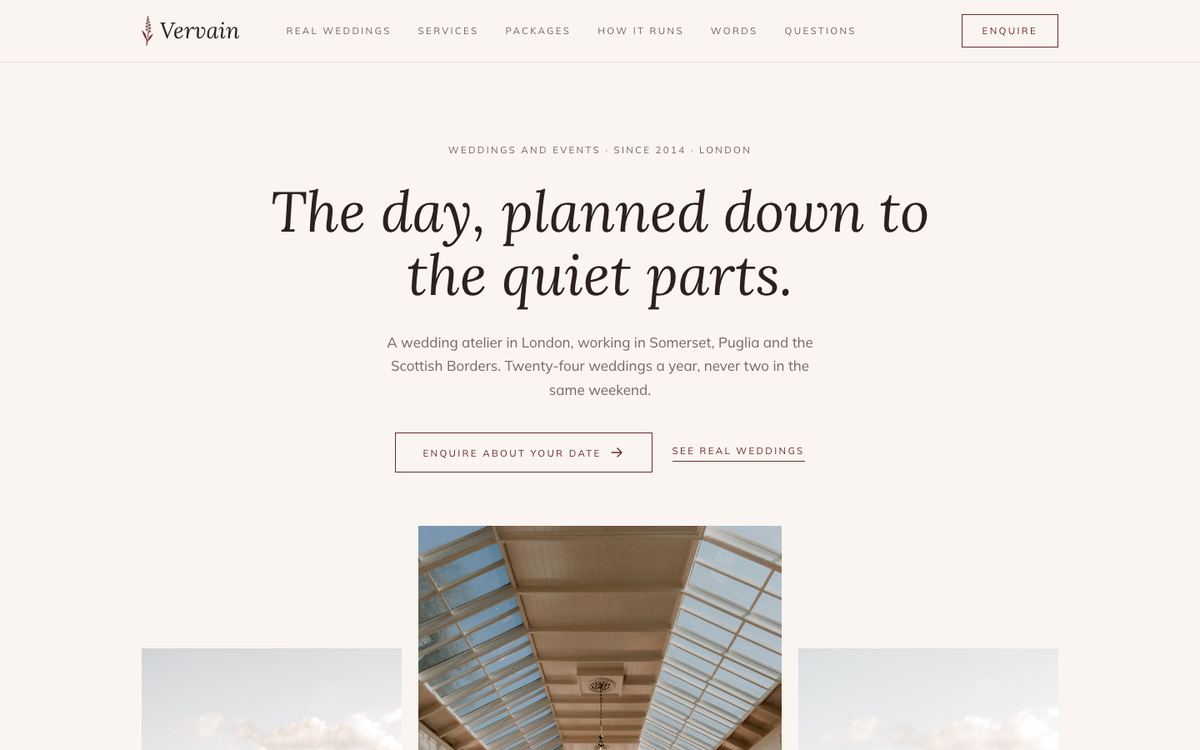
Both restaurant layouts are on the restaurant templates page.
Before you publish
- Update the menu and price to the one currently served.
- Only quote press you have the right to use.
- Check booking release dates and deposit terms.
- Ask about allergies in the reservation form.