For tools where work gets written down
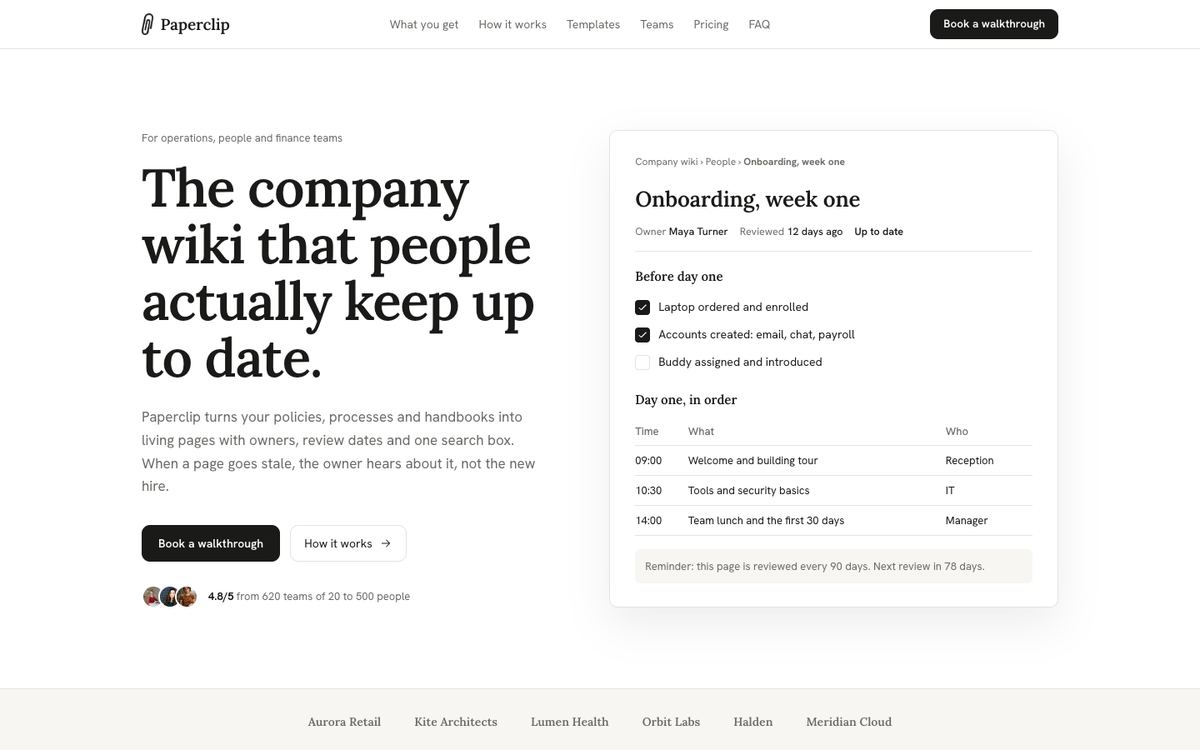
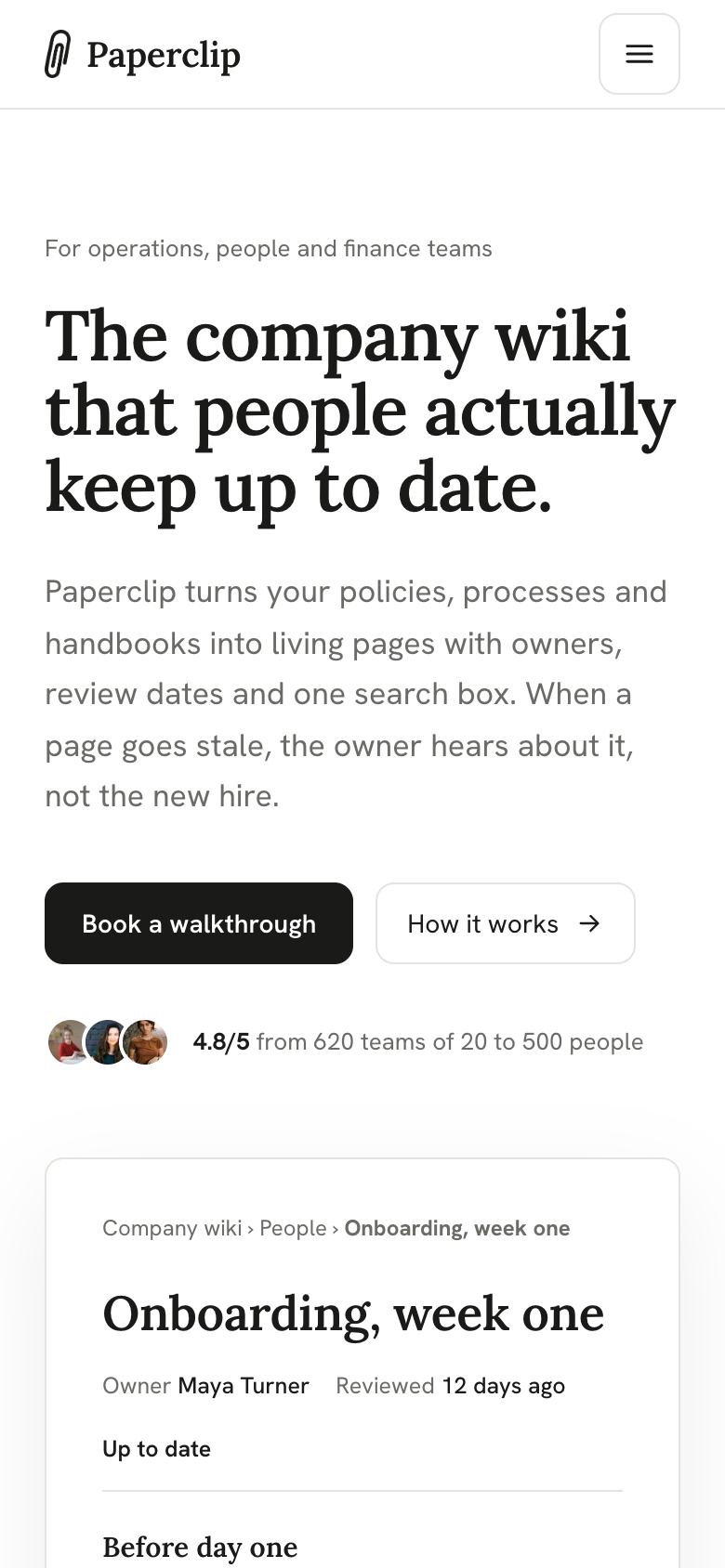
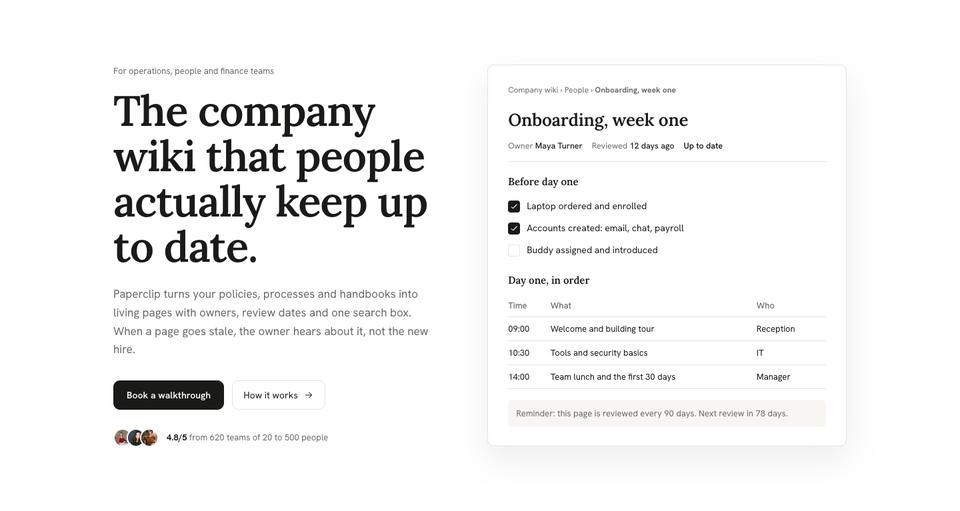
Documentation software has a credibility problem: every team has a wiki nobody maintains. Workspace Document sells the fix by showing it. The hero is the product’s own document drawn on the page, with a black button and a serif display face that feels like a well-kept handbook. The goal is a walkthrough that uses the buyer’s own material.
It suits workspace, documentation and knowledge-base products, project and process tools, internal wiki and handbook software, template marketplaces and productivity apps for small teams. Choose it when the product is a place where work is written down and kept current.
How the page gets a walkthrough booked
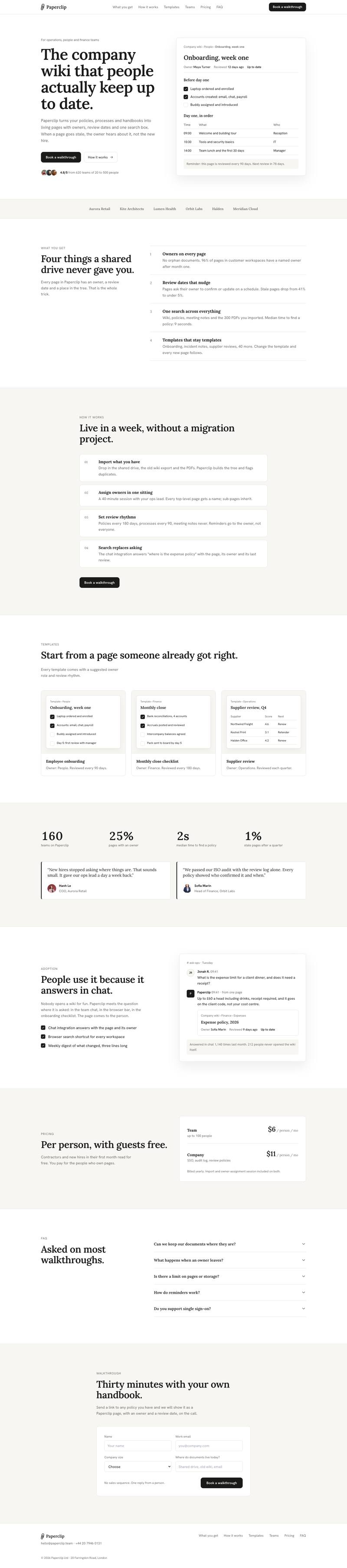
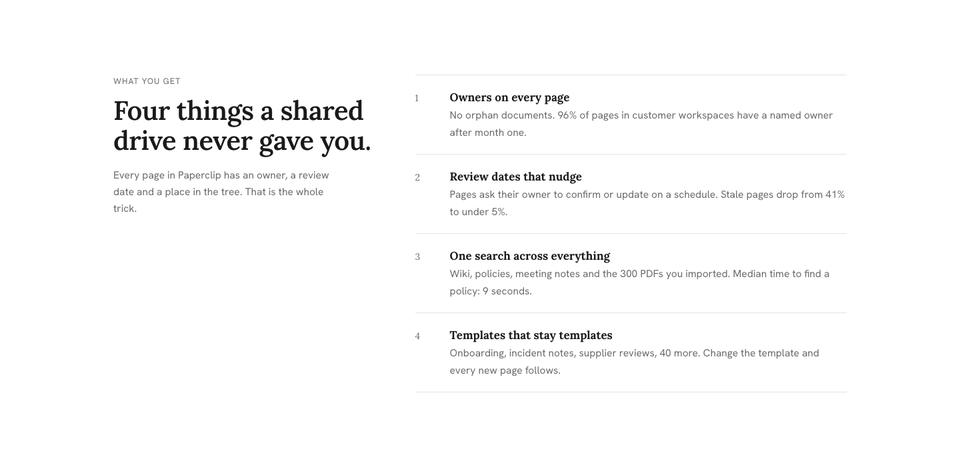
The hero names the frustration it solves, “The company wiki that people actually keep up to date”, and the teams it serves, beside a document with owners and review dates visible. What you get lists four things a shared drive never provided, and explains the core mechanism in a sentence.
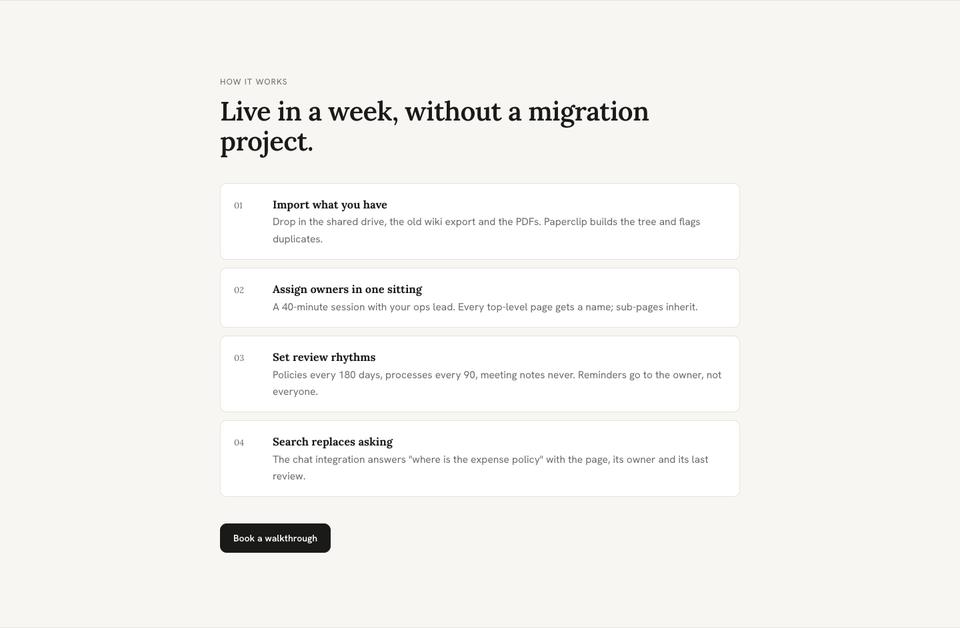
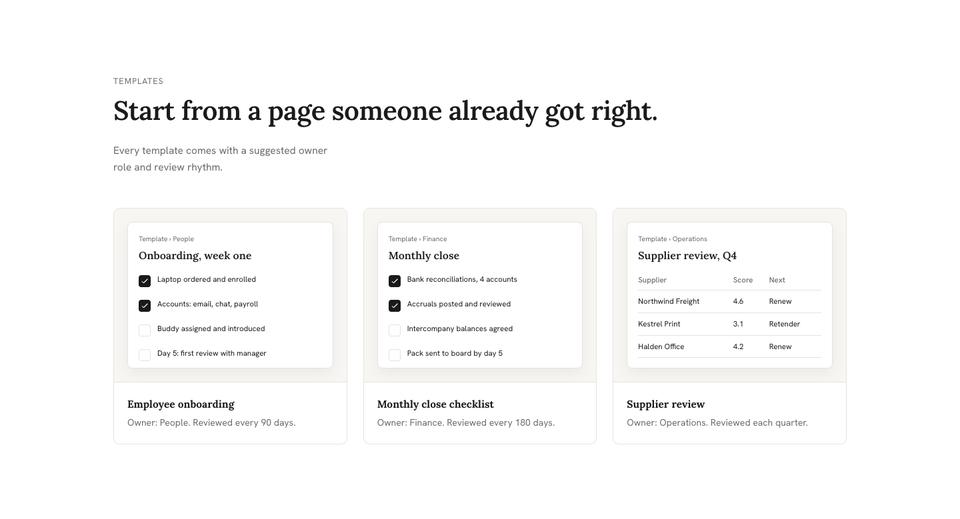
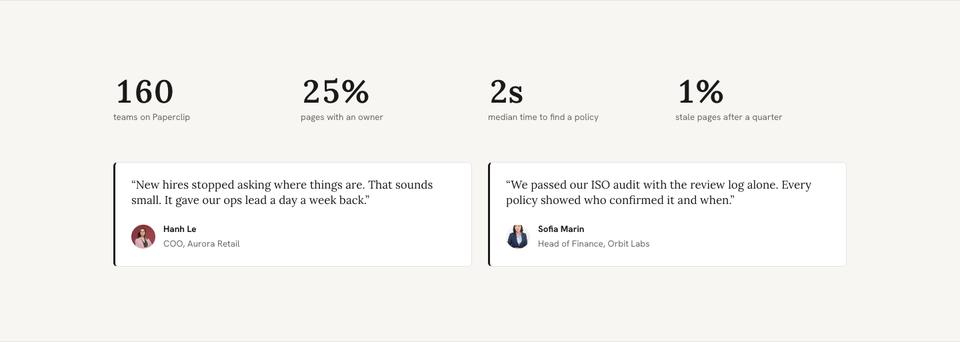
How it works promises a week to go live without a migration project, in three steps. Templates shows ready-made pages with suggested owners and review rhythms. A numbers band with a customer quote gives teams, share of pages with owners, time to find a policy and stale pages after a quarter.
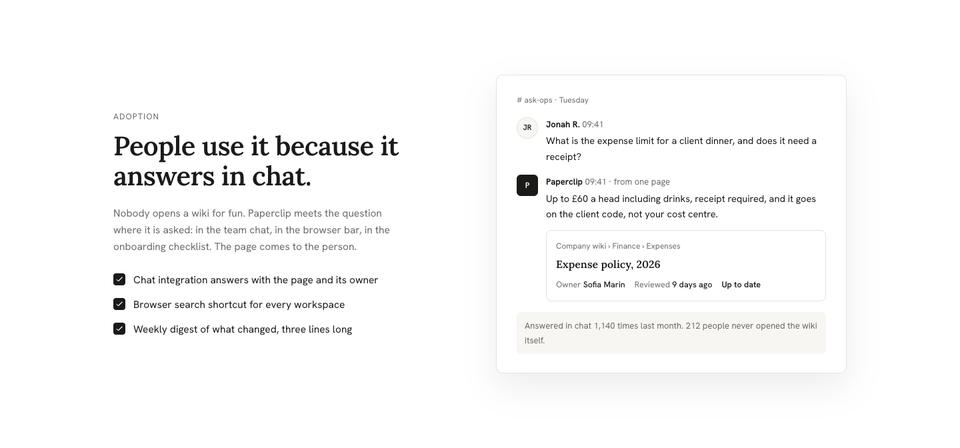
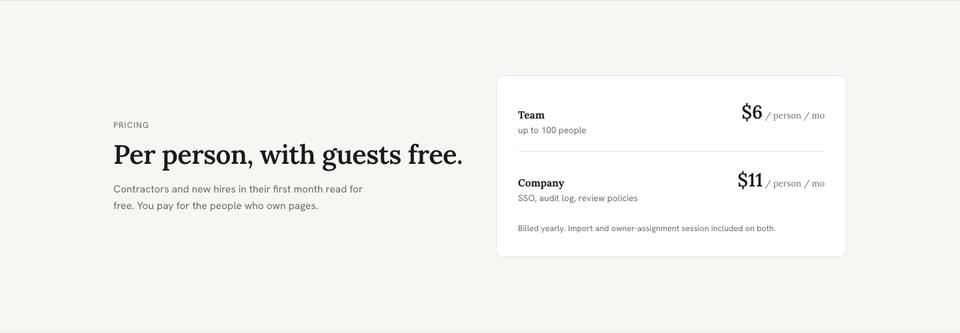
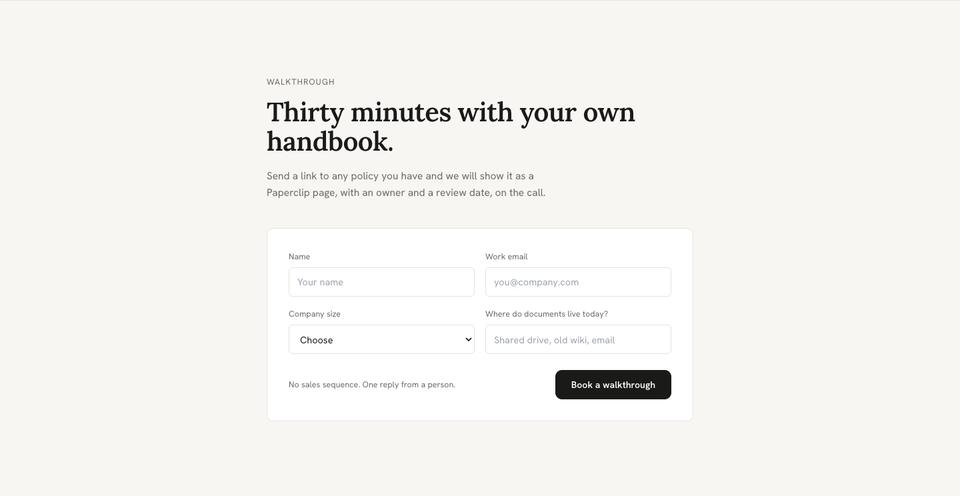
Adoption addresses the real reason wikis fail, that nobody opens them, by answering in chat and the browser. Pricing charges per page-owning person with guests free, questions covers keeping existing documents, and the page closes with a walkthrough form that turns one of the visitor’s policies into a page on the call.
Making it yours
Choose between Ink, Forest, Brick and Navy. Headings are Lora, Newsreader or Literata, over Hanken Grotesk, Manrope or Plus Jakarta Sans. Five photographs are used, as the drawn document carries the visual weight.
Edit the drawn document like any text, and select any section to ask the AI for a rewrite in your product’s terms.
Writing it for your product
Starting from the template costs nothing. If you tick the copy option, the AI writes your text into the layout for about 20 credits. Tell it who the product is for, the mechanism that keeps content current, how teams get started, templates you ship, adoption features, pricing and what a walkthrough shows.
Deciding what the drawn document shows
This template draws the product as a document, with a checklist and a table, rather than a screenshot. Before editing, choose one page that shows your product at its best, such as an onboarding checklist, a policy with an owner and review date, or a project brief. Keep the content realistic and specific to one team, since the drawn page is what a visitor remembers.
The templates section needs three or four starting points your customers actually use, each with the team it is for. Pull adoption figures from product data, such as the share of pages with owners or the median time to find an answer, and define each clearly. For pricing, state who pays and who is free, for example guests, contractors or read-only users. Five photographs are used, so most of the page is type and drawn interface, which keeps it fast.
Knowledge bases, project tools and template shops
A customer-facing knowledge base can change the audience from internal teams to support leaders, and show deflection rates in the numbers band. Project and process tools usually replace the document with a board or timeline drawn the same way. Handbook and internal-wiki products can lead with the import step. Template marketplaces can turn the templates section into the main content, with categories, prices and a preview of each page.
When another template fits better
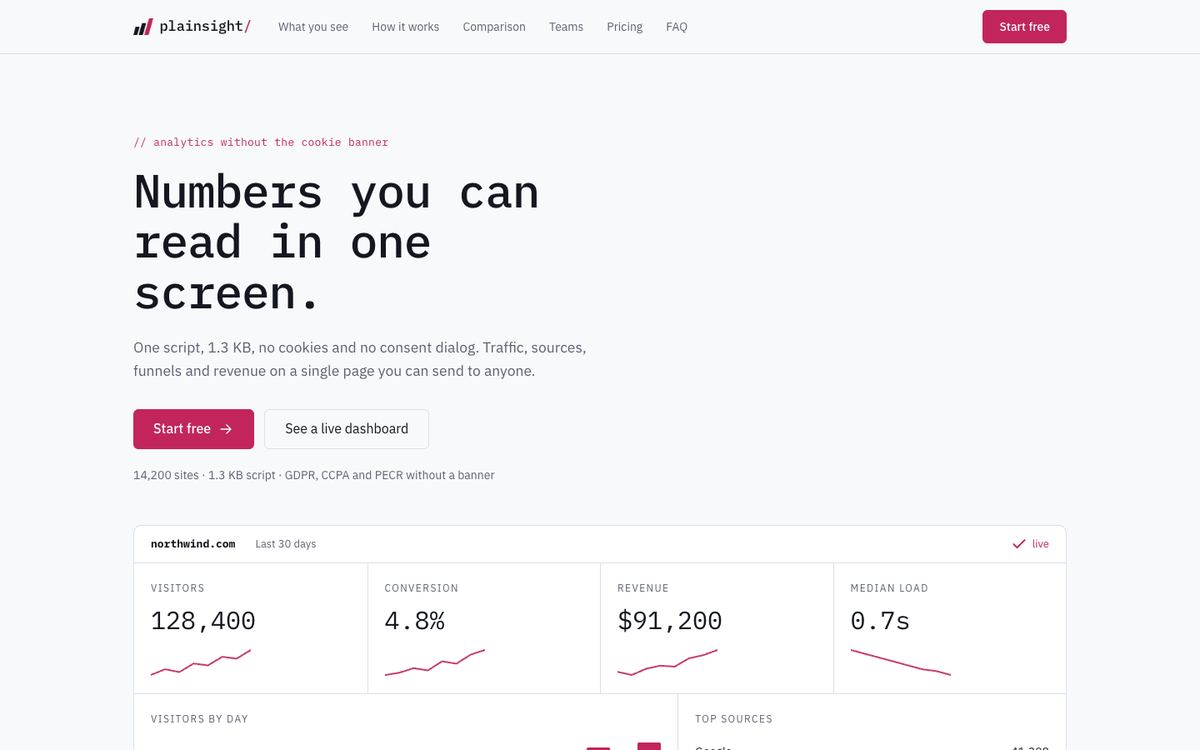
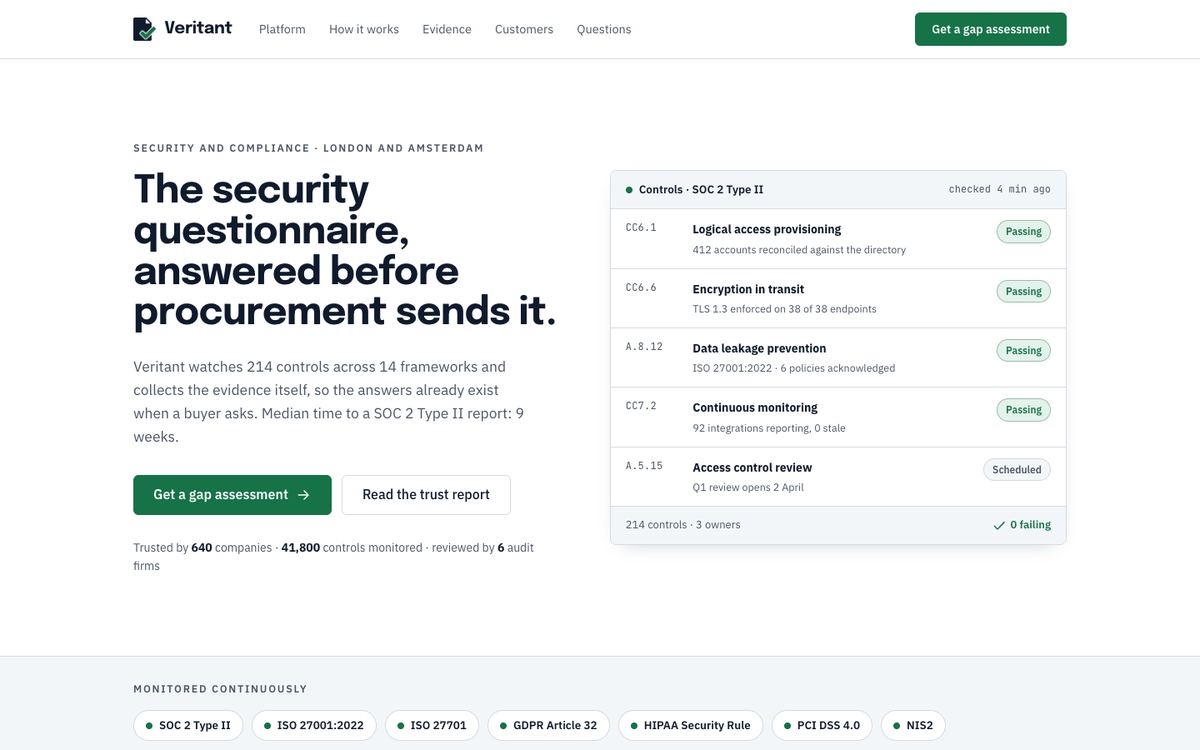
Workspace Document suits written, calm products. A tool sold on its interface and integrations fits SaaS Conversion, and a product for engineers belongs on Developer Tool. An AI knowledge assistant can use the transcript hero of AI Product, and a compliance or security product that also documents policy should look at Compliance Trust.
See all software layouts on the SaaS and software templates page.
Before you publish
- Replace the drawn document with a real page from your product.
- Check the adoption numbers and how they were measured.
- Confirm guest and seat rules in the pricing section.
- Ask for a link to one document in the walkthrough form.