For AI that earns its place in the sales team
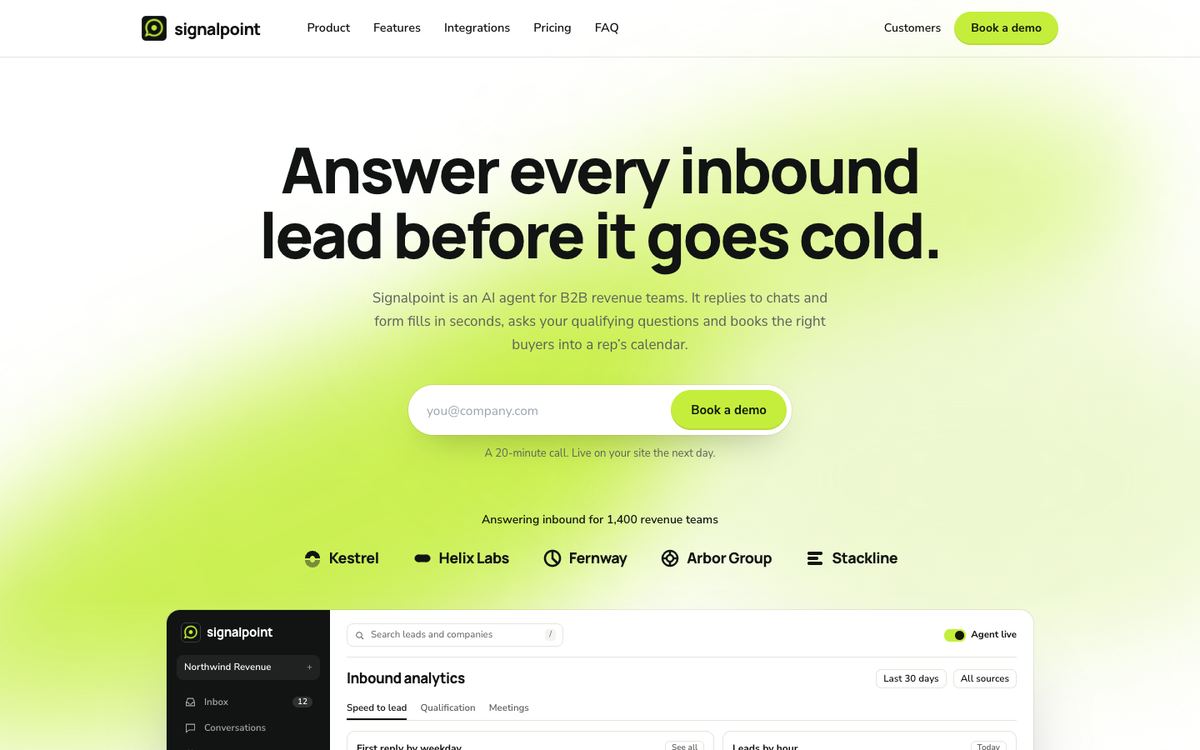
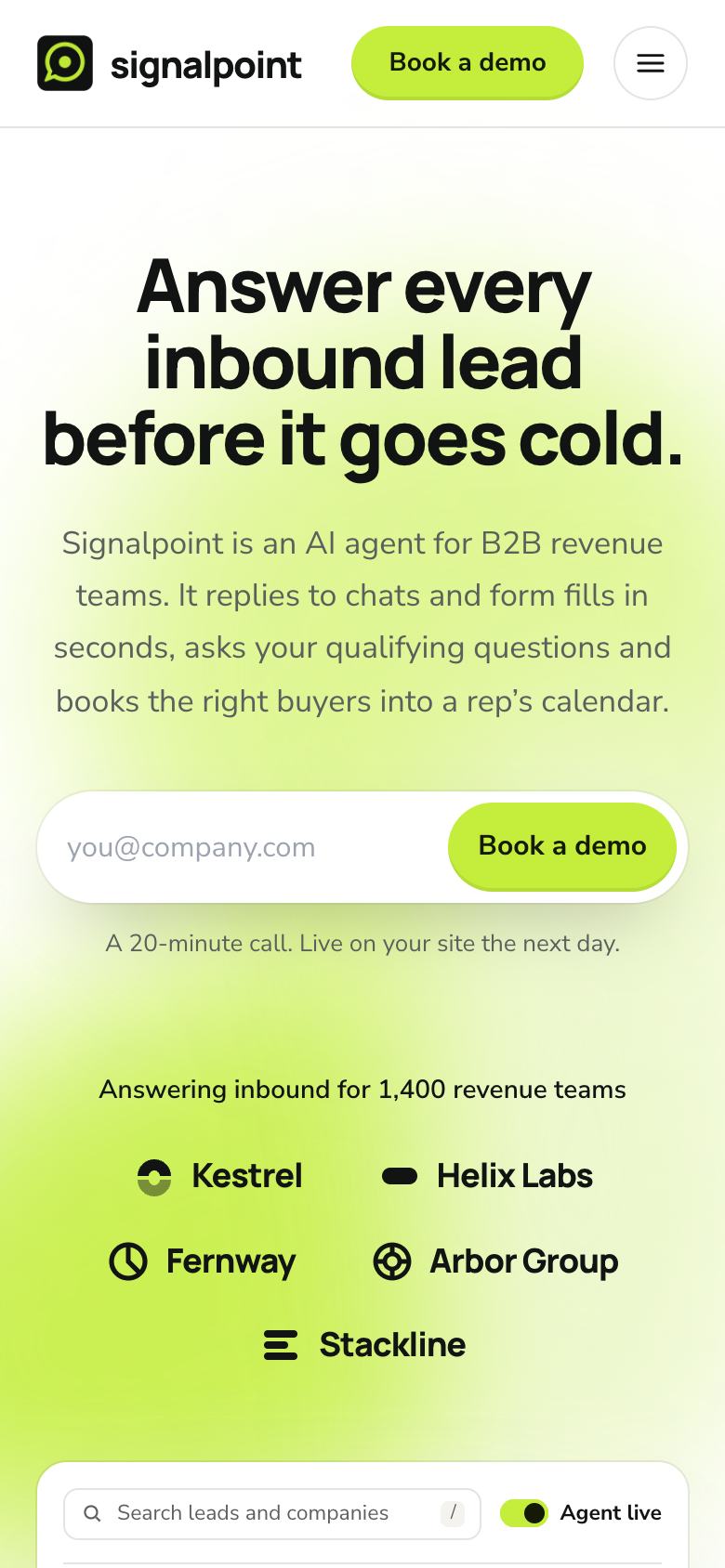
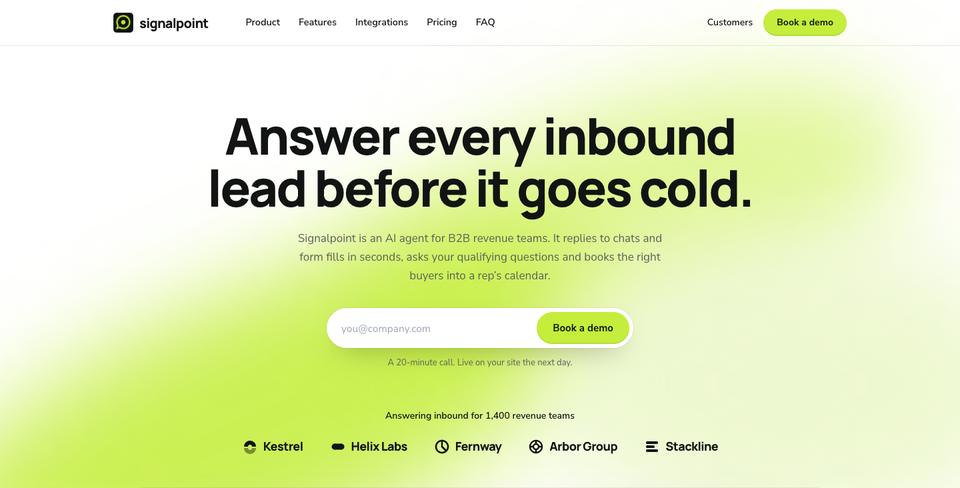
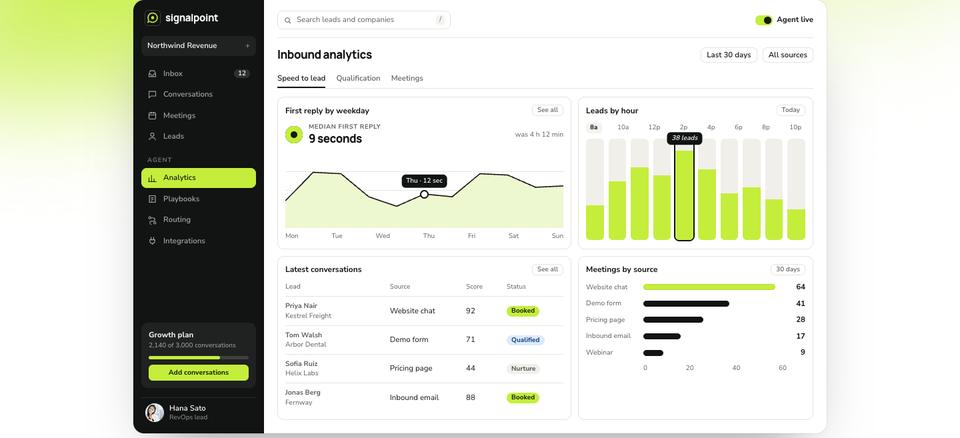
Revenue leaders are curious about AI agents and wary of them in equal measure. They want a clear promise, proof it works inside their existing tools, a price that scales sensibly and honesty about how leads experience it. AI Inbound Agent is bright and product-led: a centred promise with a pill email form in a soft lime glow and a drawn analytics console rising out of it.
It suits AI SDRs and inbound lead agents, website chat that qualifies and books meetings, conversation intelligence, lead routing and revenue analytics. Choose it when the product is AI sold on a demo.
How the page wins a demo
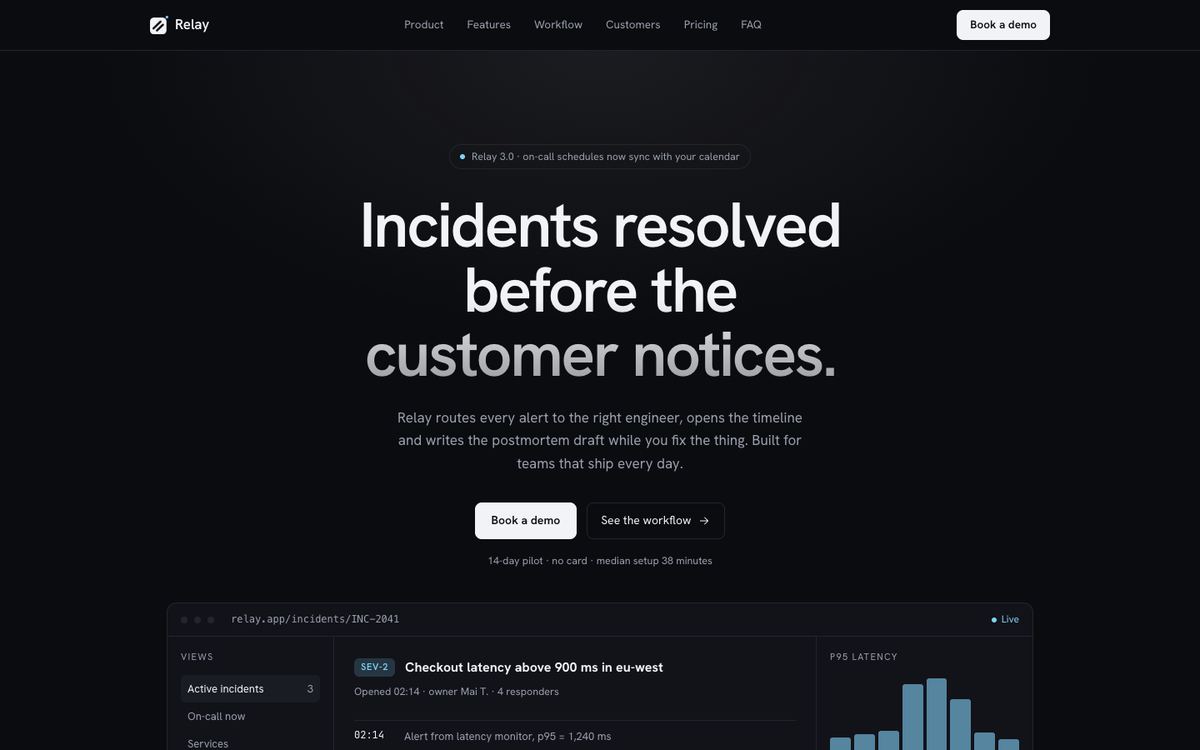
The hero names the cost of doing nothing, “Answer every inbound lead before it goes cold”, with a work email field. The product console rises below it, showing conversations, meetings and usage in a realistic interface.
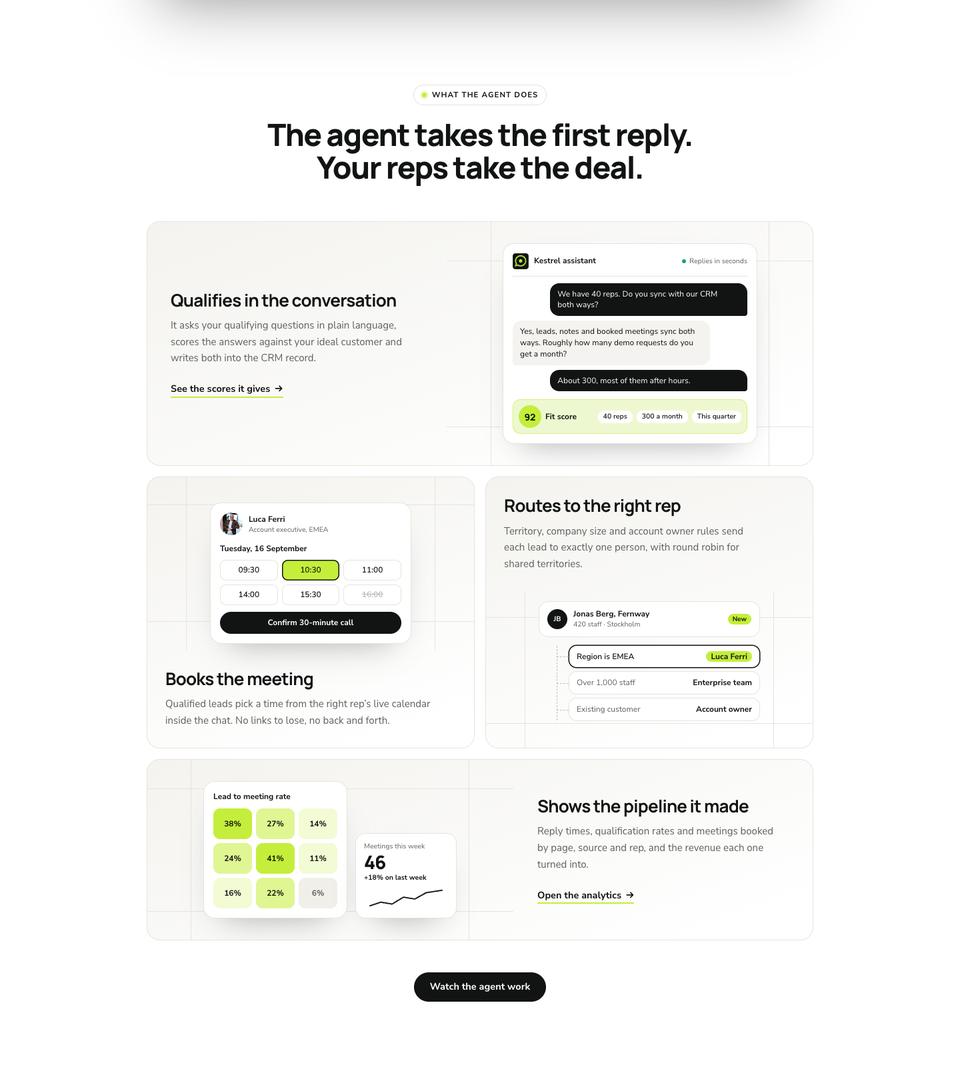
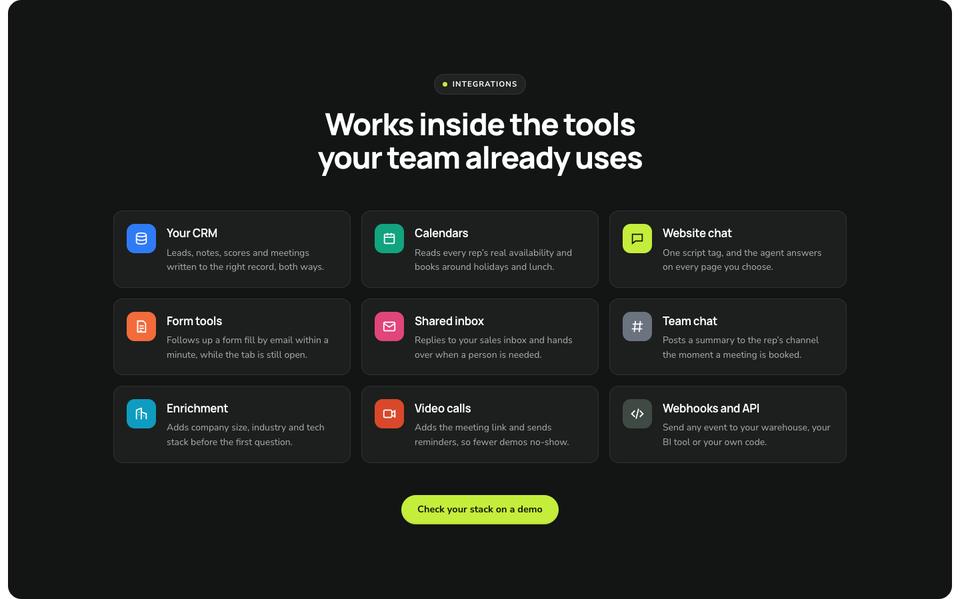
What the agent does divides the work clearly: the agent takes the first reply, your reps take the deal. It then lists how it qualifies, books and hands over. Integrations is a dark panel explaining how the agent writes to the CRM, calendar and chat tools teams already use.
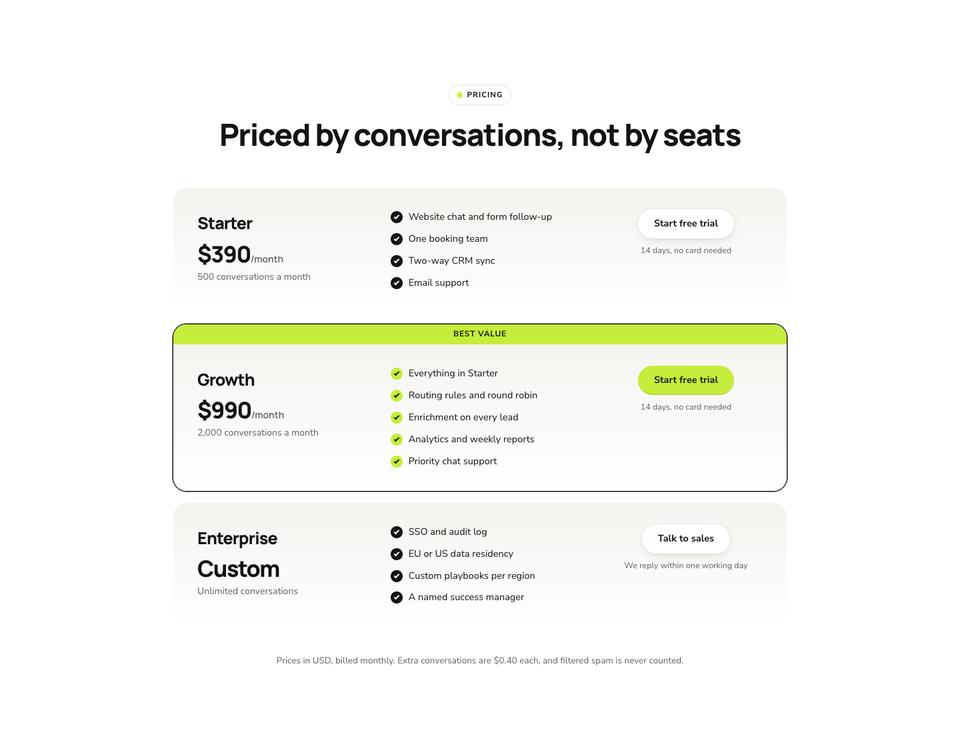
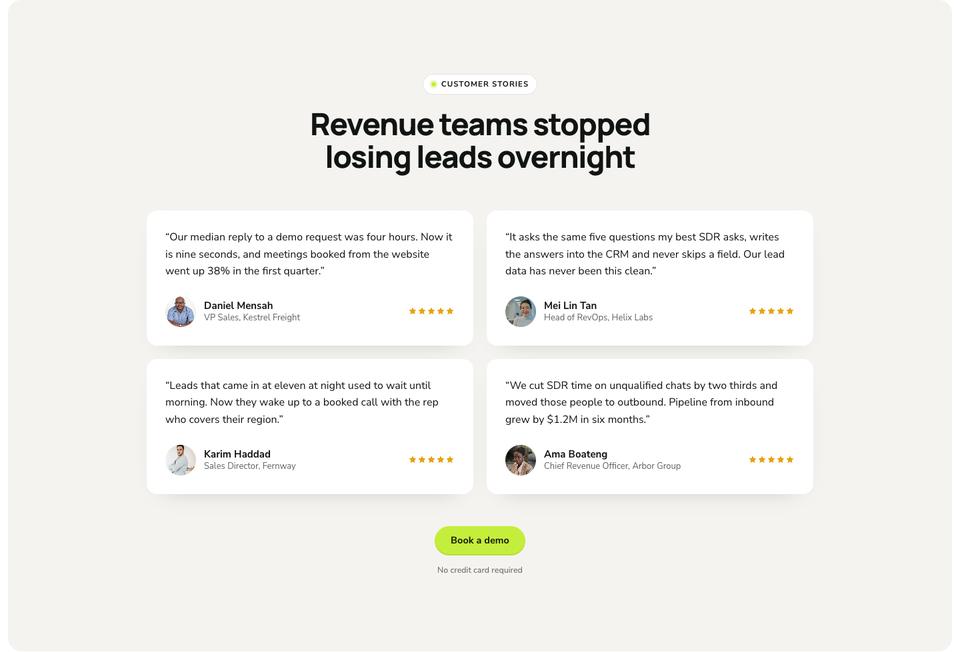
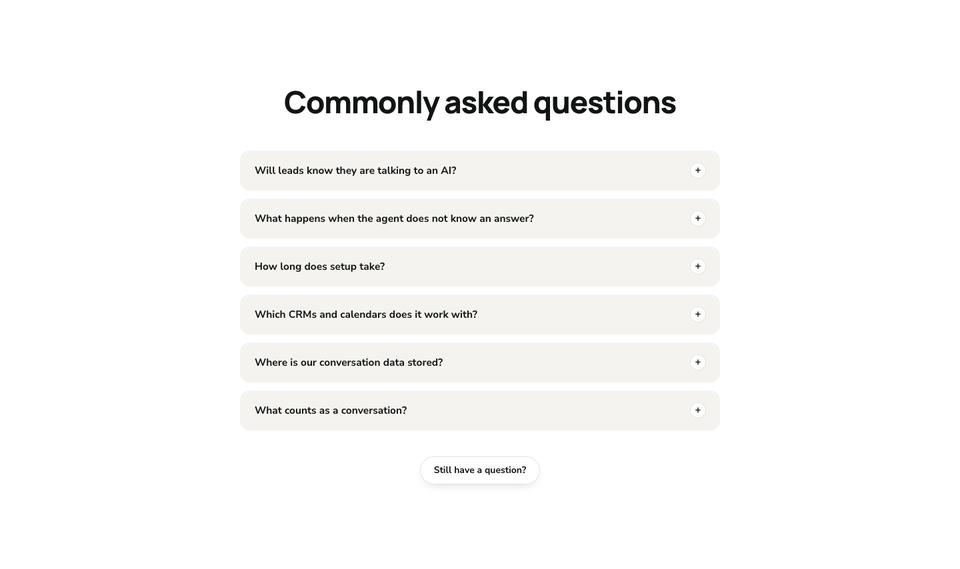
Pricing is based on conversations rather than seats, set out in wide plan rows. Customer stories give before-and-after reply times and meetings booked. Questions answers whether leads know they are talking to AI, and a final call to action promises going live on the site in a day.
The split between agent and rep is the most important idea on the page. It reassures sales leaders that the product protects their team’s deals rather than replacing the team.
Adjusting the look
Four schemes are included: Lime, Tangerine, Aqua and Sky. Headings can be Manrope, Epilogue or Plus Jakarta Sans. Six images are used, mostly logos and customer photos, with the drawn console as the main visual.
The console, feature list and plans are editable. Select the questions section and ask the AI to rewrite the answers to match your product’s behaviour.
Writing it for your product
You can start from the template for free, or tick “Write the text for my business” to have the AI write your copy for about 20 credits, keeping the layout. Include what the agent handles and hands over, integrations, how it is set up, pricing, customer results and honest answers about AI disclosure and data.
Showing the agent’s work honestly
Revenue leaders buying an AI agent want to see what it says to a lead and what it does next, so this template draws an analytics console and describes the agent’s actions. Build the console from one realistic company, with conversation counts, meetings booked, qualification rates and routing, and keep the numbers consistent with the plan limits shown in pricing.
The features section should describe each job the agent takes on, such as asking qualifying questions, scoring, booking on a rep’s calendar and handing over with notes, and where a human takes control. Write down which questions it asks and when it escalates, because buyers worry about an AI saying the wrong thing to a valuable prospect. If you publish performance figures, like response time or meetings booked per month, define them and the customer base they cover.
The integrations panel needs the CRMs, calendars, chat tools and data sources you support, and whether sync is two-way. Pricing by conversations should explain what counts as a conversation, what happens at the limit and which features belong to each plan. The FAQ should answer data use for model training, languages supported and how the agent is configured. Six photographs are used, mostly for the team and customer quotes.
Include a short example exchange, a few lines between a prospect and the agent ending in a booked meeting. Seeing the tone of the replies does more to reassure a sales leader than any feature description.
Website chat, conversation intelligence and support agents
A website chat product can put the chat widget in the hero and show qualification happening live. Conversation intelligence tools usually replace the agent with call summaries, talk ratios and deal risks. Lead routing and scheduling software can draw the routing rules and round-robin logic. AI support or success agents can show resolved tickets and handovers, with pricing by resolution.
When another template fits better
AI Inbound Agent is bright and revenue-focused. A calm AI assistant for customer service that shows transcripts fits AI Product. Marketing testing tools belong on Marketing Tool SaaS, B2B proposal software on Warm B2B Workflow, and general B2B software on SaaS Conversion.
See every software layout on the SaaS and software templates page.
Before you publish
- Check AI disclosure and data-handling answers against your product.
- Replace the drawn console with your real interface.
- Get permission for customer stories and metrics.
- Connect the email form to your demo booking.