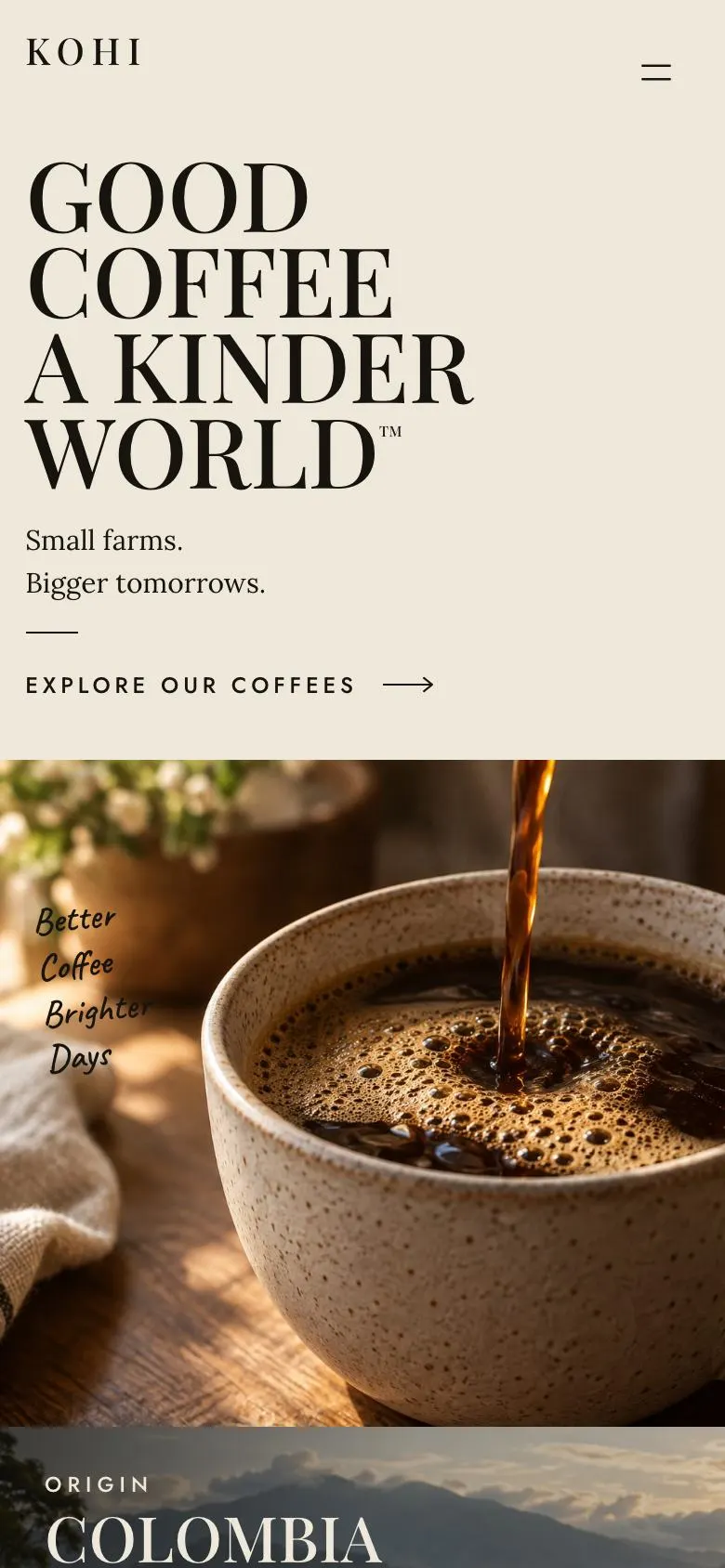
A subscription page for people who buy with care
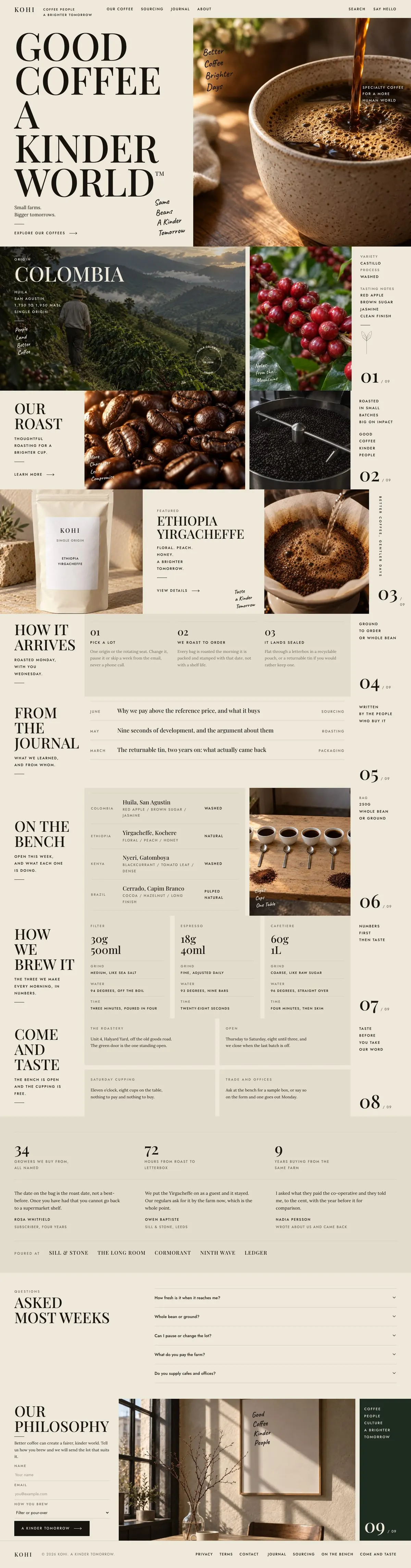
Someone searching for a recurring box subscription needs a page that explains more than the delivery rhythm. They need to understand what is in the box, why the maker chose it and whether it suits their own tastes or routine. This design does that through product, origin and process rather than a generic sales page.
It is built around the approach used by makers who sell one thing well: a coffee roaster, tea house, chocolate maker, olive oil producer, honey producer or small distillery. The page gives each part of the offer room to make its case. Sourcing can sit beside product detail. Advice can sit beside an invitation to get in touch.
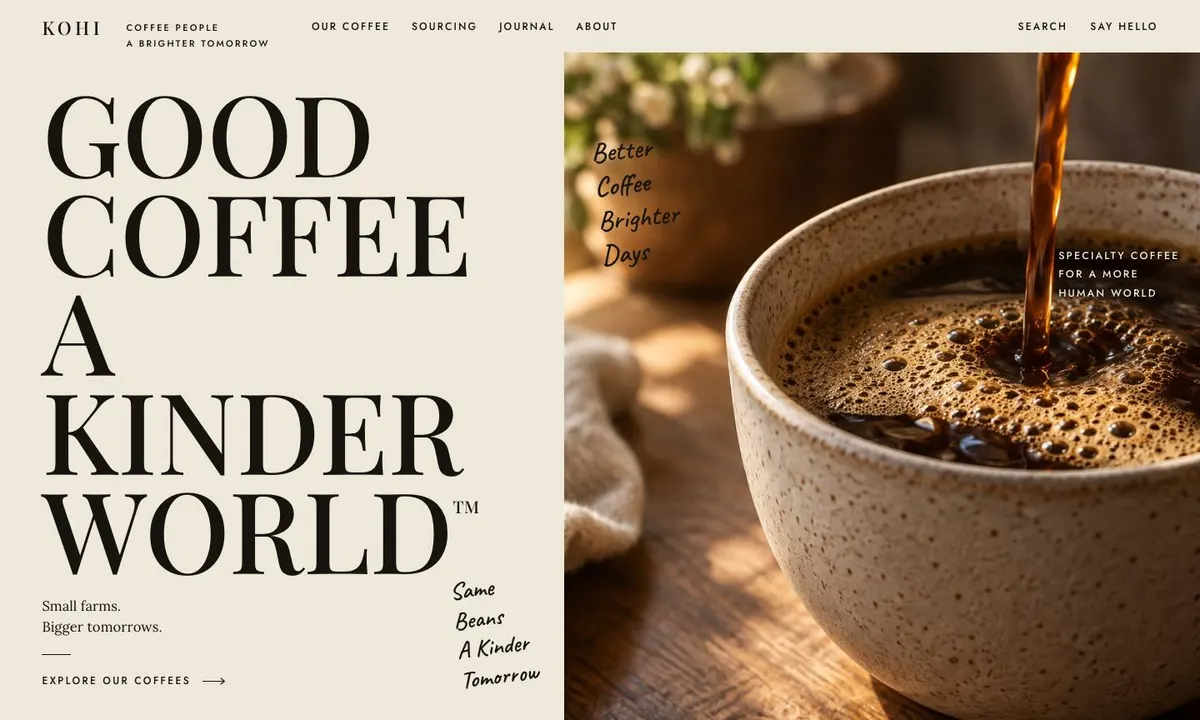
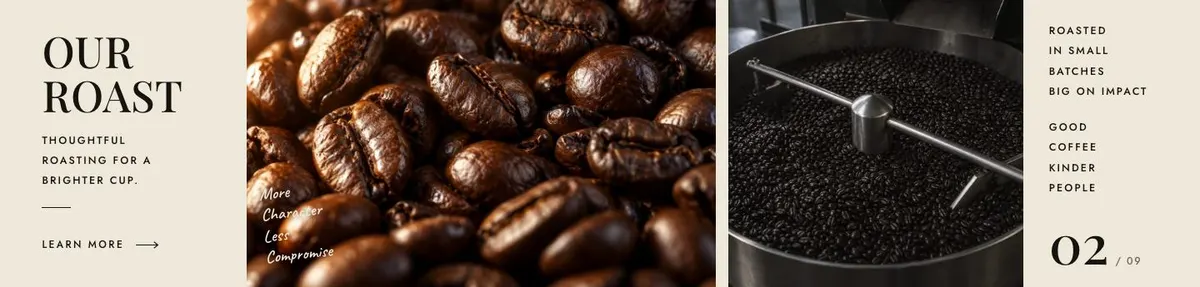
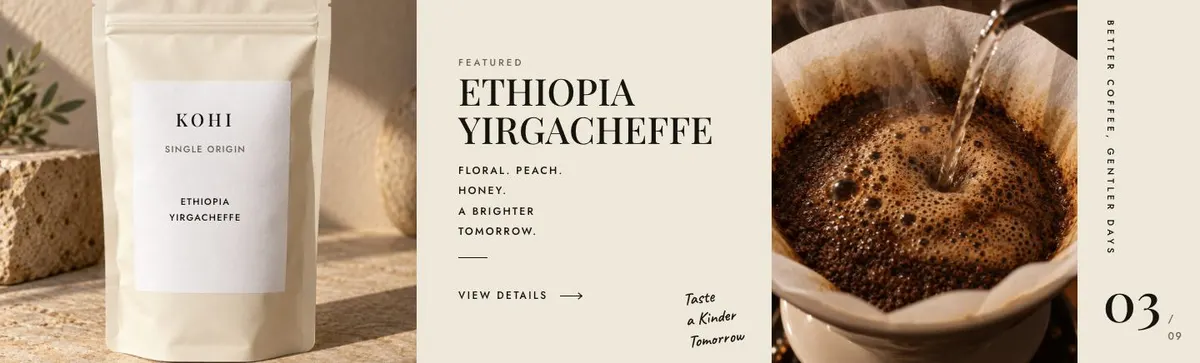
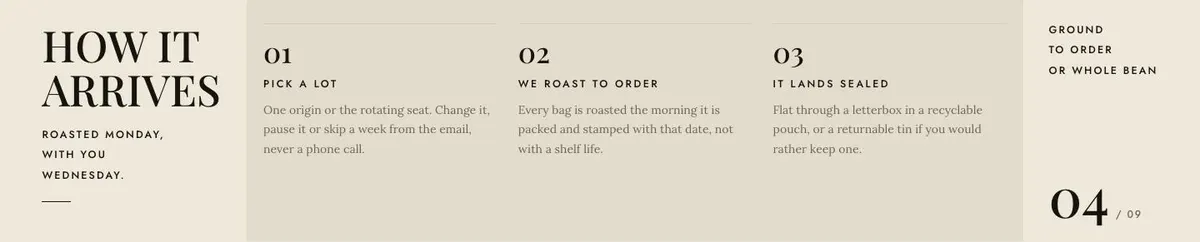
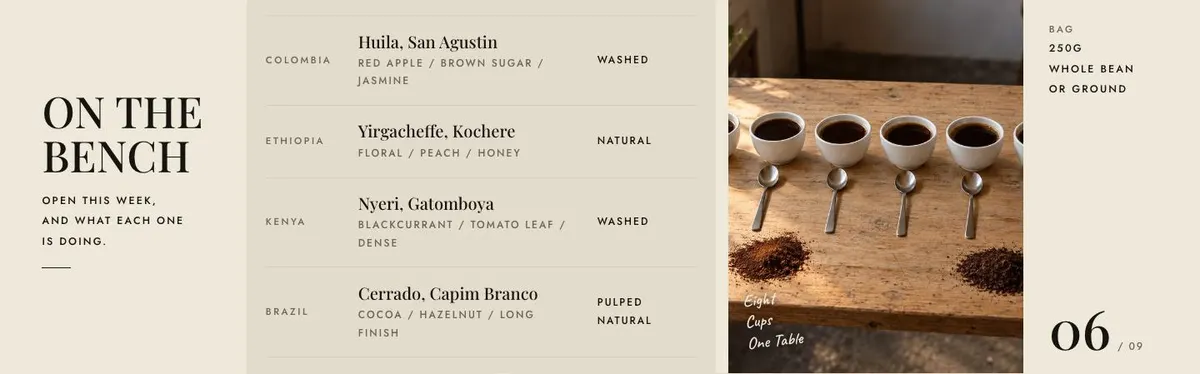
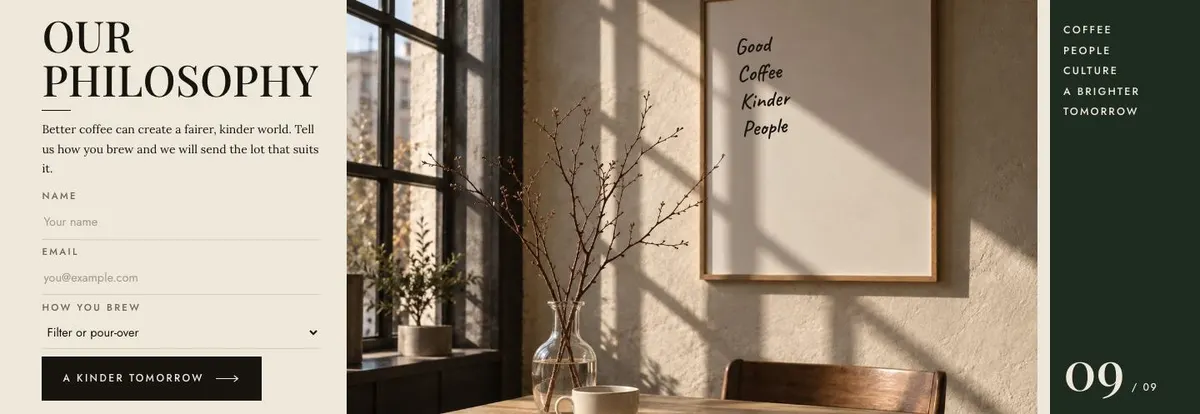
The structure is editorial and photo-led. Bands read like a contact sheet, separated by cream channels, with a numbered chapter rail running down the right. Large uppercase display headings set the pace, while the smaller information carries the practical detail. This works particularly well when the business has a point of view worth showing, not just a list of products.
The page ends in an enquiry form. It does not present a checkout, so businesses that need customers to buy a subscription directly on the page should plan that purchase route separately.
Adapting the design to the product
The template offers Forest, Roast, Slate and Plum colour schemes. Choose the scheme that supports the existing packaging, labels or photography rather than changing the business identity to fit the page.
Playfair Display is the display face and Jost is the body face. The available font pairings also include Caveat with Jost and Lora with Jost. Playfair Display with Jost keeps the clearest connection to the editorial structure; the alternatives should be chosen only if they suit the written character of the business.
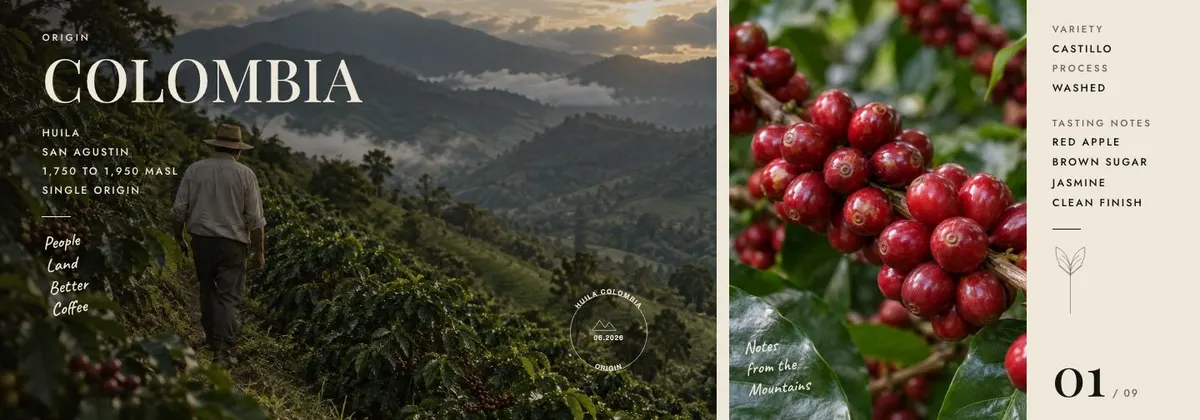
The page needs eleven photographs. One introduces the Hero. Origin needs four, Roast needs two and Coffees needs two. Bench and Philosophy each use one. Before starting, make sure the images can show both the product and the people, places or working detail behind it. The writing and photography should support the same story.
Writing it for your business
Starting from this template costs no credits. Rewriting the copy with AI costs about 20 credits. A useful brief names the business, the product range, the source or process that matters, who the recurring offer is for and the enquiry the page should encourage.
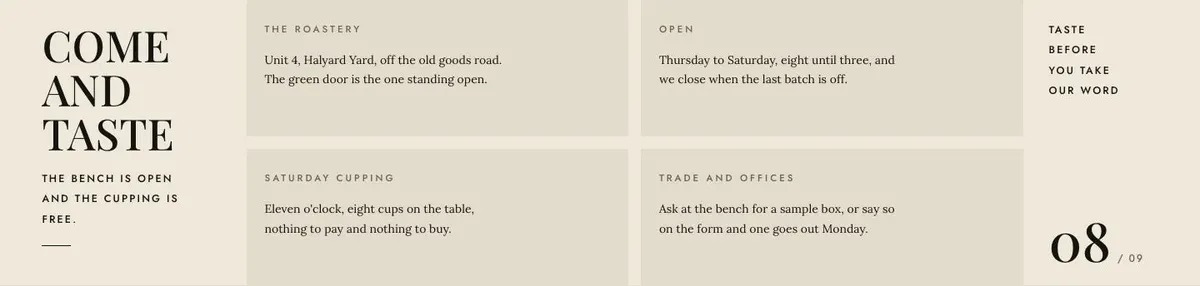
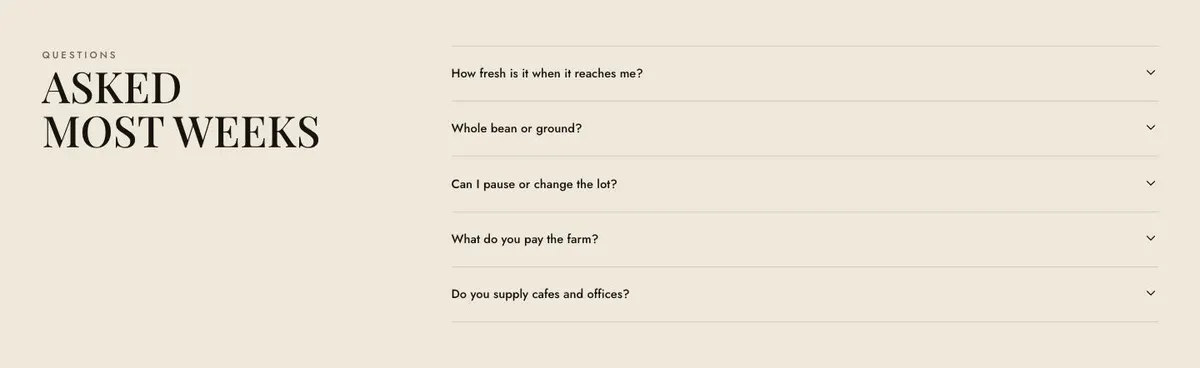
It should also say which parts of the existing structure are true for the business. Name the current featured product, the advice customers need, any journal subjects, whether visitors can come and taste, and the questions that arrive most often. Do not ask the rewrite to imply deliveries, visits or product choices that the business has not confirmed.
What to prepare before publishing
Prepare the main statement for the Hero and the short supporting line beneath it. Write the origin story, the process explanation and notes for one featured product. Map out the real journey from preparation to arrival for the subscription band.
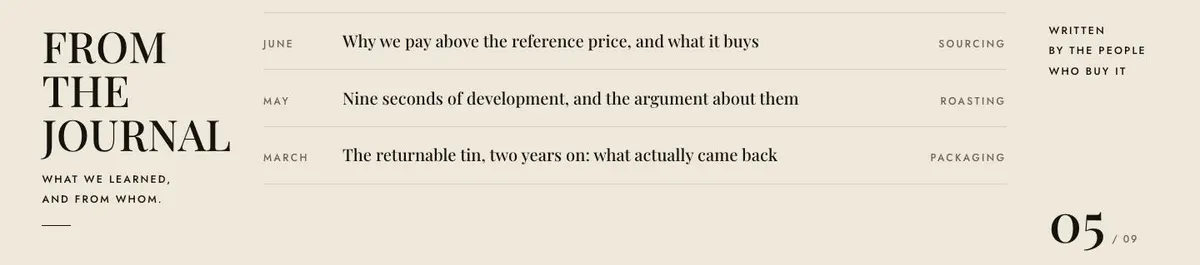
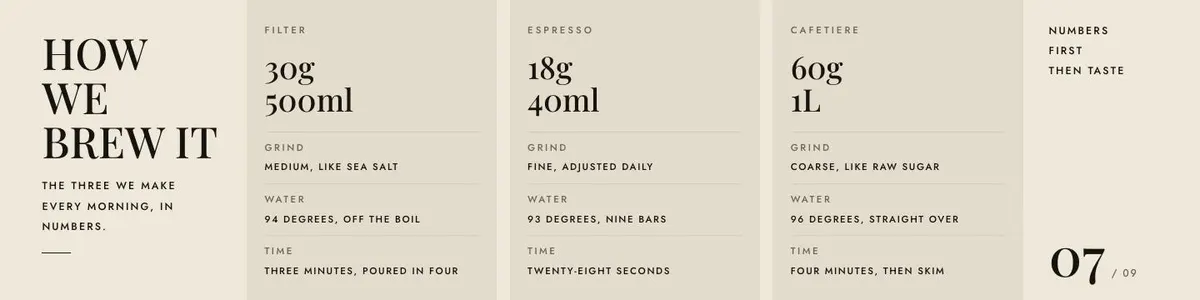
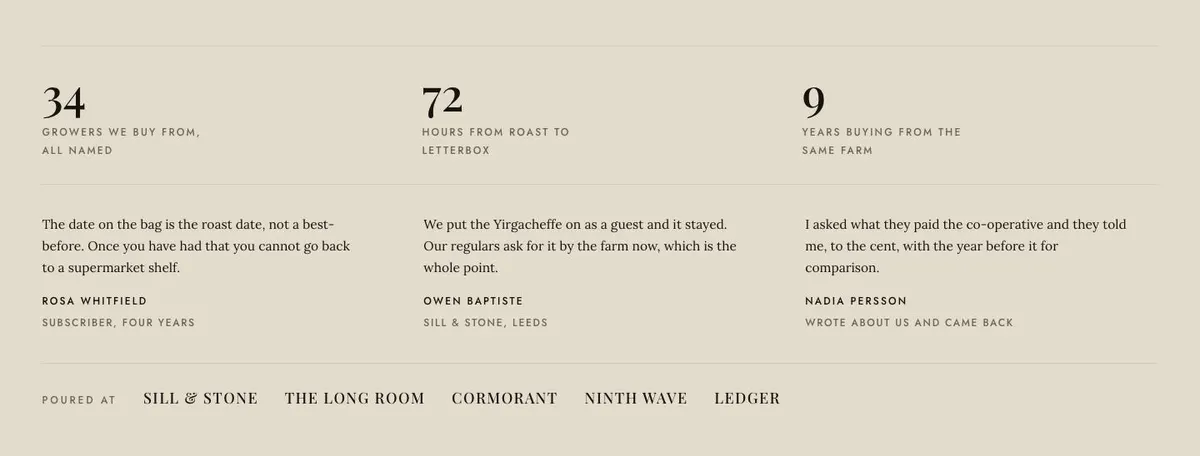
Collect the eleven photographs before the final layout is reviewed. Prepare a current Bench update, three pieces of customer guidance for the Brew section and an honest customer quotation for Reviews. Finally, write the questions customers genuinely ask and decide what information the final enquiry form should help the business learn.
Variations for neighbouring trades
A tea house can retain the Origin, featured product and preparation structure, changing roast language to leaf, harvest and brewing. The subscription section should explain the real way its regular selection is prepared and sent.
A chocolate maker can use Origin for cacao sourcing, Roast for the making process and Coffees for one bar or collection. Brew can become tasting and storage guidance, while Bench can introduce the current production or seasonal release.
An olive oil or honey producer can make the page about harvest, place and flavour. The featured product should name a real oil, honey or season, and the final form can ask how the customer plans to cook, serve or use it.
When another template fits better
For a drinks business with a different product emphasis, compare Botanical Drinks Brand. For a broader retail presentation, see Fashion Brand Showcase.
If the main job is selling to trade buyers, Wholesale Marketplace is the closer comparison. Makers with a plant-led personal-care range can look at Botanical Skincare Collection. Browse the ecommerce template collection for the wider set.
Before you publish
- Check that the source and process claims are accurate.
- Make sure all eleven photographs are ready.
- Confirm that delivery and visit wording reflects reality.
- Read every question and form prompt as a prospective customer.