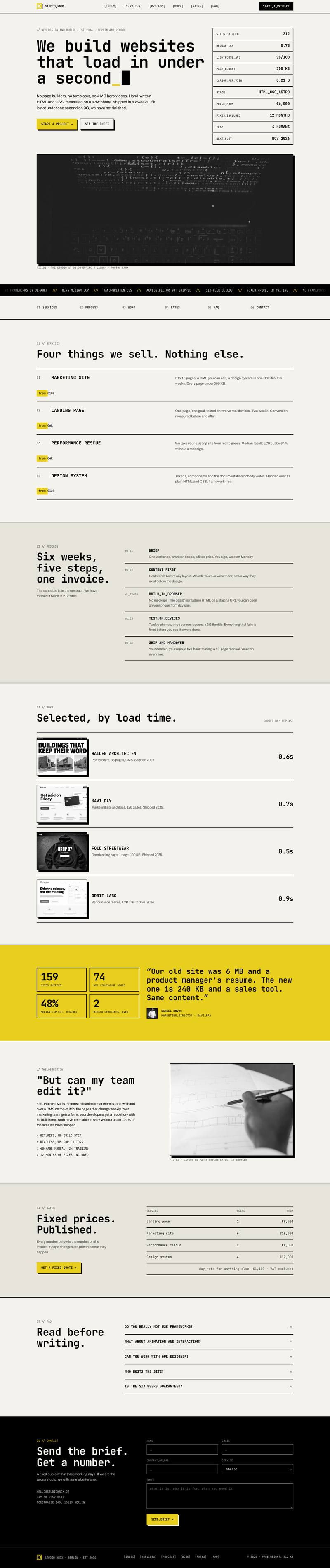
Raw MonospaceLanding page template
2px frames, typewriter type, highlighter yellow
A blunt page with 2px frames, typewriter type and highlighter yellow for indie software, dev utilities and small studios that sell on receipts rather than polish.
2px frames, typewriter type, highlighter yellow
A blunt page with 2px frames, typewriter type and highlighter yellow for indie software, dev utilities and small studios that sell on receipts rather than polish.
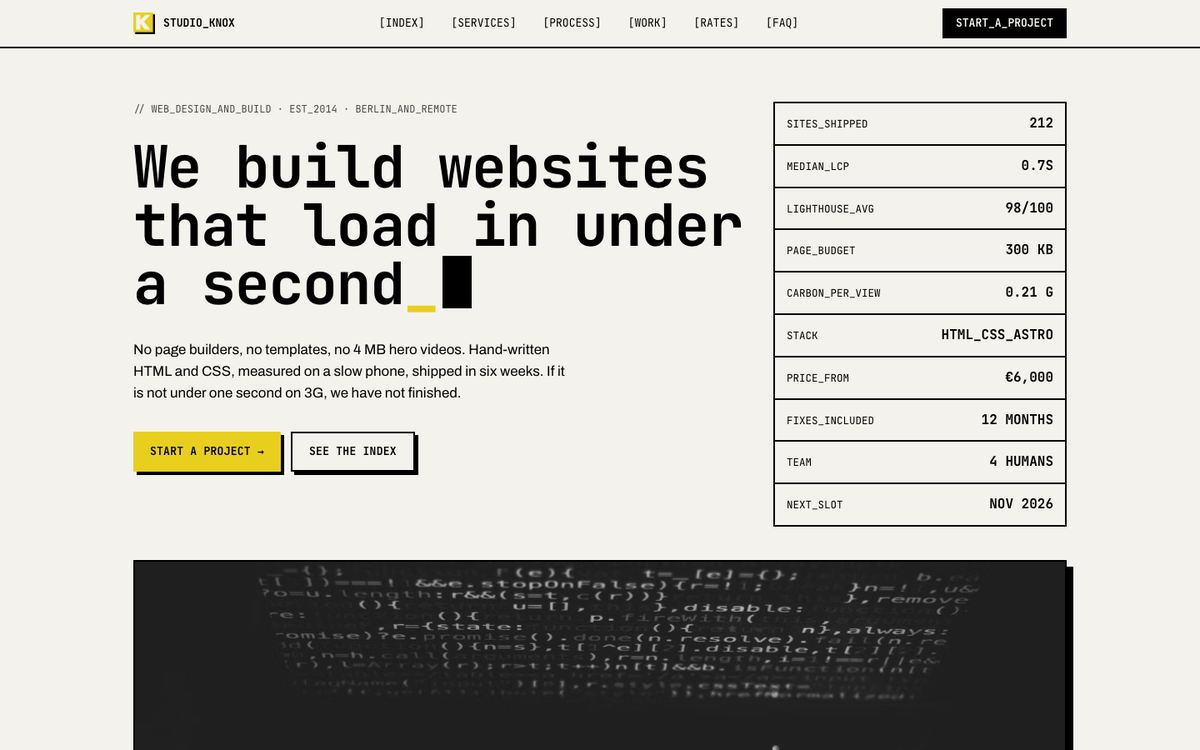
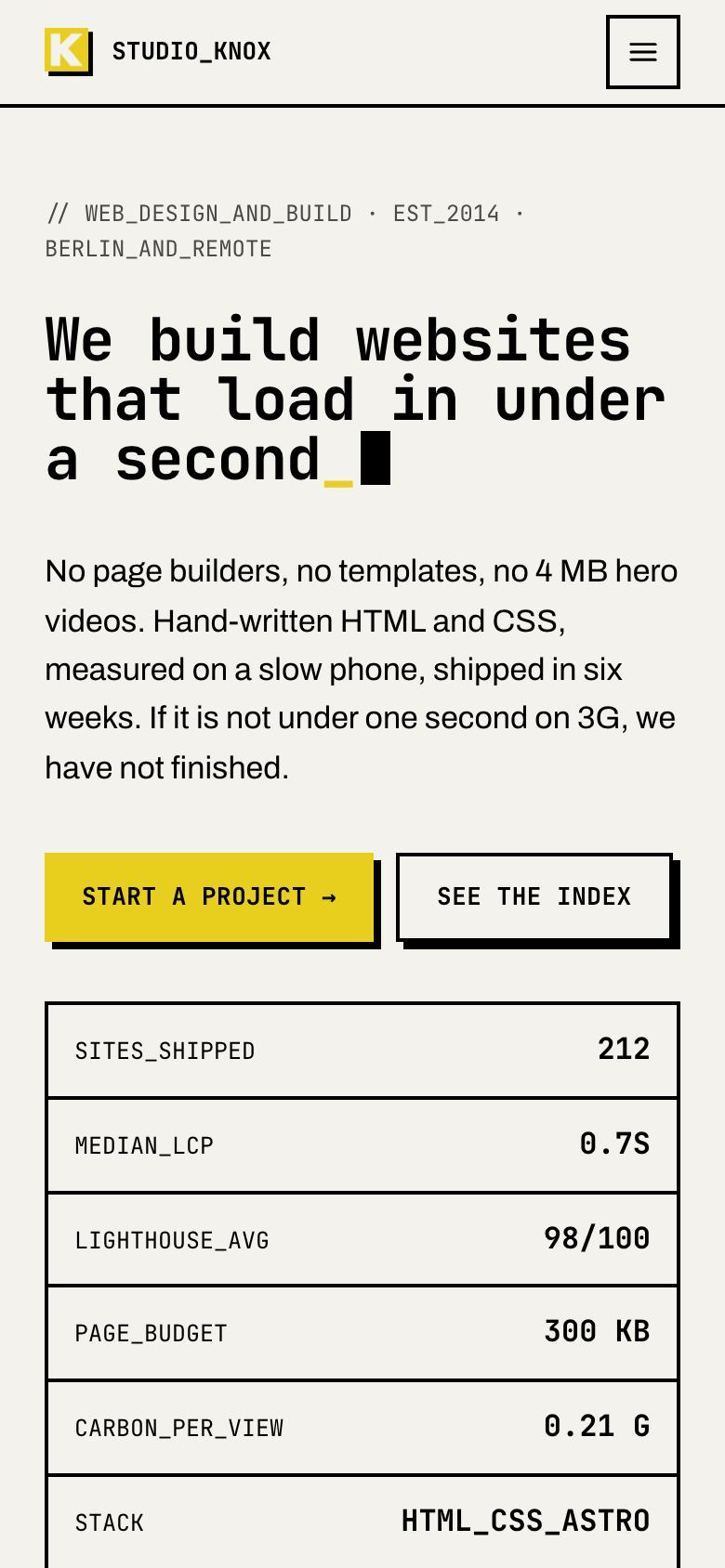
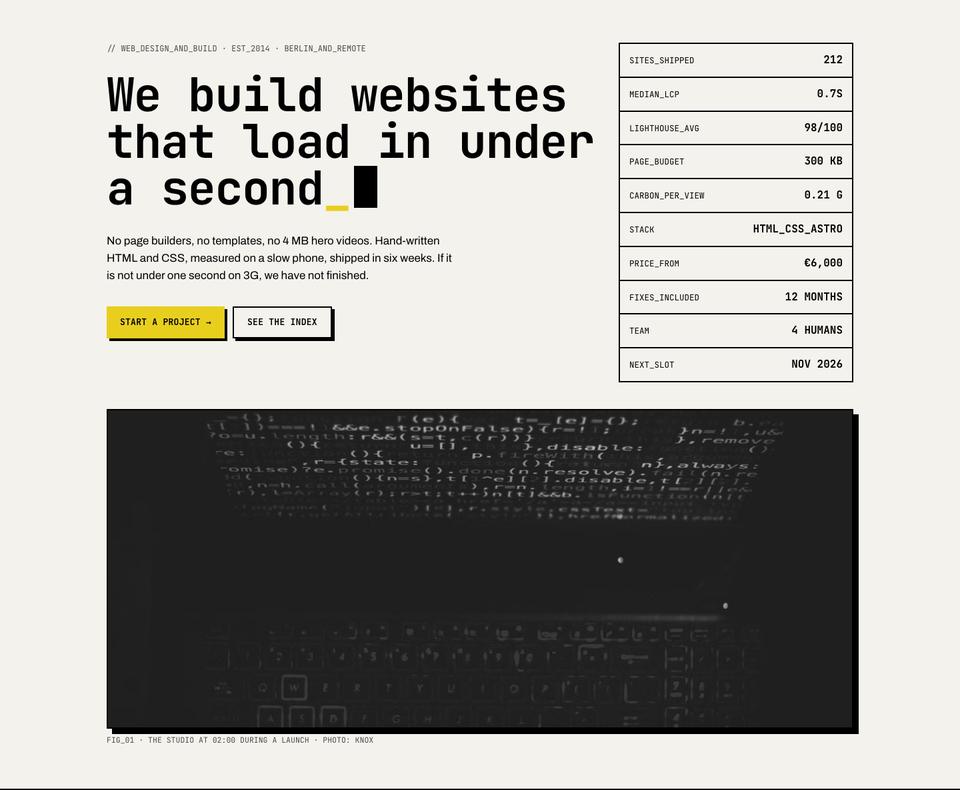
Switch devices, scroll the full page, or open the live demo. This is the exact layout, photos and sample text a new page starts with.
The headings are the demo's own sample text. Your brief, or the AI copy pass, replaces them; the structure stays.
We build websites that load in under a second_
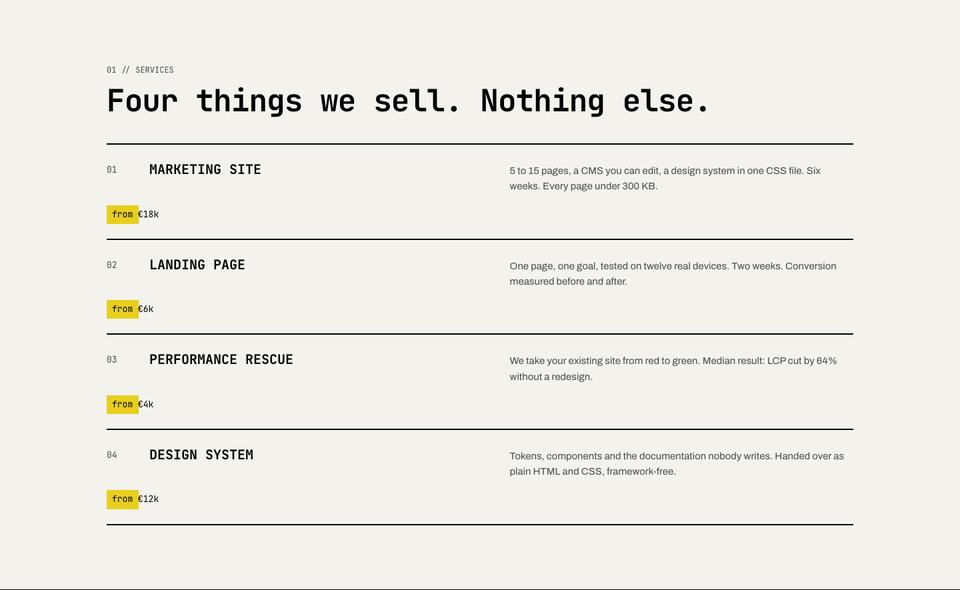
Four things we sell. Nothing else.
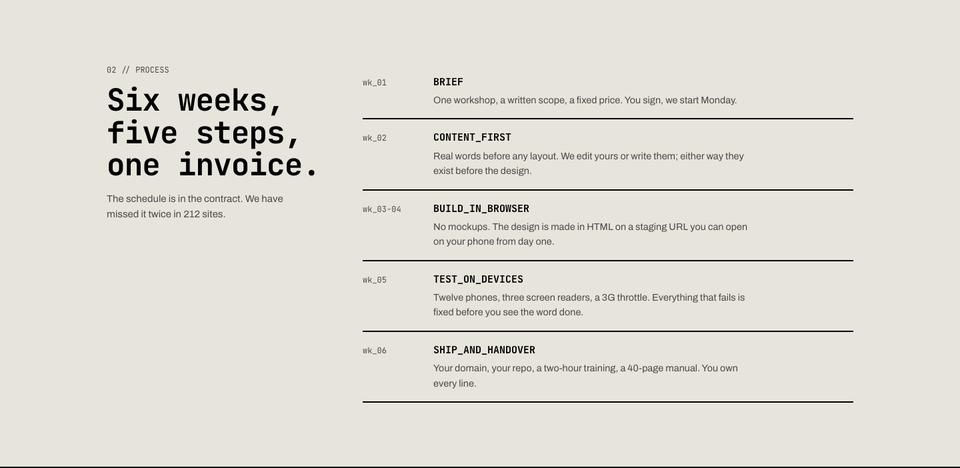
Six weeks, five steps, one invoice.
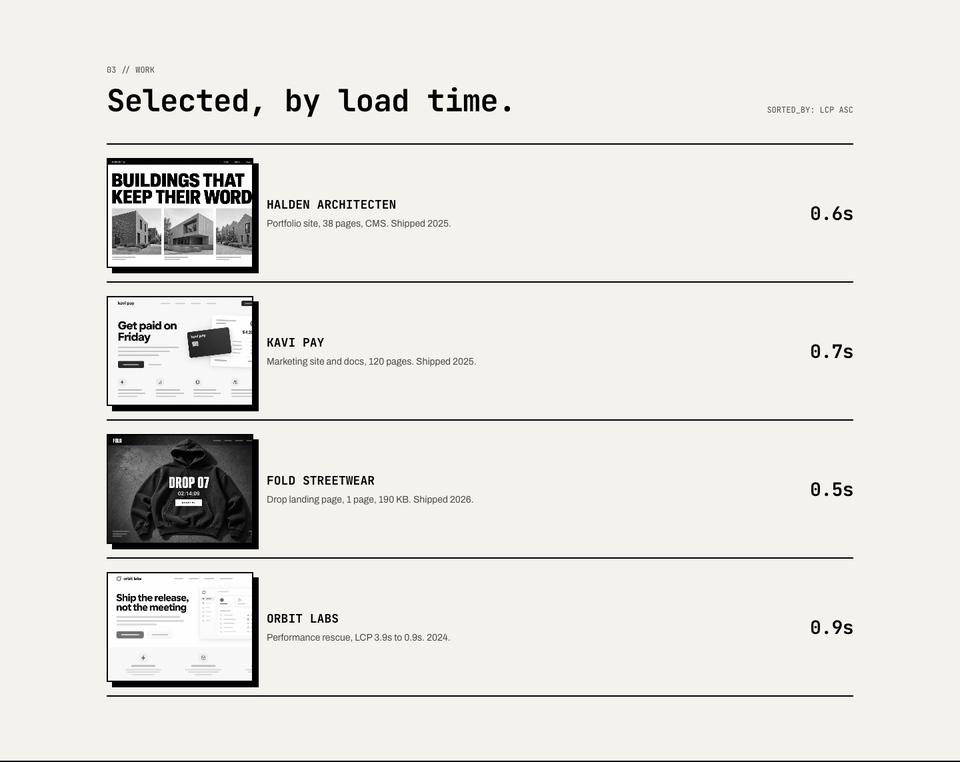
Selected, by load time.
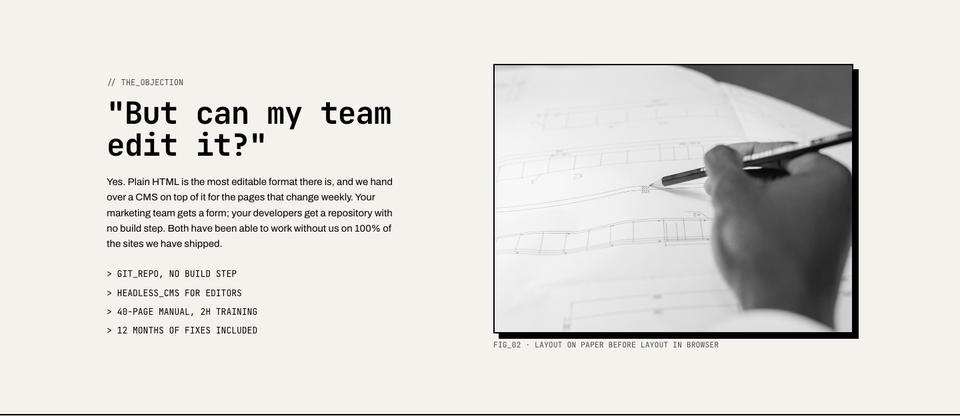
But can my team edit it?
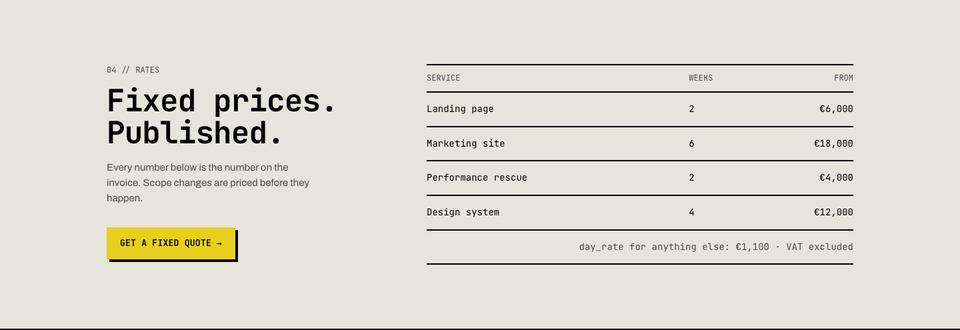
Fixed prices. Published.
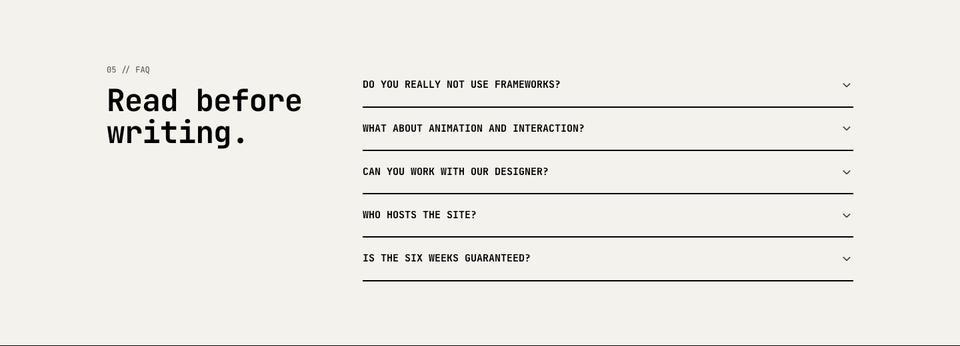
Read before writing.
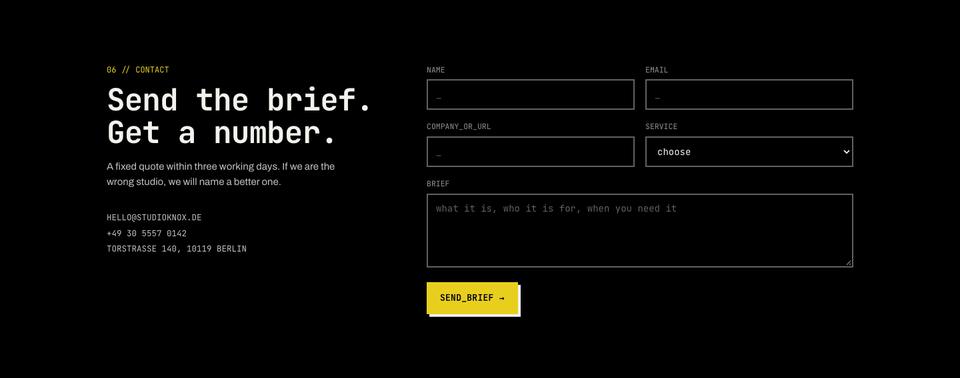
Send the brief. Get a number.
Some buyers distrust a polished page. Engineers, indie makers and technical founders want the facts, preferably with numbers, and they enjoy a bit of attitude. Raw Monospace gives them 2px frames, typewriter type, comment-style section labels and a highlighter-yellow accent. It is blunt on purpose, and it converts on a brief or a sign-up.
It suits indie software and no-code tools, developer utilities and APIs, technical studios and one-person shops, and hardware and fabrication businesses. Choose it when the brief is direct and wants numbers on the page.
The hero makes one measurable promise, “We build websites that load in under a second”, with a blinking cursor and a line on what the studio refuses to use. Services lists exactly four offers with scope, duration and a size budget.
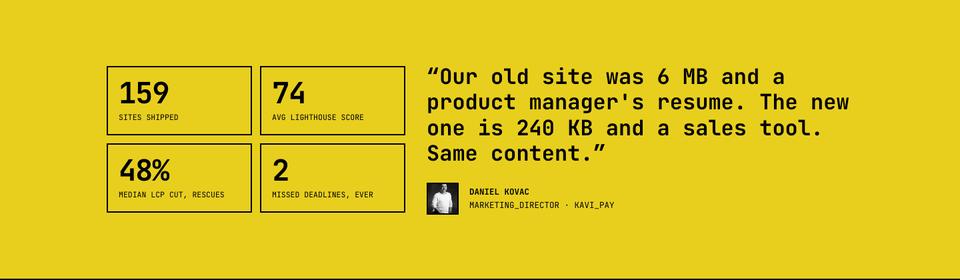
Process gives six weeks in five dated steps and admits how many deadlines were missed. Work lists projects sorted by load time rather than by beauty, which says everything about the studio’s values. A numbers band shows sites shipped, average performance score, load time improvements and missed deadlines, with a funny client quote.
The objection is a whole section answering the doubt every buyer has, such as whether their team can edit the site. Rates publishes fixed prices, faq answers questions about frameworks and hosting, and contact promises a fixed quote within days, or the name of a better studio.
Four schemes are included: Highlighter yellow, Cyan, Orange and Lime. Heading pairings are JetBrains Mono over Archivo, Space Grotesk over IBM Plex Sans, or Archivo over Barlow for a less typewritten feel. Only three photographs are used; the frames and type carry it.
Service lists, rates and the work table are plain editable text. Select a section and ask the AI to rewrite it in your own blunt voice.
Start from the template with no credits spent, or have the AI write the copy for your business for about 20 credits while keeping the layout. Give it your one measurable promise, services or features, your process with real dates, proof in numbers, the objection you hear most, prices and what happens after someone gets in touch.
The whole point of this template is that every claim arrives with a number, so gather receipts first. For each piece of work you want to show, record what it was, its size, the year and a measurable result, such as page weight, load time or Lighthouse score, and sort the list by that figure as the sample does. If you sell software, use uptime, response times or the size of your binary instead.
The stats band should include one uncomfortable number, such as deadlines missed, because blunt pages lose their credibility the moment they sound polished. Write the objection section around the question customers really ask before buying, and answer it in a few plain sentences. The rate table needs service, duration and the actual starting price, with how scope changes are priced. Three photographs are used, so most of the page is type, frames and tables. Keep the copy short and lowercase-friendly, and let the monospace headings carry the tone.
An indie software product can turn services into plans and replace the work list with a changelog, newest first. Developer utilities and APIs often put a request and response example in the first frame, with rate limits and pricing per call in the table. One-person shops can keep the process as it is and add a short about line with a photo. Hardware makers and fabrication shops can list machines, tolerances and lead times, with a quote form asking for a file upload link.
Raw Monospace is loud in a particular way. A developer tool that wants dark and quiet rather than bright and blunt fits Developer Tool. A mainstream B2B product will convert better on SaaS Conversion, and a design studio with a more gallery-like portfolio should see Studio Index or Digital Studio. Website-builder and no-code products have their own layout in Website Builder Studio.
The full list is on the SaaS and software templates page.
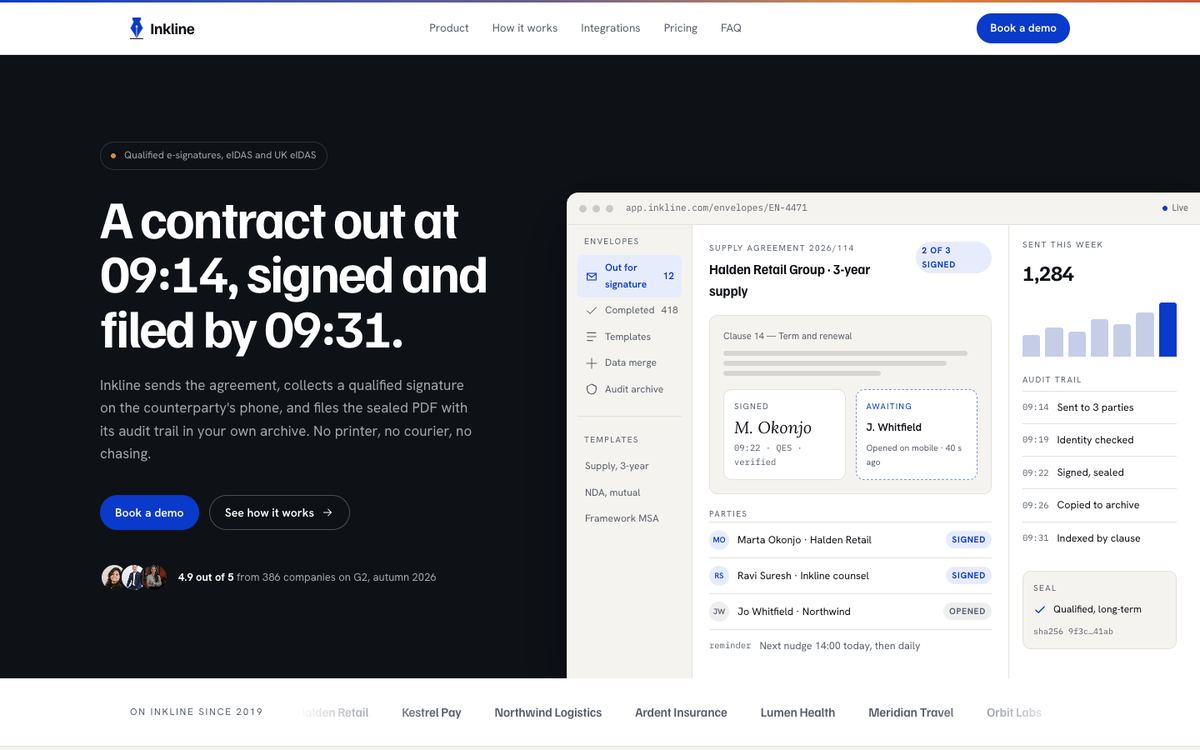 SaaS ConversionSoftware & SaaS · Familjen Grotesk
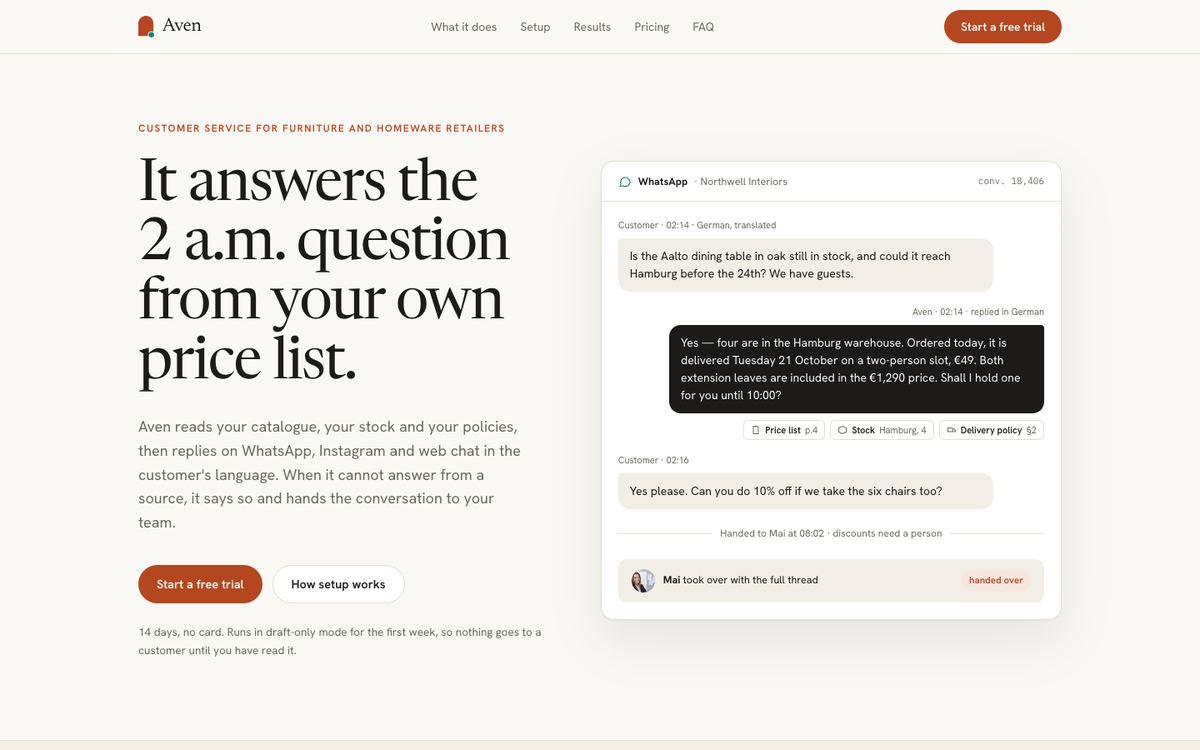 AI ProductSoftware & SaaS · Newsreader
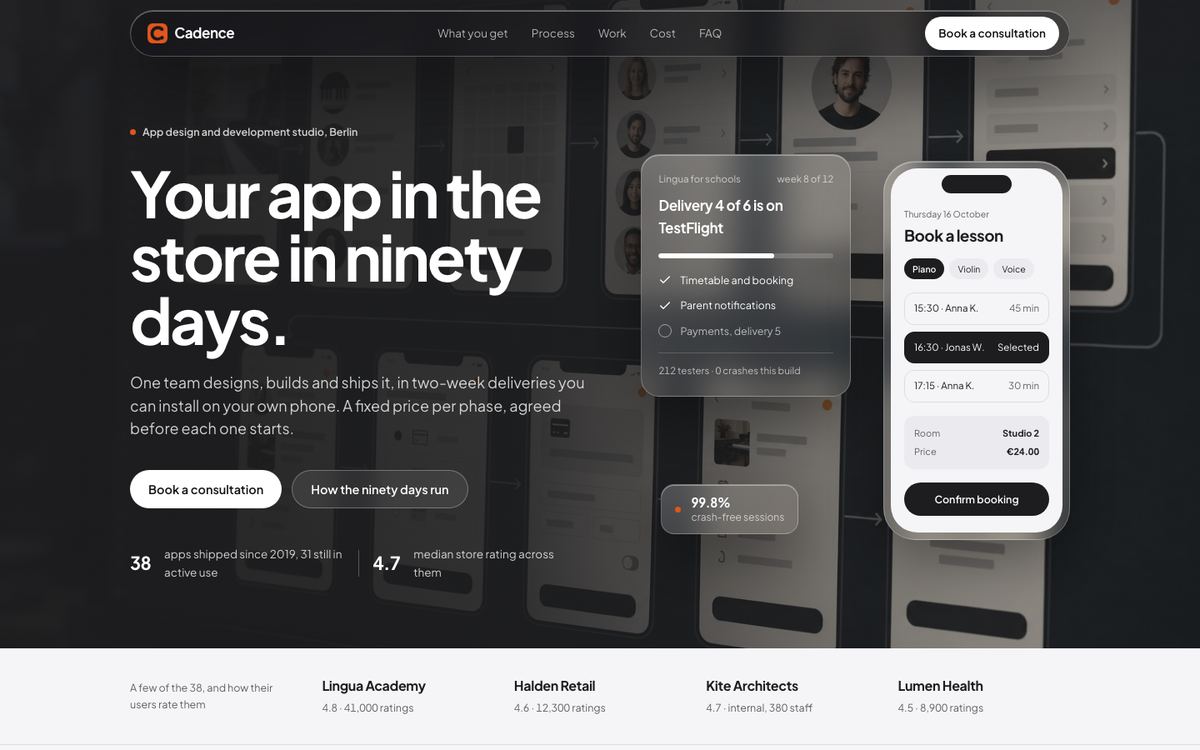 Frosted GlassSoftware & SaaS · Plus Jakarta Sans
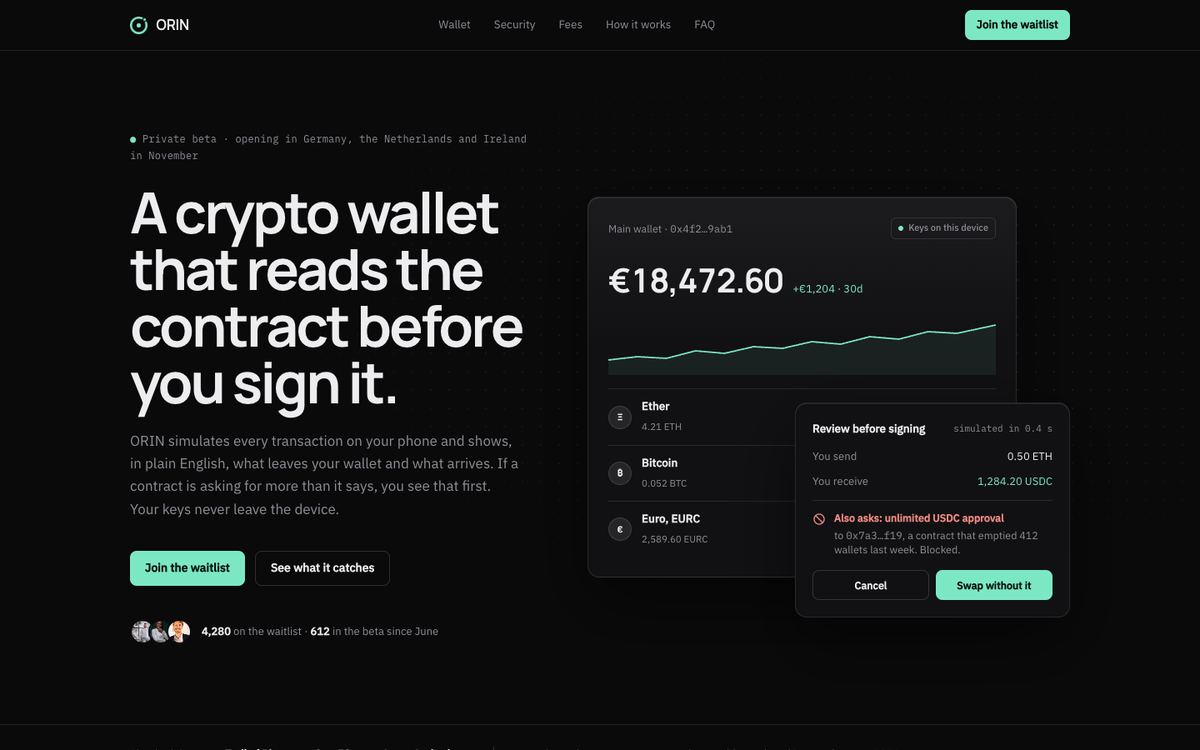 Web3Software & SaaS · Manrope
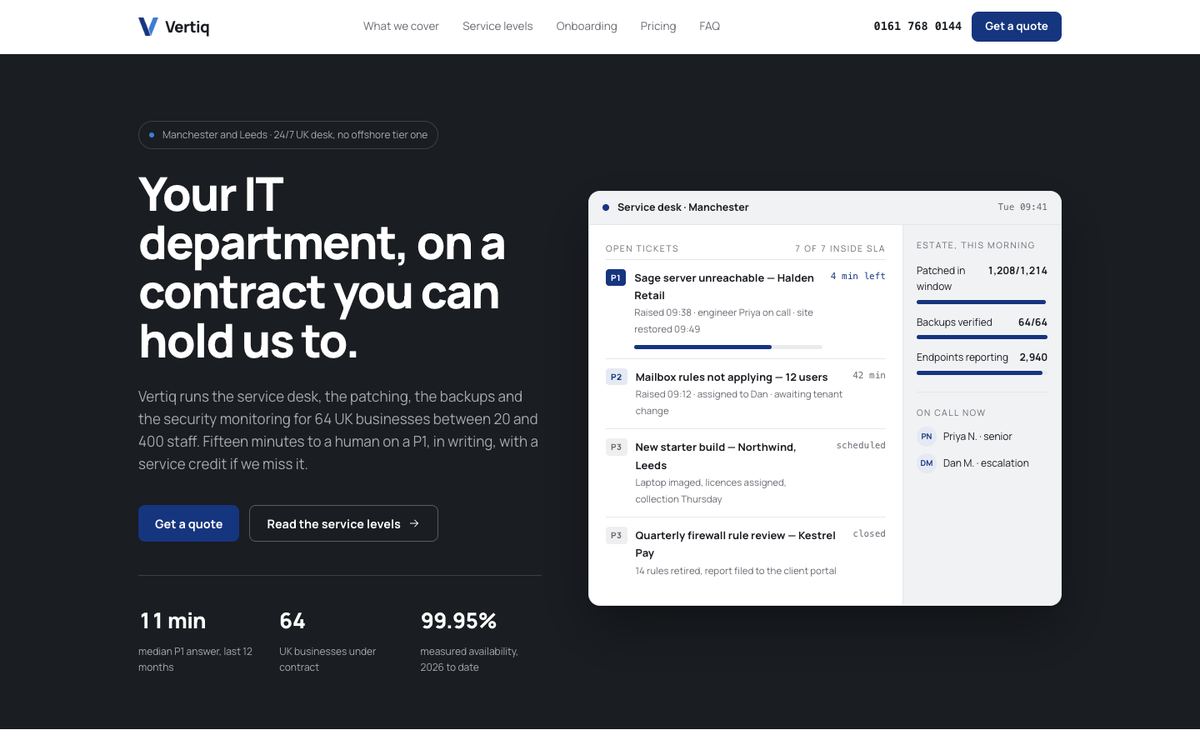 IT SolutionsSoftware & SaaS · Manrope
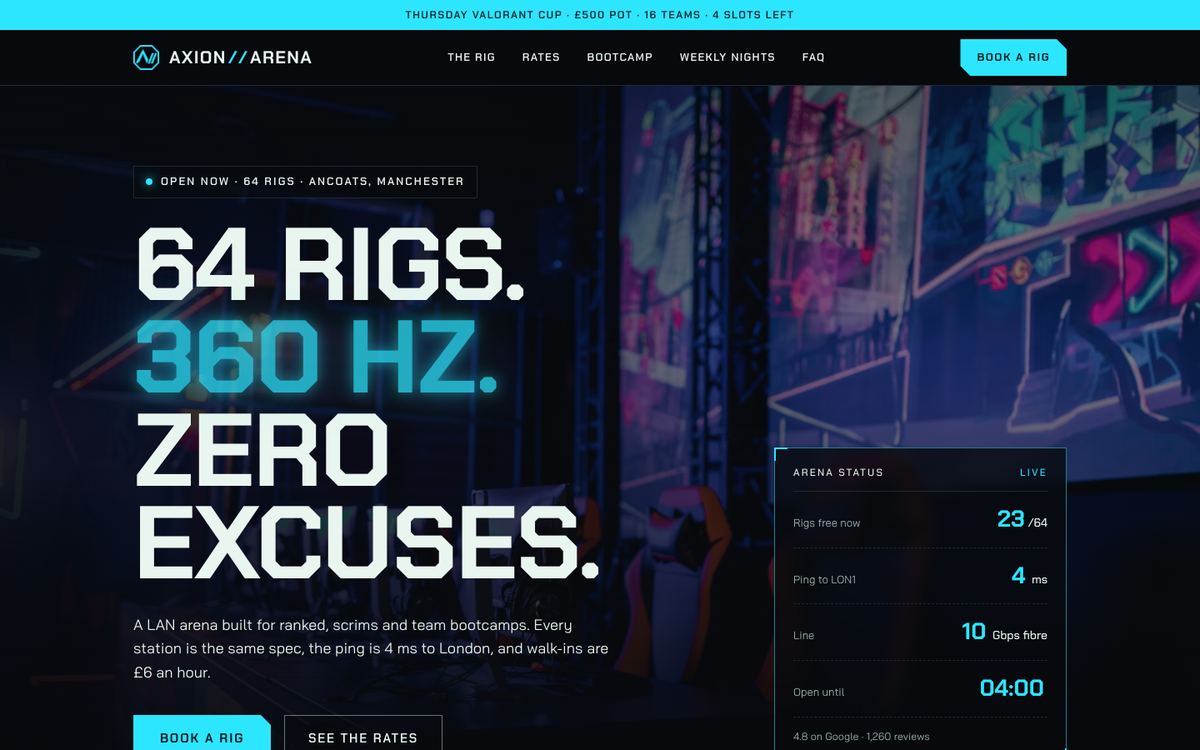 GamingSoftware & SaaS · Chakra Petch
Starting from the theme costs no credits. Or describe the offer and the AI draws a new page in this style, usually in about two minutes.