A studio page for work that needs a point of view
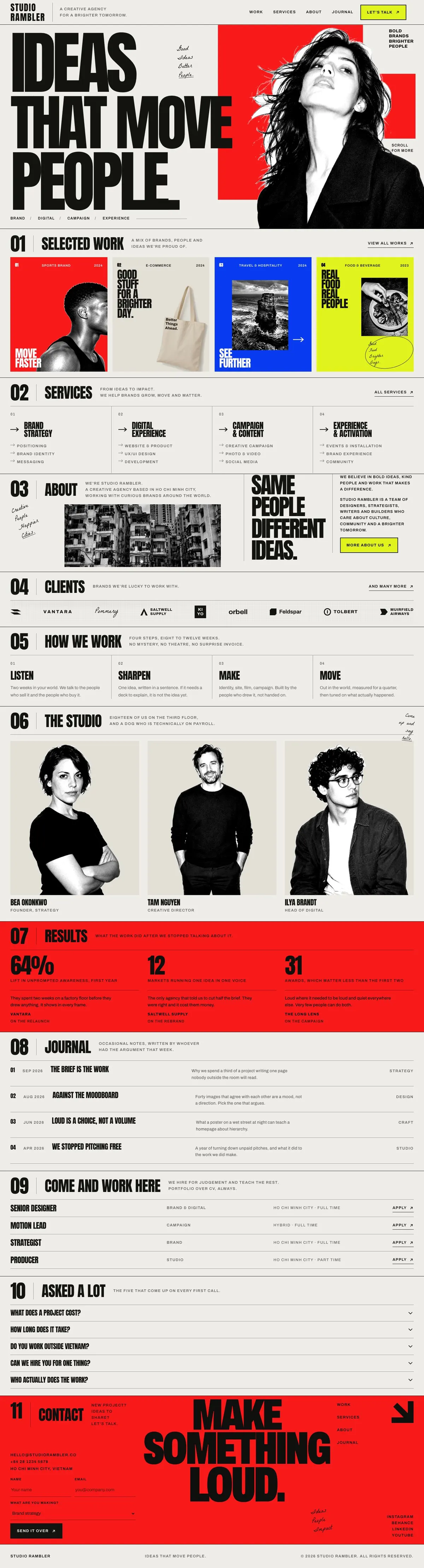
Someone searching for Bold Agency needs a page that makes a creative practice feel definite before a prospect reads every detail. The page has to show the work, state what the studio stands for and make it easy to begin a project conversation. This design does that through a poster-led structure, with a numbered rail across the bands, case work given room to lead and a final written enquiry route.
A generic agency page can make one studio sound much like another. It often puts services first, then asks the visitor to make sense of a broad list of claims. Bold Agency starts from the opposite direction. It gives the practice a position, puts selected work in front of the reader, then supports that work with services, people, process, results and answers to common questions.
The mock-up uses Studio Rambler as an example, but the template is not tied to that name, location or wording. It is for a business prepared to write its own view of the work. It is also built for an enquiry rather than a calendar link. If the main need is a different agency focus, the Growth Agency template is a related option to consider.
From first impression to a project enquiry
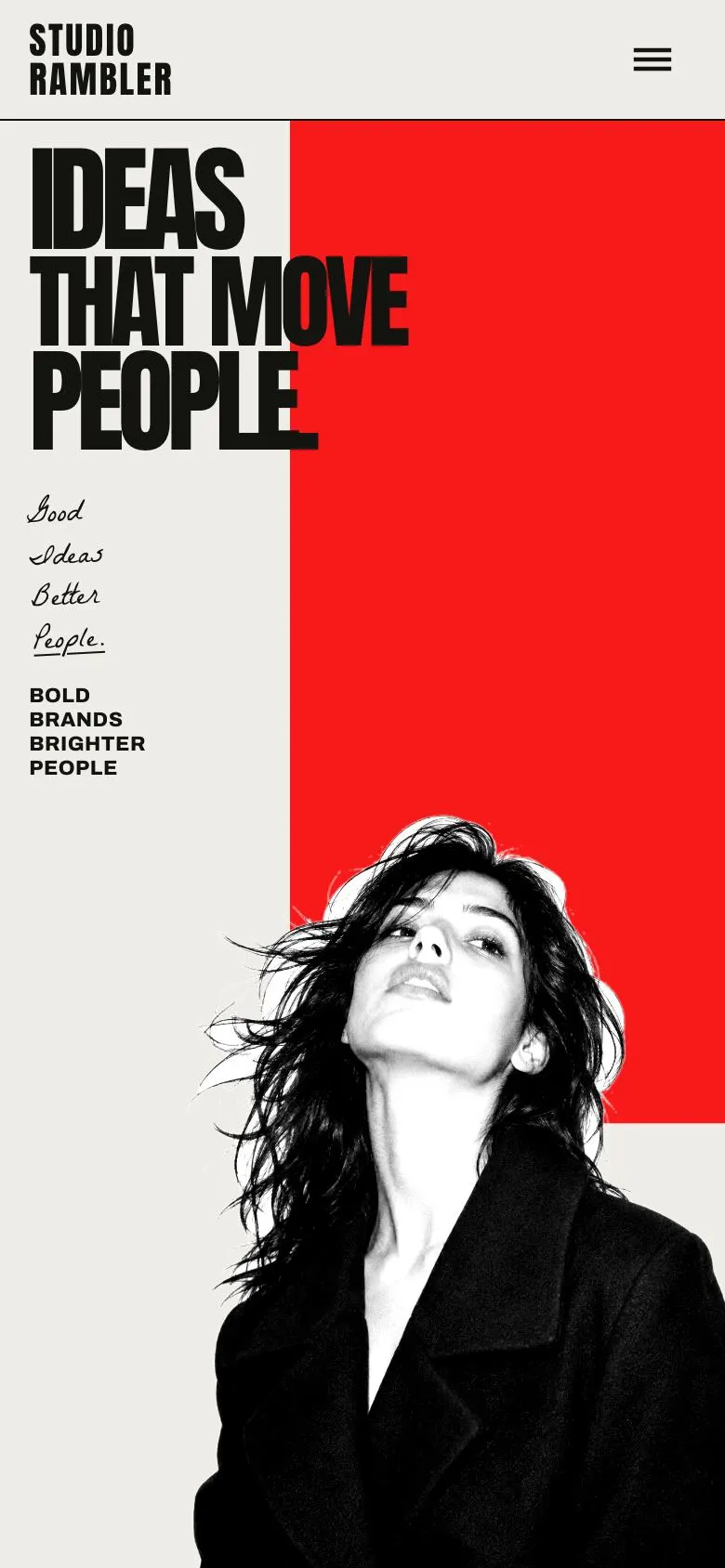
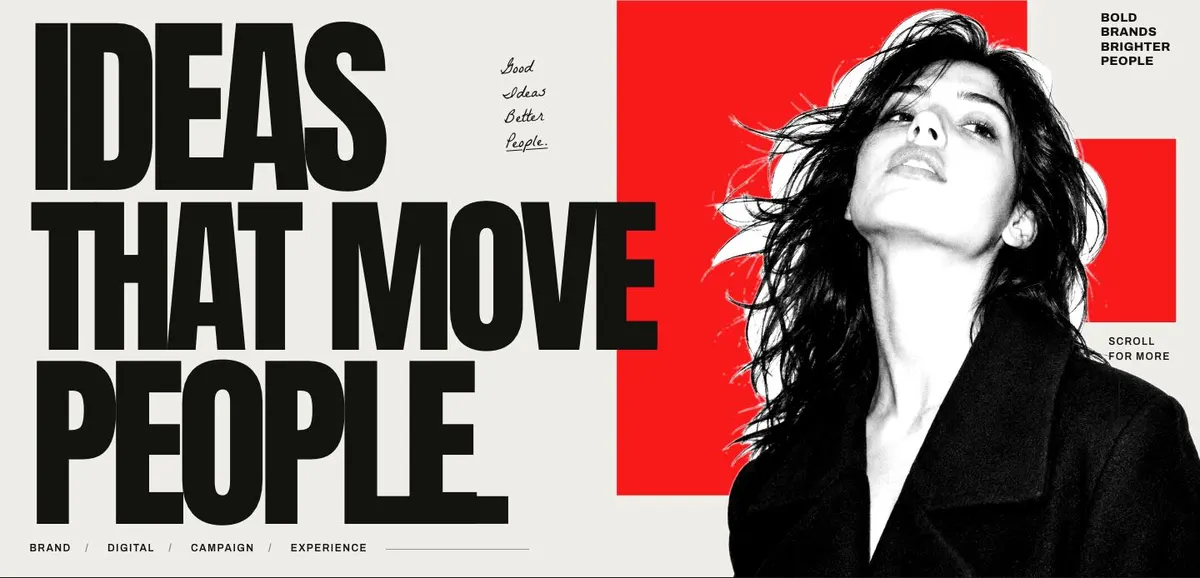
The Hero opens with “Ideas that move people”, a short supporting line and one photograph. It is the place for the sentence that explains what makes the practice worth considering. The opening needs to be direct. It should describe the kind of ideas, work or change the studio is known for, rather than trying to summarise every service.
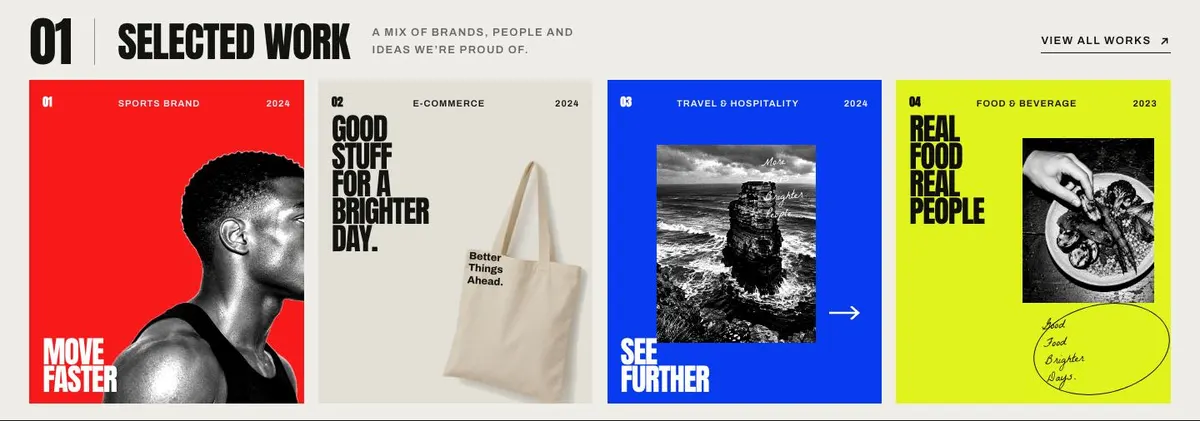
Work follows with “Selected work” and case imagery. The template gives four pieces of work their own space, so this section needs four projects that can carry the page. Each should have a clear client or project name and enough context for a prospect to understand why it matters. Choose work that reflects the jobs the studio wants more of, not simply the newest work available.
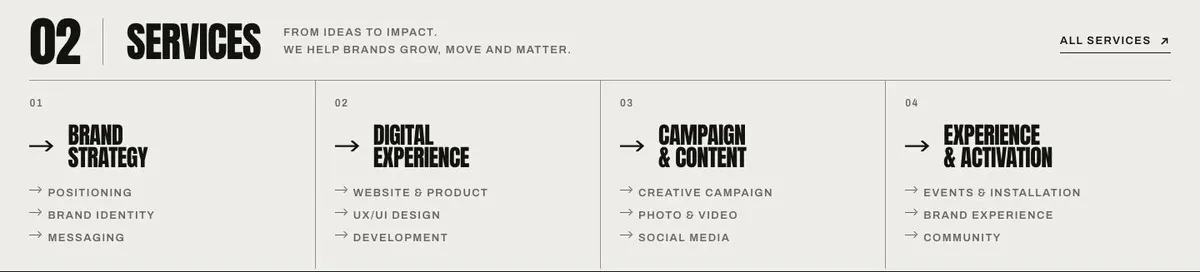
Services then turns the studio’s offer into a usable list. Its supporting line moves from ideas to impact, so the service names should be specific enough for a prospective client to recognise their need. Keep the list aligned with what the practice can actually deliver. A broad list is less useful than a clear one.
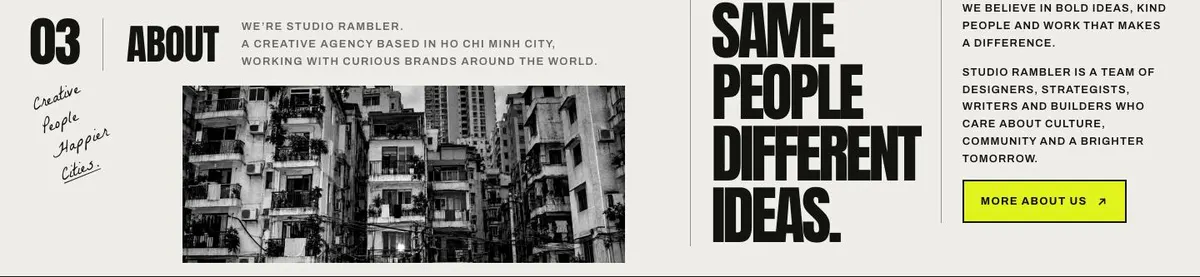
The About band introduces the people and perspective behind the work, alongside a photograph and a “More about us” button. This is where the business can explain its point of view, the kind of clients it works well with and the context that shapes its practice. The button means there should be a fuller story ready for the destination behind it.
Clients gives room for the names of businesses the practice has worked with. How we work follows with a four-step approach and an indicative project timescale. Use it to reduce uncertainty without pretending every commission follows the same path. Explain what happens between the first conversation and delivery, and be plain about the parts of the process that matter to clients.
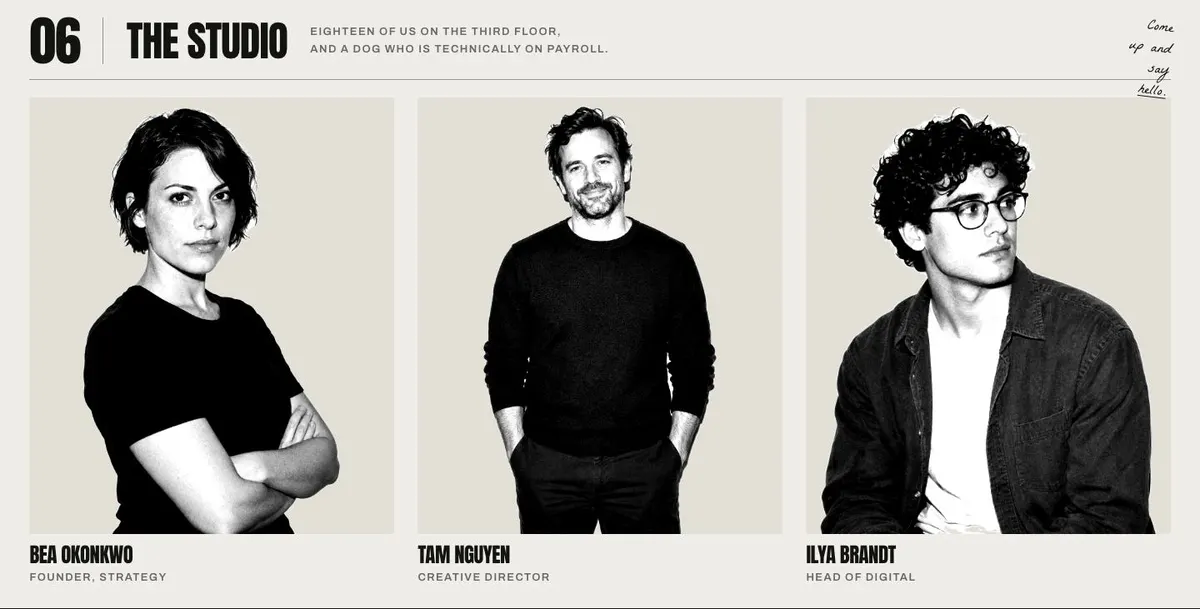
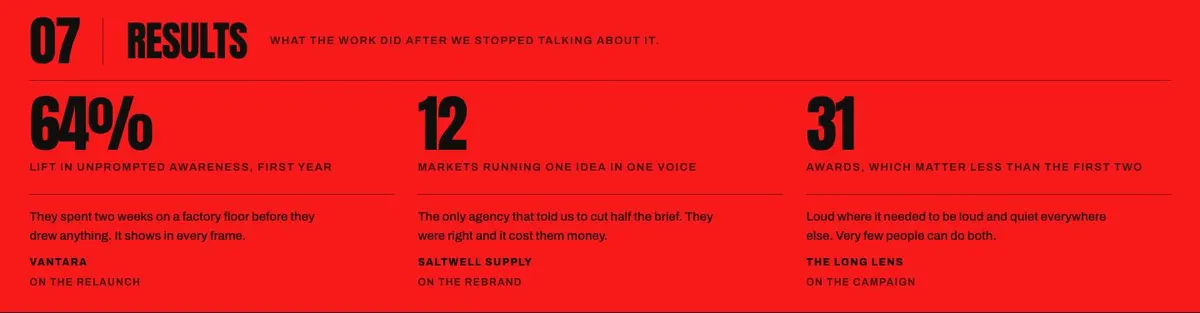
The studio brings in the team through photographs and short supporting material. It should show the working environment and the people clients may meet, while staying relevant to the kind of relationship the practice offers. Results is where the page moves beyond describing the work. The band includes a quote, making it suitable for a client account of what changed after the project.
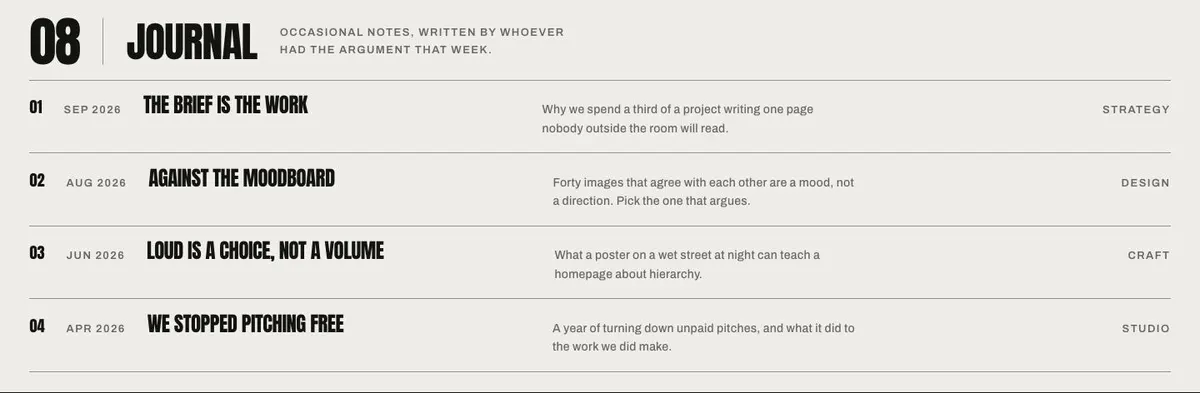
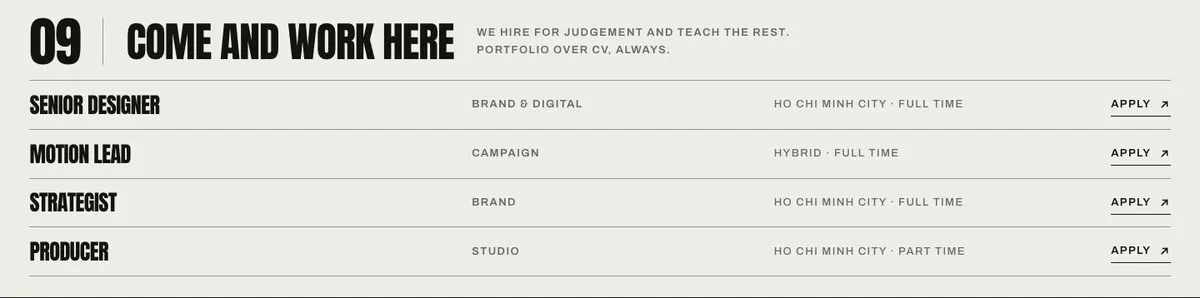
Journal supports the practice’s voice with occasional notes. It can hold arguments, observations and useful thinking that show how the studio sees its field. Come and work here is for open roles and the qualities the practice values. Do not leave it vague: write it for the people the business would genuinely want to hear from.
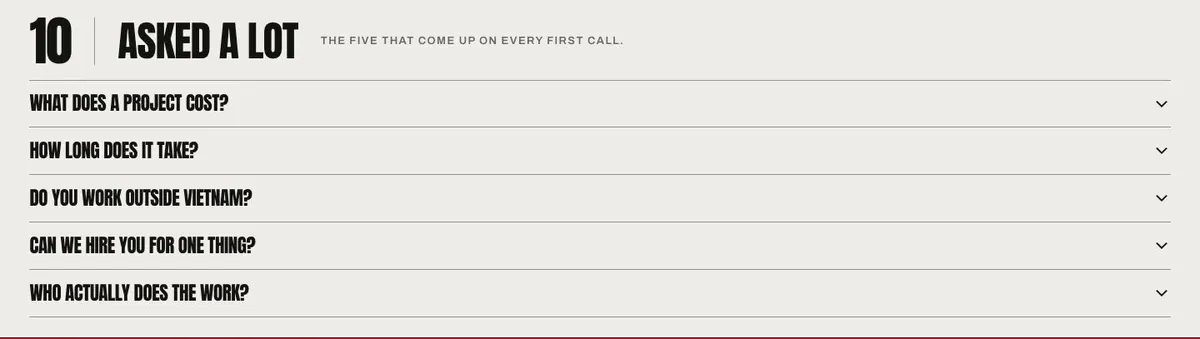
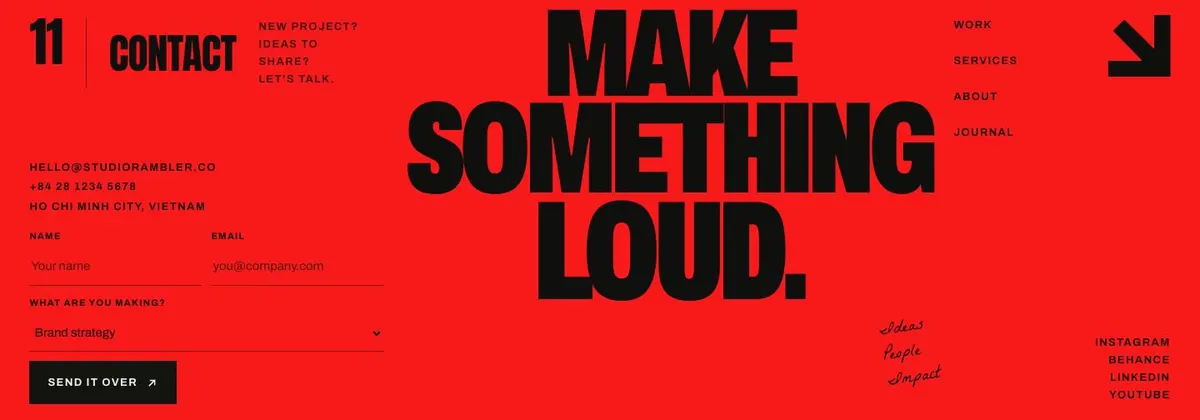
Asked a lot uses an accordion for the questions that arise on first calls. It is the right place for concise answers on fit, ways of working and the practical points that otherwise delay an enquiry. Finally, Contact closes the page with “New project? Ideas to share? Let’s talk.” and an enquiry form. The form should ask only for the information needed to decide what happens next.
Making the poster-led design your own
The template offers Signal red, Flare orange, Volt blue and Ink black schemes. Select one that supports the studio’s existing identity and the work being shown. The choice should help the case work remain recognisable across the page, rather than competing with it.
Anton is the display face and Archivo is the body face. The available font pairings also include La Belle Aurore with Archivo and Oswald with Archivo. The display type is part of the page’s editorial, assertive feel, while the body copy still needs to be easy to read. Keep headlines short enough to hold their force.
The page needs nine photographs. One belongs in the Hero, four support Selected work, one sits with About and three appear in The studio. Prepare the case images first. They carry much of the argument for the business. The remaining photographs should show the practice with enough clarity to support the written story.
Starting with the template and rewriting the copy
Starting from this template costs no credits. Rewriting the copy with AI costs about 20 credits. A useful brief names the business, its audience, the work it wants to win and the voice it should use. It should also name the projects, services, client evidence and team details that belong on the page.
Give the AI real material rather than broad instructions such as “make us sound creative”. State what the studio does, what it does not do, where it works and what a good enquiry looks like. Include any wording that must remain exact, such as service names, client names or an established positioning line.
What to gather before publishing
Begin with the Hero statement and supporting line. These are not slogans to fill space; together they set the expectation for the rest of the page. Then choose the four case studies and collect the photographs, project names and short descriptions needed to make each one understandable.
Write the service list, About story and process in the same voice. Gather approved client names for Clients, a client quote for Results and photographs for the studio material. Prepare Journal items if the business intends to publish them, and write clear Careers copy if there are roles to share. Finish with the five questions that repeatedly arise in early conversations and the details needed for the enquiry form.
Ways neighbouring practices can adapt it
A branding studio can use Selected work for identity systems and make Services describe the stages it takes on. Its Results quote should explain what the new identity helped the client do after launch.
A production company can select projects that show the range of work it wants commissioned, then use About and The studio to explain the people behind the output. The process section can set expectations for how projects move from initial idea to completed work.
An independent marketing practice can make the Hero more focused on its judgement and use the Journal for the thinking that informs its work. It should keep the service list narrow enough that an enquiry comes from the right kind of client.
When a related studio template is a better fit
Product Design Studio is worth reviewing when product design should be the clearest frame for the practice. Studio Index is a related choice for a studio looking for another starting point. Digital Studio gives a nearby option where digital studio language is closer to the business. Website Builder Studio is relevant where website building is central to the offer.
Browse the wider agencies and studios collection before committing to the page structure.
Before the page goes live
- Check that the opening statement matches the work shown.
- Use four case studies the business wants more of.
- Confirm every client name and quote is approved.
- Test the enquiry route with a complete project message.