A Digital Studio page for work that needs to be seen
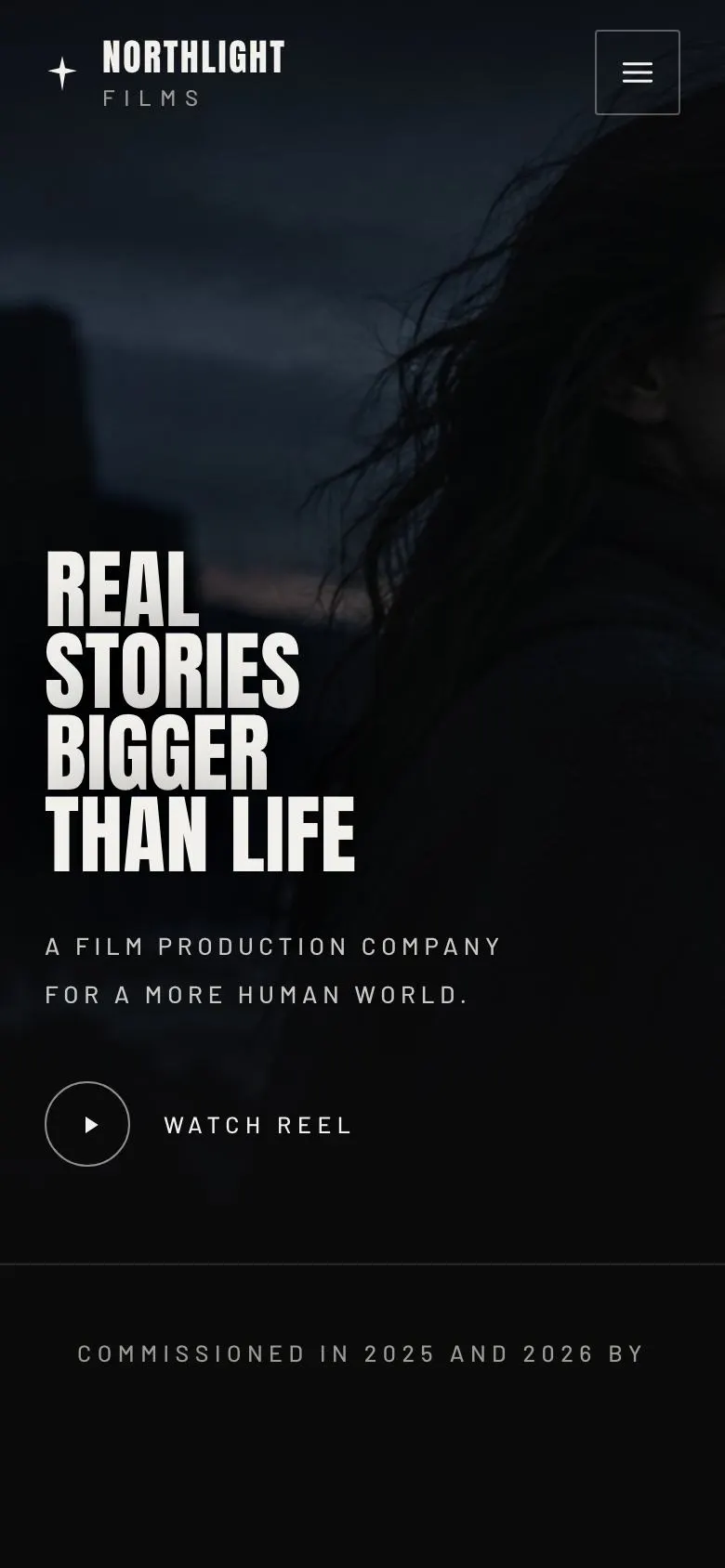
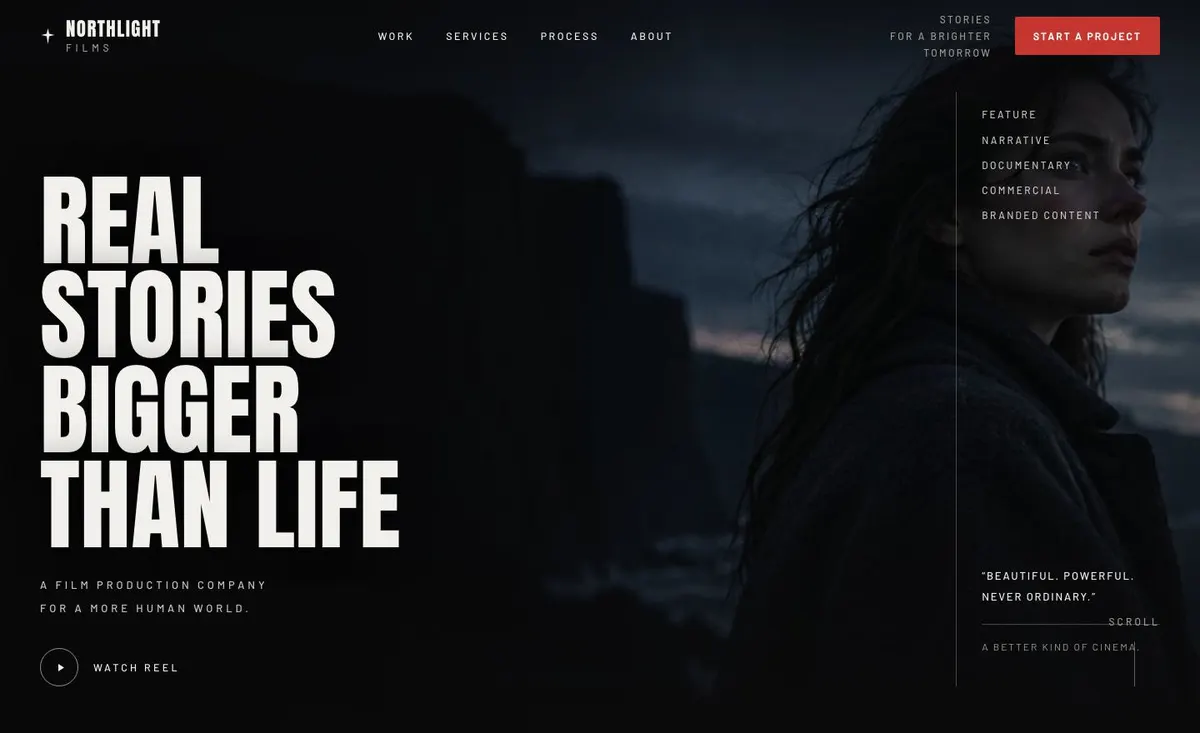
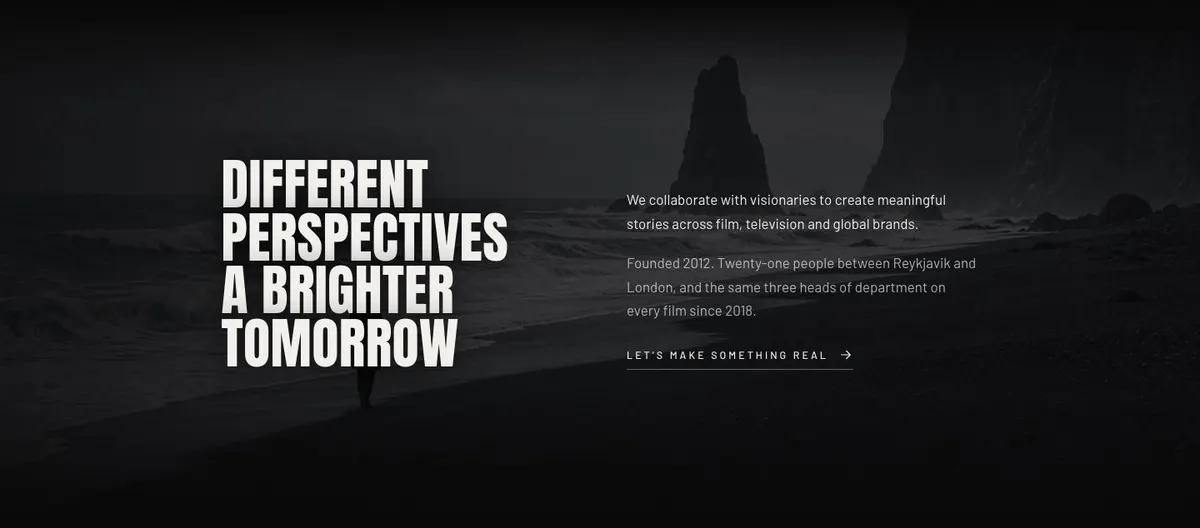
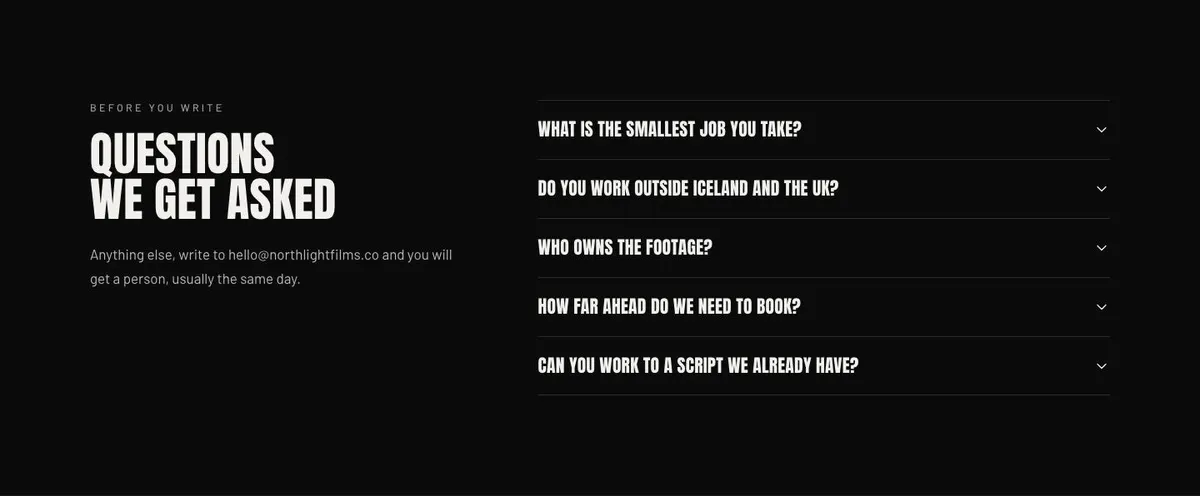
Someone searching for a Digital Studio needs a page that makes the studio’s output clear before asking for an enquiry. A generic agency page can leave film, stills and visual work buried under broad claims. This design gives the pictures a leading role, then follows them with services, a working process, answers to common questions and a route to contact.
It is built for a company whose work is film, stills or built things. That can mean a film production company, a video agency, a photography studio, an architecture practice or a record label. The mock-up uses a film production company, but the structure is not limited to that trade. The important requirement is a body of work that can carry the page.
The page is designed around an enquiry rather than a shop. It can show what the studio makes and how it works, but it does not include a booking calendar, a product catalogue or payment. A studio that needs an index-led overview of several disciplines may prefer the Studio Index template.
Adapting the design without losing its character
The template has four colour schemes: Ember red, Bone, Signal gold and Cold blue. Select one that supports the existing work rather than trying to correct mixed or weak imagery. The default art direction is dark, with light text and an accent colour. Headings are set in uppercase with Anton, while body copy uses Barlow.
Anton + Barlow is the direct starting combination. Oswald + Barlow and Archivo + Barlow are the listed alternatives. Keep display copy short whichever option is chosen, because the page relies on concise project names and clear section statements rather than long headline paragraphs.
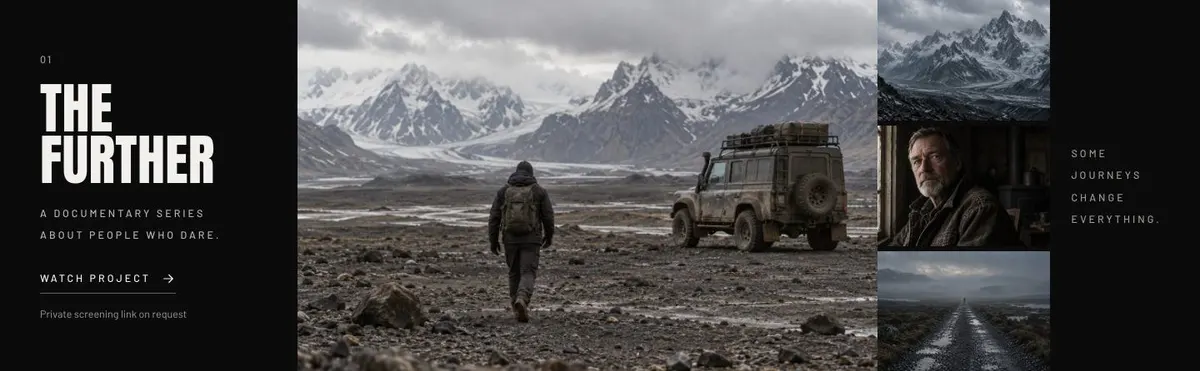
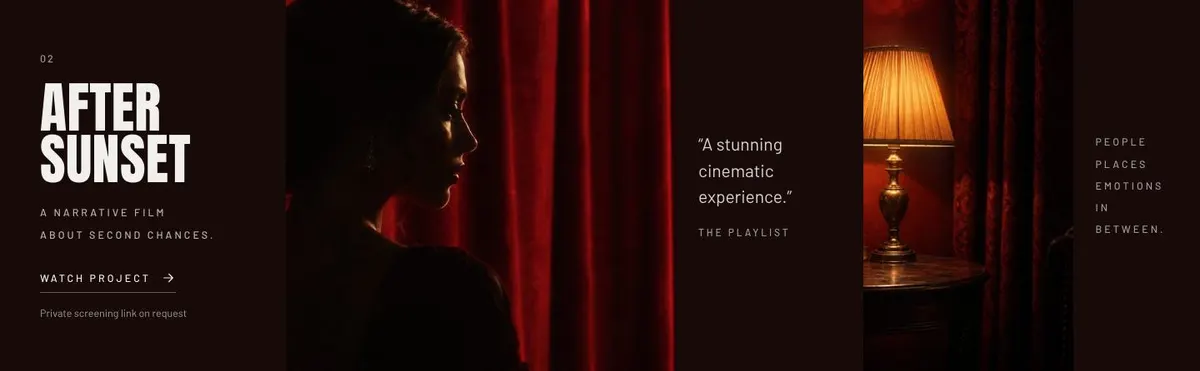
The page needs nineteen photographs in total. They appear in the Hero, Clients, Work, Quote, Process, Reviews, About and Contact bands. Gather the work before changing the copy. The largest burden is in Clients and Work, so those areas need enough usable material to feel like evidence of a real practice rather than a thin selection.
Writing it for the business
Starting from this template costs no credits. Rewriting its copy with AI costs about 20 credits. A useful brief names the trade, the services that are genuinely offered, the locations served, the sort of commission sought and the action the business wants a visitor to take.
It should also identify the projects that will replace the sample work. Give each project a name, a short factual description and any approved quote. Name the client references that can be shown, explain the actual process, and list the questions the team is prepared to answer in public. That lets the rewrite preserve the page’s structure without inventing a studio story.
What to prepare before publishing
Prepare the visual material first: nineteen photographs assigned to their intended bands, with permission to use them. Then write the hero statement and supporting line, two project descriptions, a quote for the project band if one is available, and the service descriptions.
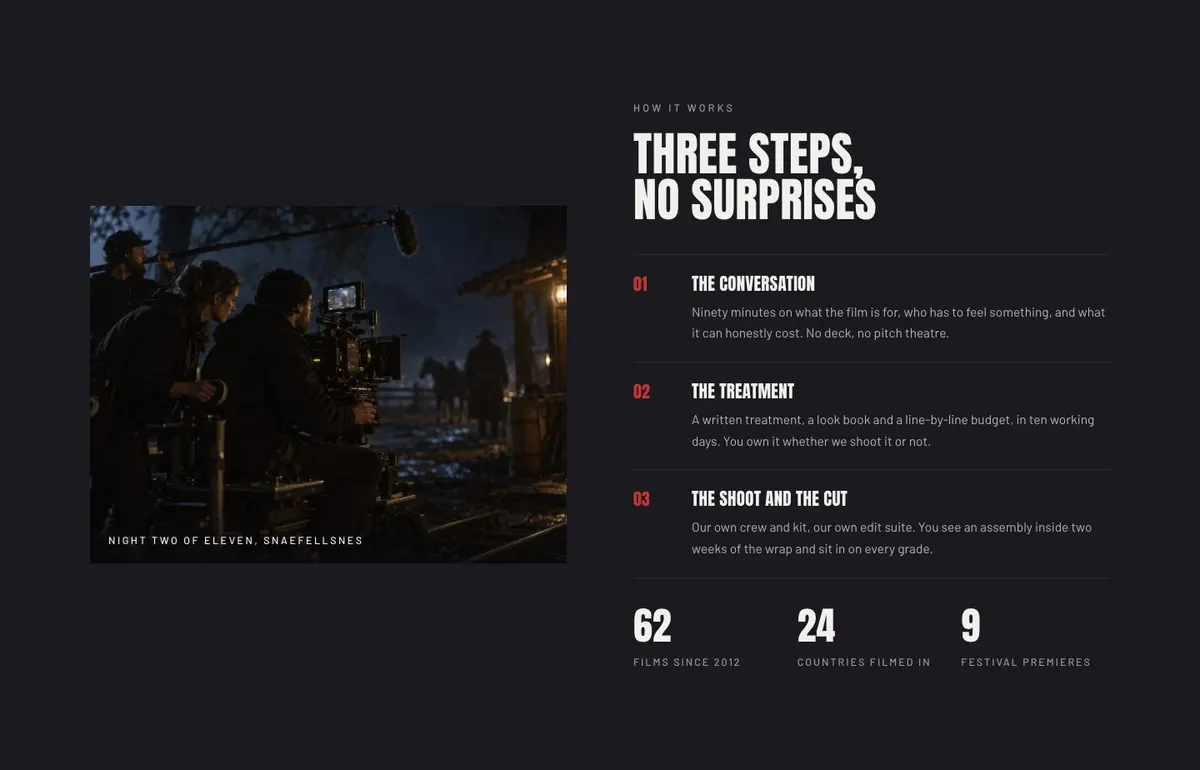
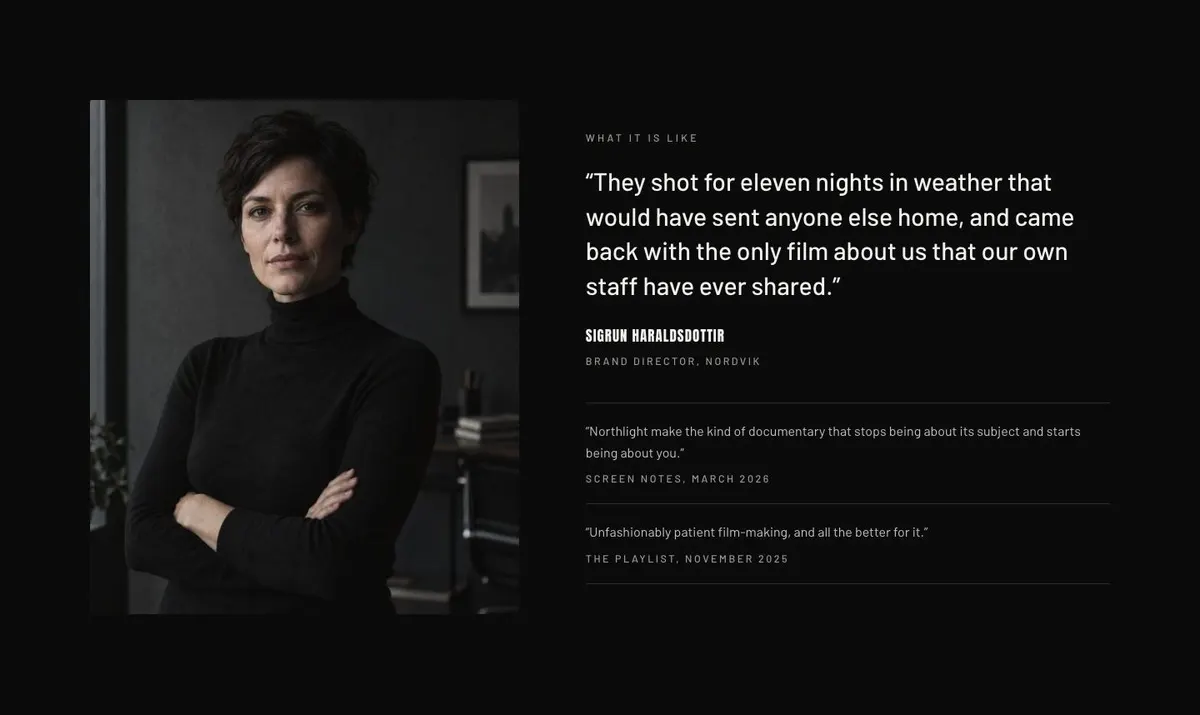
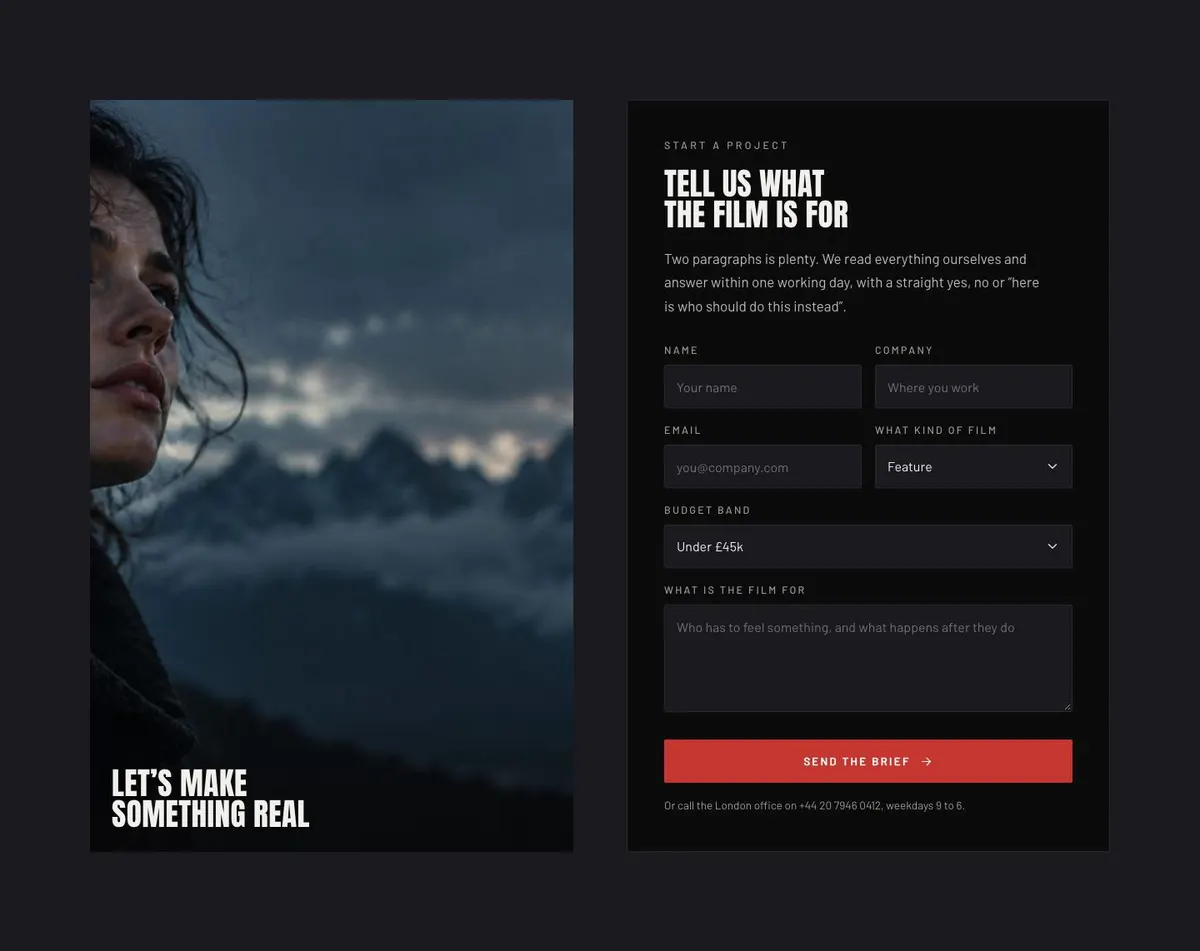
The business also needs three clear process steps, review copy that is approved for publication, a short About statement and the accordion answers. Finally, decide what the Contact form should ask for and who will receive the enquiries. The page promises a route to start a project, so the response process needs to exist before it goes live.
Variations for nearby creative trades
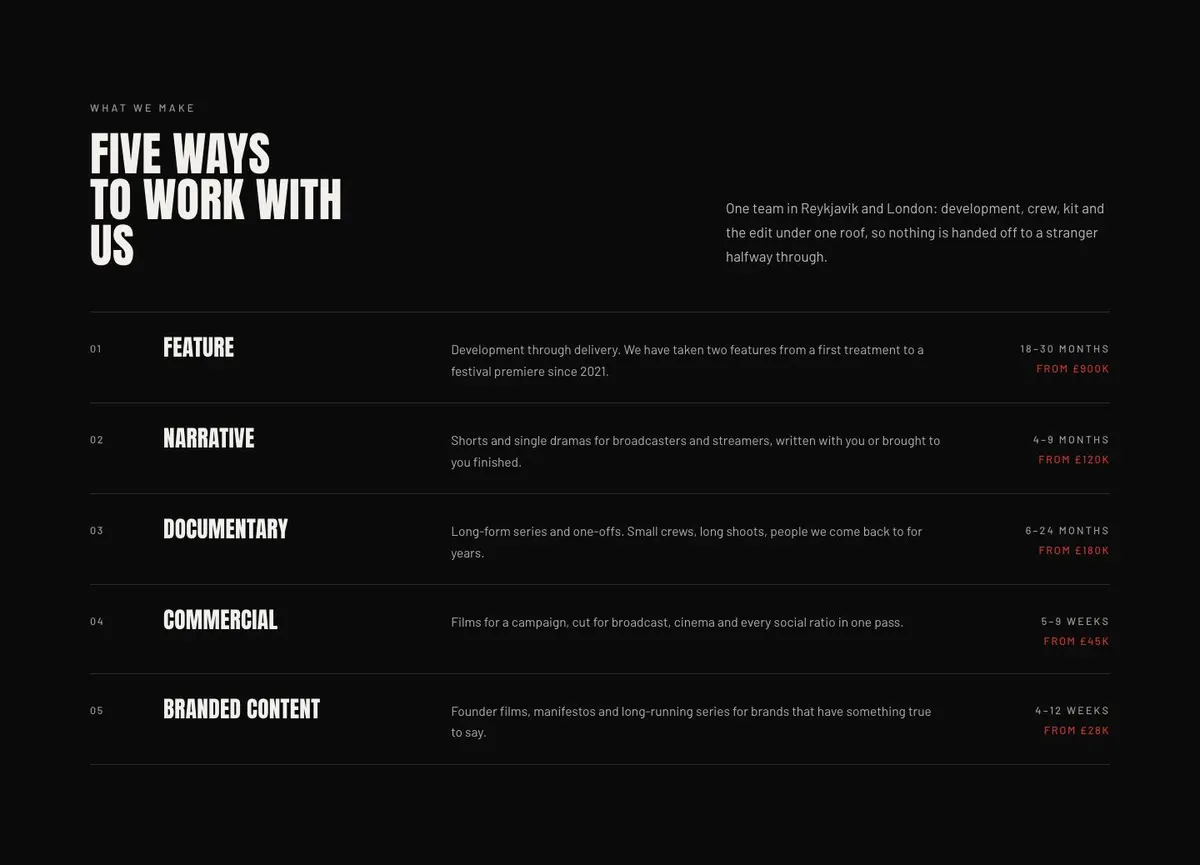
A film production company can use the two project bands for contrasting formats, such as documentary work and a narrative or commercial project. The services should reflect the stages the company genuinely covers, while the process should explain how a production moves from brief to delivery.
A photography studio can make Work and Quote into two distinct shoots, then use Services for the kinds of photography it takes on. The Contact copy should ask for the intended use of the images, as that changes the shape of an enquiry.
An architecture practice can use the project bands for completed work and make the services reflect its actual disciplines. Its process should describe the practice’s own route through a commission rather than borrowing the film language used in the demo.
When another template fits better
For a practice centred on digital products and product work, see Product Design Studio. For a broader directory-like studio presentation, see Studio Index. For a more agency-focused offer, see Growth Agency or Bold Agency. For more templates in this area, visit agencies and studios.
Before you publish
- Check that every photograph is approved for use.
- Replace the sample project names and descriptions.
- Make services match the work the studio actually delivers.
- Test the enquiry route and who receives it.