Drop LaunchLanding page template
A drop launch page, converting on a waitlist sign-up
A magazine-masthead page for streetwear drops and limited editions: the pieces and run sizes, a lookbook, how the drop works and a list that gets the link first.
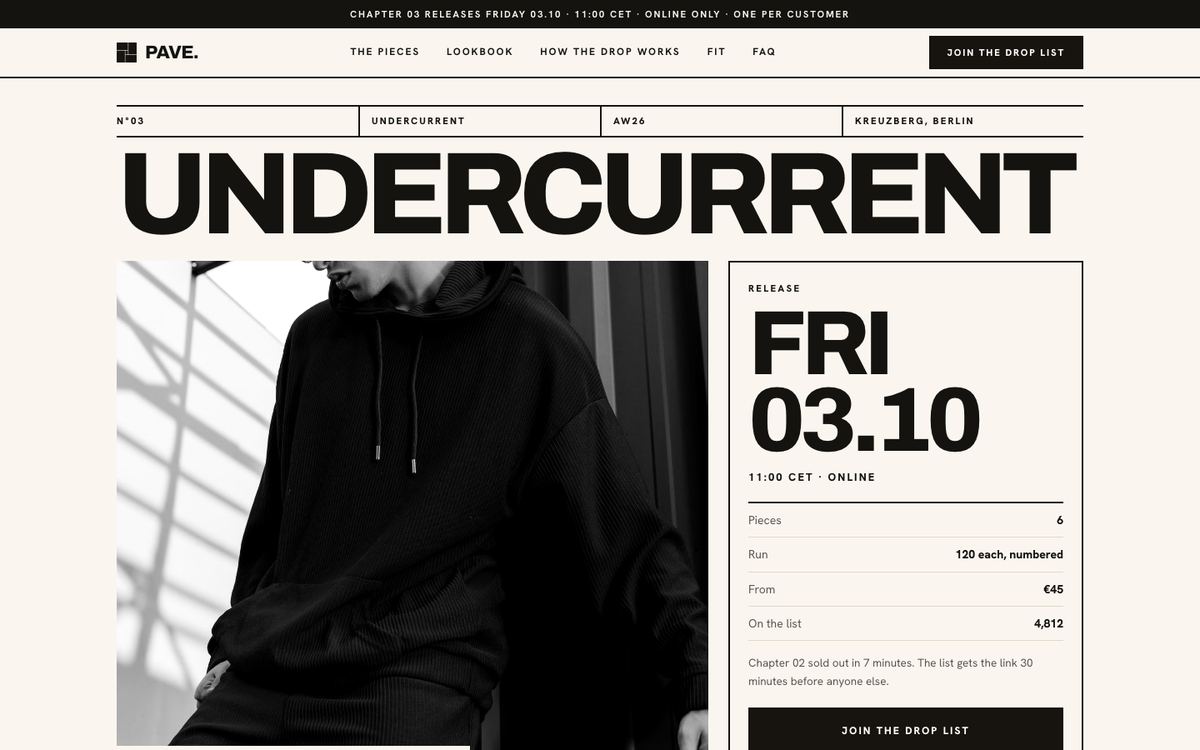
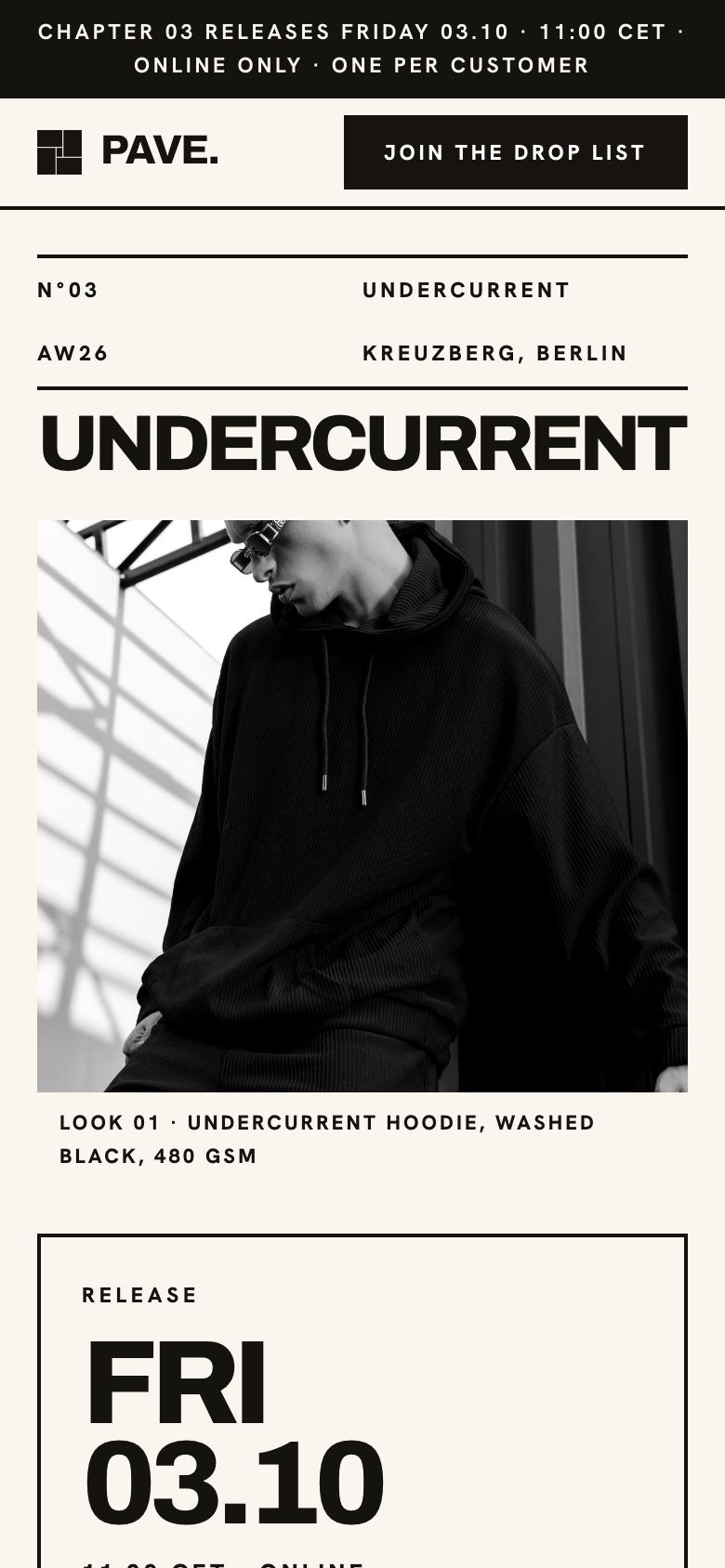
A drop launch page, converting on a waitlist sign-up
A magazine-masthead page for streetwear drops and limited editions: the pieces and run sizes, a lookbook, how the drop works and a list that gets the link first.
Switch devices, scroll the full page, or open the live demo. This is the exact layout, photos and sample text a new page starts with.
The headings are the demo's own sample text. Your brief, or the AI copy pass, replaces them; the structure stays.
Undercurrent, chapter 03
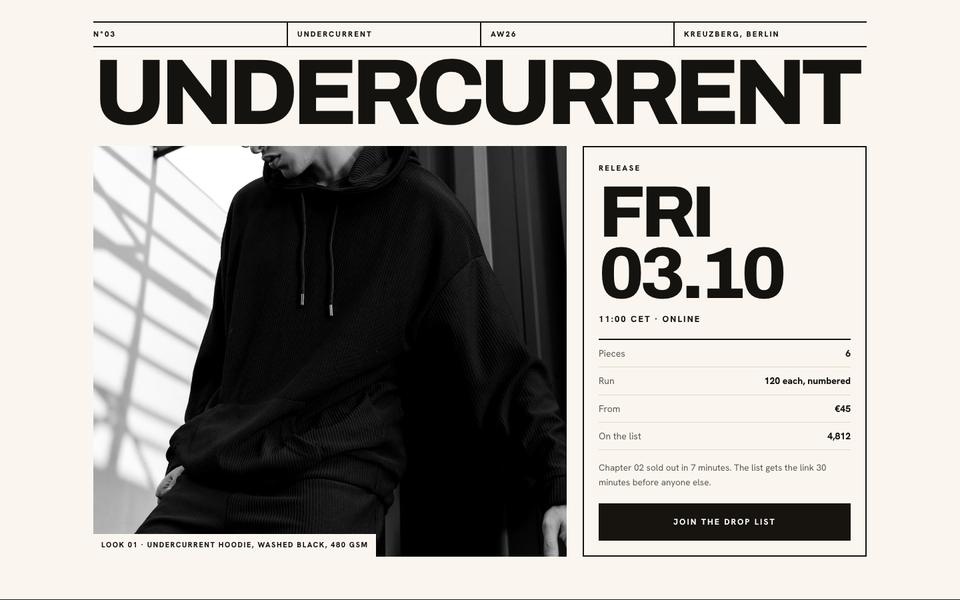
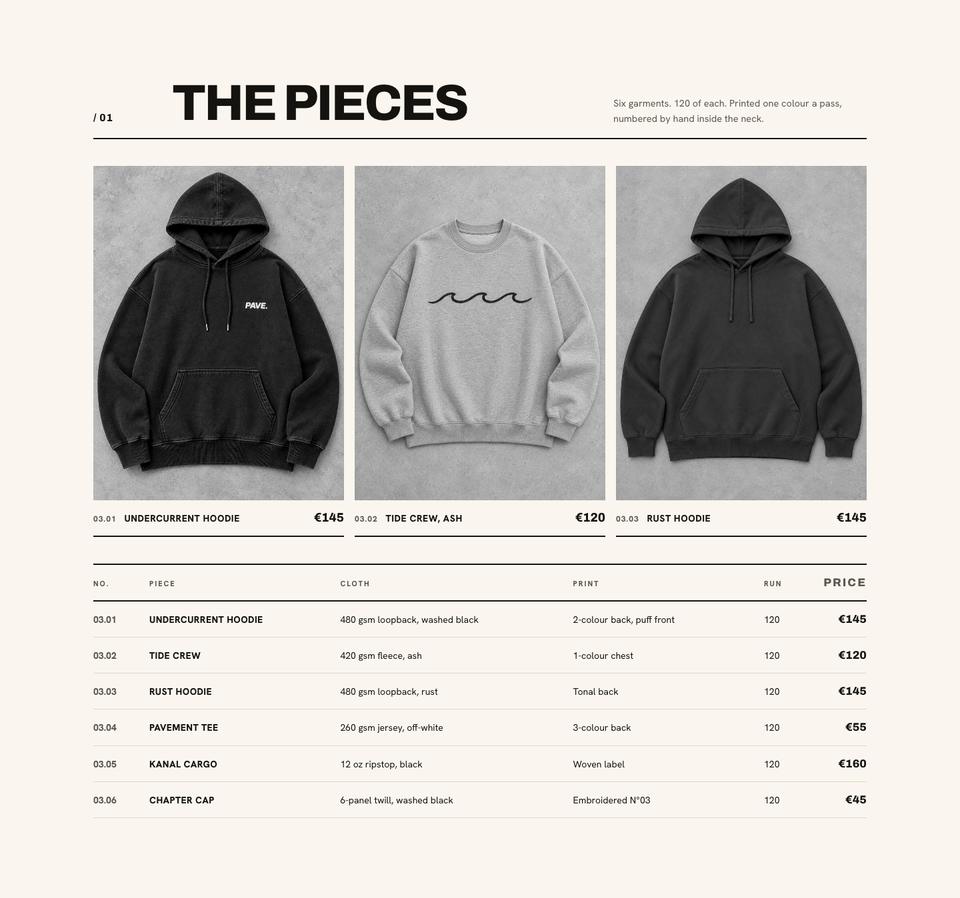
Six garments. 120 of each.
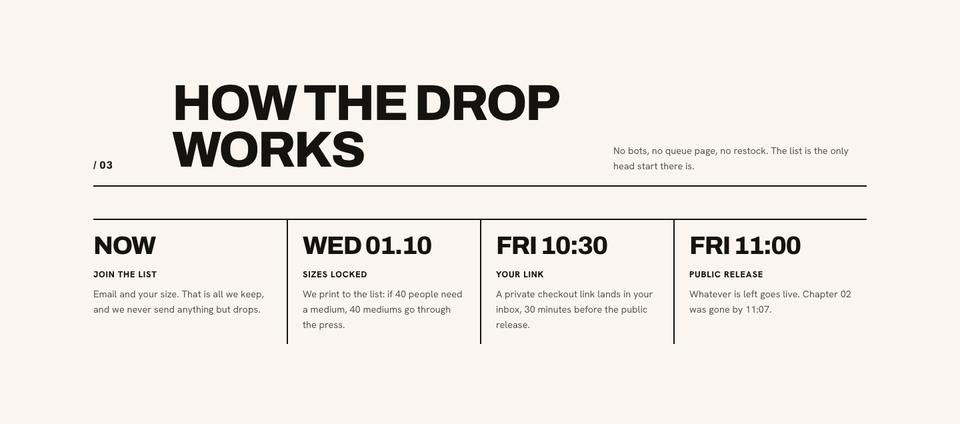
No bots, no queue page, no restock.
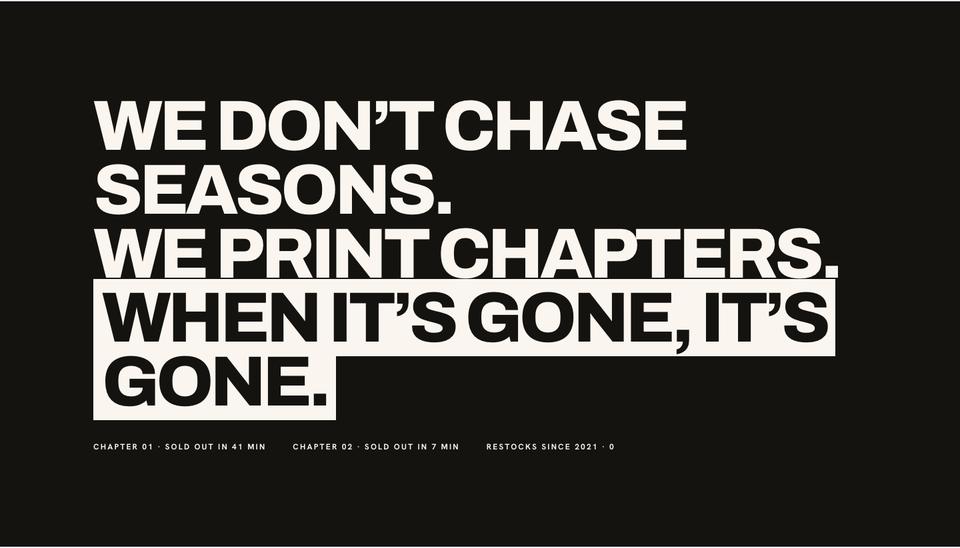
When it's gone, it's gone.
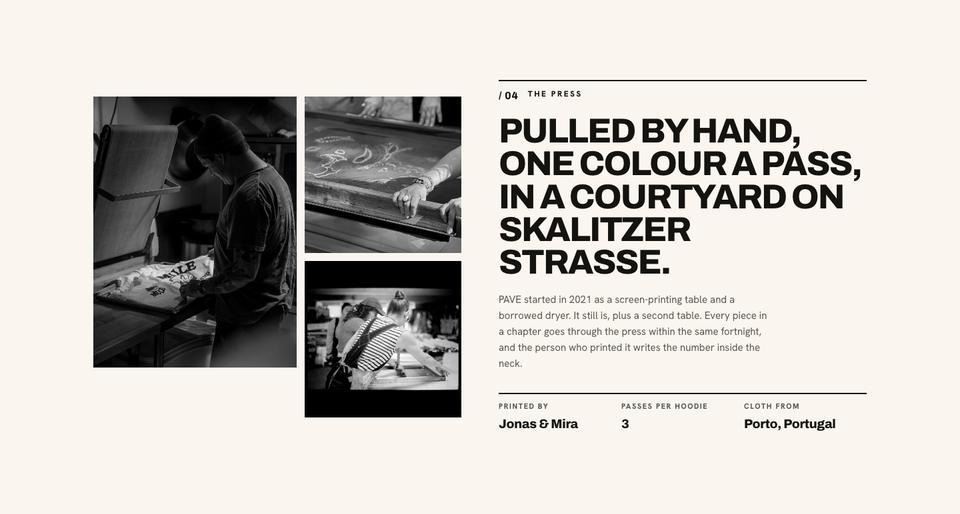
Pulled by hand, one colour a pass
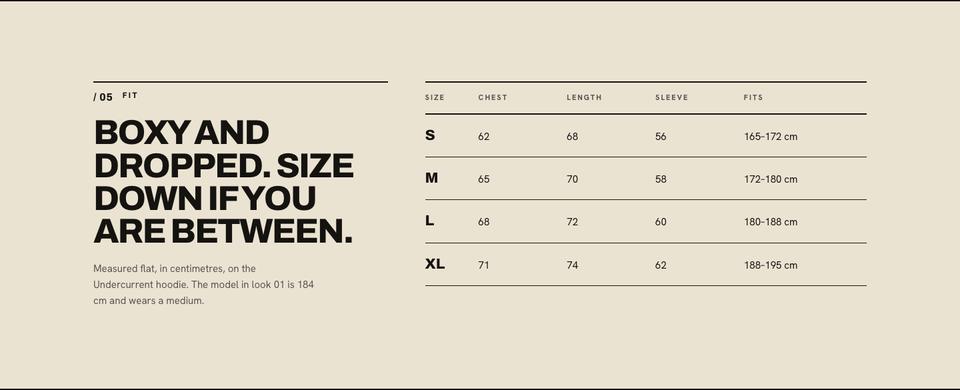
Boxy and dropped. Size down if you are between.
Get the link first.
A limited drop does not need a catalogue. It needs the date, the pieces, the rules and a list. Drop Launch is laid out like a magazine masthead, with numbered sections, heavy type and a lookbook, and it treats the drop as a chapter in a story. The page converts on a sign-up that gets people the link before anyone else.
It suits streetwear and sneaker drops, fashion labels and capsule collections, limited-edition merch, creative collectives and music releases. Pick it when the launch has a countdown, a lookbook and a waitlist rather than a full product range.
The hero is a cover: chapter number, collection name, city, the lead look with its fabric, and the release date, number of pieces and run size. The pieces lists each garment with its number and price, and says how it was made and how many exist.
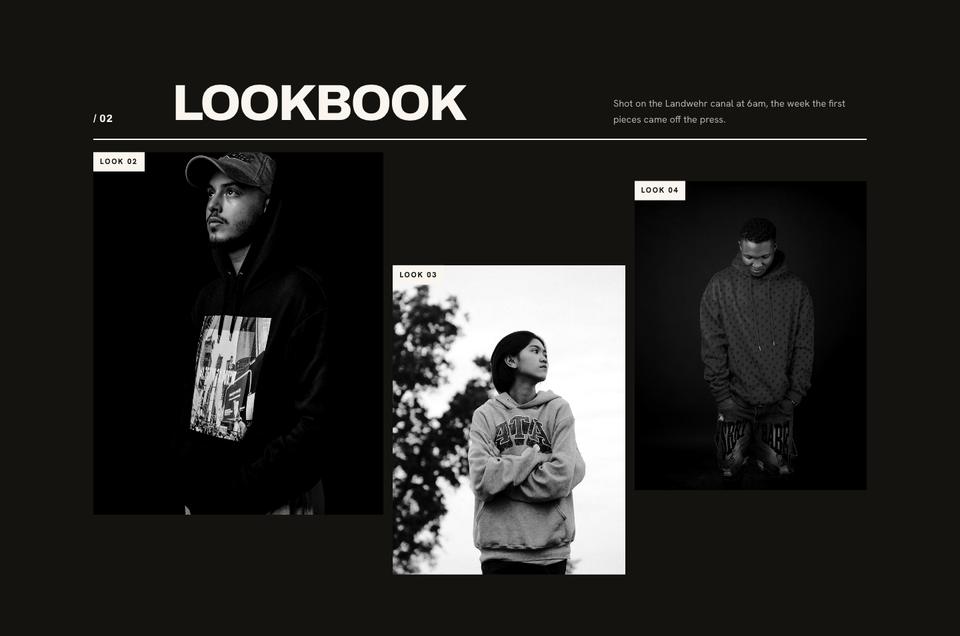
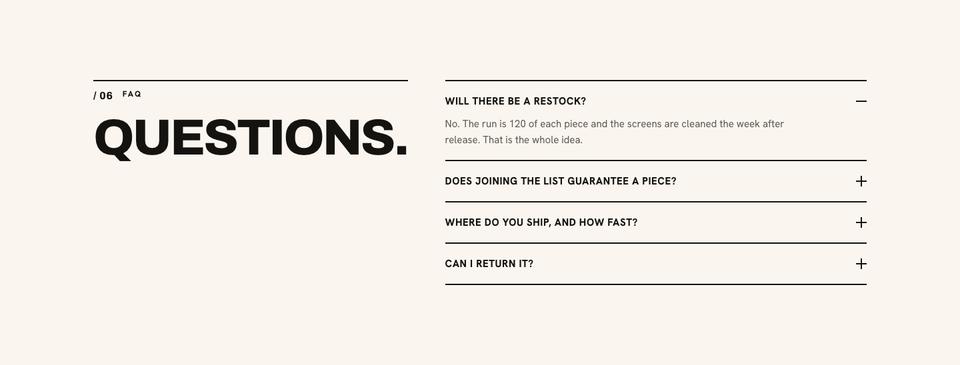
Lookbook shows the pieces worn, with a line on where and when it was shot. How the drop works sets the rules plainly: join the list, get the link early, no bots, no queue page, no restock. A past chapters band gives sell-out times from earlier drops, which is all the social proof a drop needs.
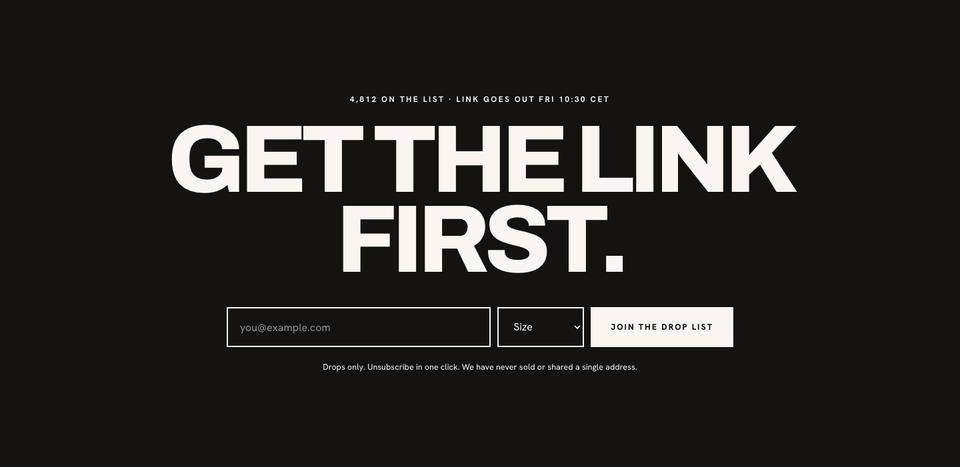
The press tells the making story, fit gives measurements and a sizing tip, questions handles restocks and shipping, and the page closes with the drop list form, showing how many are on it and when the link goes out.
Three schemes are included, Ink black, Forest and Brick red, all on a warm paper ground so photographs look printed. Headings are Archivo or the condensed Anton. The demo only uses seven photographs, which suits a small run: a cover shot, a few looks and the workshop.
Edit piece names, numbers and prices directly on the page. For each new chapter, duplicate the page and ask the AI to rewrite the pieces and story from your notes.
Starting from the template is free of credits. For about 20 credits, the AI can write the copy for your release into the same layout. Tell it the chapter or collection name, release date and time, each piece with price and run size, how it is made, the drop rules, sizing, and how early the list gets the link.
A launch page has a short life and a lot of traffic, so settle the details before you publish. Fix the release date, time and time zone, the number of pieces and the run size of each, the prices and whether pieces are numbered. Decide how the waitlist gives an advantage, whether it is an early link, a time window or a code, and state it exactly. Visitors on drop day will test every promise.
The fit section needs measurements taken flat for each size and the height and size of the model in the lookbook. The lookbook uses seven photographs, so the shoot is worth planning around one location and one light. If you print or make the pieces yourself, the making section is where to show it, with the process and the place. Also decide what happens after the drop: whether the page switches to a sold-out state, or points to the next chapter’s list.
A sneaker release can swap the pieces for colourways and sizes, with a raffle or draw explained in the how-it-works section. Fashion labels launching a capsule collection often add a short designer statement and stockists. Limited merch for a creator or collective can keep the countdown and list, with the pieces section showing each item. For a music release, the pieces become formats, such as vinyl variants or bundles, and the lookbook becomes artwork and studio photographs.
Drop Launch is about scarcity and story. A sale with a hard end time is better on Dated Flash Sale, and a waitlist for ceramics, knitwear or editions with a gentler tone suits Waitlist Drop. Fashion houses and ateliers presenting a collection rather than a drop will like Maison Monochrome, and a brand selling one product for pre-order should look at Pre-order Launch.
There are more creative layouts on the agency, studio and creative templates page, and selling layouts on the ecommerce templates page.
 Bold AgencyCreative & studios · Archivo
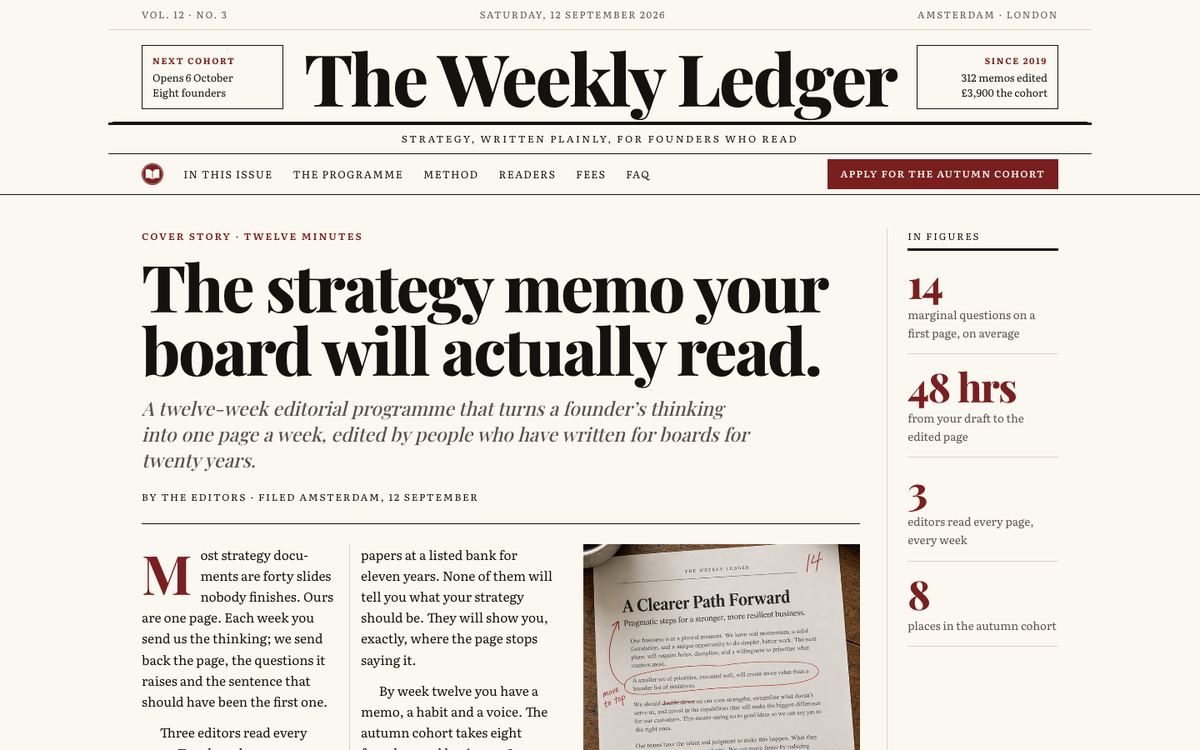 Broadsheet EditorialCreative & studios · Playfair Display
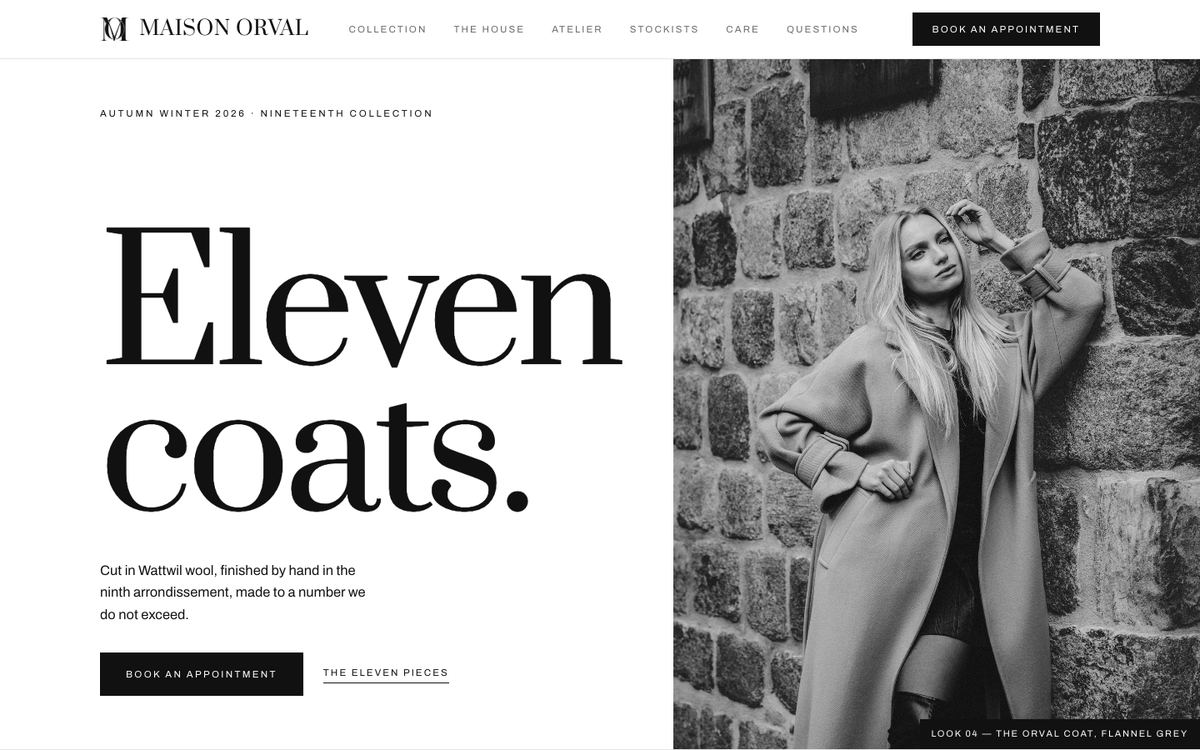 Maison MonochromeCreative & studios · Prata
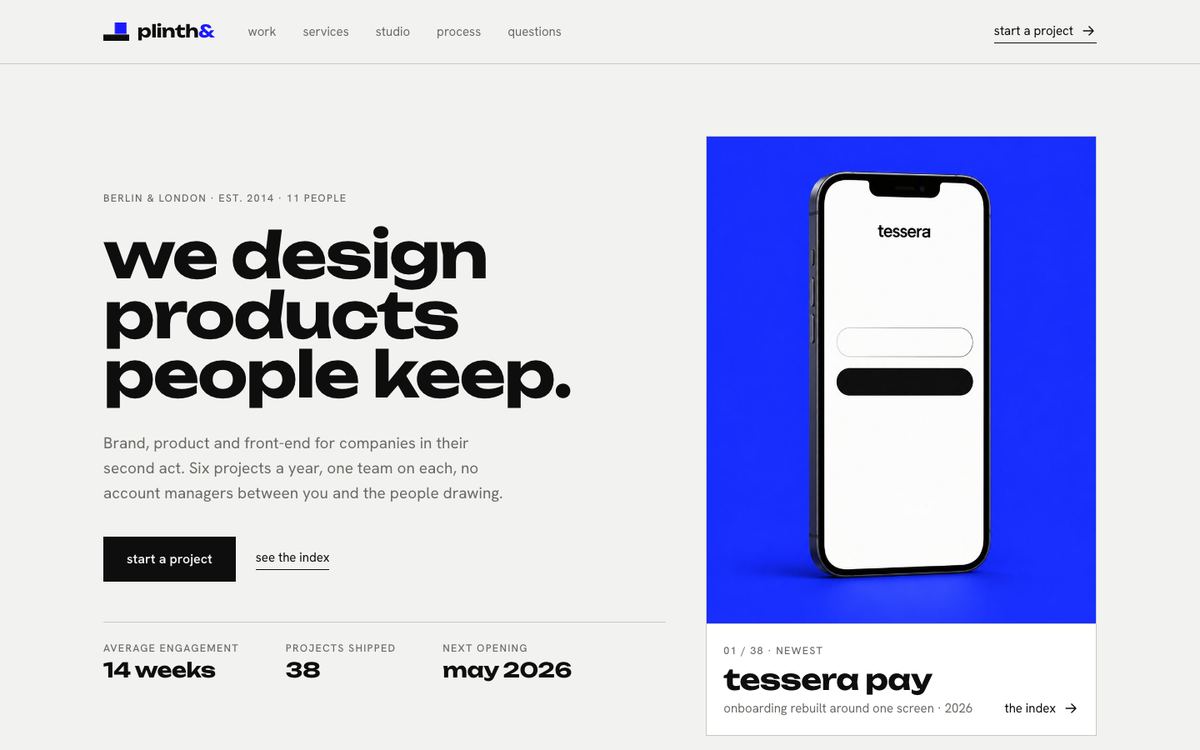 Studio IndexCreative & studios · Unbounded
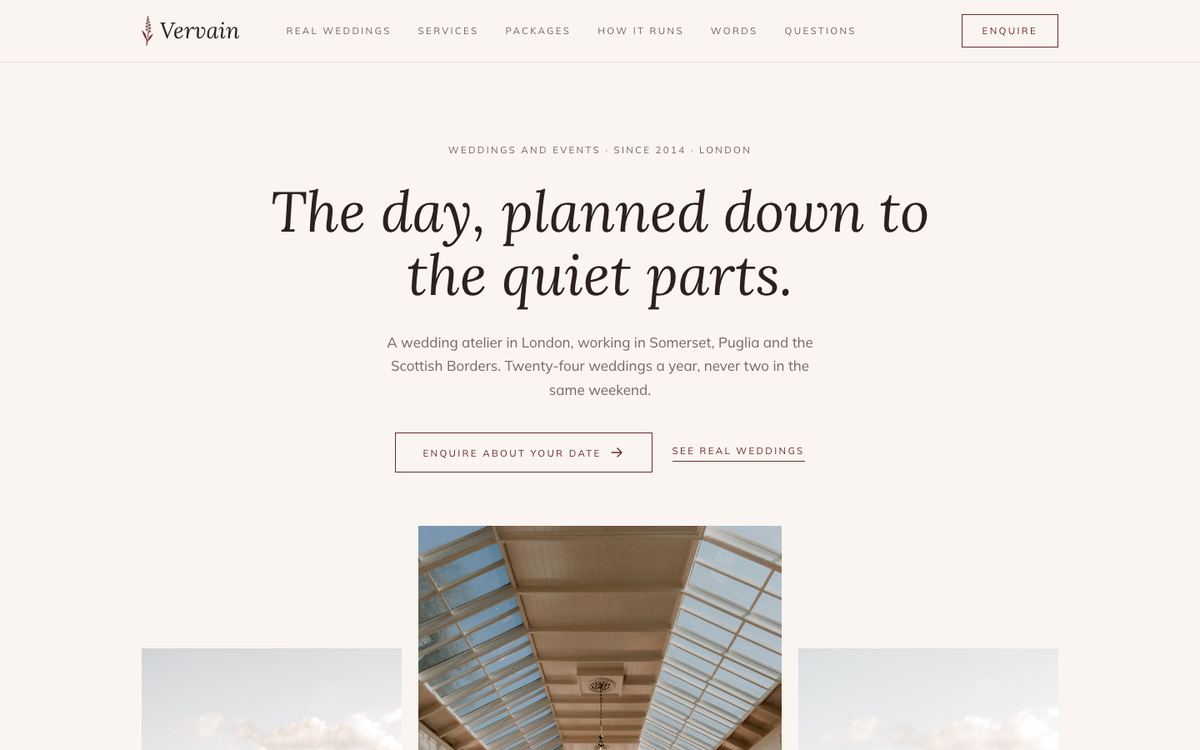 Wedding AtelierCreative & studios · Lora
 Product Design StudioCreative & studios · Unbounded
Starting from the theme costs no credits. Or describe the offer and the AI draws a new page in this style, usually in about two minutes.
