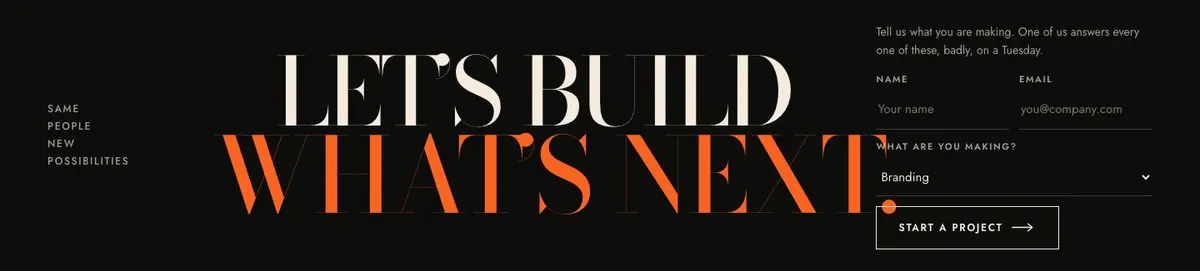
A growth agency page that makes the work do the talking
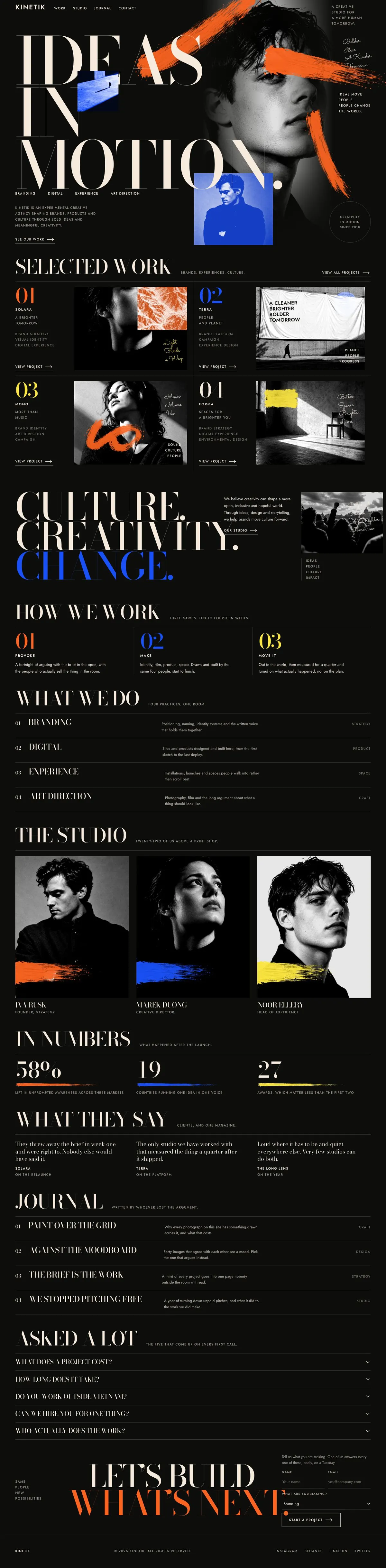
Someone searching for a Growth Agency needs a page that establishes why the team sees a problem differently, then gives enough proof to start a conversation. A generic agency page can reduce that to a list of services and broad promises. This design takes a more editorial route. It puts a point of view, selected work, the people behind it and a written enquiry in one considered sequence.
It is a close fit for growth work when growth comes through brand, creative direction, campaigns, content or production. The page has room to explain how the studio works and to show what happened after a launch. It does not provide a calendar link, so it is better for businesses that qualify projects through an enquiry. If the offer is centred on digital product work, Product Design Studio may be the clearer starting point.
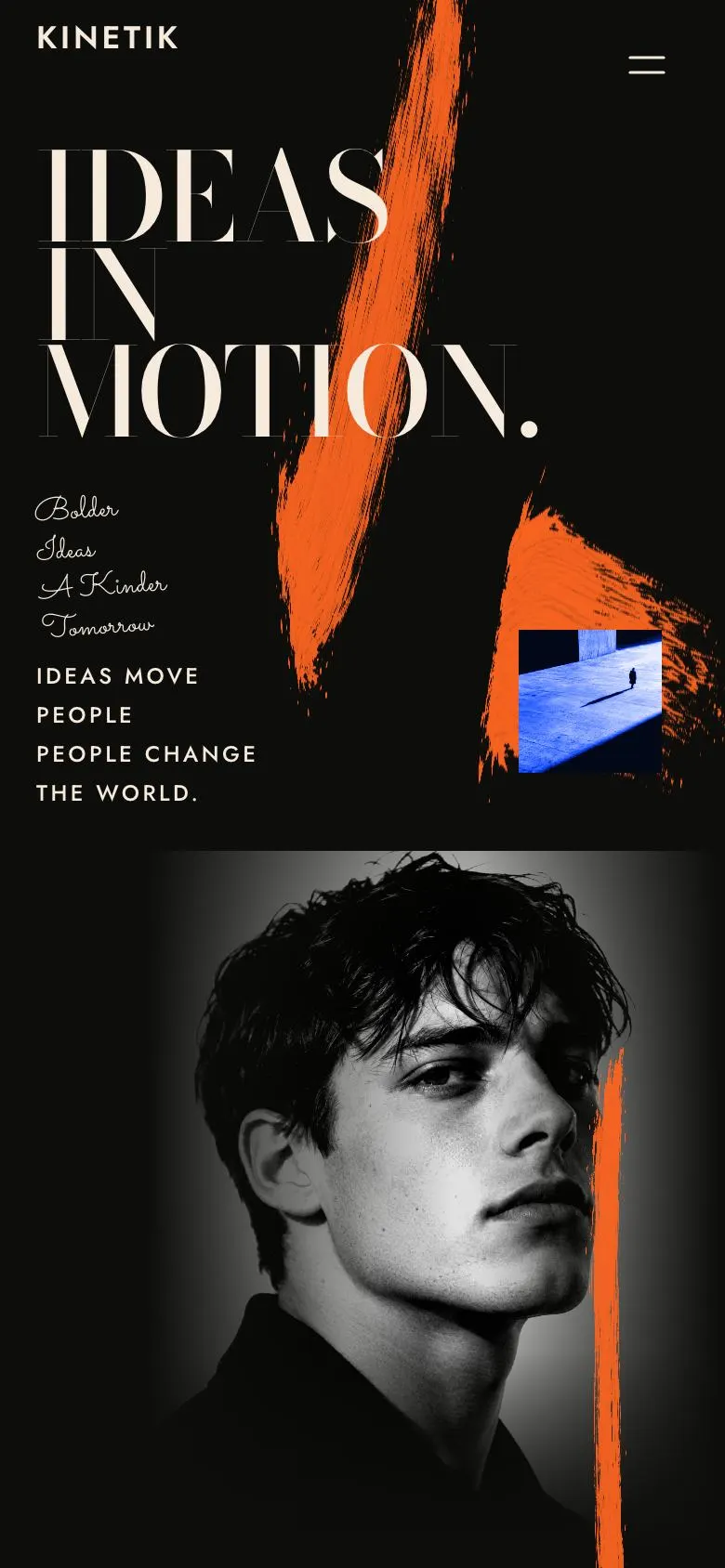
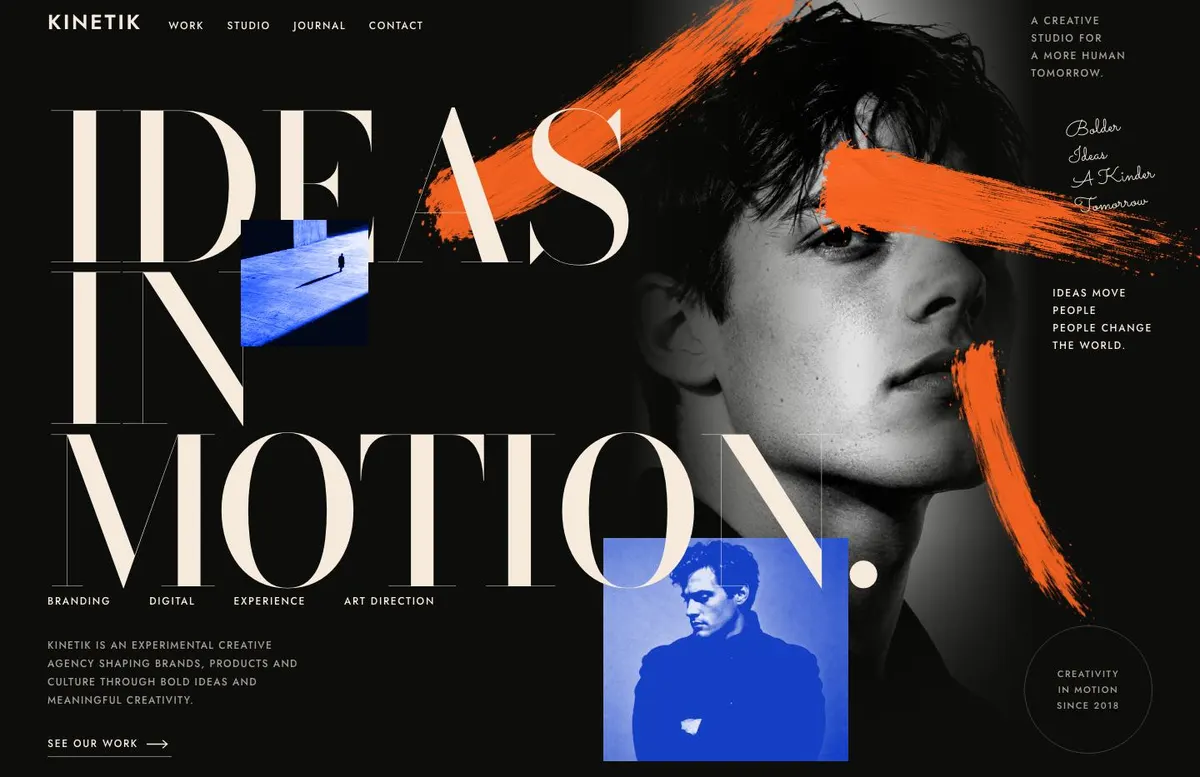
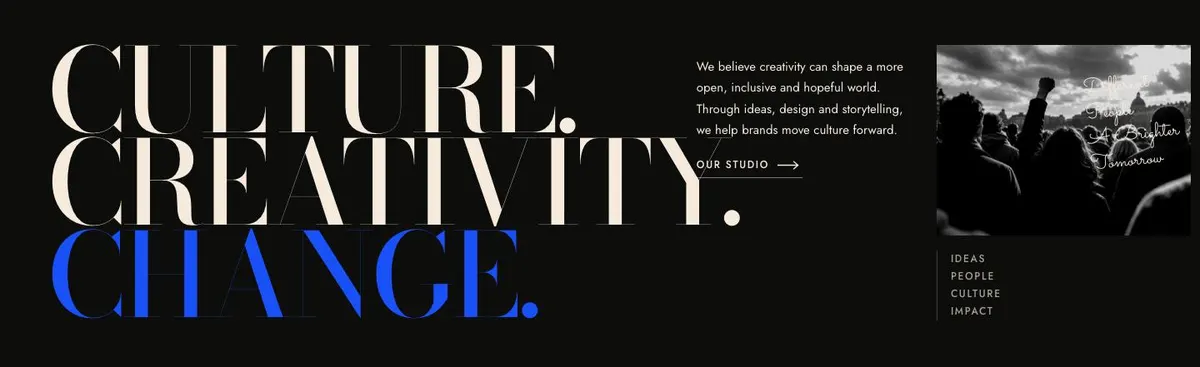
The visual direction is dark, editorial and typographic. It suits a business with a defined creative voice and work worth looking at closely. It will ask more of the material than a simple service page: the photographs, project descriptions and written point of view need to feel like they belong together.
Adapting the design to the studio
The template uses a dark ground with light type and an orange accent. Its available schemes are Signal, Acid, Flare and Gold. Select one based on the existing identity and image work, then keep the choice consistent across the page. A scheme cannot rescue unrelated photographs or weak case-study writing.
Bodoni Moda is the display face and Jost is the body face. Alternatives include Sacramento with Jost, and Playfair Display with Jost. The display type carries much of the editorial character, while the body copy needs to remain direct and readable. The page uses uppercase headings, so shorter headings will usually serve the layout better than long descriptive titles.
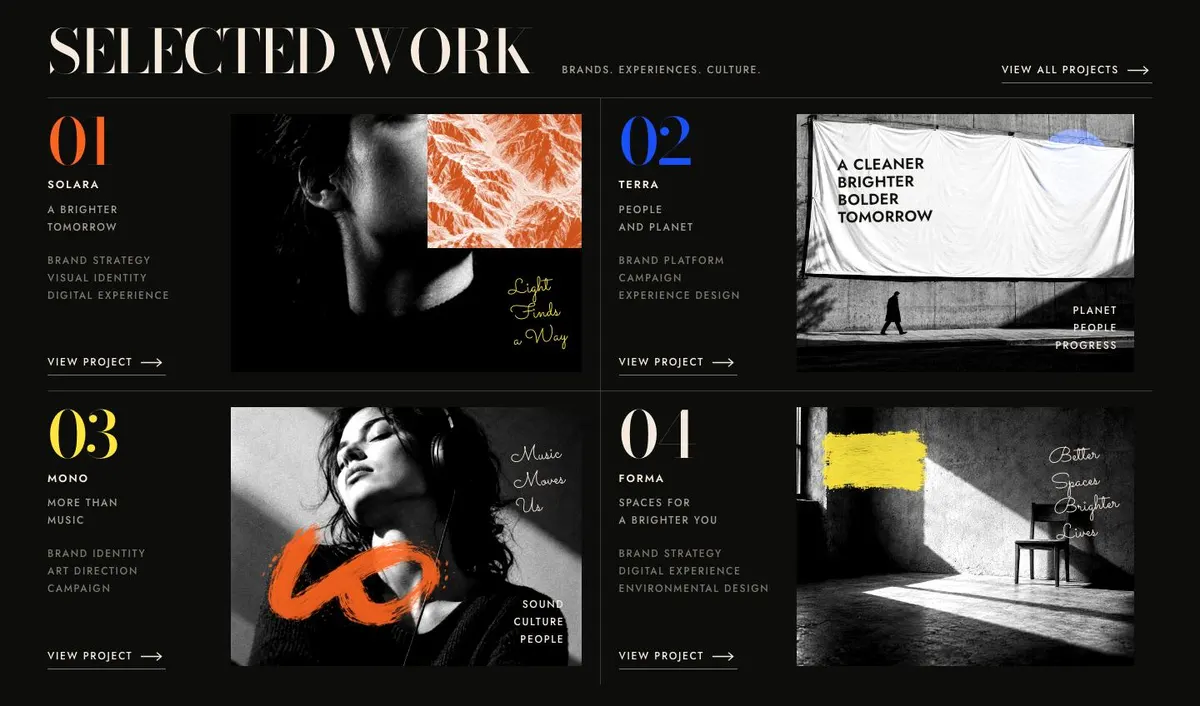
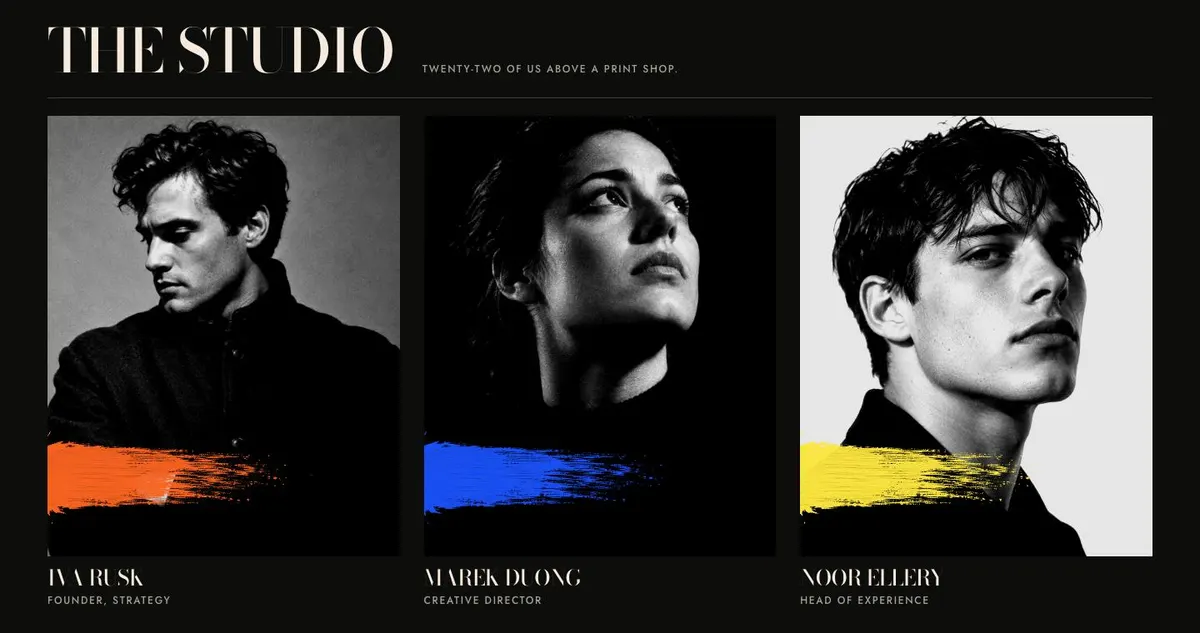
Twelve photographs are needed across the Hero, Work, Culture and Studio bands. The largest share belongs in selected work, while the opening and studio sections also rely on images. Prepare a deliberate mix of project photography, campaign material, product or environment details, and people where those are part of the story. Do not fill the page with stock imagery that does not appear in the work.
Writing it for the business
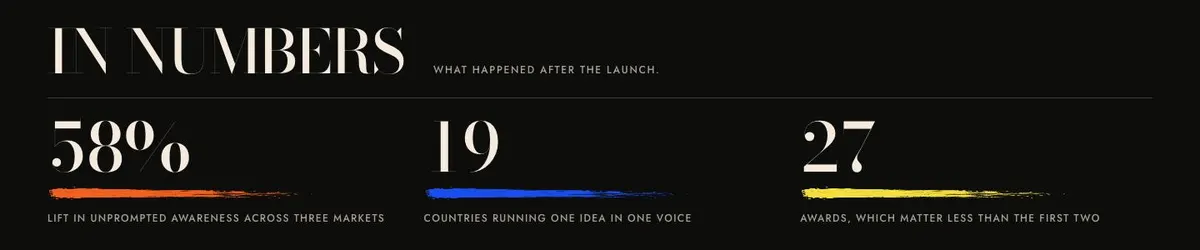
Starting from a template costs no credits. Rewriting the copy with AI costs about 20 credits. A good brief names the business, the audience, the offer, the kinds of projects sought and the tone that already sounds natural. It should also state which completed projects can appear, what evidence can be used in the numbers section and what enquiries the team can realistically take on.
Give the AI real source material rather than instructions to sound creative. A short positioning statement, project notes, service descriptions, a founder biography and approved client language will lead to more useful copy. Flag claims that must not be made, especially outcomes that cannot be verified or client names that cannot be published.
What to prepare before publishing
Start with the opening statement and supporting line for the Hero. They need to say what the business is trying to change or make, in language that belongs to the business. Next, select the case work and gather the images, project titles and short descriptions. The work section is the centre of the page, so it should be settled before polishing the rest.
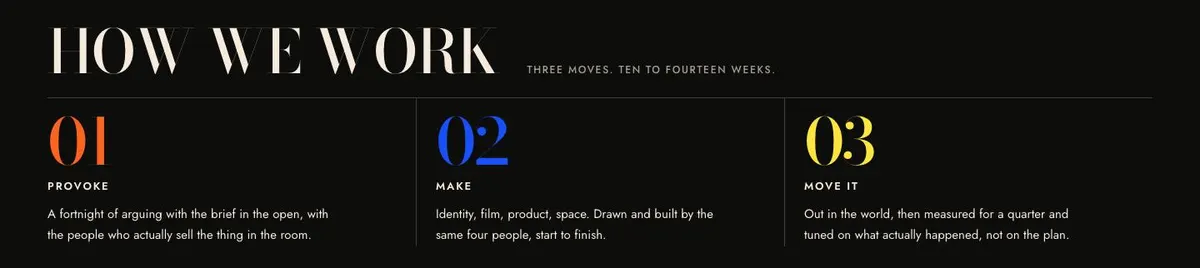
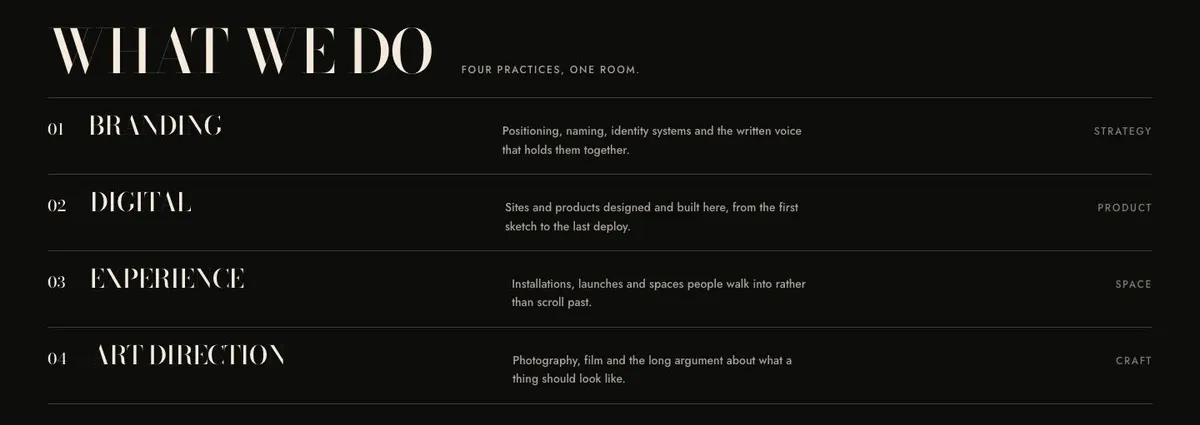
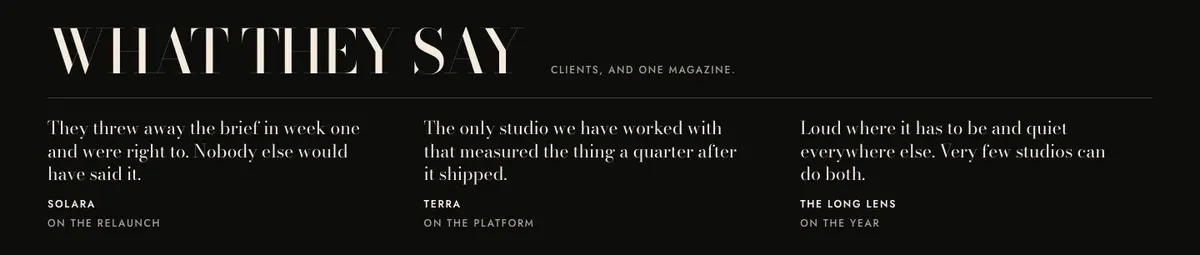
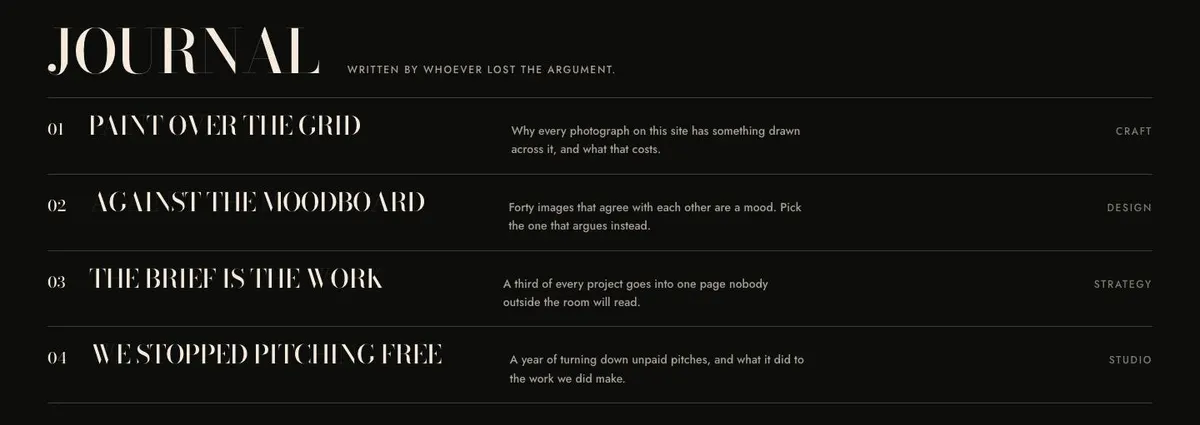
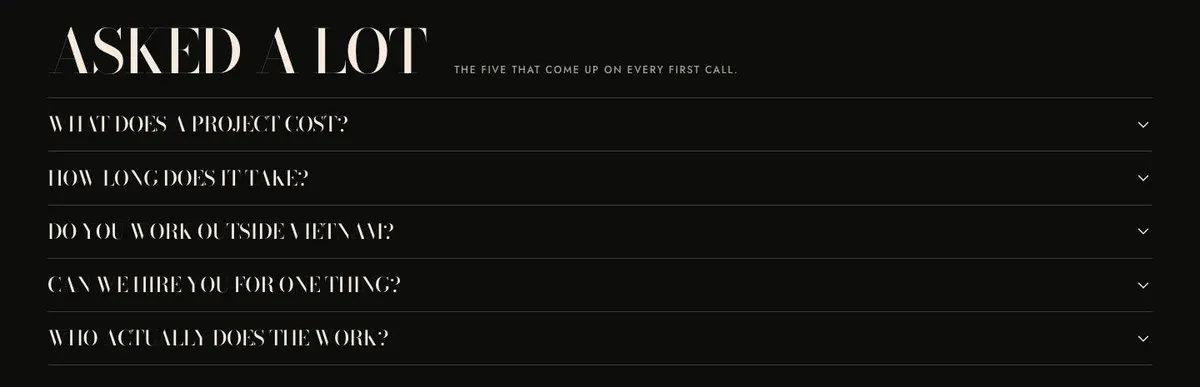
Write the three working stages and the four practices in plain terms. Prepare a short studio introduction, team or workspace images where appropriate, and any launch outcomes for the numbers area. Obtain permission for the chosen quote and decide whether there are journal pieces ready to publish. Finally, draft the answers for the common questions and agree what information the enquiry form should collect.
Variations for nearby creative trades
A branding studio can make the selected work area about identity systems, launches and the client contexts those identities needed to address. Its practices should describe the actual branding offer, while the journal can explain decisions around naming, identity or rollout.
A production company can use the Hero and Work photographs to establish its visual range, then make the working stages clear about how a commission moves from idea to finished work. The Studio band can focus on the people and collaborators involved, if that is part of how projects are delivered.
An art-direction practice can make the point of view more prominent, choose fewer but stronger projects, and use Culture to state the references or principles that connect them. In each variation, the enquiry should ask for the context needed to judge fit.
When another template fits better
Bold Agency is worth considering when the agency needs a different agency-focused starting point. Digital Studio may fit a studio whose offer is explicitly digital. Studio Index is a neighbouring option for a studio-led presentation. Raw Monospace may suit a more stripped-back technical or experimental voice. Browse the wider agencies and studios collection before committing.
Before publishing
- Check that the opening claim matches the work shown below it.
- Use only approved project images and client quotations.
- Make the four practices and three working stages accurate.
- Test that the enquiry route asks for useful project context.