For offers that are made of words
If what you sell is thinking, writing or editing, a page full of icons undersells it. Broadsheet Editorial is set like a newspaper: a masthead, serif columns, roman-numbered sections and a single oxblood rule. It reads as considered, and it lets strong sentences do the persuading.
It suits publishers, newsletters and paid research, essayists and columnists, think tanks and policy groups, cultural institutions and festivals, and consultancies that sell a point of view. Choose it when the brief is words-first and the page should feel like reading a good paper.
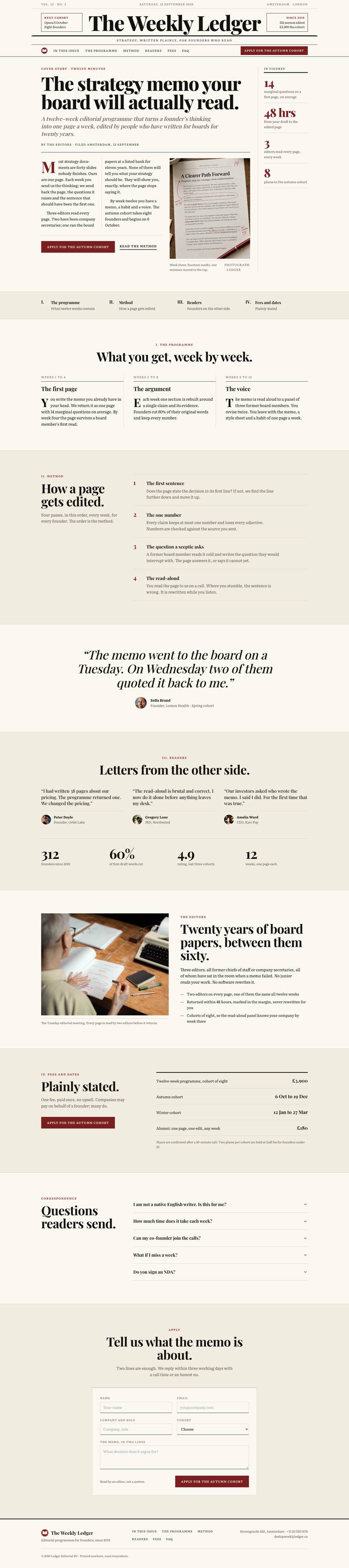
How the page reads, front to back
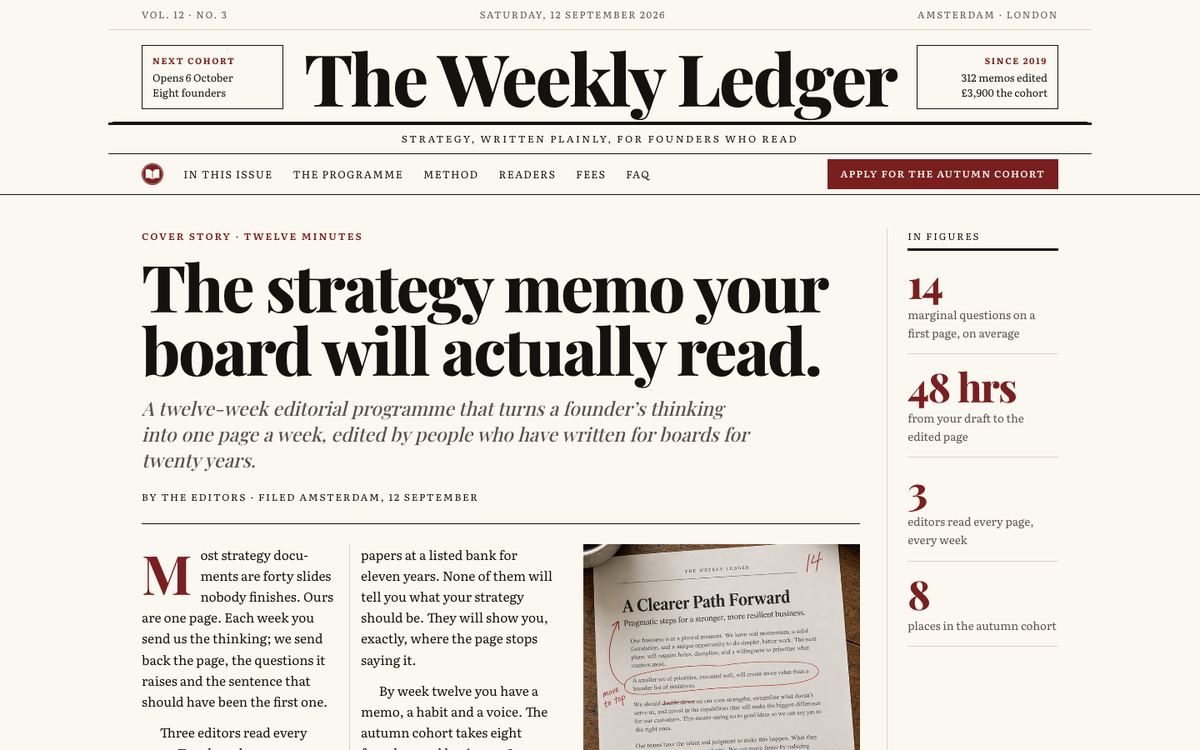
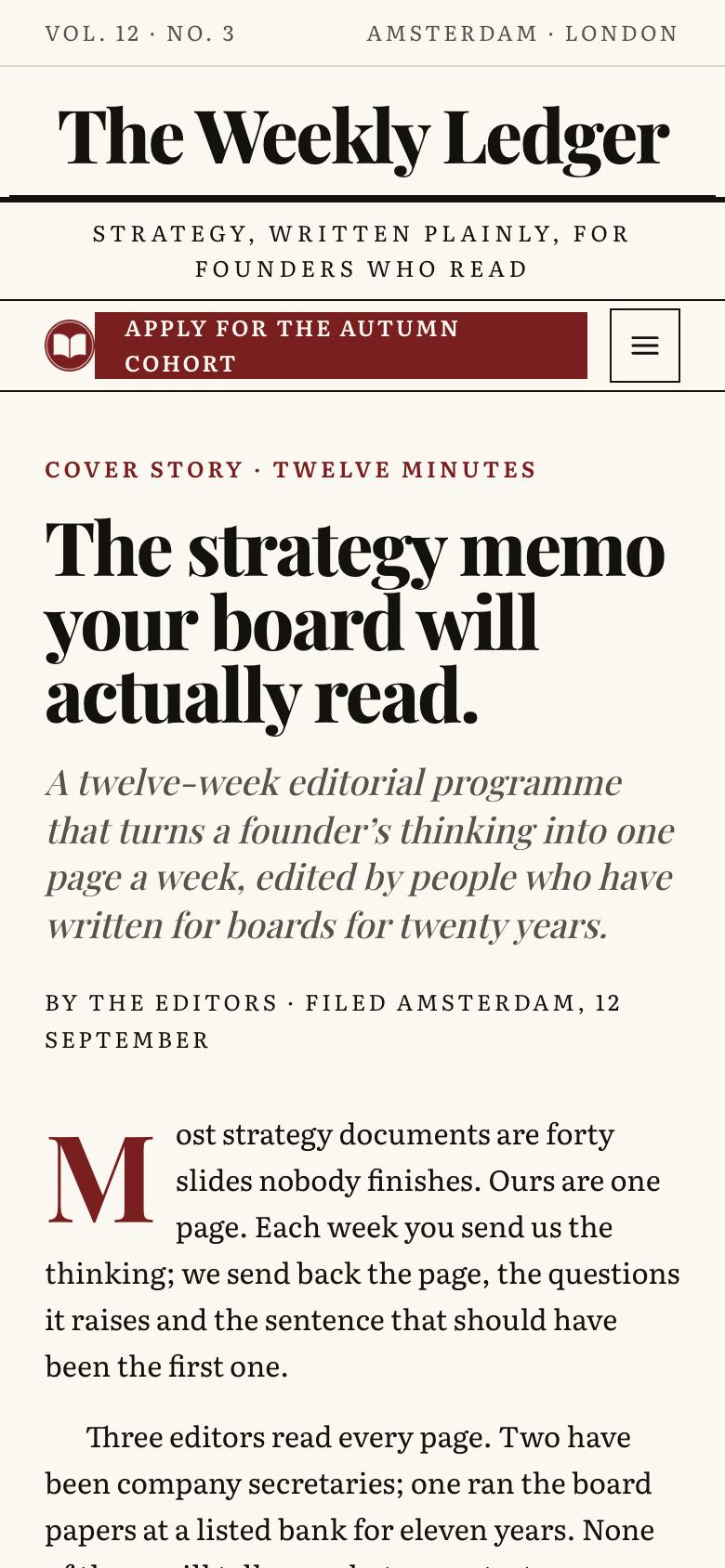
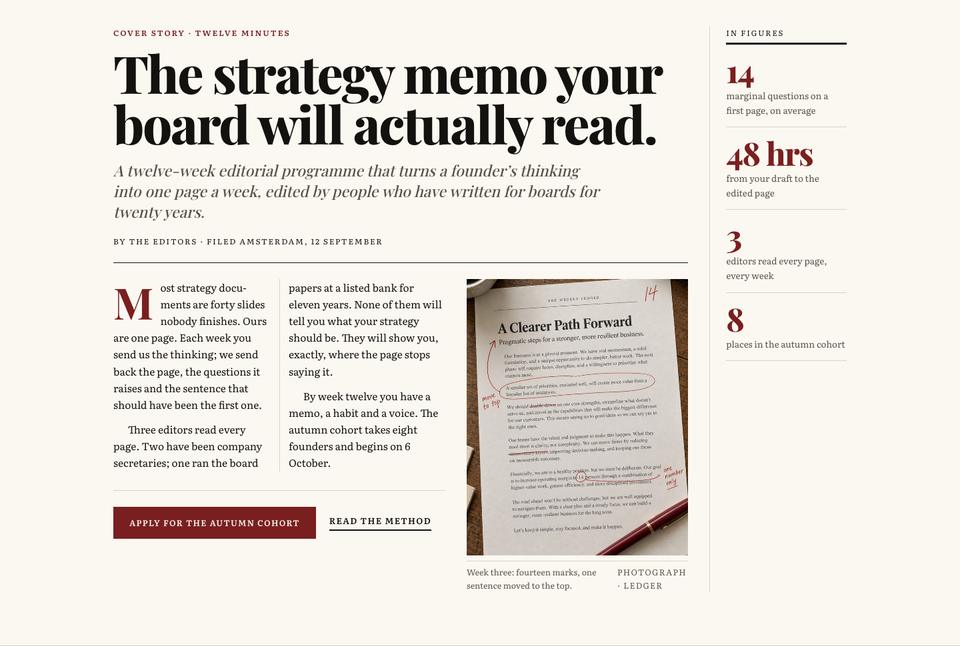
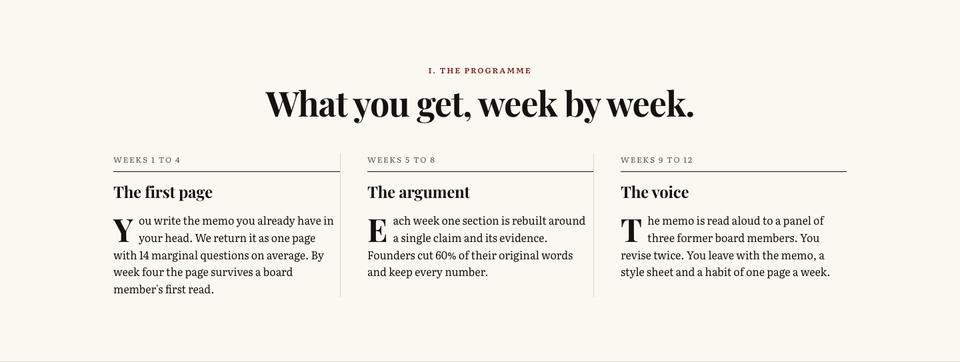
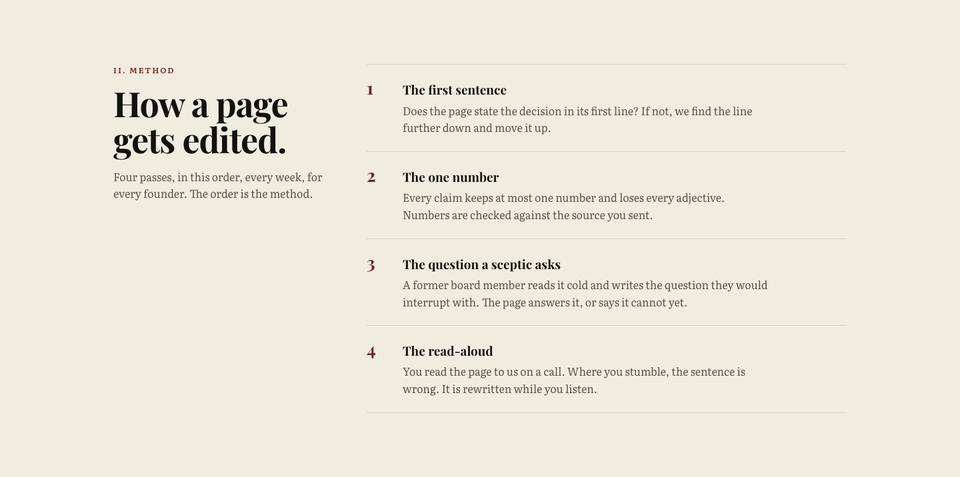
The cover story is the offer as a headline, “The strategy memo your board will actually read”, with a standfirst and reading time like a feature. I. The programme explains what the reader receives, broken into weeks, and II. Method describes the editing process as a fixed sequence, which is the product’s real difference.
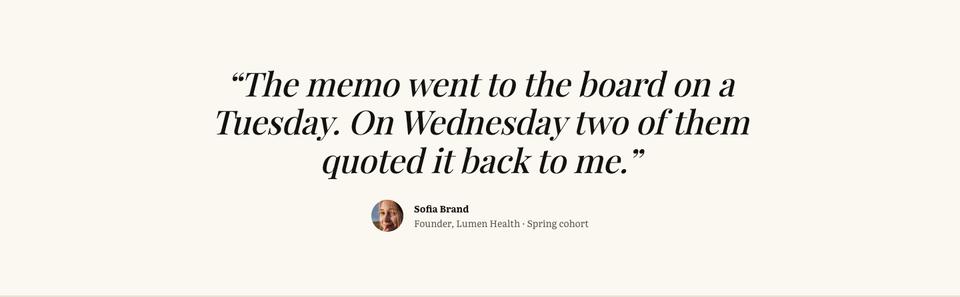
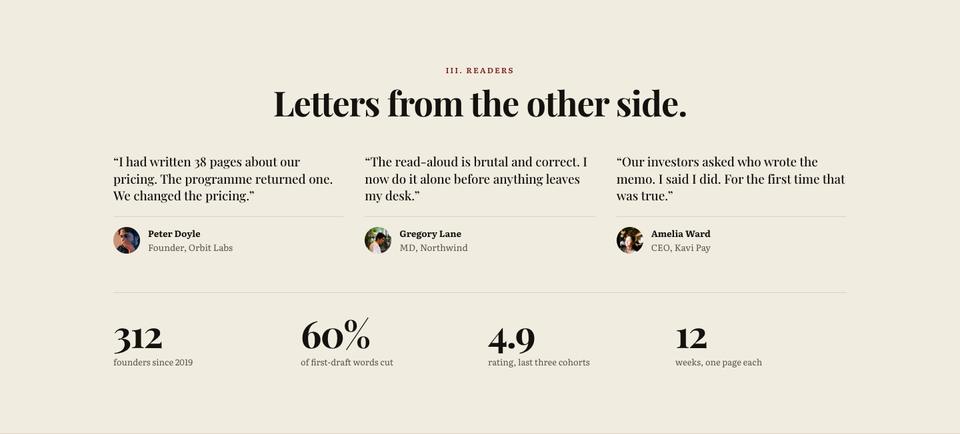
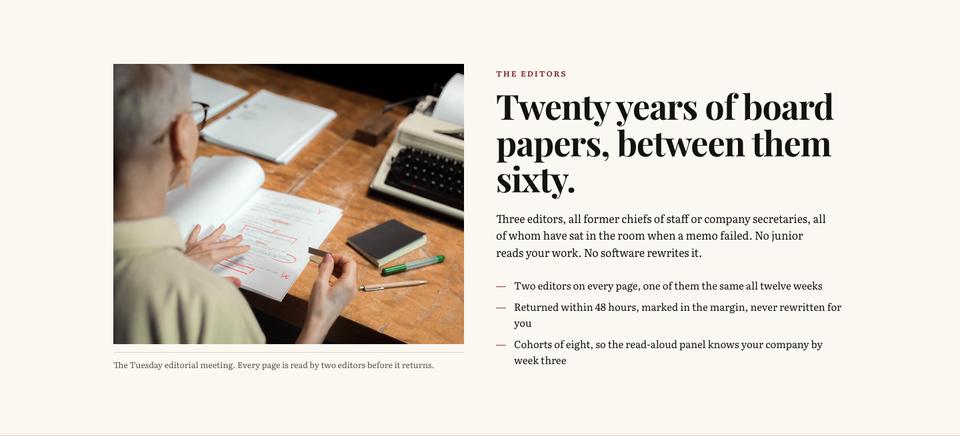
A pull quote from a participant breaks the page like a magazine spread. III. Readers collects short letters with specific results, and the editors introduces the people behind the work with a photograph of the weekly meeting.
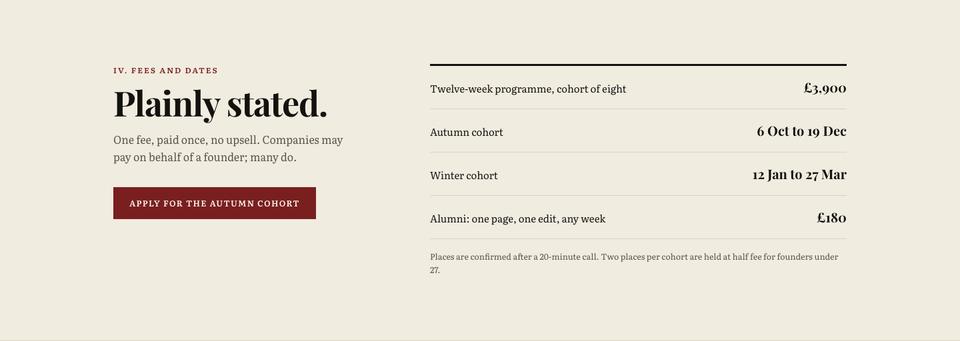
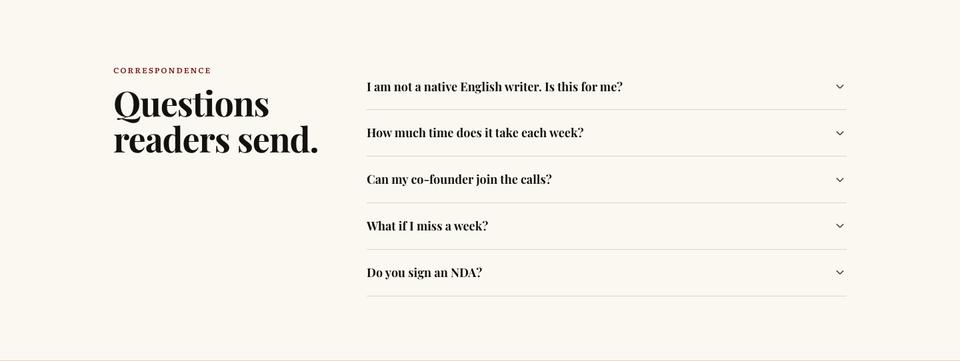
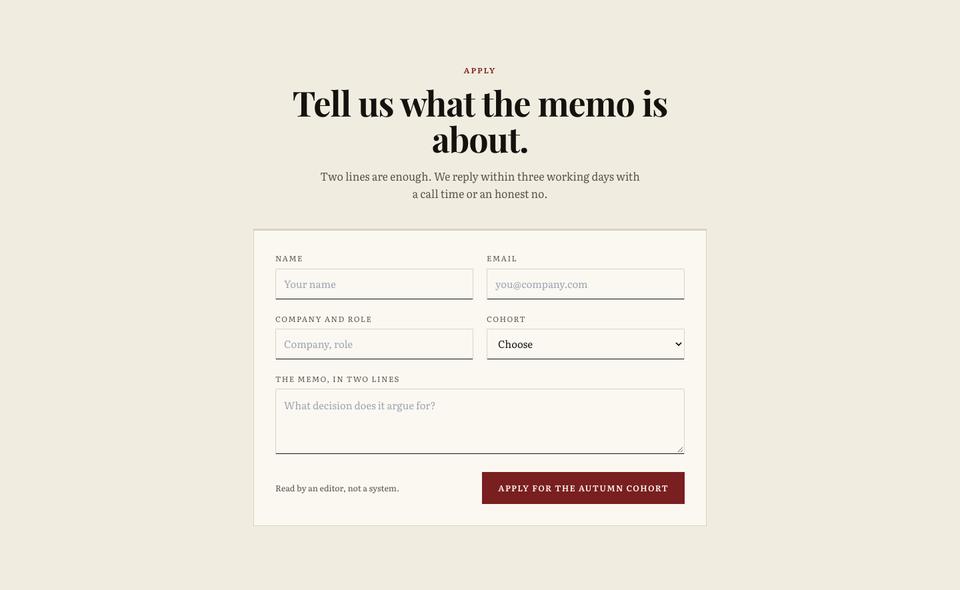
IV. Fees and dates states one fee plainly and the cohort dates. Correspondence answers questions in the voice of a letters page, such as whether second-language writers are welcome, and the page ends with apply, which asks for two lines and promises a reply or an honest no.
Styling it for your publication
Four schemes are included: Oxblood, Press black, Forest and Ink navy. Type pairings are Playfair Display over Literata, Newsreader over Crimson Pro, or Fraunces over Hanken Grotesk for a less traditional read. Photographs are optional; the demo uses five.
Because nearly everything here is text, the editor is where you will spend your time. Click any column to rewrite it, or select a section and ask the AI to cut it to half the length in your own voice.
Writing it for your offer
Start from the template at no cost, or tick “Write the text for my business” to have the AI replace the sample text for about 20 credits, keeping the layout. Tell it what readers receive and when, your method, who writes or edits, the fee and dates, what readers have said and how people apply or subscribe.
Writing for a words-first layout
With five photographs and three newspaper columns, this template depends on writing that holds attention. Start by drafting the cover story: a headline that states the offer as a claim, a standfirst of two sentences and an opening paragraph that works with the drop cap. Keep sentences short enough to read comfortably in narrow columns, and avoid bullet lists, which break the editorial rhythm.
The programme section should describe what a subscriber, reader or client receives over time, week by week or issue by issue. The method section needs the steps you actually follow, in order. Letters from readers work best when they quote a concrete result. The editors section needs real names and backgrounds, since trust in a publication comes from the people behind it. The fees block should state the price, what it includes and the dates, in plain sentences.
Newsletters, research and cultural institutions
A paid newsletter can turn the programme into a sample issue with its regular sections, and price by month and year. Research providers usually add a table of contents from a recent report and a note on methodology. Think tanks and policy groups can replace fees with membership or briefings. Cultural institutions and festivals can use the masthead for a season, with the columns introducing each event and the rate card for tickets or memberships.
When another template fits better
Broadsheet Editorial is for words. A studio or practice that sells visual work through a list of projects fits Studio Index, and a book launch with pre-orders is simpler on Book Launch. An advisory or law firm wanting a serif, trustworthy feel may prefer Counsel Practice, and a cohort course with live sessions and a timetable belongs on Learning Platform.
See more on the agency, studio and creative templates page.
Before you publish
- Edit the page as hard as you would edit the product; typos show in this layout.
- Get permission for every letter and quote.
- Check dates and the fee for the cohort or plan you are selling.
- Keep the application to a few fields so good applicants are not put off.