A considered page for a considered offer
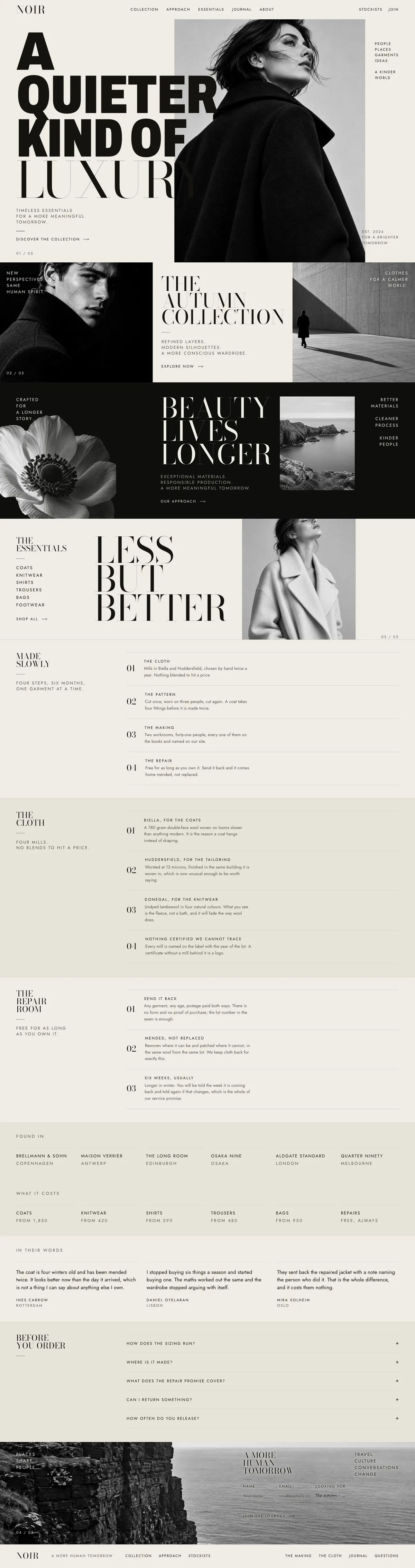
Someone searching for Maison Monochrome needs a page that makes restraint feel deliberate. A generic product page can reduce a small collection to a list of items and prices. This design gives the collection room, then explains the material choices, the making process and the care offered after purchase.
It is built for a business whose argument is not volume. A tailor may have a few core garments. A leather goods maker may work with a narrow set of hides. An interiors practice may be known for a small number of objects or commissions. In each case, the page can lead with the work and support it with the reasons behind it.
The template is enquiry-led. It includes an enquiry form near the end, so it can support conversations about orders, availability, commissions or appointments. It does not show a payment mechanism. If direct online selling is the main requirement, consider the related Luxury Collection Showcase instead.
Adapting the design
The template has four colour schemes: Noir, Ash, Bordeaux and Moss. Choose one that supports the existing identity rather than trying to make every collection look alike. Keep the scheme consistent across the page, especially if the photographs already carry strong material or seasonal character.
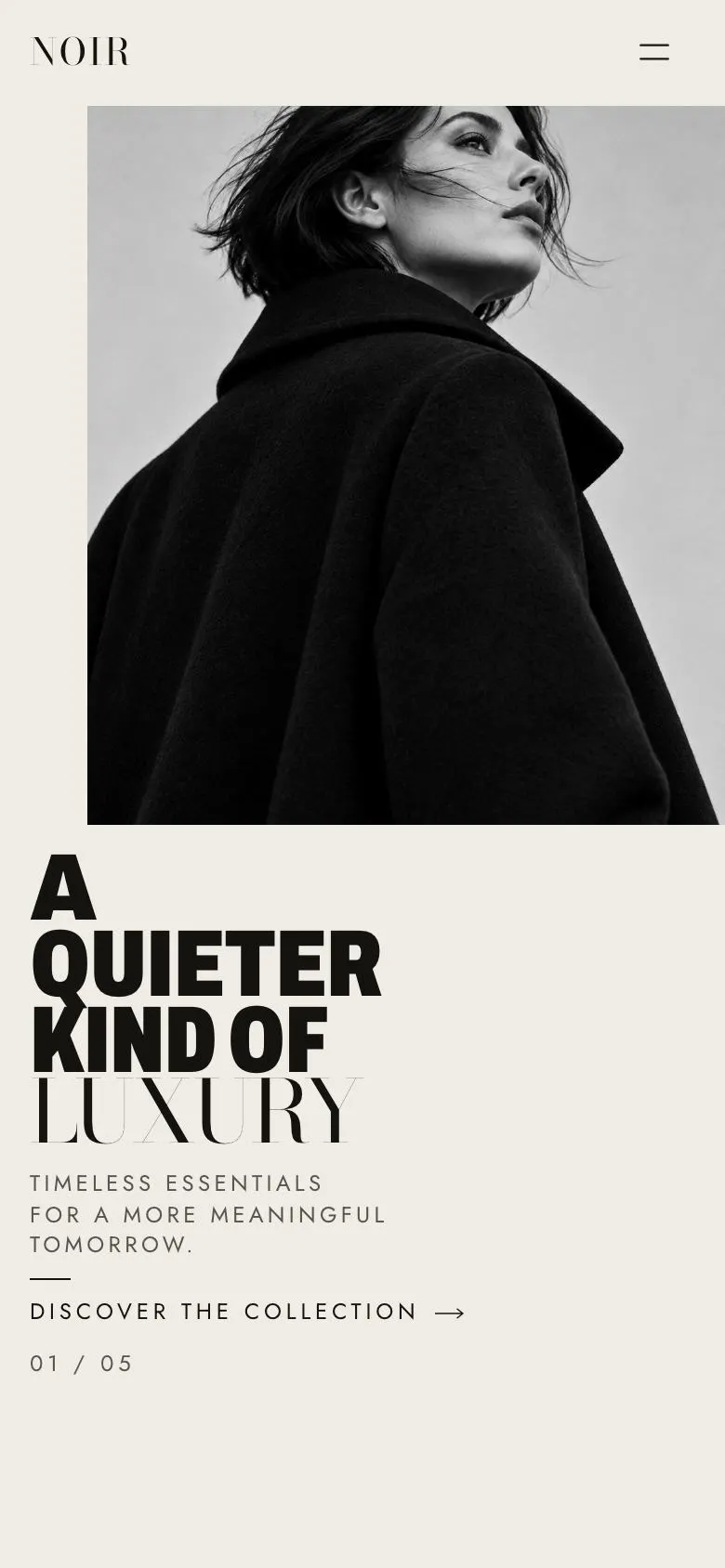
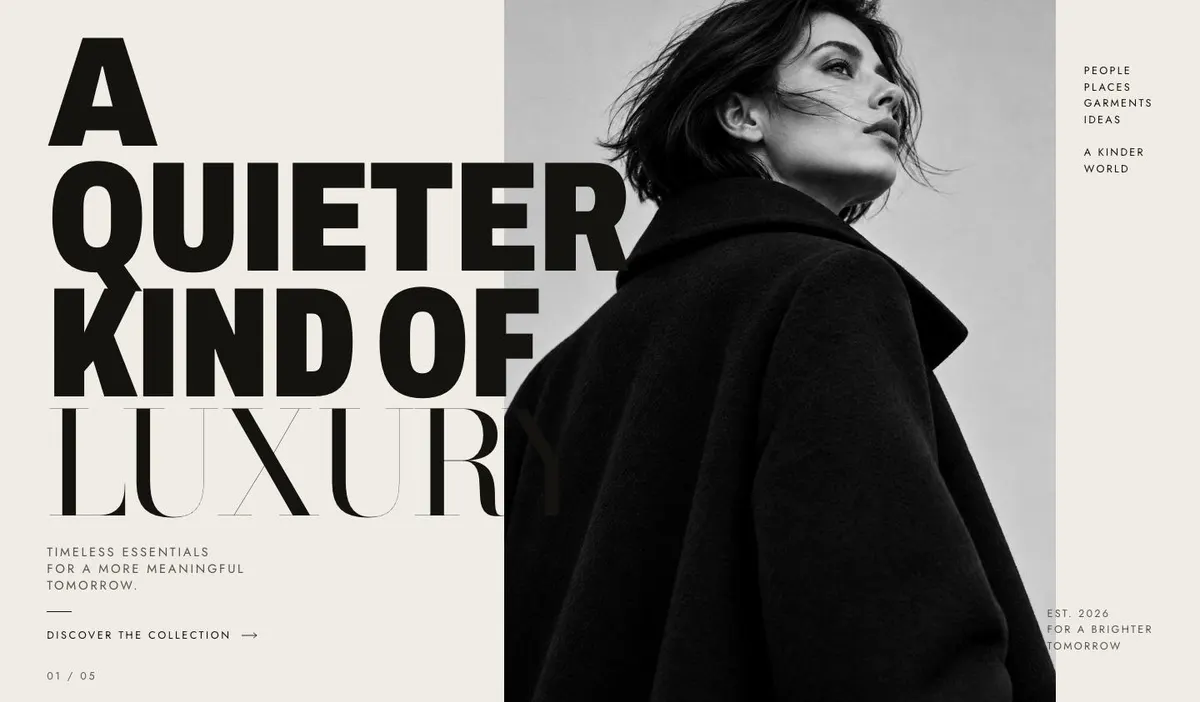
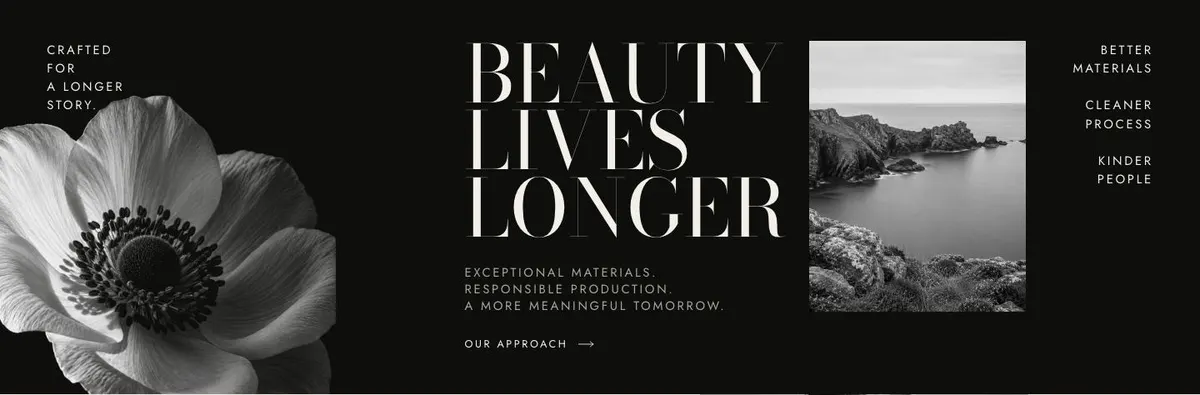
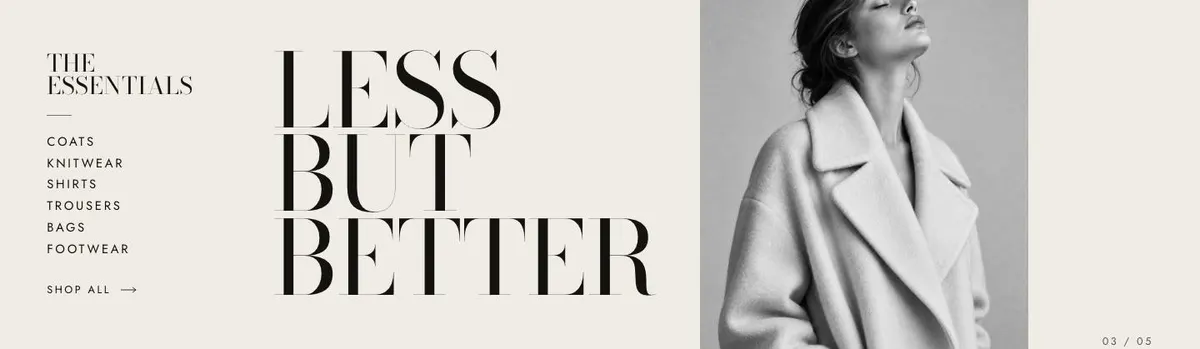
The display font is Bodoni Moda and the body font is Jost. The available font pairings are Bodoni Moda with Jost, Archivo with Jost, and Prata with Jost. The page is photo-led and needs seven photographs in total. One belongs in Hero, two in Collection, two in Approach, one in Essentials and one in Journey.
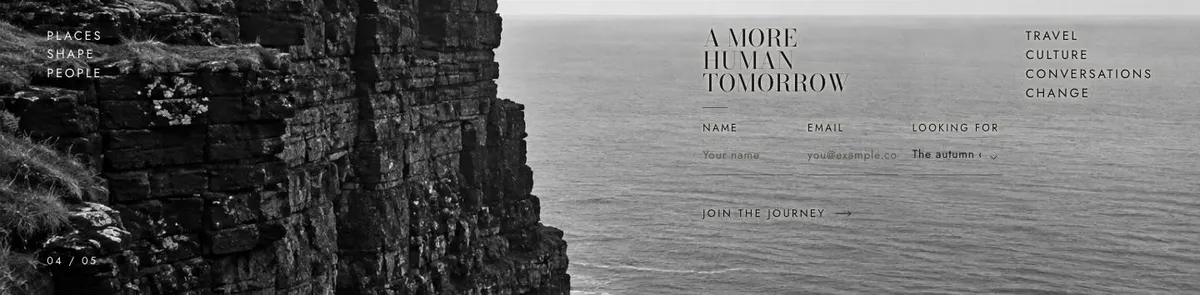
Plan those images as a sequence. The opening image should establish the world of the business. Collection and Approach can show the work and the thinking behind it. Essentials can focus attention on a defining piece, while Journey can support the invitation to enquire. The photographs need to carry the same level of care as the writing.
Writing it for your business
Starting from this template costs no credits. Rewriting the copy with AI costs about 20 credits. A useful brief names the business, the offer, the people it serves and the action the page should lead to.
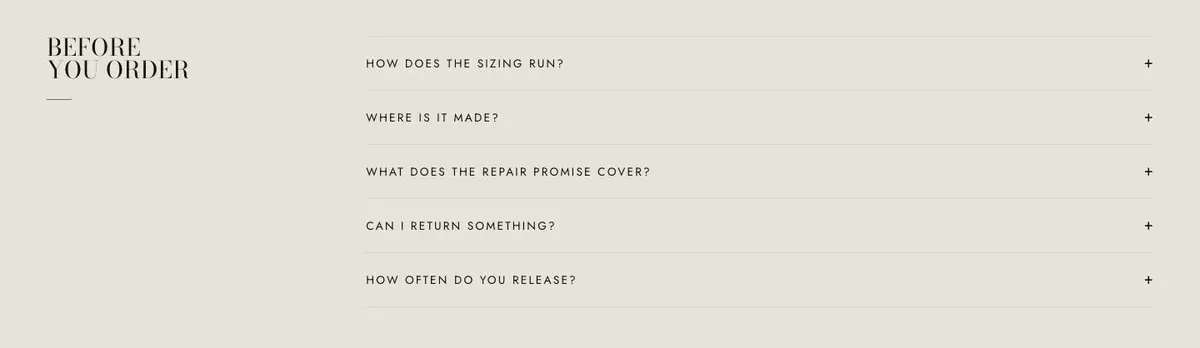
It should also name the collection or service categories that belong in Essentials, the true making steps, the material facts that can be published, the repair or care policy and the places to include under Stockists. Give the AI real prices only if they are ready to show. Include the common pre-order questions so the accordion can answer them without making promises the business cannot keep.
What to prepare first
Before publishing, gather the material that makes the page credible. Write the opening position in one or two sentences. Prepare a concise introduction to the current collection and a short explanation of the approach behind it.
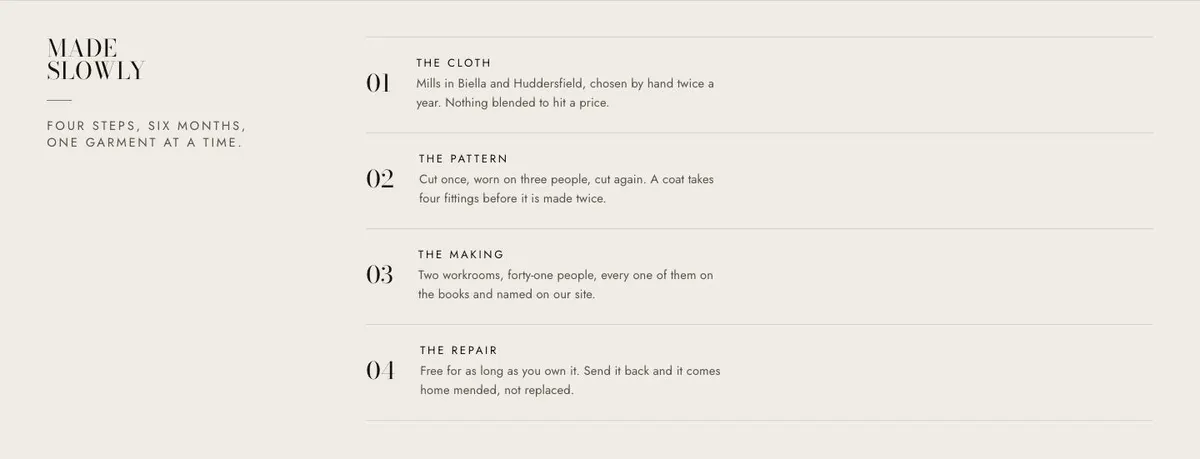
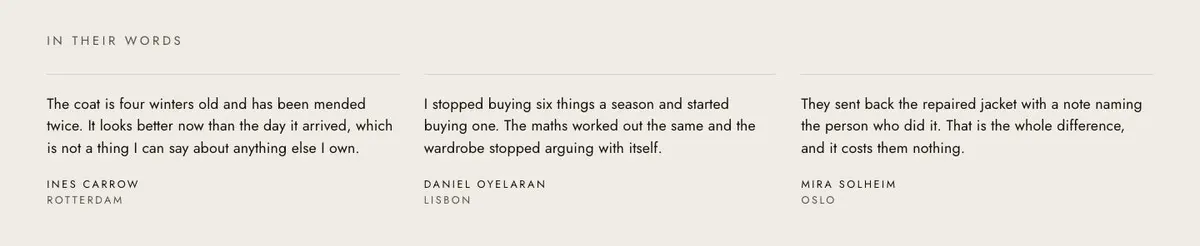
Have the seven photographs ready, with a clear purpose for each. Confirm the sequence of making, the names of relevant suppliers or materials, and the exact terms of any repair or aftercare offer. Prepare the stockist information, pricing details, three customer quotes and the questions that routinely come up before an order or enquiry.
Finally, decide what happens after the form is submitted. The page contains the form, but the business still needs a process for replying to enquiries and continuing the conversation.
Variations for neighbouring trades
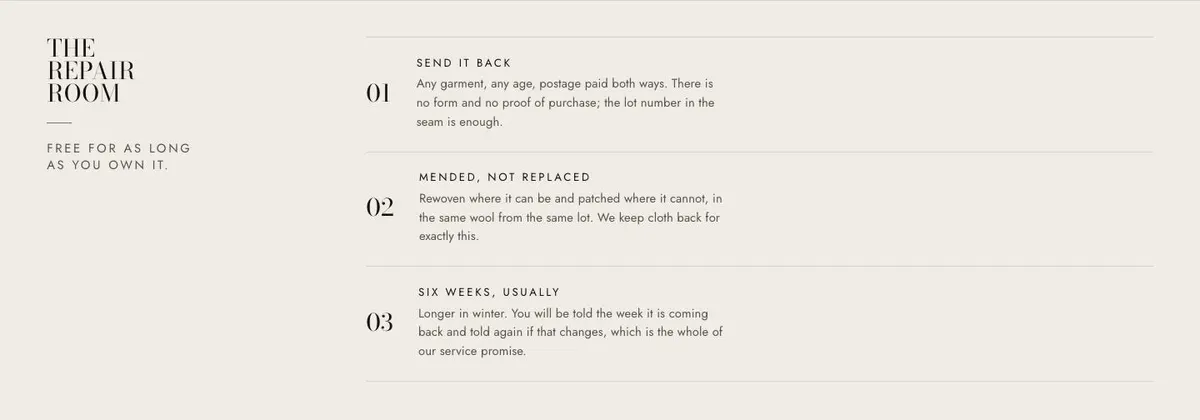
A tailor can use Collection for seasonal cloth and key garments, then make Making the account of consultation, fitting and completion. Repair can explain alterations or ongoing garment care, provided those services are genuinely offered.
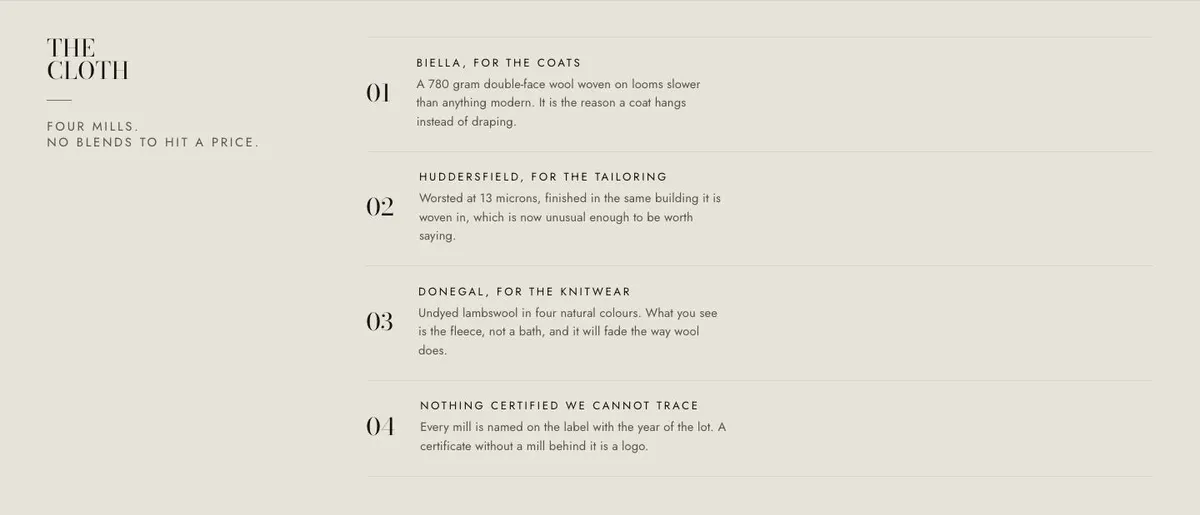
A leather goods maker can make Essentials a concise list of core forms, such as bags or small goods, while Cloth becomes the material section for leather and linings. Reviews should describe use over time rather than simply the appearance on arrival.
An interiors house can treat Collection as a group of furniture, objects or finishes. Stockists can name places where work can be seen, and Journey can invite enquiries about a commission or project.
When another template fits better
For a design practice whose main work is studio-led rather than collection-led, see Studio Index. For a page centred more directly on a luxury range, see Luxury Collection Showcase.
For a tailor with a collection-specific story, use Tailoring Collection Showcase. For jewellery, Fine Jewellery Collections is the closer starting point. Browse more options for agencies and studios.
Before you publish
- Check that every material and making claim is accurate.
- Confirm that the repair promise matches the real policy.
- Make prices and stockist details current.
- Test the enquiry route and response process.