For labels that sell shoes and a point of view
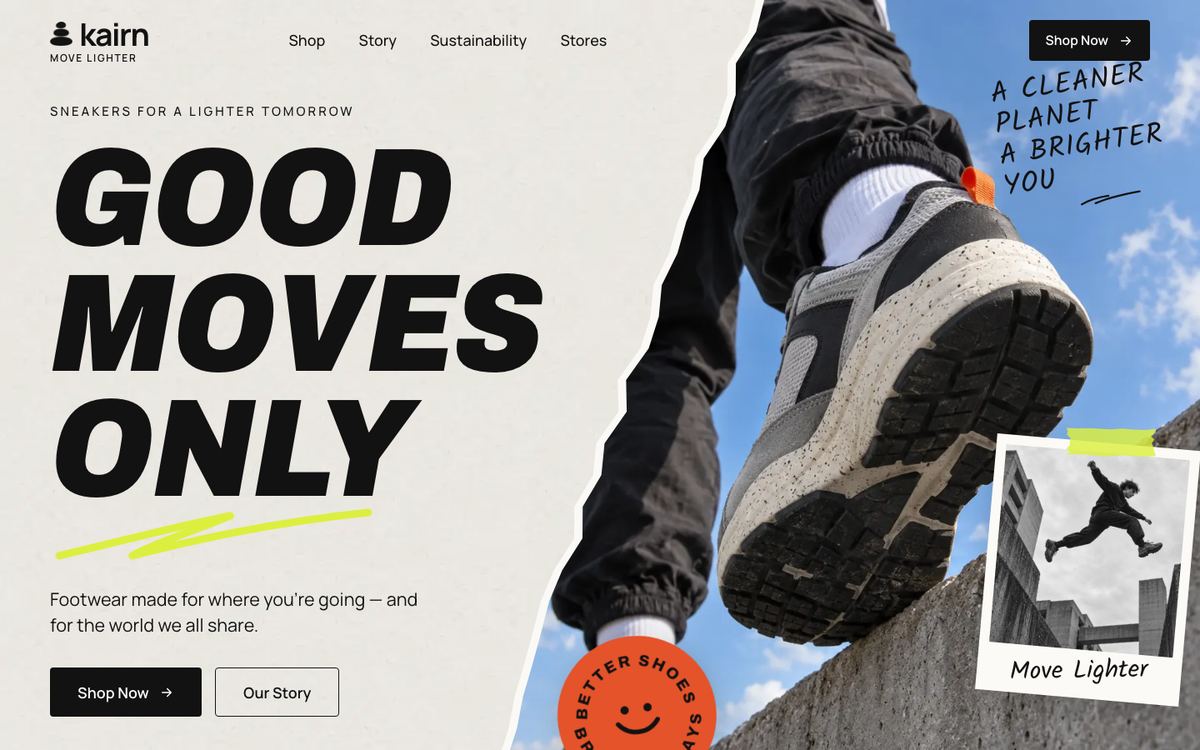
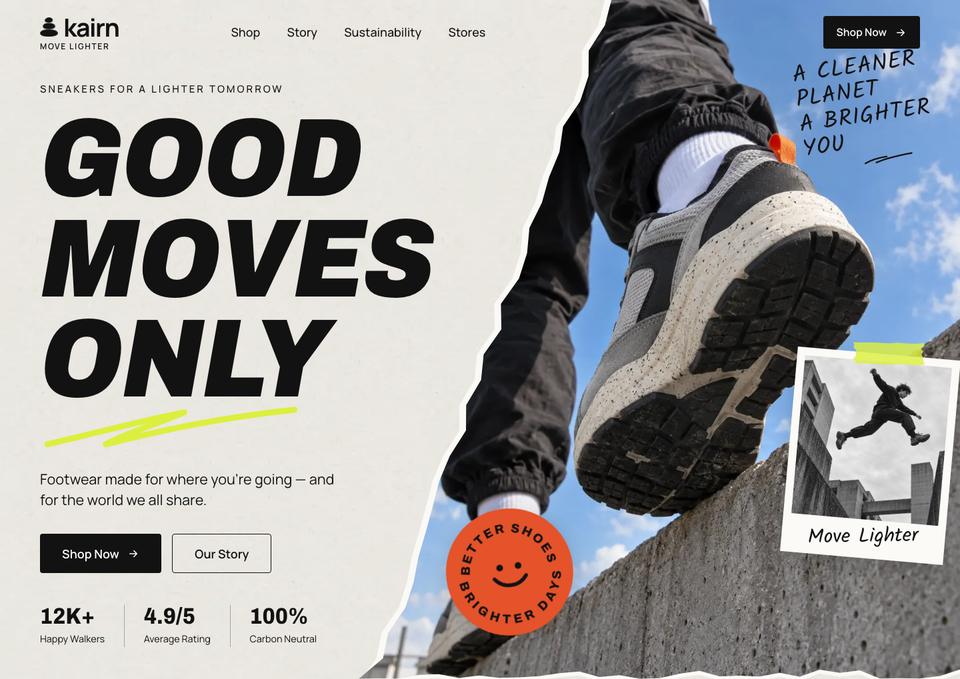
Sustainable footwear is a crowded shelf, and the brands that stand out are specific: this many bottles in the upper, this factory, this many kilometres tested, this much cheaper to resole than to replace. Sustainable Sneakers is built for that: a torn-paper collage with a heavy italic slogan, lime tape, a smiley badge and handwritten notes, holding sections that are all numbers underneath.
It suits sneaker, streetwear, skate and trail labels, and any recycled or vegan goods brand that wants a handmade, energetic page. Pick it when the tone should feel like a zine rather than a catalogue.
How the page sells, section by section
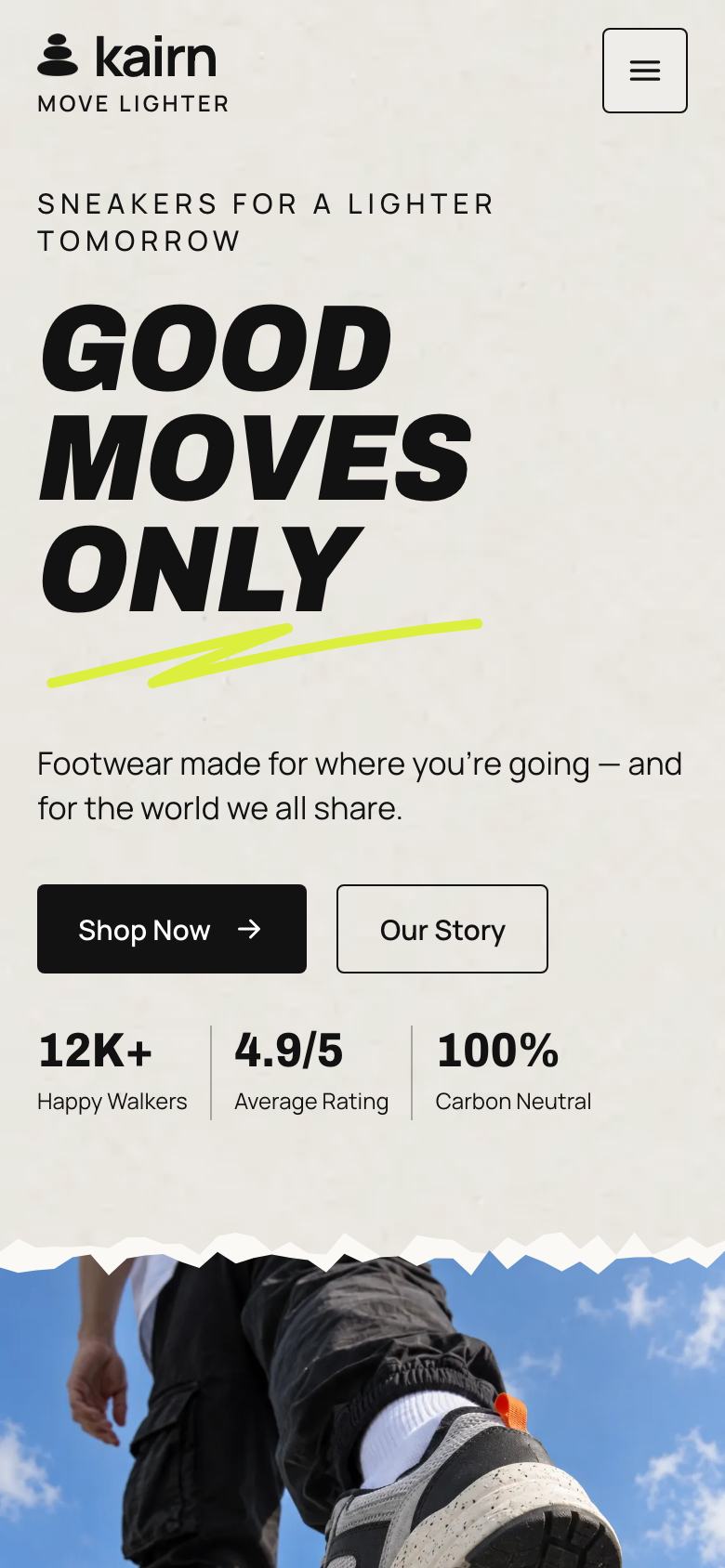
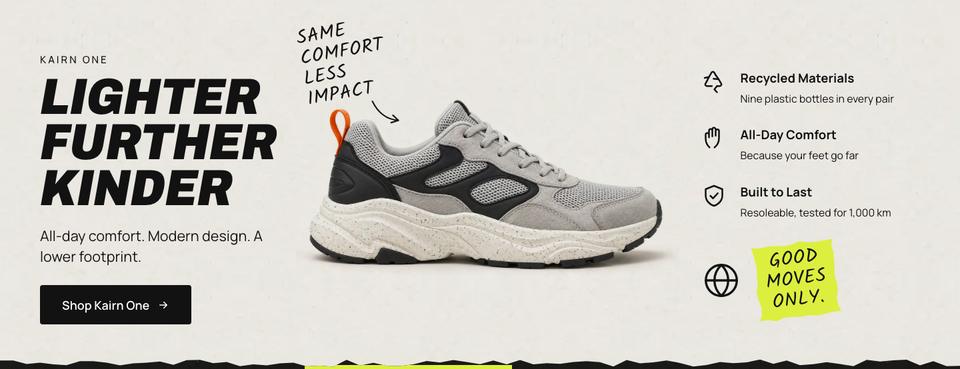
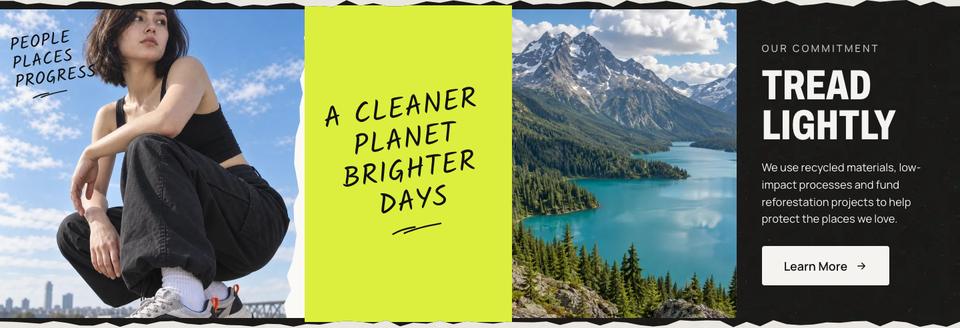
The hero carries the slogan, three stats and two actions over torn paper. The product band introduces the main model with three features. A dark commitment band states what the brand does about its footprint.
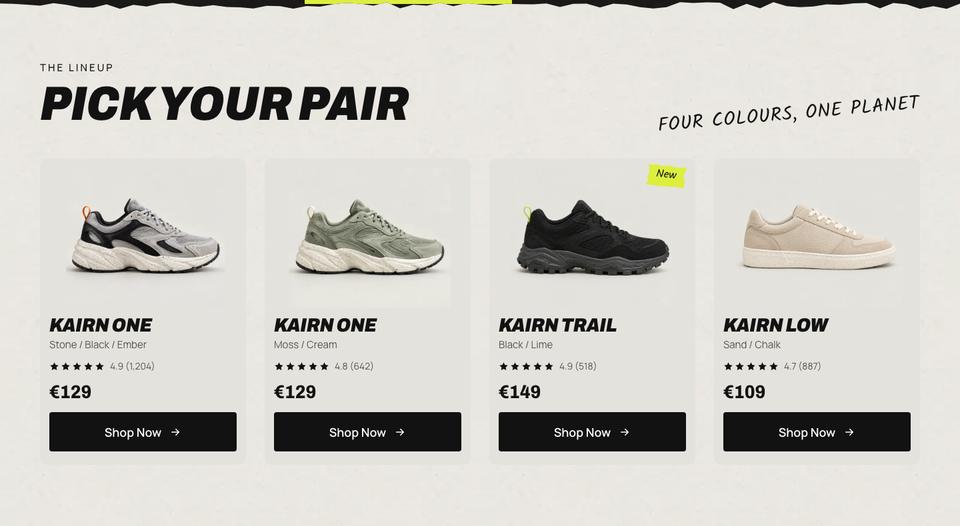
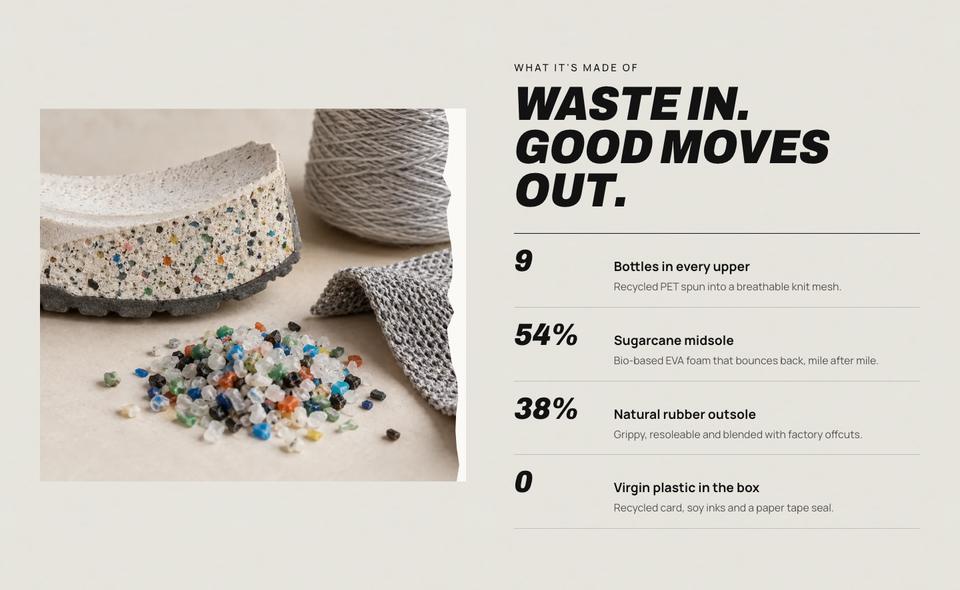
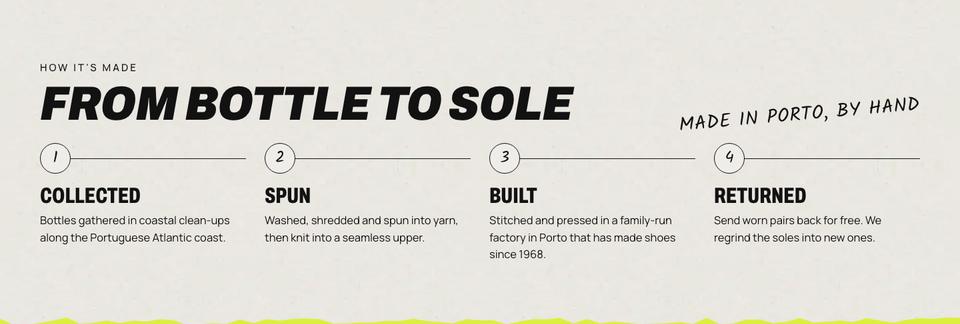
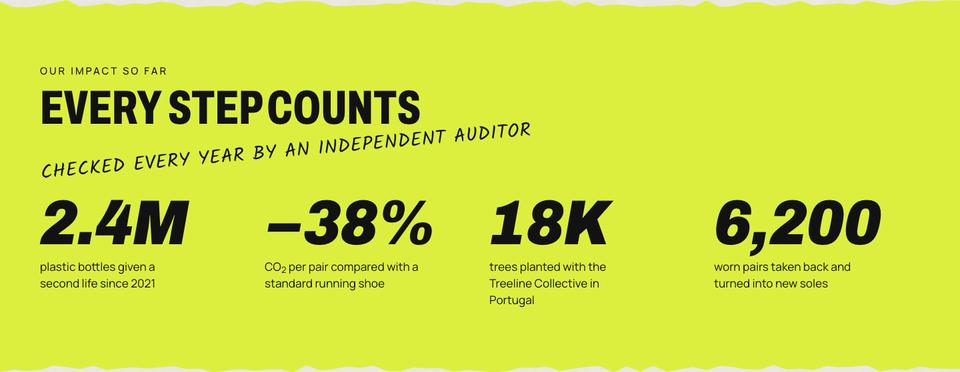
The lineup shows four colourways with ratings and prices. Materials breaks the shoe into its parts with the share of each, and how it is made walks from collected bottles to a resoled return. The lime impact band publishes audited figures with the year.
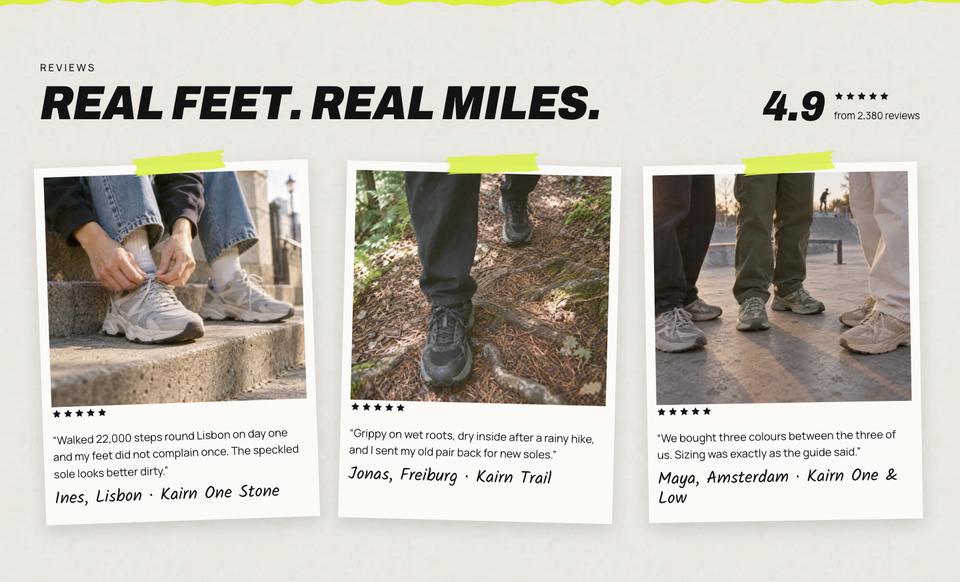
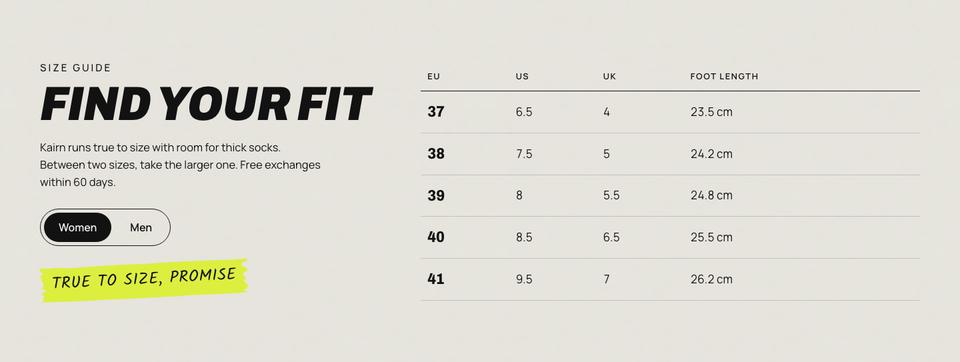
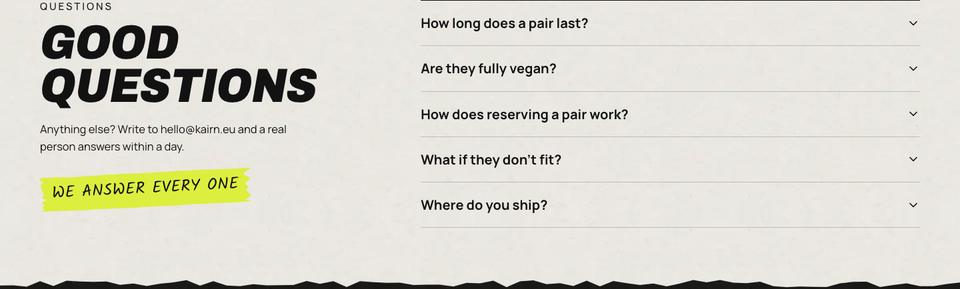
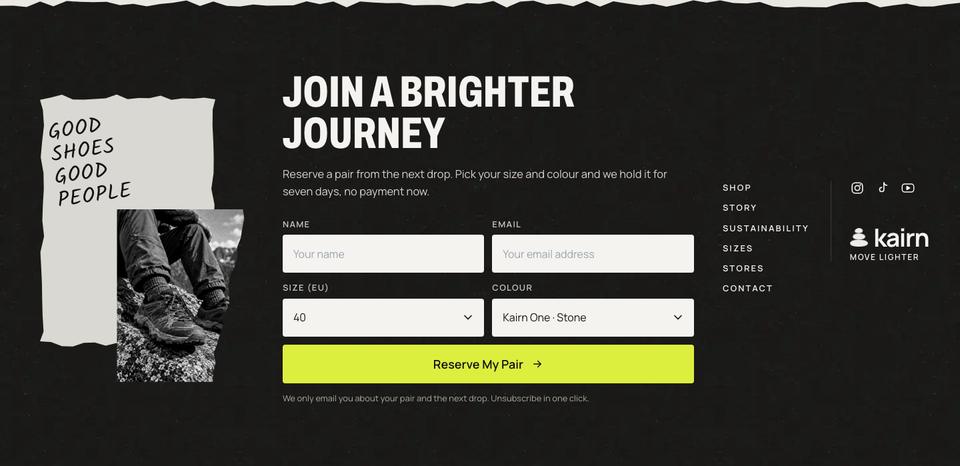
Reviews are taped polaroids from named wearers with the model, the size guide gives measurements in tabs, stores lists addresses and hours, and the page closes with questions and a dark reserve a pair form for the next drop.
Making it yours
Lime tape, Sky tape, Bubblegum and Forest schemes are included, with Archivo, Anton or Oswald headlines. Ten photographs are used, and the collage suits real, slightly rough images: shoes on feet, in the factory, and on the street rather than on white.
Claims to have audited
Environmental claims are increasingly regulated, and vague ones are the fastest way to lose credibility. For each figure in the impact band, record the source, the period and whether an independent auditor checked it, and say so on the page. Avoid words like carbon neutral unless you can show what was measured and what was offset.
For materials, give the percentage of recycled or bio-based content per component, and name the certification if you have one. Describe the repair or take-back scheme precisely: what it costs, how long it takes and what happens to the returned pair. Sizing causes most returns in footwear, so publish foot-length measurements rather than only size numbers, and state the exchange window.
Writing it with the AI
Edit the sample for free, or tick “Write the text for my business” for about 20 credits. A good brief names the label and city, the models with prices, the materials with percentages, where and by whom the shoes are made, your audited impact figures, the repair scheme and the exchange terms.
Adapting it for apparel and outdoor brands
A streetwear label can replace the size guide with garment measurements and the lineup with a capsule. Outdoor and trail brands usually add weather and terrain notes to each model. A vegan goods brand can expand materials into a full component list. A skate brand can keep the collage and add team riders in place of stores.
Where a footwear label finds its people
Sneaker brands grow through creators, city communities, and search for materials and repairs rather than through broad advertising. The materials and impact sections are the ones journalists and bloggers quote, so link to them directly. Give each store, creator and newsletter its own link so reservations arrive tagged, and you can see which partnerships bring wearers rather than clicks. Keep the size guide and the repair scheme current, since both are the reason people come back to the page months after the first visit.
When another template fits better
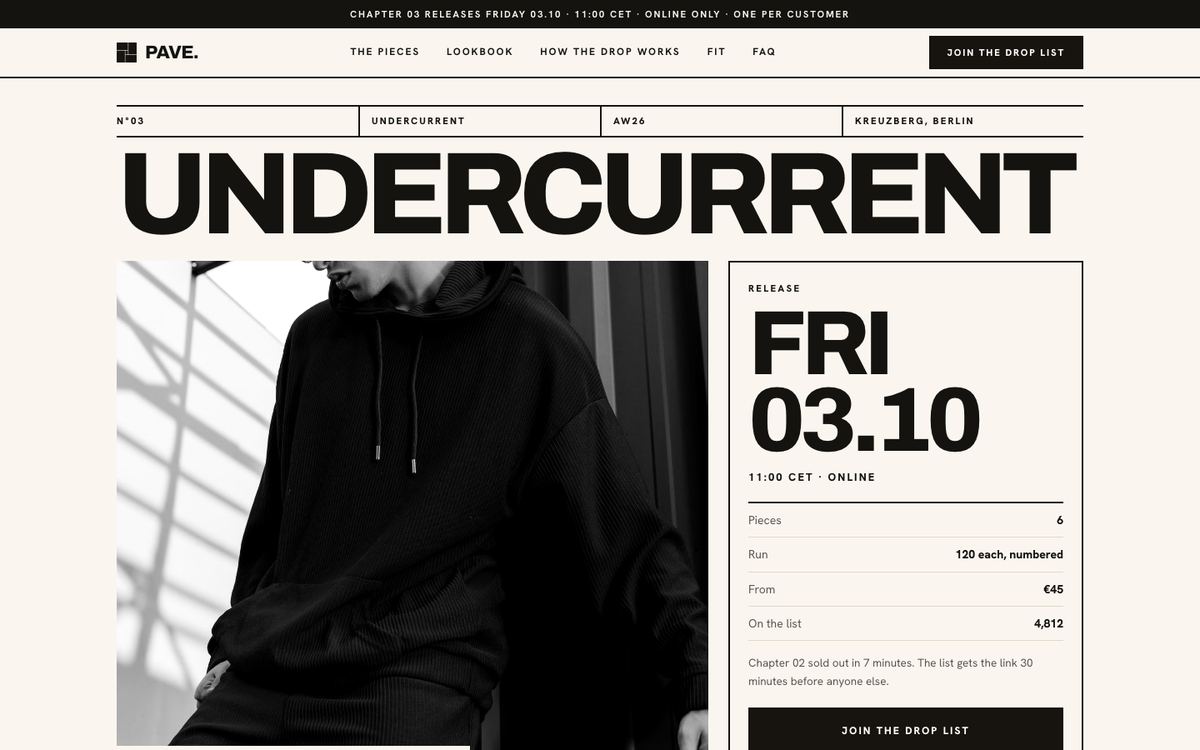
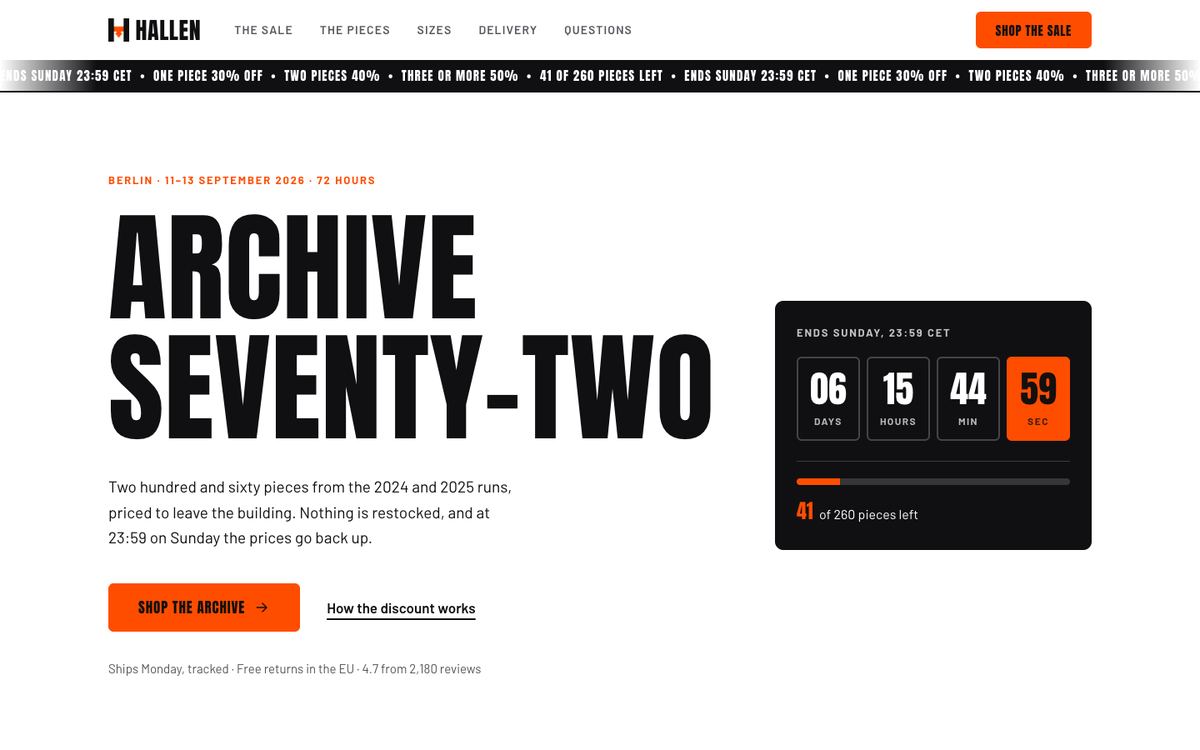
For a limited release with a real quantity and a queue, Waitlist Drop is quieter and stricter about scarcity. A streetwear drop with a countdown and a lookbook fits Drop Launch, and technical gear on sale fits Outdoor Season End. More selling layouts are on the ecommerce templates page.
Before you publish
- Have every impact figure sourced, dated and checked.
- Give material percentages per component.
- Publish foot-length measurements, not just sizes.
- State the repair scheme and its price.
- Check store addresses and opening hours.