EventLanding page template
One page for one date, converting on a registration form
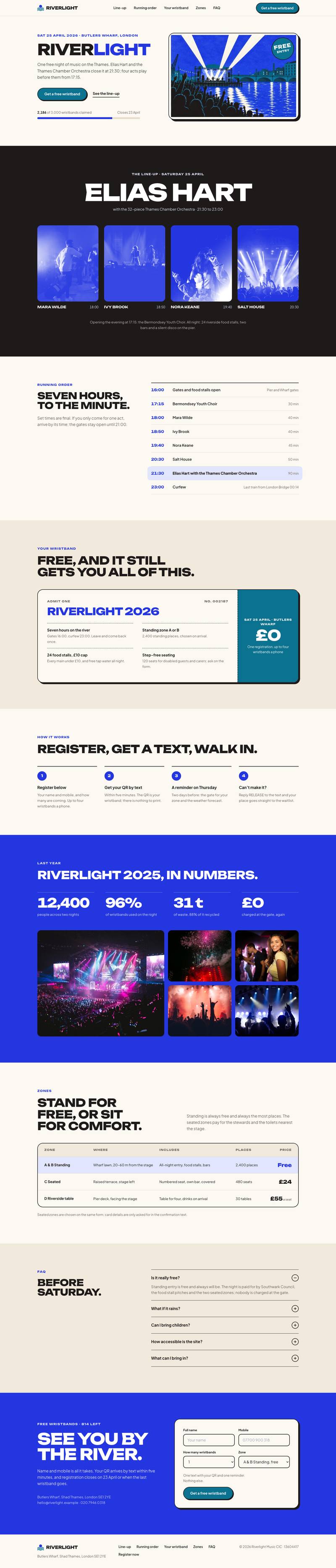
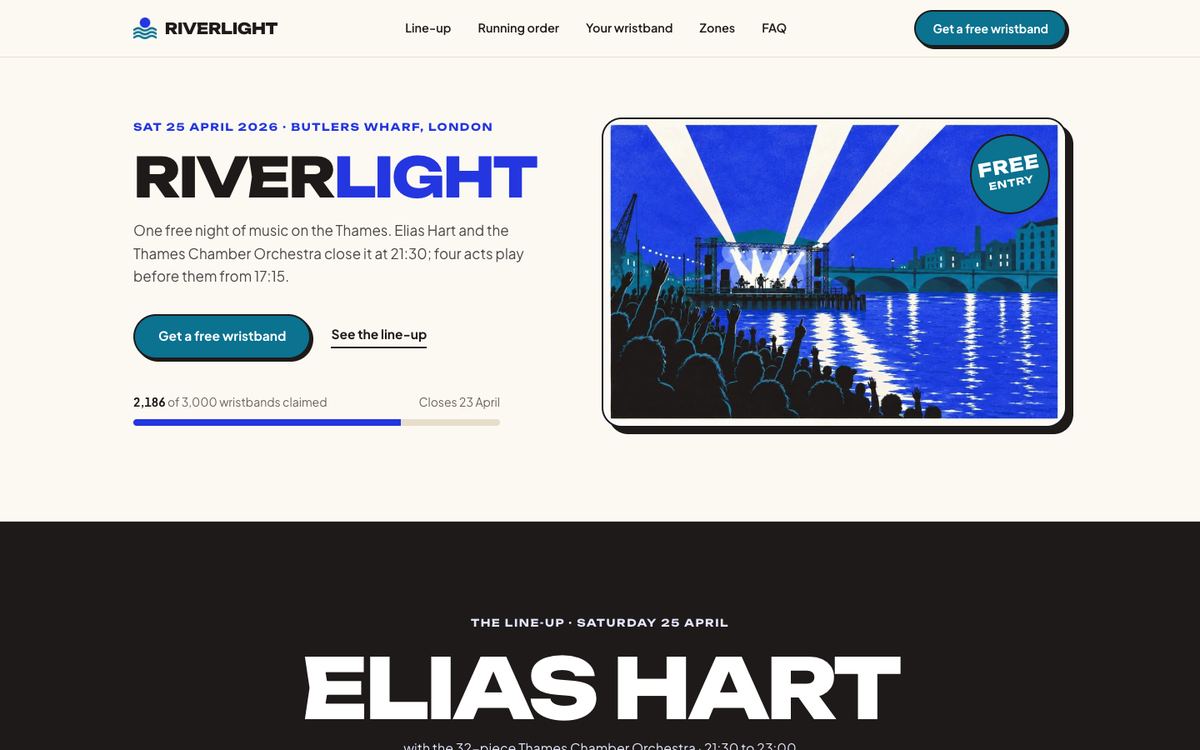
A poster-style page for one event on one date, with the line-up, a running order to the minute, zones, last year's numbers and a registration form with places left.
One page for one date, converting on a registration form
A poster-style page for one event on one date, with the line-up, a running order to the minute, zones, last year's numbers and a registration form with places left.
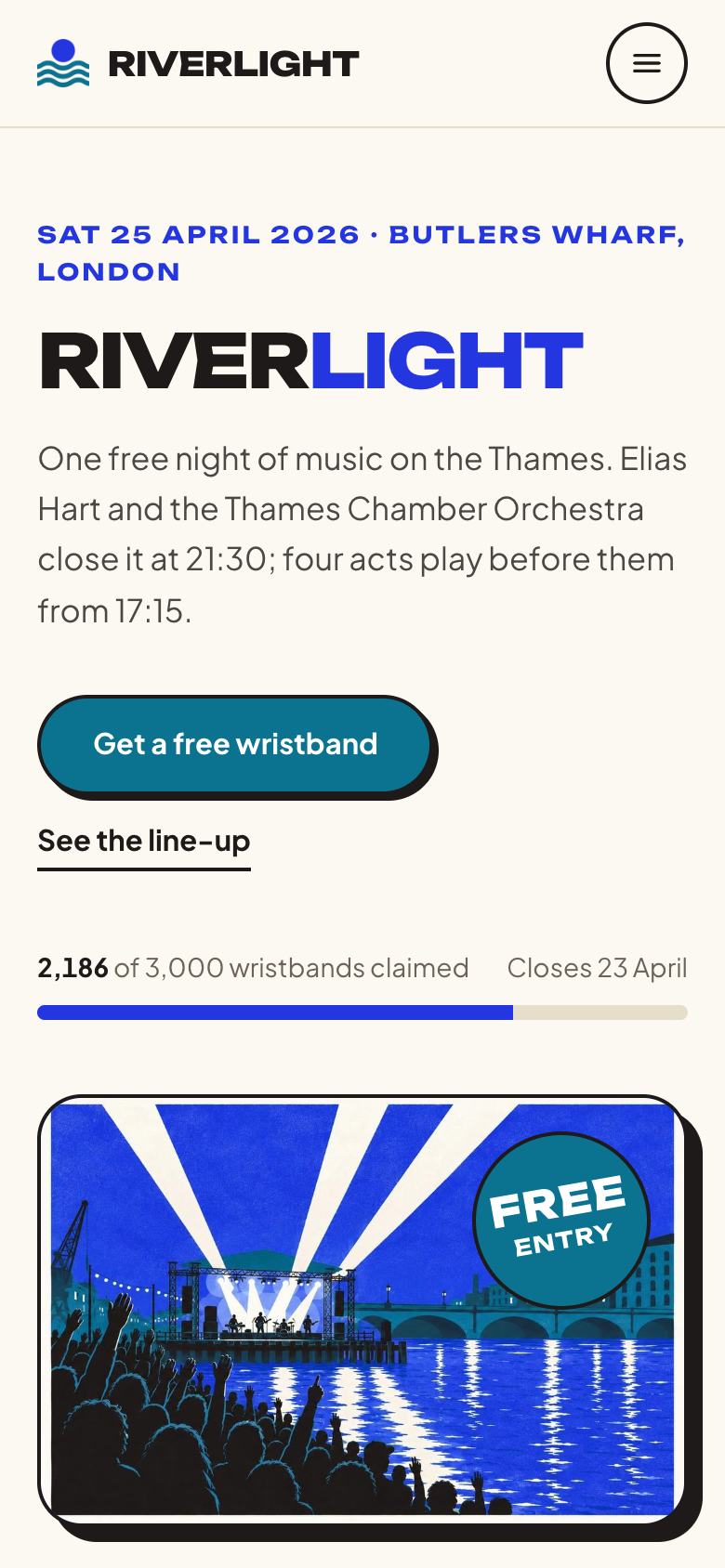
Switch devices, scroll the full page, or open the live demo. This is the exact layout, photos and sample text a new page starts with.
The headings are the demo's own sample text. Your brief, or the AI copy pass, replaces them; the structure stays.
Riverlight
Saturday 25 April
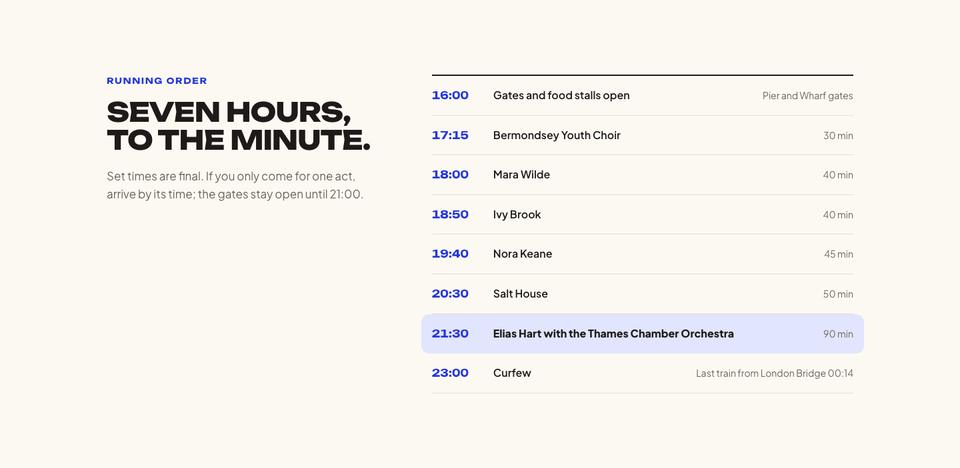
Seven hours, to the minute.
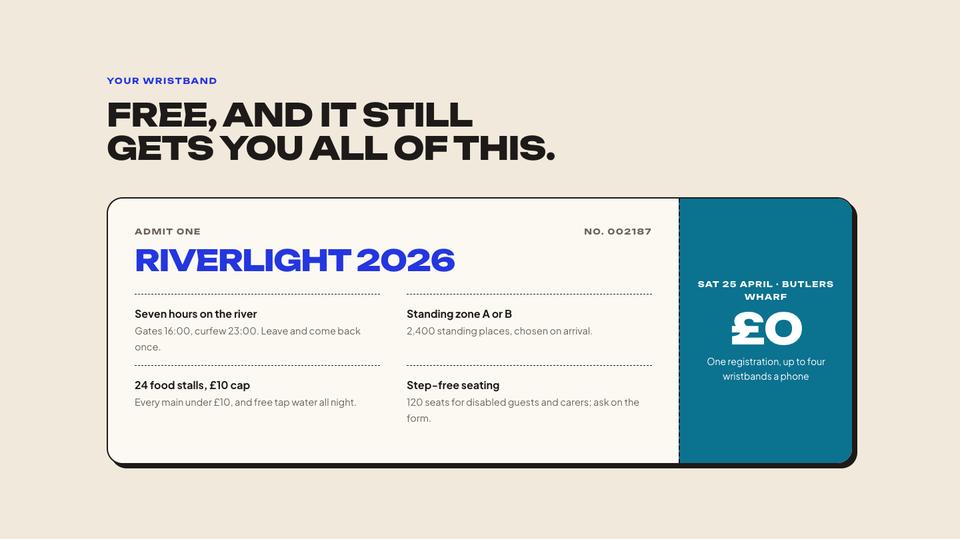
Free, and it still gets you all of this.
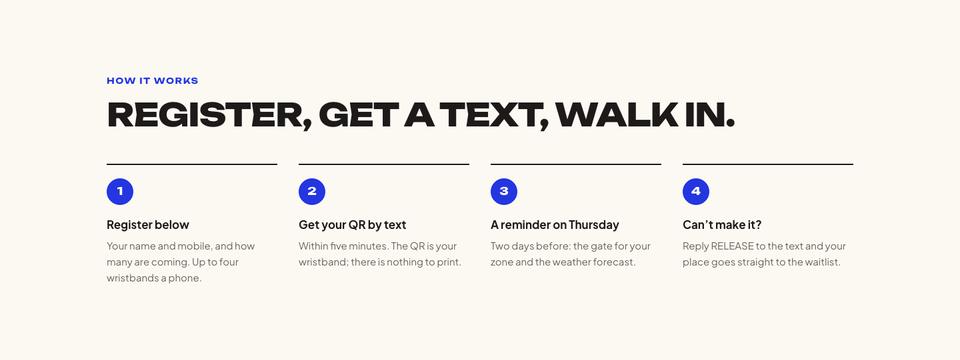
Register, get a text, walk in.
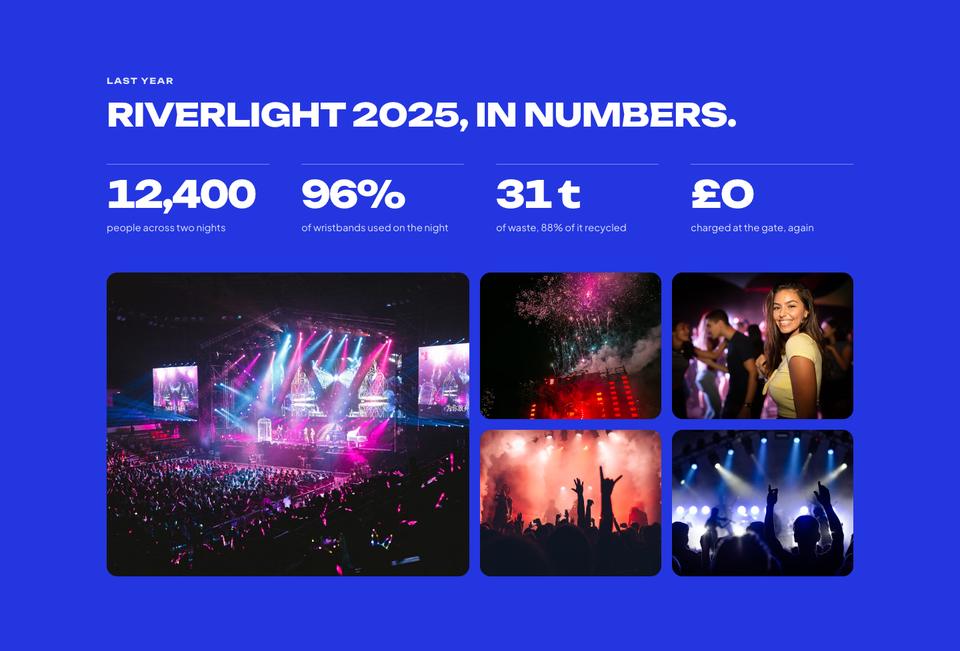
Riverlight 2025, in numbers.
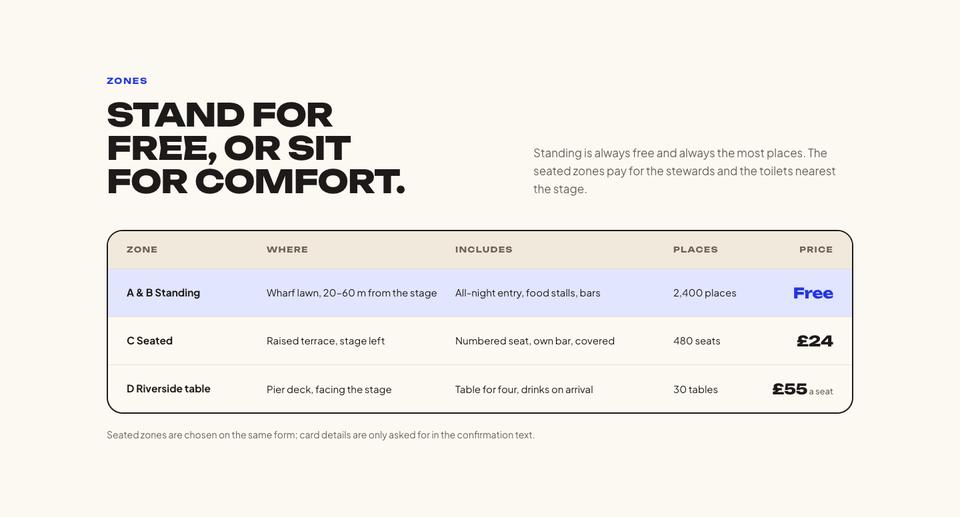
Stand for free, or sit for comfort.
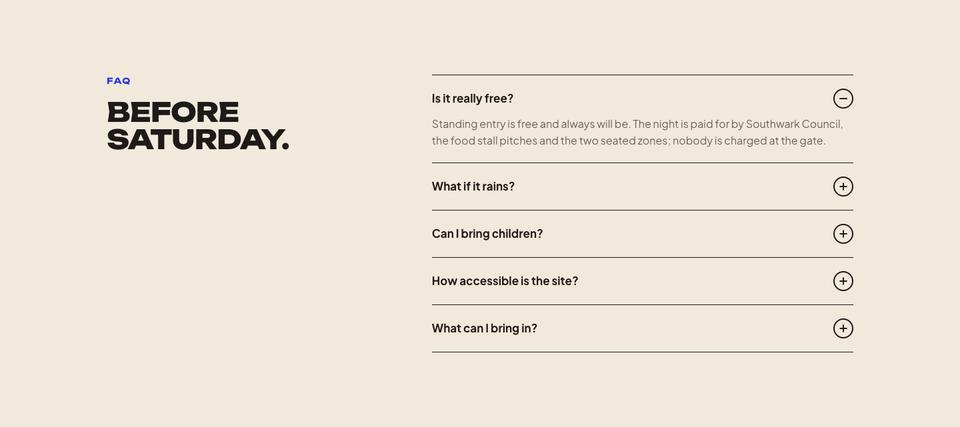
Before Saturday.
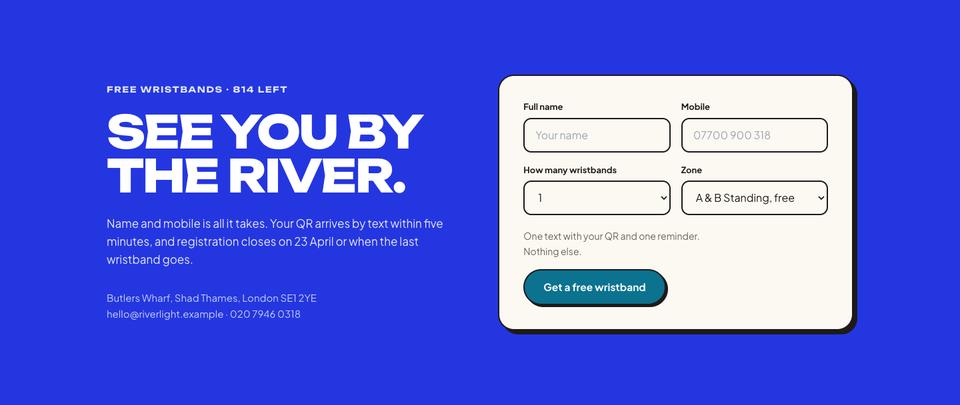
See you by the river.
An event page has a simpler job than most: get people to the date. Event is a light, poster-like template that treats the day itself as the product. The hero reads like a gig poster, the line-up and running order are set to the minute, and everything funnels into a registration form that shows how many places are left.
It suits concerts and festivals, conferences and summits, product launch events, hackathons, community meetups and brand activations. Pick it when your brief has a date, a line-up or agenda, a venue and a registration deadline.
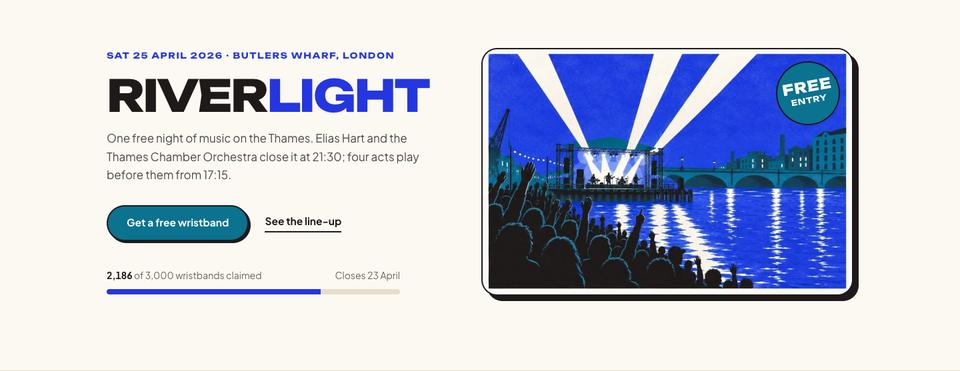
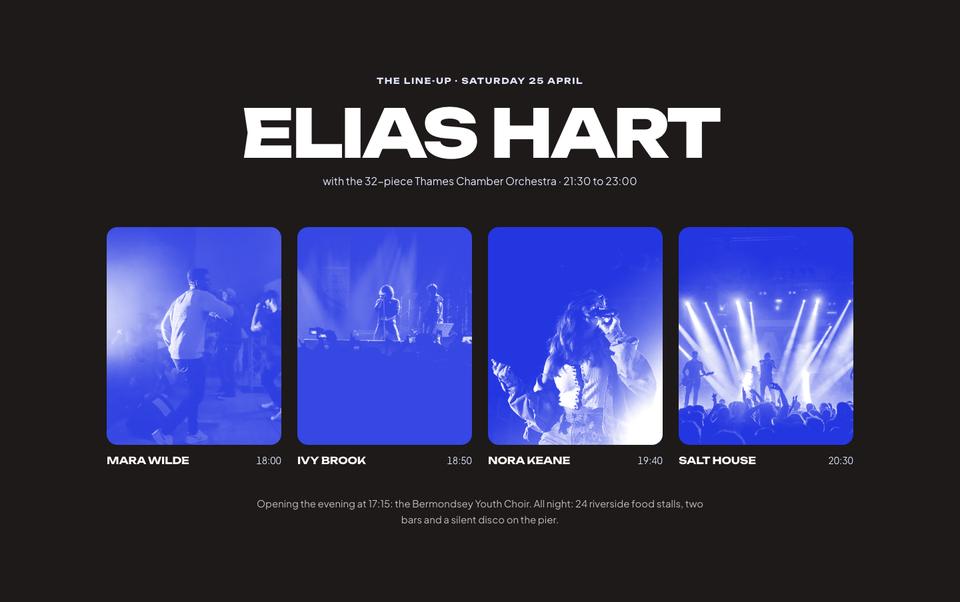
The hero is the event name set huge, with date, venue and one sentence on what the night is. The line-up leads with the headliner and lists supporting acts with times; for a conference, that becomes keynote and speakers.
The running order gives seven hours to the minute, and tells people when to arrive for the part they came for. Your wristband uses a ticket-shaped card to show what registration gets you even though it is free, which makes “free” feel valued rather than disposable.
How it works explains the three steps from form to entry, last year in numbers proves the event is established, and zones separates free standing from paid seating so the paid option does not undermine the free one. Questions answers the practical ones, from who pays for the night to what you can bring, and the page closes with a registration form and a live count of wristbands left.
Three schemes are included: Electric teal, Flare red and a two-ink Riso blue and red that looks printed. The display face is Unbounded, a wide rounded type that reads well at poster size, or Space Grotesk for a plainer look; body text is Plus Jakarta Sans or Hanken Grotesk.
Replace the nine sample photographs with images from past editions or the venue. The line-up and running order are plain rows, easy to edit in the page editor or to rewrite by asking the AI with the section selected.
Starting from the template costs no credits. If you would like the AI to write the copy for your event, it replaces the sample text for about 20 credits and keeps the design. Give it the date and venue, the headliner and schedule, what entry includes, any paid options, last year’s attendance and the registration deadline.
An event page gets shared fast, so every fact on it gets tested by the people who come. Confirm the running order with each act or speaker and treat set times as final before publishing. Decide how registration works in practice: how many places each phone number or email can claim, when confirmations are sent, and what the entry check looks like at the gate.
The zones section needs capacities and what each paid option includes. The questions section should cover access, what can be brought in, weather, re-entry and accessibility routes, because those are the messages that otherwise land in your inbox the week before. If you show last year’s numbers, use attendance and one figure people care about, such as waste recycled or money raised, rather than social media impressions.
For a conference, the line-up becomes speakers with their talk titles, and the timetable splits into tracks. A hackathon can turn the wristband section into what every team gets, such as food, mentors and prizes, and use the form to collect team names. A product launch event usually shortens the running order to an evening and adds a section on who the invitation is for. Community meetups can keep the page almost as it is and change the tone of the copy to something more personal.
Event is built for a single day with free or simple registration. A multi-day festival selling ticket tiers and camping fits Music Festival. A professional conference with speakers, tracks and pricing is better on Tech Conference, and exhibitions that sell stands work with Trade Expo Floor Plan. Races and charity runs have their own shape in City Marathon Race Day, and performances with seat maps and show dates suit Theatre Show.
The event templates page lists them together.
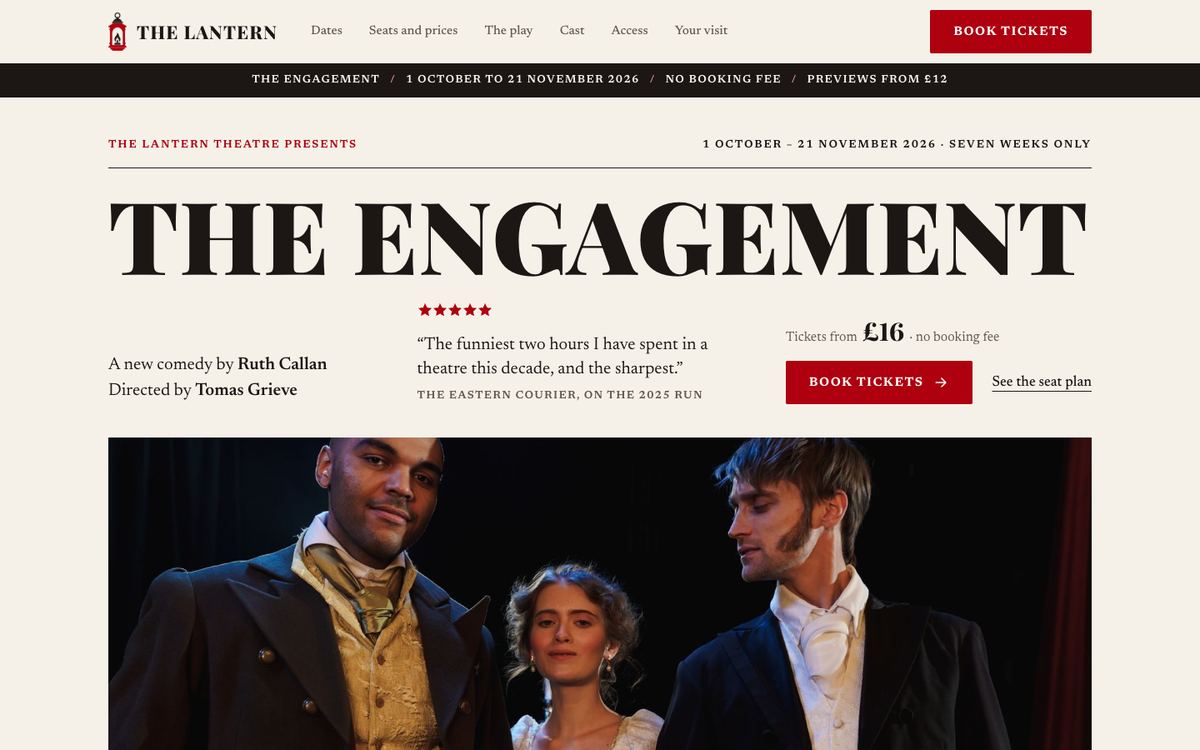 Theatre ShowEvents · Playfair Display
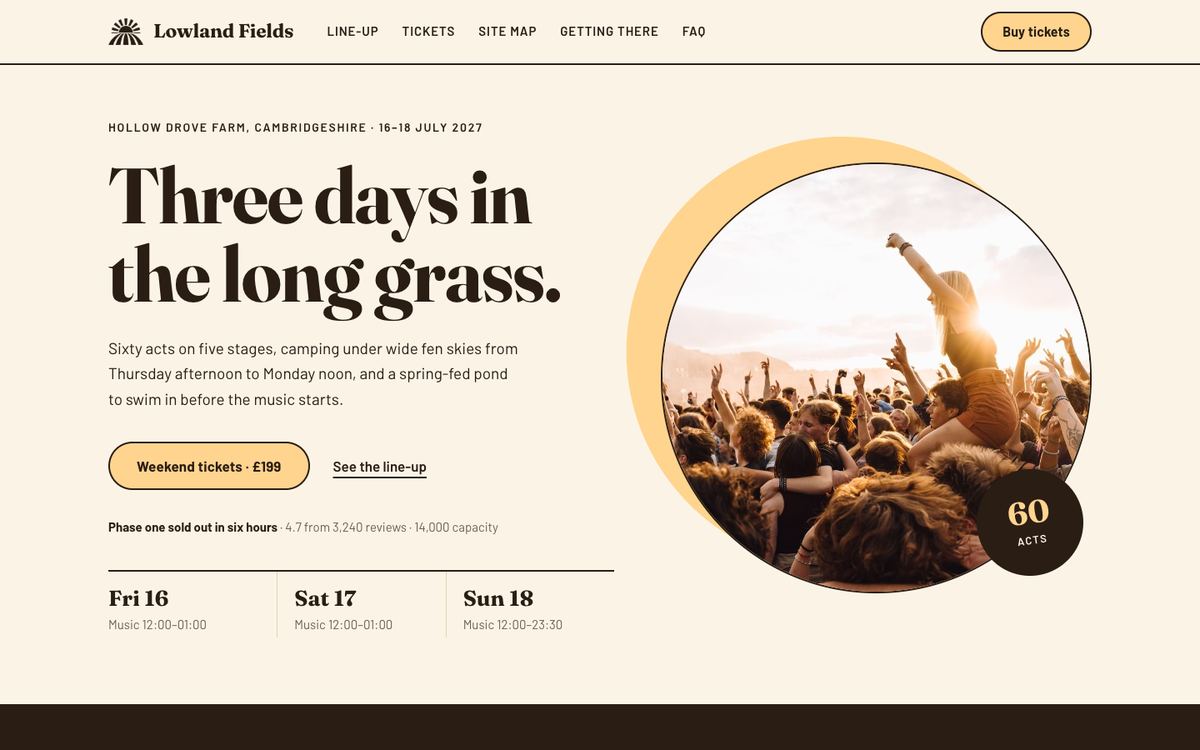 Music FestivalEvents · Fraunces
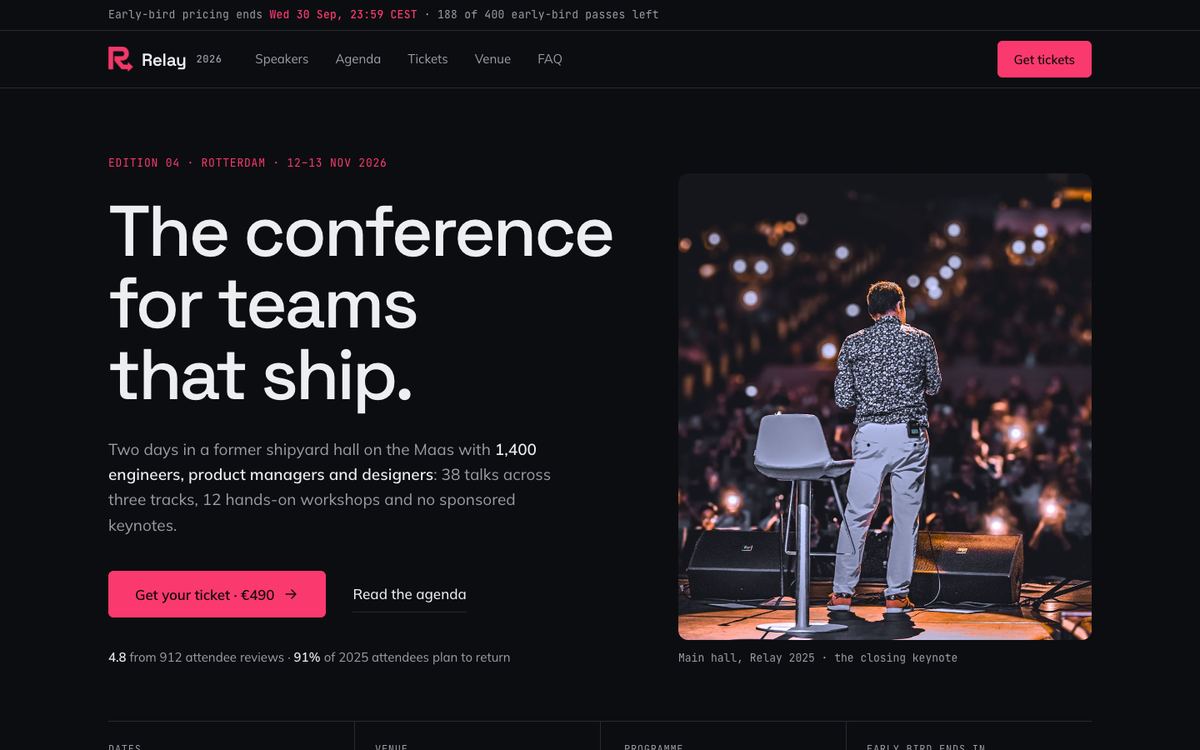 Tech ConferenceEvents · Space Grotesk
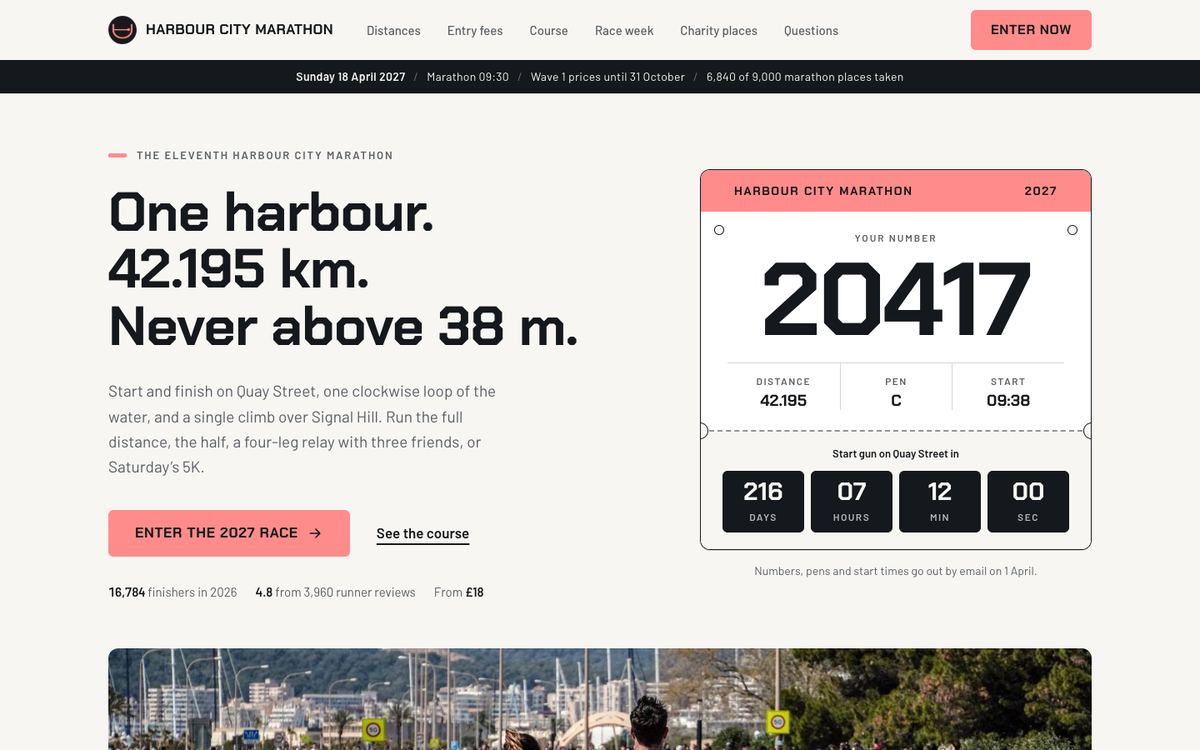 City Marathon Race DayEvents · Chakra Petch
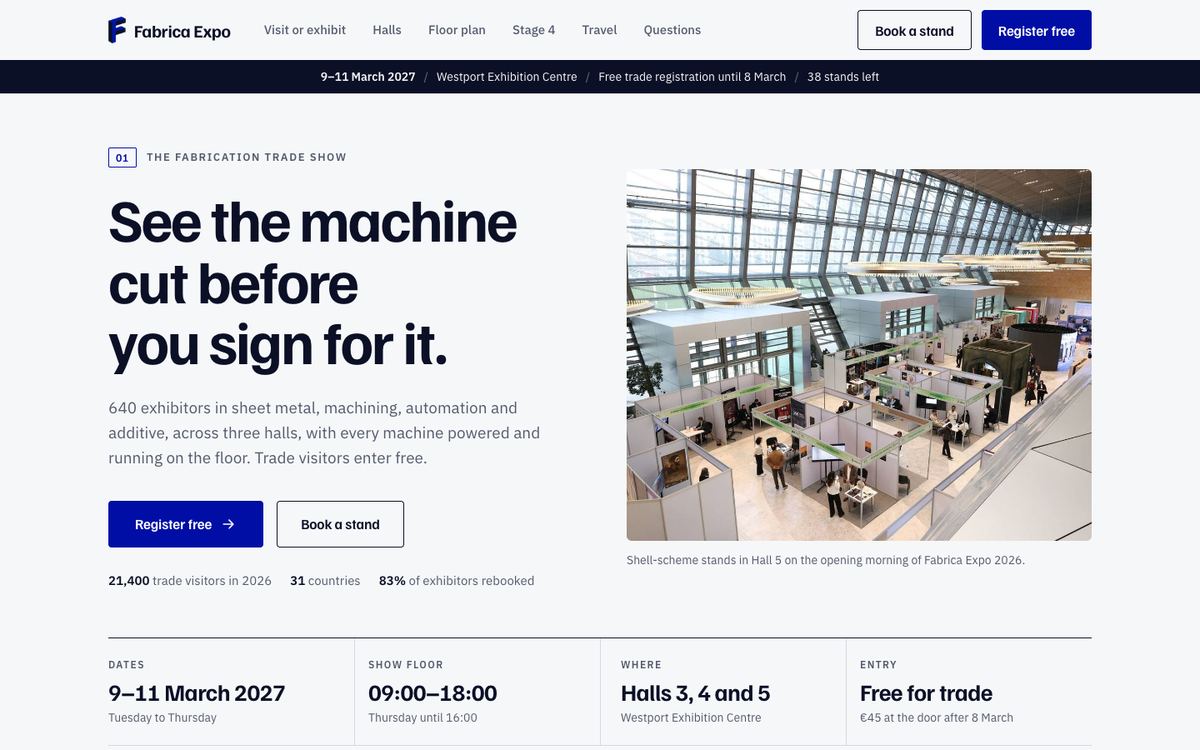 Trade Expo Floor PlanEvents · Familjen Grotesk
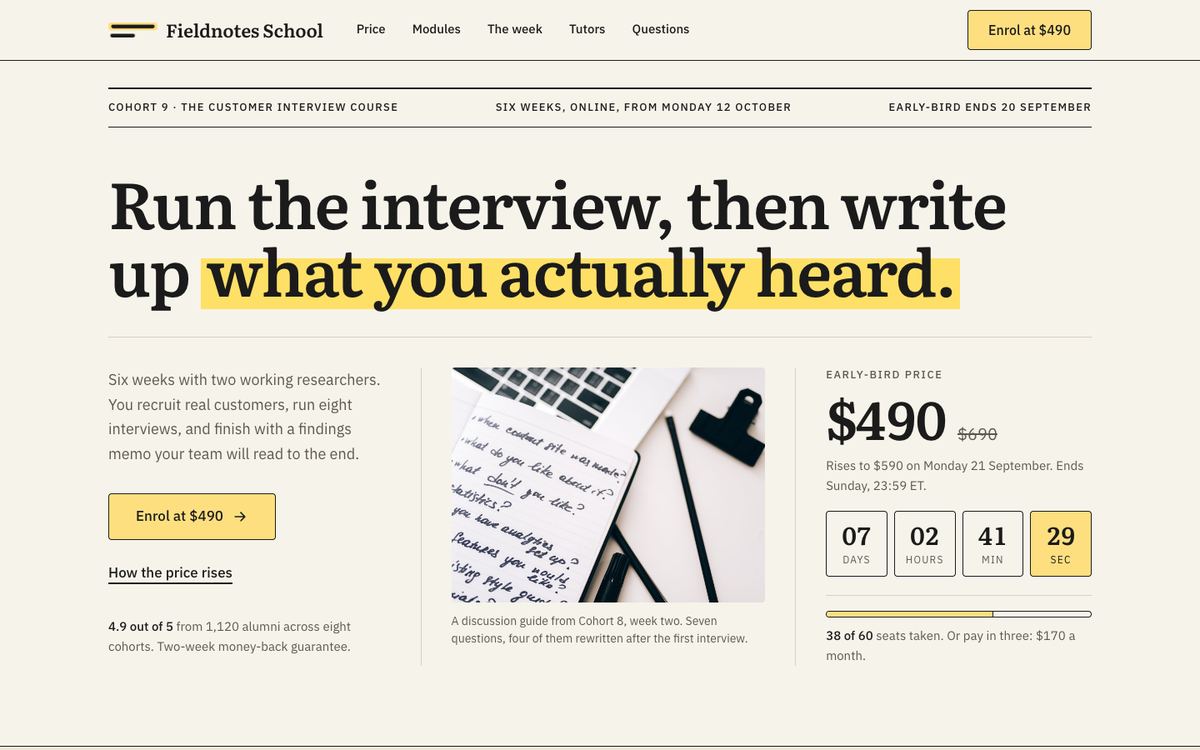 Course Early-Bird EnrolmentEducation & courses · Literata
Starting from the theme costs no credits. Or describe the offer and the AI draws a new page in this style, usually in about two minutes.