For skincare brands that sell on ingredients
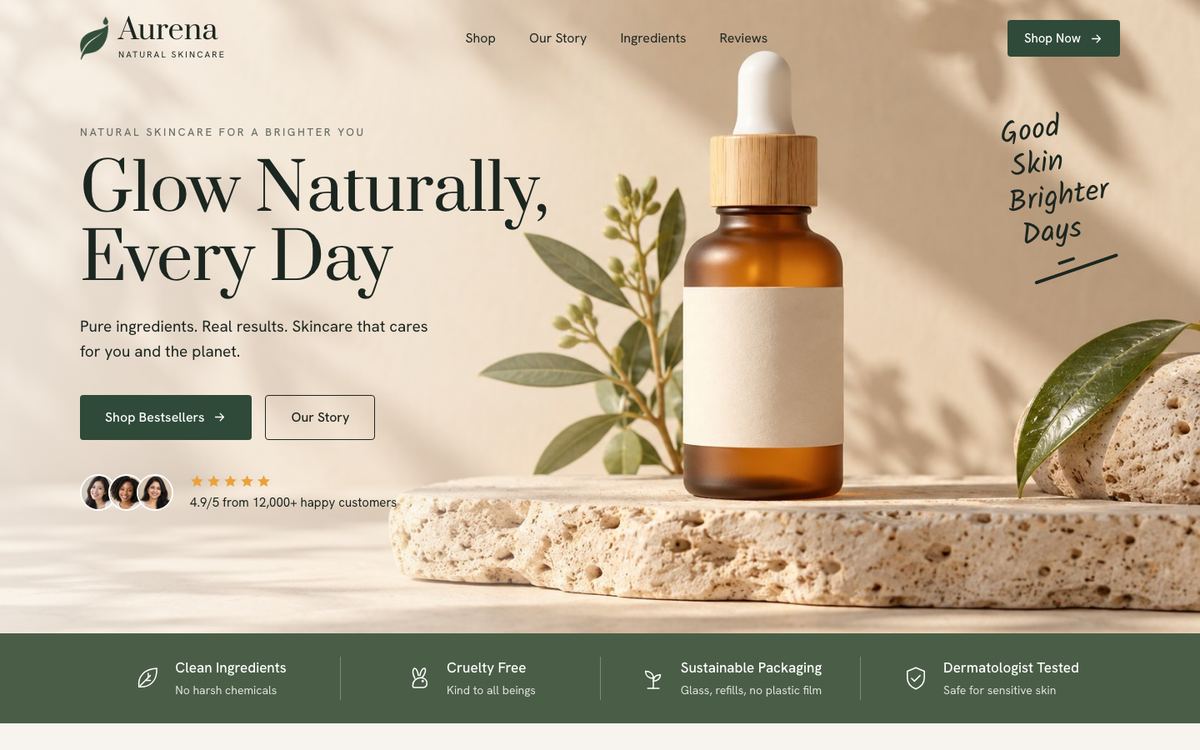
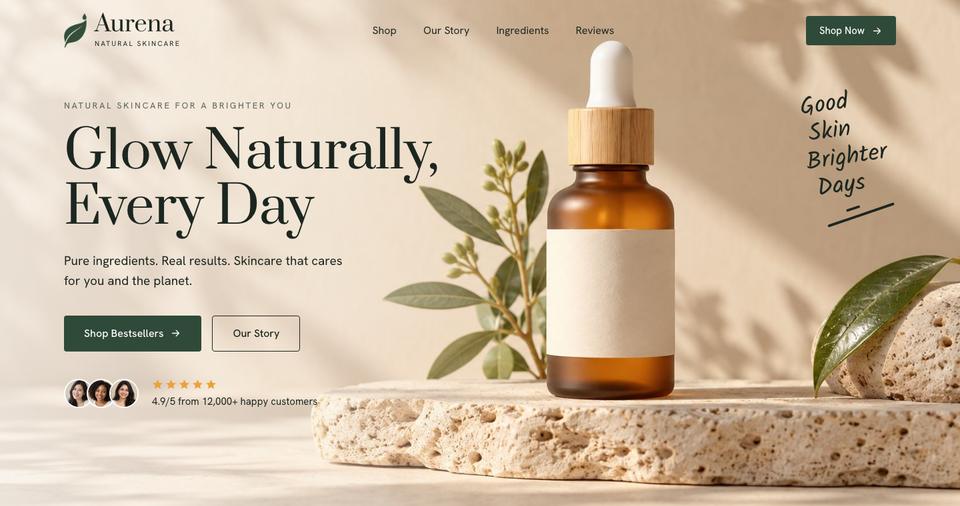
Skincare buyers have learned to distrust promises. They read the label, look for the percentage of the active, and check whether anyone has measured the result. Natural Skincare is built for that reader: a product photographed on stone with a handwritten note, round ingredient portraits with what each one does, a four-step routine split into morning and evening, and a results band with figures from a real study.
It suits natural and clean skincare, body care and beauty brands selling a small range of their own products. Pick it when your ingredients and your sourcing are the argument, and when the page should feel calm rather than clinical.
How the page sells, section by section
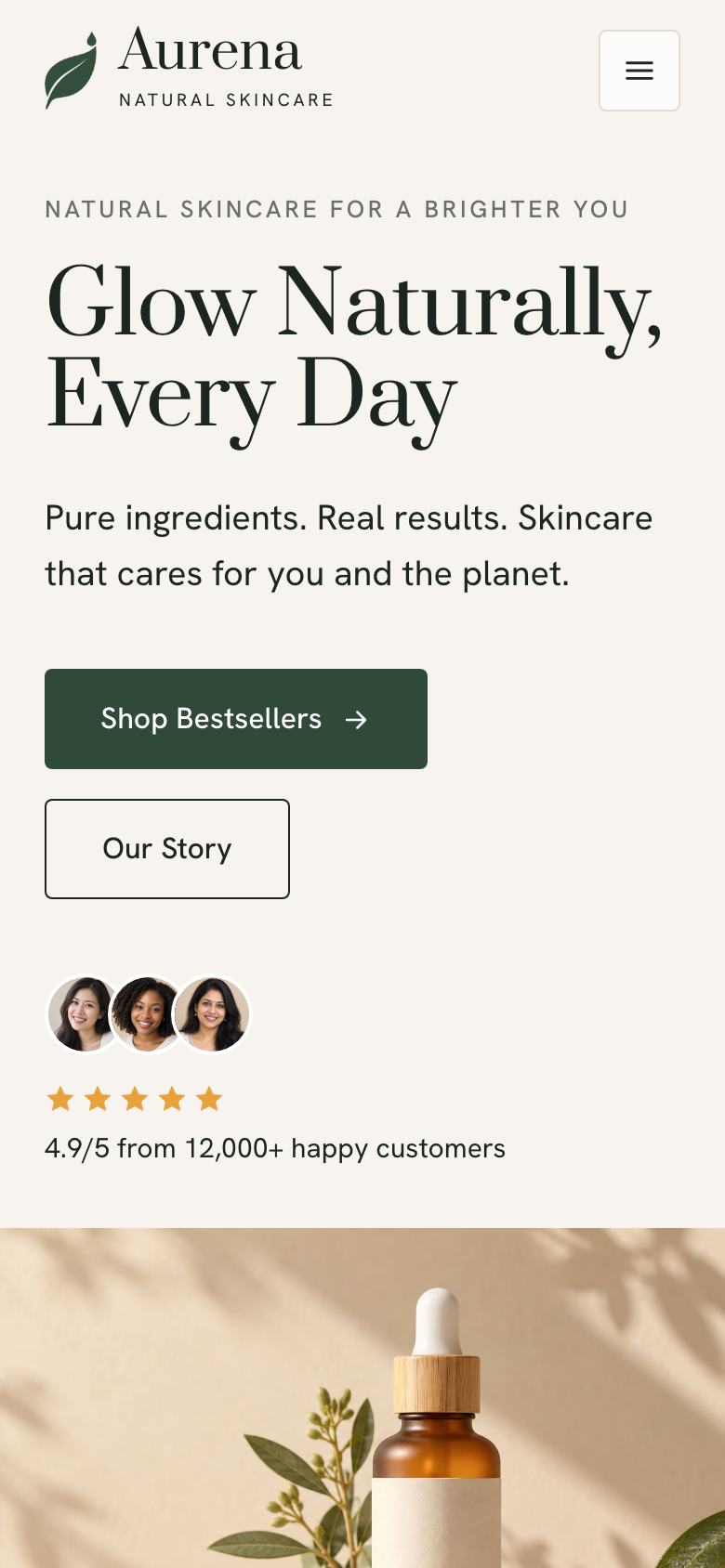
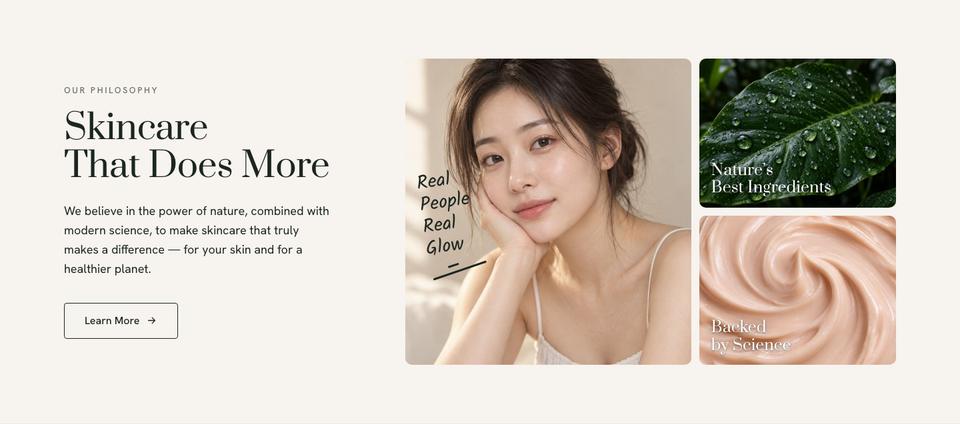
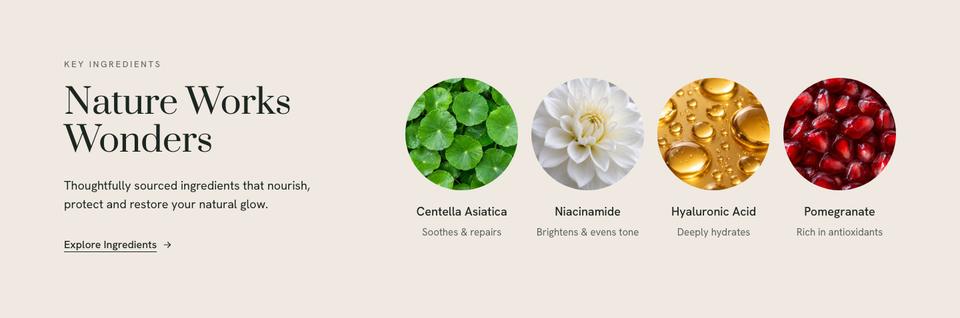
The hero puts the product in real light with a rating and two actions. A trust strip covers ingredients, cruelty-free status, packaging and dermatologist testing. The philosophy is a short mosaic about how the brand works, and key ingredients gives each active a round photograph and one line on what it does.
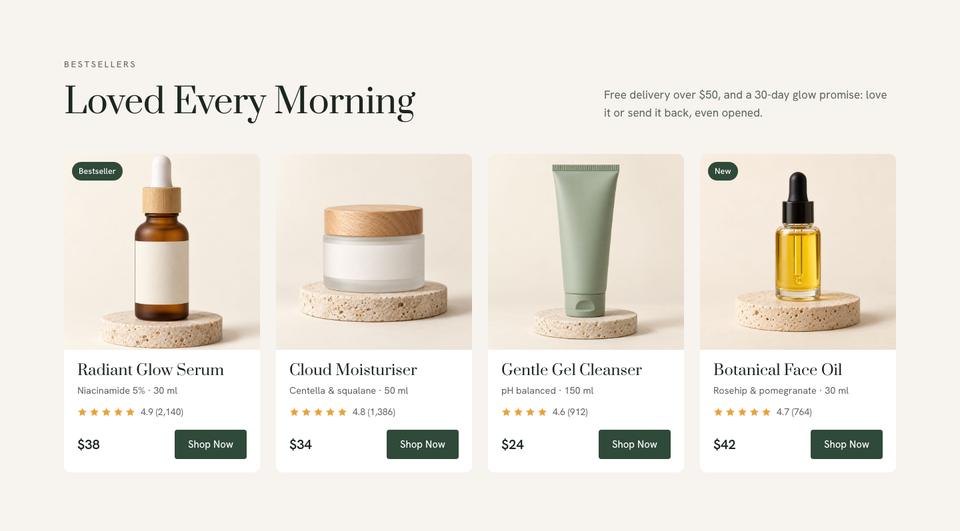
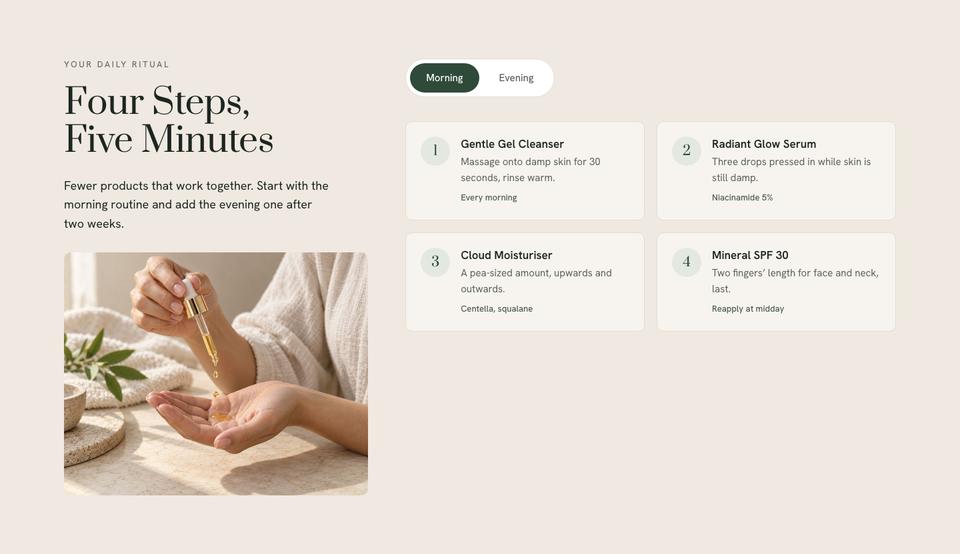
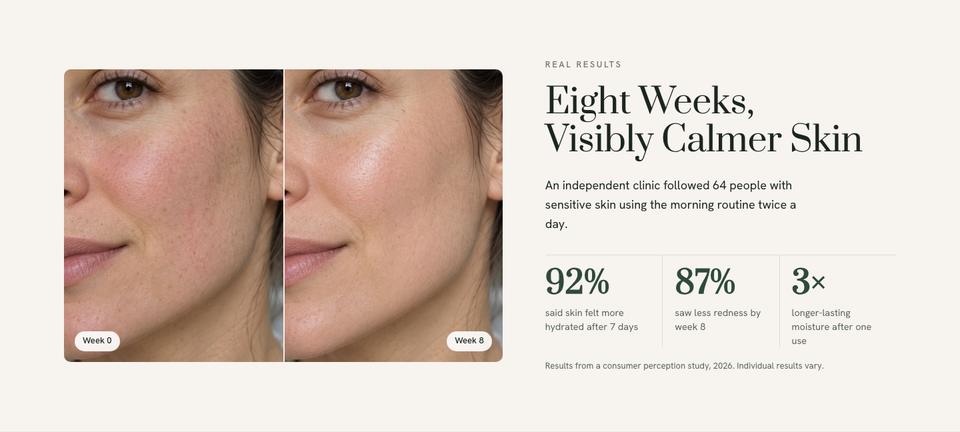
Bestsellers show three products with sizes, the active and its strength, ratings and prices. The routine is a tabbed morning and evening ritual with the order of use and how long each step takes. Sustainability explains sourcing and refills. Results publishes a study with its sample and period, and reviews carry named customers.
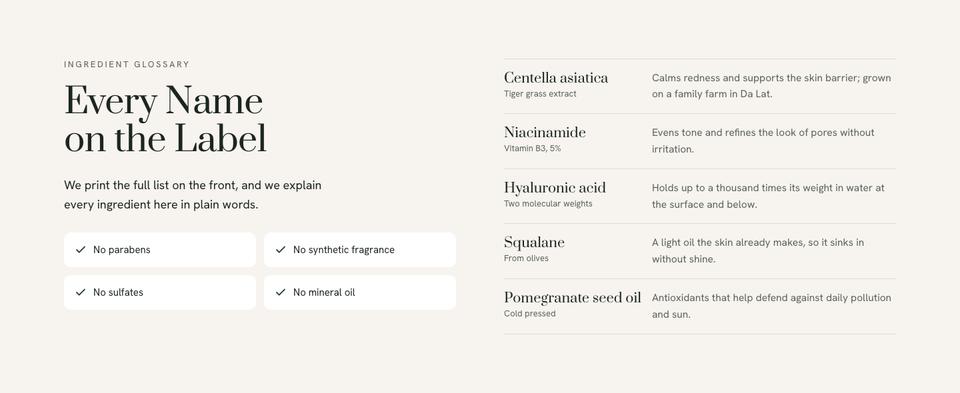
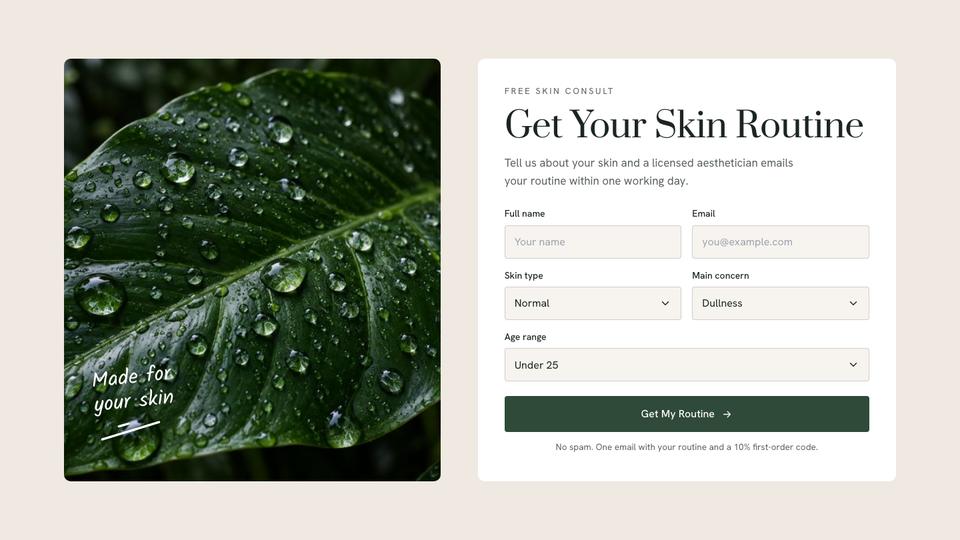
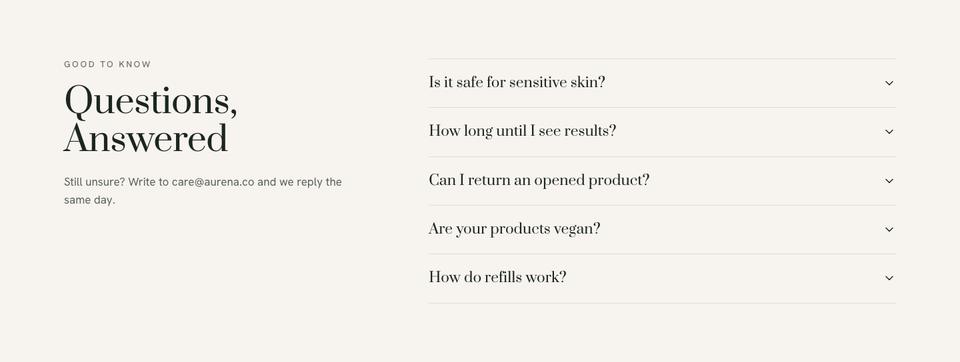
The glossary explains every name on the label in plain words, which is unusual and very persuasive. The page closes with a free skin consult form and a questions section on sensitivity, timing and returns.
Making it yours
Forest, Clay, Rose and Ink schemes are included, with Prata, Cormorant Garamond or Newsreader as the display face. The layout uses seventeen photographs, so it rewards a proper shoot: products on stone or linen in daylight, ingredients close up, and hands using the product.
What to prepare before publishing
Collect the full ingredient list for each product as it appears on the label, with the strength of each active and its form, checked with your formulator. Write the glossary entries in plain language, including what each ingredient is for and where it comes from.
Claims about skin are regulated in most countries. Keep them factual, attribute any figures to a named study with its sample size and date, and avoid suggesting a cosmetic treats a medical condition. For before-and-after photographs, get written consent and shoot in the same light and pose. Decide the terms behind the returns promise, especially whether opened products can come back, and make sure your fulfilment team agrees.
Writing it with the AI
Start from the template for free, or tick “Write the text for my business” for about 20 credits. A good brief names the brand, three products with sizes and prices, the actives and their strengths, the routine, your sustainability commitments, any study you can cite, and your delivery and returns terms.
Adapting it for other beauty brands
A body care or haircare brand can group products by hair or body concern and replace the routine with a wash-day order. Fragrance brands usually swap ingredients for notes and add a discovery set. A refill-led brand can lead with the sustainability split and show the cost per refill over a year. A clinic selling its own products can keep the glossary and add its practitioners.
Where skincare buyers come from
Most first orders start with a search for an ingredient or a concern, a recommendation in a group, or an ad on social. The ingredient glossary and the routine section are what those visitors read first, so link straight to them from posts rather than always to the homepage. Because every consult request arrives with its source and campaign, you can see which ingredient posts bring people who order, not just people who read. Keep the page at one address through the year and update the study and the bestsellers rather than rebuilding it each season.
When another template fits better
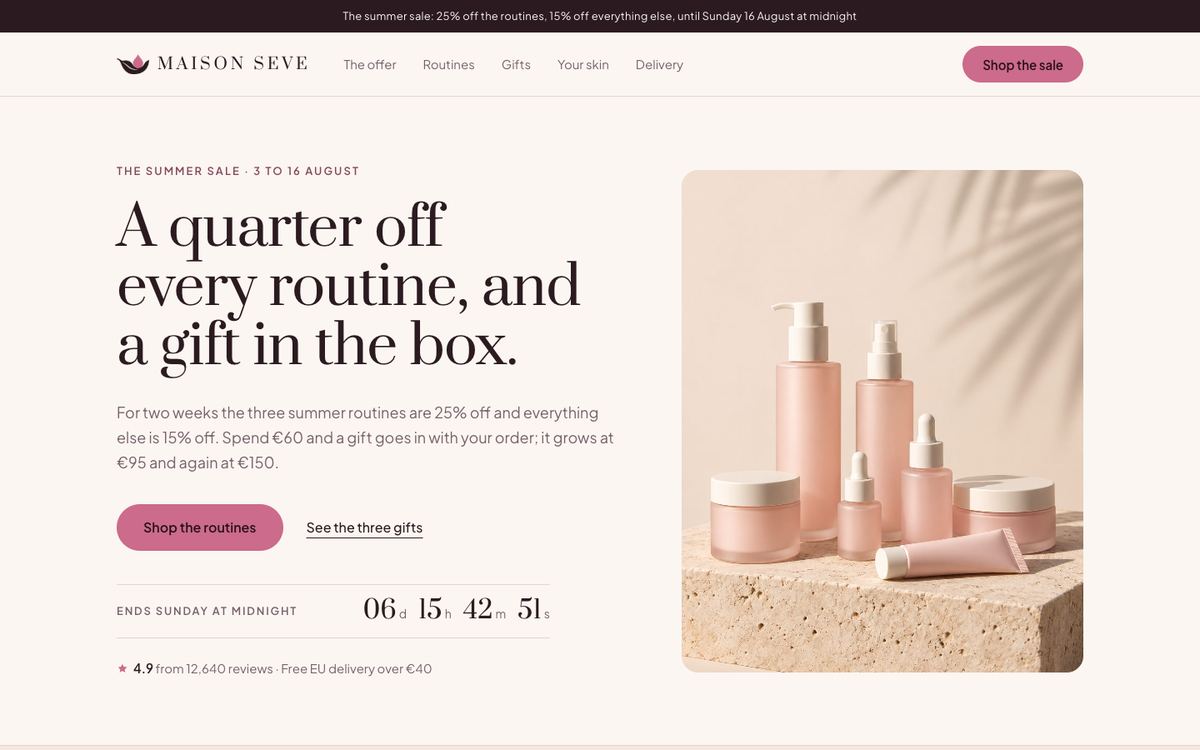
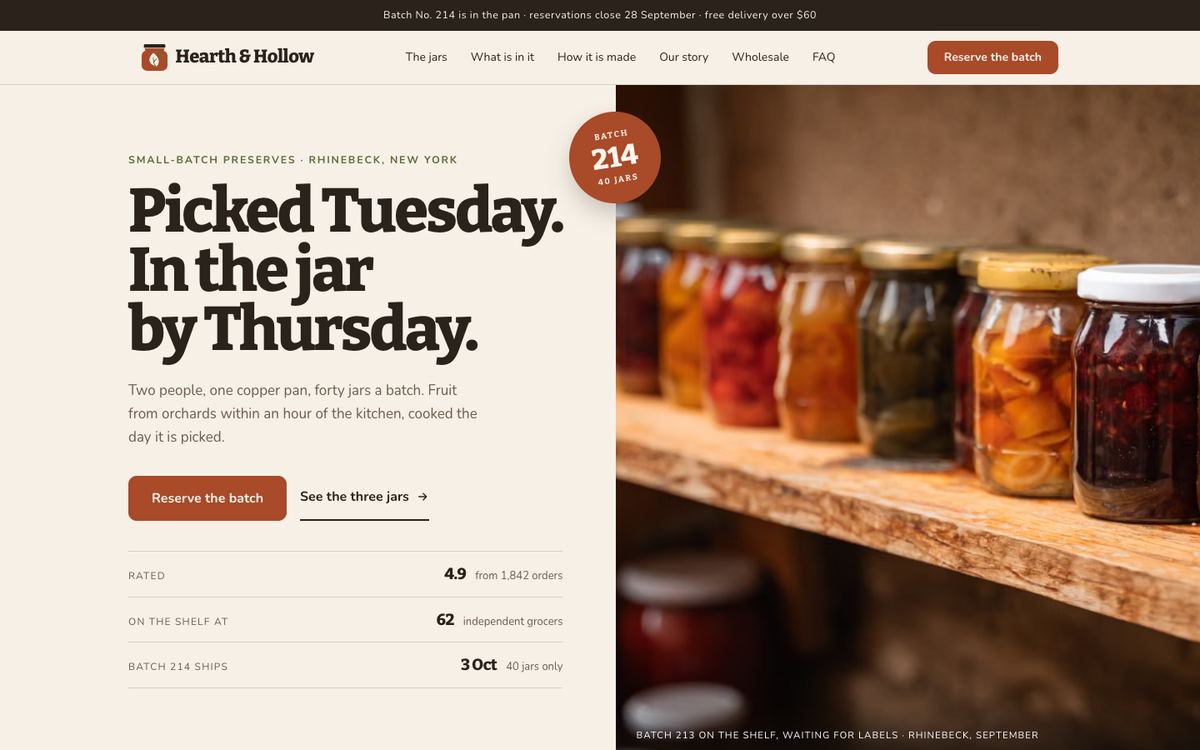
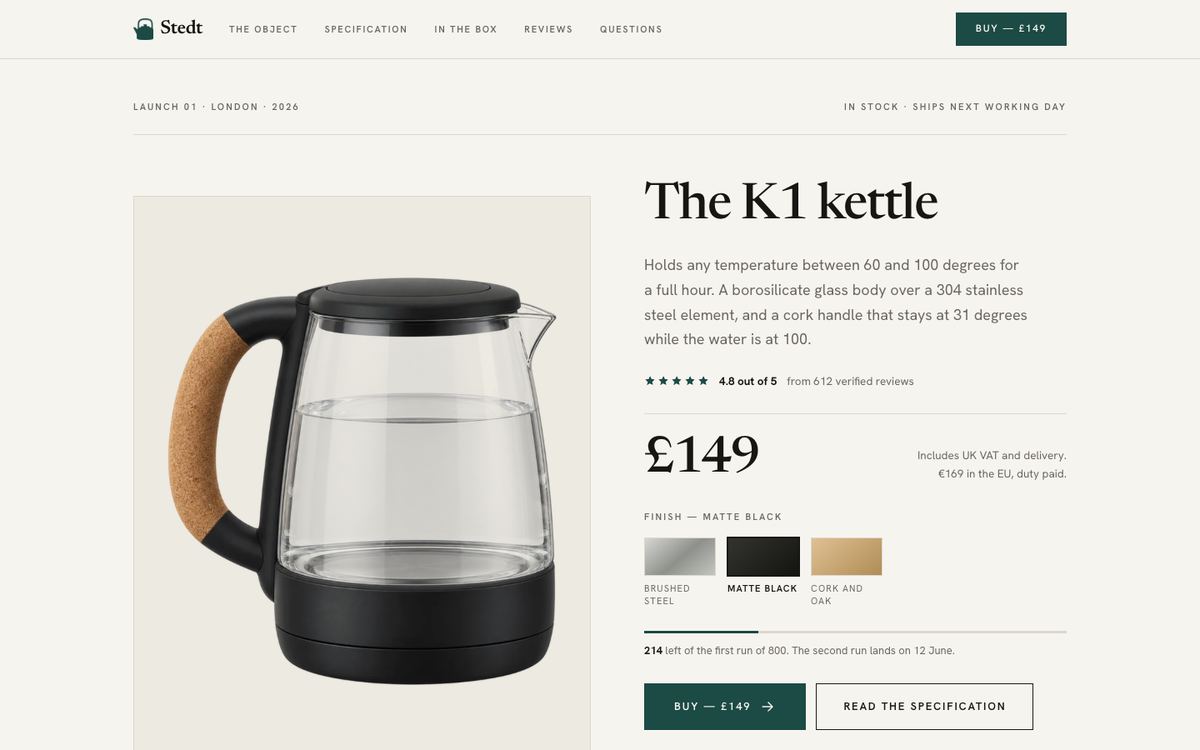
For a dated sale on an existing range, Skincare Summer Sale adds a countdown and a gift ladder. A single hero product with a specification table fits Single Product Launch, and a maker selling in small batches fits Small-Batch Craft. More selling layouts are on the ecommerce templates page.
Before you publish
- Check every ingredient name, strength and claim with your formulator.
- Date any study and state how many people took part.
- Get written consent for before-and-after photographs.
- Confirm delivery, returns and the refill offer.
- Test the consult form and who answers it.