A considered route into a floor model clearance
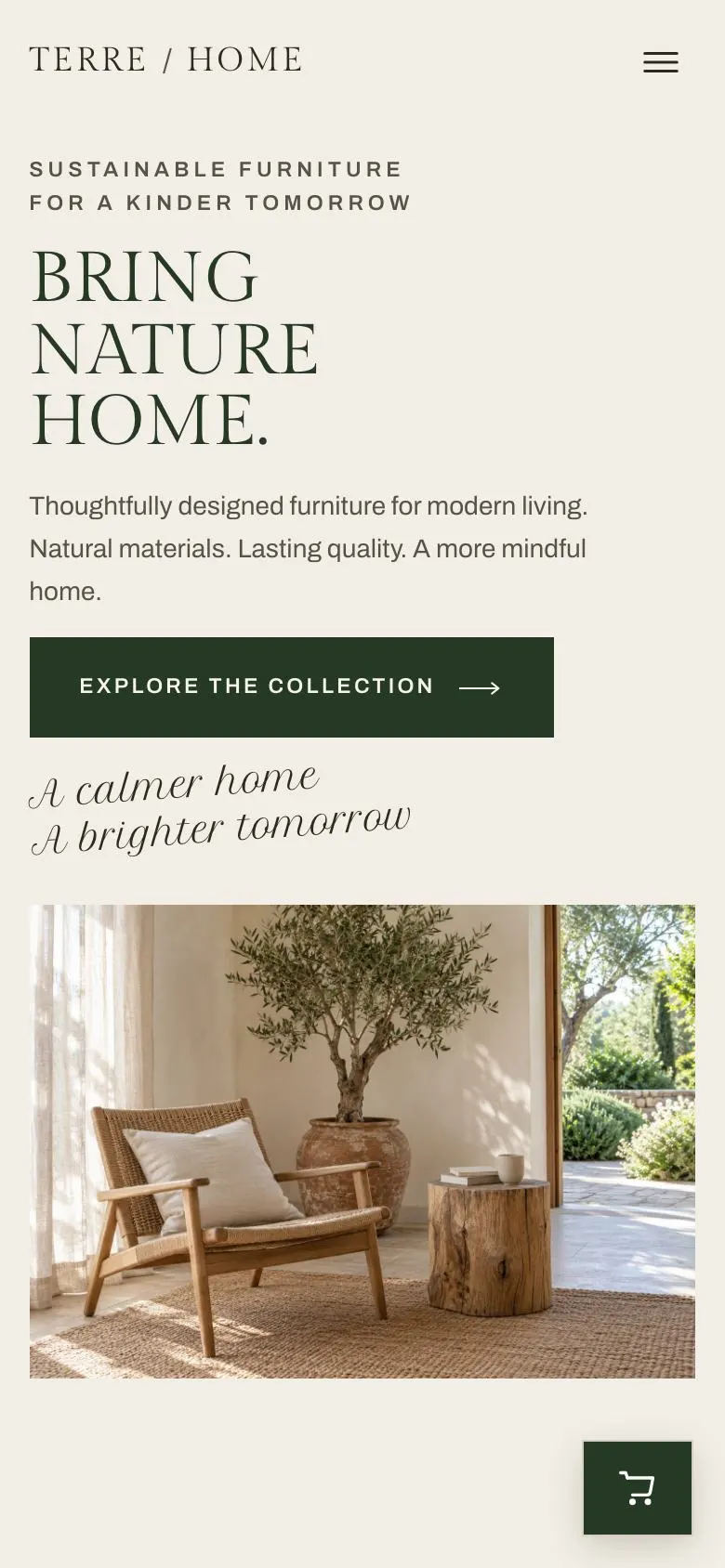
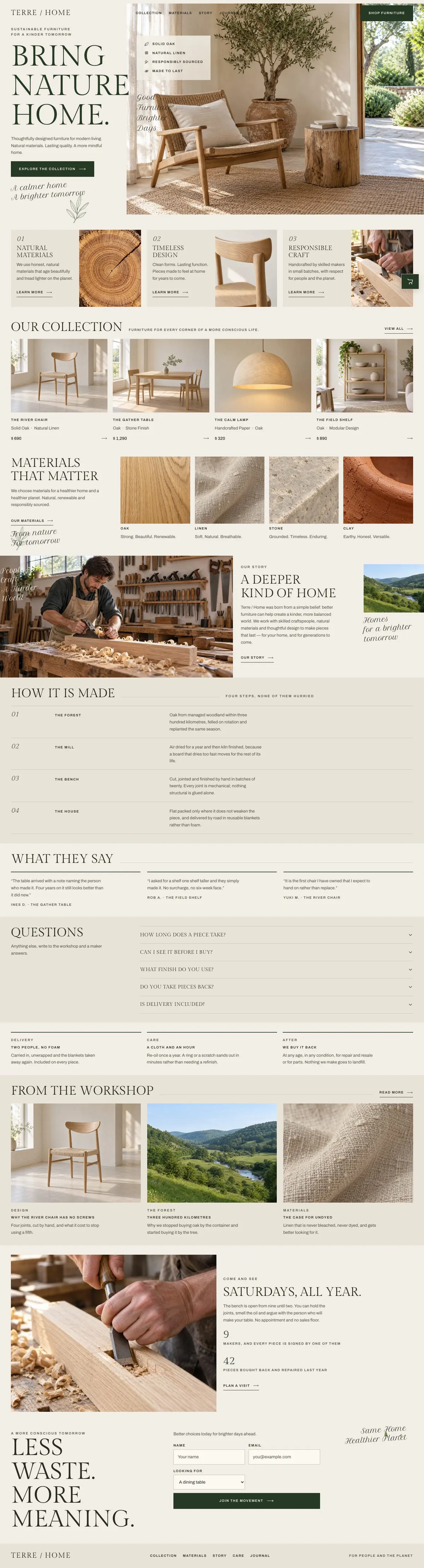
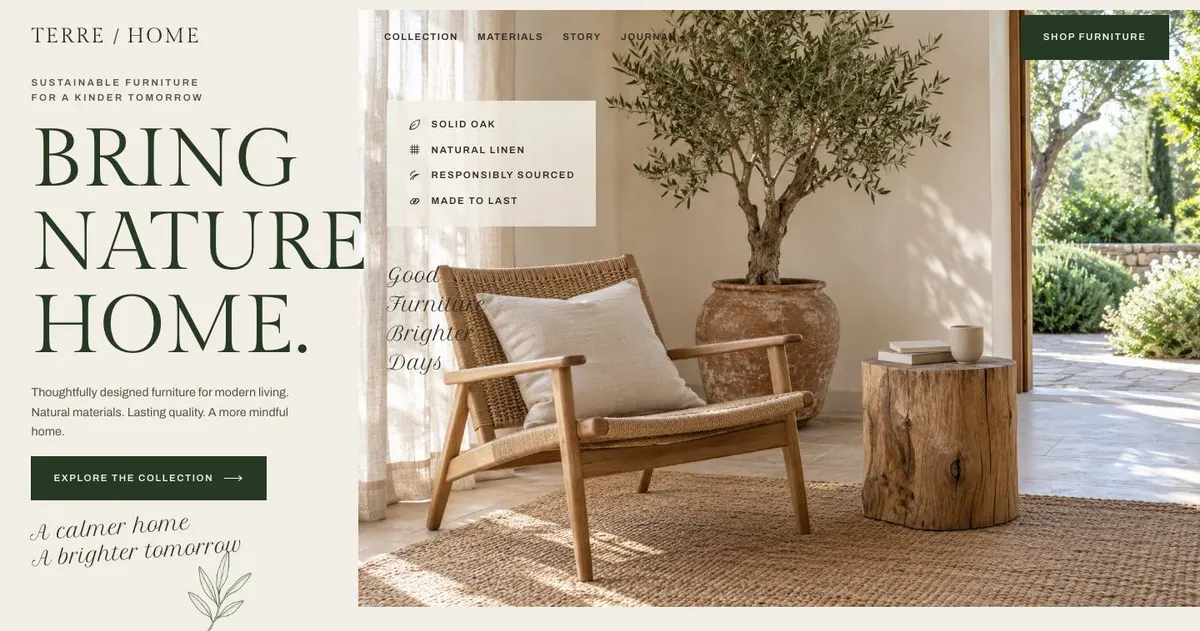
Someone searching for a Floor Model Clearance page needs to understand what is available, why each piece is worth buying and how to place an order. This design does that through a material-led furniture and homeware presentation: it introduces the point of view, shows a collection, then makes room for the story behind the work.
A generic sale page can make a maker’s work look interchangeable. That is a poor fit when a dining table, chair, vessel or shelving piece has a particular timber, finish, maker or history. The template gives the business space to put those details beside the collection rather than asking the buyer to infer them from a reduced price alone.
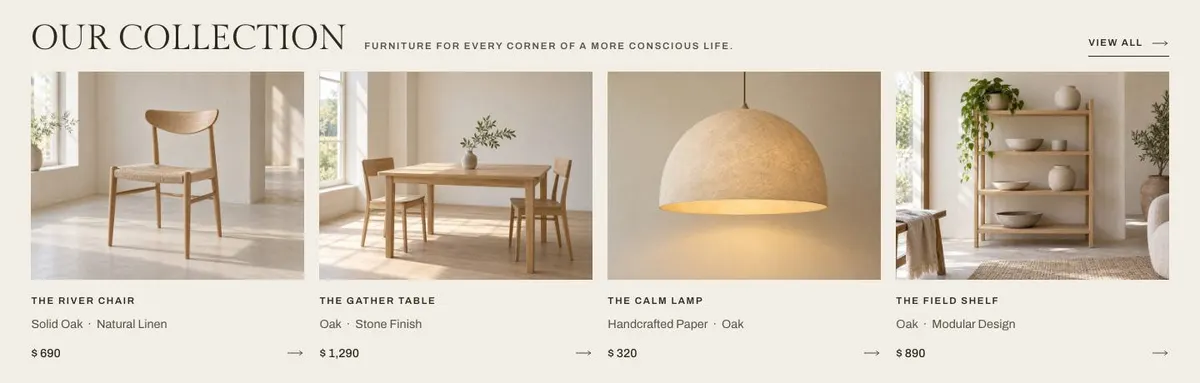
For a clearance, the collection needs careful rewriting. Each item should state what it is, its dimensions, material, condition and current price in the text supplied for that piece. This design does not include a dedicated clearance-status band or a mechanism for showing live stock levels. If the priority is a more direct furniture selling page, Furniture Collection Sales is the closer related option.
The wider approach works beyond floor models. A furniture maker can sell a limited run. A ceramicist can offer display pieces from a studio collection. A homeware retailer can use it for end-of-line objects where the material and the room they belong in remain part of the decision.
Adapting the design
The template has four colour schemes: Forest, Clay, Ink and Slate. Its display typeface is Prata and its body typeface is Archivo. The listed alternatives retain Archivo with Prata, Gilda Display or Petit Formal Script, so the page can stay readable while changing the character of the headings.
It needs a substantial image set: twenty-one photographs across the page. The Hero, Why, Shop, Materials and Story bands all need imagery, as do the Journal, Visit and Join bands. Plan these as a connected set rather than gathering isolated product shots. The page needs room views, close material views, collection photographs, workshop images and the images required for the visit and closing bands.
For a floor model clearance, photograph the actual available pieces. Do not use a general room image where the order depends on the buyer seeing a particular display item. The material-led direction is especially useful where a buyer needs to judge grain, glaze, texture or finish before choosing.
Writing it for your business
Starting from this template costs no credits. Rewriting the copy with AI costs about 20 credits. A good brief names the business, what it sells, the material point of view, the available collection and the action the page should lead to.
It should also say what is true about delivery, workshop visits, making and care. For a clearance, name the condition policy and how buyers will learn whether a piece is still available. The AI can reshape the wording, but it needs the real facts to avoid vague claims about sustainability, craftsmanship or service.
What to prepare first
Prepare the product list before working on the broader story. Each available item needs its own name, material, dimensions, condition and price for the Shop copy. Write the opening statement, then gather the material notes that support it.
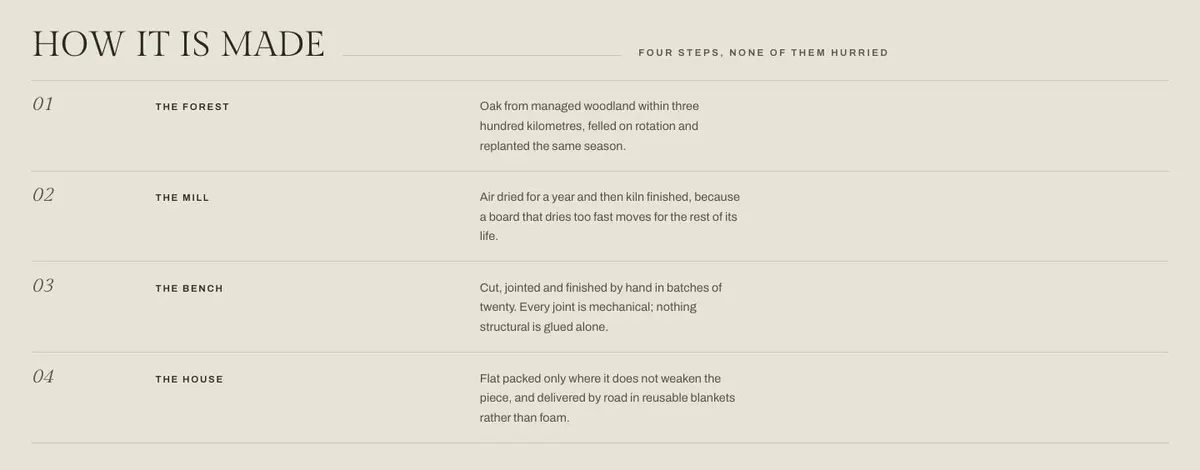
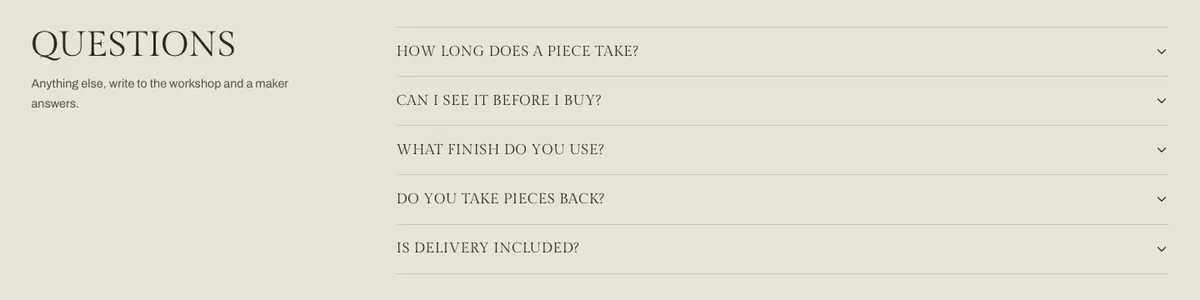
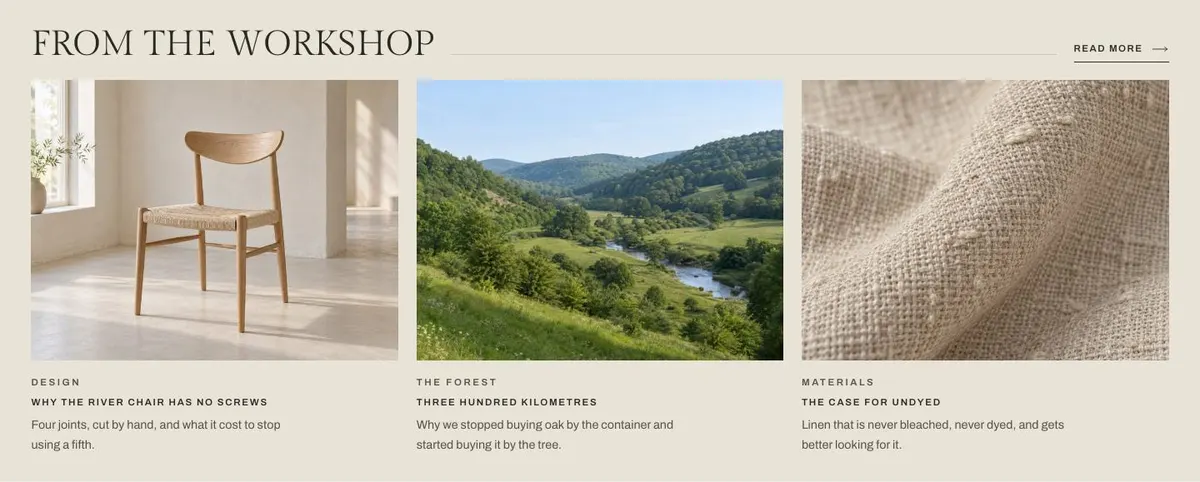
Next, prepare the four making steps, a genuine customer quote and answers for Questions. If Care is retained, confirm that the described delivery approach applies to every piece. Write a short workshop story for Journal and only include Visit details if the stated Saturday opening is accurate for the business.
Finally, organise all twenty-one photographs by band. The collection and material images should be ready first, because they carry the main buying decision. Keep the final form copy focused on the response the business can actually provide.
Variations for nearby trades
A ceramicist can use the collection for display vessels, tableware or discontinued glazes. The Materials band can explain clay, glaze and firing, while the Shop copy records the exact piece and any visible variation.
A homeware retailer can use the same structure for floor stock across lighting, textiles and small furniture. The opening should define the sale, and each collection entry should make the item, finish and condition easy to understand.
A furniture maker with made-to-order work can shift the emphasis away from clearance and towards a small collection. The making steps, workshop story and visit then become central, while Shop presents the pieces available to order.
When another template fits better
Furniture Collection Sales is a better starting point when selling the collection is the whole job of the page.
Furniture Design Portfolio fits a studio that needs to show completed design work before seeking enquiries.
Interior Design Enquiries is for an interior business whose main next step is an enquiry rather than an order.
Botanical Skincare Collection is a neighbouring material-led retail option for body and skincare products. Browse the wider ecommerce template hub for more selling formats.
Before you publish
- Check every collection item has accurate material, dimensions, condition and price.
- Use photographs of the actual pieces available to order.
- Confirm the delivery and workshop information is current.
- Make the final form’s purpose clear in its surrounding copy.