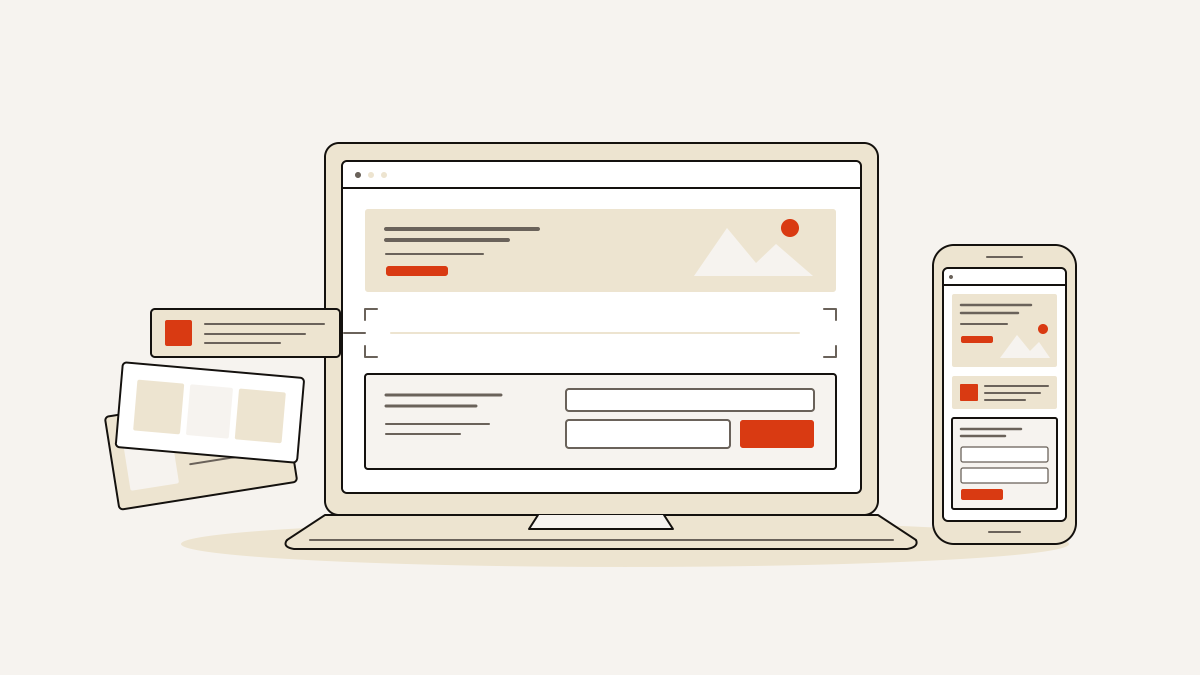
Hire landing page design services when you need someone to clarify your offer, write the copy or handle a bespoke build. Start from a template when your offer and content are ready and the layout fits.
Compare quotes on what it takes to publish a working page that collects leads. The scope should cover copy, development, form delivery, publishing and who owns the page after launch. Separate setup costs from recurring charges and ask for evidence to support the quote. If you already have a page, check whether it needs a redesign before paying for one.
What a landing page service should deliver
Your page should match what the visitor expected when they clicked, then ask for their contact details. Someone clicking an introductory ad needs more explanation than someone ready to book a demo.
Start with the promised outcome, then give proof, such as a relevant customer quote or a result you can back up. Before the form, explain what the offer includes and what happens when someone enquires. Keep one goal and one form per page.
Ask each supplier to list what they will deliver separately. This makes clear where each supplier’s work stops:
- Visual design covers the layout, colours, fonts and how the page looks on mobile. A design file gives you something to hand over. It still needs to become a working page.
- Copywriting covers the headline, offer explanation, proof, button text and form instructions. The agreement should also name who supplies and approves claims.
- Development and publishing means building the page, making the form work and publishing it in the agreed place.
- Lead routing means deciding where enquiries arrive and who receives them. It also sets out how delivery will be checked.
The agreed work should also cover what happens after someone sends the form. That includes the confirmation message, any follow-up email or booking step, and who handles the enquiry. If an email promises a response, assign someone to provide it.
Record which rounds of changes are included and who owns the page. The agreement should also name who handles account access and fixes after launch. If you buy only the design, these jobs remain unassigned unless the agreement covers them.
Compare service costs with the work a template leaves you
Compare the quoted fee alongside the work left on your desk. A template saves you commissioning a layout. You still supply the offer and content, then check the page.
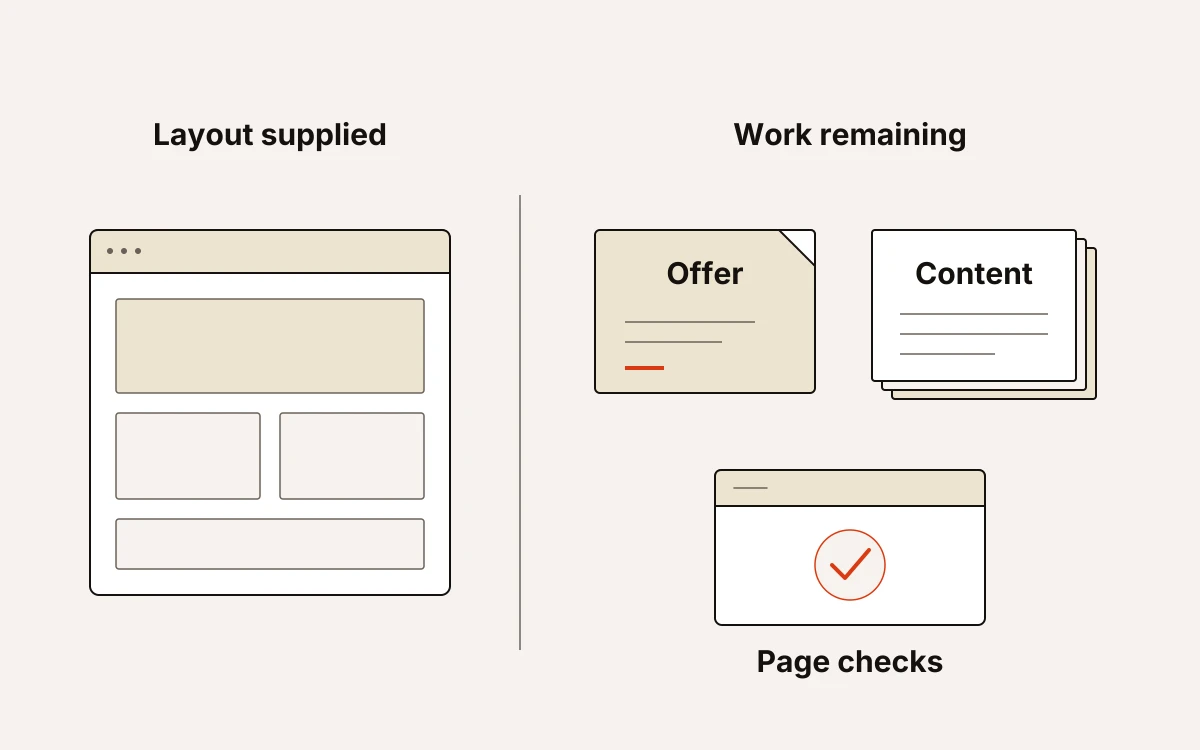
- If your message is unclear, pay for copywriting before custom design. The quote should list work on your offer and writing the page as separate setup items. A new layout cannot decide what you sell, who needs it or why they should enquire.
- If something needs to be built specially, get a clear price for that work. The quote should separate design from development, the work needed to build the page. It should also name what must work on the published page. This gives you a cost for meeting that need. An undefined “custom” package gives you little to compare.
- If your offer and content are ready, use a template that fits them. Even with a finished layout, you need time to replace sample text and photographs. Allow time to check the form and publish too.
- If you expect changes, agree what is covered before commissioning the work. The agreement should state how many rounds of changes are included and what counts as a round. It should also explain how extra changes are charged. Keep corrections to agreed work separate from requests that change what you originally asked for.
- If the page will stay live, separate setup from costs you keep paying. Publishing, upkeep and ongoing work to improve the page each need their own line. For testing and further changes, agree who will suggest changes and make them. Name who will review the enquiries those changes bring, so responsibility continues after launch.
At landflow, we charge no credits to start from a template; our free plan includes 200 monthly credits, a subdomain (an address for your page), and keeps every lead.
Ask for evidence before accepting a quote
Judge a provider by its work for your traffic sources and the results it can explain. An attractive portfolio needs a relevant project behind it, with reasons for the choices made.
A provider should ask who your customer is, how you sell and what a typical deal is worth. Those answers help it judge which enquiries matter to your business.
Before accepting a quote, agree what success means:
- Form submissions: someone sends their details.
- Qualified enquiries: that person fits your agreed customer criteria and has a need you can serve.
If you need qualified enquiries, require a way to review lead quality after submission, because a form count cannot tell you whether someone meets those criteria.
Before-and-after results should be tied to a specific copy or design change. To judge them, you need to know how the provider tested the change, what else changed during the test and why it kept or rejected the result.
Then ask for an unsuccessful test and what it learned. Its ability to make and check decisions is part of what you are buying, alongside the finished work.
Check your page before paying for a redesign
A broken form or missing campaign record needs a repair. Before paying for design work, check each step from arriving on the page to receiving an enquiry.
- Open the page on your phone. Check how it loads and whether text gets cut off or parts overlap. The action you want visitors to take should be clear. You should be able to use the button and form without switching to a desktop.
- Send a test enquiry from a campaign link, which identifies the campaign that brought the visitor. The enquiry should reach your inbox, and the visitor should see a confirmation. The saved enquiry should keep the campaign details. If the visitor has consented to analytics, check that submission tracking works too; a blocked tracking script must not prevent the enquiry reaching your inbox.
- Check access and ownership by opening the editor and finding where the page is published. You need to know who controls the domain (your web address) and the publishing account. Find out who controls deployment, the process of putting updates online. You also need to know whether you can update the page after the supplier leaves.
At landflow, we stamp campaign information on the server, save leads before pixels fire and run six checks before publishing.
Before publishing, ask the supplier to check links within the page, image licences and where images are stored. Also check the title, description and image that appear when someone shares the page.
If your test fails, tell the supplier which step failed and what should have happened. This makes the repair clear and keeps it from becoming an open-ended redesign.